You help make Hymnary.org possible. More than 10 million people from 200+ countries found hymns, liturgical resources and encouragement on Hymnary.org in 2025, including you. Every visit affirms the global impact of this ministry.

If Hymnary has been meaningful to you this year, would you take a moment today to help sustain it? A gift of any size—paired with a note of encouragement if you wish—directly supports the server costs, research work and curation that keep this resource freely available to the world.

Give securely online today, or mail a check to:
Hymnary.org
Calvin University
3201 Burton Street SE
Grand Rapids, MI 49546

Thank you for your partnership, and may the hope of Advent fill your heart.

Person Results

Tune Identifier:"^boylston_mason$"
In:people

Planning worship? Check out our sister site, ZeteoSearch.org, for 20+ additional resources related to your search.
Showing 21 - 30 of 85Results Per Page: 102050

H. W. Baker

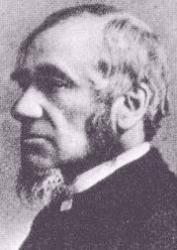
1821 - 1877 Person Name: Rev. Sir Henry Williams Baker (1821-1877) Author of "Cross and Crown" in Many Voices; or, Carmina Sanctorum, Evangelistic Edition with Tunes Baker, Sir Henry Williams, Bart., eldest son of Admiral Sir Henry Loraine Baker, born in London, May 27, 1821, and educated at Trinity College, Cambridge, where he graduated, B.A. 1844, M.A. 1847. Taking Holy Orders in 1844, he became, in 1851, Vicar of Monkland, Herefordshire. This benefice he held to his death, on Monday, Feb. 12, 1877. He succeeded to the Baronetcy in 1851. Sir Henry's name is intimately associated with hymnody. One of his earliest compositions was the very beautiful hymn, "Oh! what if we are Christ's," which he contributed to Murray's Hymnal for the Use of the English Church, 1852. His hymns, including metrical litanies and translations, number in the revised edition of Hymns Ancient & Modern, 33 in all. These were contributed at various times to Murray's Hymnal, Hymns Ancient & Modern and the London Mission Hymn Book, 1876-7. The last contains his three latest hymns. These are not included in Hymns Ancient & Modern. Of his hymns four only are in the highest strains of jubilation, another four are bright and cheerful, and the remainder are very tender, but exceedingly plaintive, sometimes even to sadness. Even those which at first seem bright and cheerful have an undertone of plaintiveness, and leave a dreamy sadness upon the spirit of the singer. Poetical figures, far-fetched illustrations, and difficult compound words, he entirely eschewed. In his simplicity of language, smoothness of rhythm, and earnestness of utterance, he reminds one forcibly of the saintly Lyte. In common with Lyte also, if a subject presented itself to his mind with striking contrasts of lights and shadows, he almost invariably sought shelter in the shadows. The last audible words which lingered on his dying lips were the third stanza of his exquisite rendering of the 23rd Psalm, "The King of Love, my Shepherd is:"— Perverse and foolish, oft I strayed, But yet in love He sought me, And on His Shoulder gently laid, And home, rejoicing, brought me." This tender sadness, brightened by a soft calm peace, was an epitome of his poetical life. Sir Henry's labours as the Editor of Hymns Ancient & Modern were very arduous. The trial copy was distributed amongst a few friends in 1859; first ed. published 1861, and the Appendix, in 1868; the trial copy of the revised ed. was issued in 1874, and the publication followed in 1875. In addition he edited Hymns for the London Mission, 1874, and Hymns for Mission Services, n.d., c. 1876-7. He also published Daily Prayers for those who work hard; a Daily Text Book, &c. In Hymns Ancient & Modern there are also four tunes (33, 211, 254, 472) the melodies of which are by Sir Henry, and the harmonies by Dr. Monk. He died Feb. 12, 1877. --John Julian, Dictionary of Hymnology (1907)

William Augustus Muhlenberg

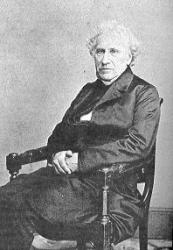
1796 - 1877 Person Name: Wm. A. Muhlenberg Author of "Like Noah's weary dove" in The Otterbein Hymnal Mühlenberg, William Augustus, D.D., son of the Rev. Dr. Mühlenberg, and grandson of Henry Melchior Mühlenberg, the patriarch of Lutheranism in America, was born in Philadelphia Sept. 16, 1796. He graduated at the University of Pennsylvania in 1814. Entering Holy Orders in 1817, he was successively Assistant Rector of St. James's Lancaster, 1823; Rector of the Church of the Holy Communion, New York, 1843; St. Paul's College, Flushing (1828); St. Luke's Hospital, New York (1855); St. John's and Long Island (1865), were established by him. He died April 6, 1877. His poetical gift was genuine, but not largely used. In 1826 he contributed four hymns to the Prayer Book Collection (of which he was one of the Committee). His Poems appeared in 1859. He had previously published Church Poetry, 1823; and The People's Psalter, 1858. I would not live alway followed in 1859 (revised in 1871). This last contains 26 pieces, the hymns in the Prayer Book Collection, 1826, with the exception of "I would not live alway," being omitted. The following are his principal lyrics:— 1. Carol, brothers, carol. Christmas Carol. "Made for the boys of St. Paul's College—-the Chorus adapted from one of the Rev.[Bishop] A.C. Coxe's Christian Ballads"-—in 1840. 2. How short the race our friend has run. Death of a Young Person. Contributed to the Prayer Book Collection, 1826. 3. I would not live alway. Eternal rest desired. Four texts of this poem are extant: 1st the Original; 2nd the version given in the Prayer Book Collection, 1826; 3rd the author's revised version of 1859; and 4th his rewritten text of 1871, the second of these being that known to the hymnbooks. The history of the poem is somewhat complicated. We quote it here as given by us in the History of the American Episcopal Church, 1885, p.637, as we have nothing further to add thereto:-— "The most famous of these (Dr. Mühlenberg's hymns) was probably first written. 'I will not live alway' has an intricate history, which was not simplified by the author's lapse of memory in his later years. In his brief ‘story of the hymn,' printed with its ‘evangelized’ text in 1871, every date is wrong by two or three years; and his assertion, ‘The legend that it was written on an occasion of private grief is a fancy,' hardly agrees with the clear and minute recollections of persons of the highest character, still living, and who knew the circumstances thoroughly. The date of composition assigned, 1824, is probably (not certainly) correct; it was written at Lancaster, in a lady's album, and began:— I would not live alway; no, no, holy man, Not a day, not an hour, should lengthen my span.' In this shape it seems to have had six eight-line stanzas. The album was still extant in 1876, at Pottstown, Pa., and professed to contain the original manuscript. Said the owner's sister, ‘It was au impromptu. He had no copy, and, wanting it for some occasion, he sent for the album.' In 1826 he entrusted his copy to a friend, who called on him on the way from Harrisburg to Philadelphia, to carry to the Episcopal Recorder, and in that paper it appeared June 3, 1826 (not 1824). For these facts we have the detailed statement of Dr. John B. Clemson, of Claymont, Del., the Ambassador mentioned, who also chances to have preserved that volume of the paper. Thus appearing (without name) it was adopted by the sub-committee [of the Prayer Book Collection, 1826]. When their report was presented to the entire committee in 1826—-not 1829, as Dr. Mühlenberg had it—-'each of the hymns was passed upon. When this came up one of the members remarked that it was very sweet and pretty, but rather sentimental, upon which it was unanimously thrown out. Not suspected as the author, I voted against myself. That, I supposed, was the end of it.’ The committee, which sat until late at night at the house of Bishop White, agreed upon their report to the Convention, and adjourned. But the next morning Dr. Onderdonk (who was not one of their number, but who, on invitation, had acted with the sub-committee, which in fact consisted of him and myself), called on me to inquire what had been done. Upon my telling him that among the rejected hymns was this one of mine, he said, 'That will never do,' and went about among the members of the committee soliciting them to restore the hymn in their report, which accordingly they did; so that to him is due the credit of giving it to the Church.' As thus adopted it was a small and altered selection from the original lines, made by Dr. Onderdonk ‘with some revision' by the author. He was never satisfied with these texts, but revised the poem in 1859, and re¬wrote it in 1871….The authorship of this, as of many another popular lyric, has been disputed. The claim of Henry Ward, a printer of Lichfield, Conn., has been vehemently urged, and revived but a few years ago. Of course it is unsupported by adequate evidence. When Dr. Mühlenberg was asked to assure ‘some of his brethren, editors of Church papers,' of his paternity, his manly reply was, ‘If they thought I was capable of letting the work of another pass for so many years as my own, they would not be sure of anything I might say.'" 4. Jesus' Name shall ever be. The Holy Name, Jesus. This is entitled "The Blessed Name of Jesus. An Evangelical Rosary." It was written in 1842, and revised for Schaff's Christ in Song in Aug., 1868. 5. King of kings, and wilt Thou deign. Submission to Jesus. Appeared in his Poems, 1859. 6. Like Noah's weary dove. The Ark of the Church. Contributed to the Prayer Book Collection, 1826, No. 24, in 5 st. of 4 1. It sometimes begins with st. ii., "0 cease, my wandering soul;" and again with st. in., "Behold the Ark of God." 7. Saviour, Who Thy flock art feeding. Holy Baptism. This is the most widely known of Dr. Mühlenberg's hymns. It was contributed to the Prayer Book Collection, 1826, No. 86, in 4 st. of 4 1. It is sometimes given as "Jesus, Who Thy flock art feeding." 8. Shout the glad tidings, exultingly sing. Christmas. Contributed to the Prayer Book Collection, 1826, No. 46, in 3 st. of 4 1., with the chorus :— "Shout the glad tidings, exultingly sing, Jerusalem triumphs, Messiah is King;" the opening lines, followed by the first stanza, and a repetition of the chorus, and so on to the end. Sometimes the hymn opens with st. i.: "Zion, the marvellous story be telling," or as “Sion the marvellous story be telling," instead of the chorus. Dr. Mühlenberg says that the hymn was written— "at the particular request of Bishop Hobart, who wanted something that would go to the tune by Avison, then popular, to the words of Moore, ‘Sound the loud timbrel,' &c. He liked the verses I made so well that he had them struck off before the hymns (Prayer Book Collection] were published, and sung in Trinity Church on Christmas day." 9. Since o'er Thy footstool here below. Earth and Heaven. Appeared in the Episcopal Register, 1824, and in his Poems, 1859. 10. The mellow eve is gliding. Evening. Dated 1825 (?) and published in his Poems, 1859. 11. The throne of his glory—-as snow it is white. Advent. Dated 1839, and published in his Poems, 1859. 12. Thine handmaid,Saviour, can it be? Admission of a Nursing Sister. Written on the words, "Come, follow me," for the reception of a Sister at St. Luke's Hospital, New York, 1859. [Rev. F. M. Bird, M.A.] --John Julian, Dictionary of Hymnology (1907) See also in: Hymn Writers of the Church

Benjamin Beddome

1717 - 1795 Person Name: Benj. Beddome Author of "BOYLSTON" in Christian Hymns Benjamin Beddome was born at Henley-in Arden, Warwickshire, January 23, 1717. His father was a Baptist minister. He studied at various places, and began preaching in 1740. He was pastor of a Baptist society at Bourton-on-the-Water, Gloucestershire, until his death in 1795. In 1770, he received the degree of M.A. from the Baptist College in Providence, Rhode Island. He published several discourses and hymns. "His hymns, to the number of 830, were published in 1818, with a recommendation from Robert Hall." Montgomery speaks of him as a "writer worthy of honour both for the quantity and the quality of his hymns." --Annotations of the Hymnal, Charles Hutchins, M.A. 1872. ========================= Beddome, Benjamin , M.A. This prolific hymnwriter was born at Henley-in-Arden, Warwickshire, Jan. 23, 1717, where his father, the Rev. John Beddome, was atthat time Baptist Minister. He was apprenticed to a surgeon in Bristol, but removing to London, he joined, in 1739, the Baptist church in Prescott St. At the call of this church he devoted himself to the work of the Christian ministry, and in 1740 began to preach at Bourton-on-the-Water, in Gloucestershire. Declining invitations to remove to London or elsewhere, he continued pastor at Bourton until his death, on Sep. 3, 1795, at the age of 78. Mr. Beddome was for many years one of the most respected Baptist ministers in the West of England. He was a man of some literary culture. In 1770 he received the degree of M.A. from Providence College, Rhode Island. He was the author of an Exposition of the Baptist Catechism, 1752, in great repute at the time, and reprinted by Dr. C. Evans in 1772. It was his practice to prepare a hymn every week to be sung after his Sunday morning sermon. Though not originally intended for publication, he allowed thirteen of these to appear in the Bristol Baptist Collection of Ash & Evans (1769), and thirty-six in Dr. Rippon's Baptist Selection (1787), whence a number of them found their way into the General Baptist Hymn Book of 1793 and other collections. In 1817, a posthumous collection of his hymns was published, containing 830 pieces, with an introduction by the Rev. Robert Hall, and entitled "Hymns adapted to Public Worship or Family Devotion, now first published from the Manuscripts of the late Rev. B. Beddome, M.A." Preface dated "Leicester, Nov. 10, 1817." Some of the early copies bear the same date on the title page. Copies bearing both the 1817 and 1818 dates are in the British Museum. The date usually given is 1818. Some hymns are also appended to his Sermons, seven volumes of which were published l805—1819; and over twenty are given in the Baptist Register of various dates. Beddome's hymns were commended by Montgomery as embodying one central idea, "always important, often striking, and sometimes ingeniously brought out." Robert Hall's opinion is just, when in his "Recommendatory Preface" to the Hymns, &c, he says, p. vii.:— "The man of taste will be gratified with the beauty and original turns of thought which many of them ex¬hibit, while the experimental Christian will often perceive the most secret movements of his soul strikingly delineated, and sentiments pourtrayed which will find their echo in every heart." With the exception of a few composed for Baptisms and other special occasions, their present use in Great Britain is limited, but in America somewhat extensive. One of the best is the Ordination Hymn, "Father of Mercies, bow Thine ear." Another favourite is “ My times of sorrow and of joy," composed, by a singular coincidence, to be sung on Sunday, Jan. 14, 1778, the day on which his son died, most unexpectedly, in Edinburgh. "Let party names no more," is very popular both in Great Brit, and America. "Faith, His a precious gift," "Witness, ye men and angels, now," and the hymn for Holy Baptism, "Buried beneath the yielding wave," are also found in many collections. Beddome's popularity is, however, now mainly in America. [Rev. W. R. Stevenson, M.A.] Beddome is thus seen to be in common use to the extent of about 100 hymns. In this respect he exceeds every other Baptist hymnwriter; Miss Steele ranking second. The authorities for Beddome's hymns are: (1) A Collection of Hymns adapted to Public Worship, Bristol, W. Pine, 1769, the Collection of Ash & Evans; (2) Dr. Rippon's Selections 1787, and later editions; (3) Sermons printed from the Manuscripts of the late Rev. Benjamin Beddome, M.A.,... with brief Memoir of the Author, Dunstable & Lond., 1805-1819; (4) Dr. Rippon's Baptist Register, 1795, &c.; (5) The Beddome Manuscripts, in the Baptist College, Bristol; (6) and Hymns adapted to Public Worship, or Family Devotion now first published, from Manuscripts of the late Rev. B. Beddome, A.M. With a Recommendatory Preface by the Rev. R. Hall, A.M. Lond., 1817. In his Preface, Mr. Hall gives this account of the Beddome Manuscript:— "The present Editor was entrusted several years ago with the MSS, both in prose and verse, with permission from the late Messrs. S. & B. Beddome, sons of the Author, to publish such parts of them as he might deem proper. He is also indebted to a descendant of the Rev. W. Christian, formerly pastor of the Baptist Church at Sheepshead, Leicestershire, for some of the Author's valuable hymns, which had been carefully preserved in the family. From both these sources, as well as others of less consequence, the present interesting volume has been derived." -- Excerpts from John Julian, Dictionary of Hymnology (1907) ======================= Beddome, Benjamin, pp. 121-124. Other hymns in common use:— 1. Great God, before Thy mercy-seat. (1817). Lent. 2. Great God, oppressed with grief and fear. (1787.) Reading H. Scripture. 3. How glorious is Thy word, 0 God. Holy Scripture. From "When Israel, &c," p. 124, i. 4. In God I ever will rejoice. Morning. From his Hymns, &c, 1817. 5. Jesus, my Lord, divinely fair. (1817.) Jesus the King of Saints. Begins with stanza ii. of “Listen, ye mortals, while I sing." 6. Rejoice, for Christ the Saviour reigns. Missions. Altered form of "Shout, for the blessed, &c," p. 123, ii. 7. Satan, the world, and sin. (1817.) In Temptation. 8. Thou, Lord of all above. (1817.) Lent. 9. Unto Thine altar, Lord. (1787.) Lent. 10. Ye saints of every rank, with joy. (1800.) Public Worship. The dates given above are, 1787 and 1800, Rippon's Selection; and 1817 Beddome's Hymns. --John Julian, Dictionary of Hymnology, Appendix, Part II

George Heath

1745 - 1822 Person Name: Geo. Heath Author of "My Soul, Be On Thy Guard" in The Gospel in Song Rv George Heath DD United Kingdom 1745-1822. Born at Exeter, Devon, England, he was educated at the Dissenting Academy and King’s College, Cambridge. He married Mary Ann Kean, and they had 4 children: Louisa, John, Charles, and Benjamin (also a minister). He served as pastor of the Honiton, Devonshire, Presbyterian Church, but proved unworthy and was dismissed for cause. He later became a Unitarian minister. In 1781 he published “Hymns & poetic essays sacred to the worship of the Deity”. He also authored a “History of Bristol”. He became Headmaster of Eton College (1792-1802). He joined the Anglican Church and became Canon of Windsor (1800-1822), Rector of Monks Risborough, Vicar of Sturminster Marshall, Dorset, Vicar of Piddletown, Vicar of East Beachsworth (1805-1814), and Fellow of the Royal Society (1795-1822). He was appointed to the 4th stall in St. George’s Chapel in 1800, Windsor Castle, and died at his residence in the Cloisters, Windsor Castle. John Perry ======================= Heath, George, became pastor of a Presbyterian Church at Honiton, Devon, in 1770, and died in 1822. He published a History of Bristol, 1797. Also Hymns and Poetic Essays Sacred to the Public and Private Worship of the Deity, &c, Bristol, 1781, from which "My soul, be on thy guard" (Steadfastness), is taken. --John Julian, Dictionary of Hymnology, Appendix, Part II (1907)

Timothy Dwight

1752 - 1817 Person Name: T. Dwight Author of "I Love Thy Kingdom, Lord" in Notes of Praise Timothy Dwight (b. Northampton, MA, 1752; d. Philadelphia, PA, 1817) was a grandson of Jonathan Edwards who became a Congregationalist pastor, a Revolutionary War army chaplain, a tutor and professor at Yale College, and president of Yale from 1795 to 1817. As president he continued to teach and serve as chaplain and was instrumental in improving both the academic and the spiritual life of the college. Bert Polman =============== Dwight, Timothy, D.D. This is the most important name in early American hymnology, as it is also one of the most illustrious in American literature and education. He was born at Northampton, Massachusetts, May 14, 1752, and graduated at Yale College, 1769; was a tutor there from 1771 to 1777. He then became for a short time a chaplain in the United States Army, but passed on in 1783 to Fairfield, Connecticut, where he held a pastorate, and taught in an Academy, till his appointment, in 1795, as President of Yale College. His works are well known, and need no enumeration. He died at New Haven, Jan. 11, 1817. In 1797 the General Association of Connecticut, being dissatisfied with Joel Barlow's 1785 revision of Watts, requested Dwight to do the work de novo. This he did liberally, furnishing in some instances several paraphrases of the same psalm, and adding a selection of hymns, mainly from Watts. The book appeared as— "The Psalms of David, &c.... By I. Watts, D.D. A New Edition in which the Psalms omitted by Dr. Watts are versified, local passages are altered, and a number of Psalms are versified anew in proper metres. By Timothy Dwight, D.D., &c….To the Psalms is added a Selection of Hymns," 1800. Dwight's lyrics are all professedly psalms, but they are by no means literal versions. His original compositions number 33. Of these many are still in common use, the most important being:— 1. Blest be the Lord, Who heard my prayer. Psalm xxviii. This is the second part of Psalm xxviii., in 5 stanzas of 4 lines. It is in the English New Congregational Hymn Book, 1859. 2. I Love Thy kingdom, Lord. Psalm cxxxvii. This is version three of Ps. 137, in 8 stanzas of 4 lines, and is in extensive use at the present time throughout the States. It is also included in many English, Irish, and Scottish collections, sometimes in the original form, as in Alford's Year of Praise, 1867; again as, "I love Thy Church, 0 God," which opens with the second stanza, as in the Scottish Evangelical Union Hymnal, 1878, in 3 stanzas, and "We love Thy kingdom, Lord," in the Irish Church Hymnal, 1873. In Cleveland's Lyra Sacra Americana six stanzas only are given from the original. Next to this in popularity are his 2nd and 3rd renderings of Psalm lxxxviii.:— 3. Shall man, 0 God of life and light. (3rd stanza) 4. While life prolongs its precious light. (2nd stanza) Both of which are in extensive use. From his 4th version of the same Psalm (88), the following hymns have been compiled, each opening with the stanza indicated:— 5. Just o'er the grave I hung. Stanza ii. 6. I saw beyond the tomb. Stanza iv. 7. Ye sinners, fear the Lord. Stanza xii. This last is found in Spurgeon's 0ur Own Hymnbook. The original version consists of 13 stanzas. 8. 0 Thou Whose sceptre earth and seas obey. Psalm lxxii. This is his second version of this Psalm, and was given in the Comprehensive Rippon, 1844. The following, most of which are of a more jubilant character, are well known:— 9. How pleasing is Thy voice. Psalm lxv. 10. In Zion's sacred gates. Psalm cl. 11. Lord of all worlds, incline Thy gracious [bounteous] ear. Psalm llii. 12. Now to Thy sacred house. Psalm xliii., st. 3. 13. Sing to the Lord most high. Psalm c. 14. In barren wilds shall living waters spring. Psalm liii. 15. Lord, in these dark and dismal days. Psalm cxxxvii. No. 9 is found in Lyra Sacra Americana, pp. 101-2, the seven stanzas of the original being abbreviated to five. In addition to the Psalms, Dr. Dwight published three poems, "The Conquest of Canaan," 1785; "Greenfield Hill," 1794; "Triumph of Infidelity," 1788. [Rev. F. M. Bird, M.A.] - John Julian, Dictionary of Hymnology (1907)

Edward Henry Bickersteth

1825 - 1906 Person Name: Edward H. Bickersteth Author of "Stand, soldier of the cross" in Praise Songs Bickersteth, Edward Henry, D.D., son of Edward Bickersteth, Sr. born at Islington, Jan. 1825, and educated at Trinity College, Cambridge (B.A. with honours, 1847; M.A., 1850). On taking Holy Orders in 1848, he became curate of Banningham, Norfolk, and then of Christ Church, Tunbridge Wells. His preferment to the Rectory of Hinton-Martell, in 1852, was followed by that of the Vicarage of Christ Church, Hampstead, 1855. In 1885 he became Dean of Gloucester, and the same year Bishop of Exeter. Bishop Bickersteth's works, chiefly poetical, are:— (l) Poems, 1849; (2) Water from the Well-spring, 1852; (3) The Rock of Ages, 1858 ; (4) Commentary on the New Testament, 1864; (5) Yesterday, To-day, and For Ever, 1867; (6) The Spirit of Life, 1868; (7) The Two Brothers and other Poems, 1871; (8) The Master's Home Call, 1872 ; (9) The Shadowed Home and the Light Beyond, 1874; (10) The Beef and other Parables, 1873; (11) Songs in the House of Pilgrimage, N.D.; (12) From Year to Year, 1883. As an editor of hymnals, Bp. Bickersteth has also been most successful. His collections are:— (1) Psalms & Hymns, 1858, based on his father's Christian Psalmody, which passed through several editions; (2) The Hymnal Companion, 1870; (3) The Hymnal Companion revised and enlarged, 1876. Nos. 2 and 3, which are two editions of the same collection, have attained to an extensive circulation.   [Ch. of England Hymnody.] About 30 of Bp. Bickersteths hymns are in common use. Of these the best and most widely known are:—" Almighty Father, hear our cry"; "Come ye yourselves apart and rest awhile"; "Father of heaven above"; "My God, my Father, dost Thou call"; "O Jesu, Saviour of the lost"; "Peace, perfect peace"; "Rest in the Lord"; "Stand, Soldier of the Cross"; " Thine, Thine, for ever"; and "Till He come.” As a poet Bp. Bickersteth is well known. His reputation as a hymn-writer has also extended far and wide. Joined with a strong grasp of his subject, true poetic feeling, a pure rhythm, there is a soothing plaintiveness and individuality in his hymns which give them a distinct character of their own. His thoughts are usually with the individual, and not with the mass: with the single soul and his God, and not with a vast multitude bowed in adoration before the Almighty. Hence, although many of his hymns are eminently suited to congregational purposes, and have attained to a wide popularity, yet his finest productions are those which are best suited for private use. -John Julian, Dictionary of Hymnology (1907) ================= Bickersteth, Edward Henry, p. 141, ii. Bishop Bickersteth's 1890 edition of his Hymnal Companion is noted on p. 1312, i., and several of his own hymns and translations, which appear therein for the first time, are annotated in this Appendix. One of these, "All-merciful, Almighty Lord," for the Conv. of St. Paul, was written for the 1890 edition of Hymnal Companion. --John Julian, Dictionary of Hymnology, Appendix, Part II (1907) ================== Bickersteth, B. H., p. 141, ii. Bp. Bickersteth died in London, May 16, 1906. --John Julian, Dictionary of Hymnology, New Supplement (1907)

Federico J. Pagura

1923 - 2016 Person Name: Federico J. Pagura, 1923-2016 Translator of "A Charge to Keep I Have (Yo tengo una misión)" in Santo, Santo, Santo Federico José Pagura was an Argentine Methodist bishop and author and translator of hymns. Leland Bryant Ross

John Leland

1754 - 1841 Author of "The Day Is Past and Gone" in The Gospel in Song Leland, John, an American Baptist minister, was born at Grafton, Massachusetts, on May 15th, 1754, and began to preach at the age of 20. From 1776 to 1790 he was in Virginia, and thereafter in Massachusetts, mostly at Cheshire. He died Jan. 14, 1841. His Sermons, Addresses, Essays and Autobiography were published by his niece, Miss L. F. Greene, at Lanesboro, Massachusetts, in 1845. His influence seems to have been equalled by his peculiarities. We hear of his "restless activity and roving disposition"; his "mad devotion to politics," wherein he had much local and temporary weight; his "ready wit and endless eccentricities;" as also of his high character. Of the hymns which have been ascribed to him, some on doubtful authority, the following are the most important:— 1. The day is past and gone, The evening, &c. Evening. This is in universal American use, and Leland's claim to the authorship has never been disputed, although it is supported by no known particulars. It was first made widely known by the invaluable Hartford Selection (Congregational) of 1799. Its first appearance, so far as known, was in Philomela, or, A Selection of Spiritual Songs, by George Roberts, Petersburg,1792, No. 82. 2. 0 when shall I see Jesus! The Christian Race. This vigorous lyric is ascribed by Dr. Hitchcock, in Hymns and Songs of Praise, 1874, to Leland. It has generally been regarded as anonymous, and is of uncertain date, cir. 1807, or probably earlier. 3. Christians, if your hearts are warm. Holy Baptism. Adult. The only hymn by Leland which can be authenticated by date and circumstances is this familiar doggerel:— "Christians, if your hearts are warm, Ice and snow can do no harm." Dr. Belcher says, in his Historical Sketches of Hymns, &c, 1859, that it was written for one of Leland's large baptisms in Virginia, 1779. [Rev. Frank M. Bird, M.A.] -- John Julian, Dictionary of Hymnology (1907)

Henry Twells

1823 - 1900 Author of "Spirit of truth and might" in The Sunday School Hymnary Twells, Henry, M.A., was born in 1823, and educated at St. Peter's College, Cambridge. B.A. 1848, M.A. 1851. Taking Holy Orders in 1849, he was successively Curate of Great Berkhamsted, 1849-51; Sub-Vicar of Stratford-on-Avon, 1851-54; Master of St. Andrew's House School, Mells, Somerset, 1854-56; and Head Master of Godolphin School, Hammersmith, 1856-70. In 1870 he was preferred to the Rectory of Baldock, Herts, and in 1871 to that of Waltham-on-the Wolds. He was Select Preacher at Cambridge in 1873-74, and became an Honorary Canon of Peterborough Cathedral in 1884. Canon Twells is best known by his beautiful evening hymn, "At even ere the sun was set." He also contributed the following hymns to the 1889 Supplemental Hymns to Hymns Ancient & Modern:— 1. Glorious is Thy Name, O Lord. The Name of God. 2. Know ye the Lord hath borne away? Ascension. 3. Not for our sins alone. Plea for Divine Mercy. 4. The voice of God's Creation found me. The Word of God a Light. -- John Julian, Dictionary of Hymnology (1907) ================== Twells, H., p. 1189, i. Canon Twells was born on March 13, 1823, at Ashted, Birmingham, and died at Bournemouth, Jan. 19, 1900. His Memoir, by W. Clavell Ingram, D.D., was published in 1901. His Hymns and other Stray Verses, appeared in 1901i. From it the following additional hymns have come into common use:— 1. Spirit of Truth and Might, 'Tis Thou alone can teach. [Our Words.] On "The Responsibility of Speech," p. 26. In the Sunday School Hymnary, 1905. 2. The day of Pentecost is fully come. [Whitsuntide.] Usually the second stanza is taken as the opening of this hymn. In this form it is given as "Awake, 0 Lord, as in the days of old," in Hymns Ancient & Modern, 1904, the Sunday School Hymnary, 1905, and other collections. --John Julian, Dictionary of Hymnology, New Supplement (1907)

Nāşīf Yāzijī

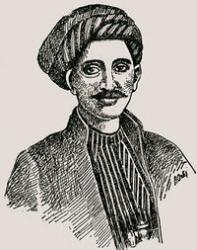
1800 - 1871 Person Name: ناصيف اليازجي Author of "يا روح قدس الله" in كتاب الترانيم الروحية للكنائس الإنجيلية Nasif al-Yaziji (March 25, 1800 – February 8, 1871) was a Lebanese author at the times of the Ottoman Empire and father of Ibrahim al-Yaziji. He was one of the leading figures in the Nahda movement. We was a poet, wrote and translated many hymns, and helped in translating the complete Bible into Arabic. ناصيف بن عبد الله بن جنبلاط بن سعد اليازجي (25 مارس 1800 - 8 فبراير 1871)، أديب وشاعر لبناني ولد في قرية كفر شيما، من قرى الساحل اللبناني في 25 آذار سنة 1800 م في أسرة اليازجي التي نبغ كثير من أفرادها في الفكر والأدب، وأصله من حمص. لعب دورا كبيرا في إعادة استخدام اللغة الفصحى بين العرب في القرن التاسع عشر، عمل لدى الأسرة الشهابية كاتبا وشارك في أول ترجمة الإنجيل والعهد القديم إلى العربية في العصر الحديث.

Pages


Export as CSV
It looks like you are using an ad-blocker. Ad revenue helps keep us running. Please consider white-listing Hymnary.org or getting Hymnary Pro to eliminate ads entirely and help support Hymnary.org.