You help make Hymnary.org possible. More than 10 million people from 200+ countries found hymns, liturgical resources and encouragement on Hymnary.org in 2025, including you. Every visit affirms the global impact of this ministry.

If Hymnary has been meaningful to you this year, would you take a moment today to help sustain it? A gift of any size—paired with a note of encouragement if you wish—directly supports the server costs, research work and curation that keep this resource freely available to the world.

Give securely online today, or mail a check to:
Hymnary.org
Calvin University
3201 Burton Street SE
Grand Rapids, MI 49546

Thank you for your partnership, and may the hope of Advent fill your heart.

Person Results

Tune Identifier:"^italian_hymn_giardini$"
In:person

Planning worship? Check out our sister site, ZeteoSearch.org, for 20+ additional resources related to your search.
Showing 21 - 30 of 110Results Per Page: 102050

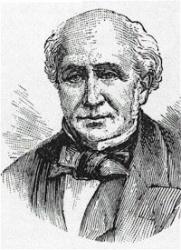
W. E. Hickson

1803 - 1870 Person Name: William Edward Hickson, 1803-70 Author of "God bless our native land!" in The Methodist Hymn-Book with Tunes William Edward Hickson [also known as Richman Hopson] United Kingdom 1803-1870. Born at London, England, the son of a boot maker, he studied at schools in Germany and the Netherlands. In 1830 he married Jane Brown. He became a businessman and an educational writer, retiring from his business in his late 30s to concentrate on philanthropic pursuits, particularly the cause of elementary education. He authored six books on various business and social topics. Of Baptist faith and having musical interest he authored: “The singing master” (1836), “Dutch & German schools” (1840), “Part singing” (1842), “Time and faith” (2 volumnes-1857), and “Try again”. In 1839 he visited North Germany, the Netherlands and Belgium to study the national school systems of those countries and provided the outlines of a scheme to adopt educational practices found in those countries considered superior. He was proprietor and editor of the Westminster Review” (1840-1852, noted for its commitment to legislative reform and popular education. He published his findings of the education study. In 1840 he looked into the unemployed handloom weavers situation in Great Britain and Ireland and prepared a report of his findings, recommending repeal of the corn laws and improving the educational system. He wrote part of the Official Peace Version of the British national anthem, approved by the Privy Council. He died at Fairseat, Sevenoaks, Kent, England. His published motto: If at first you don’t succeed, try, try again. John Perry =============== Hickson, William Edward, son of William Hickson, boot manufacturer, of Smithfield, London, was b. Jan. 7, 1803; retired from business 1840; d. March 22,1870, at Fairseat, Sevenoaks, Kent. Three pieces from his Singing Master, 1836, have come into somewhat extensive use. 1. God bless our native land (p. 1566, ii.) 2. Join now in praise, and sing. [Praise to God.] 1836, as above (ed. 1840, pt. v., No. 62). It was rewritten by the Rev. C. H. Bateman as "Come, children, join to sing " (p. 244, ii.). 3. Now to heav'n our cry [prayers] ascending, God spead the right . [National.] 1836, as above (reprint on cards, No. 85). This is repeated in W. B. Bradbury's Young Melodist, 1845, p. 122, and many later American books. With regard to "God bless our native land," we find that in the 1st ed. of the Singing Master, 1836, Hickson's hymn was in 3 stanzas only (p. 1566, ii.). [Rev. James Mearns, M.A.] --John Julian, Dictionary of Hymnology, New Supplement (1907)

George Rawson

1807 - 1889 Author of "Father of love and power" in Hymns of the Faith with Psalms Born: June 5, 1807, Leeds, England. Died: March 25, 1889, Clifton, England. Buried: Arno’s Vale Cemetery, Bristol, England. Pseudonym: A Leeds Layman. Rawson, George, was born June 5, 1807, at Leeds, in which town he practised for many years as a solicitor. In 1853 he assisted the Congregational ministers of Leeds in the compilation of Psalms, Hymns, and Passages of Scripture for Christian Worship, a volume commonly known as the Leeds Hymn-book. Mr. Rawson was a member of the Congregational body. In 1858 he also assisted Rev. Dr. Green and other Baptist ministers in the preparation of Psalms and Hymns for the use of the Baptist Denomination. A number of Mr. Rawson's own compositions first appeared in this and in the Leeds Hymn-book In 1876 he published his Hymns, Verses and Chants (Hodder and Stoughton, London), including his previously published hymns, and containing (exclusive of chants) 80 original pieces. In 1885 most of these, with several additional hymns, were published by the R. T. S. under the title Songs of Spiritual Thought. Mr. Rawson died March 25, 1889. His hymns are distinguished by refinement of thought, and delicacy and propriety of language; and if they do not attain the first rank among the songs of the Christian Church, many are of great excellence. The most widely known are, "By Christ redeemed, in Christ restored;" "Come to our poor nature's night;" "Father in high heaven dwelling;" "In the dark and cloudy day;" and "Reaper, behold the fields are white." In the Leeds Hymn-book, 1853, and the Baptist Psalms & Hymns, 1858, there are also several recasts of and additions to the hymns of other writers. In addition to Mr. Rawson's hymns which are annotated under their respective first lines, the following are also in common use:- i. From the Leeds Hymn-book, 1853. 1. Captain and Saviour of the host. Burial. 2. Give dust to dust: and here we leave. Burial. 3. God the Lord is King-—before him. Ps. xcix. 4. In the dark and cloudy day. Consolation. 5. Soul, thy week of toil is ended. Saturday Evening. 6. Though the night be very long. Resignation. ii. From the Baptist Psalms & Hymns, 1858. 7. Beautiful, desired, and dear. Public Worship. 8. Blessed are they who have not seen. Faith. 9. Blessed is the faithful heart. Faithfulness. 10. Christ to heaven is gone before. Ascension. 11. God the Father, be Thou near. Evening. 12. He fell asleep in Christ the Lord. Burial. 13. Immersed beneath the closing wave. Holy Baptism. 14. Lord, we bless Thee, Who hast given. Holy Communion. 15. My Father God, with filial awe. Abiding in God. 16. Our eyes we lift up to the hills. The Lord the Pastor's Keeper. 17. Reaper, behold the fields are ripe [white] . Missions. 18. Rise, heart, thy Lord arose. Sunday. 19. Upon the holy mountains high. Security of the Church. iii. From the Leeds Sunday School Hymn Book, 1858. 20. And will [How shall] the mighty God. The Holy Ghost. 21. Jesus, the Lord, our Righteousness. Jesus, the children's Friend. 22. O Thou Good Shepherd. The Good Shepherd. iv. From Dr. Allon's Supplemental Hymns, 1868. 23. My Father, it is good for me. Trust. 24. Thou Who hast known the careworn breast. Evening. 25. Walking with Thee, my God. Walking with God. v. From Mr. Rawson's Hymns, Verses, &c. 1876. 26. God is our Refuge; God our Strength. Ps. xlvi. 27. Lo, a voice from heaven hath said. Burial. 28. Lord, let me pray. I know not how. The Holy Spirit desired. 29. O pallid, gentle, grief-worn face. Easter Eve. 30. Out of the depths, the gulfs, the night. Ps. cxxx. 31. This, the old world's day of rest. Saturday Evening. [1854-7.] 32. Thou who Thyself didst sanctify. Ordination. [1854-7.] 33. Voices of the deep blue night. The Heavenly Call. 34. With gladness we worship. Public Worship. Mr. Rawson is represented by about 50 hymns in the collections of the present day. It must be noted that in the Hymns, &c, 1876, and in the Songs, &c, 1885, the texts of the hymns have been revised, and in several instances been weakened thereby. [Rev.W. R. Stevenson, M.A.] --John Julian, Dictionary of Hymnology (1907) ================ Rawson, George, p. 952, i. Additional hymns by this author in common use include:— 1. Come, Spirit of the Lord. From his “How shall the mighty God," in his Hymns, Verses, &c, 1876, No. 43. 2. Each trial hath a gentle voice. Patience and Hope. In the 1880 Supplement to the Baptist Psalms and Hymns. This is dated 1857. It is not in the author's Hymns, 1876. 3. Stand up before your God. All Saints. In the 1880 Baptist Psalms and Hymns this is dated 1865. It is not in Rawson's Hymns, 1876. --John Julian, Dictionary of Hymnology, Appendix, Part II (1907)

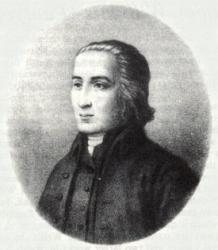
William Williams

1717 - 1791 Person Name: W. W. Author (stanzas 2, 3) of "O, tyred Ysbred Glân, Yn fflam a ddwyfol dân" in Mawl a chân = praise and song William Williams, called the "Watts of Wales," was born in 1717, at Cefn-y-coed, near Llandovery, Carmarthenshire. He originally studied medicine, but abandoned it for theology. He was ordained Deacon in the Church of England, but was refused Priest's Orders, and subsequently attached himself to the Calvinistic Methodists. For half a century he travelled in Wales, preaching the Gospel. He died in 1791. Williams composed his hymns chiefly in the Welsh language; they are still largely used by various religious bodies in the principality. Many of his hymns have appeared in English, and have been collected and published by Sedgwick. His two principal poetical works are "Hosannah to the Son of David," and "Gloria in Excelsis." --Annotations of the Hymnal, Charles Hutchins, M.A. 1872. ===================== Williams, William, of Pantycelyn, was the Sweet Singer of Wales. He was born at Cefn-y-Coed, in the Parish of Llanfair-y-bryn, near Llandovery, in 1717. He was ordained a deacon of the Established Church in 1740, by Dr. Claget, Bishop of St. Davids, and for three years he served the Curacies of Llan-wrtyd and Llanddewi-Abergwesyn. He never received Priest's Orders. He became early acquainted with the revivalist Daniel Rowlands, and for thirty-five years he preached once a month at Llanllian and Caio and Llansawel, besides the preaching journeys he took in North and South Wales. He was held in great esteem as a preacher. In 1744 his first book of hymns appeared under the title of Halleluiah, and soon ran through three editions. In1762, he published another book under the title of Y Môr o Wydr, which soon went through five editions. His son John published an excellent edition of his hymns in the year 181lines In addition to his Welsh hymns Williams also published several in English as:— (1.) Hosannah to the Son of David; or, Hymns of Praise to God, For our glorious Redemption by Christ. Some few translated from the Welsh Hymn-Book, but mostly composed on new Subjects. By William Williams. Bristol: Printed by John Grabham, in Narrow-Wine Street, 1759. This contains 51 hymns of which 11 are translated from his Welsh hymns. This little book was reprinted by D. Sedgwick in 1859. (2.) Gloria in Excelsis: or, Hymns of Praise to God and the Lamb. By W. Williams . . . Carmarthen. Printed for the Author by John Ross, removed to Priory Street, near the Church, M.DCC.LXXI. This contains 70 hymns, not including parts. From these volumes the following hymns are in common use:— i. From the Hosannah, 1759:— 1. Jesus, my Saviour is enough. Jesus, All in All. 2. My God, my God, Who art my all. Communion with God desired. 3. The enormous load of human guilt. God's love unspeakable. ii. From the Gloria in Excelsis, 1772. 4. Awake, my soul, and rise. Passiontide. 5. Beneath Thy Cross I lay me down. Passiontide. 6. Hark! the voice of my Beloved. The Voice of Jesus. 7. Jesus, lead us with Thy power. Divine Guidance Desired. Sometimes given as "Father, lead us with Thy power." 8. Jesus, Whose Almighty sceptre. Jesus as King. 9. Saviour, look on Thy beloved. The Help of Jesus desired. 10. White and ruddy is my Beloved. Beauties of Jesus. Williams is most widely known through his two hymns, "Guide me, O Thou great Jehovah," and "O'er those gloomy hills of darkness." Williams died at Pantycelyn, Jan. 11, 1791. [Rev. W. Glanffrwd Thomas] -- John Julian, Dictionary of Hymnology (1907) ================= See also in: Hymn Writers of the Church

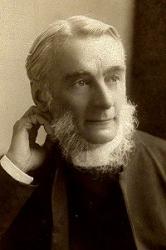
Edward Henry Bickersteth

1825 - 1906 Person Name: Edward H. Bickersteth Author of "Father of heav'n above, dwelling in light" in The Sanctuary Hymnal, published by Order of the General Conference of the United Brethren in Christ Bickersteth, Edward Henry, D.D., son of Edward Bickersteth, Sr. born at Islington, Jan. 1825, and educated at Trinity College, Cambridge (B.A. with honours, 1847; M.A., 1850). On taking Holy Orders in 1848, he became curate of Banningham, Norfolk, and then of Christ Church, Tunbridge Wells. His preferment to the Rectory of Hinton-Martell, in 1852, was followed by that of the Vicarage of Christ Church, Hampstead, 1855. In 1885 he became Dean of Gloucester, and the same year Bishop of Exeter. Bishop Bickersteth's works, chiefly poetical, are:— (l) Poems, 1849; (2) Water from the Well-spring, 1852; (3) The Rock of Ages, 1858 ; (4) Commentary on the New Testament, 1864; (5) Yesterday, To-day, and For Ever, 1867; (6) The Spirit of Life, 1868; (7) The Two Brothers and other Poems, 1871; (8) The Master's Home Call, 1872 ; (9) The Shadowed Home and the Light Beyond, 1874; (10) The Beef and other Parables, 1873; (11) Songs in the House of Pilgrimage, N.D.; (12) From Year to Year, 1883. As an editor of hymnals, Bp. Bickersteth has also been most successful. His collections are:— (1) Psalms & Hymns, 1858, based on his father's Christian Psalmody, which passed through several editions; (2) The Hymnal Companion, 1870; (3) The Hymnal Companion revised and enlarged, 1876. Nos. 2 and 3, which are two editions of the same collection, have attained to an extensive circulation.   [Ch. of England Hymnody.] About 30 of Bp. Bickersteths hymns are in common use. Of these the best and most widely known are:—" Almighty Father, hear our cry"; "Come ye yourselves apart and rest awhile"; "Father of heaven above"; "My God, my Father, dost Thou call"; "O Jesu, Saviour of the lost"; "Peace, perfect peace"; "Rest in the Lord"; "Stand, Soldier of the Cross"; " Thine, Thine, for ever"; and "Till He come.” As a poet Bp. Bickersteth is well known. His reputation as a hymn-writer has also extended far and wide. Joined with a strong grasp of his subject, true poetic feeling, a pure rhythm, there is a soothing plaintiveness and individuality in his hymns which give them a distinct character of their own. His thoughts are usually with the individual, and not with the mass: with the single soul and his God, and not with a vast multitude bowed in adoration before the Almighty. Hence, although many of his hymns are eminently suited to congregational purposes, and have attained to a wide popularity, yet his finest productions are those which are best suited for private use. -John Julian, Dictionary of Hymnology (1907) ================= Bickersteth, Edward Henry, p. 141, ii. Bishop Bickersteth's 1890 edition of his Hymnal Companion is noted on p. 1312, i., and several of his own hymns and translations, which appear therein for the first time, are annotated in this Appendix. One of these, "All-merciful, Almighty Lord," for the Conv. of St. Paul, was written for the 1890 edition of Hymnal Companion. --John Julian, Dictionary of Hymnology, Appendix, Part II (1907) ================== Bickersteth, B. H., p. 141, ii. Bp. Bickersteth died in London, May 16, 1906. --John Julian, Dictionary of Hymnology, New Supplement (1907)

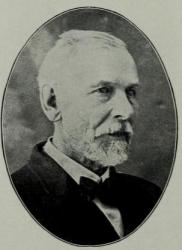
Palmer Hartsough

1844 - 1932 Author of "O Country Grand" in Gospel Songs No. 2 Rv Palmer Hartsough USA 1844-1932. Born in Redford, MI, he attended Kalamazoo College and Michigan State Normal school (later MSU). He became an author, editor, lyricist, and librettist. After working as a traveling singing teacher in MI, IL, IA, OH, KY and TN, he opened a music studio in Rock Island, IL, around 1877, also directing music at a Baptist church there. In 1893, due to his poetic abilities, he moved to Cincinnati, OH, and joined the Fillmore Music Company, providing texts (over 1000) for their music. He also served as music director at the Bethel Mission and the 9th Street Baptist Church. He became a traveling song evangelist in 1903, and was ordained a Baptist minister in 1906, serving in Ontario, Canada, and MI from 1914 to 1927. He then returned to Plymouth, MI, where he lived the rest of his life. He never married, but was close to his two sisters, and wrote them a weekly letter for many years. With Fillmore Company he helped publish 20 songbooks. He died in Plymouth, MI. John Perry

James Montgomery

1771 - 1854 Author of "The God of Harvest Praise" in Moravian Book of Worship James Montgomery (b. Irvine, Ayrshire, Scotland, 1771; d. Sheffield, Yorkshire, England, 1854), the son of Moravian parents who died on a West Indies mission field while he was in boarding school, Montgomery inherited a strong religious bent, a passion for missions, and an independent mind. He was editor of the Sheffield Iris (1796-1827), a newspaper that sometimes espoused radical causes. Montgomery was imprisoned briefly when he printed a song that celebrated the fall of the Bastille and again when he described a riot in Sheffield that reflected unfavorably on a military commander. He also protested against slavery, the lot of boy chimney sweeps, and lotteries. Associated with Christians of various persuasions, Montgomery supported missions and the British Bible Society. He published eleven volumes of poetry, mainly his own, and at least four hundred hymns. Some critics judge his hymn texts to be equal in quality to those of Isaac Watts and Charles Wesley . Many were published in Thomas Cotterill's Selection of Psalms and Hymns (1819 edition) and in Montgomery's own Songs of Zion (1822), Christian Psalmist (1825), and Original Hymns (1853). Bert Polman ======================== Montgomery, James, son of John Montgomery, a Moravian minister, was born at Irvine, Ayrshire, Nov. 4, 1771. In 1776 he removed with his parents to the Moravian Settlement at Gracehill, near Ballymena, county of Antrim. Two years after he was sent to the Fulneck Seminary, Yorkshire. He left Fulneck in 1787, and entered a retail shop at Mirfield, near Wakefield. Soon tiring of that he entered upon a similar situation at Wath, near Rotherham, only to find it quite as unsuitable to his taste as the former. A journey to London, with the hope of finding a publisher for his youthful poems ended in failure; and in 1792 he was glad to leave Wath for Shefield to join Mr. Gales, an auctioneer, bookseller, and printer of the Sheffield Register newspaper, as his assistant. In 1794 Mr. Gales left England to avoid a political prosecution. Montgomery took the Sheffield Register in hand, changed its name to The Sheffield Iris, and continued to edit it for thirty-one years. During the next two years he was imprisoned twice, first for reprinting therein a song in commemoration of "The Fall of the Bastille," and the second for giving an account of a riot in Sheffield. The editing of his paper, the composition and publication of his poems and hynms, the delivery of lectures on poetry in Sheffield and at the Royal Institution, London, and the earnest advocacy of Foreign Missions and the Bible Society in many parts of the country, gave great variety but very little of stirring incident to his life. In 1833 he received a Royal pension of £200 a year. He died in his sleep, at the Mount, Sheffield, April 30, 1854, and was honoured with a public funeral. A statue was erected to his memory in the Sheffield General Cemetery, and a stained glass window in the Parish Church. A Wesleyan chapel and a public hall are also named in his honour. Montgomery's principal poetical works, including those which he edited, were:— (1) Prison Amusements, 1797; (2) The Wanderer of Switzerland, 1806; (3) The West Indies, 1807; (4) The World before the Flood, 1813; (5) Greenland and Other Poems, 1819; (6) Songs of Zion, 1822; (7) The Christian Psalmist, 1825; (8) The Christian Poet, 1825; (9) The Pelican Island, 1828; (10) The Poet’s Portfolio, 1835; (11) Original Hymns for Public, Private, and Social Devotion, 1853. He also published minor pieces at various times, and four editions of his Poetical Works, the first in 1828, the second in 1836, the third in 1841, and the fourth in 1854. Most of these works contained original hymns. He also contributed largely to Collyer's Collection, 1812, and other hymnbooks published during the next 40 years, amongst which the most noticeable was Cotterill's Selections of 1819, in which more than 50 of his compositions appeared. In his Christian Psalmist, 1825, there are 100 of his hymns, and in his Original Hymns, 1853, 355 and 5 doxologies. His Songs of Zion, 1822, number 56. Deducting those which are repeated in the Original Hymns, there remain about 400 original compositions. Of Montgomery's 400 hymns (including his versions of the Psalms) more than 100 are still in common use. With the aid of Montgomery's MSS. we have given a detailed account of a large number. The rest are as follows:— i. Appeared in Collyer's Collection, 1812. 1. Jesus, our best beloved Friend. Personal Dedication to Christ. 2. When on Sinai's top I see. Sinai, Tabor, and Calvary. ii. Appeared in Cotterill's Selection, 1819. 3. Come to Calvary's holy mountain. The Open Fountain. 4. God in the high and holy place. God in Nature. The cento in Com. Praise, 1879, and others, "If God hath made this world so fair," is from this hymn. 5. Hear me, O Lord, in my distress. Ps. cxliii. 6. Heaven is a place of rest from sin. Preparation for Heaven. 7. I cried unto the Lord most just. Ps. cxlii. 8. Lord, let my prayer like incense rise. Ps. cxxxix. 9. O bless the Lord, my soul! His grace to thee proclaim. Ps. ciii. 10. Out of the depths of woe. Ps. cxxx. Sometimes "When from the depths of woe." 11. The world in condemnation lay. Redemption. 12. Where are the dead? In heaven or hell? The Living and the Dead. iii. Appeared in his Songs of Zion, 1822. 13. Give glory to God in the highest. Ps. xxix. 14. Glad was my heart to hear. Ps. cxxii. 15. God be merciful to me. Ps. lxix. 16. God is my strong salvation. Ps. xxvii. 17. Hasten, Lord, to my release. Ps. lxx. 18. Have mercy on me, O my God. Ps. li. 19. Hearken, Lord, to my complaints. Ps. xlii. 20. Heralds of creation cry. Ps. cxlviii. 21. How beautiful the sight. Ps. cxxxiii. 22. How precious are Thy thoughts of peace. Ps. cxxxix. 23. I love the Lord, He lent an ear. Ps. cxvi. 24. In time of tribulation. Ps. lxxvii. 25. Jehovah is great, and great be His praise. Ps. xlviii. Sometimes, "0 great is Jehovah, and great is His Name." 26. Judge me, O Lord, in righteousness. Ps. xliii. 27. Lift up your heads, ye gates, and wide. Ps.xxiv. 28. Lord, let me know mine [my] end. Ps. xxxi. 29. Of old, 0 God, Thine own right hand. Ps. lxxx. 30. O God, Thou art [my] the God alone. Ps. lxiii. 31. 0 Lord, our King, how excellent. Ps. viii. Sometimes, "0 Lord, how excellent is Thy name." 32. O my soul, with all thy powers. Ps. ciii. 33. One thing with all my soul's desire. Ps. xxvii. From this, "Grant me within Thy courts a place." 34. Searcher of hearts, to Thee are known. Ps. cxxxix. 35. Thank and praise Jehovah's name. Ps. cvii. 36. Thee will I praise, O Lord in light. Ps. cxxxviii. 37. The Lord is King; upon His throne. Ps. xciii. 38. The Lord is my Shepherd, no want shall I know. Ps. xxiii. 39. The tempter to my soul hath said. Ps. iii. 40. Thrice happy he who shuns the way. Ps. i. 41. Thy glory, Lord, the heavens declare. Ps. xix. 42. Thy law is perfect, Lord of light. Ps. xix. 43. Who make the Lord of hosts their tower. Ps. cxxv. 44. Yea, I will extol Thee. Ps. xxx. iv. Appeared in his Christian Psalmist. 1825. 45. Fall down, ye nations, and adore. Universal adoration of God desired. 46. Food, raiment, dwelling, health, and friends. The Family Altar. 47. Go where a foot hath never trod. Moses in the desert. Previously in the Leeds Congregational Collection, 1822. 48. Green pastures and clear streams. The Good Shepherd and His Flock. 49. Less than the least of all. Mercies acknowledged. 50. Not to the mount that burned with fire [flame]. Communion of Saints. 51. On the first Christian Sabbath eve. Easter Sunday Evening. 52. One prayer I have: all prayers in one. Resignation. 53. Our heavenly Father hear. The Lord's Prayer. 54. Return, my soul, unto thy rest. Rest in God. 55. Spirit of power and might, behold. The Spirit's renewing desired. 56. The Christian warrior, see him stand. The Christian Soldier. Sometimes, "Behold the Christian warrior stand." 57. The days and years of time are fled. Day of Judgment. 58. The glorious universe around. Unity. 59. The pure and peaceful mind. A Children's Prayer. 60. This is the day the Lord hath made (q. v.). Sunday. 61. Thy word, Almighty Lord. Close of Service. 62. What secret hand at morning light ? Morning. 63. While through this changing world we roam. Heaven. 64. Within these walls be peace. For Sunday Schools. v. Appeared in his Original Hymns, 1853. 65. Behold yon bright array. Opening a Place of Worship. 66. Behold the book whose leaves display. Holy Scriptures. 67. Come ye that fear the Lord. Confirmation. 68. Home, kindred, friends, and country, these. Farewell to a Missionary. 69. Let me go, the day is breaking. Jacob wrestling. 70. Not in Jerusalem alone. Consecration of a Church. 71. Praise the high and holy One. God the Creator. In common with most poets and hymnwriters, Montgomery strongly objected to any correction or rearrangement of his compositions. At the same time he did not hesitate to alter, rearrange, and amend the productions of others. The altered texts which appeared in Cotterill's Selections, 1819, and which in numerous instances are still retained in some of the best hymnbooks, as the "Rock of Ages," in its well-known form of three stanzas, and others of equal importance, were made principally by him for Cotterill's use. We have this confession under his own hand. As a poet, Montgomery stands well to the front; and as a writer of hymns he ranks in popularity with Wesley, Watts, Doddridge, Newton, and Cowper. His best hymns were written in his earlier years. In his old age he wrote much that was unworthy of his reputation. His finest lyrics are "Angels from the realms of glory," "Go to dark Gethsemane," "Hail to the Lord's Anointed," and "Songs of praise the angels sang." His "Prayer is the soul's sincere desire," is an expanded definition of prayer of great beauty; and his "Forever with the Lord" is full of lyric fire and deep feeling. The secrets of his power as a writer of hymns were manifold. His poetic genius was of a high order, higher than most who stand with him in the front rank of Christian poets. His ear for rhythm was exceedingly accurate and refined. His knowledge of Holy Scripture was most extensive. His religious views were broad and charitable. His devotional spirit was of the holiest type. With the faith of a strong man he united the beauty and simplicity of a child. Richly poetic without exuberance, dogmatic without uncharitableness, tender without sentimentality, elaborate without diffusiveness, richly musical without apparent effort, he has bequeathed to the Church of Christ wealth which could onlv have come from a true genius and a sanctified! heart. --John Julian, Dictionary of Hymnology (1907)

Samuel Wolcott

1813 - 1886 Author of "Christ for the World We Sing" in The Cyber Hymnal Wolcott, Samuel, D.D., was born at South Windsor, Connecticut, July 2, 1813, and educated at Yale College, 1833, and Andover Theological Seminary, 1837. From 1840 to 1842 he was a missionary in Syria. On his return to America he was successively pastor of several Congregational congregations, including Belchestown, Massachusetts; Providence, Rhode Island; Chicago, &c. He was also for some time Secretary of the Ohio Home Missionary Society. He died at Longmeadow, Massachusetts, Feb. 24, 1886. His hymnwriting began late in life, but has extended to more than 200 hymns, many of which are still in manuscript. Those of his hymns which have come into common use include:— 1. All thy realms in midnight shrouded. Mission. In the Oberlin Manual of Praise, 1880. 2. Christ for the world we sing. Missions. Written Feb. 7, 1869. Its origin is thus recorded by the author: "The Young Men's Christian Associations of Ohio met in one of our Churches, with their motto, in evergreen letters over the pulpit, ‘Christ for the World, and the World for Christ.' This suggested the hymn 'Christ for the world we sing.'" It was when on his way home from that service that he composed the hymn. It is in several American collections, including Laudes Domini, 1884, &c. 3. Father, I own Thy voice. Trust and Aspiration. This, his first hymn, was written in 1868, more as an experiment in hymn-writing than anything else. It was published in the Rev. Darius E. Jones's Songs for the New Life. Chicago, 1869. It has since passed into other collections. 4. Goodly were thy tents, 0 Israel. Missions. Written May 31, 1881, and included in Laudes Domini, 1884. 5. Lo! the faith which crossed the ocean. Missions. In the Oberlin Manual of Praise, 1880. 6. O gracious Redeemer! O Jesus our Lord. The Love of Jesus. Written in 1881. 7. On the works of His creation, God the Creator. In the Ohio Evangelical Association's Hymn Book, 1881. 8. Pitying Saviour, look with blessing. Prayer for the Penitent. In the Ohio Evangelical Association's Hymn Book, 1881. 9. Tell me Whom my soul doth love. Opening of Divine Service. A paraphrase of Cant. i. 8. Written Feb. 6, 1870. Included in Laudes Domini, N. Y., 1884. 10. To us have distant ages. Saints Days. In Dale's English Hymn Book, 1874. 11. This house, most holy Lord, is Thine. Opening of a Place of Worship. In Dale's English Hymn Book, 1874. For most of the information given above we are indebted to Duffield's English Hymns, N. Y., 1886. -- John Julian, Dictionary of Hymnology (1907) ================ See also in: Hymn Writers of the Church

Robert II, King of France

970 - 1031 Person Name: Robert II. of France Author of "Come Holy Ghost, in love" in The Song Companion to the Scriptures Robert the Second, King of France, surnamed "Le Page" and "Le Devot," born circa 970, was the son of Hugh Capet, the first of the line of kings that succeeded the Carlovingian monarchs on the French throne. After having been associated with his father in the government of the kingdom, in 988 he became king in his own right. The story of his life, rather than of his reign, is a sad one; troubles both in his family and without so multiplying upon him that it needed all the consolation that he sought and found in religion to enable him to bear up against them. Having in 995 or 996 espoused Bertha, the widow of Eades, Count of Chartres, and daughter of Conrad the Pacific, his cousin in the fourth degree (a marriage at that time strictly forbidden by the Roman Catholic Church), he was commanded by a decree of Pope Gregory V. to put her away. He was tenderly attached to her, and refused, whereupon he was excommunicated. This sentence caused the unhappy couple to be abandoned by all their courtiers, and even their servants, with the exception of two of the latter. After living together for a while in a state of sore privation, nay, almost absolute destitution, Bertha was delivered of a still-born infant, which was represented to Robert to have been a monster with “a head and neck like a goose." On hearing this (for the fond husband was but a weak and credulous man), Robert repudiated his wife, who thereupon retired into a nunnery. Subsequently, probably about 1002, he married Constance, a daughter of the Count of Aries, by whom he had four sons and two daughters. Much of the misery of his later life resulted from this marriage; for in addition to the antagonism which existed in their tastes and pursuits, Constance endeavoured to secure the kingdom for her youngest son Robert, to the exclusion of the third son Henry (Hugh, the eldest, haying died, and Eudes, the second, being an idiot), and this led to constant domestic broils which embittered the gentle king's existence. In 1024 he refused (and wisely) the Imperial Crown of the House of Saxony, when the Italians offered it to him on the death of Henry II., the last of the Saxon Emperors. Robert spent much of his time in the society of monks, assisting in the services of the Church, and engaging on pious pilgrimages. It was upon his return from one of the latter to some of the principal sanctuaries of France that he was attacked by a fever, to which he succumbed at Thelun in 1031, in the 60th year of his age and the 34th of his reign more deeply lamented by his people, to whom he had attached himself by the sweetness and simplicity of his character, than any other king, probably, who ever reigned in France. Robert had a great love for, and skill in, church music, and it is not improbable that compobitions of his are even at this day in use in the services of his Church. [Rev. Digby S. Wrangham, M.A.] It has been the custom to speak of King Robert as a hymn-writer. But when the different authorities come to specify the pieces which he is said to have composed, their statements are hopelessly at variance. For the purposes of this article we shall take four ancient authorities:— (a) and (b) In the Recueil des Historiens des Gaules et de la France, vol. x., Paris, 1760, pp. 297-300, there are extracts "ex chronico Sithiensi" (a); and also "ex chronico Alberici ad annum 997 " (b). (c) In the Junius manuscript, 121, in the Bodleian there is a list of authors of sequences, written about 1300. (d) William Durandus (d. 1296) in his Rationale, Bk. iv., has a section "De prosa seu sequentia." This occurs in two manuscripts of the 14th century in the British Museum [Add. 18304, f. 20 b; Reg. 7 E., ix. f. 53. An earlier and finer manuscript than either (Add. 31032) has unfortunately lost the leaf containing this section]. By these four authorities the following hymns and sequences are ascribed to King Robert :— 1. Chorus novae Hierusalem. 2. Rex omnipotens die hodierna. 3. Sancti Spiritus adsit nobis gratia. 4. Veni Sancte Spiritus. 5. Victiniae Paschali. But of these a only ascribes to him No. 3, and does not mention Nos. 1,2, 4 or 5, while b ascribes to him Nos. 2 and 3, and does Dot mention Nos. 1, 4 or 5. On the other hand c ascribes to him No. 5, while No. 3 it ascribes to Hermannus Contract us, and Nos. 1, 2, 4 it does not mention at all. Lastly d ascribes to him Nos. 1 and 4, but ascribes Nos. 2 and 3 to Hermannus Contractus, and does not mention No. 5. Taking these in detail, we find No. 1 is only ascribed to King Robert by d, and seems more probably to be by Fulbert of Chartres (see p, 224, i.). No. $. seems without doubt to be by Notker Balbulus (see note on "Sancti Spiritus adsit"). For No. 5 see note on "Victimae Paschali." No. 2 is noted at p. 958, ii, and, according to the common opinion, is there ascribed to Hermannus Contractus; but this ascription is very doubtful, seeing that he d. in 1054, and was only b. in 1013, while the Bodleian manuscript 775 was written in England about 1000, so that the ascription of b deserves attention. As to No. 4 the subject of authorship is treated more fully under "Veni Sancte Spiritus," but here it may be said that Durandus and those who followed him are alone in ascribing it to King Robert, for the French tradition was clearly against this, e.g. neither a nor b ascribe it to him, and Clichtovaeus in his Elucidatorium, Paris, 1516, and the Augustinian Missal, printed at Paris, 1529, which may be taken to represent the later French tradition, while agreeing in ascribing No. 3 to King Robert, agree also in treating No. 4 as of un¬known authorship. To sum up then it seems to us that No. 2 is possibly by King Robert; that Nos. 3 and 4 are clearly not by him; and that his claim to Nos. 1 and 5 is exceedingly doubtful. The French chronicles a and b as above also ascribe to King Robert other liturgical pieces, viz.:—(1) "O Constantia martyrum," (2) "Judaea (O Juda) et Hierusalem," (3) "Eripe me," (4) " Ounctipotens genitor"(5) "Cornelius centurio," (6) "Pro fidei meritis," (7) “Concede nobis quaesumus." These appear to be Responsories and Antiphons, but whether rightly or wrongly ascribed to Robert the present writer cannot say. No. 7 is also ascribed to him by c as above. [Rev. James Mearns, M.A.] --John Julian, Dictionary of Hymnology (1907)

Joseph H. Martin

Person Name: Martin Author of "Come, Thou Almighty King" in The Morning Hour Late 19th Century. Martin was a minister. http://www.hymntime.com/tch/bio/m/a/r/t/martin_jh.htm

James Allen

1734 - 1804 Author of "Glory to God on High" in The Cyber Hymnal Allen, James, born at Gayle, Wensleydale, Yorkshire, June 24, 1734, and educated with a view to taking Holy Orders, first with two clergymen at different times, and then for one year at St. John's Coll., Cambridge. Leaving the University in 1752 he became a follower of Benjamin Ingham, the founder of the sect of the Inghamites, but subsequently joined himself to the Sandemanians; and finally built a chapel on his estate at Gayle, and ministered therein to the time of his death; died 31st Oct., 1804. He published a small volume, Christian Songs, containing 17 hymns, and was the editor and a principal contributor to the Kendal Hymn Book, 1757, and Appendix to the 2nd edition, 1761. -- John Julian, Dictionary of Hymnology (1907)

Pages


Export as CSV
It looks like you are using an ad-blocker. Ad revenue helps keep us running. Please consider white-listing Hymnary.org or getting Hymnary Pro to eliminate ads entirely and help support Hymnary.org.