You help make Hymnary.org possible. More than 10 million people from 200+ countries found hymns, liturgical resources and encouragement on Hymnary.org in 2025, including you. Every visit affirms the global impact of this ministry.

If Hymnary has been meaningful to you this year, would you take a moment today to help sustain it? A gift of any size—paired with a note of encouragement if you wish—directly supports the server costs, research work and curation that keep this resource freely available to the world.

Give securely online today, or mail a check to:
Hymnary.org
Calvin University
3201 Burton Street SE
Grand Rapids, MI 49546

Thank you for your partnership, and may the hope of Advent fill your heart.

Person Results

Tune Identifier:"^nottingham_mozart$"
In:people

Planning worship? Check out our sister site, ZeteoSearch.org, for 20+ additional resources related to your search.
Showing 21 - 30 of 55Results Per Page: 102050

W. Shrubsole

1759 - 1829 Person Name: William Shrubsole Author of "Arm of the Lord, awake, awake" in The Evangelical Hymnal William Shrubsole was born in Sheerness, Kent, in 1759. His first occupation was as a shipwright in Sheerness Dockyard, but he was promoted, and afterwards removed to London, where he at length held the position of Secretary to the Committee of the Treasury in the Bank of England. He died at Highbury, in 1829. Mr. Shrubsole was the author of several hymns, and some articles in the religious magazines of his day. --Annotations of the Hymnal, Charles Hutchins, M.A. 1872. ============================= Shrubsole, William, eldest son of William Shrubsole, a master mastmaker in the dockyard at Sheerness, Kent, and a Lay Preacher, was born at Sheerness, Nov. 21, 1759. In his earlier years he was engaged as a shipwright in the dockyard, and then as a clerk. In 1765 he removed to London, and entered the Bank of England as a clerk. He subsequently became the Secretary to the Committee of the Treasury. He died at Highbury, Aug. 23, 1829. Mr. Shrubsole was for some time a communicant at St. Anne's, Blackfriars, during the incumbency of the Rev. W.Goode; but during the last twenty years of his life he was a member with the Congregationalists, and attended the Hoxton Academy Chapel. He interested himself in religious societies, and especially the London Missionary Society (of which he became a director and one of the secretaries), the Bible Society, and the Religious Tract Society. He contributed hymns to the Evangelical Magazine, the Christian Magazine, the Theological Miscellany, the Christian Observer and the Youths' Magazine, at various dates, from 1775 to 1813. To these works we have traced nearly twenty of his hymns. A Memoir of Shrubsole was contributed by his daughter to Dr. Morison's Fathers and Founders of the London Missionary Society, 2 vols., London, Fisher, Sons & Co., 1844. Seven of his hymns are also given, together with a portrait, in the same work. His hymns in common use include:— 1. Arm of the Lord, awake, awake. Put on Thy strength, the nations shake. Missions. This appeared in Missionary Hymns, 1795; and in Morison's Fathers and Founders, &c, 1844, vol. i. p. 451, in 6 stanzas of 4 lines. Dr. Rogers in his Lyra Britannica, 1867, attributes this hymn to Shrubsole's father, and dates it 1780. Against this statement we can only put the fact that it is claimed in Morison for the son. Original text, Lyra Britanica, 1867, p. 502. 2. Bright as the sun's meridian blaze . Missions. Written Aug. 10, 1795, for the first meeting of the London Missionary Society. It was printed in the Evangelical Magazine, Sept., 1795, headed “On the intended Mission," and signed "Junior." It is also in Morison, 1844, i. p. 449, together with the note that the hymn "was duly acknowledged by Mr. Shrubsole in his lifetime, and the original manuscript, with numerous corrections, is in possession of his family, in his own autograph," and that it bears date "August 10, 1795." Original text Lyra Britanica, 1867, p. 504. 3. In all the paths my feet pursue. Looking unto Jesus. Appeared in the Evangelical Magazine, 1794; in Morison, i., 1844, p. 454; and Lyra Britanica, 1867, p. 503. 4. Shall science distant lands explore? Missions. Published in the Evangelical Magazine, 1795; and again in Morison, 1844, i. p. 452. 5. When streaming from the Eastern skies . Daily Duties; or, Morning. Published in the Christian Observer, Aug., 1813, in 8 stanzas of 8 lines, headed "Daily Duties, Dependence and Enjoyment," and signed Probus. Also in Morison, 1844, i. p. 453; and Lyra Brittanica, 1867, p. 505. The well-known cento, "As every day Thy mercy spares," is from this hymn, and begins with st. iii. 6. Ye saints, your grateful praises bring

Frances Bevan

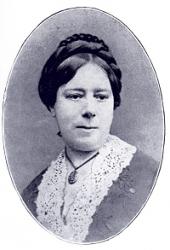
1827 - 1909 Translator of "The Habitation of God" in Songs of Victory Bevan, Emma Frances, née Shuttleworth, daughter of the Rev. Philip Nicholas Shuttleworth, Warden of New Coll., Oxford, afterwards Bishop of Chichester, was born at Oxford, Sept. 25, 1827, and was married to Mr. R. C. L. Bevan, of the Lombard Street banking firm, in 1856. Mrs. Bevan published in 1858 a series of translations from the German as Songs of Eternal Life (Lond., Hamilton, Adams, & Co.), in a volume which, from its unusual size and comparative costliness, has received less attention than it deserves, for the trs. are decidedly above the average in merit. A number have come into common use, but almost always without her name, the best known being those noted under “O Gott, O Geist, O Licht dea Lebens," and "Jedes Herz will etwas li ben." Most of these are annotated throughout this Dictionary under their authors' names, or German first lines. That at p. 630, "O past are the fast-days,—the Feast-day, the Feast-day is come," is a translation through the German from the Persian of Dschellaleddin Rumi 1207-1273. Mrs. Bevan also published Songs of Praise for Christian Pilgrims (London, Hamilton, Adams, 1859), the translations in which are also annotated throughout this Dictionary as far as possible. [Rev. James Mearns, M.A.] -- John Julian, Dictionary of Hymnology (1907)

Catherine Winkworth

1827 - 1878 Person Name: Catherine Winkworth, 1829-1878 Translator of "Word of Life, Most Pure, Most Strong" in The Mennonite Hymnary, published by the Board of Publication of the General Conference of the Mennonite Church of North America Catherine Winkworth (b. Holborn, London, England, 1827; d. Monnetier, Savoy, France, 1878) is well known for her English translations of German hymns; her translations were polished and yet remained close to the original. Educated initially by her mother, she lived with relatives in Dresden, Germany, in 1845, where she acquired her knowledge of German and interest in German hymnody. After residing near Manchester until 1862, she moved to Clifton, near Bristol. A pioneer in promoting women's rights, Winkworth put much of her energy into the encouragement of higher education for women. She translated a large number of German hymn texts from hymnals owned by a friend, Baron Bunsen. Though often altered, these translations continue to be used in many modern hymnals. Her work was published in two series of Lyra Germanica (1855, 1858) and in The Chorale Book for England (1863), which included the appropriate German tune with each text as provided by Sterndale Bennett and Otto Goldschmidt. Winkworth also translated biographies of German Christians who promoted ministries to the poor and sick and compiled a handbook of biographies of German hymn authors, Christian Singers of Germany (1869). Bert Polman ======================== Winkworth, Catherine, daughter of Henry Winkworth, of Alderley Edge, Cheshire, was born in London, Sep. 13, 1829. Most of her early life was spent in the neighbourhood of Manchester. Subsequently she removed with the family to Clifton, near Bristol. She died suddenly of heart disease, at Monnetier, in Savoy, in July, 1878. Miss Winkworth published:— Translations from the German of the Life of Pastor Fliedner, the Founder of the Sisterhood of Protestant Deaconesses at Kaiserworth, 1861; and of the Life of Amelia Sieveking, 1863. Her sympathy with practical efforts for the benefit of women, and with a pure devotional life, as seen in these translations, received from her the most practical illustration possible in the deep and active interest which she took in educational work in connection with the Clifton Association for the Higher Education of Women, and kindred societies there and elsewhere. Our interest, however, is mainly centred in her hymnological work as embodied in her:— (1) Lyra Germanica, 1st Ser., 1855. (2) Lyra Germanica, 2nd Ser., 1858. (3) The Chorale Book for England (containing translations from the German, together with music), 1863; and (4) her charming biographical work, the Christian Singers of Germany, 1869. In a sympathetic article on Miss Winkworth in the Inquirer of July 20, 1878, Dr. Martineau says:— "The translations contained in these volumes are invariably faithful, and for the most part both terse and delicate; and an admirable art is applied to the management of complex and difficult versification. They have not quite the fire of John Wesley's versions of Moravian hymns, or the wonderful fusion and reproduction of thought which may be found in Coleridge. But if less flowing they are more conscientious than either, and attain a result as poetical as severe exactitude admits, being only a little short of ‘native music'" Dr. Percival, then Principal of Clifton College, also wrote concerning her (in the Bristol Times and Mirror), in July, 1878:— "She was a person of remarkable intellectual and social gifts, and very unusual attainments; but what specially distinguished her was her combination of rare ability and great knowledge with a certain tender and sympathetic refinement which constitutes the special charm of the true womanly character." Dr. Martineau (as above) says her religious life afforded "a happy example of the piety which the Church of England discipline may implant.....The fast hold she retained of her discipleship of Christ was no example of ‘feminine simplicity,' carrying on the childish mind into maturer years, but the clear allegiance of a firm mind, familiar with the pretensions of non-Christian schools, well able to test them, and undiverted by them from her first love." Miss Winkworth, although not the earliest of modern translators from the German into English, is certainly the foremost in rank and popularity. Her translations are the most widely used of any from that language, and have had more to do with the modern revival of the English use of German hymns than the versions of any other writer. -- John Julian, Dictionary of Hymnology (1907) ============================ See also in: Hymn Writers of the Church

Gustav Friedrich Ludwig Knak

1806 - 1878 Person Name: ks. Gustav Friedrick Knak, d. 1878 Author of "O, jak pięknie w zgodzie żyć" in Śpiewnik Ewangelicki Knak, Gustav Friedrich Ludwig, son of Christian F. L. Knak, Justiz Commissarius at Berlin, was born at Berlin, July 12, 1806. He matriculated as a student of theology at the University of Berlin, Easter, 1826. In the autumn of 1829 he became tutor in a private school at Königs-Wusterhausen, near Berlin, where he worked manfully for the sick and dying during the cholera year 1831. He returned to Berlin in August, 1832, and acted as one of the editors of the well-known Geistlicher Lieder Schatz (referred to in this Dictionary as the Berlin Geistlicher Lieder Schatz), to which he contributed a number of hymns, and for which he wrote the preface dated Dec. 11, 1832. In the autumn of 1834 he was ordained pastor of Wusterwitz, near Dramburg, in Pomerania; and in the end of 1849 was appointed Gossner's successor as Pastor of the Lutheran-Bohemian congregation (Bethlehemskirche) in Berlin. During a holiday visit to a married daughter at Dünnow, near Stolpemünde, he was taken suddenly ill, and died there July 27, 1878; his body being removed to Berlin and laid to rest in the graveyard belonging to his church (O. Kraus, 1879, p. 266; Allgemeine Deutsche Biographie, xvi. 261, &c). Knak was a man of prayer, a faithful and successful preacher and pastor, and greatly interested in Missions at home and abroad, especially in the Lutheran missions to China and the Chinese Orphanage at Hong Kong. As a hymn-writer he is distinguished by elegance of style, harmony of rhythm, and deep love to the personal Christ. His hymns appeared in his Simon Johanna, hast du mich lieb? Berlin, 1829 (enlarged editions pub. at Berlin 1840, and again in 1843 as his Zionsharfe); in the Berlin Geistlicher Lieder Schatz, ed. 1832; and in his Liebe urn, Liebe . . . Nachtrag zu dessen Zionsharfe. Werder, 2nd ed. 1849 (3rd ed. Berlin, 1850). Those of Knak's hymns which have passed into English are:— i. Lasst mich geh'n, lasst mich geh'n. Longing for Heaven. Of the origin of this favourite hymn, 0. Kraus, 1879, p. 269, gives the following account:— "Knak's earnest zeal in the cause of missions to the heathen had the natural result, that for many years he was summoned as festival preacher to the most distant Mission services. On the way to fulfil these engage¬ments many of Knak's hymns had their origin. About 1845, one day the pastor of Wusterwitz [his cure] came to pastor Sondermann at Coprieben, and asked him to play the well-known popular melody 'Morgenroth, orgenroth,' as he had just composed a hymn to that tune. As the desired melody rang out, the poet struck up for the first time that hymn since sung by hundreds of thousands, *Lasst mich geh'n! Lasst mich geh'n.” Later, Knak's blind organist, Voigtlander, in Berlin, composed the pleasing melody, to which at the present time the hymn is generally sung." This hymn appears to have been written on July 23, 1846, and is included in his Liebe um Liebe, 1849 (3rd ed., 1850, No. 48), in 5 stanzas of 5 lines, entitled "Longing after Jerusalem." It soon attained wide popularity, and is given as No. 1597 in the Berlin Geistlicher Lieder Schatz, ed. 1863. Translated as:— 1. To the sky, to the sky. A good and full translation by J. M. Sloan, contributed to J. H. Wilson's Service of Praise, 1865, No. 165, and Songs of Zion, 1878, No. 94; in both cases set to Voigtländer's melody. 2. Let me go, let me go, Jesus, face to face, to know. In full, by Mrs. Edmund Ashley, in the British Herald, Sept., 1867, p. 139; repeated in Reid's Praise Book, 1872. In the Christian Hymns, Adelaide, 1872, No. 347 begins with st. ii. "Glorious light, glorious light." Other translations are, (1) "Let me close, let me close," as No. 12 in Heart Melodies , Lond., Morgan, N.D., signed “A. P. E. J." (2) "Let me flee, let me flee," by E. Massie, 1866. (3) "Let me go, let me go, Lord to me," by Mrs. H. R. Spaeth, in the Southern Lutheran Service & Hymns for Sunday Schools , Philadelphia, 1883. (4) "Let me go! ah, let me go," by J. Kelly, 1885. Other hymns by Knak which have been translated into English are:— ii. Herr, du hast uns reich gesegnet. Close of Divine Service. Zionsharfe, 1843, No. 92, in 2 st. Tr. as "Lord, we've tasted Thy rich blessing," in L. Rehfuess's Church at Sea, 1868. iii. Ich bin ein Pilger Gottes hier auf Erden. Pilgrimage of Life. Liebe um Liebe, 3rd ed. 1850, No. 45, in 4 stanzas. Translated as "God's pilgrim am I here, on earth below," by J. Kelly, 1885. iv. Jesus sei mit dir auf alien Wegen. Birthday wish. Liebe um Liebe, 3rd ed. 1850, No. 36, in 22 lines. Tr. as (1) "Jesus be with thee in thy ways, Jesus favour," in L. Rehfuess's Church at Sea, 1868. (2) “Jesu be with thee in all thy ways, Jesu crown," by J. Kelly, 1885. v. Mit der Sehnsucht heissen Blicken. Love to Christ. Zionsharfe, 1840, p. 4, in 6 stanzas. Translated as "With the glow of ardent longing," by Miss Burlingham, in the British Herald, Sept. 1865, p. 141. vi. Sei getrost, o Seele. Cross and Consolation. Zionsharfe, 1840, p. 2, in 3 stanzas. Translated as "O my soul, be comforted, Give not," by J. Kelly, 1885. vii. Wenn Seelen sich zusammenflnden. Communion of Saints. Berlin Geistlicher Lieder Schatz, ed. 1832, No. 1857, in 5 stanzas. Tr. as "When they may chance to meet together," by Dr. H. Mills, 1845 (1856, p. 186). viii. Zieht im Frieden eure Pfade. Farewell. Zionsharfe, 1843, No. 86, in 11 lines. Tr. as "Now in peace go on your ways," in L. Rehfuess's Church at Sea, 1868. [Rev. James Mearns, M.A.] --John Julian, Dictionary of Hymnology (1907)

Richard Watson Gilder

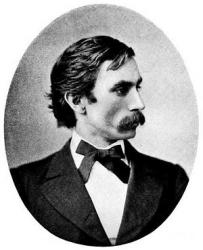
1844 - 1909 Author of "God of the Strong, God of the Weak" in A Hymnal for Friends Gilder, Richard Watson, LL.D., was born at Bordentown, N.J., Feb. 8, 1844, and educated at a Seminary at Flushing, L.I. He was associate-editor of Scribner's Monthly (now The Century) from its commencement in 1870 to 1881, when, on the death of J. G. Holland, he became editor-in-chief. His poetical works are somewhat numerous, and include The New Day, 1875; Lyrics, 1885; Two Worlds, 1801; Poems and Inscriptions, 1901; and In the Heights, 1905. His hymns in common use are:— 1. In myriad forms, by myriad names. [ Divine Incomprehensibility.] This, in In Excelsis, N.Y., 1897, is composed of the last two stanzas of a hymn sung at the presentation of the Egyptian Obelisk to the City of New York, Feb. 22, 1881. The hymn is in his Lyrics, 1885, p. 5. 2. To Thee, Eternal Soul, be praise! [God speaking through His Saints.] Written for the Methodist Hymnal, N.Y., 190 [Rev. L. F. Benson, D.D.] --John Julian, Dictionary of Hymnology, New Supplement (1907) ======================= Gilder, Richard Watson, L.L.D. (February 8, 1844--November 18, 1909). Dr. Guilder's schooling began at his father's school for girls at Belle Vue, Bordentown, New Jersey, where he was the only boy enrolled. Details of his further education are vague, but the future editor began his journalistic work at the age of twelve or thirteen by publishing a paper of his own. He read law for a time before becoming a reporter on Newark, New Jersey, papers. In 1863, he joined a volunteer company of the Union Army, the First Philadelphia Artillery, but saw little actual combat service. Later he acted as paymaster for a railway company. He was a pioneer in magazine illustration beginning with his early association with Scribner's. Always a leader in plans for civic betterment, he was quite active through his late years; though in failing health he delivered a public lecture only two weeks before his death, which occurred at the home of a friend in New York City. His real contribution to American literature was as editor of an excellent literary magazine rather than through his own writing. He was the recipient of many honorary degrees from various educational institutions. Sources: Dictionary of American Biography; Appleton's Cyclopedia of American Biography; National Cyclopedia of American Biography; Who Was Who I. --Robert G. McCutchan, DNAH Archives

Michael Bruce

1746 - 1767 Author of "Where High the Heavenly Temple" in The Friends' Hymnal, a Collection of Hymns and Tunes for the Public Worship of the Society Bruce, Michael, son of a Scottish weaver, was born at Kinnesswood, Portmoak, Kinrossshire, Scotland, March 27,1746, and educated at the village school, Edinburgh University (where he first became acquainted with John Logan), and the Theological Hall of the Associate Synod, held at Kinross, under the Rev. John Swanston, intending ultimately to enter the ministry, a hope which was frustrated by his untimely death. To assist in procuring University fees and maintenance he for some time conducted a school, during the recess, at Gairney Bridge, and subsequently at Forrest Mill, near Tillicoultry. Whilst yet a student he died at Kinnesswood, July 5th, 1767. [Also, see Logan, John] The names of Michael Bruce and John Logan are brought together because of the painful controversy which has long prevailed concerning the authorship of certain Hymns and Paraphrases of Holy Scripture which are in extensive use in the Christian Church both at home and abroad. During the latter years of Bruce's short life he wrote various Poems, and also Hymns for a singing class at Kinnesswood, which were well known to his family and neighbours, and were eventually copied out by Bruce himself in a quarto MS. book, with the hope that some day he might see them in print. Immediately upon his death, in 1767, Logan called upon his father and requested the loan of this book that he might publish the contents for the benefit of the family. This was granted. Not till three years afterwards did a certain work, containing seventeen poems, and entitled Poems on Several Occasions , by Michael Bruce, 1770, appear, with a Preface in which it was stated that some of the Poems were by others than Bruce. -- John Julian, Dictionary of Hymnology (1907)

Robert C. Chapman

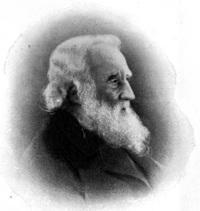
1803 - 1902 Person Name: Robert C. Chapman, 1803-1902 Author of "O my Savior, crucified!" in Hymns of Worship and Remembrance Robert Cleaver Chapman (1 April 1803 – 6 December 1902), known as the "apostle of Love", was a pastor, teacher and evangelist. Chapman was born in Helsingor, Denmark, in a wealthy Anglican merchant family from Whitby, Yorkshire. Robert was educated by his mother whilst the family was in Denmark and later at a boarding school in Yorkshire, after the return of the family to England. At the age of 15 Robert moved to London to work as an apprentice clerk in the legal profession. Robert completed his 5 year apprenticeship and became an attorney in 1823. In the same year he became a Christian after listening to the gospel preached by James Harrington Evans in a nonconformist chapel in London. He prospered in his career and also spiritually and spent most of his spare time visiting and helping the poor of London. His dedication to the poor made a great impression on his cousin's husband, a Mr. Pugsley, from Barnstaple, Devon. So much so that Puglsey, another lawyer, also became a Christian and began working with the poor in Barnstaple. In 1831 Robert visited Barnstaple on a holiday and helped out in preaching and other Christian work in the vicinity. On returning to London he became convinced that he was being called into full time Christian work, he also increasingly felt that some aspects of his legal work sat uncomfortably with his faith. In 1832 he was invited by the Ebenezer Strict Baptist Chapel in Barnstaple to be their pastor. In April 1832 he left the lucrative legal profession and stepped down the social ladder and moved to Barnstaple to become pastor. He accepted the post as pastor of a Strict Baptist chapel only on the condition that he would only be bound by what was written in the Bible and not by any denominational creeds or beliefs. Fellowship, for example, he believed was open to all true believers in Christ, and not restricted to those who had been baptised by full immersion on a profession of faith. His views on fellowship were similar to those of Anthony Norris Groves. Over time, the chapel changed from being Strict Baptist to a non denominational one ran on similar grounds to the assembly led by George Muller in Bristol, with a building at Grosvenor Street eventually being known as Grosvenor Street Chapel. In 1994 this church moved from Grosvenor Street to another part of Barnstaple occupying a converted railway shed and is now known as Grosvenor Church – http://www.grosvenorchurch.org Other examples of the assembly moving to a non denominational position are one man ministry being replaced by the priesthood of all believers and Chapman refusing any clerical salary. Chapman never enforced these changes onto the chapel and never forced his viewpoint but was prepared to wait for every believer meeting at the chapel to see the need for change. Chapman rose to become an influential figure within the Plymouth Brethren alongside John Nelson Darby and George Muller. His zeal and compassion for people led to him being referred to by many as the "apostle of love". For example, Chapman preferred to live very frugally in a deprived area of Barnstaple in order to reach the poor. In 1848 he sided with George Muller in regards to a dispute over the independency of each assembly and believed that John Nelson Darby should have waited much longer before excommunicating Muller's assembly in Bristol for not supporting Darby in his dispute with Benjamin Wills Newton. This riled some supporters of Darby who were wanting to discredit Chapman. Darby, however reproved them, saying, "You leave that man alone; We talk of the heavenlies, but Robert Chapman lives in them." In regards to the timing of the rapture of the Church, an issue which became prominent within the brethren movement, Chapman held a partial rapture view with part of the saved being raptured before the Great Tribulation and a part of them after the Great Tribulation. Charles Spurgeon called Chapman "the saintliest man I ever knew". Chapman became so well known that a letter from abroad addressed only to "R.C. Chapman, University of Love, England" was correctly delivered to him. --en.wikipedia.org ============================== Chapman, Robert Cleaver, was born Jan. 4, 1803, and has been for more than fifty years a "Minister of tho Gospel" at Barnstaple. In 1837 he published:— Hymns for the Use of the Church of Christ. By R. C. Chapman, Minister of the Gospel, Barnstaple. 1837. This was reprinted in 1852. Some copies of the 1852 edition have bound up with them An Appendix selected from Various Sources. By John Chapman. Several of these hymns were repeated in the Plymouth Brethren Hymns for the Poor of the Flock, 1838; A Few Hymns and Some Spiritual Songs, selected 1856 for the Little Flock; and in other collections. These include:— 1. Go behold [and search] the tomb of Jesus. Easter. 2. God's tender mercies follow still. Heaven. Com¬posed of stanza xxi. of "The Lamb of God exalted reigns." 3. King of glory set on high. Ascension. 4. My soul, amid this stormy world. Longing for heaven. 5. No condemnation—0 my soul. Peace in Believing. 6. 0 God, Whose wondrous Name is Love. Resignation. 7. The Prince of Life, once slain for us. Advent. Mr. Chapman's hymns and poems number 162, and are mainly in use with the Plymouth Brethren, with whom he was a Minister. They are given in his Hymns and Meditations, Barnstaple, 1871. He died June 12, 1902. --John Julian, Dictionary of Hymnology (1907)

Dora Rappard

1842 - 1923 Person Name: Dora Rappard, 1842-1923 Translator of "Nimm mein Leben! Jesus, Dir" in Glaubenslieder

Henvy Virtue Tebbs

1797 - 1876 Person Name: H. V. Tebbs Author of "Come to me, Lord, when first I wake" in The Book of Common Praise Tebbs, Henry Virtue, was born in Chelsea in 1797. He was a Proctor in Doctors' Commons, and joined in establishing the first Sunday School in Chelsea. Most of his later years were spent on the Continent, mostly at Pegli, near Genoa, and where, mainly through his exertions, a Church for the English congregation was erected and where he died Nov. 27, 1876. (Record, Dec. 23,1876.) His hymn "Come to me, Lord, when first I wake" (Morning) was written for his wife's birthday, March 16, 1851, and circulated in MS. for some years. In 1866 it was printed in the N. Y. Hours at Home, and then in the Hymnal Companion and other collections. It has been translated into 17 languages, and has also been embossed for the blind. --John Julian, Dictionary of Hymnology, Appendix, Part II (1907)

John Barathi

Person Name: S. John Barathi Translator of "எந்தன் ஜீவன் ஏற்பீரே" in The Cyber Hymnal

Pages


Export as CSV
It looks like you are using an ad-blocker. Ad revenue helps keep us running. Please consider white-listing Hymnary.org or getting Hymnary Pro to eliminate ads entirely and help support Hymnary.org.