You help make Hymnary.org possible. More than 10 million people from 200+ countries found hymns, liturgical resources and encouragement on Hymnary.org in 2025, including you. Every visit affirms the global impact of this ministry.

If Hymnary has been meaningful to you this year, would you take a moment today to help sustain it? A gift of any size—paired with a note of encouragement if you wish—directly supports the server costs, research work and curation that keep this resource freely available to the world.

Give securely online today, or mail a check to:
Hymnary.org
Calvin University
3201 Burton Street SE
Grand Rapids, MI 49546

Thank you for your partnership, and may the hope of Advent fill your heart.

Person Results

Tune Identifier:"^st_alphege_gauntlett$"
In:person

Planning worship? Check out our sister site, ZeteoSearch.org, for 20+ additional resources related to your search.
Showing 21 - 30 of 35Results Per Page: 102050

Cecil Frances Alexander

1818 - 1895 Author of "Forgive them, O my Father" in The Book of Common Praise As a small girl, Cecil Frances Humphries (b. Redcross, County Wicklow, Ireland, 1818; Londonderry, Ireland, 1895) wrote poetry in her school's journal. In 1850 she married Rev. William Alexander, who later became the Anglican primate (chief bishop) of Ireland. She showed her concern for disadvantaged people by traveling many miles each day to visit the sick and the poor, providing food, warm clothes, and medical supplies. She and her sister also founded a school for the deaf. Alexander was strongly influenced by the Oxford Movement and by John Keble's Christian Year. Her first book of poetry, Verses for Seasons, was a "Christian Year" for children. She wrote hymns based on the Apostles' Creed, baptism, the Lord's Supper, the Ten Commandments, and prayer, writing in simple language for children. Her more than four hundred hymn texts were published in Verses from the Holy Scripture (1846), Hymns for Little Children (1848), and Hymns Descriptive and Devotional ( 1858). Bert Polman ================== Alexander, Cecil Frances, née Humphreys, second daughter of the late Major John Humphreys, Miltown House, co. Tyrone, Ireland, b. 1823, and married in 1850 to the Rt. Rev. W. Alexander, D.D., Bishop of Derry and Raphoe. Mrs. Alexander's hymns and poems number nearly 400. They are mostly for children, and were published in her Verses for Holy Seasons, with Preface by Dr. Hook, 1846; Poems on Subjects in the Old Testament, pt. i. 1854, pt. ii. 1857; Narrative Hymns for Village Schools, 1853; Hymns for Little Children, 1848; Hymns Descriptive and Devotional, 1858; The Legend of the Golden Prayers 1859; Moral Songs, N.B.; The Lord of the Forest and his Vassals, an Allegory, &c.; or contributed to the Lyra Anglicana, the S.P.C.K. Psalms and Hymns, Hymns Ancient & Modern, and other collections. Some of the narrative hymns are rather heavy, and not a few of the descriptive are dull, but a large number remain which have won their way to the hearts of the young, and found a home there. Such hymns as "In Nazareth in olden time," "All things bright and beautiful," "Once in Royal David's city," "There is a green hill far away," "Jesus calls us o'er the tumult," "The roseate hues of early dawn," and others that might be named, are deservedly popular and are in most extensive use. Mrs. Alexander has also written hymns of a more elaborate character; but it is as a writer for children that she has excelled. - John Julian, Dictionary of Hymnology (1907) =============== Alexander, Cecil F., née Humphreys, p. 38, ii. Additional hymns to those already noted in this Dictionary are in common use:— 1. Christ has ascended up again. (1853.) Ascension. 2. His are the thousand sparkling rills. (1875.) Seven Words on the Cross (Fifth Word). 3. How good is the Almighty God. (1S48.) God, the Father. 4. In [a] the rich man's garden. (1853.) Easter Eve. 5. It was early in the morning. (1853.) Easter Day. 6. So be it, Lord; the prayers are prayed. (1848.) Trust in God. 7. Saw you never in the twilight? (1853.) Epiphany. 8. Still bright and blue doth Jordan flow. (1853.) Baptism of Our Lord. 9. The angels stand around Thy throne. (1848.) Submission to the Will of God. 10. The saints of God are holy men. (1848.) Communion of Saints. 11. There is one Way and only one. (1875.) SS. Philip and James. 12. Up in heaven, up in heaven. (1848.) Ascension. 13. We are little Christian children. (1848.) Holy Trinity. 14. We were washed in holy water. (1848.) Holy Baptism. 15. When of old the Jewish mothers. (1853.) Christ's Invitation to Children. 16. Within the Churchyard side by side. (1848.) Burial. Of the above hymns those dated 1848 are from Mrs. Alexander's Hymns for Little Children; those dated 1853, from Narrative Hymns, and those dated 1875 from the 1875 edition of Hymns Ancient & Modern. Several new hymns by Mrs. Alexander are included in the 1891 Draft Appendix to the Irish Church Hymnal. --John Julian, Dictionary of Hymnology, Appendix, Part II (1907) ============= Alexander, Cecil F. , p. 38, ii. Mrs. Alexander died at Londonderry, Oct. 12, 1895. A number of her later hymns are in her Poems, 1896, which were edited by Archbishop Alexander. --John Julian, Dictionary of Hymnology, New Supplement (1907) See also in:Hymn Writers of the Church

Rodolpho Hasse

1890 - 1968 Person Name: Rodolpho F. Hasse Author of "Quão doce é para os crentes" in Hinário Luterano Started Comunidade Evangélica Luterana da Paz, affiliated with Igreja Evangélica Luterana do Brasil in 1932. It was the first Lutheran congregation in Rio de Janeiro. [Source?]

St. Anatolius. of Constantinople

? - 458 Person Name: St. Anatolius Author (Greek) of "A great and mighty wonder" in Evangelical Lutheran hymnal Anatolius, one of the Greek hymn-writers. No details are known of him. From the fact that he celebrates martyrs who died in the 6th and early part of the 7th century, it is certain that he is not to be identified (as by Neale) with the patriarch who succeeded Flavian in 449, and afterward procured the enactment of the famous canon of the Council of Chalcedon, which raised Constantinople to the second place among the patriarchal sees (Dict. of Ch. Biog., i. p. 110). A letter is said to exist showing that he was a pupil of Theodore of the Studium (759-826). More than a hundred hymns, all of them short ones, are found in the Mensea and Octoechus. From this account, derived from Anth. Graec. Garm. Christ, p. xli, it will be seen that his poems cannot be considered "the spring-promise" of the age of the Canons (Neale). A few of his hymns have been translated by Dr. Neale in his Hymns of the Early Church, and Dr. Littledale, in the Offices of the Hymns of the Early Church: ("Fierce was the wild billow") and ("The day is past and over"). [Rev. H. Leigh Bennet, M.A.] -- John Julian, Dictionary of Hymnology (1907)

Thomas M. Westrup

1837 - 1909 Person Name: T. M. Westrup Author of "Serena voz y suave" in Himnario provisional con los cánticos Thomas Martin Westrup moved with his family from London to Mexico when he was fifteen years old. He translated hundreds of hymns and, along with his son, Enrique, published a three-volume hymnal Incienso Christiano. Dianne Shapiro from Celebremos su Gloria (Colombia/Illinois: Libros Alianza/Celebration), 1992

Joseph of the Studium

762 - 832 Author of "Oh, happy band of pilgrims" in Songs of Praise Joseph of the Studium [Joseph of Thessalonica]. This person not the same person wrongly named by Dr. Neale in his Hymns of the Eastern Church as Joseph of the Studium, author of the great Canon for the Ascension. That Joseph is St. Joseph the Hymnographer. Joseph of Thessalonica, younger brother of St. Theodore of the Studium, q.v., was some time Bishop of Thessalonica, and died in prison, after great suffering inflicted by command of Theophilus. He was probably the author of the Triodia in the Triodion, and certainly of five Canons in the Pentecostarion to which his name is prefixed. His pieces have not been translated into English. [Rev. H. Leigh Bennett, M.A.] --John Julian, Dictionary of Hymnology (1907)

Anonymous

Author of "O Heavenly Jerusalem" in Hymns of the Church In some hymnals, the editors noted that a hymn's author is unknown to them, and so this artificial "person" entry is used to reflect that fact. Obviously, the hymns attributed to "Author Unknown" "Unknown" or "Anonymous" could have been written by many people over a span of many centuries.

Simon Zachariah

b. 1951 Author of "യഹോവയെ ഭയന്നു അനുസരിക്കുന്നോന്‍" in The Cyber Hymnal

Claudia Frances Hernaman

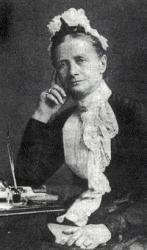
1838 - 1898 Person Name: Mrs. Claudia F. Hernaman (1838-1898) Author of ""Hosanna!" some were calling" in Junior Church School Hymnal Hernaman, Claudia Frances, née Ibotson, daughter of W. H. Ibotson, sometime Vicar of Edwinstowe, Notts, was born at Addlestone, Surrey, Oct. 19, 1838, and married Sept. 1858, to the Rev. J. W. D. Hernaman, one of H. M. Inspectors of Schools. Mrs. Hernaman has composed more than 150 hymns, a great proportion of which are for children, and also some translations from the Latin. Her publications include:— (1) The Child's Book of Praise; A Manual of Devotion in Simple Verse by C. F. H. Edited by the Rev. James Skinner, M.A., &c, 1873 ; (2) The Story of the Resurrection 1879; (3) Christmas Story, 1881; (4) Christmas Carols for Children, 1st series, 1884; 2nd series, 1885; (5) The Way of the Cross, a Metrical Litany, 1885; (6) Hymns for the Seven Words from the Cross, 1885; (7) The Crown of Life: A volume of Verses for the Seasons of the Church, 1886. In addition to these original publications Mrs. Hernaman contributed hymns to the Church Times, to various magazines, and to (l) Hymns for the Children of the Church (22 hymns). 1878; (2) Hymns for the Little Ones in Sunday Schools (10 hymns), 1884; (3) The Rev. M. Woodward's (Folkestone) Children's Service Book, 1883; (4) Mrs. Brock's Children's Hymn Book, 1881; and (5) The Altar Hymnal, 1884. Mrs. Hernaman edited The Altar Hymnal, and contributed thereto a few translations from the Latin in addition to original hymns. Mrs. Hernaman's hymns in common use appeared as follows:— i. In her Child's Book of Praise, 1873. 1. Behold, behold He cometh. Advent. 2. Holy Jesus, we adore Thee. Circumcision. 3. How can we serve Thee, Lord. For Choristers. 4. Jesus, in loving worship. Holy Communion. 5. Jesus, Royal Jesus. Palm Sunday. 6. Lord, I have sinned, but pardon me. Penitence. 7. Lord, Who throughout these forty days. Lent. 8. Reverently we worship Thee. Holy Trinity. ii. In her Appendix to The Child’s Book of Praise, 1874, and Hymns for Little Ones, 1884. 9. Hosannah, they were crying. Advent. iii. In her Christmas Carol, 1875. 10. Angels singing, Church bells ringing. Christmas Carol. iv. In Hymns for the Children of the Church, 1878. 11. As Saint Joseph lay asleep. Flight into Egypt. 12. Come, children, lift your voices. Harvest. 13. God bless the Church of England. Prayer for the Church. 14. Happy, happy Sunday. Sunday. 15. He led them unto Bethany. Ascension. 16. Jesu, we adore Thee. Holy Communion. v. In her Story of the Resurrection, 1879. 17. Early with the blush of dawn. Easter. 18. Now the six days' work is done. Sunday. vi. In The Altar Hymnal, 1884. 19. Arm, arm, for the conflict, soldiers (1880). Processional. 20. Calling, calling, ever calling. Home Mission. Written in 1878, and printed in New and Old. 21. Gracious Father, we beseech Thee. Holy Communion. 22. Hail to Thee, 0 Jesu. Holy Communion. 23. Magnify the Lord today. Christmas. 24. 0 Lamb of God, Who dost abide. Holy Communion. 25. This healthful Mystery. Holy Communion. vii. In Mrs. Brock's Children's Hymn Book, 1881. 26. It is a day of gladness. Girls' Friendly Societies. Mrs. Hernaman's translations in The Altar Hymnal are annotated under their Latin first lines. There is also her Good Shepherdhymn, in three parts. (1) “Faithful Shepherd of Thine own;" (2) “Faithful Shepherd, hear our cry;" (3) "Shepherd, who Thy life didst give," which appeared in Hymns for the Children of the Church, 1878, and in The Altar Hymnal 1884. She died Oct. 10, 1898. --John Julian, Dictionary of Hymnology (1907)

Evan A. Fry

1902 - 1959 Author of "O God, the eternal Father" in The Hymnal

Edward Ashurst Welch

1860 - 1932 Person Name: Canon Edward A. Welch Author of "We lift our hearts, O Father" in The Book of Common Praise Welch, Edward Ashurst, M.A., of King's College, Cambridge (B.A. 1882), Domestic Chaplain to the late Bp. of Durham, and Vicar of St. Bede's, Gateshead, is the author of "Thou Who didst call Thy saints of old." (For Theological College.) --John Julian, Dictionary of Hymnology, Appendix, Part II (1907) =================== Welch, Edward Ashurst. (Orpington, England, August 22, 1860--August 6, 1932, Southchurch, England). Anglican. King's College, Cambridge, B.A., 1883; M.A. 1886. Taught tehological students at Auckland Castle (Durham), 1887-1889; Trinity College, Toronto (Ontario), 1895-1899. Pastorates at Haggerston (as curate to Samuel John Stone), 1885-1887; Gateshead, 1890-1895; St. James' Cathedral, Toronto, 1899-1909; Wakefield (Yorkshire), 1909-1917; Southchurch, 1918-1932. While in Canada he did much to ease relations between "high" and "low" Anglicans, and to shape the 1908 Book of Common Praise. His hymns were written for specific occasions, including his own wedding. See: Macdonald, F.C. (1936). Edward Amhurst Welch. Cambridge University Press (privately printed). --Hugh D. McKellar, DNAH Archives

Pages


Export as CSV
It looks like you are using an ad-blocker. Ad revenue helps keep us running. Please consider white-listing Hymnary.org or getting Hymnary Pro to eliminate ads entirely and help support Hymnary.org.





