You help make Hymnary.org possible. More than 10 million people from 200+ countries found hymns, liturgical resources and encouragement on Hymnary.org in 2025, including you. Every visit affirms the global impact of this ministry.

If Hymnary has been meaningful to you this year, would you take a moment today to help sustain it? A gift of any size—paired with a note of encouragement if you wish—directly supports the server costs, research work and curation that keep this resource freely available to the world.

Give securely online today, or mail a check to:
Hymnary.org
Calvin University
3201 Burton Street SE
Grand Rapids, MI 49546

Thank you for your partnership, and may the hope of Advent fill your heart.

Person Results

Tune Identifier:"^st_magnus_clarke$"
In:people

Planning worship? Check out our sister site, ZeteoSearch.org, for 20+ additional resources related to your search.
Showing 21 - 30 of 84Results Per Page: 102050

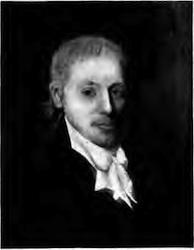
Oliver Holden

1765 - 1844 Composer of "ST. MAGNUS" in Christian Hymnal Holden, Oliver, one of the pioneers of American psalmody, was born in 1765, and was brought up as a carpenter. Subsequently he became a teacher and music-seller. He died at Charlestown, Massachusetts, 1844. His published works are American Harmony, 1793; the Worcester Collection, 1797; and other Tune books. One of his most popular tunes is "Coronation." It is thought that he edited a small hymn-book, published at Boston before 1808, in which are 21 of his hymns with the signature "H." A single copy only of this book is known, and that is without title-page. Of his hymns the following are in common use:— 1. All those who seek a throne of grace. [God present where prayer is offered.] Was given in Peabody's Springfield Collection, 1835, No. 92, in a recast form as, “They who seek the throne of grace." This form is in extensive use in America, and is also in a few collections in Great Britain. 2. With conscious guilt, and bleeding heart. [Lent.] This, although one of the best of Holden's hymns, has passed out of use. It appeared, with two others, each bearing bis signature, in the Boston Collection (Baptist), 1808. 3. Within these doors assembled now. [Divine Worship.] [Rev. F. M. Bird, M.A.] -- John Julian, Dictionary of Hymnology

Reginald Heber

1783 - 1826 Person Name: Bishop Heber, 1783-1826 Author of "The Son of God goes forth to war" in Hymns and Chorales Reginald Heber was born in 1783 into a wealthy, educated family. He was a bright youth, translating a Latin classic into English verse by the time he was seven, entering Oxford at 17, and winning two awards for his poetry during his time there. After his graduation he became rector of his father's church in the village of Hodnet near Shrewsbury in the west of England where he remained for 16 years. He was appointed Bishop of Calcutta in 1823 and worked tirelessly for three years until the weather and travel took its toll on his health and he died of a stroke. Most of his 57 hymns, which include "Holy, Holy, Holy," are still in use today. -- Greg Scheer, 1995 ==================== Heber, Reginald, D.D. Born at Malpas, April 21, 1783, educated at Brasenose College, Oxford; Vicar of Hodnet, 1807; Bishop of Calcutta, 1823; died at Trichinopoly, India, April 3, 1826. The gift of versification shewed itself in Heber's childhood; and his Newdigate prize poem Palestine, which was read to Scott at breakfast in his rooms at Brazenose, Oxford, and owed one of its most striking passages to Scott's suggestion, is almost the only prize poem that has won a permanent place in poetical literature. His sixteen years at Hodnet, where he held a halfway position between a parson and a squire, were marked not only by his devoted care of his people, as a parish priest, but by literary work. He was the friend of Milman, Gifford, Southey, and others, in the world of letters, endeared to them by his candour, gentleness, "salient playfulness," as well as learning and culture. He was on the original staff of The Quarterly Review; Bampton Lecturer (1815); and Preacher at Lincoln's Inn (1822). His edition of Jeremy Taylor is still the classic edition. During this portion of his life he had often had a lurking fondness for India, had traced on the map Indian journeys, and had been tempted to wish himself Bishop of Calcutta. When he was forty years old the literary life was closed by his call to the Episcopate. No memory of Indian annals is holier than that of the three years of ceaseless travel, splendid administration, and saintly enthusiasm, of his tenure of the see of Calcutta. He ordained the first Christian native—Christian David. His first visitation ranged through Bengal, Bombay, and Ceylon; and at Delhi and Lucknow he was prostrated with fever. His second visitation took him through the scenes of Schwartz's labours in Madras Presidency to Trichinopoly, where on April 3,1826, he confirmed forty-two persons, and he was deeply moved by the impression of the struggling mission, so much so that “he showed no appearance of bodily exhaus¬tion." On his return from the service ”He retired into his own room, and according to his invariable custom, wrote on the back of the address on Confirmation 'Trichinopoly, April 3, 1826.' This was his last act, for immediately on taking off his clothes, he went into a large cold bath, where he had bathed the two preceding mornings, but which was now the destined agent of his removal to Paradise. Half an hour after, his servant, alarmed at his long absence, entered the room and found him a lifeless corpse." Life, &c, 1830, vol. ii. p. 437. Heber's hymns were all written during the Hodnet period. Even the great missionary hymn, "From Greenland's icy mountains," notwithstanding the Indian allusions ("India's coral strand," "Ceylon's isle"), was written before he received the offer of Calcutta. The touching funeral hymn, "Thou art gone to the grave," was written on the loss of his first babe, which was a deep grief to him. Some of the hymns were published (1811-16) in the Christian Observer, the rest were not published till after his death. They formed part of a ms. collection made for Hodnet (but not published), which contained, besides a few hymns from older and special sources, contributions by Milman. The first idea of the collection appears in a letter in 1809 asking for a copy of the Olney Hymns, which he "admired very much." The plan was to compose hymns connected with the Epistles and Gospels, to be sung after the Nicene Creed. He was the first to publish sermons on the Sunday services (1822), and a writer in The Guardian has pointed out that these efforts of Heber were the germs of the now familiar practice, developed through the Christian Year (perhaps following Ken's Hymns on the Festivals), and by Augustus Hare, of welding together sermon, hymnal, and liturgy. Heber tried to obtain from Archbishop Manners Sutton and the Bishop of London (1820) authorization of his ms. collection of hymns by the Church, enlarging on the "powerful engine" which hymns were among Dissenters, and the irregular use of them in the church, which it was impossible to suppress, and better to regulate. The authorization was not granted. The lyric spirit of Scott and Byron passed into our hymns in Heber's verse; imparting a fuller rhythm to the older measures, as illustrated by "Oh, Saviour, is Thy promise fled," or the martial hymn, "The Son of God goes forth to war;" pressing into sacred service the freer rhythms of contemporary poetry (e.g. "Brightest and best of the sons of the morning"; "God that madest earth and heaven"); and aiming at consistent grace of literary expression.. Their beauties and faults spring from this modern spirit. They have not the scriptural strength of our best early hymns, nor the dogmatic force of the best Latin ones. They are too flowing and florid, and the conditions of hymn composition are not sufficiently understood. But as pure and graceful devotional poetry, always true and reverent, they are an unfailing pleasure. The finest of them is that majestic anthem, founded on the rhythm of the English Bible, "Holy, Holy, Holy, Lord God Almighty." The greatest evidence of Heber's popularity as a hymnwriter, and his refined taste as a compiler, is found in the fact that the total contents of his ms. collection which were given in his posthumous Hymns written and adapted to the Weekly Church Service of the Year. London, J. Murray, 1827; which included 57 hymns by Heber, 12 by Milman, and 29 by other writers, are in common in Great Britain and America at the present time. [Rev. H. Leigh Bennett, M.A.] Of Bishop Heber's hymns, about one half are annotated under their respective first lines. Those given below were published in Heber's posthumous Hymns, &c, 1827. Some of them are in extensive use in Great Britain and America; but as they possess no special histories they are grouped together as from the Hymns, &c, 1827:— 1. Beneath our feet, and o'er our head. Burial. 2. Creator of the rolling flood. St. Peter's Day, or, Gospel for 6th Sunday after Trinity. 3. Lo, the lilies of the field. Teachings of Nature: or, Gospel for 15th Sunday after Trinity. 4. 0 God, by Whom the seed is given. Sexagesima. 6. 0 God, my sins are manifold. Forgiveness, or, Gospel for 22nd S. after Trinity. 6. 0 hand of bounty, largely spread. Water into Wine, or, Gospel for 2nd S. after Epiphany. 7. 0 King of earth, and air, and sea. Feeding the Multitude; or, Gospel for 4th S. in Lent. 8. 0 more than merciful, Whose bounty gave. Good Friday. 9. 0 most merciful! 0 most bountiful. Introit Holy Communion. 10. 0 Thou, Whom neither time nor space. God unsearchable, or, Gospel for 5th Sunday in Lent. 11. 0 weep not o'er thy children's tomb. Innocents Day. 12. Room for the proud! Ye sons of clay. Dives and Lazarus, or, Gospel for 1st Sunday after Trinity. 13. Sit thou on my right hand, my Son, saith the Lord. Ascension. 14. Spirit of truth, on this thy day. Whit-Sunday. 15. The feeble pulse, the gasping breath. Burial, or, Gospel for 1st S. after Trinity. 16. The God of glory walks His round. Septuagesima, or, the Labourers in the Marketplace. 17. The sound of war in earth and air. Wrestling against Principalities and Powers, or, Epistle for 2lst Sunday after Trinity. 18. The world is grown old, her pleasures are past. Advent; or, Epistle for 4th Sunday in Advent. 19. There was joy in heaven. The Lost Sheep; or, Gospel for 3rd S. after Trinity. 20. Though sorrows rise and dangers roll. St. James's Day. 21. To conquer and to save, the Son of God. Christ the Conqueror. 22. Virgin-born, we bow before Thee. The Virgin Mary. Blessed amongst women, or, Gospel for 3rd S. in Lent. 23. Wake not, 0 mother, sounds of lamentation. Raising the Widow's Son, or, Gospel for 16th S. after Trinity. 24. When on her Maker's bosom. Holy Matrimony, or, Gospel for 2nd S. after Epiphany. 25. When through the torn sail the wild tempest is streaming. Stilling the Sea, or, Gospel for 4th Sunday after Epiphany. 26. Who yonder on the desert heath. The Good Samaritan, or, Gospel for 13th Sunday after Trinity. This list is a good index of the subjects treated of in those of Heber's hymns which are given under their first lines, and shows that he used the Gospels far more than the Epistles in his work. --John Julian, Dictionary of Hymnology (1907)

Thomas H. Gill

1819 - 1906 Author of "Break, new born year, on glad eyes, break" in The Praise Hymnary Gill, Thomas Hornblower, was born at Bristol Road, Birmingham, Feb. 10th, 1819. His parents belonged to English Presbyterian families which, like many others, had become Unitarian in their doctrine. He was educated at King Edward's Grammar School under Dr. Jeune, afterwards Bishop of Peterborough. He left the school in 1838, and would have proceeded to the University of Oxford, but was prevented by his hereditary Unitarianism (long since given up), which forbade subscription to the Articles of the Church of England then necessary for entrance to the University. This constrained him to lead the life of an isolated student, in which he gave himself chiefly to historical and theological subjects. Hence his life has been singularly devoid of outward incident; and its interest gathers about his hymns, and the seasons of overmastering thought and feeling which gave them birth. The only events that can be chronicled are the publications of his books (see below). It is in the singular combination of influences which has formed his character and determined his thinking that the real interest of his life consists. Here is to be found the true key to the understanding of his hymns. To his Puritan ancestry may be traced their deep religiousness; to his Unitarian training their ethical earnestness; and to his poetical temperament their freeness from conventionality. Delight in the divine songs of Watts was his earliest intellectual enjoyment; and in after years the contrast between their native force and fulness and their dwindled presentation in Unitarian hymnbooks began that estrangement from his hereditary faith which gradually became complete. These various influences mingled in his own hymns and have conspired to render him what Dr. Freeman Clarke calls him, "a more intellectual Charles Wesley." He belongs to the small company of really original hymnists. His hymns are marked by a remarkable absence of, and even opposition to, all antiquarian and sacerdotal ideas of Christianity, a keen discernment of the spirit rather than the mere letter of the Gospel; and profound thought on Scripture themes, so that some of his hymns are too subtle for use in the ordinary worship of the Church. Their style is characterized by a certain quaintness of expression reminding one of George Wither or John Mason, but modified by the influence of Watts's warmth of feeling. They have great sweetness of melody, purity of diction, and happy adaptation of metre and of style to the subject of each hymn. They are almost exclusively used by Nonconformists. Dale's English Hymnbook contains 39; the Baptist Hymnal, 19; Horder's Congregational Hymns, 11; Martineau's Hymns of Praise & Prayer, 11; and the Congregational Church Hymnal, 14. The following are Mr. Gill's published works:— (1) The Fortunes of Faith, 1841; (2) The Anniversaries (Poems in commemoration of great Men and great Events), 1858; (3) The Papal Drama (an historical essay), 1866; (4) The Golden Chain of Praise Hymns by Thomas H. Gill, 1869; (5) Luther's Birthday (Hymns), 1883; (6) The Triumph of Christ (Memorials of Franklin Howard), 1883. Mr. Gill's hymns number nearly 200. Of these, over 80 are in common use in Great Britain and America. The most widely used of these:— "Everlasting, changing never"; "O mean may seem this house of clay"; "O wherefore, Lord, doth Thy dear praise"; “Our God, our God, Thou shinest here"; "The glory of the spring, how sweet"; and "Thou biddest, Lord, Thy sons be bold"; are annotated under their respective first lines, the rest are noted below. [Rev. W. Garrett Horder] The 75 hymns which follow are all annotated from the author's manuscript notes, kindly supplied for use in this work:— 1. Ah tremblers, fainting and forlorn. Eternal Youth. Written in 1868, and first published in his Golden Chain, &c, 1869, p. 149, in 9 stanzas of 4 lines. In 1873 Martineau gave stanzas iv.-ix. in his Hymns, &c, No. 256, as, "Young souls, so strong the race to run." These were repeated in the Baptist Hymnal, 1879, as No. 862. 2. Alas the outer emptiness. Consecration of the Heart. Contributed to G. Dawson's Psalms & Hymns, 1846, No. 121, in 7 stanzas of 4 lines. It was introduced to the American Unitarian collections through Hedge & Huntington's Hymns for the Church of Christ, 1853, No. 619. 3. Alas these pilgrims faint and worn. Whitsuntide. Written in 1853, and first published in his Anniversaries, 1858, p. 73, in 11 stanzas of 4 lines, then in G. Dawson's Psalms & Hymns, 1862, the Golden Chain, &c, 1869, p. 107, &c. 4. Alone with Thee, with Thee alone. Worship in Solitude. Written in 1856, and first published in his Golden Chain , &c, 1869, p. 26, in 8 stanzas of 4 lines. 5. And didst thou, Lord, our sorrows take? Passiontide. Written in 1849, and published in his Golden Chain, &c, 1869, p. 45, in 6 stanzas of 4 lines. It is in several English collections. 6. Behold the everlasting Son. Ascension. Written in 1862, and first printed in the Hagley Magazine, and then in G. Dawson's Psalms & Hymns, 1862, and the Golden Chain, 1869, p. 47, in 8 stanzas of 4 lines. 7. Break, newborn year, on glad eyes break. New Year. Written in 1855, and first published in his Golden Chain, &c, 1869, p. 144, in 6 stanzas of 4 lines. It is one of the most popular of the author's hymns, and is found in many collections. 8. Bright Presence! may my soul have part. Witness of the Spirit. Written in 1849, and first published in his Golden Chain, &c, 1869, p. 100, in 8 stanzas of 8 lines. It is repeated in The Songs of the Spirit, N. Y., 1871. 9. Bright Thy presence when it breaketh. Public Worship. Written in 1856, and first publised in his Golden Chain, &c, 1869, p. 27, in 6 stanzas of 6 lines. In the Baptist Hymnal, 1879, and in Dale's English Hymnbook it is in an abridged form. 10. Day divine! when sudden streaming. Whit-Sunday. Written on Whit-Sunday, 1850, and first published in G. Dawson's Psalms & Hymns, 1859, and again in the Golden Chain, &c, 1869, p. 97, in 3 stanzas of 8 lines. In some American collections, as the Dutch Reformed Hymns of the Church, 1869, it is given as "Day divine, when in the temple." 11. Dear Lord and Master mine. Resignation. Written in 1868, and first published in his Golden Chain, &c, 1869, p. 162, in 7 stanzas of 4 lines. It is in somewhat extensive use both in Great Britain and America. 12. Dear Lord, Thou art not sorry. Passiontide. Written in 1866, and first published in his Golden Chain, &c, 1869, p. 58, in 5 stanzas of 8 lines. 13. Dear Lord, Thy light Thou dost not hide . Christian Labours . No. 125 in the Golden Chain, &c, 1869, p. 178, in 8 stanzas of 4 lines on the text, "Let your light so shine before men," &c, and was written in 1855. 14. Do we only give Thee heed . Jesus the Gladdener of Life. Written in 1849, and first published in G. Dawson's Psalms & Hymns, 1853; and again in the Golden Chain, &c, No. 145, in 6 stanzas of 6 lines. In use in Great Britain and America. 15. Embrace your full Salvation. Heaven. Written in 1870, and first printed in The Congregationalist, 1873, in 9 stanzas of 8 lines. On including it in his English Hymnbook, 1874, Dr. Dale transposed some of the stanzas. 16. Farewell, delightful day. Sunday Evening . Written in 1867, and published in his Golden Chain, &c, 1869, No. 19, in 9 stanzas of 4 lines. In the Church Praise Book, N. Y., 1882, st. i., viii., ix., are given with the alteration of the opening line as, "Holy, delightful day." Dr. Hatfield, in his Church Hymnbook, N. Y., 1872, has the same opening, but he omits stanzas iv.-vi. of the original. 17. Father, glorious with all splendour. Holy Trinity. This hymn of great merit was written in 1860, and published in the Golden Chain, &c, in 1869, No. 4, in 7 stanzas of 8 lines. In some American collections, including Hymns & Songs of Praise, N. Y., 1874, No. 17, stanzas iv., vi., vii., are given as "Father, Thine elect who lovest." 18. Father, hast Thou not on me. Eternal Love . A Trinitarian hymn on eternal love, composed in 1867, and published in his Golden Chain, &c, 1869, No. 139, in 7 stanzas of 8 lines. In 1869, stanzas v.-vii. were given in the Supplement to the New Congregational Hymn Book, as "Mighty Quickener, Spirit blest." 19. Full many a smile, full many a song. Joy in God the Father. Written in 1854, and first published in his Golden Chain, &c, 1869, No. 8, in 9 stanzas of 4 lines. In Dale's English Hymn Book, 1874, No. 21, st. ii., which applied personally to the author alone, was omitted. 20. How can I, Lord, abide with Thee? Prayer. “Produced in 1856. Struck with the didactic character of Cowper's and Montgomery's hymns, ‘What various hindrances we meet,’ and ‘Prayer is the soul's sincere desire,’ I greatly wished to set forth the soul's view of prayer, simply, naturally, poetically, and achieved this hymn with much aspiration and satisfaction." Printed in the Golden Chain, &c, 1869, No. 119, in 8 stanzas of 4 lines, and headed "Pray without ceasing." 21. How, Lord, shall vows of ours be sweet? Public Worship. The author's earliest hymn. It was written in 1845, and first published in G. Dawson's Psalms & Hymns, 1846, No. 114, in 6 stanzas of 4 lines, and again in the Golden Chain, &c, 1869, No. 2. It is in several American hymnbooks. 22. Is earth too fair, is youth too bright? Consecration of Youth to God. Written in 1848, and first pub. in his Golden Chain, &c, 1869, No. 102, in 13 stanzas of 4 lines, and entitled "The Hymn of Youth." 23. Is not my spirit filled with Thine. God glorious in His works. "Written in the summer of 1846 among the hills and streams of Derbyshire," and first published in the Golden Chain, &c, 1869, No. 15, in 9 stanzas of 4 lines, and entitled "God glorious in His works." 24. Let bolder hearts the strife require. Prayer against Temptation. No. 218 in Martineau's Hymns of Praise and Prayer, 1873. It was written in 1851, and first published in the Golden Chain, &c, 1869, in 7 stanzas of 4 lines. 25. Lift thy song among the nations. National Hymn. Written in 1853, and first published in G. Dawson's Psalms & Hymns, 1853, in 4 stanzas of 8 lines. When repeated in the Golden Chain, &c, 1869, No. 62, an additional stanza (iii.) was given, and it was entitled "England's Hymn." It is a spirited hymn and worthy of greater circulation than it now has. The 1869 text is given in Dale's English Hymn Book, 1874, No. 1239. 26. Lord, am I precious in Thy sight. Grieve not the Holy Spirit. Composed in 1850, and first published in G. Dawson's Psalms & Hymns, 1853. In 1869 it was included in the Golden Chain , &c, No. 70, in 7 stanzas of 4 lines. It is in common in America. A cento is also in the Supplement to the New Congregational, 1869, No. 1095. It is composed of stanzas iii., v., vi. much altered, and not improved, and begins, "O Holy Spirit, dost thou mourn?" 27. Lord, comes this bidding strange to us ? Invitation to Rejoice. Written in 1849, and first published in his Golden Chain, &c, 1869, No. 144, in 11 stanzas of 4 lines. 28. Lord, dost Thou ne'er Thy servants bless? Free Grace. Written in 1855, on the words of Oliver Cromwell as used by him in a letter to his "beloved cousin Mrs. St. John," dated "Ely, 13th October, 1638. "Truly no poor creature hath more cause to put him self forth in the cause of his God than I. I have had plentiful wages beforehand; and I am sure I shall never earn the least mite." (Carlyle's Oliver Cromwell's Letters and Speeches, &c, Letter ii.) The hymn was first published in the Golden Chain, &c, 1869, in 9 stanzas of 4 lines. 29. Lord, from Thee, what grace and glory. National Hymn. This cento in Vince's Collection, 1870, No. 450, is from the poem, on St. George's Day, written in 1853, and published in the author'sAnniversaries, 1858, p. 47. 30. Lord, from these trembling souls of ours. Praise. Composed in 1859, and first published in his Golden Chain, &c, 1869, No. 3, in 10 stanzas of 4 lines. 31. Lord God, by Whom all change is wrought. God Eternal. Written in 1869, the keynote being the words of St. Augustine, "Immutabilis mutans omnia," and first printed in the Songs of the Spirit, N. Y., 1871. In 1874 it was included in Dale's English Hymn Book; and, in 4 stanzas, in the Baptist Hymnal, 1879. 32. Lord God of old, who wentest. Public Worship. Composed in 1868, and first published in his Golden Chain, &c, 1869, No. 30, in 5 stanzas of 8 lines. 33. Lord, if our dwelling place thou art Communion of Saints. Written in 1856, and first published in his Golden Chain, &c, 1869, No. 150, in 8 stanzas of 4 lines. The hymn, "Death has no bidding to divide," in Dale's English Hymn Book, 1874, begins with stanzas ii., and omits stanzas i., iv. of this hymn. 34. Lord, in this awful fight with sin. Victory through Christ. Written in 1857, and first published in his Golden Chain, &c., 1869, No. 128, in 7 stanzas of 8 lines. 35. Lord, in Thy people Thou dost dwell. Unity of Christ and His people. Written in 1864, and first published in his Golden Chain, &c, 1869, in 12 stanzas of 4 lines. 36. Lord, Thou hast been our dwelling place. National Hymn. "Begun among the Waldenses, 1864," and first published in his Golden Chain, &c, 1869, No. 59, in 8 stanzas of 7 lines, entitled, "The hymn of the Waldenses," and supplemented with the note, "This hymn as a whole belongs to the Waldenses only, among whom it was begun, but all the people of God have an interest in the first two and the last verses." Acting upon this suggestion of the author, these stanzas were given in the Supplement to the New Congregational, 1869, as No. 1025. 37. Lord, Thou wouldst have us like to Thee. Holiness desired. Written in 1846, and first published in G. Dawson's Psalms & Hymns, 1846, No. 120, in 8 stanzas of 4 lines. It is in several American collections. 38. Lord, Thy gracious voice hath spoken. Christ our Caesar. Written in 1849, and first published in G. Dawson's Psalms & Hymns, 1853; and again in the Golden Chain, &c, 1869, in 3 stanzas of 8 lines. 39. Lord, when I all things would possess. Humility. Written in 1850, and first published in his Golden Chain, &c, 1869, No. 111, in 8 stanzas of 4 lines. In Martineau's Hymns, &c, 1873, No. 304, stanzas ii., iv., vii. are omitted. This hymn is also in common use in America. 40. Lord, when we come at Thy dear call. The Holy Ghost, the Sanctifier. No. 72 in his Golden Chain, 1869, in 7 stanzas of 4 lines, was written in 1856, and is given in the Songs of the Spirit, N. Y., 1871. 41. May we not, Father, meetly mourn? Burial. No. 151 in his Golden Chain, &c, 1869, in 9 st. of 4 lines, was written in 1855. 42. Methought my soul had learned to love. Resignation. "Composed in 1852 and first printed in Golden Chain, 1869. It came from the very depths of my own heart, was inspired by a suppressed trouble which turned out one of the greatest blessings of my life." In the Golden Chain, &c, No. 114, it is given in 7 st. of 4 lines, and is headed, "Not my will but Thine be done." 43. My God, I do not flee from Thee. Joy. Written in 1849, and first published in his Golden Chain, &c., 1869, No. 10, in 7 stanzas of 4 lines. The New Congregational, 1369, No. 1119, begins with stanza ii., "Father, Redeemer, Quickener mine," and also omits stanza iv. 44. My God, my Majesty divine. Child of God. Written in 1845, and first published in G. Dawson's Psalms & Hymns, 1846, No. 116, in 8 stanzas of 4 lines, and again, after revision, in the Golden Chain, &c, 1869, No. 135. The original text is in common use in America. 45. Not, Lord, Thine ancient works alone. Public Worship. Written in 1874, and first printed in The Congregational, in 6 stanzas of 6 lines, and entitled, "The Living God." In Dale's English Hymn Book, 1874, st. iii. is omitted. 46. Not yet I love my Lord. Lent. Written in 1868, and first published in his Golden Chain, &c, 1869, No. 86, in 9 stanzas of 4 lines. It is in several collections, including Martineau's Hymns, &c, 1873, No. 199. 47. Not yet, ye people of His grace. Here and Hereafter. A hymn on the "The Vision Beatific," No. 165, in his Golden Chain, &c, 1869, in 11 stanzas of 4 lines. It was written in 1866, and is in American common use. 48. 0 height that doth all height excel. Written in 1853, and "was born of the words of Augustine in the outset of the Confessions, ‘Secretissime et Praesentissime,' and was the first of several hymns inspired by his wonderful antitheses about God." It was first published in G. Dawson's Psalms & Hymns, 1853, and again in the Golden Chain, &c, 1869, No. 13, in 9 stanzasof 4 lines. It is in English and American common use. 49. 0 Holy Ghost, Who down dost come. Whitsuntide. "Written at Malvern on Whitsunday, 1863; a day of singular spiritual enjoyment, and outward loveliness." It was first published in the Golden Chain, &c, 1869, No. 74, in 1 stanza of 4 lines, and headed, "A Breathing after the Holy Spirit," and is in several collections. In Martineau's Hymns, &c, 1873, No. 251, it begins with st. ii., "Spirit of Truth, Who makest bright," st. i. and vi. being omitted. 50. 0 not alone in saddest plight. Divine Guidance desired. Composed in 1856, and first published in his Golden Chain, &c, 1869, No. 120, in 9 stanzas of 4 lines. 51. 0 not to fill the mouth of fame. A Servant of Christ. "Composed in 1849, and printed first in a small collection of poems entitled, I think, “The Violet." In 1853 it was given in G. Dawson's Psalms & Hymns; and in 1869, in the Golden Chain, &c, No. 121, in 6 stanzas of 4 lines. Its use is mainly confined to America. 52. 0 not upon our waiting eyes. Divine Love. Written in 1849, and first published in his Golden Chain, &c, 1869, No. 29, in 5 stanzas of 4 lines. 53. 0 saints of old, not yours alone. Seeking God. Written in 1848, and first published in G. Dawson's Psalms & Hymns, 1853; and again, after revision, in the Golden Chain, &c, 1869, No. 126, in 10 stanzas of 4 lines. The American hymnbooks have usually the original text, but in Dale's English Hymn Book , 1875, and Holder's Congregational Hymn Book1884, the text is abridged from the Golden Chain. 54. 0 smitten soul that cares and conflicts wring. Heaven desired. Written in 1854, and first published in his Golden Chain, &c, 1869. No. 75, in 8 stanzas of 4 lines. 55. 0 Spirit, sweet and pure. Constant Presence of the Holy Spirit desired. Written in 1868, and given in his Golden Chain, &c, 1869, as No. 127, in 7 stanzas of 8 lines. 56. 0 time, ne'er resteth thy swift wing. Worth of Time. Written in 1855, and first published in his Golden Chain, &c, 1869, No. 98, in 9 stanzas of 4 lines. 57. 0 wherefore hath my spirit leave? Spiritual Changes. "Composed with great ardour and stir of soul in 1847, and first printed in the Golden Chain, 1869," No. 85, in 7 stanzas of 4 lines. 58. O'er fulness of grace, blest Britain rejoice. National Hymn. Composed in 1868, and first published in his Golden Chain, &c, 1869, No. 61, in 11 stanzas of 4 lines, and entitled, "The Thanksgiving Song of Protestant Britain”; to which was added the words of Milton: "Let us all go, every true Protestant Briton, throughout the three kingdoms, and render thanks to God the Father of Light, and to His Son, Jesus Christ our Lord." 59. Saviour, needs the world no longer! Christ All in All. "Written in 1847... it was inspired partly by my contemplation of Shelley's hapless, Christless life." It was first published in G. Dawson's Psalms & Hymns 1853, and again in the Golden Chain, &c, 1869, No. 35, in 7 stanzas of 6 lines, and headed, "Lord, to whom shall we go." Its use is limited, and far less than its merits deserve. 60. Saviour, Who from death didst take. The Resurrection of Christ, a cause of Confidence. Written in 1856, and first published in his Golden Chain, &c, 1869, No. 96, in 5 stanzas of 6 lines. 61. Sweet Spirit, would Thy breath divine. The Holy Ghost, the Purifier, desired. Written in 1856, and given as No. 71 in his Golden Chain, &c, 1869, in 10 stanzas of 4 lines. 62. The happy fields, the heavenly host. Heaven. Written in 1848, first published in G. Dawson's Psalms & Hymns, 1853, and again in the Golden Chain, &c, 1869, No. 157, in 10 stanzas of 4 lines. 63. Thy happy ones a strain begin. Joy in God. Written in 1846, and published in G. Dawson's Psalms & Hymns, 1846, No. 118, in 5 stanzas of 4 lines. In the Golden Chain, &c, 1869, No. 146, the text is slightly changed. The text in common use in Great Britain and America is from the original. 64. Too dearly, Lord, hast Thou redeemed. Lent. Written in 1855, and first published in his Golden Chain, &c, 1869, No. 97, in 9 stanzas of 4 lines. 65. Unto thy rest return. Lent. Written in 1866, and first published in his Golden Chain, &c, 1869, No. 92, in 6 stanzas of 8 lines. 66. We come unto our fathers'God. God our Abode. "The birthday of this hymn, November 22nd, 1868 (St. Cecilia's Day), was almost the most delightful day of my life. Its production employed the whole day and was a prolonged rapture.....It was produced while the Golden Chain was being printed, just in time to be a link therein, and was the latest, as ‘How, Lord, shall vows of ours be sweet?' was the earliest song included therein." In the Golden Chain, &c, 1869, it is No. 129, in 7 stanzas of 7 lines, and is entitled, "The People of God." 67. We triumph in the glorious grace. Citizens of Heaven. Written in 1855, and first published in his Anniversaries, 1858, and again in his Golden Chain, &c, 1869, No. 153, in 12 stanzas of 4 lines. 68. What sweetness on Thine earth doth dwell. Nature revealing God. [Summer.] Written in 1850, and first published in his Golden Chain, &c, 1869, in 8 stanzas of 4 lines. 69. When shall I, Lord, a journey take. Lent. Written in 1856, and first published in his Golden Chain, &c, 1869, No. 80, in 8 stanzas of 4 lines. It is in common use in Great Britain and America. 70. Whence this naming joy that maketh! The Prodigal's Return. "Written in 1853 just before the hymn beginning 'Thrice blessed soul, who still hath made,' with the text 'Son, thou art ever with me' (Golden Chain, No. 134), which is its completement; and first printed in the Golden Chain," 1869, No. 81, in 6 stanzas of 6 lines. 71. Would the Spirit more completely? The Gifts of the Spirit. Written in 1849, and first published in G. Dawson's Psalms & Hymns, 1853; and again in the Golden Chain, &c, 1869, No. 67. in 3 stanzas of 8 lines. 72. Ye children of the Father. Spiritual Worship. Written in 1867, and first published in his Golden Chain. &c, 1869, No. 23, in 6 stanzas of 8 lines. 73. Ye of the Father loved. Praise. Written in 1862, and first published in the Golden Chain, &c, 1869, No. 5, in 8 stanzas of 8 lines. 74. Ye people of the Lord, draw near. Holy Communion. Written in 1855, and first published in his Golden Chain, &c, 1869, No. 127, in 7 stanzas of 4 lines. 75. Ye souls, the Father's very own. Holy Diligence. Composed in 1867, and first published in his Golden Chain, &c, 1869, No. 142, in 9 stanzas of 4 lines. These hymns are usually abridged in the hymnbooks, the length of most of them being against their use in their full form. Although they are gradually growing in popular esteem, the extent of their use is much more limited than their merits deserve. -- John Julian, Dictionary of Hymnology (1907) ==================== Gill, T. H. , pp. 421-3. Additional hymns to those annotated are in common use:—(l) "O dreadful glory that doth make," a cento from No. 48, p. 423, ii.; (2) "O mystery of Love Divine " (The Love of Christ); (3) " Ye souls for whom the Saviour died" (Electing Love). These are all from his Golden Chain of Praise, 1869. --John Julian, Dictionary of Hymnology, Appendix, Part II (1907) ======================== Gill, T. H. , pp. 421, i.; 1565, ii. &c. During the past ten years Mr. Gill's hymns have been widely used, especially in America, the result being that the following have to be added to the long lists already annotated as above:— 1. Ah! wherefore fall my tears so fast? [The World Overcome.] Published in his Golden Chain of Praise, 1869, p. 167. The hymn, "O Thou for Whom the strife was strong," in the American Hymns for Church and Home, 1895, is composed of sts. iii.-vii. of this hymn. 2. Dear Lord, Thou bringest back the morn. [Morning.] From his Golden Chain of Praise, 1869, p. 145. 3. I would not give the world my heart. This, in the Amer.Baptist Sursum Corda, 1898, No. 379, is a cento from "With sin I would not make abode," p. 1288, ii. 4. Not only when ascends the song. This in the Amer. Hymns of the Ages, 1904, No. 80, is a cento from “0 Saints of old, not yours alone," p. 423, i. 53. 5. Walk with the Lord! along the road. Composed of sts. v., vii.-ix., of "Ah ! tremblers, fainting and for¬lorn," p. 421, ii. 1. Included in the American Unitarian Hymns for Church and Home, 1895. 6. We would not dare their bliss to mourn. This in the Amer.Unit. Hymns for Church and Home, 1895 is composed of sts. v.-viii. of "May we not, Father, meetly mourn?" p. 422, ii. 41. 7. Wherefore faint and fearful ever. [ God is for us.] Published in the 2nd edition of his Golden Chain of Praise, 1894, No. xiii., in 7 stanzas of 6 lines, and dated 1880. In Hymns Ancient & Modern, 1904, in 5 stanzas. The cento "He Who suns and worlds upholdeth," is composed of stanzas ii., iii., and vii. of the original hymn. Mr. Gill died in 1906. --John Julian, Dictionary of Hymnology, New Supplement (1907)

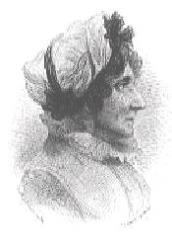
Mrs. Barbauld

1743 - 1825 Person Name: Anna L. Barbauld Author of "When, as returns this solemn day" in Laudamus Barbauld, Anna Laetitia, née Aikin, daughter of the Rev. John Ailrin, D.D., a dissenting minister, was b. at Kibworth-Harcourt, Leicestershire, June 20, 1743. In 1753 Dr. Aikin became classical tutor at a dissenting academy at Warrington. During her residence there she contributed five hymns to Dr. W. Enfield's Hymns for Public Worship, &c, Warrington, 1772. In the following year these were included in her Poems, Lond., J. Johnson, 1773. In May, 1774, Miss Aikin was married to the Rev. Rochemont Barbauld, a descendant of a French Protestant family, and a dissenting minister. For some years Mr. Barbauld conducted, in addition to his pastoral work, a boarding school at Palgrave, Suffolk. From this he retired in 1785. In 1786 he undertook the charge of a small congregation at Hampstead, and from thence he passed to the dissenting chapel (formerly Dr. Price's) at Newington Green, in 1802. He d. Nov. 11, 1808. Mrs. Barbauld continued to reside in the neighbourhood until her death, March 9, 1825. In the latter part of the same year her niece published The Works of Anna Laetitia Barbauld, with Memoir, by Lucy Aikin, 2 vols., Lond., Longman, 1825. As a writer of hymns Mrs. Barbauld was eminently successful. Their use, however, with the exception of five contributed to Dr. W. Enfield's collection, is almost exclusively confined to the Unitarian hymnals of Great Britain and America. Including these hymnals, the whole of her hymns are still in common use. These hymns appeared thus:— i. In Dr. W. Enfield's Hymns, &c., 1772. 1. Again the Lord of life and light. Easter. 2. Awake, my soul, lift up thine eyes. Conflict. 3. Behold, where breathing love divine. Christian Charity. 4. Jehovah reigns, let every nation hear. God's Dominion. A part of this was given in Collyer's Sel., 1812, No. 586, as:— 5. This earthly globe, the creature of a day. 6. Praise to God, Immortal praise. Harvest. ii. Poems, 1773 (Preface dated Dec. 1, 1772). The whole of the above, and also:— 7. God of my life and author of my days. To God the Father. This is an “Address to the Deity," in 80 1. It is given in Martineau's Collection, 1840 and 1873. From it the following centos were given in Collyer's Selection> 1812:— 8. God, our kind Master, merciful as just. 9. If friendless in the vale of tears I stray. iii. Poems revised 1792. 10. Come, said [says] Jesus' sacred voice. Invitation. 11. How blest the sacred tie that binds. Christian Fellowship. 12. Lo where a crowd of pilgrims toil. Pilgrimage of Life. From this is taken:— 13. Our country is Immanuel's ground [land]. iv. Leisure Hour Improved (Ironbridge), 1809. 14. Sweet is the scene when virtue dies. Death. v. Supplement to the Unitarian Coll. of Kippis, Bees, and others, 1807. 15. When as returns the solemn day. Sunday. 16. Sleep, sleep to day, tormenting cares. Sunday. 17. How may earth and heaven unite. Worship. vi. Works, with Memoir, 1825. In vol. i. most of the above are reprinted, and the following are added :— 18. Joy to the followers of the Lord. Joy. (c. 1820.) 19. Pure spirit, O where art thou now. Bereavement. This is dated 1808. 20. Salt of the earth, ye virtuous few. Salt of the Earth. 21. When life as opening buds is sweet. Death. This is dated " November, 1814." The more important of these hymns are annotated in this Dictionary under their first lines. Mrs. Barbauld's Hymns in Prose for Children, originally published in 1781, were long popular and have been translated into French, Italian, Spanish, and other languages. -- John Julian, Dictionary of Hymnology (1907) =================== Barbauld, Anna L., p. 113, ii. No. 18 on p. 114, i.,should be dated circa 1820. Another hymn in common use from Mrs. Barbauld's Works, &c, 1825, is, "O Father! though the anxious fear" (E. Taylor, p. 1117, in error). --John Julian, Dictionary of Hymnology, Appendix, Part II (1907) See also in: Hymn Writers of the Church

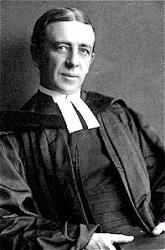
Louis F. Benson

1855 - 1930 Author of "O Thou Whose Feet Have Climbed Life's Hill" in The Hymnbook Benson, Louis FitzGerald, D.D., was born at Philadelphia, Penn., July 22, 1855, and educated at the University of Penn. He was admitted to the Bar in 1877, and practised until 1884. After a course of theological studies he was ordained by the Presbytery of Philadelphia North, in 1888. His pastorate of the Church of the Redeemer, Germantown, Phila., extended from his ordination in 1888 to 1894, when he resigned and devoted himself to literary and Church work at Philadelphia. He edited the series of Hymnals authorised for use by the General Assembly of the Presbyterian Church in the U.S.A., as follows:— (1) The Hymnal, Phila., 1895; (2) The Chapel Hymnal, 1898; and (3) The School Hymnal, 1899. Dr. Benson's hymnological writings are somewhat extensive. They include:— (1) Hymns and Verses (original and translations), 1897; (2) The Best Church Hymns, 1898; (3) The Best Hymns, 1898; (4) Studies of Familiar Hymns, 1903, &c. Of his original hymns the following have come into American common use:— I. In The Hymnal, 1895:— 1. O Christ, Who didst our tasks fulfil. For Schools and Colleges. Written in 1894. 2. O risen Christ, Who from Thy throne. For Installation of a Pastor. Written in 1894. II. In The School Hymnal, 1899:— 3. A glory lit the wintry sky. Loneliness of Jesus. Written in 1897. 4. Happy town of Salem. Heaven. 5. Now the wintry days are o'er. Easter. 6. O sing a song of Bethlehem. Early Life of Jesus. 7. Open the door to the Saviour. Invitation. 8. Out of the skies, like angel eyes. Lullaby. 9. Who will teach me how to pray? Prayer. In Carey Bonner's Sunday School Hymnary, 1905:— 10. The sun is on the land and sea. Morning. 11. Our wilful hearts have gone astray. Penitence. 12. When I awake from slumber. Morning. Of the above, Nos. 1-4, 10-12 are from Hymns and Verses, 1897. In the above collection by C. Bonner, Nos. 1, 4, and 6 are also found. Of Dr. Benson's translations from the Latin one only is in common use. See "Plaudite coeli, Rideat aether." As a hymn writer Dr. Benson is not widely known, mainly through the recent publication of his verse. His hymns deserve attention, and will, no doubt, gain the public ear in due time; whilst his hymnological researches and publications are thorough and praiseworthy. --John Julian, Dictionary of Hymnology, New Supplement (1907)

Anonymous

Person Name: Anon. Author of "Let Chrixtian faith and hope dispel" in The Book of Praise In some hymnals, the editors noted that a hymn's author is unknown to them, and so this artificial "person" entry is used to reflect that fact. Obviously, the hymns attributed to "Author Unknown" "Unknown" or "Anonymous" could have been written by many people over a span of many centuries.

John Mason

1645 - 1694 Person Name: John Mason (-1694) Author of "Lord, for the mercies of the night" in School and Parish Hymnal Mason, John. The known facts of his life are scanty. He was the son of a Dissenting Minister, and the grandfather of John Mason, the author of A Treatise on Self-Knowledge. He was educated at Strixton School, Northants, and Clare Hall, Cambridge. After taking his M.A., he became Curate of Isham; and in 1668, Vicar of Stantonbury, Bucks. A little more than five years afterwards he was appointed Rector of Water-Stratford. Here he composed the volume containing The Songs of Praise, his paraphrase of The Song of Solomon, and the Poem on Dives and Lazarus, with which Shepherd's Penitential Cries was afterwards bound up. This volume passed through twenty editions. Besides the Songs of Praise, it contains six Penitential Cries by Mason, and it is this portion of his work which harmonizes with the compositions of Shepherd. Probably his hymns were used in public worship, and if so, they are among the earliest hymns so used in the Church of England. Some of his hymns are often found in the early Hymn Collections of the 18th century. The most notable work besides this volume is Select Remains of the Rev, John Mason, a collection of sententious and practical sayings and Christian letters, published by his grandson, and much eulogized by Dr. Watts. His friend, Shepherd, who was at Water-Stratford at the remarkable period to which reference is made below, published two of Mason's Sermons, with a preface of his own. Mason was a man of true piety and humility; known for eminent prayerfulness; faithful, experimental, effectual preaching; "a light in the pulpit, and a pattern out of it." His friendship with Baxter, and Shepherd, the Nonconformist Minister of Braintree, probably indicates his sympathies and theological position. Baxter calls him "the glory of the Church of England," and says :— "The frame of his spirit was so heavenly, his deportment so humble and obliging, his discourse of spiritual things so weighty, with such apt words and delightful air, that it charmed all that had any spiritual relish.” The close of his life was sensational enough. One night, about a month before his death, he had a vision of the Lord Jesus, wearing on His head a glorious crown, and with a look of unutterable majesty in His face. Of this vision he spoke; and preached a Sermon called The Midnight Cry, in which he proclaimed the near approach of Christ's Second Advent. A report spread that this Advent would take place at Water-Stratford itself, and crowds gathered there from the surrounding villages. Furniture and provisions were brought in, and every corner of the house and village occupied. Most extraordinary scenes occurred, singing and leaping and dancing. The excitement had scarcely died out when the old man passed away (1694), still testifying that he had seen the Lord, and that it was time for the nation to tremble, and for Christians to trim their lamps. His last words were, “I am full of the loving kindness of the Lord." [Rev. H. Leigh Bennett, M.A.] The full titles of his Songs of Praise, and the additions thereto, are:— (1) Spiritual Songs; or, Songs of Praise to Almighty God upon several occasions, 1683. (2) The Song of Songs which is Solomon's first Turned, then Paraphrased in English Verse. Published with the former. (3) Dives and Lazarus, incorporated with the former 1685. (4) Penitential Cries, Begun by the Author of the Songs of Praise, And carried on by another Hand. Licensed and Entered, Sept. 13, 1693. This forms the concluding part of all editions of the Songs of Praise after 1693. The complete work was reprinted by D. Sedgwick in 1859. This reprint was accompanied by a short Memoir. In this reprint Mason's Penitential Cries and Ps. 86 are given under Songs of Praise, pp. 49-61, those under Penitential Cries being all by Shepherd (q.v.). Mason's Life, by John Dunton, was published in 1694, and included some miscellaneous poems; and another, by Henry Maurice, in 1695, in which are two hymns not found elsewhere. We may add that Mason published a Catechism, with some Verses for Children. Of this, however, no copy is known to exist. Mason's Songs are commonly presented in modern hymnbooks in the form of centos, which are sometimes compiled from a single Song, and in other instances from several Songs. Many of these are annotated under their respective first lines. The rest include:— 1. Blest be my God that I was born. Praise for the Gospel. 2. Lord, for the mercies of the night. Morning. 3. Lord of my life, Length of my days. Praise for Deliverance from Immediate danger of Death. 4. My God, a God of pardon is. Praise for Pardon of Sin. 5. My God, my only Help and Hope. Praise for Providence. 6. My God, my reconciled God. Praise for Peace of Conscience. 7. My God was with me all this night. Morning. 8. Thou wast, 0 God; and Thou wast blest. Praise for Creation. 9. Thousands of thousands stand around. Praise. A cento from Songs i. and ii. In Griffith, Farran & Co.'s Ancient and Modern Library, No. 12, Giles Fletcher's Christ's Victory and Triumph, &c, 1888, p. 208 (edited by W. T. Brooke), a short hymn by Mason is given from Multum in Parvo: or the Jubilee of Jubilees, 1732, beginning "High praises meet and dwell within." It is an indifferent example of Mason's powers as a writer of sacred verse. -- John Julian, Dictionary of Hymnology (1907) ==================== Mason, J., p. 716, ii. Mason's Midnight Cry, stated on p. 717, i. as having been preached in 1694, was delivered in 1691. The 1st ed. of this sermon is:— “The Midnight Cry. A Sermon Preached On the Parable of the Ten Virgins . . . . By J. M., M.A., Rector of W. in the County of B., London: Nathanael Ranew . . 1691. This edition has no hymns. To the 4th ed. in 1692, published by the same Nathanael Ranew, there was added:— The Fourth Edition, with the Addition of two Hymns for the Coming of Christ. By the same Author. The first of these hymns begins:— "The evening of the Day Portends a dismal night," and is in 12 stanzas of 8 lines. The second hymn is:— "Come, come, my dearest, dearest Lord, Make haste and come away." This is in 14 stanzas of 4 lines. Of the first and fifth eds. there are copies in the Brit. Museum, and of the first in the Julian Collection of the Church House, London. --John Julian, Dictionary of Hymnology, New Supplement (1907)

Jeremiah Clarke

1669 - 1707 Person Name: Jeremiah Clarke, c.1673-1707 Composer of "ST MAGNUS (NOTTINGHAM)" in The Irish Presbyterian Hymnbook

Healey Willan

1880 - 1968 Person Name: Healey Willan, 1880- Arranger (Faux Bourdon) of "ST. MAGNUS" in The Hymnary of the United Church of Canada Healey Willan (b. Balham, London, England, October 12, 1880; d. Toronto, Ontario, February 16, 1968), theory teacher, composer and organist, was born into an Anglo-Catholic family in England and served several churches in the London area, becoming known especially for his adaptations of Gregorian chant to be able to be sung in English translation. In 1913 he moved to Canada where he led the theory department and was organist at the Toronto Conservatory of Music. He also was organist at St. Paul’s, Canada’s largest Anglican church, and after 1921 at the smaller Church of St. Mary Magdalene. By invitation, he composed an anthem for the coronation of Queen Elizabeth II, a singular honor for one not residing in England. Emily Brink

John Needham

? - 1786 Author of "Holy and reverend is the name" in Luther League Hymnal Needham, John, was the son of John Needham, Baptist Minister, of Hitchin, Herts, but the date of his birth is unknown. He would doubtless be educated by his father, who was a tutor and in repute as a learned man. In 1750 Needham became co-pastor with John Beddome at the Baptist meetinghouse in the Pithay, Bristol; but, two years later, Beddome having retired through age, a violent controversy arose in the Church with regard to a continuance of the plan of co-pastorship. As the result, Needham and a number of his friends removed to a Baptist meetinghouse in Callowhill Street, where a Mr. Foot was pastor. For a time the two societies used the same builing at different hours, but in 1755 they were united, with Mr. Needham and Mr. Foot as co-pastors. It is known that up to 1774 this arrangement continued, and it is also known that in 1787, both Mr. Needham and Mr. Foot having died, the Callowhill Street Church became extinct, but which of the two pastors was the survivor is not known. The date of Needham's death is unknown. It was probably circa 1786. In 1768 he published Hymns Devotional and Moral on various Subjects, collected chiefly from the Holy Scriptures, &c, Bristol, S. Farley, 1768. These hymns are 263 in all, and whilst none of them possess great excellence, yet several are of a pleasing and useful character. During the past 120 years several have appeared in Nonconformist hymnbooks, and specially in those of the Baptists. Of these the following are still in common use:— 1. Ashamed of Christ! my soul disdains. Not ashamed of Christ. 2. Awake, my tongue, thy tribute bring. The Divine Perfections. 3. Glory to God, Who reigns above. Jesus, the Messiah. 4. Great author of the immortal mind. Imitation of God's Moral Perfections. From "flow matchless, Lord, Thy glories are." 5. Happy the man whose cautious steps. Christian Moderation. 6. Holy and reverend is the Name. Reverence in Worship. 7. Kind are the words that Jesus speaks. Christ the Strengthener. 8. Lord,ere [Now Lord] the heavenly seed is sown. Parable of the Sower. 9. Methinks the last great day is come. The Judgment. 10. Rise, O my soul, pursue the path. The Example of the Saints. 11. See how the little toiling ant. Youth for Christ. 12. Thou art, O God, a Spirit pure. God a Spirit. 13. To praise the ever bounteous Lord. Harvest. 14. When some kind shepherd from his fold. The Lost Sheep. From this “O how divine, how sweet the joy," in Hatfield's Church Hymn Book, New York, 1872, is taken. [Rev. W. R. Stevenson, M.A.] --John Julian, Dictionary of Hymnology (1907)

Pages


Export as CSV
It looks like you are using an ad-blocker. Ad revenue helps keep us running. Please consider white-listing Hymnary.org or getting Hymnary Pro to eliminate ads entirely and help support Hymnary.org.