

 My Starred Hymns
 My FlexScores
 My Hymnals
 My Purchased Files
Planning worship?
Check out our sister site, ZeteoSearch.org,
for 20+ additional resources related to your search.
- |
User Links
Person Results
Samuel Francis Smith
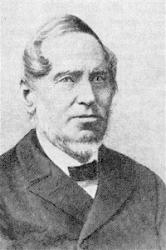
1808 - 1895 Person Name: S. F. Smith Author of "With willing hearts we tread" in New Manual of Praise Smith, Samuel Francis, D.D., was born in Boston, U.S.A., Oct. 21, 1808, and graduated in arts at Harvard, and in theology at Andover. He entered the Baptist ministry in 1832, and became the same year editor of the Baptist Missionary Magazine. He also contributed to the Encyclopaedia Americana. From 1834 to 1842 he was pastor at Waterville, Maine, and Professor of Modern Languages in Waterville College. In 1842 he removed to Newton, Massachusetts, where he remained until 1854, when he became the editor of the publications of the Baptist Missionary Union. With Baron Stow he prepared the Baptist collection known as The Psalmist, published in 1843, to which he contributed several hymns. The Psalmist is the most creditable and influential of the American Baptist collections to the present day. Dr. Smith also published Lyric Gems, 1854, Rock of Ages, 1870, &c. A large number of his hymns are in use in America, and several have passed into some of the English collections. Taking his hymns in common use in alphabetical order, we have the following:—
1. And now the solemn deed is done. Ordination. Given in The Psalmist, 1843, No. 954. In Dr. Hatfield's Church Hymn Book, N. Y., 1872, it is altered to "The solemn service now is done."
2. As flows the rapid river. Life Passing Away. In Christian Psalmody, 1833, No. 33; the Hymns for the Vestry and Fireside, Boston, 1841; and The Psalmist, 1843, No. 1059. Found in a few English hymn-books, and in Lyra Sacra Americana, 1868.
3. Auspicious morning, hail. American National Anniversary. Written for July 4th, 1841, and published in The Psalmist, 1843, No. 1007.
4. Beyond where Cedron's waters flow. Gethsemane. In L. Bacon's Appendix, 1833; the Psalmist, 1843, No. 220, and later collections.
5. Blest is the hour when cares depart. Divine Worship. In The Psalmist, 1843, No. 947, and others.
6. Constrained by love we follow where. Holy Baptism. Appeared in the Baptist edition of the Plymouth Hymn Book, 1857.
7. Down to the sacred wave. Holy Baptism. Contributed to Winchell's Additional Hymns added to his Collection of 1817, in 1832, No. 510; repeated in The Psalmist, 1843, No. 818, and in several collections. Also in Lyra Sacra Americana, 1868.
8. Hail! ye days of solemn meeting. Public Worship. An altered form of No. 26 below, in Spurgeon's Our Own Hymn Book, 1866, as an "American Hymn, 1840."
9. How blest the hour when first we gave. Holy Baptism. Appeared in the Baptist edition of thePlymouth Hymn Book, 1857, No. 1468.
10. How calmly wakes the hallowed morn. Holy Baptism. Given in The Psalmist, 1843, No. 810, in later collections, and in Lyra Sacra Americana, 1868.
11. Jesus, Thou hast freely saved us. Salvation. In Winchell's Additional Hymns, 1832, No. 503, and others.
12. Meekly in Jordan's Holy Stream. Holy Baptism. Contributed to The Psalmist, 1843, No. 808.
13. My country, 'tis of thee. National Hymn. "Written in 1832, and first sung at a children's Fourth of July celebration in Park Street church, Boston." Included in The Psalmist, 1843, No. 1000, and found in a large number of American hymn-books, but not in use in Great Britain. It is one of the most popular of Dr. Smith's compositions. Text, with note in Lyra Sacra Americana, 1868.
14. 0 not my own these verdant hills. Bought with a Price. Appeared in Nason's Congregational Hymn Book, 1857, and given inLaudes Domini, 1884.
15. Onward speed thy conquering flight. Missions. Appeared in The Psalmist, 1843, No. 892, and is found in several modern collections in Great Britain and America. Also in Lyra Sac. Americana, 1868.
16. Planted in Christ, the living Vine. Christian Fellowship; or, For Unity. Given in The Psalmist, 1843, No. 929, inLyra Sacra Americana, 1868, and several hymn-books. Of the hymns contributed by Dr. Smith to The Psalmist this is the best, and one of the most popular.
17. Remember thy Creator. Youthful Piety Enforced. In Christian Psalmody, 1832, No. 32; the Hymns for the Vestry and Fireside, 1841; The Psalmist, 1843, No. 778; Lyra Sac. Americana, 1868, and other collections.
18. Sister, thou wast mild and lovely. Death and Burial. Written on the death of Miss J. M. C. of Mount Vernon School, Boston, July 13,1833, and published in The Psalmist, 1843, No. 1096.
19. Softly fades the twilight ray. Sunday Evening. Written in 1832, and included in The Psalmist, 1843, No. 56. Also in Lyra Sacra Americana, and several hymn-books.
20. Spirit of holiness, descend. Whitsuntide. Appeared in the Hymns for the Vestry and Fireside, 1841, No. 295, and again in The Psalmist, 1843, No. 384. In the Unitarian Hymns for the Church of Christ, Boston, 1853. St. ii., iii., iv. were given as "Spirit of God, Thy churches wait." This form of the text and the original are both in modern hymn-books.
21. Spirit of peace and holiness. Institution of a Minister. Appeared in The Psalmist, 1843, No. 953, and Hatfield's Church Hymn Book, 1872.
22. The morning light is breaking. Missions. Written in 1832, and included in Hastings's Spiritual Songs, 1832-33, No. 253; and The Psalmist, 1843, No. 912. This hymn is very popular and has been translated into several languages. Dr. Smith says of it that “it has been a great favourite at missionary gatherings, and I have myself heard it sung in five or six different languages in Europe and Asia. It is a favourite with the Burmans, Karens, and Telegus in Asia, from whose lips I have heard it repeatedly.”
23. The Prince of Salvation in triumph is riding. Missions. Given in Hastings and Mason's Spiritual Songs, 1832-33, No. 274; The Psalmist, 1843, and later collections.
24. Tis done, the [important] solemn act is done. Ordination. Appeared in The Psalmist 1843, No. 951, and later hymn-books.
25. Today the Saviour calls. Invitation. First sketch by Dr. Smith, the revised text, as in Hastings and Mason's Spiritual Songs, No. 176, and The Psalmist, No. 453, by Dr. T. Hastings (p. 495, i. 19).
26. Welcome, days of solemn meeting. Special Devotional Services. Written in 1834, and given in Dr. Hatfield's Church Hymn Book, 1872. See No. 8.
27. When shall we meet again ? Parting. This is a cento. The first stanza is from Alaric A. Watts's Poetical Sketches, &c, 1822, p. 158 ; and st. ii.-iv. are by Dr. Smith. In this form it was published in L. Bacon's Supplement to Dwight, 1833, No. 489. It is in several American hymn-books; and also the English Baptist Psalms & Hymns, 1858, &c.
28. When the harvest is past and the summer is gone. Close of Worship. Contributed to Hastings and Mason's Spiritual Songs, 1831, No. 244; and repeated in the Fuller and Jeter Supplement to The Psalmist, 1847, No. 22, and later collections.
29. When thy mortal life is fled. The Judgment. Contributed to Winchell's Additional Hymns, 1832, No. 379, and repeated in The Psalmist, 1843, No. 455, and later hymn-books. Also in Lyra Sacra Americana, 1868.
30. While in this sacred rite of Thine. Holy Baptism. Appeared in The Psalmist, 1843, No. 803: Lyra Sacra Americana, 1868, &c.
31. With willing hearts we tread. Holy Baptism. In The Psalmist, 1843, No. 798; and again in the Baptist Praise Book, 1871.
32. Yes, my native land, I love thee. A Missionary's Farewell. Contributed to Winchell's Additional Hymns, 1832, No. 445, and found in later collections. Also in Lyra Sacra Americana, 1868. [Rev. F. M. Bird, M.A.]
--John Julian, Dictionary of Hymnology (1907)
Samuel Francis Smith
J. Hart
1712 - 1768 Person Name: Joseph Hart Author of "Come, Holy Spirit, come" in The Home and School Hymnal Hart, Joseph, was born in London in 1712. His early life is involved in obscurity. His education was fairly good; and from the testimony of his brother-in-law, and successor in the ministry in Jewin Street, the Rev. John Hughes, "his civil calling was" for some time "that of a teacher of the learned languages." His early life, according to his own Experience which he prefaced to his Hymns, was a curious mixture of loose conduct, serious conviction of sin, and endeavours after amendment of life, and not until Whitsuntide, 1757, did he realize a permanent change, which was brought about mainly through his attending divine service at the Moravian Chapel, in Fetter Lane, London, and hearing a sermon on Rev. iii. 10. During the next two years many of his most earnest and impassioned hymns were written. These appeared as:—
Hymns composed on Various Subjects, with the Author's Experience, London, 1759. During this year he became the Minister of the Independent Chapel, Jewin Street, London. In 1762 he added a Supplement to his Hymns; and in 1765 an Appendix. In modern editions of his Hymns these three are embodied in one volume as:— Hymns composed on Various Subjects: With the Author's Experience, The Supplement and Appendix. By the Rev. Joseph Hart, late Minister of the Gospel in Jewin Street, London. Allott & Co. [no date].
Hart died on May 24, 1768. At one time his hymns were widely used, especially by Calvinistic Nonconformists. Many of them are of merit, and are marked by great earnestness, and passionate love of the Redeemer. The best known are: “Come, Holy Spirit, come"; “Come, ye sinners, poor and wretched"; "This God is the God we adore"; and "Lord, look on all assembled here." Those which are more limited in their use include:—
i. From his Hymns, &c, 1759.
1. Descend from heaven, celestial Dove. Whitsuntide. No. 6, in 6 stanzas of 6 lines. In Snepp's Songs of Grace & Glory., 1872, No. 374, st. iv., v. are omitted. It is in extensive use in America.
2. Great High Priest, we view Thee stooping. High Priesthood of Christ. No. 56, pt. ii., in 3 stanzas of 8 lines. In Snepp's Songs of Grace & Glory, 1872, No. 236; Hatfield's Church Hymn Book, N. Y., 1872, No. 435, &c.
8. How wondrous are the works of God. Redeeming Love. No. 21, in 9 stanzas of 4 lines. In the Scottish Evangelical Union Hymnal, 1878, st. i.-iv. are given as No. 11.
4. If ever it could come to pass. Final Perseverance. No. 58, in 3 stanzas of 6 lines. Repeated in Snepp's Songs of Grace & Glory, 1872, No. 729.
6. Jesus is our God and Saviour . Faith and Repentance. No. 54, in 7 stanzas of 8 lines. In Snepp's Songs of Grace & Glory, 1872, No. 146, st. iv. is omitted. In the London Hymn Book (enlarged), 1879, st. iii. and v. are given as "Nothing but Thy blood, 0 Jesus."
6. Jesus, while He dwelt below. Gethsemane. No. 75, in 23 stanzas of 6 lines. In Snepp's Songs of Grace & Glory, 1872, No. 230, sixteen stanzas are broken up into three parts: (i.) "Jesus, while He dwelt below"; (ii.) "Full of love to man's lost race"; (iii.) "There my God bore all my guilt." A cento is also given in Hatfield's Church Hymn Book, N. Y., 1872, No. 441, as "Many woes had Christ [He] endured." It is composed of st. viii., ix., xiii., xx., xxiii., slightly altered. In the Scottish Evangelical Union Hymnal, 1878, No. 34, 8 stanzas are given in two parts: pt. i. as, "Jesus, while He dwelt below"; pt. ii. "Eden from each flowery bed."
7. Lamb of God, we fall before Thee. Christ All in All. No. 17 in 4 stanzas of 8 lines. It is in various collections, and as altered in Kennedy , 1863, No. 1171, is much improved.
8. Let us all with grateful praises. Christmas. No. 14 in 7 stanzas of 8 lines. In Spurgeon's 0ur Own Hymn Book, 1866, it is reduced to 4 stanzas of 4 lines.
9. Lord, look on all assembled here. For a Public Fast. No. 96, in 8 stanzas of 4 lines. It is in several of the older hymnbooks.
10. Lord, we lie before Thy feet. Lent. No. 74, in 6 stanzas of 6 lines, and based on 2 Chron. xx. 20. In Spurgeon's 0ur Own Hymn Book, 1866, stanza i., iii., vi. are given as No. 585.
11. Mercy is welcome news indeed. God's Mercy in pardoning Sin. No. 51, in 6 stanzas of 4 lines, on St. Luke vii. 42. In Spurgeon, 1866, No. 544.
12. Much we talk of Jesu's blood. Passiontide. No. 41, in 4 st. of 8 lines, on Lam. i. 12. In Spurgeon, 1866, it is abridged to 4 stanzas of 4 lines.
13. Bow from the garden to the cross. Good Friday. No. 63, in 9 stanzas of 4 lines, and entitled, "The Crucifixion." In Spurgeon, 1866, No. 274, st. ii.-v., vi.-ix. are given as "See how the patient Jesus stands."
14. The Fountain of Christ Assist me to sing. The Fountain. No. 86, in 8 stanzas of 8 lines on Zech. xiii. 1. In Spurgeon, 1866, st. i., v., vii., viii., are given as No. 375.
15. The moon and stars shall lose their light. Advent. No. 48, in 4 stanzas of 4 lines, on St. Matt. xxiv. 35. In Spurgeon, 1866.
16. The sinner that truly believes. Saving Faith. No. 88, in 5 stanzas of 4 lines, and entitled, "Saving Faith" In Spurgeon, 1866, No. 533, st. ii. is omitted, and the opening line is altered to "The moment a sinner believes."
ii. From his Supplement, 1762.
17. Behold what awful pomp. Advent. No. 52, in 8 stanzas of 4 lines. It is usually abridged as in the American Methodist Episcopal Hymns, 1849, No. 1107.
18. Christ is the Eternal Rock. The Offices of Christ. No. 27, in 6 stanzas of 8 lines. In Windle's Metrical Psalter & Hymnal, 1862, stanzas i., ii., v. are given as No. 53.
19. Christians, dismiss your fear. Easter. No. 33, in 4 stanzas of 8 lines into Dr. Alexander's Augustine Hymn Book, 1849, No. 79, in 7 stanzas of 4 lines.
20. Dismiss us with Thy blessing, Lord. Close of Service. No. 78, in 2 stanzas of 4 lines. In a few collections.
21. Gird thy loins up, Christian soldier. The Christian Armour . No. 29, in 5 stanzas of 8 lines, on Eph. vi. 11. Found in several of the older, and a few of the modern collections.
22. Glory to God on high, Our peace, &c. Holy Communion. No. 3, in 6 stanzas of 4 lines. In Hatfield's Church Hymn Book, 1872, No. 704, st. v., vi. are omitted.
23. Holy Ghost, inspire our praises. On behalf of Ministers. No. 77, in 5 stanzas of 8 lines. In the Scottish Evangelical Union Hymnal, 1878, No. 412, st. iii.-v. are given as, "Happy soul that hears and follows."
24. Jesus once for sinners slain. Holy Communion. No. 18, in 6 stanzas of 4 lines. In American use.
25. Lord, help us on Thy word to feed. Close of Service. No. 80, in 2 stanzas of 4 lines. In several modern hymnbooks.
26. O for a glance of heavenly day. Lent. No. 64, in 5 stanzas of 4 lines. In Hatfield's Church Hymn Book, 1872, and other American collections it is usually repeated in full. In Bickersteth's Christian Psalmody, 1833, it was given as, "Lord, shed a beam of heavenly day," and this is repeated in modern hymnbooks.
27. Once more before we part. Close of Service. No. 79, in 2 stanzas of 4 lines. Popular in Great Britain and America.
28. Once more we come before our God. Before a Sermon. No. 21, in 6 stanzas of 4 lines, into Hatfield, 1872, No. 111, and others.
29. Sons of God by bless'd adoption. Burial. No. 45, in 3 stanzas of 8 lines, into Snepp's Songs of Grace & Glory, 1872, No. 981, as "Sons of God by blest adoption."
30. Suffering Saviour, Lamb of God . Holy Communion. No. 14, in 8 stanzas of 4 lines. In W. F. Stevenson's Hymns for Church & Home, 1873, st. iii., vii. are omitted.
31. That doleful night before His death. Holy Communion. No. 17, in 2 stanzas of 8 lines. In the Scottish Evangelical Union Hymnal, 1878, st. i. 11. 4-8, and st. ii., are given as, "To keep Thy Feast, Lord, we are met."
iii. From his Appendix, 1765.
32. Christians, in your several stations. Christian Duty. No. 7, in 5 stanzas of 6 lines. It is slightly altered in Snepp's Songs of Grace & Glory, 1872, No. 742, and dated 1759 in error.
33. Prayer was [is] appointed to convey. Prayer. No. 12 in 6 stanzas of 4 lines into Snepp's Songs of Grace & Glory, 1872, No. 542, with alterations and the omission of st. ii., v. In some American collections it begins, "Prayer is to God, the soul's sure way."
--John Julian, Dictionary of Hymnology (1907)
=======================
Hart, Joseph, p. 492, ii. Other hymns in common use are—
1. The blest memorials of Thy grief (1762). Holy Communion.
2. To comprehend the great Three-One (1759). Holy Trinity.
3. Vain man, thy fond pursuits forbear (1759). Death.
4. When the blest day of Pentecost (1759). Whitsuntide.
--John Julian, Dictionary of Hymnology, Appendix, Part II (1907)
J. Hart
Anonymous
Author of "Lord, Bless and Pity Us" in The Cyber Hymnal In some hymnals, the editors noted that a hymn's author is unknown to them, and so this artificial "person" entry is used to reflect that fact. Obviously, the hymns attributed to "Author Unknown" "Unknown" or "Anonymous" could have been written by many people over a span of many centuries.
Anonymous
Matthias Loy
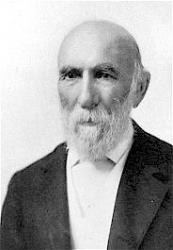
1828 - 1915 Translator of "Thy Table I Approach" in The Lutheran Hymnal Loy, M., President of the Capital University, Columbus, Ohio, contributed several original hymns, and translations from the German, to the Evangelical Lutheran Hymnal. Published by Order of the Evangelical Lutheran Joint Synod of Ohio and Other States. Columbus, Ohio, 1880.
The translations may be found through the Index of Authors, &c.; the original hymns are the following:—
1. An awful mystery is here. Holy Communion.
2. At Jesus' feet our infant sweet. Holy Baptism.
3. Come, humble soul, receive the food. Holy Communion.
4. Give me, 0 Lord, a spirit lowly. Humility desired.
5. God gave His word to holy men. Inspiration of Holy Scripture.
6. God of grace, Whose word is sure. Faithfulness.
7. How matchless is our Saviour's grace. Holy Baptism.
8. I thank Thee, Saviour, for the grief. Lent.
9. Jesus took the lambs and blest them. Holy Baptism.
10. Jesus, Thou art mine for ever. Jesus, All and in All.
11. Launch out into the deep. Call to Duty.
12. Listen to those happy voices. Christmas.
13. O Great High Priest, forget not me. Confirmation.
14. O Lord, Who hast my place assigned. Daily Duties.
15. Our Shepherd of His ransomed flock. Holy Communion.
16. The gospel shows the Father's grace. Holy Scripture.
17. The law of God is good and wise. Holy Scripture.
18. Though angels bright escape our eight. St. Michael and All Angels.
19. When Rome had shrouded earth in night. The Reformation.
20. When souls draw near the holy wave. Confirmation.
Several of these hymns, together with some of his translations, previously appeared in the Ohio Synod's preceding Collection of Hymns (3rd ed., 1858; 4th, 1863).
--John Julian, Dictionary of Hymnology (1907)
====================
Loy, Matthias, D.D., p. 700, i. Dr. Loy was born in Cumberland County, Pennsylvania, March 17, 1828. He studied at the Evangelical Lutheran Theological Seminary at Columbus, Ohio, of which he became Professor of Theology in 1365. He was appointed President of the Capital University in 1880.
--John Julian, Dictionary of Hymnology, Appendix, Part II (1907)
==================
See also in:
Wikipedia
Matthias Loy
Robert Bridges
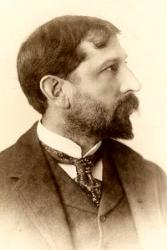
1844 - 1930 Person Name: R. B. Author (sts. 4, 5) of "How beauteous are their feet" in Hymns Robert S. Bridges (b. Walmer, Kent, England, 1844; d. Boar's Hill, Abingdon, Berkshire, England, 1930) In a modern listing of important poets Bridges' name is often omitted, but in his generation he was considered a great poet and fine scholar. He studied medicine and practiced as a physician until 1881, when he moved to the village of Yattendon. He had already written some poetry, but after 1881 his literary career became a full-time occupation, and in 1913 he was awarded the position of poet laureate in England. Bridges published The Yattendon Hymnal (1899), a collection of one hundred hymns (forty-four written or translated by him with settings mainly from the Genevan psalter, arranged for unaccompanied singing. In addition to volumes of poetry, Bridges also published A Practical Discourse on Some Principles of Hymn-Singing (1899) and About Hymns (1911).
Bert Polman
===================
Bridges, Robert Seymour, M.A., son of J. J. Bridges, of Walmer, Kent, was b. Oct. 23, 1844, and educated at Eton and at Corpus Christi College, Oxford (B.A. 1867, M.A. 1874). He took his M.A. in 1874, but retired from practice in 1882, and now (1906) resides at Yattendon, Berks. He is the author of many poems and plays. He edition and contributed to the Yattendon Hymnal, 1899 (originally printed at the Oxford Univ. Press in parts—Nos. 1-25, 1895; 26-50, 1897; 51-75, 1898; 76-100, 1899). [Rev. James Mearns, M.A.]
--John Julian, Dictionary of Hymnology, New Supplement (1907)
Robert Bridges
William Henry Monk
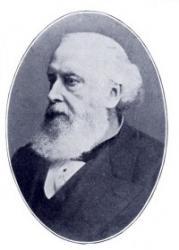
1823 - 1889 Person Name: William Henry Monk, 1823-1889 Harmonizer of "ST. MICHAEL" in The Book of Praise William H. Monk (b. Brompton, London, England, 1823; d. London, 1889) is best known for his music editing of Hymns Ancient and Modern (1861, 1868; 1875, and 1889 editions). He also adapted music from plainsong and added accompaniments for Introits for Use Throughout the Year, a book issued with that famous hymnal. Beginning in his teenage years, Monk held a number of musical positions. He became choirmaster at King's College in London in 1847 and was organist and choirmaster at St. Matthias, Stoke Newington, from 1852 to 1889, where he was influenced by the Oxford Movement. At St. Matthias, Monk also began daily choral services with the choir leading the congregation in music chosen according to the church year, including psalms chanted to plainsong. He composed over fifty hymn tunes and edited The Scottish Hymnal (1872 edition) and Wordsworth's Hymns for the Holy Year (1862) as well as the periodical Parish Choir (1840-1851).
Bert Polman
William Henry Monk
Nahum Tate
1652 - 1715 Person Name: N. Tate Author of "To bless Thy chosen race" in A Missionary Hymn Book Nahum Tate was born in Dublin and graduated from Trinity College, Dublin, B.A. 1672. He lacked great talent but wrote much for the stage, adapting other men's work, really successful only in a version of King Lear. Although he collaborated with Dryden on several occasions, he was never fully in step with the intellectual life of his times, and spent most of his life in a futile pursuit of popular favor. Nonetheless, he was appointed poet laureate in 1692 and royal historiographer in 1702. He is now known only for the New Version of the Psalms of David, 1696, which he produced in collaboration with Nicholas Brady. Poverty stricken throughout much of his life, he died in the Mint at Southwark, where he had taken refuge from his creditors, on August 12, 1715.
--The Hymnal 1940 Companion
See also in:
Hymn Writers of the Church
Nahum Tate
Richard Mant
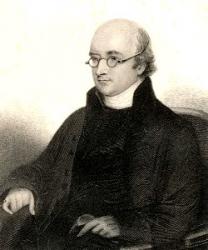
1776 - 1848 Person Name: Richard Mant, 1776-1848 Author of "For All Thy Saints, O Lord" in Ambassador Hymnal Mant, Richard D.D., son of the Rev. Richard Mant, Master of the Grammar School, Southampton, was born at Southampton, Feb. 12, 1776. He was educated at Winchester and Trinity, Oxford (B.A. 1797, M.A., 1799). At Oxford he won the Chancellor's prize for an English essay: was a Fellow of Oriel, and for some time College Tutor. On taking Holy Orders he was successively curate to his father, then of one or two other places, Vicar of Coggeshall, Essex, 1810; Domestic Chaplain to the Archbishop of Canterbury, 1813, Rector of St. Botolph, Bishopsgate, London. 1816, and East Horsley, 1818, Bishop of Killaloe, 1820, of Down and Connor, 1823, and of Dromore, 1842. He was also Bampton Lecturer in 1811. He died Nov. 2, 1848. His prose works were numerous, and although now somewhat obsolete, they were useful and popular in their day. His poetical works, and other works which contain poetical pieces, are:—
(1) The Country Curate, 1804; (2) Poems in three Parts, 1806; (3) The Slave, 1807; (4) The Book of Psalms in an English Metrical Version, &c, 1824; (5) The Holydays of the Church; or Scripture Narratives of Our Blessed Lord's Life and Ministry, and Biographical Notices of the Apostles, Evangelists, and Other Saints, with Reflections, Collects, and Metrical Sketches, vol. i., 1828; vol. ii., 1831; (6) The Gospel Miracles in a series of Poetical Sketches, &c., 1832; (7) The British Months, 2 vols., 1836; (8) Ancient Hymns from the Roman Breviary, for Domestick Use. . . .To which are added Original Hymns, principally of Commemoration and Thanksgiving for Christ's Holy Ordinances, 1837: new ed., 1871. (9) The Happiness of the Blessed Dead, 1847.
Bishop Mant is known chiefly through his translations from the Latin. He was one of the earliest of the later translators, I. Williams and J. Chandler being his contemporaries. Concerning his translations, Mr. Ellerton, in his Notes on Church Hymns, 1881, p. xlviii. (folio ed.), says justly that:—
"Mant had little knowledge of hymns, and merely took those of the existing Roman Breviary as he found them: consequently he had to omit many, and so to alter others that they have in fact become different hymns: nor was he always happy in his manipulation of them. But his book has much good taste and devout feeling, and has fallen into undeserved neglect."
His metrical version of the Psalms has yielded very few pieces to the hymnals, the larger portion of his original compositions being from his work of 1837. The most popular of these is "Come Holy Ghost, my soul inspire, Spirit of," &c, and its altered forms; "Bright the vision that delighted," and its altered form of "Round the Lord in glory seated;" and "For all Thy saints, O Lord." His hymns in common use which are not annotated under their respective first lines are:—
i. From his Metrical Version of the Psalms, 1824.
1. God, my King, Thy might confessing. Ps. cxlv.
2. Lord, to Thee I make my vows. Ps. xxvii.
3. Blessed be the Lord most High. Ps. xxviii. Pt. ii.
4. My trust is in the highest Name. Ps. xi.
5. Reign, Jehovah, King supreme. Ps. xcix.
6. Thy listening ear, O Lord, incline. Ps. Ixxxvi.
7. To God my earnest voice I raise. Ps. cxlii.
8. To Jehovah hymn the lay. Ps. cxviii. Two centos in Spurgeon's Our Own Hymn Book, 1866. (1) st. i., ii., v.; and (2) "Thee, Jehovah, will I bless" from st. vii.-x.
ii. From his Holydays of the Church, &c, 1828-31.
9. Lo, the day the Lord hath made. Easter.
10. There is a dwelling place above. All Saints.
iii. From his Ancient Hymns, &c, 1837.
11. Before Thy mercy's throne. Lent.
12. Father of all, from Whom we trace. Unity.
13. For these who first proclaimed Thy word. Apostles.
14. No! when He bids me seek His face. Holy Communion.
15. Oft as in God's own house we sit. Divine Worship.
16. Put off thy shoes, 'tis holy ground. The House of God .
17. Saviour of men, our Hope [Life] and Rest. The Greater Festivals.
18. Thy House each day of hallowed rest. Holy Communion.
19. We bless Thee for Thy Church, 0 Lord. Thanksgiving for the Church.
26. We deem and own it, Lord, a proof. Divine Grace.
When all Bishop Mant's translations of original hymns, and versions of the Psalms in common use are taken into account, it is found that he is somewhat strongly represented in modern hymnody.
-- John Julian, Dictionary of Hymnology (1907)
====================
http://en.wikipedia.org/wiki/Richard_Mant
Richard Mant
Stephen Greenleaf Bulfinch
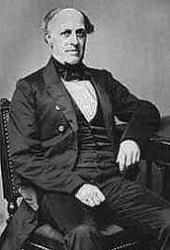
1809 - 1870 Person Name: S. Bulfinch Author of "Hail to the Sabbath day!" in The Primitive Methodist Church Hymnal Bulfinch, Stephen Greenleaf, D.D. This Unitarian minister was born at Boston, June 18, 1809, and removed to Washington in 1818, his father being the architect of the Capitol. He graduated at Columbian College and the Cambridge Theological School. In 1831 lie was ordained at Charleston, S.C., as assistant to Dr. Gilman. Subsequently he was pastor at Pittsburg, Pennsylvania; Washington, 1838; Nashua, New Hampshire, 1845; Dorchester, Mass., 1852; and "East Cambridge, Mass., 1865. He died at the last place, Oct. 12, 1870. His works include:—
(1) Contemplations of the Saviour; A Series of Extracts from the Gospel History, with Reflections and Original and Selected Hymns. Boston, Carter and Hendee, 1832. This has been reprinted in England. (2) Poems, Charleston, S.C., 1834. (3) Lays of the Gospel, 1845. In addition to these works, which contain his original hymns, he also published (4) The Harp and Cross, a selection of hymns, in 1857.
Those of his hymns which have attained ta the greatest popularity are:—
1. Hail to the Sabbath day. Sunday. In the Contemplations, &c, p. 45. It is appended to Sect. xii. on the “Walk through the corn¬fields," and is in 5 stanzas of 4 lines. It is in extensive use both in Great Britain and America, and is the best known of this author'ess hymns. In many collections it begins with st. ii., " Lord, in Thy [this] sacred hour."
2. Hath not thy heart within thee burned? Presence of Christ. In the Contemplations, &c, p. 148, as the accompanying hymn to the Reflections on Jesus appearing to His disciples on their way to Emmaus, It is in 5 stanzas of 4 lines and is given in the Collections of Beard, Martineau, and others in Great Britain.
3. 0 suffering friend of human kind. Passiontide. The hymn in 4 stanzas of 4 lines appended to Sect. xxxv. on "Peter's confession of Christ," in the Contemplations, &c, p. 109. It ranks next in popularity to ”Hail to the Sabbath day."
In addition to these hymns which best represent Dr. Bulfinch's power? as a sacred poet, the following are also in limited use:—
4. Burden of shame and woe. Crucifixion.
5. Holy Son of God most high. Miracles of Christ.
6. How glorious is the hour. The New Life.
7. It is finished! Glorious word. Good Friday.
8. There is a strife we all must wage. Life's Duty. These are from his Poems, 1834. The next—
9. What power unseen by mortal eye. Cure of Nobleman's Son. From the Contemplations, &c, p. 56.
10. In the Saviour's hour of death. Good Friday. Also from the Contemplations, p. 142:
Dr. Bulfinch's hymns were made known to English readers through Beard's Collection, 1837, in which 19 were given. His hymns throughout are noted for solid and tranquil piety, and deserve a wider circulation than has been accorded to them. They embrace some good hymns on the miracles of Christ. [Rev. F. M. Bird, M.A.]
-- John Julian, Dictionary of Hymnology (1907)
====================
Bulfinch, Stephen Greenleaf, p. 191, ii. Several of this authors hymns, not noted in this Dictionary, were given in Longfellow and Johnson's Book of Hymns , 1846-8. Additional hymns by him in English common use are:—
1. Benignant Saviour! 'twas not Thine. The Compassion of Christ . From his Contemplations of the Saviour , &c, 1832. In Horder's Congregational Hymns. 1884, it reads “Most gracious Saviour! 'twas not Thine."
2. We gather to the sacred board. Holy Communion. This in Horder is from Bulfinch's Communion Thoughts, 2nd ed., 1852.
--John Julian, Dictionary of Hymnology, Appendix, Part II (1907)
Stephen Greenleaf Bulfinch
Pages




