You help make Hymnary.org possible. More than 10 million people from 200+ countries found hymns, liturgical resources and encouragement on Hymnary.org in 2025, including you. Every visit affirms the global impact of this ministry.

If Hymnary has been meaningful to you this year, would you take a moment today to help sustain it? A gift of any size—paired with a note of encouragement if you wish—directly supports the server costs, research work and curation that keep this resource freely available to the world.

Give securely online today, or mail a check to:
Hymnary.org
Calvin University
3201 Burton Street SE
Grand Rapids, MI 49546

Thank you for your partnership, and may the hope of Advent fill your heart.

Person Results

Tune Identifier:"^wachet_auf_nicolai$"
In:people

Planning worship? Check out our sister site, ZeteoSearch.org, for 20+ additional resources related to your search.
Showing 21 - 30 of 70Results Per Page: 102050

Wilhelm Erasmus Arends

1677 - 1721 Person Name: Wilhelm Erasmus Arends Author of "Rüstet euch, ihr Christenleute" in Evangelisches Kirchengesangbuch Arends, Wilhelm Erasmus, son of E. F. Arnds, pastor at Langenstein, near Halberstadt, was born at Langenstein, Feb. 5,1677. He became, in 1707, pastor at Crottorf, near Halberstadt, and in 1718, pastor of the church of St. Peter and St. Paul in Halberstadt. He died at the latter place, May 16,1721 (Koch, iv. 389; Allg. Deutsche Biog., i. 516; manuscript from Pastor Spierling, Halberstadt, and Pastor Schafft, Langenstein). He is said to have contributed three hymns to pt. ii., 1714, of Freylinghausen's Gesang-Buch Of these Nos. 118, 303 are ascribed to him at p. 3 of the Grischow-Kirchner Nachricht, 1771, to Freylinghausen's Gesang-Buch, while the other is left anonymous. It is:— Rüstet euch ihr Christenleute. [Christian Warfare.] First published as No. 360 in 1714 as above, in 4 stanzas of 11 lines. Dr. Jacobs of Wernigerode informs me that Count Christian Ernst of Wernigerode (d. 1771), a well-known German hymnologist, ascribed it to Arends in a marked copy of the 1741 ed. of Freylinghausen's Gesang-Buch. Koch styles it "a call to arms for spiritual conflict and victory." Included in many later hymnbooks, and recently as No. 675 in the Berlin Geistliche Liedersegan, ed. 1863. Translation in common use:— Christians, prayer may well employ you. A full and good translation contributed by J. M. Sloan as No. 289 to Wilson's Service of Praise, 1865. [Rev. James Mearns, M.A.] - John Julian, Dictionary of Hymnology (1907)

F. Crawford Burkitt

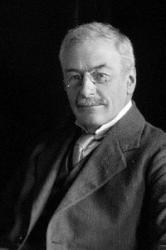
1864 - 1935 Person Name: Francis Crowford Burkitt Translator (English) of "Wachet auf, ruft uns die Stimme" in Cantate Domino Burkitt, Francis Crawford, M.A., son of Crawford Burkitt, was born in London, Sept. 3, 1864, and educated at Harrow and at Trinity College, Cambridge (B.A. 1886, M.A. 1889). In 1905, though a layman, he was appointed Norrisian Professor of Divinity at Cambridge. He has been a Fellow of the British Academy since 1904, and is the author of various works on Biblical Criticism and Early Church History. He contributed two translations (12, 194) to the English Hymnal, 1906. [Rev. James Mearns. M.A.] --John Julian, Dictionary of Hymnology, New Supplement (1907)

Jodocus van Lodenstein

1620 - 1677 Person Name: Jodocus v. Lodenstein Author of "Heiligster Jesu, heil'gungsquelle" in Die Glaubensharfe (With Melodies) Lodenstein, Jodocus van, son of Joost Corneliss van Lodenstein, burgomaster of Delft, was born at Delft Feb. 6, 1620. After studying at the Universities of Utrecht and Franeker he was appointed in 1644 pastor at Zoetermeer and Zegwaard, near Delft; in 1650 at Sluys (Sluis, near the boundary of Flanders); and in 1653 at Utrecht. He died at Utrecht Aug. 6, 1677 (Allg. Deutsche Biog., xix. 73-75). A pastor of the Reformed Church, he was spiritually allied to the Mystics. After 1665, not being able to exclude the worldly, he ceased to dispense the Holy Communion and altered the Baptismal formula; but never separated from the Church. His hymns appeared in his Uyt-Spanningen, Behelfende eenige stigtelyke Liederen en andere Gedigten, &c, Utrecht, 1676 [Berlin], which passed through many editions. Two are translated, viz.:— 1. Hemelsch Ooge! Wilt gy dogen. [Love to God.] 1676, p. 346, in 9 st. entitled "Solitude with God." It has passed into English through Ich will einsam und gemeinsam. No. 723, in Freylinghausen's Gesang-Buch, 1705; Porst's Gesang-Buch, ed. 1855, No. 385. It is a free translation in 5 stanzas of 6 lines, and is probably by C. A. Bernstein (p. 135, ii.), certainly not by Gr. Arnold or G. Tersteegen. Translated as (1) “Quite alone and yet not lonely," in full, from the 1105, as No. 680 in pt. i. of the Moravian Hymn Book, 1754. In the Moravian Hymn Book, 1789 (1886, No. 702), the trs. of stanzas i., ii., were reduced to 8.7.8.7, and this form is also in the Bible Hymn Book, 1845. 2. Heylge Jesu! Hemelsch Voorbeeld! [Christ our Example.] 1676, p. 152, in 9 stanzas, entitled "Jesus Pattern." It has passed into English through Heiligster Jesu, Heiligungsquelle, tr. in full. This has not yet been traced earlier than G. Arnold's Göttliche Sophia, 1700, pt. ii. p. 327, where it is No. 17 of “some hitherto unknown poems, mostly composed by others.” As it is found in this section it is perhaps more probably by B. Crasselius (q. v.). Koch, vi. 6, and viii. 437, characterises it as "a pearl in the Evangelical Treasury of Song and a genuine Christian moral hymn, of more importance than a hundred of the so-called moral hymns in the second half of the eighteenth cen¬tury." In the Berlin

Richard Massie

1800 - 1887 Person Name: Richard Massie, 1800-87 Translator of "By the holy hills surrounded" in The Methodist Hymn-Book with Tunes Massie, Richard, eldest son of the Rev. R. Massie, of Goddington, Cheshire, and Rector of Eccleston, was born at Chester, June 18, 1800, and resides at Pulford Hall, Coddington. Mr. Massie published a translation of Martin Luther’s Spiritual Songs, London, 1854. His Lyra Domestica, 1st series, London, 1860, contains translations of the 1st Series of Spitta's Psalter und Harfe. In 1864 he published vol. ii., containing translations of Spitta's 2nd Series, together with an Appendix of translations of German hymns by various authors. He also contributed many translations of German hymns to Mercer's Church Psalter & Hymn Book; to Reid's British Herald; to the Day of Rest, &c. He died Mar. 11,1887. -- John Julian, Dictionary of Hymnology (1907)

Carl Bernhard Garve

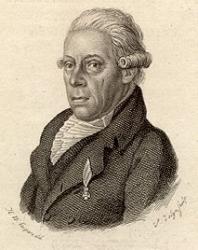
1763 - 1841 Person Name: K. B. Garve Author of "Sieh' uns, Deine Gäste, nahen" in Die Glaubensharfe (With Melodies) Garve, Carl Bernhard, was born Jan. 24, 1763, at Jeinsen, near Hannover, where his father was a farmer. He was educated at the Moravian schools in Zeist, and Neuwied, at their Pädagogium at Niesky, and their Seminary at Barby. In 1784 he was appointed one of the tutors at Niesky, and in 1789 at Barby; but as his philosophical lectures were thought rather unsettling in their tendency, he was sent, in 1797, to arrange the documents of the archive at Zeist. After his ordination as diaconus of the Moravian church, he was appointed, in 1799, preacher at Amsterdam; in 1801 at Ebersdorf (where he was also inspector of the training school); in 1809 at Berlin; and in 1816 at Neusalza on the Oder. Feeling the burden of years and infirmities he resigned the active duties of the ministry in 1836, and retired to Herrnhut, where he died June 21, 1841. (Koch, vii. 334-342; (Allgemeine Deutsche Biographie, viii. 392-94, &c.) Garve ranks as the most important of recent Moravian hymnwriters, Albertini being perhaps his superior in poetical gifts, but certainly not in adaptability to church use. His better productions are almost entirely free from typically Moravian features; and in them Holy Scripture is used in a sound and healthful spirit. They are distinguished by force and at the same time elegance of style, and are full of deep love and devotion to the Saviour. Many of them have passed into the German Evangelical hymnbooks, no less than 36 being included in the Berlin Gesange-Buch 1829; and of those noted below No. i. is to be found in almost all recent German collections. They appeared mostly in the two following collections, both of which are to be found in the Town Library, Hamburg: (1) Christliche Gesänge, Görlitz, 1825, with 303 hymns, a few being recasts from other authors. (2) Brüdergesange, Gnadau, 1827, with 65 hymns intended principally for use in the Moravian Communion. Garve's hymns in English common use are:— i. Dein Wort, 0 Herr, ist milder Thau. Holy Scripture. Perhaps his finest hymn. 1825, as above, p. 51, in 7 st. of 8 l. Included, as No. 410, in the Berlin Geistliche Lieder S., ed. 1863, and in the German hymnbooks for Hannover, 1883, for the kingdom of Saxony, 1883, for the province of Saxony, 1882, &c." Translated as:— 1. Thy Word, 0 Lord, like gentle dews. A good translation of st. i.-iii, by Miss Winkworth, in the first Ser., 1855, of her Lyra Germanica, p. 36. In the Pennsylvania Lutheran Church Book, 1868, it is No. 314 in full, but rewritten to D.C.M. In 1864 it was included, altered, and with 11. 5-8 of each stanza omitted, as No. 681 in Hymns of the Spirit, Boston, U. S., and this has been repeated in Dr. Martineau's Hymns of Praise & Prayer, 1873, and Dr. Allon's Children's Worship, 1878. 2. Thy Word, 0 Lord, is gentle dew. A good translation of st. i.-iii., based on the Lyra Germanica, by Miss Winkworth, as No. 102 in her Chorale Book for England, 1863, and thence, in the Ohio Lutheran Hymnal, 1880. ii. Hallelujah, Christus lebt. Easter. 1825, as above, p. 105, in 8 st. of 6 1. Included in Knapp's Evangelical Lutheran Songbook, 1850, No. 565. Translated as:— Hallelujah! Jesus lives! A good translation (omitting st. iv., vi.) by Miss Borthwick, in the 4th Ser., 1862, of the Hymns from the Land of Luther, p. 30 (1884, p. 201). In Lyra Messianica, 1864, p. 295, and in G. S. Jellicoe's Collection, 1867, No. 103, it begins, "Alleluia ! Jesus lives." iii. O Vater der Gemeine. Trinity Sunday. 1825, as above, p. 18, in 3 st. of 7 l. Included as No. 107 in Knapp's Evangelischer Lieder-Schatz, 1837. Translated as: -- Father of all created. In full, as No. 159, in Dr. Pagenstecher's Collection, 1864, signed " F. C. C." Another translation is, "0 Father, we adore Thee," in the British Herald, Oct. 1866, p. 324, repeated as No. 416 in Reid's Praise Book, 1872. Hymns not in English common use:— « iv. Der Herr ist treu, Der Herr ist ewig treu. God's Faithfulness. 1825, p. 5, in 6 st., repeated in the Berlin Gesang-Buch, 1829, No. 60, beginning "Gott ist treu." Translated by N. L. Frothingham, 1870, p. 253. v. Geduld! Geduld! ob's stürmisch weht. Trust in God. 1825, p. 180, in 3 st., repeated in the Berlin Gesang-Buch 1829, No. 593, beginning "Geduld! wie sehr der Sturm auch weht." Translated by N. L. Frothingham, 1870, p. 265. vi. Sagt was hat die weite Welt. Holy Scripture. 1825, p 49, in 6 st. Translated as “Tell me, can the world display," in the British Herald, Nov. 1866, p. 360, repeated as No. 420 in Reid's Praise Book, 1872. vii. Wer bin ich, Herr, in deinem Licht. Self-Examination, 1825, p. 216, in 15 st. Translated by N. L. Frothingham, 1870, p. 258. viii. Zur Arbeit winkt mir mein Beruf. Before Work, 1825, p. 233, in 9 st. Translated by E. Massie, l861. A hymn sometimes ascribed to Garve is noted under "Gib deinen Frieden uns." [Rev. James Mearns, M.A.] -- John Julian, Dictionary of Hymnology (1907)

Benjamin C. Blodgett

1838 - 1925 Person Name: Benj. C. Blodgett Arranger of "WACHET AUF" in College Hymnal

Jacob Praetorius

1586 - 1651 Person Name: Jak. Praetorius Arranger of "[Wachet auf, ruft uns die Stimme]" in Cantate Domino

S. P.

Translator of "Wake, O wake! for night is flying!" in Songs of Praise

W. Cook

Translator of "Wake, awake, for Night is Flying" in Concordia

Rhijnuis Feith

1753 - 1824 Person Name: Rhijnvis Feith, 1753-1824 Author of "Praise the Lord through every nation" in The Hymnal 1982 Rhijnvis Feith (b. Zwolle, the Netherlands, 1753; d. Zwolle, 1824) received a law degree from the University of Leiden in 1770 and was mayor of Zwolle. An ardent Dutch patriot and a man of letters who lamented the Napoleonic occupation of the Netherlands, Feith wrote nineteen volumes of prose and poetry, much of it highly romantic, as well as theological and philosophic essays. He also wrote a number of hymns, thirty-five of which were included in the Dutch hymnal Evangelische Gezangen (1806), which he helped to compile. Bert Polman ================ Feith, Rhijnvis, a Minister of the Dutch Reformed Church at Zwolle, in Holland. His hymn "Looftden Koning, alle Volken" appeared in the Evangelische Gezangen bij Godsdienst in de Nederlandsche Hervormde Gemeenten, 1806 (p. 1528, ii.). This hymn was translated on January 10, 1828, by J. Montgomery (M. MSS), as "Praise the Lord through every nation," and so far as we can trace, was first published in his Original Hymns, 1853, p. 136, as a hymn for Ascension Day, and headed, “Paraphrased, in the original metre, from a Dutch Hymn." In 1855 it was included in Mercer's Church Psalter & Hymn Book, No. 122, and later in many collections. --John Julian, Dictionary of Hymnology, Appendix, Part II (1907)

Pages


Export as CSV
It looks like you are using an ad-blocker. Ad revenue helps keep us running. Please consider white-listing Hymnary.org or getting Hymnary Pro to eliminate ads entirely and help support Hymnary.org.