You help make Hymnary.org possible. More than 10 million people from 200+ countries found hymns, liturgical resources and encouragement on Hymnary.org in 2025, including you. Every visit affirms the global impact of this ministry.

If Hymnary has been meaningful to you this year, would you take a moment today to help sustain it? A gift of any size—paired with a note of encouragement if you wish—directly supports the server costs, research work and curation that keep this resource freely available to the world.

Give securely online today, or mail a check to:
Hymnary.org
Calvin University
3201 Burton Street SE
Grand Rapids, MI 49546

Thank you for your partnership, and may the hope of Advent fill your heart.

Person Results

Tune Identifier:"^ware_kingsley$"
In:people

Planning worship? Check out our sister site, ZeteoSearch.org, for 20+ additional resources related to your search.
Showing 21 - 30 of 35Results Per Page: 102050

St. Bernard of Clairvaux

1090 - 1153 Person Name: Bernard of Clairvaux Author of "Of him who did salvation bring" in The Primitive Methodist Church Hymnal Bernard of Clairvaux, saint, abbot, and doctor, fills one of the most conspicuous positions in the history of the middle ages. His father, Tecelin, or Tesselin, a knight of great bravery, was the friend and vassal of the Duke of Burgundy. Bernard was born at his father's castle on the eminence of Les Fontaines, near Dijon, in Burgundy, in 1091. He was educated at Chatillon, where he was distinguished for his studious and meditative habits. The world, it would be thought, would have had overpowering attractions for a youth who, like Bernard, had all the advantages that high birth, great personal beauty, graceful manners, and irresistible influence could give, but, strengthened in the resolve by night visions of his mother (who had died in 1105), he chose a life of asceticism, and became a monk. In company with an uncle and two of his brothers, who had been won over by his entreaties, he entered the monastery of Citeaux, the first Cistercian foundation, in 1113. Two years later he was sent forth, at the head of twelve monks, from the rapidly increasing and overcrowded abbey, to found a daughter institution, which in spite of difficulties and privations which would have daunted less determined men, they succeeded in doing, in the Valley of Wormwood, about four miles from the Abbey of La Ferté—itself an earlier swarm from the same parent hive—on the Aube. On the death of Pope Honorius II., in 1130, the Sacred College was rent by factions, one of which elected Gregory of St. Angelo, who took the title of Innocent II., while another elected Peter Leonis, under that of Anacletua II. Innocent fled to France, and the question as to whom the allegiance of the King, Louie VI., and the French bishops was due was left by them for Bernard to decide. At a council held at Etampes, Bernard gave judgment in favour of Innocent. Throwing himself into the question with all the ardour of a vehement partisan, he won over both Henry I., the English king, and Lothair, the German emperor, to support the same cause, and then, in 1133, accompanied Innocent II., who was supported by Lothair and his army, to Italy and to Rome. When Lothair withdrew, Innocent retired to Pisa, and Bernard for awhile to his abbey of Clairvaux. It was not until after the death of Anacletus, the antipope, in January, 1138, and the resignation of his successor, the cardinal-priest Gregory, Victor II., that Innocent II., who had returned to Rome with Bernard, was universally acknowledged Pope, a result to which no one had so greatly contributed as the Abbot of Clairvaux. The influence of the latter now became paramount in the Church, as was proved at the Lateran Council of 1139, the largest council ever collected together, where the decrees in every line displayed the work of his master-hand. After having devoted four years to the service of the Pope, Bernard, early in 1135, returned to Clairvaux. In 1137 he was again at Rome, impetuous and determined as ever, denouncing the election of a Cluniac instead of a Clairvaux monk to the see of Langres in France, and in high controversy in consequence with Peter, the gentle Abbot of Cluny, and the Archbishop of Lyons. The question was settled by the deposition by the Pope of the Cluniac and the elevation of a Clairvaux monk (Godfrey, a kinsman of St. Bernard) into his place. In 1143, Bernard raised an almost similar question as to the election of St. William to the see of York, which was settled much after the same fashion, the deposition, after a time, if only for a time, of William, and the intrusion of another Clairvaux monk, Henry Murdac, or Murduch, into the archiepiccopal see. Meantime between these two dates—in 1140—the condemnation of Peter Abilaid and his tenets, in which matter Bernard appeared personally as prosecutor, took place at a council held at Sens. Abelard, condemned at Sens, appealed to Rome, and, resting awhile on his way thither, at Cluny, where Peter still presided as Abbot, died there in 1142. St. Bernard was next called upon to exercise his unrivalled powers of persuasion in a very different cause. Controversy over, he preached a crusade. The summer of 1146 was spent by him in traversing France to rouse the people to engage in the second crusade; the autumn with a like object in Germany. In both countries the effect of his appearance and eloquence was marvellous, almost miraculous. The population seemed to rise en masse, and take up the cross. In 1147 the expedition started, a vast horde, of which probably not a tenth ever reached Palestine. It proved a complete failure, and a miserable remnant shared the flight of their leaders, the Emperor Conrad, and Louis, King of France, and returned home, defeated and disgraced. The blame was thrown upon Bernard, and his apology for his part in the matter is extant. He was not, however, for long to bear up against reproach; he died in the 63rd year of his age, in 1153, weary of the world and glad to be at rest. With the works of St. Bernard, the best ed. of which was pub. by Mabillon at Paris in the early part of the 18th cent. (1719), we are not concerned here, except as regards his contributions, few and far between as they are, to the stores of Latin hymnology. There has been so much doubt thrown upon the authorship of the hymns which usually go by his name,—notably by his editor, Mabillon himself,—that it is impossible to claim any of them as having been certainly written by him; but Archbishop Trench, than whom we have no greater modern authority on such a point, is satisfied that the attribution of them all, except the "Cur mundus militat," to St. Bernard is correct. "If he did not write," the Archbishop says, "it is not easy to guess who could have written them; and indeed they bear profoundly the stamp of his mind, being only inferior in beauty to his prose." The hymns by which St. Bernard is best known as a writer of sacred poetry are: (1.) "Jesu duicis memoria," a long poem on the " Name of Jesus"—known as the "Jubilus of St. Bernard," and among mediaeval writers as the " Rosy Hymn." It is, perhaps, the best specimen of what Neale describes as the "subjective loveliness " of its author's compositions. (2.) "Salve mundi Salutore," an address to the various limbs of Christ on the cross. It consists of 350 lines, 50 lines being addressed to each. (3.) "Laetabundus, exultet fidelis chorus: Alleluia." This sequence was in use all over Europe. (4.) "Cum sit omnis homo foenum." (5.) " Ut jucundas cervus undas." A poem of 68 lines, and well known, is claimed for St. Bernard by Hommey in his Supplementum Patrum, Paris, 1686, p. 165, but on what Archbishop Trench, who quotes it at length, (Sac. Lat. Poetry, p. 242,) deems " grounds entirely insufficient." (6.) " Eheu, Eheu, mundi vita," or " Heu, Heu, mala mundi vita." A poem of nearly 400 lines, is sometimes claimed for St. Bernard, but according to Trench, “on no authority whatever." (7.) “O miranda vanitas." This is included in Mabillon's ed. of St. Bernard's Works. It is also attributed to him by Rambach, vol. i. p. 279. Many other hymns and sequences are attributed to St. Bernard. Trench speaks of a " general ascription to him of any poems of merit belonging to that period whereof the authorship was uncertain." Hymns, translated from, or founded on, St. Bernard's, will be found in almost every hymnal of the day, details of which, together with many others not in common use, will be found under the foregoing Latin first lines. -John Julian, Dictionary of Hymnology (1907) See also in: Hymn Writers of the Church

Charles Wesley

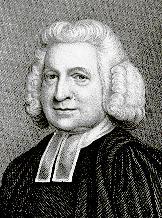
1707 - 1788 Author of "We have no outward righteousness" in The Epworth Hymnal No. 2 Charles Wesley, M.A. was the great hymn-writer of the Wesley family, perhaps, taking quantity and quality into consideration, the great hymn-writer of all ages. Charles Wesley was the youngest son and 18th child of Samuel and Susanna Wesley, and was born at Epworth Rectory, Dec. 18, 1707. In 1716 he went to Westminster School, being provided with a home and board by his elder brother Samuel, then usher at the school, until 1721, when he was elected King's Scholar, and as such received his board and education free. In 1726 Charles Wesley was elected to a Westminster studentship at Christ Church, Oxford, where he took his degree in 1729, and became a college tutor. In the early part of the same year his religious impressions were much deepened, and he became one of the first band of "Oxford Methodists." In 1735 he went with his brother John to Georgia, as secretary to General Oglethorpe, having before he set out received Deacon's and Priest's Orders on two successive Sundays. His stay in Georgia was very short; he returned to England in 1736, and in 1737 came under the influence of Count Zinzendorf and the Moravians, especially of that remarkable man who had so large a share in moulding John Wesley's career, Peter Bonier, and also of a Mr. Bray, a brazier in Little Britain. On Whitsunday, 1737, [sic. 1738] he "found rest to his soul," and in 1738 he became curate to his friend, Mr. Stonehouse, Vicar of Islington, but the opposition of the churchwardens was so great that the Vicar consented that he "should preach in his church no more." Henceforth his work was identified with that of his brother John, and he became an indefatigable itinerant and field preacher. On April 8, 1749, he married Miss Sarah Gwynne. His marriage, unlike that of his brother John, was a most happy one; his wife was accustomed to accompany him on his evangelistic journeys, which were as frequent as ever until the year 1756," when he ceased to itinerate, and mainly devoted himself to the care of the Societies in London and Bristol. Bristol was his headquarters until 1771, when he removed with his family to London, and, besides attending to the Societies, devoted himself much, as he had done in his youth, to the spiritual care of prisoners in Newgate. He had long been troubled about the relations of Methodism to the Church of England, and strongly disapproved of his brother John's "ordinations." Wesley-like, he expressed his disapproval in the most outspoken fashion, but, as in the case of Samuel at an earlier period, the differences between the brothers never led to a breach of friendship. He died in London, March 29, 1788, and was buried in Marylebone churchyard. His brother John was deeply grieved because he would not consent to be interred in the burial-ground of the City Road Chapel, where he had prepared a grave for himself, but Charles said, "I have lived, and I die, in the Communion of the Church of England, and I will be buried in the yard of my parish church." Eight clergymen of the Church of England bore his pall. He had a large family, four of whom survived him; three sons, who all became distinguished in the musical world, and one daughter, who inherited some of her father's poetical genius. The widow and orphans were treated with the greatest kindness and generosity by John Wesley. As a hymn-writer Charles Wesley was unique. He is said to have written no less than 6500 hymns, and though, of course, in so vast a number some are of unequal merit, it is perfectly marvellous how many there are which rise to the highest degree of excellence. His feelings on every occasion of importance, whether private or public, found their best expression in a hymn. His own conversion, his own marriage, the earthquake panic, the rumours of an invasion from France, the defeat of Prince Charles Edward at Culloden, the Gordon riots, every Festival of the Christian Church, every doctrine of the Christian Faith, striking scenes in Scripture history, striking scenes which came within his own view, the deaths of friends as they passed away, one by one, before him, all furnished occasions for the exercise of his divine gift. Nor must we forget his hymns for little children, a branch of sacred poetry in which the mantle of Dr. Watts seems to have fallen upon him. It would be simply impossible within our space to enumerate even those of the hymns which have become really classical. The saying that a really good hymn is as rare an appearance as that of a comet is falsified by the work of Charles Wesley; for hymns, which are really good in every respect, flowed from his pen in quick succession, and death alone stopped the course of the perennial stream. It has been the common practice, however for a hundred years or more to ascribe all translations from the German to John Wesley, as he only of the two brothers knew that language; and to assign to Charles Wesley all the original hymns except such as are traceable to John Wesley through his Journals and other works. The list of 482 original hymns by John and Charles Wesley listed in this Dictionary of Hymnology have formed an important part of Methodist hymnody and show the enormous influence of the Wesleys on the English hymnody of the nineteenth century. -- Excerpts from John Julian, Dictionary of Hymnology (1907) ================== Charles Wesley, the son of Samuel Wesley, was born at Epworth, Dec. 18, 1707. He was educated at Westminster School and afterwards at Christ Church, Oxford, where he graduated M.A. In 1735, he took Orders and immediately proceeded with his brother John to Georgia, both being employed as missionaries of the S.P.G. He returned to England in 1736. For many years he engaged with his brother in preaching the Gospel. He died March 29, 1788. To Charles Wesley has been justly assigned the appellation of the "Bard of Methodism." His prominence in hymn writing may be judged from the fact that in the "Wesleyan Hymn Book," 623 of the 770 hymns were written by him; and he published more than thirty poetical works, written either by himself alone, or in conjunction with his brother. The number of his separate hymns is at least five thousand. --Annotations of the Hymnal, Charles Hutchins, M.A., 1872.

Thomas Campbell

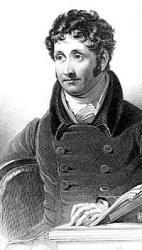
1777 - 1844 Person Name: T. Campbell Author of "When Jordan hushed his waters still" in Good-Will Songs Campbell, Thomas, the Poet, has little in common with hymnody. A few of his pieces, including," When Jordan hushed its waters still," are found in a limited number of hymnals. His poetical works, The Pleasures of Hope, Gertrude of Wyoming, and others, have been reprinted several times. He was born at Glasgow, 1777; died at Boulogne, 1844, and was buried in Westminster Abbey. --John Julian, Dictionary of Hymnology (1907)

George Washington Doane

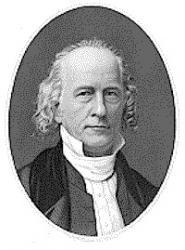
1799 - 1859 Person Name: G. W. Doane Author of "Fling out the banner, let it float" in New Christian Hymn and Tune Book Doane, George Washington, D.D. Bishop Doane was born at Trenton, New Jersey, May 27, 1799, and graduated at Union College, Schenectady, New York. Ordained in 1821, he was Assistant Minister at Trinity Church, New York, till 1824. In 1824 he became a Professor at Trinity College, Hartford, Conn.; in 1828 Rector of Trinity Church, Boston; and, in 1832, Bishop of New Jersey. He founded St. Mary's Hall, Burlington, 1837, and Burlington College, Burlington, 1846. Died April 27, 1859.  Bishop Doane's exceptional talents, learning, and force of character, made him one of the great prelates of his time. His warmth of heart secured devoted friends, who still cherish his memory with revering affection. He passed through many and severe troubles, which left their mark upon his later verse. He was no mean poet, and a few of his lyrics are among our best. His Works, in 4 volumes with Memoir by his son, were published in 1860. He issued in 1824 Songs by the Way, a small volume of great merit and interest. This edition is now rare. A second edition, much enlarged, appeared after his death, in 1859, and a third, in small 4to, in 1875. These include much matter of a private nature, such as he would not himself have given to the world, and by no means equal to his graver and more careful lyrics, on which alone his poetic fame must rest.The edition of 1824 contains several important hymns, some of which have often circulated without his name. Two of these are universally known as his, having been adopted by the American Prayer Book Collection, 1826:-- 1. Softly now the light of day. Evening. This, in addition to its use in American hymnals, is also found in the English Collections, including Snepp's Songs of Grace & Glory.   Written in 1824. 2. Thou art the way, to Thee alone. Christ the Way. This, in the judgment of many, is the first of American hymns, and one of the most admirable and useful in the English language. In the United States its use is most extensive, and since its introduction into the English Collections by Bickersteth in 1833, Hall in his Mitre, in 1836, and others, it has grown in favour until it ranks with the most popular of the great English hymns. Near in merit to the foregoing stands a companion piece in the same work, which deserves to be better known :— 3.  Lord, should we leave Thy hallowed feet. The next three have been overlooked at home, but have obtained considerable circulation in English Collections. 4.  Father of mercies hear,  Thy pardon we implore.    Ash Wednesday or Lent.    A translation of "Audi, benigne Conditor" q.v.), published in his Songs by the Way, 1824, together with several other translations, thus anticipating by twelve years the great English movement in that direction.   Original translation in his Songs by the Way, 1875Miller (S. & S., p. 12) attributes this translation to Dr. Neale in error. 5.  Return and come to God.   Invitation.   In his Songs, &c, 1824.   It is found in  Hall’s Mitre, 1836; the Baptist Hymnal, 1879, and several others. 6.  To thee, 0 Lord, with dawning light.  Morning.    This hymn is attributed to Heber by Miller (S. & S. , p. 381) in error.  It is included in the Society for Promoting Christian Knowledge Hymns, 1852; in Windle and others.    It is from the Songs, &c, 1824. His later hymns, the dates of which are generally preserved in the last edition of his Songs by the Way, include the following, which are more or less in use :— 7.  Beloved, it is well.   All well in Christ.   This is entitled "To my wife"; is dated Mar. 12, 1833, and was written in a copy of Dr. Bedell's "It is well."    It is given in Kennedy, 1863. 8.  Broken-hearted, weep no more.    Assurance of Peace.    The date of this hymn is not preserved. It is found as early as 1829, when it appeared in the 2nd edition of Cleland's (Baptist) Hymns. 9.  Fling out the banner, let it float.    Missions, Home & Foreign.    This hymn, sometimes dated 1824 in error, was written at Riverside, 2nd Sunday in Advent, 1848, and is one of the author's latest effusions.    It is in extensive use both in Great Britain and America. 10.  He came not with His heavenly crown.   The two Advents. In his Songs by the Way, edition 1875, this poem is dated Dec. 1827.    In Dale's English Hymnbook, 1879, it is given with the omission of stanza iii., and in the American Protestant Episcopal  Hymnal,   1871,  it begins  with stanza iv., "Once more, O Lord, Thy sign shall be."    Full text in Lyra Sac. Amer., p. 92. 11.  Lift not thou the wailing voice.   Burial.   A funeral hymn, adopted by the Anglican Hymnbook, but dated 1826 in error, for 1830. 12.  What is that, mother?  The lark, my child. This is not a hymn, but a familiar and long popular song. 13.  "When darkness erst [once] at God's command. Israel in Egypt.    In Kennedy, 1863, No. 722. 14.  Young and happy while thou art.    Youth for Christ.   A favourite piece in many juvenile collections.   It is dated Sept., 1827, and is given in Songs by the Way, 1875. The Lyra Sacra Americana also contains the following:— 15.  Brightness of the Father's glory.    Morning. A tr. of "Consors Paterni luminis " (q.v.).   It is from the Songs, &c, 1824. 16.  Child that kneelest meekly there.     Child at Prayer.    Suggested by a cast from a piece of sculpture by Greenough representing a child at prayer. 17.  Grant me, Lord, Thy graces three.    Faith, Hope, and Charity desired. 18.  Perfect through suffering may it be.     Uses of suffering.    Dated in Songs by the Way, "The Breakers, June 1, 1853." 19.  Yes, it is a faithful saying.   Redemption. In his Songs, &c, 1824.             [Rev. F. M. Bird, M.A.] -- John Julian, Dictionary of Hymnology (1907)

Joseph Stennett

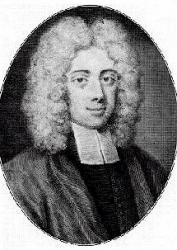
1663 - 1713 Author of "Another six days' work is done" in The National Baptist Hymnal The author was a Baptist preacher in London, from 1690, to his death in 1713. --Annotations of the Hymnal, Charles Hutchins, M.A. 1872. ============================= Stennett, Joseph, the earliest English Baptist hymnwriter whose hymns are now in common use, was born at Abingdon, Berks, in 1663. He received a superior education at the Grammar School of Wallingford, and at the age of 22 removed to London, where for several years he engaged in tuition. In 1688 he married a daughter of George Guill, a French Protestant refugee, another of whose daughters was the wife of the celebrated Presbyterian minister, Dr. Daniel Williams, who became a generous friend to Stennett. In the following year he was called to preach by the Baptist Sabbatarian congregation then meeting in Devonshire Square, London, afterwards in Pinners' Hall; and in 1690 became its pastor, a position he retained to his death, July 4, 1713. Since the meetings of this congregation for worship were on the seventh day of the week, he was free to preach to other congregations on the Sunday, which he did very frequently, especially to the General Baptist Church in the Barbican. Such was Stennett's repute for piety, learning and practical wisdom that his advice was very much sought by his Christian friends, and by the "great Whig Lords” of that day he was occasionally consulted as to the feeling of the Dissenters concerning national affairs. His published works include:— (1) Hymns in commemoration of the Sufferings of our Blessed Saviour Jesus Christ, compos'd for the Celebration of his Holy Supper, 1697; 2nd ed. 1703 (This is entitled in Stennett's Works, 1732, Hymns for the Lord's Supper). These were 37 in number, increased to 50 in the 3rd edition, 1709. (2) In 1700 he published a poetical Version of Solomon's Song of Songs, together with the XLVth Psalm. A second edition, corrected, appeared in 1709. (3) In 1712 he published twelve Hymns composed for the Celebration of the Holy Ordinance of Baptism; 2nd ed. 1722. Stennett also translated Dacier's Plato and other works from the French, and published several sermons preached on days of National Thanksgiving and other public occasions. His Works were collected after his death and published in 1732, in 4 vols. They contain a Memoir, Sermons and Letters, the Hymns and Poems mentioned above, and a few other poetical pieces. A controversial work, An Answer to Mr. Russen's Book on Baptism, 1702, may be reckoned as a 5th vol. Of his hymns, that which, in the form of varying centos, is most widely known is, "Another six days' work is done". Others in common use include:— 1. Gracious Redeemer, how divine. Holy Communion. Appeared in his Hymns for the Lord's Supper, first edition, 1697. (Works, 1732, ii. p. 98.) Usually abbreviated. 2. Immortal praise be given. Holy Communion. Published in his Hymns for The Lord's Supper, first ed., 1697. (Works, 1732, ii. p. 97.) From this "We'll praise our risen Lord," is taken. 3. Jesus, O word divinely sweet. Redemption through Jesus. Published in Hymns for the Lord's Supper, 3rd ed. 1709, No. 47. 4. Lord, at Thy Table I behold. Holy Communion. This hymn is not in Stennett's Works. From it "With humble faith and trembling heart," is taken. 5. My blessed Saviour, is Thy love? Self-Consecration to God. Appeared in his Hymns for the Lord's Supper, 1697, No. 22. Usually abbreviated. 6. The great Redeemer we adore. Published in his Hymns for Baptism, 1712. 7. Whene'er one sinner turns to God. Holy Baptism. Published in his Hymns for Baptism, 1712, No. 12. From this "See how the willing converts trace" is taken. It begins with st. iii. Several of his hymns additional to these are given in the older collections, but have passed out of use. We may add that the Joseph Stennett, the subject of this article, had a son, Joseph Stennett, D.D., who also became an eminent Baptist minister, and was the father of Samuel Stennett. [Rev.W. R. Stevenson, M.A.] --Excerpts from John Julian, Dictionary of Hymnology (1907)

W. T. Dale

1845 - 1924 Author of "I to the hills will lift mine eyes" in The Songs of Zion

John Gambold

1711 - 1771 Alterer of ""Te Deum"" in Laudes Domini Gambold, John, M.A., was b. April 10, 1711, at Puncheston, Pembrokeshire, where his father was vicar. Educated at Christ Church, Oxford, where he graduated B.A. in 1730, M.A. in 1734. Taking Holy Orders, he became, about 1739, Vicar of Stanton Harcourt, Oxfordshire, but resigned his living in Oct. 1742, and joined the United Brethren [Moravians], by whom lie was chosen one of their bishops in 1754. He d. at Haverfordwest, Sept. 13, 1771. He published an edition of the Greek Testament; Maxims and Theological Ideas; Sermons, and a dramatic poem called Ignatius. About 26 translations and 18 original hymns in the Moravian Hymn Books are assigned to him. One or two of his hymns, which were published by the Wesleys, have been claimed for them, but the evidence is in favour of Gambold. A collected ed. of his works was published at Bath in 1789, and afterwards reprinted. [George Arthur Crawford, M.A.] --John Julian, Dictionary of Hymnology (1907)

William Kingsbury

1744 - 1818 Author of "Great Lord of all thy churches, hear" in The Evangelical Hymnal Born: July 12, 1744, Bishopsgate Street, London, England. Christened: August 12, 1744, Poultry Chapel, Camomile Street Independent Church, London, England. Died: February 18, 1818, Caversham, Southampton, England. Kingsbury, William, was born in 1744, educated at an Independent academy in London, and became Pastor of the ancient Congregational Church, Above Bar, in Southampton, where he died in 1818, after an honourable and useful ministry of fifty-four years. He was the author of several published sermons and pamphlets, including:—(1) A Sermon on the King's recovery, 1780; (2) The Manner in which Protestant Dissenters perform Public Worship represented and vindicated, 1796; (3) An Apology for Village Preachers, 1799; (4) A Funeral Sermon on the Death of the Rev. Mr. Towle, 1807, &c. Kingsbury was one of the ministers under whose patronage Dobell published his New Selection, 1806, and to that book contributed two hymns.-—"Great Lord of all thy churches, hear!" No. 213 (Divine Worship), and "Let us awake our joys," No. 100 (Jesus the King). Both these hymns are in common use, the second being specially popular in America. [Rev. W. R. Stevenson, M.A.] --John Julian, Dictionary of Hymnology (1907)

Simon Browne

1680 - 1732 Author of "Come, gracious Spirit, heavenly Dove" in The Seventh-Day Adventist Hymn and Tune Book Simon Browne was born at Shepton Mallet, Somersetshire, about 1680. He began to preach as an "Independent" before he was twenty years of age, and was soon after settled at Portsmouth. In 1716, he became pastor in London. In 1723, he met with some misfortunes, which preyed upon his mind, and produced that singular case of monomania, recorded in the text-books of Mental Philosophy; he thought that God had "annihilated in him the thinking substance, and utterly divested him of consciousness." "Notwithstanding," says Toplady, "instead of having no soul, he wrote, reasoned, and prayed as if he had two." He died in 1732. His publications number twenty-three, of which some are still in repute. --Annotations of the Hymnal, Charles Hutchins, M.A., 1872. ================== Browne, Simon. A contemporary of Dr. Watts, born at Shepton Mallet, Somersetshire, cir. 1680, and died in 1732. After studying for the Independent Ministry under the Rev. John Moore, of Bridgewater, he became pastor of an Independent charge in Portsmouth, and then, in 1716, of the Independent-Chapel in Old Jewry, London. His lateryears were clouded by a peculiar malady, under the influence of which "he imagined that God had in a gradual manner annihilated in him the thinking substance, and utterly divested him of consciousness." It is supposed that the death of a highwayman at his hands during a violent struggle, followed by that of his wife and son a short time after, had much to do in producing this sad result. Whilst thus contending that he had no power to think, he produced a work in defence of Christianity, another in defence of the Trinity, a third as an Exposition of the 1st Epistle to the Corinthians, and a fourth in the form of a Dictionary. His publications number over 20. Of these works, he is known to hymnology through his:— Hymns and Spiritual Songs, in Three Books, designed as a Supplement to Dr. Watts, &c, 1720, 2nd edition 1741, 3rd edition 1760. It contains 166 hymns, 7 doxologies, and a Preface of some historical interest. In the old collections Simon Browne's hymns (all of which are from the above collection) held a prominent position, but in modern hymnals they are fast passing out of use. The best known and most widely used are "Come, Holy [gracious] Spirit, Heavenly Dove," "O God, on Thee we all depend," and "Lord, at Thy feet we sinners lie." In addition the following are also in common use:— 1. Eternal God, Almighty Cause. Unity of God. 2. Eternal God, of beings First. God all in all . 3. Frequent the day of God returns. Sunday. 4. Great First of beings, Mighty Lord. Creation. 5. Great God, my joyful thanks to Thee. Thanksgiving. 6. Great God, Thy peerless excellence. Imitation of God. 7. Great Lord of earth and seas and skies. Providence. 8. Great Ruler of the earth and sky. Providence. 9. Hail, Holy Spirit, bright, immortal, Dove. Whitsuntide. 10. Hail, happy day, the [thou] day of holy rest. Sunday. 11. I cannot shun the stroke of death. Death. 12. Lord, Thou art good; all nature shows. Divine Goodness. 13. Lord, what a feeble frame is ours. Frailty of Life. 14. O God, on Thee we all depend. Confidence in God. -- John Julian, Dictionary of Hymnology (1907)

Thomas Lake Harris

1823 - 1906 Person Name: T. L. Harris Author of "This common earth, by mortals trod" in Song-Hymnal of Praise and Joy Harris, Thomas Lake, born May 15, 1823. Under his name three hymns are given in the American Unitarian Hymns of the Spirit, 1864:—(1) "In every human mind we see" (The Soul God's Temple); (2) "Look up, O man, behold the same" (God All in All); (3) "O earth, thy past is crowned and consecrated" (Past, Present and Future). --John Julian, Dictionary of Hymnology, Appendix, Part II (1907) ===================== Harris, T. L., p. 1569, ii., was born at Stony Stratford, Bucks, and when three years of age went with his parents to America. He died at New York, March 23, 1006. His hymns were published as Hymns of Spiritual Devotion, N.Y., 1858. In his Preface, he says, "Many of the hymns were verbally communicated by individual spirits." [Rev. James Mearns, M.A.] --John Julian, Dictionary of Hymnology, New Supplement (1907)

Pages


Export as CSV
It looks like you are using an ad-blocker. Ad revenue helps keep us running. Please consider white-listing Hymnary.org or getting Hymnary Pro to eliminate ads entirely and help support Hymnary.org.