You help make Hymnary.org possible. More than 10 million people from 200+ countries found hymns, liturgical resources and encouragement on Hymnary.org in 2025, including you. Every visit affirms the global impact of this ministry.

If Hymnary has been meaningful to you this year, would you take a moment today to help sustain it? A gift of any size—paired with a note of encouragement if you wish—directly supports the server costs, research work and curation that keep this resource freely available to the world.

Give securely online today, or mail a check to:
Hymnary.org
Calvin University
3201 Burton Street SE
Grand Rapids, MI 49546

Thank you for your partnership, and may the hope of Advent fill your heart.

Person Results

Tune Identifier:"^windsor_tye_daman$"
In:people

Planning worship? Check out our sister site, ZeteoSearch.org, for 20+ additional resources related to your search.
Showing 21 - 30 of 51Results Per Page: 102050

Dane K. Shepard

Arranger of "[There is a green-hill far away]" in Hymns for Worship

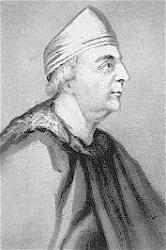
Samuel Wesley

1662 - 1735 Person Name: Samuel Wesley, Sr. Author of "Behold the Savior of Mankind" in The Lutheran Hymnal Father of Samuel Wesley, John Wesley, and Charles Wesley. See also in: Hymn Writers of the Church ====================================================================================================== Samuel Wesley, M.A., the elder, was born in 1662 at Whitchurch in Dorsetshire, of which parish his father, John Wesley, was Vicar until the Act of Uniformity caused him to resign his living. He was educated at a Dissenting academy by a Mr. Morton, and was designed for the Nonconformist Ministry. But having been, on account of his talents, selected as a champion to defend the dissenters against some severe invectives, and having commenced a course of controversial reading for this purpose, he was led by his studies to embrace the opposite views, and became, and continued through life, a pronounced churchman. With the impetuosity which was a family trait, he set forth on foot to Oxford, and entered himself at Exeter College. In spite of his straitened means, he managed to keep his terms and take his degrees at the University. He then received Holy Orders and took a curacy of £28 a year. Having held this curacy for a year, he obtained a naval chaplaincy, and then took another curacy in London. About the year 1690 he married Susanna, daughter of Dr. Annesley, a famous Nonconformist minister, and a scion of the noble house of Anglesey. The wife, like the husband, had been brought up as a dissenter, but at the early age of 13 she had come over to the Church of England, and was afterwards a Jacobite in politics. In 1693 Mr. Wesley was presented to the living of South Ormsby in Lincolnshire. He was also chaplain to the Marquis of Normandy, afterwards Duke of Buckingham. In 1697 he was appointed by the Crown to the Rectory of Epworth, and there he spent the remainder of his life, nearly forty years. The first part of his residence at Epworth was marked by a series of troubles arising partly from his pecuniary embarrassments, which increased with his increasing family, partly from the animosity of his parishioners, who resented the part which he felt it his duty to take, as a staunch churchman, in politics, and partly from unfortunate accidents. These troubles reached their climax in 1705, when he was thrown into Lincoln gaol for debt. They are graphically described by his own pen. "I have been thrown behind," he writes to his good friends at Oxford, "by a series of misfortunes. My Parsonage Barn was blown down ere I had recovered the Taking my Living; My House great part of it burnt down about 2 years since. My Flax, great part of my Income now in my own Hands, I doubt wilfully fir'd and burnt in ye night, whilst I was last in London. My Income sunk about one half by the low price of Grain and my credit lost by the taking away my Regiment. I was brought to Lincoln Castle June 23rd last past. About 3 weeks since my very unkind People, thinking they had not yet done enough, have in ye night stabbed my 3 cows, wch were a great part of my poor Numerous Family's Subsistence.—For wch God forgive them." Some points in this letter require explanation. When he speaks of being in London, he means on Convocation business; for he was elected Proctor for the Diocese, and in one of his absences Mrs. Wesley instituted those religious meetings at the Rectory which are thought by some to have been the precursors of the Wesleyan Society Meetings. “His Regiment" was a Chaplaincy in the army which had been given him in reward for a poem in praise of the Duke of Marlborough. The last and worst of the many fires through which he suffered was in 1709, when the rectory was entirely burnt down, and the present house erected in its place. The latter part of his time at Epworth was more free from troubles. He met with many generous friends who enabled him to emerge from his pecuniary difficulties, the firmest and most constant of these friends being the admirable Archbishop of York, Dr. John Sharp; his sons grew up to be a comfort and a credit to him; his income was slightly increased by the addition of the neighbouring living of Wroot; and his parishioners gradually became more tractable. The annoyance caused by the famous Epworth Ghost can scarcely be reckoned among his serious troubles. In 1731 he met with an accident which probably hastened his end, and in 1735 he passed away and was buried in Epworth churchyard, leaving behind him the character of an excellent parish priest, a good husband and father, and a man of very considerable abilities and attainments. Mr. Wesley was a somewhat voluminous writer. His first publication was a volume of poems bearing the unpromising, not to say repulsive, title of Maggots. It appeared in 1685. In 1691 he became the clerical correspondent to the Athenian Gazette (afterwards Mercury) published by his brother-in-law, John Dunton. In 1693 appeared an Heroic Poem on the Life of Our Blessed Lord and Saviour Jesus Christ. This was dedicated to Queen Mary, and led to his appointment to the living of Epworth. In 1695 he published Elegies on Queen Mary and Archbishop Tillotson; and in 1698 A Sermon preached before the Society for the Reformation of Manners. The Elegies are rather fulsome and in bad taste according to the standard of the present day; but it should be remembered that high-flown panegyrics were the fashion of the age. The Sermon is a spirited and energetic defence of the "Societies," which were regarded with some suspicion by many high-churchmen, but of which Mr. Wesley, like his friend Robert Nelson, was a warm supporter. In 1700 he published The Pious Communicant rightly prepared; or a Discourse concerning the Blessed Sacrament, &c, With Prayers and Hymns suited to the several parts of that holy office. To which is added A short Discourse of Baptism. In this work appeared his version of the "Great Hallel" or "Paschal Hymn." In 1704 he published The History of the Old and New Testaments in Verse, in three volumes, which he dedicated to Queen Anne. This, like his Life of Christ, was illustrated with numerous and costly engravings. In 1705 he published a poem of nearly 600 lines on the "Battle of Blenheim," entitled Maryborough, or The Fate of Europe. For this he was rewarded with the Chaplaincy of Colonel Lepell's regiment; but his political enemies at Epworth soon succeeded in getting him deprived of this office. In 1707 appeared A Reply to Mr. Palmer's Vindication of the Learning, Loyalty, Morals, and most Christian Behaviour of the Dissenters towards the Church of England. This originated in the publication, without his consent or knowledge, of a Letter he wrote to a friend Concerning the Education of the Dissenters in their Private Academies. The letter was attacked anonymously and defended by Mr. Wesley in a pamphlet (1704). The pamphlet was answered by Mr. Palmer. After this, Mr. Wesley's pen seems to have rested for some time; but during the last ten years of his life he was engaged in his elaborate Dissertation on the Book of Job, his incessant labours upon which are said to have hastened his end. This work was dedicated to Queen Caroline, the wife of George II., and presented to her by John Wesley some months after the author's death. Perhaps if he had written less, and spent more time in elaborating what he did write, he might have been more successful; but, after all, the "Divine afflatus" must have been wanting; and the best service which he rendered to sacred poetry was in being father of his children. Two of his hymns are in common use:— 1. Behold the Saviour of mankind. 2. 0 Thou Who, when I did complain. -- Excerpts from John Julian, Dictionary of Hymnology (1907)

Elizabeth Eunice Smith Marcy

1821 - 1911 Person Name: Mrs. E. E. Marcy, 1822- Author of "Out of the depths to Thee I cry" in Methodist Hymn and Tune Book Marcy, Elizabeth Eunice, wife of Oliver Marcy, LL.D., Professor of Natural History in the Northwestern University, Evanston, Illinois, was born in 1822. Her hymn, "Out of the depths to Thee I cry" (Lent), was contributed to the Methodist Episcopal Hymnal in 1877, and published therein in 1878. --John Julian, Dictionary of Hymnology, Appendix, Part II (1907) ================== Born: December 22, 1821, Eastham, Connecticut. Died: January 26, 1911, Evanston, Illinois. Buried: Woodland Dell Cemetery, Wilbraham, Massachusetts. She was ac­tive in the Wo­man’s Christ­ian Tem­per­ance Un­ion, the Wo­man’s Home Mis­sion­a­ry So­ci­e­ty, and the Wo­man’s For­eign Mis­sion­a­ry So­ci­e­ty, and found­ed the Eliz­a­beth Mar­cy Home in the Bo­he­mi­an District of Chi­ca­go, Il­li­nois. She was des­cribed as a "re­mark­a­ble wo­man, full of orig­in­al­i­ty in thought and ex­pres­sion, and known through­out Meth­od­ism as a writ­er in verse and prose, and as a speak­er who can make ev­en a pro­sy theme po­e­tic." --http://www.hymntime.com/tch ================== Marcy, Elizabeth Eunice. (Eastham, Connecticut, December 22, 1821--January 26, 1911, Evanston, Illinois). Her hymn in five four-line stanzas was included in the Hymn and Tune Book (1866), Methodist Episcopal Church, South, with the first and third lines of the first stanza interchanged. It appeared again in The Methodist Hymnal, (1905) in its original form. Source: Nutter and Tillett, Hymns and Hymn Writers of the Church. --Robert G. McCutchan, DNAH Archives

John Chandler

1806 - 1876 Person Name: John Chandler & others Translator (from Latin) of "Today, O Lord, a Holier Work" in The Cyber Hymnal John Chandler, one of the most successful translators of hymns, was born at Witley in Surrey, June 16, 1806. He was educated at Corpus Christi College, Oxford, B.A. 1827, M.A. 1830. Ordained deacon in 1831 and priest in 1832, he succeeded his father as the patron and vicar of Whitley, in 1837. His first volume, entitled The Hymns of the Primitive Church, now first Collected, Translated and Arranged, 1837, contained 100 hymns, for the most part ancient, with a few additions from the Paris Breviary of 1736. Four years later, he republished this volume under the title of hymns of the Church, mostly primitive, collected, translated and arranged for public use, 1841. Other publications include a Life of William of Wykeham, 1842, and Horae sacrae: prayers and meditations from the writings of the divines of the Anglican Church, 1854, as well as numerous sermons and tracts. Chandler died at Putney on July 1, 1876. --The Hymnal 1940 Companion =============== Chandler, John, M.A.,one of the earliest and most successful of modern translators of Latin hymns, son of the Rev. John F. Chandler, was born at Witley, Godalming, Surrey, June 16, 1806, and educated at Corpus Christi College, Oxford, where he graduated in 1827. He took Holy Orders in 1831, and became Vicar of Witley in 1837. He died at Putney, July 1, 1876. Besides numerous Sermons and Tracts, his prose works include Life of William of Wykeham, 1842; and Horae Sacrae; Prayers and Meditations from the writings of the Divines of the Anglican Church, with an Introduction, 1844. His translations, he says, arose out of his desire to see the ancient prayers of the Anglican Liturgy accompanied by hymns of a corresponding date of composition, and his inability to find these hymns until he says, "My attention was a short time ago directed to some translations [by Isaac Williams] which appeared from time to time in the British Magazine, very beautifully executed, of some hymns extracted from the Parisian Breviary,with originals annexed. Some, indeed, of the Sapphic and Alcaic and other Horatian metres, seem to be of little value; but the rest, of the peculiar hymn-metre, Dimeter Iambics, appear ancient, simple, striking, and devotional—in a word in every way likely to answer our purpose. So I got a copy of the Parisian Breviary [1736], and one or two other old books of Latin Hymns, especially one compiled by Georgius Cassander, printed at Cologne, in the year 1556, and regularly applied myself to the work of selection and translation. The result is the collection I now lay before the public." Preface, Hymns of the Primitive Church, viii., ix. This collection is:— (1) The Hymns of the Primitive Church, now first Collected, Translated, and Arranged, by the Rev. J. Chandler. London, John W. Parker, 1837. These translations were accompanied by the Latin texts. The trsanslations rearranged, with additional translations, original hymns by Chandler and a few taken from other sources, were republished as (2) The Hymns of the Church, mostly Primitive, Collected, Translated, and Arranged/or Public Use, by the Rev. J. Chandler, M.A. London, John W. Parker, 1841. From these works from 30 to 40 translations have come gradually into common use, some of which hold a foremost place in modern hymnals, "Alleluia, best and sweetest;" "Christ is our Corner Stone;" "On Jordan's bank the Baptist's cry;" "Jesus, our Hope, our hearts' Desire;" "Now, my soul, thy voice upraising;" "Once more the solemn season calls;" and, "O Jesu, Lord of heavenly grace;" being those which are most widely used. Although Chandler's translations are somewhat free, and, in a few instances, doctrinal difficulties are either evaded or softened down, yet their popularity is unquestionably greater than the translations of several others whose renderings are more massive in style and more literal in execution. --John Julian, Dictionary of Hymnology (1907)

Anonymous

Person Name: Anon. Author of "Unheard the Dews Around Me Fall" in The Mennonite Hymnary, published by the Board of Publication of the General Conference of the Mennonite Church of North America In some hymnals, the editors noted that a hymn's author is unknown to them, and so this artificial "person" entry is used to reflect that fact. Obviously, the hymns attributed to "Author Unknown" "Unknown" or "Anonymous" could have been written by many people over a span of many centuries.

Louisa Frederica Adela Schafer

b. 1865 Person Name: Adela Ŝefer Translator of "En lando malproksime for" in TTT-Himnaro Cigneta Louisa Frederica Adela Schafer, British Esperantist, solo vocalist, and foreign-language teacher, born February 11, 1865, was a prolific early translator of English songs, sacred and secular, into Esperanto. She generally published her texts under the Esperanto respelling and abbreviation of her name "Ad. Ŝefer". Four of her texts are in Adoru Kantante, and one survives in Adoru. She was a member of the prestigious "Lingva Komitato" from 1907. The year of her death is not known.

H. Ellis Wooldridge

1845 - 1917 Person Name: H. E. W. Arranger of "WINDSOR AND ETON" in Hymns b. 3/28/1845, Winchester; d. 2/13/17, London; English music scholar LOC Name Authority File

John William Hewett

1824 - 1886 Person Name: John W. Hewett Translator (from Latin) of "Jesu, Our Lenten Fast of Thee" in The Cyber Hymnal Hewett, John William, M.A., was born in 1824, and educated at Trinity College, Cambridge (B.A. 1849, M.A. 1852). From 1849 to 1852 he was a Fellow of St. Nicolas College, Shoreham; and subsequently he was Head Master of Bloxham Grammar School (1853-56), and Senior Classical Master in the North London College School (1874-78). He has also held curacies in London and the neighbourhood. He edited The Sealed Copy of the Prayer Book, 1848, and other works, and is the author of History and Description of Exeter Cathedral; and another of Ely. His original hymns and translations appeared in his Verses by a Country Curate 1859. From this work the following hymns have come into common use:— 1. In the Name of God the Father. Holy Communion. The 2nd stanza begins,"Lo in wondrous condescension," and the 3rd, "Here in figure represented." 2. Jesu, now Thy new-made soldier. After Holy Baptism. 3. What time the evening shadows fall. SS. Simon & Jude. 4. Withdraw from every human eye. St. Bartholomew. There are also two translations in Hymns Ancient & Modern, "Jesu, our Lenten fast to Thee," and "O Thou Who dost to man accord," q.v. His Verses contain several good hymns in addition to those named. In addition he contributed a few hymns (all signed by him) to the Lyra Messianica, 1864; and "Jesus, Thy presence we adore" (Communion) to The Eucharistic Hymnal, 1877. -- John Julian, Dictionary of Hymnology

Joseph Dacre Carlyle

1759 - 1804 Person Name: Joseph D. Carlyle Author of "Lord, when we bend before Thy throne" in The Hymnal Joseph Dacre Carlyle was born at Carlisle, in 1759. He became Professor of Arabic in the University of Cambridge, in 1794, and afterwards Vicar of Newcastle-on-Tyne. He was the author of several works. His death occurred in 1804. --Annotations of the Hymnal, Charles Hutchins, M.A., 1872 ====================== Carlyle, Joseph Dacre, B.D., some time Professor of Arabic in the University of Cambridge, and afterwards Vicar of Newcastle-on-Tyne, was born at Carlisle, June 4, 1758. In 1799 he accompanied the Earl of Elgin to Constantinople with the object of exploring the literary treasures of the public Library of that city. He extended his journey into Asia Minor, and the islands and shores of the Archipelago. He died at Newcastle, April 12, 1804. Amongst his manuscripts were Poems, suggested chiefly by Scenes in Asia Minor, Syria, &c. These were published under that title, in 1805, by Susanna Maria Carlyle. His hymns, which appeared in J. Fawcett's Psalms & Hymns, Carlisle, 1802, include, "Lord, when we bend before Thy throne "—his most popular production; a paraphrase of the Lord's Prayer,"Father of heaven, Whose gracious hand"; and "Lord, when we creation scan." His works include Specimens of Arabian Poetry, 1796. --John Julian, Dictionary of Hymnology (1907)

E. Cronenwett

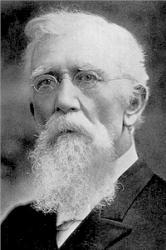
1841 - 1931 Person Name: Emanuel Cronenwett Author of "As By One's Sin Fell All Our Kin" in American Lutheran Hymnal Cronenwett, Emmanuel, a Lutheran Pastor at Butler, Pennsylvania, U.S.A., contributed to the Evangelical Lutheran Hymnal, Published by Order of the Evangelical Lutheran Joint Synod of Ohio and other States, 1880, in addition to 20 translations from the German, the following original hymns, some of which rank with the best in the collection:— 1. A holy state is wedded life. Domestic Worship. 2. Faith is wisdom from on high. Faith. 3. Heavenly Father, Jesus taught us. Prayer. 4. Lord, Thine omniscience I adore. Omniscience. 5. O Triune God, Thy blessing great. Domestic Worship. 6. Of omniscient grace I sing. Omniscience. 7. Of Zion's honour angels sing. Ordination. 8. The precepts of the word are pure. Holy Scripture. 9. The Spirit's fruits are peace and love. Fruits of the Spirit. 10. 'Tis a marvel in our eyes. Foundation Stone laying of a Church. 11. To Thee, our fathers' God, we bow. Domestic Worship. 12. Unto Caesar let us render. National Thanksgiving. 13. We have a sure, prophetic word. Holy Scripture. --John Julian, Dictionary of Hymnology (1907)

Pages


Export as CSV
It looks like you are using an ad-blocker. Ad revenue helps keep us running. Please consider white-listing Hymnary.org or getting Hymnary Pro to eliminate ads entirely and help support Hymnary.org.