You help make Hymnary.org possible. More than 10 million people from 200+ countries found hymns, liturgical resources and encouragement on Hymnary.org in 2025, including you. Every visit affirms the global impact of this ministry.

If Hymnary has been meaningful to you this year, would you take a moment today to help sustain it? A gift of any size—paired with a note of encouragement if you wish—directly supports the server costs, research work and curation that keep this resource freely available to the world.

Give securely online today, or mail a check to:
Hymnary.org
Calvin University
3201 Burton Street SE
Grand Rapids, MI 49546

Thank you for your partnership, and may the hope of Advent fill your heart.

Person Results

Tune Identifier:"^york_scottish$"
In:person

Planning worship? Check out our sister site, ZeteoSearch.org, for 20+ additional resources related to your search.
Showing 21 - 30 of 44Results Per Page: 102050

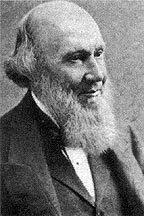
W. Chatterton Dix

1837 - 1898 Person Name: William C. Dix Author of "O Christ, Eternal Son of God" in Psalms, Hymns, and Spiritual Songs Most British hymn writers in the nineteenth century were clergymen, but William C. Dix (b. Bristol, England, 1837; d. Cheddar, Somerset, England, 1898) was a notable exception. Trained in the business world, he became the manager of a marine insurance company in Glasgow, Scotland. Dix published various volumes of his hymns, such as Hymns of Love and Joy (1861) and Altar Songs: Verses on the Holy Eucharist (1867). A number of his texts were first published in Hymns Ancient and Modern (1861). Bert Polman ======================== Dix, William Chatterton, son of John Dix, surgeon, of Bristol, author of the Life of Chatterton; Local Legends, &c, born at Bristol, June 14, 1837, and educated at the Grammar School of that city. Mr. Chatterton Dix's contributions to modern hymnody are numerous and of value. His fine Epiphany hymn, "As with gladness men of old,” and his plaintive ”Come unto Me, ye weary," are examples of his compositions, many of which rank high amongst modern hymns. In his Hymns of Love and Joy, 1861, Altar Songs, Verses on the Holy Eucharist, 1867; Vision of All Saints, &c, 1871; and Seekers of a City, 1878, some of his compositions were first published. The greater part, however, were contributed to Hymns Ancient & Modern; St. Raphaels Hymnbook, 1861; Lyra Eucharidica, 1863; Lyra Messianica, 1864; Lyra Mystica, 1865; The People's Hymns, 1867; The Hymnary, 1872; Church Hymns, 1871, and others. Many of his contributions are renderings in metrical form of Dr. Littledale's translation from the Greek in his Offices . . . of the Holy Eastern Church, 1863; and of the Rev. J. M. Rodwell's translation of hymns of the Abyssinian Church. These renderings of the "songs of other Churches" have not received the attention they deserve, and the sources from whence they come are practically unknown to most hymnal compilers. Mr. Dix has also written many Christmas and Easter carols, the most widely known of which is "The Manger Throne."   In addition to detached pieces in prose and verse for various magazines, he has published two devotional works, Light; and The Risen Life, 1883; and a book of instructions for children entitled The Pattern Life, 1885. The last-named contains original hymns by Mr. Dix not given elsewhere. In addition to the more important of Mr. Dix's hymns which are annotated under their respective first lines, the following are also in common use:- 1. God cometh, let the heart prepare.  Advent. In his Vision of All Saints, &c, 1871.      2. Holy, holy, holy, to Thee our vows we pay.  Holy Communion.   Published in his Altar Songs, 1867, in 6 stanzas of 6 lines, and headed "Eucharistic Processional for Dedication Feast."    In the Society for Promoting Christian Knowledge Church Hymns, 1871, and others in an abridged form.      3. How long, O Lord, how long, we ask.   Second Advent.   Appeared in the Appendix to the Society for Promoting Christian Knowledge Psalms & Hymns, 1869, and repeated in several collections.        4. In our work and in our play.    Children's Hymn. Published in his Hymns and Carols for Children, 1869, and is largely adopted  in  children's  hymnbooks, as  Mrs. Brock's Children's Hymnbook, 1881, and others.   Also in the Society for Promoting Christian Knowledge Church Hymns, 1871.      5.  In the hollow of Thine hand.   For Fair Weather. Appeared in the People's Hymns, 1867, and repeated in several others.      6.  Joy fills our inmost heart today.    Christmas. Printed in the Church Times, and  then on a Flysheet by Gr. J. Palmer, as the third of Four Joyful Hymns for Christmas, circa 1865. It is in the Society for Promoting Christian Knowledge Church Hymns, 1871, and other hymnals. It is also one of Mr. Dix's Christmas Customs & Christmas Carols, not dated.      7. Lift up your songs, ye thankful.   St. Ambrose. Contributed to the People's Hymns, 1867.  8. Now in numbers softly flowing.    St. Cecilia. Contributed to the People's Hymns, 1867.    9.  Now, our Father, we adore Thee.   Praise to the Father.   Appeared in the Appendix to the S. P. C. K. Psalms & Hymns, 1869.   10.  O Christ, Thou Son of Mary.   St. Crispin.   First printed in the Union Review, Sept., 1866, and thence into the People's Hymns, 1887.   11. O Cross which only canst allay.   Glorying and Trusting in the Cross.   Published in the People's Hymns, 1867.   12. O Thou the Eternal Son of God.   Good Friday. Appeared in Lyra Messianica, 1864; the author's Hymns and Carols for Children, 1869; the S. P. C. K. Church Hymns, 1871, &c.   13. On the waters dark and drear.   For use at Sea. Published in Hymns for Public Worship, &c. (St. Raphael's, Bristol), 1861; the S. P. C. K. Church Hymns, 1871, &c.   14. Only one prayer to-day.   Ash Wednesday.   Contributed to the People's Hymns, 1867.   15. Sitting at receipt of custom.  St. Matthew.  Appeared in the People's Hymns, 1867.   16. The Cross is on thy brow.   Confirmation.   In the 1869 Appendix to the S. P. C. K. Psalms & Hymns.   17.  The stars above our head.   Work and Humility. In the 1869 Appendix to the S. P. C. K. Psalms & Hymns.  18. When the shades of night are falling.   Evening Hymn to the Good Shepherd.   In the author's Seekers of a City, &c. [1878]. Most of Mr. Dix's best-known hymns, and also some of those named above, are in common use in America and other English-speaking countries. In Great Britain and America from 30 to 40 are in common use.  He died Sept. 9, 1898. -- John Julian, Dictionary of Hymnology (1907) ====================== Dix, William Chatterton, p. 302, ii. Additional hymns by Mr. Dix now in common use are:— 1. Lift up your songs, ye angel choirs. Ascension. 2. Now, my soul rehearse the story. Christ Feeding the Multitude. 3. Within the temple's hallowed courts. Blessed Virgin Mary. These hymns are from his Altar Songs, 1867. --John Julian, Dictionary of Hymnology, Appendix, Part II (1907)

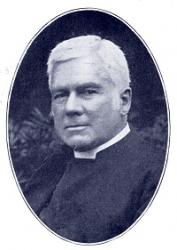
E. J. Hopkins

1818 - 1901 Person Name: Hopkins Author of "Thy praise alone, O Lord, doth reign" in University Hymns Dr Edward John Hopkins MusDoc United Kingdom 1818-1901. Born at Westminster, England, the son of a clarinetist with the Royal Opera House orchestra, he became an organist (as did two of his brothers) and a composer. In 1826 he became a chorister of the Chapel Royal and sang at the coronation of King William IV in Westminster Abbey. He also sang in the choir of St. Paul’s Cathedral, a double schedule requiring skill and dexterity. On Sunday evenings he would play the outgoing voluntary at St. Martin’s in-the-field. He left Chapel Royal in 1834 and started studying organ construction at two organ factories. He took an appointment at Mitcham Church as organist at age 16, winning an audition against other organists. Four years later he became organist at the Church of St. Peter, Islington. In 1841 he became organist at St. Luke’s, Berwick St., Soho. Two Years later he was organist at Temple Church, which had a historic organ (built in 1683). He held this position for 55 years. In 1845 he married Sarah Lovett, and they had four sons and five daughters. He was closely associated with the Bach Society and was organist for the first English performances of Bach’s St. Matthew Passion. In 1855 he collaborated with Edward Rimbault publishing “The organ, its history and construction” (3 editions 1855-70-77). In 1864 he was one of the founders of the “College of organists”. In 1882 he received an honorary Doctorate of Music from the Archbishop of Canterbury. He composed 30+ hymn tunes and some psalm chants, used by the Church of England. He died in London, England. John Perry

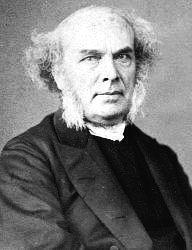
William Walsham How

1823 - 1897 Author of "We will Serve the Lord" in The Pilgrim Hymnal William W. How (b. Shrewsbury, Shropshire, England, 1823; d. Leenane, County Mayo, Ireland, 1897) studied at Wadham College, Oxford, and Durham University and was ordained in the Church of England in 1847. He served various congregations and became Suffragan Bishop in east London in 1879 and Bishop of Wakefield in 1888. Called both the "poor man's bishop" and "the children's bishop," How was known for his work among the destitute in the London slums and among the factory workers in west Yorkshire. He wrote a number of theological works about controversies surrounding the Oxford Movement and attempted to reconcile biblical creation with the theory of evolution. He was joint editor of Psalms and Hymns (1854) and Church Hymns (1871). While rector in Whittington, How wrote some sixty hymns, including many for chil­dren. His collected Poems and Hymns were published in 1886. Bert Polman =============== How, William Walsham, D.D., son of William Wybergh How, Solicitor, Shrewsbury, was born Dec. 13, 1823, at Shrewsbury, and educated at Shrewsbury School and Wadham College, Oxford (B.A. 1845). Taking Holy Orders in 1846, he became successively Curate of St. George's, Kidderminster, 1846; and of Holy Cross, Shrewsbury, 1848. In 1851 he was preferred to the Rectory of Whittington, Diocese of St. Asaph, becoming Rural Dean in 1853, and Hon. Canon of the Cathedral in 1860. In 1879 he was appointed Rector of St. Andrew's Undershaft, London, and was consecrated Suffragan Bishop for East London, under the title of the Bishop of Bedford, and in 1888 Bishop of Wakefield. Bishop How is the author of the Society for Promoting Christian Knowledge Commentary on the Four Gospels; Plain Words , Four Series; Plain Words for Children; Pastor in Parochia; Lectures on Pastoral Work; Three All Saints Summers, and Other Poems , and numerous Sermons , &c. In 1854 was published Psalms and Hymns, Compiled by the Rev. Thomas Baker Morrell, M.A., . . . and the Rev. William Walsham How, M.A. This was republished in an enlarged form in 1864, and to it was added a Supplement in 1867. To this collection Bishop How contributed several hymns, and also to the S. P. C. K. Church Hymns , of which he was joint editor, in 1871. The Bishop's hymns in common use amount in all to nearly sixty. Combining pure rhythm with great directness and simplicity, Bishop How's compositions arrest attention more through a comprehensive grasp of the subject and the unexpected light thrown upon and warmth infused into facia and details usually shunned by the poet, than through glowing imagery and impassioned rhetoric. He has painted lovely images woven with tender thoughts, but these are few, and found in his least appreciated work. Those compositions which have laid the firmest hold upon the Church, are simple, unadorned, but enthusiastically practical hymns, the most popular of which, "O Jesu, Thou art standing"; "For all the Saints who from their labours rest," and "We give Thee but Thine own," have attained to a foremost rank. His adaptations from other writers as in the case from Bishop Ken, "Behold, the Master passeth by," are good, and his Children's hymns are useful and popular. Without any claims to rank as a poet, in the sense in which Cowper and Montgomery were poets, he has sung us songs which will probably outlive all his other literary works. The more important of Bishop How's hymns, including those already named, and "Lord, Thy children guide and keep"; "O Word of God Incarnate"; "This day at Thy creating word"; "Who is this so weak and helpless"; and others which have some special history or feature of interest, are annotated under their respective first lines. The following are also in common use:— i. From Psalms & Hymns, 1854. 1. Before Thine awful presence, Lord. Confirmation. 2. Jesus, Name of wondrous love [priceless worth]. Circumcision. The Name Jesus . 3. Lord Jesus, when we stand afar. Passiontide. 4. O blessing rich, for sons of men. Members of Christ. 5. 0 Lord of Hosts, the earth is Thine. In time of War. 6. O Lord, Who in Thy wondrous love. Advent. ii. From Psalms & Hymns, enlarged, 1864. 7. Lord, this day Thy children meet. Sunday School Anniversary. iii. From Supplement to the Psalms & Hymns, 1867. 8. Hope of hopes and joy of joys. Resurrection. 9. 0 daughters blest of Galilee. For Associations of Women. 10. O happy feet that tread. Public Worship. 11. With trembling awe the chosen three. Transfiguration. iv. From Parish Magazine, 1871, and Church Hymns, 1871. 12. O Jesu, crucified for man. Friday. 13. Yesterday, with worship blest. Monday. v. From the S. P. C. K. Church Hymns. 1871. 14. Bowed low in supplication. For the Parish. 15. Great Gabriel sped on wings of light. Annunciation, of the Blessed Virgin Mary. 16. O blest was he, whose earlier skill. St. Luke. 17. O God, enshrined in dazzling light. Omnipresence. Divine Worship . 18. O heavenly Fount of Light and Love. Witsuntide. 19. O Lord, it is a blessed thing. Weekdays. 20. 0 One with God the Father. Epiphany. 21. O Thou through suffering perfect made. Hospitals. 22. Rejoice, ye sons of men. Purification of the B. V. M. 23. Summer suns are glowing. Summer. 24. The year is swiftly waning. Autumn. 25. Thou art the Christ, O Lord. St. Peter. 26. To Thee our God we fly. National Hymn. 27. Upon the holy Mount they stood. Transfiguration and Church Guilds. 28. We praise Thy grace, 0 Saviour. St. Mark. vi. From the S. P. C. K. Children's Hymns, 1872. 29. Behold a little child. Jesus the Child's Example. 30. Come, praise your Lord and Saviour. Children's Praises. 31. It is a thing most wonderful. Sunday School Anniversary. 32. On wings of living light. Easter. Bishop How's hymns and sacred and secular pieces were collected and published as Poems and Hymns, 1886. The Hymns, 54 in all, are also published separately. He d. Aug. 10, 1897. --John Julian, Dictionary of Hymnology (1907) =================== How, W. W., p. 540, i. He died Aug. 10, 1897. His Memoir, by F. D. How, was published in 1898. --John Julian, Dictionary of Hymnology, New Supplement (1907)

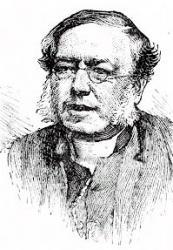
Horatius Bonar

1808 - 1889 Author of "This Present Evil World" in The Cyber Hymnal Horatius Bonar was born at Edinburgh, in 1808. His education was obtained at the High School, and the University of his native city. He was ordained to the ministry, in 1837, and since then has been pastor at Kelso. In 1843, he joined the Free Church of Scotland. His reputation as a religious writer was first gained on the publication of the "Kelso Tracts," of which he was the author. He has also written many other prose works, some of which have had a very large circulation. Nor is he less favorably known as a religious poet and hymn-writer. The three series of "Hymns of Faith and Hope," have passed through several editions. --Annotations of the Hymnal, Charles Hutchins, M.A. 1872 ================================ Bonar, Horatius, D.D. Dr. Bonar's family has had representatives among the clergy of the Church of Scotland during two centuries and more. His father, James Bonar, second Solicitor of Excise in Edinburgh, was a man of intellectual power, varied learning, and deop piety. Horatius Bonar was born in Edinburgh, Dec. 19th, 1808; and educated at the High School and the University of Edinburgh. After completing his studies, he was "licensed" to preach, and became assistant to the Rev. John Lewis, minister of St. James's, Leith. He was ordained minister of the North Parish, Kelso, on the 30th November, 1837, but left the Established Church at the "Disruption," in May, 1848, remaining in Kelso as a minister of the Free Church of Scotland. The University of Aberdeen conferred on him the doctorate of divinity in 1853. In 1866 he was translated to the Chalmers Memorial Church, the Grange, Edinburgh; and in 1883 he was chosen Moderator of the General Assembly of of the Free Church of Scotland. Dr. Bonar's hymns and poems were, he tells us, composed amid a great variety of circumstances; in many cases he cannot himself recall these circumstances; they also appeared in several publications, but nearly all have boen published or republished in the following:— (i) Songs for the Wilderness, 1843-4. (2) The Bible Hymn Book, 1845. (3) Hymns, Original and Selected, 1846. (4) Hymns of Faith and Hope, First Series, 1857; Second Series, 1861; Third Series, 1866. (5) The Song of the New Creation, 1872. (6) My Old Letters, a long poem, 1877. (7) Hymns of the Nativity, 1879. (8) Communion Hymns, 1881. In addition to numerous prose works, he has also edited The New Jerusalem; a Hymn of the Olden Time, 1852, &c. Dr. Bonar's poems—-including many beautiful lyrics, several psalm versions, and translations from the Greek and Latin, a large number of hymns, and a long meditative poem—-are very numerous, too numerous, perhaps, for their permanent fame as a whole. Dr. Bonar's scholarship is thorough and extensive; and his poems display the grace of style and wealth of allusion which are the fruit of ripe culture. Affected very slightly by current literary moods, still less by the influence of other religious poetry, they reveal extreme susceptibility to the emotional power which the phases of natural and of spiritual life exercise; the phases of natural life being recognised chiefly as conveying and fashioning spiritual life, used chiefly for depicting spiritual life, and handled for this purpose with greater delicacy of touch than in the Olney Hymns, and with less conscious purpose than in the Christian Year. As a result of this susceptibility, and from habitual contemplation of the Second Advent as the era of this world's true bliss, his hymns and poems are distinguished by a tone of pensive reflection, which some might call pessimism. But they are more than the record of emotion; another element is supplied by his intellectual and personal grasp of Divine truth, these truths particularly:—The gift of a Substitute, our Blessed Saviour; Divine grace, righteous, yet free and universal in offer; the duty of immediate reliance upon the privilege of immediate assurance through that grace; communion with God, especially in the Lord's Supper, respecting which he insists on the privilege of cherishing the highest conceptions which Scripture warrants; and finally, the Second Advent of our Lord: by his vigorous celebration of these and other truths as the source and strength of spiritual life, his hymns are protected from the blight of unhealthy, sentimental introspection. To sum up: Dr. Bonar's hymns satisfy the fastidious by their instinctive good taste; they mirror the life of Christ in the soul, partially, perhaps, but with vivid accuracy; they win the heart by their tone of tender sympathy; they sing the truth of God in ringing notes; and although, when taken as a whole, they are not perfect ; although, in reading them, we meet with feeble stanzas, halting rhythm, defective rhyme, meaningless Iteration; yet a singularly large number have been stamped with approval, both in literary circles and by the Church. In Great Britain and America nearly 100 of Dr. Bonar's hymns are in common use. They are found in almost all modern hymnals from four in Hymns Ancient & Modern to more than twenty in the American Songs for the Sanctuary, N. Y., 1865-72. The most widely known are, "A few more years shall roll;" "Come, Lord, and tarry not;" "Here, O my Lord, I see Thee face to face;" "I heard the Voice of Jesus say;" "The Church has waited long;" and "Thy way, not mine, O Lord." In addition to these and others which are annotated under their respective first lines, the following are also in common use:— From Songs for the Wilderness, No. 1, 1843. 1. For Thee we long and pray. Sunday Morning. 2. Holy Father, hear my cry. A Child's Prayer. 3. I thought upon my sins and I was sad. Christ our Peace. 4. Peace to the world, our Lord is come. A Millennial Song. 5. Spirit of everlasting grace. The Vision of Dry Bones. ii. From Songs for the Wilderness, No. 2,1844. 6. Ho, ye thirsty, parched and fainting. Invitation. 7. 0 'tis not what we fancied it. The world renounced. 8. Sing them, my children, sing them still. Children exhorted to Praise. 9. Time's sun is fast setting. Advent. 10. Weep, pilgrim, weep, yet 'tis not for the sorrow. Faith. 11. Yes, for me, for me He careth. Christ the Elder Brother . iii. From The Bible Hymn Book, 1845. 12. Jesus, my sorrow lies too deep. Jesus, the Great High Priest. 13. There is a Morning Star, my soul. The Morning Star. 14. This is not my place of resting. Pressing towards heaven. iv. From Hymns, Original and Selected, 1845. 15. Let there be light, Jehovah said. Creation. v. From Hymns of Faith and Hope, 1st series, 1857. 16. Be brave, my brother. The Fight of Faith. 17. Blessed be God, our God. Good Friday. 18. Everlasting praises. Doxology. 19. Go up, go up, my heart. Heavenly aspirations desired. 20. I close my heavy eye. Evening. Sometimes given as "We close our heavy eyes." 21. I see the crowd in Pilate's hall. Good Friday. 22. Jesus, while this rongh desert soil. Strength by the Way. 23. Jesus, Whom angel-hosts adore. The Word made Flesh. From "The Son of God, in mighty love." 24. Make haste, 0 man, to live. Exhortation to lay hold of Life. 25. No seas again shall sever. Heaven. 26. Oppressed with noonday's scorching heat. Shadow of the Cross. 27. Rest for the toiling hand. Burial. From "Lie down, frail body, here." 28. Shall this life of mine be wasted? Exhortation to Duty. 29. These are the crowns that we shall wear. Heaven. 30. Thy works, not mine, O Christ [Lord]. The Sin-bearer. 31. Where the faded flower shall freshen. Heaven. vi. From Hymns of Faith and Hope. 2nd series, 1861. 32. Be still, my soul, Jehovah loveth Thee. Rest in the Love of God. 33. Christ has done the mighty work. Good Friday. 34. Come, mighty Spirit, penetrate. Whitsuntide. 35. Deep down beneath the unresting surge. Burial at Sea. 36. Fear not the foe, thou flock of God [thou little flock]. Battle-Song of the Church. 37. For lack of love I languish. Lent. 38. From this bleak hill of storms. Eternal Rest desired. 39. He liveth long who liveth well. The True Life. 40. Here shall death's triumph end: the rock-barred door. Easter. From "The tomb is empty: wouldst thou have it full." 41. Jesus, Sun and Shield art Thou. Jesus the First and Last. 42. Jesus, the Christ of God. Praise to Christ. 43. Light of the world, for ever, ever shining. Christ the Light of the World. From "Why walk in darkness? Has the dear light vanished?" 44. Make use of me, my God. Duty desired. 45. Not what I am, 0 Lord, but what Thou art. The Love of God. 46. 0 Light of Light, shine in. Cry of the Weary. 47. 0 love of God, how strong and true. Love of God. 48. 0 love that casts out fear. Love of God. 49. 0 strong to save and bless. Lent. 50. 0 this soul, how dark and blind. Lent. 51. Safe across the waters. Thanksgiving at end of a journey. 52. Silent, like men in solemn haste. Pressing onwards. 53. Speak, lips of mine. Exhortation to Praise. 54. The Bridegroom comes. Advent. vii. From Hymns of Faith and Hope. 3rd series, 1866. 55. Bear Thou my burden, Thou Who bar'st my sin. Lent or Passiontide. 56. Done is the work that saves. Easter. 57. Father, our children keep. Prayer on behalf of Children. 58. Fill Thou my life, 0 Lord my God. Life's Praise. 59. Finish Thy work, the time is short. Earnest labour to the end. 60. From the Cross the blood is falling. Good Friday. 61. He called them, and they left. Obedience. 62. Help me, my [0] God to speak. Truth desired. 63. Holy Father, Mighty God. Holy Trinity. 64. How are my troubles multiplied. Ps. iii. 65. How sweetly doth He show His face Flower Service. 66. Light hath arisen, we walk in its brightness. Sustaining power of Faith. 67. Lo, God, our God has come. Christmas. 68. Lord, give me light to do Thy work. Divine guidance desired. 69. No, not despairingly. Lent. 70. Not to ourselves again. Life in Christ, or, Living unto God. 71. Now in parting, Father, bless us. Post Communion. 72. Sounds the trumpet from afar. Battle-Song of the Church. 73. Thee in the loving bloom of morn. God in all. 74. Through good report and evil, Lord. Faithfulness. 75. To Jehovah, God of might. Praise to the Father. 76. To the name of God on high. Doxology. 77. Upward, where the stars are burning. Heavenward Aspirations. 78. We take the peace which He hath won. The Gift of Peace. 79. When the weary, seeking rest. Intercession for all Conditions of Men. viii. From The Song of the New Creation,1872. 80. For the Bread and for the Wine. Holy Communion. 81. Light of life so softly shining. Light of Life. 82. Yet there is room. The Lamb's bright hall of song. Home Missions. ix. From Hymns of the Nativity, 1879. 83. Great Ruler of the land and sea. Sailors' Liturgy. From Communion Hymns, 1881. 84. Beloved, let us love. Brotherly Love. In several instances these hymns are given in an abbreviated form, and sometimes alterations are also introduced. In this latter respect however Dr. Bonar has suffered less than most modern hymn-writers. [Rev. James Mearns, M.A.] -- John Julian, Dictionary of Hymnology (1907) ==================== Bonar, Horatius, p. 161, i. He died at Edinburgh, July 31, 1889. In 1890 his son published a posthumous volume of his poetical pieces as Until the Day Break and other Hymns and Poems left behind. The following additional hymns are in common use:— 1. Almighty Comforter and Friend. (1866.) Whitsuntide. 2. Father, make use of me. An altered form of No. 44, p. 162, ii. 3. I ask a perfect creed. (1861.) Creed not Opinions. From this is also taken "O True One, give me truth." 4. Long, long deferred, now come at last. Marriage of the Lamb. Part of "Ascend, Beloved, to the joy." (1861.) 5. Nay 'tis not what we fancied it. (1857.) Vanity of the World. 6. No blood, no altar now. (1861.) The Finished Sacrifice. 7. No shadows yonder. (1857.) Heaven Anticipated. 8. Not with the light and vain. (1857.) Godly Companionship. 9. O Love invisible, yet infinite. (1866.) Divine Love. 10. On the great love of God I lean. (1866.) Love of God our Resting-place. 11. On Thee, O Jesus, strongly leaning. (1866.) Fellowship with Christ. 12. Peace upon peace, like wave on wave. (1866.) Divine Peace. 13. Sower divine, sow the good seed in me. (1857.) Heavenly Sowing. 14. Speaketh the sinner's sin within my heart. (1866.) Ps. xxxvi. 15. Still one in life and one in death. (1857.) Communion of Saints. Part of "'Tis thus they press the hand and part." 16. Surely, yon heaven, where angels see God's face. (1857.) Heaven Anticipated. 17. That city with the jewelled crest. (1857.) Heaven. Part of "These are the crowns that we shall wear." Another cento from the same is "Yon city, with the jewelled crest." 18. That clime is not like this dull clime of ours. (1843.) Heaven. 19. The Free One makes you free: He breaks the rod. (1857.) Freedom in Christ. From "Of old they sang the song of liberty." 20. There is a Morning-star, my soul. (1357.) Christ the Morning Star. 21. This is the day of toil. (1866.) Pressing Onwards. 22. Thy thoughts are here, my God. (1866.) Holy Scripture. 23. Till the day dawn. (1857.) Life's Journey. 24. To Him Who spread the skies. (1866.) Creation's Song. 25. Trustingly, trustingly. (1866.) Trust. 26. Unto th' eternal hills. (1866.) Ps. cxxi. The above dates are: 1843, Songs in the Wilderness; 1857, Hymns of Faith and Hope, 1st Series; 1861, same, 2nd Ser. (not 1864); 1866, same, 3rd Ser. (not 1867), The dates 1857, 1864,1867, were given by Dr. Bonar, but the British Museum copies are 1857, 1861, 1866 respectively. --John Julian, Dictionary of Hymnology, Appendix, Part II (1907) ============== Bonar, H., pp. 161, i.; 1554, i. The Rev. H. N. Bonar, Dr. Bonar's son, published in 1904, Hymns by Horatius Bonar, Selected and Arranged by his Son H. N. Bonar, With a brief History of some of the Hymns, &c. (London: H. Frowde). From this work we must correct the date of his Song of the New Creation to 1872. We have also enriched our pages by additional and expanded notes on several of Dr. Bonar's most widely used hymns. In his biographical notes, Mr. Bonar refers to Dr. Bonar's work as editor of the Quarterly Journal of Prophecy, begun in 1848, to which he contributed a hymn for each number. We find that the number of hymns contributed thereto is 101. With Dr. Bonar's poetical productions great difficulty has been encountered by the historian and annotator because of his absolute indifference to dates and details. It was enough for him that he had written, and that the Church of Christ approved and gladly used what, out of the fulness of his heart, he had given her. --Excerpt from John Julian, Dictionary of Hymnology, New Supplement (1907)

John S. B. Monsell

1811 - 1875 Author of ""Deceivers" As The World May Deem" in The Cyber Hymnal John Samuel Bewley Monsell (b. St. Colomb's, Londonderry, Ireland, 1811; d. Guilford, Surrey, England, 1875) was educated at Trinity College in Dublin and served as a chaplain and rector of several churches in Ireland after his ordination in 1835. Transferred to England in 1853, he became rector of Egham in Surrey and was rector of St. Nicholas Church in Guilford from 1870 until his death (caused by a construction accident at his church). A prolific poet, Monsell published his verse in eleven volumes. His three hundred hymns, many celebrating the seasons of the church year, were issued in collections such as Hymns and Miscellaneous Poems (1837), Spiritual Songs (1857), Hymns of Love and Praise (1863), and The Parish Hymnal (1873). Bert Polman =============================== Monsell, John Samuel Bewley, L.L.D., son of Thomas Bewley Monsell, Archdeacon of Londonderry, was born at St. Columb's, Londonderry, March 2,1811, and educated at Trinity College, Dublin (B.A. 1832, LL.D. 1856). Taking Holy Orders in 1834, "he was successively Chaplain to Bishop Mant, Chancellor of the diocese of Connor, Rector of Ramoan, Vicar of Egham, diocese Worcester, and Rector of St. Nicholas's, Guildford. He died in consequence of a fall from the roof of his church, which was in the course of rebuilding, April 9, 1875. His prose works include Our New Vicar, 1867; The Winton Church Catechist, &c. His poetical works are:— (1) Hymns and Miscellaneous Poems, Dublin, W. Curry, Jun., & Co., 1837; (2) Parish Musings, or Devotional Poems, 1850; (3) Spiritual Songs for the Sundays and Holy Days throughout the Year. 1857 (People's Ed., 1875); (4) His Presence, not His Memory, 1855, 1858; (5) Hymns of Love and Praise for the Church's Year, 1863 (2nd ed. 1866); (6) The Passing Bell; Ode to The Nightingales, and Other Poems, 1867; (7) Litany Hymns, 1869; (8) The Parish Hymnal after the Order of The Book of Common Prayer, 1873; (9)Watches by the Cross, 1874; (10) Simon the Cyrenian; and Other Poems; (11) Nursery Carols. In these works several hymns which appeared in the earlier books are repeated in the later, and thus at first sight his compositions seem to be more in number than they really are. The total amounts to nearly 300, and of these about one-fourth are in common use. The most popular of these are, "God is love; that anthem olden"; "God of that glorious gift of grace"; "Holy offerings, rich and rare"; “Lord of the living harvest"; "Mighty Father, Blessed Son"; and "Sing to the Lord a joyful song." In addition to those which are annotated under their respective first lines, the following are in common use:— i. Appeared in his Hymns and Miscellaneous Poems, Dublin, 1837. 1. Birds have their quiet nests. Humility of Christ. 2. Dark and dim the day-light rose. Good Friday. 3. Friend of the friendless and the lone. Jesus, the Friend. 4. My God, what wondrous love was Thine. Whitsuntide. 5. O for a heart more fervent. Holiness desired. 6. O for the time when on the world. Missions. 7. The springtide hour brings leaf and flower. Spring. 8. This day the Lord is risen. Easter. 9. When cold our hearts and far from Thee. Teach us to Pray. 10. Why restless, why so weary? Providence. 11. Yes, I do feel, my God, that I am Thine. Assurance. ii. Appeared in his Parish Musings, 1850. 12. In Thee, my [O] God, will we rejoice. Trust in God. 13. Lord, dependent on Thy promise. Holy Baptism. 14. Members of Christ, Children of God. Confirmation. 15. So teach me, Lord, to number. The Old and New Year. 16. Soon [soon] and for ever. Death anticipated. 17. The broken, contrite heart oppress'd. Promises of God. 18. Thou art near, yes, Lord, I feel it. Divine Support. 19. Would'st thou learn the depths of sin? Passiontide. iii. Appeared in his Spiritual Songs, 1857. 20. A few bright leaders of her host. All Saints. 21. A happy, happy [merry, merry] Christmas. New Year's Day. 22. Blessed hope, that we the fallen [sinful]. Hope. 23. Heart in heart, and hand in hand. SS. Simon and Jude. 24. Jesus, my loving Lord! I know. Resignation. 25. Last Sunday of the work-day year. Sunday after Christmas Day. 26. Loved by God the Father. Holy Baptism. 27. Mercy, mercy, God the Father. Lent. 28. My head is low, my heart is sad. Confirmation. (Penitential.) 29. Oft doth the Christian's heart inquire. Christian Duty. 30. 0 God, most mighty, listen now. Charities. From "When languid frame or throbbing pulse." 31. 0 holy Sabbath day. Sunday. 32. 0 Lord, what records of Thy love. St. Barnabas. Sometimes, “Lord God, what records of Thy love." 33. 0 love, divine and golden. Holy Matrimony. From this, "Love divine and tender" is taken. 34. One lesson more the Church must learn. Waiting on God. From this, “One lesson Christ His own would teach" is taken. 35. Proudly in his [the] hall of judgment. Tuesday before Easter. 36. Sinful, sighing to be blest. Lent. 37. The Church of God, with equal care. St. James. 38. The journey done; The rest begun. Burial. 39. The simple trust that can confide. Trust. 40. Weary and sad, a wanderer from Thee. Lent. iv. Appeared, in his Hymns of Love and Praise, 1863, and 2nd ed., 1866. 41. Bounteous blesser of the seedtime. Sexagesima. Seed Time. 42. Brightly hopeful for the future. God's mercy through life. 43. Christ is risen! Alleluia! Easter. 44. Come and deck the grave with flowers. Easter Eve. 45. Fight the good fight with all thy might. Fight of Faith. 46. Holy Spirit, long expected. Whitsuntide. 47. Hours and days and months and years. The Circumcision. 48. I have no comfort but Thy love. The Comfort of Love. 49. I knew Thee in the land of drought. A Song of Love. 60. I think of Thee, my God by night. Evening. 61. Jesu, gentle Sufferer, say. Good Friday. 52. Labouring and heavy-laden. Lent. 53. Light of the world, we hail Thee. Missions. 54. Lord, to whom except to Thee? Holy Communion. 55. My sins, my sins, my Saviour. Ash Wednesday. 56. O'er the distant mountains breaking. Second Advent. 57. Other Name than our dear Lord's. Jesus All and in All. 58. Pity on us, heavenly Father. Litany Hymn for Lent. 59. Praise the Lord, rejoice, ye Gentiles. Advent, or Missions. 60. Rest of the weary, joy of the sad. Jesus, the Saviour and Friend. 61. Shadow of a mighty Rock. Jesus, the Rock of Ages. 62. Sing, 0 heaven; 0 earth rejoice. Ascension. 63. Sweet is the gentle voice of spring. Seed Time. 64. Sweet is Thy mercy, Lord. Divine Mercy. 65. Teach me to do the thing that pleaseth Thee. Divine Teaching. 66. The good old times, how glorious. Advent. 67. The world may in its wealth delight. Rejoicing in the Lord. An altered form of "Let others in their wealth delight." 68. Though Thou slay me, I will trust. Faith. 69. To Christ the Lord! The Incarnate Word. Christmas. 70. When I had wandered from His fold. The Love of God. v. Appeared in his Litany Hymns, 1869. 71. Lay the precious body, In the quiet grave. Burial. 72. My sins have taken such a hold on me. Litany of Repentance. vi. Appeared in his Parish Hymnal, 1873. 73. I hunger and I thirst. Septuagesima. Dr. Monsell’s hymns are as a whole bright, joyous, and musical; but they lack massiveness, concentration of thought, and strong emotion. A few only are of enduring excellence. --John Julian, Dictionary of Hymnology 1907 ===================== Monsell, J, S. B., p. 762, ii. Additional hymns in common use include:— 1. Blessed Lord, Who, till the morning. Holy Scriptures. From his Spiritual Songs, 1857. 2. Christ incarnate in His poor. Christ in His Poor. From his Hymns of Love and Praise, 1863. 3. We ask for life, and mean thereby. Life and Work. From his Hymns of Love and Praise, 1863. --John Julian, Dictionary of Hymnology, Appendix, Part II (1907) ==================== Monsell, J. S. B. Since the article on pp. 762-3 was written, copies of the original editions of Dr. Monsell's works have come into our hands, and from them we have to make the following corrections, the numbers following being those given to the first lines of the hymns on pp. 762-3:— 15. So teach me, &c. Hymns and Misc. Poems, 1837, p. 30. 17. The broken, &c. Hymns and Misc. Poems, 1837, p. 49. 18. Thou art near, &c. Hymns and Misc. Poems, 1837, p. 21. 19. Would'st thou, &c. Hymns and Misc. Poems, 1837, p. 14. 26. Loved by God, &c. Parish Hymnal, 1873, No. 181. 27. Mercy, mercy, &c. Prayers and Litanies, 1861, p. 119. 28. My head is low, &c. Hymns of Love and Praise, 1866, p. 125. 33. O Love divine, &c. Hymns of Love and Praise, p. 131. 38. The journey done, &c. Hymns of Love and Praise, p. 134. 40. Weary and sad, &c. Parish Hymnal, 1873, No. 209. 41-50. Hymns of Love and Praise, 1863. 51. See "Day of loss," &c, p. 282, i. 52. Labouring, &c. Prayers and Litanies, 1861, p. 116. 53-57. Hymns of Love and Praise, 1863. 58. Pity on us, &c. Prayers and Litanies, 1861, p. 125. 59. Praise the Lord, &c. Hymns of Love and Praise, 1863, p. 13. 60. 61, 62, 64, 65. Prayers and Litanies, 1861. 63, 66-70. Hymns of Love and Praise, 1863. 72. My sins, &c. Hymns of Love and Praise, 1866, p. 34. 73. I hunger, &c. Hymns of Love and Praise, 1866, p. 128. It will be seen from this list of additions and corrections that Dr. Monsell multiplied his works by giving much the same material under new titles, and that his Prayers and Litanies of 1861 were unknown to us when the original article was written. "We can sincerely add that few hymn writers are so perplexing to the annotator as Dr. Monsell. [Rev. James Mearns, M.A.] --John Julian, Dictionary of Hymnology, New Supplement (1907)

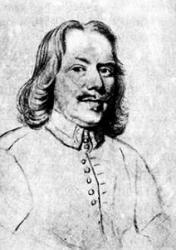
John Bunyan

1628 - 1688 Person Name: John Bunyan, 1628-1688 Author of "He that is down needs fear no fall" in CPWI Hymnal Bunyan, John. This great allegorist cannot be included amongst hymn writers, except on the ground that the piece, “He that is down needs fear no fall," from pt. ii. of his Pilgrim's Progress, 1684, is given in a limited number of hymnals. The son of a mechanic, he was born at Elstow, 1628; was a Baptist minister at Bedford; and died in London, Aug. 1688. -- John Julian, Dictionary of Hymnology (1907) =================================== Bunyan, John, p. 193, ii. Another piece by him is "Valiant's song" in the Pilgrim's Progress, pt. ii., 1684 (2nd edition 1686, p. 177). There, and in E. P. Hood's Our Hymn Book1873, no. 398, it begins "Who would true valour see" (A Pilgrim's Song). In the English Hymnal, 1906, No. 402, it is partly rewritten, and begins "He who would valiant be." [Rev. James Mearns. M.A.] --John Julian, Dictionary of Hymnology, New Supplement (1907)

Anonymous

Person Name: Unknown Author of "Behold, That Great And Awful Day" in The Cyber Hymnal In some hymnals, the editors noted that a hymn's author is unknown to them, and so this artificial "person" entry is used to reflect that fact. Obviously, the hymns attributed to "Author Unknown" "Unknown" or "Anonymous" could have been written by many people over a span of many centuries.

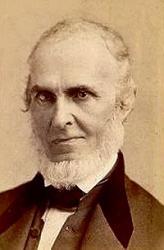
John Greenleaf Whittier

1807 - 1892 Author of "Blow, winds of God, awake and blow" in Hymns of the Kingdom of God Whittier, John Greenleaf, the American Quaker poet, was born at Haverhill, Massachusetts, Dec. 17, 1807. He began life as a farm-boy and shoemaker, and subsequently became a successful journalist, editor and poet. In 1828 he became editor of the American Manufacturer (Boston), in 1830 of the New England Review, and an 1836 (on becoming Secretary to the American Anti-Slavery Society) of the Pennsylvania Freeman. He was also for some time, beginning with 1847, the corresponding editor of the National Era. In 1840 he removed to Amesbury, Massachusetts, where most of his later works have been written. At the present time [1890] he lives alternately at Amesbury and Boston. His first poetical piece was printed in the Newburyport Free Press in 1824. Since then his publications have been numerous, including:— Voices of Freedom, 1833; Songs of Labour, and other Poems, 1850; Ballads and other Poems, London, 1844; The Panorama, and other Poems, 1856; In War Time, 1863; Occasional Poems, 1865; Poetical Works, 1869; Complete Poetical Works, 1876; The Bay of the Seven Islands, and other Poems, 1883, &c. From his numerous poems the following hymns have been compiled, and have come into common use, more especially amongst the American Unitarians:— 1. All as God wills, Who wisely heeds. Trust. This begins with stanza xi. of Whittier's poem, "My Psalm." in his workThe Panorama, and other Poems, 1856 (Complete Poetical Works, Boston, 1876, p. 179), and is given in Lyra Sacra Americana , 1868; Border's Congregational Hymns, 1884, &c. 2. All things are Thine: no gift have we. Opening of a Place of Worship. Written for the Opening of Plymouth Church, Minnesota, 1872 ( Complete Poetical Works , p. 281). In Horder's Congregational Hymns, 1884. 3. Another hand is beckoning us. Bereavement. From his poem " Gone," written in 1845 (Complete Poetical Works, p. 106). In Horder's Congregational Hymns, 1884. 4. Dear Lord and Father of mankind. Calmness in God desired. From his poem “The Brewing of Soma," beginning with stanza xii. (Complete Poetical Works p. 266). In Horder's Congregational Hymns, 1884. 5. God giveth quietness at last. Death and Burial. This begins with stanza xvii. of his poem, “The Singer," written in 1871 (Author's MS.), and included in the Complete Poetical Works, 1876, p. 265. In Martineau's Hymns, 1875. 6. Hast thou, 'midst life's empty noises. The Purpose of Life. Written in 1842. It is in Longfellow and Johnson's Unitarian Book of Hymns, Boston, 1846, and several other later American collections. Also in Lyra Sacra Americana, 1864. 7. I ask not now for gold to gild. Resignation. From his poem "The Wish of To-Day." Written in 1848 (Author's MS.). In Hedge and Huntingdon's Unitarian Hymns for the Church of Christ, Boston, 1853; the Laudes Domini, 1884, and other collections. 8. Immortal love, for ever full. The Love of Jesus. This poem, entitled “Our Master," appeared in Whittier's work, The Panorama, and other Poems, 1856, in 35 stanzas of 4 lines; in Schaff’s Christ in Song, 1869-70, p. 117; and in the Complete Poetical Works, 1876, p. 231, and others. From this poem the following centos have come into common use:— (1) Immortal love for ever full. In the 1890 edition of the Hymnal Companion and others. (2) 0 Lord and Master of us all. Begins with stanza xvi. (3) 0 Love! O Life! our faith and sight. Begins with stanza xxiv. In several American hymnals, including the Unitarian Hymn [and Tune Book ], Boston, 1868, and others. (4) Our Friend, our Brother, and our Lord. Begins with stanza xxxiv. In Horder's Congregational Hymns, 1884, &c. (5) We faintly hear, we dimly see. Begins with stanza xxvi. In Barrett's Congregational Church Hymnal, 1887. (6) We may not climb the heavenly steeps. Begins with stanza v. In Laudes Domini, 1884; the Primitive Methodist Hymnal, 1887, &c. The use of these centos shows that the hymnic element in the original poem is of a high and enduring order. 9. It may not be our lot to wield. Duty and its Reward. This begins with stanza iv. of his poem "Seedtime and Harvest." Written circa 1850 (Author's MS.). Given in his Complete Poetical Works, p. 114. The hymn is in Laudes Domini, 1884, and other American collections. 10. May freedom speed onward, wherever the blood. Freedom. In the 1848 Supplement to the Boston Book of Hymns, Boston, No. 582, Hymns of the Spirit, 1864, and other collections. In Whittier's Poetical Works, Boston, 1869, p. 68, it is given as, “Right onward, O speed it! Wherever the blood”. 11. Now is the seed-time; God alone. Self-Sacrifice. In the Boston Hymns of the Spirit, 1864, No. 683. 12. 0 backward-looking son of time. New and Old. This begins with stanza xix. of his poem "The Reformer," and is given in this form in the Boston Hymns for the Church of Christ, Boston, 1853, No. 835, and again in later collections. In full in the Complete Poetical Works, p. 78. 13. 0 beauty, old yet ever new. The Law of Love. This in the Boston Hymns of the Spirit, 1864, begins with stanza xxi. of his poem on “The Shadow and the Light,” given in full in the Complete Poetical Works , p. 173. 14. 0 fairest-born of love and light. American National Hymn. This is from his poem "Democracy," which is dated "Election Day, 1843," and is in his Ballads and other Poems, London, 1844, p. 214, and his Complete Poetical Works, p. 82. 15. 0, he whom Jesus loves has truly spoken. True Worship. This in the 1848 Supplement to the Boston Book of Hymns, 1848, No. 578, begins with stanza xi. of his poem on “Worship," given in full in his Complete Poetical Works, p. 96. The poem is dated by the Author, 1848 (Author's MS.). 16. 0 holy Father, just and true. Freedom. "Lines written for the Celebration of the third Anniversary of British Emancipation at the Broadway Tabernacle, N. Y., First of August, 1837." (Complete Poetical Works, p. 47.) It was included in the Unitarian Christian Hymns, Boston, 1844, and has been repeated in later collections. 17. 0 Maker of the Fruits and Flowers. Flower Services. This begins with stanza iv. of his "Lines for the Agricultural and Horticultural Exhibition at Amesbury and Salisbury, Sep. 28, 1858," as given in his Complete Poetical Works , p. 183. It is in the Boston Hymns of the Spirit, 1864, and as "O Painter of the fruits and flowers," in Horder's Congregational Hymns, 1884. 18. O not alone with outward sign. Divine Invitation. This begins with stanza ii. of his poem, "The Call of the Christian," given in his Ballads and other Poems, London, 1844, p. 185, and his Complete Poetical Works, p. 73. The hymn appeared in the Boston Book of Hymns, 1846, and again in later collections. 19. O pure Reformers, not in vain. Freedom. This begins with stanza xii. of his poem "To the Reformers of England," as given in his Complete Poetical Works, p. 77. The hymn was included in the Boston Book of Hymns, 1846, and has been repeated in later collections. 20. O sometimes gleams upon our sight. Old and New. This is taken from his poem "The Chapel of the Hermits," 1852 (in 94 stanzas of 4 lines), and begins with stanza xi. (Comp. Poetical Works, p. 115.) The cento was given in the Boston Hymns of the Spirit, 1864, and repeated in later collections. 21. O Thou, at Whose rebuke the grave. Mercy. This was given in the Boston Book of Hymns, 1848, No. 44l. 22. O [God] Thou, Whose presence went before. National Hymn. This hymn is dated by the author 1834 (Author's MS.), and was written for the Anti-slavery Meeting at Chatham Street Chapel, New York, "on the 4th of the 7th month, 1831." It is No. 750 in the Unitarian Christian Hymns, 1844. It is sometimes given as “0 God, whose presence went before." 23. 0, what though our feet may not tread where Christ trod. Presence of Christ's Spirit. The author dates this 1837 (Author's MS.). It is No. 150 in the Boston Book of Hymns, 1846. In their Hymns of the Spirit, 1864, No. 652, it begins: "0, wherefore the dream of the earthly abode." Both centos are from his poem “Poledom." 24. Shall we grow weary in our watch? Patience, or Resignation. This begins with stanza x. of his poem "The Cypress-Tree of Ceylon." (Complete Poetical Works, p. 84.) This form of the text was given in the Boston Book of Hymns, 1846, No. 278, in 7 stanzas of 4 lines, and again in Horder's Congregational Hymns, 1884, in 3 stanzas. 25. Sport of the changeful multitude. Persecution. This begins with line 6 of stanza x. of his poem "Ezekiel," and was given in the Boston Hymns of the Spirit, 1864, No. 65lines In full in Complete Poetical Works, p. 67. 26. The green earth sends its incense up. Worship of Nature. The author dates this 1845 (Author's MS.). It is from his poem “The Worship of Nature," and was given in this form in the Boston Hymns for the Church of Christ, 1853, No. 193. The cento "The harp at Nature's advent strung," in the Unitarian Hymn [and Tune] Book, Boston, 1868, No. 195, is from the same poem. The cento No. 321 in the Boston Hymns of the Spirit, 1864, is also (altered) from this poem. 27. The path of life we walk today. The Shadowing Rock. This in the Boston Hys. of the Spirit, 1864, begins with stanza i. of his poem on "The Rock in El Gh'or," which the author dates 1859 (Author's MS.). In full in Complete Poetical Works, p. 180. 28. Thine are all the gifts, 0 God. Children's Missions, or Ragged Schools. Written for the Anniversary of the Children's Mission, Boston, 1878. It is given in Horder's Congregational Hymns, 1884. 29. Thou hast fallen in thine armour. Death. From his poem "To the memory of Charles B. Storrs, late President of Western Reserve College," published in his Ballads and other Poems, London, 1844, p. 84. Dated by the author 1835 (Author's MS.). Abridged form in the Hymns of the Spirit, 1864. 30. To-day, beneath Thy chastening eye. Seeking Rest. This begins with stanza iv. of his poem, "The Wish of To-Day," dated by the author 1847 (Author's MS.), and given in full in his Complete Poetical Works, p. 114. The cento is in Martineau's Hymns, 1873, and others. 31. We see not, know not; all our way. Resignation. "Written at the opening of the Civil War, 1861" (Author's MS.), and included in his In War Time, 1863, and his Complete Poetical Works, p. 190. In full in the Prim. Methodist Hymnal, 1887. 32. When on my day of life the night is falling. Old Age. Written in 1882 (Author's MS.), and included in his work The Bay of the Seven Islands, and other Poems, 1883. In Horder's Congregational Hymns, 1884. 33. With silence only as their benediction. Death. 1845. "Written on the death of Sophia Sturge, sister of Joseph Sturge, of Birmingham, England" (Author's MS.). It is in several collections, including Martineau's Hymns, &c, 1873; Horder's Congregational Hymns, 1884, and others. Notwithstanding this extensive use of portions of Mr. Whittier's poems as hymns for congregational use, he modestly says concerning himself: "I am really not a hymn-writer, for the good reason that I know nothing of music. Only a very few of my pieces were written for singing. A good hymn is the best use to which poetry can be devoted, but I do not claim that I have succeeded in composing one." (Author's MS.) We must add, however, that these pieces are characterized by rich poetic beauty, sweet tenderness, and deep sympathy with human kind. -- John Julian, Dictionary of Hymnology (1907) ======================== Whittier, J. G, p. 1277, i. In addition to the large number of this author's hymns already annotated from his own manuscript, the following have also come into use, mainly in the form of centos from his poems, during the past ten years:— i. From Poems, 1850:— 1. O brother man! Fold to thy heart thy brother. [Brotherly Love.] From his poem, “Worship." Written in 1848, and published in Poems, 1850. ii. From Songs of Labour, and Other Poems, 1850;— 2. Bowed down in lowliness of min. [Resignation.] From the poem “The Wish of To-day." iii. From The Chapel of the Hermits, and Other Poems, 1853:— 3. O, sometimes glimpses on our sight. [Light in Darkness.] First published in The National Era, 1851, and again as above, 1853. In The Pilgrim Hymnal, N.Y. 1904, it begins " 0 sometimes gleams upon our sight," and in Hymns of the Ages, 1904, "Yet sometimes glimpses on my sight"; see p. 1277, ii. 20. iv. From The Panorama, and Other Poems, 1856:— 4. Thou, 0 most compassionate. [Divine Compassion.] This cento is from the poem "My Dream," and is dated 1855. v. From Home Ballads and Poems, 1860:— 5. I mourn no more my vanished years. [Life's Review.] A cento from "My Psalm," dated 1859, opening with st. i. 6. No longer forward nor behind. This begins with st. iii. of "My Psalm." 7. O hearts of love, O souls that turn. [Life from, Christ.] A cento from the poem, "The Overheart." 8. O Love Divine, Whose constant beam. [Divine Love Universal.] From the poem, "The Shadow and the Light." The form in which it is given in The Pilgrim Hymnal, 1904, first appeared in The Independent, Nov. 1860. 9. Once more the liberal year laughs out. [Autumn.] From his "For an Autumn Festival," 1859. vi. From In War Time, and Other Poems, 1864:— 10. I can only urge the plea. [Cry for Mercy.] A cento from “Andrew Rykman’s Prayer,” dated 1863. 11. What Thou wilt, O Father, give. Also from “Andrew Kykman's Prayer." vii. From The Tent on the Beach, and Other Poems, 1867:— 12. I bow my forehead to [in] the dust. St. ix., &c. 13. I know not what the future hath. St. xvi., &c. 14. I long for household voices gone. St. xv., &c. 15. I see the wrong that round me lies. St. x., &c. 16. Who fathoms the Eternal Thought. St. iv., &c. 17. Yet, in the maddening maze of things. St. xi., &c. These centos are taken from the poem, "The Eternal Goodness," which is dated 1865. viii. From Among the Hills, and Other Poems, 1869:— 18. For ever round the mercy-seat. [God's Love and Man's Unfaithfulness.] From the poem, “The Answer." ix. From The Pennsylvania Pilgrim, and Other Poems, 1873:— 19. Best for the weary hands is good. [Daily Renewal.] This is from "My Birthday," which appeared in the Atlantic Monthly, 1871, and again as above, 1873. x. From Hazel Blossoms, 1875:— 20. All things [gifts] are Thine, p. 1277, i. 2. The church for which this was written, in 1873, was Plymouth Church, St. Paul, Minn. The hymn was included in Hazel Blossoms, 1875. 21. We need love's tender lessons taught. [Love.] From Child-Songs," in Hazel Blossoms, opening with st. ix. xi. From The Bay of the Seven Islands, 1883:— 22. As from the lighted hearths behind me. [Anticipation of the Future.] This begins with st. iii. of the poem, "What the Traveller said at Sunset." xii. Additional Notes:— 23. Lord, for the things we see. [Public Gatherings.] This hymn is from "Poledom," 1837. 24. Not always as the whirlwind's rush. [Call to the Ministry.] Published in The Poetical Writings, 1857, Vol. i., p. 254, and again in the Oxford edition of his Poetical Works, 1904, p. 455. It is dated 1833. 25. Sound over all waters, [The Coming Kingdom.) This, in Horder's Worship Song, 1905, is from Whittier's Complete Poetical Works, Boston, 1876, p. 280, where it is dated 1873. 26. Take courage, Temperance workers. [Temperance.] Mr. Pickard, Whittier's literary executor, cannot trace this hymn in any of the author's writings, and we also are at fault. 27. The harp at Nature's advent strung. [Nature's acknowledgement of God.] Dr. Charles L. Noyes, one of the editors of The Pilgrim Hymnal, 1904, writes us concerning this hymn: "It was first published in its present form [as in the American hymn-books] in 1867 in The Tent on the Beach." But a hymn almost identical was written when Whittier was in his teens, and published in the Haverhill Gazette, October 5, 1827. The same poem appeared in The Palladium, 1829. It was revised for The Tent on the Beach, 1867 (p. 1278, i. 26). 28. We see not, know not; all our way, p. 1278, i. 31. This hymn, written in 1861, first appeared in the Atlantic Monthly, 1862, vol. 10, p. 235. 29. Wherever through the ages rise. [Love is universal.] Opens with line 1 of a section in the poem "Miriam," in Miriam, and Other Poems, 1871, p. 13. 30. Who calls Thy glorious service hard? [Duty.] This begins with st. iii. of his poem "Seedtime and Harvest," noted on p. 1277, ii. 9. 31. O Lord and Father of mankind. This is a slightly altered form of "Dear Lord and Father of mankind." p. 1277, i. 4. The poem, “Our Master," stated on p. 1277, i., No. 8, as having appeared in The Panorama, 1856, in error, was given in The Tent on the Beach, and Other Poems, Boston, 1867, pp. 143-152. In compiling the foregoing, we have been materially assisted by Mr. Pickard, the poet's literary executor, and the Rev. Dr. Charles L. Noyes, of Somerville, Mass. Whittier died at Hampton Falls, New Hampshire, Sep. 7, 1892. --John Julian, Dictionary of Hymnology, New Supplement (1907) ======================= See also in: Hymn Writers of the Church

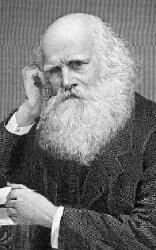
William Cullen Bryant

1794 - 1878 Author of "O Thou, Whose Own Vast Temple Stands" in Gloria Deo Bryant, William Cullen. First in order of time of the great American poets, Bryant was born at Cummington, Mass., Nov. 3, 1794, and was educated at Williams College. In 1815 he'was called to the Bar, and practised for a time at Great Barrington. In 1825 he retired from the Bar, settled at New York, and devoted himself to literary pursuits, founding the New York Review, and editing for a short time the New York Evening Post. He died June 12, 1878. His poetical and other works are well known. His hymns were written at intervals during his long life. They were collected and privately printed in 1869, and number over 20. Those in common use are:— 1. Almighty, listen while we raise. Praise. This is given as "Almighty hear us,” &c, in the Unitarian Hymn and Tune Book, Boston, 1868. It was introduced into Great Britain through Beard's Collection, 1857. 2. Deem not that they are blest alone. Mourning. In this form it is in Beard's Collection, 1837. It is best known as "0 deem not they are," &c, and in this form it is No. 964 in Songs for the Sanctuary, N. Y., 1865-72, No. 452, in Dr. Martineau's Hymns of Prayer and Praise, Lond., 1873, &c. 3. Father, to Thy kind love we owe. God's Lovingkindness. This is given in several modern collections, including the Unitarian Hymn and Tune Book, Boston, 1868, Martineau, 1873, &c. 4. 0 God, whose dread and dazzling brow. Compassion desired. Is No. 57 in the Boston Hymn and Tune Book, 1868, as above. 5. When he who from the scourge of wrong. Hope of the Resurrection. This is seldom found in modern hymnals. Text in Lyra Sacra Americana, 1868. The above hymns (1-5) appeared in Dr. H. D. Sewall's (Unitarian) Psalms & Hymns for Social and Private Worship, 1820, and were written at the instance of a Miss Sedgwick. Following as near as possible the chronological order of the hymns we have next:— 6. O Thou Whose own vast temple stands. Opening of a Place of Worship. Written in 1835 for the Dedication of a Chapel in Prince Street, N. Y. This is the most widely known of this author's hymns. It was introduced into Great Britain as early as 1837, when it was included in Beard's Collection, No. 405. It is in 4 stanzas of 4 lines. Orig. text in Songs for the Sanctuary, N. Y., 1865, No. 1017, and Martineau, 1873, No. 727. Another form of the hymn is "Thou, Whose unmeasured temple stands," This is No. 569 in the American Presb. Psalms and Hymns, Richmond, 1867, Horder's Congregational Hymns, Lond. 1884, No. 747, and others. 7. All that in this wide world we see. Omnipresence. This is dated 1836. In his Collection in 1837, No. 17, Beard gives it as an original contributed thereto, thus fixing its first publication. 8. Thou unrelenting past. The Past. Dates from 1836. Also in Martineau, 1873, No. 508. 9. Not in the solitude. God in the City. Dates from 1836, and is No. 26 in Martineau, 1873. 10. Whither, midst falling dew. Divine Guidance. This, in common with Nos. 8 and 9, is more a poem than hymn. It is addressed "To a Waterfowl," and dates from 1836. In Martineau, 1873. 11. Dear ties of mutual succour bind. Charity Sermons. No. 905 in the Amer. Methodist Episcopal Hymnal, 1878. It dates from about 1836. 12. 0 Thou whose love can ne'er forget. Ordination. Given (but not as an original contributed thereto) in Beard's Collection (Eng.), 1837. 13. Mighty One, before Whose face. Ordination. This is dated 1840 (but is probably earlier), and is given in several collections, including Mr. Beecher's Plymouth Collection, 1855, and others. 14. Look from Thy sphere of endless day. Home Missions. This hymn has also attained to considerable use both in Great Britain and America. It dates from 1840. It is in the Song. for the Sanctuary, N. Y., 1865, Horder's Congregational Hymns, 1884, &c. 15. Lord, who ordainest for mankind. Thanks for a Mother's love. Written at Dr. Osgood's suggestion, and printed in his Christian Worship, 1862. It is repeated in Martineau, 1873. 16. All praise to Him of Nazareth. Holy Communion. Dr. Hatfield in his Church Hymn Bk., 1872, No. 736, gives this in 3 stanzas of 4 lines. In the Songs for the Sanctuary it is in its full form of 5 stanzas. It dates from 1864. 17. As shadows cast by cloud and sun. Epiphany. In the Methodist Episcopal Hymnal, N. Y., 1878. It was contributed to that Hymnal, 1877, but was composed for the Semi-Centennial Celebration of the Church of the Messiah, Boston, March 19, 1875. 18. When doomed to death the Apostle lay. On behalf of Drunkards. Also in the Methodist Episcopal Hymnal, 1878. In addition to the above the following hymns by Bryant are in limited use:— 19. All things that are on earth. Love of God. In Beard's Collection, 1837. 20. Close softly, fondly, while ye weep. Death. In Mr. Beecher's Plymouth Coll., 1855. 21. How shall I know thee in the sphere which keeps? The Future Life. In the Supplement to the Boston Hymns for the Church of Christ, 1853. 22. Standing forth in life's rough way. On behalf of Children. In Dr. Alton's Children's Worship, 1878; Horder's Congregational Hymns, 1884, and others. 23. When this song of praise shall cease. Death anticipated. In his Hymns, 1869, and W. R. Stevenson's School Hymnal, 1880, No 313. 24. When the blind suppliant in the way. Opening the eyes of the blind. In the Methodist Episcopal Hymnal, 1878, N. Y., No. 201. It dates from 1874. 25. Wild was the day, the wintry sea. The Pilgrim Fathers. In Hymns of the Spirit, by Longfellow and Johnson. Boston, 1864. In 1869, Hymns by W. C. Bryant, 12mo, were privately printed. In this work the texts of many of the older hymns are altered. The dates of his hymns are difficult to determine, and many of those given above are approximate only. Bryant's genius was cool, meditative, and not distinguished by lyric fire. His hymns are correct and solid, but none reach the highest rank. [Rev. F. M. Bird, M.A.] -- John Julian, Dictionary of Hymnology (1907)

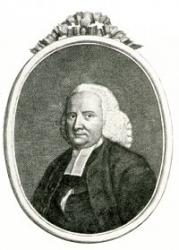
Thomas Gibbons

1720 - 1785 Author of "To Thee, my God, Whose presence fills" in The Evangelical Hymnal with Tunes Gibbons, Thomas, was born at Beak, near Newmarket, May 31, 1720; educated by Dr. Taylor, at Deptford; ordained in 1742, as assistant to the Rev. Mr. Bures, at Silver Street Chapel, London; and in 1743 became minister of the Independent Church, at Haberdashers' Hall, where he remained till his death, Feb. 22, 1785. In addition to his ministerial office he became, in 1754, tutor of the Dissenting Academy at Mile End, London; and, in 1759, Sunday evening lecturer at Monkwell Street. In 1760 the College at New Jersey, U.S., gave him the degree of M.A. and in 1764 that of Aberdeen the degree of D.D. His prose works were (1) Calvinism and Nonconformity defended, 1740; (2) Sermons on various subjects, 1762; (3) Rhetoric, 1767; (4) Female Worthies, 2 vols., 1777. Three volumes of sermons were published after his death. His poetical works were:— (1) Juvenilia; Poems on various subjects of Devotion and Virtue, 1750, was published by subscription. Among the subscribers is found the name of the Rev. Mr. George Whitefield, B.A. It was dedicated to the Countess of Huntingdon, and bears her coat of arms. In this volume are included versions of six of the Psalms, and a few hymns. (2) Hymns adapted to Divine wor¬ship in two books. Book I. Derived from select passages of Holy Scriptures. Book II., Written on sacred subjects and particular occasions, partly collected front various authors, but principally composed by Thomas Gibbons, D.D., 1769. (3) Hymns adapted to Divine worship in two books. Book I. Derived from select passages of the Holy Scriptures. Book II. Written on sacred subjects and particular occasions by Thomas Gibbons, D.D., 1784. (4) The Sermons, published in 1762, included fifteen hymns, one being appended to each sermon. (5) The Christian Minister in three poetical epistles to Philander, 1772. This volume included (i.) Poetical versions of several parts of Scripture, (ii.) Translations of poems from Greek and Latin writers, (iii.) Original pieces on various occasions. (6) An English version of the Latin Epitaphs on the Nonconformist's Memorial, with a poem to the memory of the 2000 ministers ejected in 1662, 1775. (7) Select Portions of Scripture, and Remarkable Occurrences, versified for the Instruction and entertainment of Youth of both Sexes, 1781. Reprinted in America, 1805. Dr. Gibbons may be called a disciple in hymnwriting of Dr. Watts, whose life he wrote. His hymns are not unlike those of the second rank of Watts. He lacked "the vision and faculty divine," which gives life to hymns and renders them of permanent value. Hence, although several are common use in America, they are dying out of use in Great Britain. The most popular are, "Now let our souls on wings sublime"; "Great God, the nations of the earth"; "Thy goodness, Lord, our souls confess"; "To Thee, my God, whose presence fills." [Rev. W. Garrett Horder] The less important of Dr. Gibbons's hymns, which are still in common use are:— 1. And be it so that till this hour. Hope. This is No. 50 in Book ii. of his Hymns adapted to Divine Worship, &c, 1769, in 5 stanzas of 4 lines, and headed, "Encouragement against Despair; or, Hope still set before us." Originally a Sacramental hymn in Rippon's Selections, 1787, No 230, it was altered to a general hymn, with special reference to "Hope." 2. Assist us, Lord, Thy Name to praise. Life, a race. In Rippon's Baptist Selections, 1787, No. 326, in 4 stanzas of 4 lines. 3. Eternal life, how sweet the sound. Eternal Life. This is one of three hymns on Titus iii. 7, in his Hymns adapted to Divine Worship, &c, 1784, Book i., No. 156, in 5 stanzas of 4 lines. In the American Dutch Reformed Hymns of the Church, 1869, No. 843 begins with st. ii., "Eternal life, how will it reign?" 4. Father, is not Thy promise pledged? Missions. This is Pt. iii.of his hymn, "Great God, the nations of the earth" (q. v.). 5. Forgiveness, 'tis a joyful sound. Pardon. From his Hymns adapted to Divine Worship, &c, 1769. Book i., No. 69, in 5 stanzas of 4 lines into several modern collections in Great Britain and America. It is based on St. Luke, vii. 47. 6. From winter's barren clods. [Spring.] Appeared in his Hymns, &c, 1784, Book ii., No. 27, in 5 stanzas of 4 lines, and headed, "The Return of the Spring celebrated in the Powerful and Gracious Work of God." In 1787 it was repeated anonymously in Rippon's Baptist Selections, No. 499. The hymn, "Great God, at Thy command, Seasons in order rise," begins with st. iii. of this hymn. 7. Happy the men in ancient days. Public Worship. In his Hymns adapted to Public Worship, &c, 1784. 8. On Zion, his most holy mount. Gospel Feast. From his Hymns adapted for Divine Worship, &c, 1769, Book i., No. 35, in 6 stanzas of 4 lines. It was originally a Sacramental hymn, but in its abbreviated form, as in use in America, that element is eliminated. 9. Our Father, high enthroned above. Lord's Prayer. Appeared in the Bristol Baptist Collection of Ash & Evans, 1769, No. 41, in 9 stanzas of 4 lines. In 1772 it was reprinted in a revised form, and with an additional stanza, in Gibbons's Christian Minister, p. 74. 10. Thy goodness, Lord, our souls confess. Providence and Grace. Appeared in the Gospel Magazine, 1775, and in his Hymns adapted to Divine Worship, &c, 1784, Bk. ii., No. 11, in 7 stanzas of 4 lines. In Dobell's Selections, 1806, st. i.-iv., and vi. were given with alterations, which were not improvements, as No. 9. This arrangement is repeated in modern hymnbooks, including the Baptist Hymnal, 1879, and others. 11. When Jesus dwelt in mortal clay. Jesus our Example. From his Hymns adapted to Divine Worship, &c, 1784, Book i., No. 128, in 9 stanzas of 4 lines into a few American collections, including the Baptist Praise Book, 1871. The more important of Dr. Gibbons's hymns are annotated under their respective first lines. [William T. Brooke] -- John Julian, Dictionary of Hymnology (1907) ====================== Gibbons, Thomas, p. 420, i. From his Hymns, &c, of 1784, are also in common use:— 1. Lord God, omnipotent to bless. Divine Help desired. 2. Now may the God of peace and love. Close of Service. (1769. Pt. i.) 3. O what stupendous mercy shines. Benevolence. --John Julian, Dictionary of Hymnology, Appendix, Part II (1907)

Pages


Export as CSV
It looks like you are using an ad-blocker. Ad revenue helps keep us running. Please consider white-listing Hymnary.org or getting Hymnary Pro to eliminate ads entirely and help support Hymnary.org.