You help make Hymnary.org possible. More than 10 million people from 200+ countries found hymns, liturgical resources and encouragement on Hymnary.org in 2025, including you. Every visit affirms the global impact of this ministry.

If Hymnary has been meaningful to you this year, would you take a moment today to help sustain it? A gift of any size—paired with a note of encouragement if you wish—directly supports the server costs, research work and curation that keep this resource freely available to the world.

Give securely online today, or mail a check to:
Hymnary.org
Calvin University
3201 Burton Street SE
Grand Rapids, MI 49546

Thank you for your partnership, and may the hope of Advent fill your heart.

Person Results

Topics:unity+of+the+church
In:people

Planning worship? Check out our sister site, ZeteoSearch.org, for 20+ additional resources related to your search.
Showing 211 - 220 of 509Results Per Page: 102050

Richard Runciman Terry

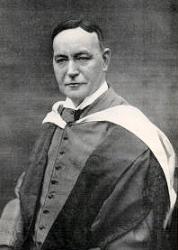
1865 - 1938 Person Name: Richard Runciman Terry, 1865-1938 Topics: Unity of the Church Composer of "BILLING" in Together in Song Terry, Richard R., was born at Morpeth, Jan. 3, 1868, and was Tate Choral Scholar at King's College, Cambridge. In 1896 he became organist and music-master at Downside R. C. College and Abbey, Bath; and in 1901 organist and director of the choir at Westminster Cathedral (R. C.) London. He contributed to A. E. Tozer's Catholic Hymns, 1898, thirteen tunes and the words of two hymns:— 1. Christ, the Lord, is my true Shepherd. Ps. xxiii. 2. Peaceful eve, so still and holy. Christmas Carol. It is marked as D. C. B., i.e. for Downside Coll., Bath. The tune by Mr. Tozor was published in 1881 to a carol beginning with the same first line, but otherwise entirely different. --John Julian, Dictionary of Hymnology, New Supplement (1907)

Ernest Hawkins

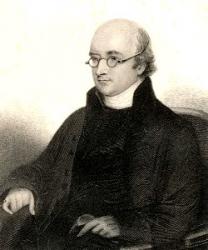
1802 - 1868 Person Name: Ernest Hawkins, 1802-1868 Topics: The Adoration of God; Life and Unity in the Church Adapter of "WESTMINSTER ABBEY" in Singing the Faith Hawkins, Ernest, B.D., son of Major Hawkins, born Jan. 25, 1802, at Hitchin, and educated at Balliol College, Oxford (B.A. 1842). He was for sometime a Fellow of Exeter College. On taking Holy Orders he became Curate of Burwash, sub-librarian of the Bodleian Library, Curate of St. George's, Bloomsbury, Minister of Curzon Chapel, Mayfair, London, Prebendary of St. Paul's, and Canon of Westminster. From 1838 to his death, Oct. 5, 1866, he also acted as secretary to the Society for the Propagation of the Gospel in Foreign Parts. Besides his prose works, which were not numerous, he published Verses in commemoration of the Third Jubilee of the S.P.G. (Society for the Propagation of the Gospel), 1851-2. To this little collection his hymns were contributed. The most extensively used of these, "Lord, a Saviour's love displaying" (Missions), has been adopted by many collections. --John Julian, Dictionary of Hymnology (1907)

Christopher Wordsworth

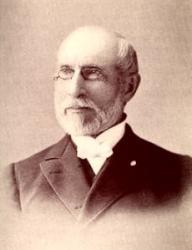
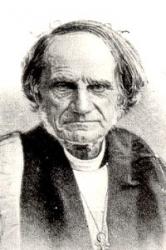
1807 - 1885 Person Name: Bp. Christopher Wordsworth, 1807-1885 Topics: Church Unity; Church Unity; Christian Unity; The Church and the Kingdom of God The Church; Unity, Christian Author of "Father of all, from land and sea" in Methodist Hymn and Tune Book Christopher Wordsworth--nephew of the great lake-poet, William Wordsworth--was born in 1807. He was educated at Winchester, and at Trinity College, Cambridge, where he graduated B.A., with high honours, in 1830; M.A. in 1833; D.D. in 1839. He was elected Fellow of his College in 1830, and public orator of the University in 1836; received Priest's Orders in 1835; head master of Harrow School in 1836; Canon of Westminster Abbey in 1844; Hulsean Lecturer at Cambridge in 1847-48; Vicar of Stanford-in-the-Vale, Berks, in 1850; Archdeacon of Westminster, in 1865; Bishop of Lincoln, in 1868. His writings are numerous, and some of them very valuable. Most of his works are in prose. His "Holy Year; or, Hymns for Sundays, Holidays, and other occasions throughout the Year," was published in [1862], and contains 127 hymns. --Annotations of the Hymnal, Charles Hutchins, M.A., 1872. =================== Wordsworth, Christopher, D.D., was born at Lambeth (of which parish his father was then the rector), Oct. 30, 1807, and was the youngest son of Christopher Wordsworth, afterwards Master of Trinity College, Cambridge, and Priscilla (née Lloyd) his wife. He was educated at Winchester, where he distinguished himself both as a scholar and as an athlete. In 1826 he matriculated at Trinity College, Cambridge, where his career was an extraordinarily brilliant one. He swept off an unprecedented number of College and University prizes, and in 1830 graduated as Senior Classic in the Classical Tripos, and 14th Senior Optime in the Mathematical, won the First Chancellor's Medal for classical studies, and was elected Fellow of Trinity. He was engaged as classical lecturer in college for some time, and in 1836 was chosen Public Orator for the University. In the same year he was elected Head Master of Harrow School, and in 1838 he married Susan Hatley Freere. During his head-mastership the numbers at Harrow fell off, but he began a great moral reform in the school, and many of his pupils regarded him with enthusiastic admiration. In 1844 he was appointed by Sir Robert Peel to a Canonry at Westminster; and in 1848-49 he was Hulsean lecturer at Cambridge. In 1850 he took the small chapter living of Stanford-in-the-Vale cum Goosey, in Berkshire, and for the next nineteen years he passed his time as an exemplary parish priest in this retired spot, with the exception of his four months' statutable residence each year at Westminster. In 1869 he was elevated to the bishopric of Lincoln, which he held for more than fifteen years, resigning it a few months before his death, which took place on March 20th, 1885. As bearing upon his poetical character, it may be noted that he was the nephew of the poet-laureate, William Wordsworth, whom he constantly visited at Rydal up to the time of the poet's death in 1850, and with whom he kept up a regular and lengthy correspondence. Christopher Wordsworth was a very voluminous writer, his principal works being:— (1) Athens and Attica, 1836; (2) Pompeian Inscriptions, 1837; (3) Greece Pictorial and Descriptive, 1839; (4) King Edward VIth's Latin Grammar, 1841; (5) Bentley's Correspondence, 1842; (6) Theophilus Anglicanus, 1843; (7) Memoirs of William Wordsworth, 1851; (8) Hippolytus, 1853; (9) Notes at Paris, 1854; (10) A Commentary on the whole Bible, 1856-1870; (11) The Holy Year, 1862; (12) Church History, 1881-1883; many volumes of Sermons, and an enormous amount of Pamphlets, Addresses, Letters, Speeches, on almost every subject in which the interests of the church were concerned, and also on subjects connected with classical literature. Of his many works, however, the only one which claims notice from the hynmologist's point of view is The Holy Year, which contains hymns, not only for every season of the Church's year, but also for every phase of that season, as indicated in the Book of Common Prayer. Dr. Wordsworth, like the Wesleys, looked upon hymns as a valuable means of stamping permanently upon the memory the great doctrines of the Christian Church. He held it to be "the first duty of a hymn-writer to teach sound doctrine, and thus to save souls." He thought that the materials for English Church hymns should be sought (1) in the Holy Scriptures, (2) in the writings of Christian Antiquity, and (3) in the Poetry of the Ancient Church. Hence he imposed upon himself the strictest limitations in his own compositions. He did not select a subject which seemed to him most adapted for poetical treatment, but felt himself bound to treat impartially every subject, and branch of a subject, that is brought before us in the Church's services, whether of a poetical nature or not. The natural result is that his hymns are of very unequal merit; whether his subject inspired him with poetical thoughts or not, he was bound to deal with it; hence while some of his hymns (such as "Hark! the sound of holy voices," &c, “See the Conqueror mounts in triumph," &c, "O, day of rest and gladness") are of a high order of excellence, others are prosaic. He was particularly anxious to avoid obscurity, and thus many of his hymns are simple to the verge of baldness. But this extreme simplicity was always intentional, and to those who can read between the lines there are many traces of the "ars celans artem." It is somewhat remarkable that though in citing examples of early hymnwriters he almost always refers to those of the Western Church, his own hymns more nearly resemble those of the Eastern, as may be seen by comparing The Holy Year with Dr. Mason Neale's Hymns of the Eastern Church translated, with Notes, &c. The reason of this perhaps half-unconscious resemblance is not far to seek. Christopher Wordsworth, like the Greek hymnwriters, drew his inspiration from Holy Scripture, and he loved, as they did, to interpret Holy Scripture mystically. He thought that ”the dangers to which the Faith of England (especially in regard to the Old Testament) was exposed, arose from the abandonment of the ancient Christian, Apostolic and Patristic system of interpretation of the Old Testament for the frigid and servile modern exegesis of the literalists, who see nothing in the Old Testament but a common history, and who read it (as St. Paul says the Jews do) ‘with a veil on their heart, which veil' (he adds) 'is done away in Christ.'" In the same spirit, he sought and found Christ everywhere in the New Testament. The Gospel History was only the history of what "Jesus began to do and to teach" on earth; the Acts of the Apostles and all the Epistles were the history of what he continued to do and to teach from Heaven; and the Apocalypse (perhaps his favourite book) was "the seal and colophon of all." Naturally he presents this theory, a theory most susceptible of poetical treatment, in his hymns even more prominently than in his other writings. The Greek writers took, more or less, the same view; hence the resemblance between his hymns and those of the Eastern Church. [Rev. J. H. Overton, D.D.] During the time that Bishop Wordsworth was Canon of Westminster, and Vicar of Stanford-in-the-Vale cum Goosey, he published his collection of hymns as:— The Holy Year; or Hymns for Sundays and Holy-days, And other Occasions. London, Rivingtons, 1862. This work contained an extended Preface; a Calendar of Hymns; 117 Original Compositions; and a Supplement of 82 hymns from other sources. In the 3rd edition, 1863, the Supplement was omitted, and the Original hymns were increased to 127. Several of these hymns are annotated under their respective first lines, the rest in common use are:— From The Holy Year, first edition, 1862:— 1. Five pebbles from the brook. Temptation. Stanza ix. added in 1863. 2. Giver of law is God's [Thy] dear Son. Circumcision. Doxology added in 1863. 3. Gracious Spirit, Holy Ghost. Quinquagesima. 4. Holy, holy, holy, Lord, God of Hosts, Eternal King. Holy Trinity. 5. Holy of Holies! awful name. Epistle 5th Sunday in Lent. 6. How blest are hearts which Christ the Lord. Holy Matrimony. In 1863 in two parts, Pt. ii. being "Bless these Thy servants, gracious Lord." 7. How blessed is the force of prayer. St. Peter. In 1863, in two parts, Pt. i. being "Behold! at hand is Herod's doom." 8. How wondrous and mysterious are. Holy Baptism. In the 1863 ed. it is divided into four parts:— Pt. ii. "In Jordan Thou didst sanctify"; Pt. iii. "Thee, risen in triumph from the grave"; Pt. iv." Baptized in Christ we put on Christ." The cento, "By Water and the Holy Ghost," is also from this hymn. 9. In sorrow and distress. Ash Wednesday. 10. In Thy glorious Resurrection . Easter. In the 1863 ed. it begins, "Lord, Thy glorious Resurrection," and the doxology was added. 11. Lord, may we never, save to One. Against False Worship. Stanza viii. was added in 1863. 12. Lord not with [by] poor and paltry gifts. Offertory. 13. Lord, Who didst the Prophets teach. 2nd Sunday in Advent, or, Holy Scripture. The doxology was added in 1863. 14. Man fell from grace by carnal appetite. Gospel 1st S. in Lent. 15. Mankind in Adam fell. Good Friday. In the 1863 ed. it is divided into three parts: Pt. ii. being "We fell by Adam's sin;" and Pt. iii. "Thy Cross a Trophy is." 16. Not bound by chains, nor pent in cells. The Gifts of the Holy Ghost. This hymn is preceded by a special note on the Holy Spirit and His gifts. 17. Not gifts of prophecy can save. Self Discipline, or, 8th Sunday after Trinity. 18. 0 Jerusalem beloved, joyful morn has dawned on Thee. Purification of Blessed Virgin Mary, or, The Presentation. In the 1863 edition it is divided into two parts, Pt. ii. Being “Light the Gentile world to lighten, and thy glory Israel." 19. 0 Saviour, Who at Nain's gate. The Raising of the Widow's Son. 20. 0 Son of God, the Eternal Word. The Queen's Accession. 21. Once all the nations were as one. Babel and Sion a Contrast. 22. Sing, 0 sing this blessed morn. Christmas. In the 1863 edition a doxology was added, and the hymn was divided into two parts, Pt. ii. being, "God comes down that man may rise." 23. The banner of the Cross. Missions. In the 1863 ed. it is in three parts, Pt. ii., "Now for the Lord our God"; Pt. iii. "The earth from East to West." 24. The Galilean Fishers toil. Collect 4th Sunday in Advent. From this "0 Lord, when storms around us howl" is taken. 25. Thou bidd'st us visit in distress. The Promise of the Comforter, or, Sunday before Ascension. In the 1863 edition it is in two parts, Pt. ii. being “At Thy first birth, Thou, Lord, didst wait." 26. Thou hast a Temple founded. The Christian Temple; or, Epistle 11th Sunday after Trinity. 27. To-day, 0 Lord, the Holy James. St. James. In the 1863 ed. in two parts, Pt. ii. being "God in His word does not display." 28. Today with bright effulgence shine. Conversion of St. Paul. In the 1863 ed. it begins "Today in Thine Apostle shine," and is in two parts, Pt. ii being "From East to West, from North to South." 29. Upon the sixth day of the week. Easter Eve. Stanzas x., xi. of the 1863 text were added then, and the hymn was given in two parts, Pt. ii. being "By tasting the forbidden fruit." 30. We hear the tolling bell. Burial. The doxology was added in 1863, and the hymn was divided, Pt. ii. being "0 gracious Lord, to Thee." The cento "We see the open grave" is from this hymn. 31. When from the City of our God. The Good Samaritan. From this is taken “What beams of grace and mercy, Lord." 32. When Thou, 0 Lord, didst send the Twelve. SS. Simon and Jude. In the 1863 ed. stanza x. is new, and Pt. ii. begins, "Zeal, swollen with passion's cloudy smoke." ii. From the Holy Year, 3rd ed., 1863. 33. Heavenly Father, send Thy blessing. For Schools. In extensive use. 34. Holy, holy, holy Lord, Maker of this worldly frame. Septuagesima. Based on the Epistle and Gospel of the week. 35. Lo He comes! Whom every nation. Advent. This is headed "The First Advent of Christ, coming to save." 36. 0 fear not though before thee lies. Communion of the Sick. Pt. ii. begins, "The Resurrection and the Life." 37. On every new-born babe of earth. Churching of Women. Pt. ii. begins, "Bright angels of the King of kings." 38. Peace to this house! O Thou Whose way. Visitation of the Sick. Pt. ii. "0 Conqueror by suffering; Pt. iii. "Restore us to Thine house of prayer." 39. The day is gently sinking to a close. Evening. A beautiful hymn. 40. We all, 0 God, unrighteous are. The Lord our Righteousness. Sometimes "We all, O Lord, unrighteous are." Based upon the Epistle of the Sunday next before Advent. Pt. ii. begins "Behold the day, the glorious day." In addition to many of the hymns in the 1863 edition of The Holy Year being divided into parts, the texts of most of them were revised by the author, and are authorized. -- John Julian, Dictionary of Hymnology (1907) ================ Wordsworth, Bp. C. (Lincoln) , p. 1294, i. Of his hymns, noted on p. 1294, i., ii., we find that No. 39 appeared in his Holy Year in 1864; and Nos. 34, 35, and 40 in 1862. The first edition in which the longer hymns were divided into parts was that of 1868. With regard to the date of Bp. Wordsworth's death, we find this reference thereto in his Biography: "He expired soon after midnight on Friday, March 20, or perhaps, it might be said, early on the Saturday morning." This gives the date of his death as March 21, 1885. --John Julian, Dictionary of Hymnology, New Supplement (1907) =========================== See also in: Hymn Writers of the Church

John Darwall

1732 - 1789 Person Name: John Darwall, 1731-1789 Topics: Biblical Names and Places Massah; Biblical Names and Places Meribah; Church Year Christ the King; Daily Prayer Morning Prayer; Disciples / Calling; Earth; Elements of Worship Call to Worship; Elements of Worship Gathering; Elements of Worship Praise and Adoration; Elements of Worship Prayer for Illumination; Enthronement Psalms; Faith; God Light from; God Obedience to; God Trust in; God as Refuge; God as Shepherd; God as Creator; God as King; God's Reigning; God's Sovereignty; God's Anger; God's People (flock, sheep); God's Power; God's Presence; God's Promise of Redemption; God's Strength; God's Way; Grace; Hymns of Praise; Idols and Idolatry; Joy; Obedience; Occasional Services Christian Marriage; Peace; Prayer; Processions; Remembering; Rest; Ten Commandments 2nd Commandment (do not make graven emages); The Creation; Unity and Fellowship; Worship; Year A, Lent, 3rd Sunday; Year A, Reign of Christ, November 20-26 Composer of "DARWALL'S 148TH" in Psalms for All Seasons John Darwall (b. Haughton, Staffordshire, England, 1731; d. Walsall, Staffordshire, England, 1789) The son of a pastor, he attended Manchester Grammar School and Brasenose College, Oxford, England (1752-1756). He became the curate and later the vicar of St. Matthew's Parish Church in Walsall, where he remained until his death. Darwall was a poet and amateur musician. He composed a soprano tune and bass line for each of the 150 psalm versifications in the Tate and Brady New Version of the Psalms of David (l696). In an organ dedication speech in 1773 Darwall advocated singing the "Psalm tunes in quicker time than common [in order that] six verses might be sung in the same space of time that four generally are." Bert Polman

Juanita R. de Balloch

1894 - 1959 Person Name: J. R. de Balloch Topics: Unity of the Church Translator (Spanish) of "In Christ There Is No East or West" in Lift Up Your Hearts Born: 1894, Spain.

Richard Mant

1776 - 1848 Topics: Church Unity of Author of "For all Thy saints, O Lord" in Book of Worship with Hymns and Tunes Mant, Richard D.D., son of the Rev. Richard Mant, Master of the Grammar School, Southampton, was born at Southampton, Feb. 12, 1776. He was educated at Winchester and Trinity, Oxford (B.A. 1797, M.A., 1799). At Oxford he won the Chancellor's prize for an English essay: was a Fellow of Oriel, and for some time College Tutor. On taking Holy Orders he was successively curate to his father, then of one or two other places, Vicar of Coggeshall, Essex, 1810; Domestic Chaplain to the Archbishop of Canterbury, 1813, Rector of St. Botolph, Bishopsgate, London. 1816, and East Horsley, 1818, Bishop of Killaloe, 1820, of Down and Connor, 1823, and of Dromore, 1842. He was also Bampton Lecturer in 1811. He died Nov. 2, 1848. His prose works were numerous, and although now somewhat obsolete, they were useful and popular in their day. His poetical works, and other works which contain poetical pieces, are:— (1) The Country Curate, 1804; (2) Poems in three Parts, 1806; (3) The Slave, 1807; (4) The Book of Psalms in an English Metrical Version, &c, 1824; (5) The Holydays of the Church; or Scripture Narratives of Our Blessed Lord's Life and Ministry, and Biographical Notices of the Apostles, Evangelists, and Other Saints, with Reflections, Collects, and Metrical Sketches, vol. i., 1828; vol. ii., 1831; (6) The Gospel Miracles in a series of Poetical Sketches, &c., 1832; (7) The British Months, 2 vols., 1836; (8) Ancient Hymns from the Roman Breviary, for Domestick Use. . . .To which are added Original Hymns, principally of Commemoration and Thanksgiving for Christ's Holy Ordinances, 1837: new ed., 1871. (9) The Happiness of the Blessed Dead, 1847. Bishop Mant is known chiefly through his translations from the Latin. He was one of the earliest of the later translators, I. Williams and J. Chandler being his contemporaries. Concerning his translations, Mr. Ellerton, in his Notes on Church Hymns, 1881, p. xlviii. (folio ed.), says justly that:— "Mant had little knowledge of hymns, and merely took those of the existing Roman Breviary as he found them: consequently he had to omit many, and so to alter others that they have in fact become different hymns: nor was he always happy in his manipulation of them. But his book has much good taste and devout feeling, and has fallen into undeserved neglect." His metrical version of the Psalms has yielded very few pieces to the hymnals, the larger portion of his original compositions being from his work of 1837. The most popular of these is "Come Holy Ghost, my soul inspire, Spirit of," &c, and its altered forms; "Bright the vision that delighted," and its altered form of "Round the Lord in glory seated;" and "For all Thy saints, O Lord." His hymns in common use which are not annotated under their respective first lines are:— i. From his Metrical Version of the Psalms, 1824. 1. God, my King, Thy might confessing. Ps. cxlv. 2. Lord, to Thee I make my vows. Ps. xxvii. 3. Blessed be the Lord most High. Ps. xxviii. Pt. ii. 4. My trust is in the highest Name. Ps. xi. 5. Reign, Jehovah, King supreme. Ps. xcix. 6. Thy listening ear, O Lord, incline. Ps. Ixxxvi. 7. To God my earnest voice I raise. Ps. cxlii. 8. To Jehovah hymn the lay. Ps. cxviii. Two centos in Spurgeon's Our Own Hymn Book, 1866. (1) st. i., ii., v.; and (2) "Thee, Jehovah, will I bless" from st. vii.-x. ii. From his Holydays of the Church, &c, 1828-31. 9. Lo, the day the Lord hath made. Easter. 10. There is a dwelling place above. All Saints. iii. From his Ancient Hymns, &c, 1837. 11. Before Thy mercy's throne. Lent. 12. Father of all, from Whom we trace. Unity. 13. For these who first proclaimed Thy word. Apostles. 14. No! when He bids me seek His face. Holy Communion. 15. Oft as in God's own house we sit. Divine Worship. 16. Put off thy shoes, 'tis holy ground. The House of God . 17. Saviour of men, our Hope [Life] and Rest. The Greater Festivals. 18. Thy House each day of hallowed rest. Holy Communion. 19. We bless Thee for Thy Church, 0 Lord. Thanksgiving for the Church. 26. We deem and own it, Lord, a proof. Divine Grace. When all Bishop Mant's translations of original hymns, and versions of the Psalms in common use are taken into account, it is found that he is somewhat strongly represented in modern hymnody. -- John Julian, Dictionary of Hymnology (1907) ==================== http://en.wikipedia.org/wiki/Richard_Mant

N. F. S. Grundtvig

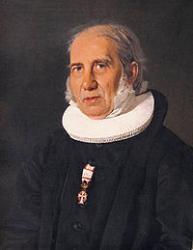
1783 - 1872 Person Name: Nicolai F. S. Grundtvig Topics: Church, The Fellowship and Unity; Dedications of Building Author of "Built on the Rock the Church Doth Stand" in Hymns for the Living Church Nicolai Frederik Severin Grundtvig was the son of a pastor, and was born at Udby, in Seeland, in 1783. He studied in the University of Copenhagen from 1800-1805; and, like some other eminent men, did not greatly distinguish himself; his mind was too active and his imagination too versatile to bear the restraint of the academic course. After leaving the university he took to teaching; first in Langeland, then (1808) in Copenhagen. Here he devoted his attention to poetry, literature, and Northern antiquities. In 1810 he became assistant to his father in a parish in Jutland. The sermon he preached at his ordination, on the subject "Why has the Lord's word disappeared from His house," attracted much attention, which is rarely the case with "probationers'" sermons. On his father's death, in 1813, he returned to Copenhagen, and for eight years devoted himself mainly to literature. The poetry, both secular and religious, that he produced, drew from a friend the remark that "Kingo's harp had been strung afresh." In 1821 King Frederik vi. appointed him pastor of Prasloe, a parish in Seeland, from which he was the next year removed to Copenhagen, and made chaplain of St. Saviour's church in Christianshavn. From the time of his ordination he had been deeply impressed with Evangelical church sentiments, in opposition to the fashionable Rationalism and Erastianism of the day; and adhered to the anti-rationalist teaching of Hauge, whose death at this time (1824) seemed to be a call to Grundtvig to lift up his voice. An opportunity soon presented itself; Professor Clausen brought out a book entitled Katholicismens og Protestantismens Forfatning, Ldre, og Ritus ("The condition, teaching, and ritual of Catholicism and Protestantism"). This book was replete with the Erastian Rationalism which was so especially distasteful to Grundtvig, who forthwith, in his Kirkens Gjenmsele ("The Church's Reply," 1825), strongly opposed its teaching, and laid down truer principles of Christian belief, and sounder views of the nature of the Church. This caused a sensation: Grandtvig (who had not spared his opponent) was fined 100 rixdollars, and the songs and hymns which he had written for the coming celebration of the tenth centenary of Northern Christianity were forbidden to be used. On this he resigned his post at St. Saviour's, or rather was forced to quit it by a sentence of suspension which was pronounced in 1826, and under which he was kept for 13 years. He took the opportunity of visiting England in 1829, 30, and 31, and consulting its libraries, mainly with a view to a further insight into Northern antiquities, and to help his studies in the early English tongue. His edition of Cynewulfs beautiful poem of the Phenix from the Codex Exoniensis, the Anglo-Saxon (so-called) text, with a preface in Danish, and a fri Fordanskning (free rendering in Danish), published in 1840*, is a result of this journey and enforced leisure. Tired of his long silence, his numerous friends and admirers proposed to erect a church for him, and form themselves into an independent congregation, but this was not permitted. He was allowed, however, to hold an afternoon service in the German church at Christianshavn. There ho preached for eight years, and compiled and wrote his hymn-book, Sang-Vdrk til den Danske Kirkce ("Song-work for the Danish Church"). He still worked on towards his object of raising the Christian body to which ho belonged from the condition of a mere slate establishment to the dignity of a gospel-teaching national church. In 1839 (the year of the death of King Frederik vr., and the accession of his cousin Chrisliem vni.) the suspension was removed, and he was appointed chaplain of the hospital Vartou, a position which he held till his death. In 1863 the king (Frederik vn.) conferred on him the honorary title of bishop. The good old man died suddenly, in his 89th year, on Sept. 2, 1872, having officiated the day before. As Kingo is the poet of Easter, and Brorson of Christmas, so Grundtvig is spoken of as the poet of Whitsuntide. --John Julian, Dictionary of Hymnology,, p. 1001 (1907)

Christopher M. Idle

b. 1938 Person Name: Christopher Idle (born 1938) Topics: God's Church Unity and Growth; Pentecost The Holy Spirit; Trinity Sunday The Trinity; Pentecost 2 The People of God; Pentecost 2 The Church's Unity and Fellowship; Pentecost 4 The Freedom God Gives Author of "As sons of the day and daughters of light" in Hymns for Today's Church (2nd ed.) Christopher Martin Idle (b. Bromley, Kent, England, 1938) was educated at Elthan College, St. Peter's College, Oxford, and Clifton Theological College in Bristol, and was ordained in the Church of England. He served churches in Barrow-in-­Furness, Cumbria; London; and Oakley, Suffolk; and recently returned to London, where he is involved in various hymnal projects. A prolific author of articles on the Christian's public responsibilities, Idle has also published The Lion Book of Favorite Hymns (1980) and at least one hundred of his own hymns and biblical paraphrases. Some of his texts first appeared in hymnals published by the Jubilate Group, with which he is associated. He was also editor of Anglican Praise (1987). In 1998 Hope Publishing released Light Upon the River, a collection of 279 of his psalm and hymn texts, along with suggested tunes, scripture references, and commentary. Bert Polman

George F. Root

1820 - 1895 Topics: Church Unity of Composer of "CLYMER" in Book of Worship with Hymns and Tunes Root, George F., MUS. DOC, born in Sheffield, Berkshire County, Mass., Aug. 30, 1820. He is much more widely known as a composer of popular music than as a hymn writer. Four of his hymns are in I. D. Sankey's Sacred Songs & Solos, 1878. Nos. 16, 100, 293, and 297. A sympathetic biographical sketch, with portrait, is in The Tonic Sol-Fa Reporter, Sep. 1886. He died Aug. 6, 1895. --John Julian, Dictionary of Hymnology, Appendix, Part II (1907) ===================== George Frederick Root was born in Sheffield, Mass., August 30, 1820. His father moved to North Reading, near Boston, when the boy was six years old, and there his youth was spent. He was always fond of music— not singing at all as a boy, but played upon every kind of instrument that came in his way. At thirteen it was his pride that he could "play a tune" on as many instruments as he was years old. His dream of life was to be a musician, although such an ambition was looked down upon by all his relatives and friends, excepting a fond mother. In the fall of 1838 he went to Boston and made an engagement to work for Mr. A. N. Johnson and take lessons on the piano. His father and one of the brothers were at the time in South America, and the mother, with six younger children, was at home on the farm. When he secured the engagement with Mr. Johnson to receive three dollars a week and board and lessons, the neighbors became interested and encouraged him to go ahead, they promising to help look after the farm and see that the family got along. The young man's happiness over these events can better be imagined than described. On the second day of October, 1838, he entered upon his duties in his new heaven on earth located at Harmony Hall, Mr. Johnson's music-room, in Boston. His duties were to see to the fires, care for the room, answer callers, give information about Mr. Johnson when he was out, and practice his lessons when not otherwise engaged. He worked industriously and made steady progress. It was but a few weeks till Mr. Johnson had him playing for the prayer-meeting, and but a few more till he began turning over pupils to him. In about seven weeks' time Mr. Johnson encouraged him by a considerable increase of salary. A most important event to him was meeting Dr. Lowell Mason and being accepted as a bass singer in the celebrated Bowdoin Street choir. Also, on Mr. Johnson's recommendation, he began taking private voice lessons of Mr. Geo. Jas. Webb, the then celebrated voice teacher of Boston. He continued at least a year with Mr. Webb. His first real singing class was taught the following fall, 1839, at the North End. It lasted nearly through the winter, and on the closing night his class made him a present of a silver goblet, suitably engraved, which he kept among his treasures. Before the first year was up Mr. Johnson proposed a five year partnership, by which Mr. Root was to receive one-third of their earnings, and the former was to have the privilege of visiting Germany part of the time if he chose. They then changed their quarters to three rooms in the basement of Park Street Church. The annual rental was six hundred dollars. They were kept quite busy. At this time Dr. Mason's music teaching in the public schools was a growing success, and Messrs. Johnson and Root were employed to assist him. Drs. Mason and Webb had introduced what is now called Musical Conventions a year or two previous to this. They called them "The Teachers' Class." Teachers and singers were called to Boston from surrounding territory to study and practice pretty much as they do now at normals. In 1841 Mr. Root became one of the teachers in this class. He taught vocal training and continued this work for years afterward in Dr. Mason's teachers' classes, and later incorporated the same method in his own normals. During this year Mr. Johnson went to Germany, and left the two large church choirs (Winter Street and Park Street) in charge of Mr. Root. One of the organs was played by a pupil — Mr. S. A. Bancroft. Everything went smoothly during Mr. Johnson's absence as it did also after his return. During the last year of the five-year partnership, Mr. Root was called to take the organ at Bowdoin Street, Mr. Mason changing to Winter Street. An amicable settlement was made between Messrs. Johnson and Root, and the partnership dissolved. In 1811, Mr. Jacob Abbott (father of Lyman Abbott)and his three brothers had established a young ladies' school in New York City. They wanted a music teacher, and offered the position to Mr. Root. They also secured him the organ and choir of the Mercer Street Church, with prospects for other good work. It required pretty strong persuasive arguments to tempt Mr. Root to leave Boston, he was doing well there, and as the sequel shows, there was an attraction in Boston that held him in too tight a grasp to be relinquished by the mere offer of greater power and place. He made up his mind, however, only after getting the consent of the powders of Boston to take with him this [to him] the greatest attraction of the city — Miss Mary Olive Woodman — an accomplished lady, a sweet singer, and a member of a prominent family of musicians. He went to New York first to prepare a home, and in August, 1845, returned for his bride, who took her place in his New York choir as leading soprano, and through his long and eventful career she was ever at his side, a true helpmeet. He was soon employed at Rutger's Female Institute, Miss Haines' School for Young Ladies, Union Theological Seminary and the New York State Institution for the Blind. Within six weeks after he arrived in New York his time was fully occupied. He continued with Mr. Abbott's young ladies' school ten years. While teaching in New York he continued his summer work with Messrs. Mason and Webb in Teachers' Classes. Up to the year 1849 he had written but little music; only a few hymn tunes while in Boston. He needed more music for the young ladies of his schools, so he made his first book, The Young Ladies' Choir, of which he had enough copies made for his own use, as he had no thought of offering it to the public. Then in connection with Mr. J. E. Sweetser, they compiled the Root and Sweetser's Collection. Mr. Root did work enough for two men, hence broke down in health. Mr. Abbott suggested that he take a trip to Paris. After weighing the matter carefully, in December, 1853, he sailed, and in due time arrived at Paris, where he began studying French, voice culture and piano under celebrated teachers. After spending nearly a year abroad, he returned home in improved health and ready for active work. He began to feel the need of new music for his classes, and after some thought decided upon a musical play ; the subject and title, The Flower Queen. At the Institution for the Blind was a young lady, a former pupil, but now a teacher who had shown some poetical talent. He asked her to help him with the words. He would suggest in prose what the flowers might say and she would put it into rhyme. She did it so well that it seldom needed any alteration. This lady was the now famous Fanny Crosby. The cantata became very popular. About this time Mr. Root wrote a half dozen simple songs for the people. They all sold pretty well, but Hazel Dell and Rosalie, the Prairie Flower, became the most popular, and had a large sale. It was in the summer of 1853 that the first real normal was held. Mr. Root originated it, and held it in New York. The principal teachers were Messrs. Mason, Root, Hastings, and Bradbury. This school became famous. Sessions were also held at North Reading, Mass., a village near Mr. Root's "Willow Farm Home," with Dr. Mason, Mr. Webb, Mr. Bradbury and himself as principal teachers. About this time Mr. Root decided to give up his work in New York, and devote himself entirely to conventions, normal work and authorship. He was eminently successful. Among the most eminent teachers and composers of our country have been students in Dr. Geo. F. Root's Normal Musical Institute. In 1860 Dr. Root settled in Chicago and entered the music publishing business with his brother E. T. Root, and C. M. Cady, as "Root & Cady," Mr. Root's reputation being the most important capital of the firm. His books and popular songs soon made the new firm prosperous. Then came the war with its horror. Dr. Root wielded his musical sword in the way of writing war songs, which made him famous. The Battle Cry of Freedom, Just Before the Battle, Mother, and others, made thousands of dollars for the music house. In the great Chicago fire of 1871 the interests of the firm of Root & Cady became engulfed in the general ruin. Their loss was upward of a quarter of a million dollars. They then sold their book catalogue, plates and copyrights to John Church & Co., of Cincinnati, and the sheet music plates and copyrights to S. Brainard's Sons, Cleveland. These sales realized about §130,000. The final result was that Dr. Root, his talented son F. W., and others became connected with John Church & Co. Under this new business relationship Mr. Root went right on with his normal and convention work; also issued a great many new books and cantatas. In 1872 the Chicago University very worthily conferred upon him the degree Doctor of Music. In 1886 he made a trip to Scotland and England, and arranged with publishers to issue some of his cantatas. He was royally received. Dr. Root was the author of about seventy-five books, nearly two hundred songs in sheet form, and many popular gospel songs. Dr. Root occupies a prominent place in the musical history of this country. It was Dr. Mason who lifted music from almost nothing and gave it an impetus, but he left no better follower than Dr. Root to carry on his work. He was a man of spotless integrity and high Christian character, and to know him was to love him. At the time of Dr. Root's death he was at Bailey Island, Maine, a summer resort, where he and other relatives had cottages. On August 6, 1895, he was seized with neuralgia of the heart — and died within one hour. He was buried at North Reading, Mass., his old home. --Hall, J. H. (c1914). Biographies of Gospel Song and Hymn Writers. New York: Fleming H. Revell Company.

Phil Burt

b. 1957 Topics: The Church of Jesus Christ Unity of the Church Arranger of "DENNIS" in Complete Mission Praise

Pages


Export as CSV
It looks like you are using an ad-blocker. Ad revenue helps keep us running. Please consider white-listing Hymnary.org or getting Hymnary Pro to eliminate ads entirely and help support Hymnary.org.