

 My Starred Hymns
 My FlexScores
 My Hymnals
 My Purchased Files
Planning worship?
Check out our sister site, ZeteoSearch.org,
for 20+ additional resources related to your search.
- |
User Links
Person Results
Ruth C. Duck
1947 - 2024 Topics: Trust in God Author of "Rejoice in God" in Catholic Book of Worship III
Ruth C. Duck
Joachim Magdeburg
1525 - 1587 Topics: The Christian Life Trust in God Author (st. 1) of "Who Trusts in God, a Strong Abode" in Trinity Hymnal (Rev. ed.) Magdeburg, Joachim , was born circa 1525 at Gardelegen in the Altmark. He matriculated at the University of Wittenberg, April, 1544, and in 1546 was appointed rector of the school at Schöningen, near Helmstädt, Brunswick. He became pastor of Dannenberg in Lüneburg in 1547, but being unable to exist on his slender income resigned in 1549, and in the same year became pastor of Salzwedel in the Altmark. But refusing to adopt the Roman ceremonies prescribed by the Act of Interim he was, in 1552 (Easter Sunday, April 17) banished from the Electorate of Brandenburg. About May, 1552, by the influence of Johann Aepinus, Superintendent of Hamburg, he was appointed diaconus of St. Peter's Church in Hamburg, and there became acquainted with Flacius Illyricus [Matthias Flach, Extreme Lutheran, church historian, &c, died at Frankfurt-am-Main, March 11, 1575]. After the death of Aepinus, May 13, 1553, Paulus von Eitzen, his successor, was not so friendly, and when, during the controversy in 1558 regarding Holy Communion, Magdeburg published a tractate without submitting it to the revision of Eitzen, the latter obtained the removal of Magdeburg from his post, May 25, 1558. He then went to Magdeburg to help his friend Flacius as one of the compilers of the Church history known as the Magdeburg Centuries. Shortly thereafter he was appointed pastor of Ossmanstedt in Thuringia; but, as a follower of Flacius, was dispossessed in 1562. He then stayed for longer or shorter periods with Count von Mansfeld, Baron von Schönburg and others, until, after the Emperor Maximilian II. had once more permitted Protestant preachers in Austria, he was, at Count von Mansfeld's recommendation, appointed by the commandant of Raab in Hungary as regimental chaplain at Raab in 1564, and, after his house there was burnt, at the castle of Gräfenworth (east of Krems), to the German-speaking Austrian troops. There he had to contend with the machinations of the Roman clergy, and after joining with nineteen others of the Evangelical clergy in Austria in presenting a Confession of Faith to an Austrian Diet (Landtag), was compelled to leave; and in 1571 we find him living at Erfurt. In 1581 he was preacher at Efferding in Austria; but in 1583 was expelled as an adherent of Flacius. His later history is unknown (Koch, i. 446; Allgemeine Deutsche Biographie, xx., 53, &c). Wachernagel, iii. pp. 1035-1042, gives five pieces under his name. The only one translation into English is:—
Wer Gott vertraut, hat wohl gebaut. Trust in God. Founded on Ps. lxxiii. 25, 26. Wachernagel, iii. p. 1042, prints st. i. from Magdeburg's Christliche und tröstliche Tischgesenge, mit vier Stimmen, Erfurt, 1572 (where it is the hymn for Saturday evening); and thinks it probable, though not certain, that it is an original by Magdeburg. In S. Calvisius's Harmonia cantionum ecclesiasticarum, Leipzig, 1597, st. ii. and iii., are first found. Lauxmann in Koch, viii., 373, thus sums up the evidence:—
”From these circumstances it seems evident that the hymn originally consisted only of the first stanza, but that Magdeburg's authorship, in opposition to other claims [it has been ascribed to J. Kolross and to J. Mühlmann] is beyond doubt."
The text of 1597 is repeated in Wachernagel, iii. p. 1043, and the Unverfälschter Liedersegen, 1851, No. 642, in 3 st. of 8 (or 12) lines. Translated as:—
1. Who trusts in God, his work abides. By A. T. Russell, of st. i., ii., as No. 230, in his Psalms & Hymns, 1851.
2. Who puts his trust in God most just. A good and full translation by Miss Winkworth, in her Lyra Germanica, 2nd Service, 1858, p. 192, and her Chorale Book for England, 1863, No. 145. Repeated, slightly altered, in the Pennsylvania Lutheran Church Book, 1568.
3. Who trusts in God a strong abode. A good but free translated by Dr. B. H. Kennedy, as No. 486, in his Hymnologia Christiana, 1863, repeated in J. L. Porter's Collection 1876, and others. In Morrell and How's Psalms & Hymns, 1864, No 208, it was considerably altered by Bishop How, and this form is repeated in the Society for Promoting Knowledge’s Church Hymns, 1871; Thring's Collection, 1882, and others; the Baptist Hymnal, 1879, omitting the last four lines, and ascribing it, in error, to M. Luther.
Another translation is: "Who lives in God has safe abode." By Dr. H. Mills, 1856, p. 244. [Rev. James Mearns, M.A.]
-- John Julian, Dictionary of Hymnology (1907)
Joachim Magdeburg
John Barnard
b. 1948 Topics: God Trust in Arranger of "[Great is the Lord and how great is his kingdom]" in Psalms for All Seasons
John Barnard
Samuel Wesley
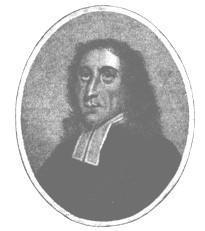
1691 - 1739 Person Name: Samuel Wesley, 1766-1837 Topics: General Hymns Trust in God Composer of "DONCASTER" in CPWI Hymnal Samuel Wesley, M.A., the younger, was the eldest child of Samuel and Susanna Wesley, and was born in or near London in 1691. He received his early education from his mother, who always took a special interest in him as her firstborn. In 1704 he went to Westminster School, where he was elected King's Scholar in 1707. Westminster had, under the mastership of Dr. Busby for 55 years, attained the highest reputation for scholarship, and Samuel Wesley, as a classical scholar, was not unworthy of his school. In 1709, Dr. Spratt, Bishop of Rochester, patronised the young scholar, and frequently invited him to Bromley. In 1711 he went with a Westminster studentship to Christ Church, Oxford, and having taken his degree, returned to Westminster as an Usher. He then received Holy Orders and became an intimate friend of Bishop Atterbury, who was then Dean of Westminster. His intimacy with this prelate was a bar to his advancement, and he was bitterly disappointed at not being appointed undermaster at Westminster when that post was vacant. But he was faithful to his friend in his adversity, and the banished prelate warmly appreciated his attachment. In 1732 he was invited, without solicitation, to accept the headmastership of the Free School at Tiverton, and here he spent the remainder of his life. He strongly disapproved of John and Charles Wesley's proceedings; but though the brothers expressed their opinions to one another with characteristic frankness, the disagreement did not cause any interruption in the friendly relations between them.
Samuel Wesley was universally acknowledged to be an honest, conscientious and deeply religious man. He was a most uncompromising High Churchman both in the political and the theological sense of that term; and there is no doubt that he was the mainstay of the Wesley family at Epworth. His kindness to his father and mother was unbounded, and he acted like a father to his younger brothers and sisters. He also took a great interest in works of charity, and was one of the first promoters of the Westminster Infirmary. He died at Tiverton in the 49th year of his age, Nov. 6, 1739. His epitaph in Tiverton Churchyard does not exaggerate his merits, when it describes him as—
"a man for his uncommon wit and learning, For the benevolence of his temper, and simplicity of manner, Deservedly loved and esteemed by all: An excellent Preacher; But whose best sermon Was the constant example of an edifying life: So continually and zealously employed In acts of beneficence and charity, That he truly followed His blessed Master's example In going about doing good; Of such scrupulous integrity, That he declined occasions of advancement in the world, Through fear of being involved in dangerous compliances; And avoided the usual ways to preferment As studiously as many others seek them."
Samuel Wesley published in 1736 A Collection of Poems on several occasions, some of which are full of a rather coarse humour, but all of a good moral and religious tendency. This work was reprinted in 1743, and again by W. Nichols in 1862. Dr. Adam Clarke specifies eight hymns of S. Wesley's composition which were in use among the Methodists of that time (1823). The Wesleyan Hymn Book of the present day contains five, the best-known of which is "The Lord of Sabbath let us praise."
Six of his hymns are in common use, and are annotated as follows:—
1. From whence these dire portents around.
2. Hail, Father, Whose creating call.
3. Hail, God the Son in glory crowned.
4. Hail, Holy Ghost, Jehovah, Third.
5. The Lord of Sabbath, let ns praise.
6. The morning flowers display their sweets.
-- Excerpts from John Julian, Dictionary of Hymnology (1907)
Samuel Wesley
John Hullah
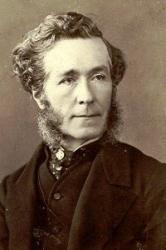
1812 - 1884 Topics: Trust in God Composer of "BENTLEY" in Trinity Hymnal (Rev. ed.) Born: June 27, 1812, Worcester, England.
Died: February 21, 1884, London, England.
John Hullah
Oscar Ahnfelt
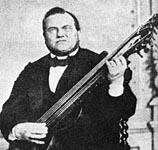
1813 - 1882 Topics: Trust in God Composer of "BLOTT EN DAG" in Lift Up Your Hearts Oscar Ahnfelt (1813 -1882) was a Swedish singer and composer. He wrote the music for many of Lina Sandell’s hymns. A pietist, he raised some concern in the State-church, but his music was apparently so popular, King Karl XV gave him permission to play and sing in both of his kingdoms. Ahnfelt’s music has spread throughout the world; two of his best-known songs are “Children of the Heavenly Father” and “Day by Day.”
Laura de Jong
Oscar Ahnfelt
David Jenkins
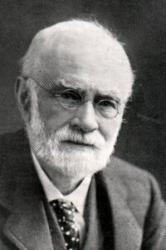
1848 - 1915 Person Name: David Jenkins, 1849-1915 Topics: Trust in God Composer of "PENLAN" in Together in Song Born: December 30, 1848, Trecastle, Breconshire, Wales.
Died: December 10, 1915, Aberystwyth, Cardiganshire, Wales.
Buried: Trecastle, Breconshire, Wales.
Professor David Jenkins (1848 - 1915) was a Welsh composer born at Trecastle, Brecknockshire, Wales. Originally apprenticed to the tailoring trade, he joined the Tonic Solfa choral movement and in 1874 enrolled at Aberystwyth College and studied under the renowned composer Joseph Parry, the first Professor of Music there. Jenkins received his Mus. Bac. from Cambridge in 1878. In 1893, he was appointed lecturer in the newly-formed Music Department of the University of Wales, Aberystwyth, and was appointed Professor in 1910, a post he held until his death. He was a prominent figure in the musical life of Wales, judging at the National Eisteddfod and provincial eisteddfodau, and conducting at cymanfaoedd (hymn-singing festivals). He was a prolific composer; his best-known choral works are Arch y Cyfamod, Job, Yr Ystorm and The Psalm of Life, which was written for the Cardiff Triennial Festival in 1895, and was first premiered by two thousand singers at the Crystal Palace, London, on July 1896. He was also an editor of Y Cerddor. He died in Castell Brychan, Aberystwyth.
--www.hymnswithoutwords.com
David Jenkins
Communauté de Taizé
Person Name: Community of Taizé Topics: God Trust in Adapter (refrain) of "Psalm 13: A Responsorial Setting" in Psalms for All Seasons
Communauté de Taizé
Andraé Crouch
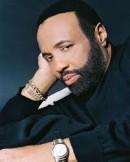
1942 - 2015 Topics: Trusting in the Promises of God Author of "Soon and Very Soon" in Glory to God Born in San Francisco on July 1, 1942, and raised in Los Angeles, Andraé Edward Crouch was the son of bivocational-pastor parents Benjamin and Catherine Crouch. He has recounted that he received the gift of music as a child, when his father was called as a guest preacher and pastoral candidate to a small rural church that had no musicians. He began playing for them at the age of 11. He wrote his first gospel song at 14, and formed his first band, the COGICS, in 1960.
In 1965 he formed The Disciples, which lasted until 1979, and as a protegé of Audrey Mieir, Ralph Carmichael, and other leading Contemporary Christian Music artists of the time, went on to win a total of nine Grammies, and numerous other awards. He wrote his first well-known song, "The Blood Will Never Lose Its Power", at the age of 15, but most of his songs that have gained congregational currency flowed from the years when he was active with The Disciples. After The Disciples were disbanded, Crouch continued his recording and performing career, and also became more active in church ministries.
After his parents died (1993-94), with his twin sister Sandra he took over the pastorate at the church his parents had led, New Christ Memorial Church of God in Christ in Pacoima, California. In December, 2014, Crouch was hospitalized for treatment of pneumonia and congestive heart failure, and on January 3, 2015, he was readmitted to the hospital following a heart attack. He died there five days later, at the age of 72. His twin sister and co-pastor Sandra Crouch issued the following statement: "Today my twin brother, womb-mate and best friend went home to be with the Lord. Please keep me, my family and our church family in your prayers. I tried to keep him here but God loved him best."
Andraé Crouch
J. Jefferson Cleveland
1937 - 1986 Person Name: J. Jefferson Cleveland, 1937-1988 Topics: Good Friday; Funeral Sacraments; Cross; Discipleship; Eternal Life; Hope; Lamb Of God; Mercy, Forgiveness; Patience; Redemption; Rest; Trust in Jesus Christ Harmonizer of "NEAR THE CROSS" in Lead Me, Guide Me (2nd ed.) Judge Jefferson Cleveland (1937-1986) was one of the most important scholars and editors of African-American congregational song of the 20th century. Along with Verogla Nix, he edited what is arguably the most groundbreaking collection of African-American song in the last half of the 20th century, Songs of Zion (1981/1982).
Lutheran hymnologist Marilyn Stulken provides a biographical sketch of Cleveland’s life and accomplishments. Born in Georgia, Cleveland graduated from Clark College (Atlanta), Illinois Wesleyan University and received his doctorate in education from Boston University.
He served on the faculty of three historically black Christian colleges: Claflin College (South Carolina), Langston University (Oklahoma), and Jarvis Christian College (Texas), before teaching at the University of Massachusetts and Wesley Theological Seminary in Washington, D.C.
Cleveland’s musical arrangements, historical research and scholarship on the performance practice of African-American song have proven invaluable for the advancement of black gospel song, not only among African Americans, but also in Anglo hymnals to the present day. For example, Cleveland’s essay, “A Historical Account of the Hymn in the Black Worship Experience,” in Songs of Zion is a helpful introduction for laypersons and scholars alike.
In addition to serving as a hymnody consultant for the United Methodist General Board of Discipleship, he toured the United States and Africa in 1981 and Europe in 1984 as a teacher, lecturer and performer.
--www.umportal.org/
J. Jefferson Cleveland
Pages




