You help make Hymnary.org possible. More than 10 million people from 200+ countries found hymns, liturgical resources and encouragement on Hymnary.org in 2025, including you. Every visit affirms the global impact of this ministry.

If Hymnary has been meaningful to you this year, would you take a moment today to help sustain it? A gift of any size—paired with a note of encouragement if you wish—directly supports the server costs, research work and curation that keep this resource freely available to the world.

Give securely online today, or mail a check to:
Hymnary.org
Calvin University
3201 Burton Street SE
Grand Rapids, MI 49546

Thank you for your partnership, and may the hope of Advent fill your heart.

Person Results

Topics:example
In:people

Planning worship? Check out our sister site, ZeteoSearch.org, for 20+ additional resources related to your search.
Showing 221 - 230 of 432Results Per Page: 102050

Alfred M. Smith

1879 - 1971 Topics: Christ Example of Composer of "LABOR" in The Hymnal of the Protestant Episcopal Church in the United States of America 1940 Alfred Morton Smith (1879-1971) was born in Jenkintown, Pennsylvania, and studied at the University of Pennsylvania (B.S. 1901) and Philadelphia Divinity School (B.D. 1905; S.T.B. 1911). An Episcopalian, Smith was ordained a deacon (1905) and a priest (1906). After a short time in Philadelphia and Long Beach, California, he served at St. Matthias Church, Los Angeles, for ten years. He was a chaplain in the U.S. Army during World War I, returning to Philadelphia in 1919, where he spent the remainder of his career. He retired in 1955. In 1963, Smith moved to Drium Moir, Chestnut Hill, Pennsylvania, and in 1968 to Brigantine, New Jersey, where he remained until his death. --The Presbyterian Hymnal Companion, 1993

Thomas Helmore

1811 - 1890 Topics: Jesus Christ Example Arranger and Harmonizer of "VENI EMMANUEL" in The United Methodist Hymnal A graduate of Magdalen College, Oxford, England, Thomas Helmore (b. Kidderminster, Worcestershire, England, 1811; d. Westminster, London, England, 1890) was ordained a priest in the Church of England, but his main contribution to the church was in music. He was precentor at St. Mark's College, Chelsea (1842-1877), and master of the choristers in the Chapel Royal for many years. He promoted unaccompanied choral services and played an important part in the revival of plainchant in the Anglican Church. Helmore was involved in various publications of hymns, chants, and carols, including A Manual of Plainsong (1850) and The Hymnal Noted (with John Mason Neale). Bert Polman

Charles S. Robinson

1829 - 1899 Topics: Example Author of "Tell Me, My Saviour" in The Praise Book Robinson, Charles Seymour, D.D., was born at Bennington, Vermont, March 31, 1829, and educated at William College, 1849, and in theology, at Union Seminary, New York (1852-53), and Princeton (1853-55). He became Presbyterian Pastor at Troy, 1855; at Brooklyn, 1860; of the American chapel in Paris (France), 1868; and of the Memorial Presbyterian Church, New York, 1870. During 1876-77 he was editor of the Illustrated Christian Weekly. As an editor of hymn-books he has been most successful. His Songs of the Church were published in 1862; Songs for the Sanctuary, 1865; Spiritual Songs, 1878; and Laudes Domini, A Selection of Spiritual Songs, Ancient and Modern, 1884. His Songs for the Sanctuary has probably had a wider sale than any other unofficial American collection of any denomination, and the Laudes Domini is a book of great excellence. Dr. Robinson has composed a few hymns, including, "Saviour, I follow on" (Following Christ), in his Song of the Church, 1862, and "Isles of the South, your redemption is nearing " (Missions), in his Songs for the Sanctuary, 1865. The latter is given in Dr. Hatfield's Church Hymn Book, 1872, as "Lands long benighted." [Rev. F. M. Bird, M.A.] --John Julian, Dictionary of Hymnology (1907)

A. Brooks Everett

1828 - 1875 Person Name: Asa B. Everett Topics: Christ Example Composer of "FOOTSTEPS" in The Celebration Hymnal Asa Brooks Everett MusDoc USA 1828-1875. Born in VA, he planned to be a doctor, but decided to study music instead. He studied in Boston for four years and also in Leipzig, Germany for four years.. He composed many gospel tunes and edited “The Sceptre” a New York publication. His brothers, Benjamin and Leonard, were also composers. He and Leonard organized a musical instruction system in Richmond, VA, in the 1850s. By 1861, 50 teachers and singing schools were representing them and using their publications. He died in Nashville, TN. John Perry

M. B. C. Slade

1826 - 1882 Person Name: Mary B. C. Slade Topics: Christ Example Author of "Footsteps of Jesus" in The Celebration Hymnal Mary Bridges Canady Slade USA 1826-1882. Born in Fall River, MA, she was well-educated and became a minister's wife, teacher, and poet. She was assistant editor of The New England Journal of Education. She also authored hymns, Sunday school materials and books on education, primarily used for training teachers. She authored a children's magazine, “Wide-awake”. She and her husband were active in the underground railroad (helping slaves achieve their freedom). She spent her whole life living in the same town. John Perry

W. H. Havergal

1793 - 1870 Person Name: William H. Havergall Topics: Christ Example Arranger of "FRANCONIA" in The Hymnbook Havergal, William Henry, M.A, son of William Havergal, was born at High Wycombe, Buckinghamshire, 1793, and was educated at St. Edmund's Hall, Oxford (B.A. 1815, M.A. 1819). On taking Holy Orders he became in 1829 Rector of Astley, Worcestershire; in 1842, Rector of St. Nicholas, Worcester; and in 1860, Rector of Shareshill, near Wolverhampton. He was also Hon. Canon in Worcester Cathedral from 1845. He died April 18, 1870. His hymns, about 100 in all, were in many instances written for special services in his own church, and printed as leaflets. Several were included in W. Carus Wilson's Book of General Psalmody, 1840 (2nd ed., 1842); and in Metrical Psalms & Hymns for Singing in Churches, Worcester, Deighton, 1849, commonly known as the Worcester Diocesan Hymn Book, and of which he was the Editor. In Life Echoes, 1883, his hymns are given with those of Miss Havergal. Of those in common use the greater part are in Mercer, and Snepp's Songs of Grace & Glory. Although his hymns are all good, and two or three are excellent, it is not as a hymnwriter but as a musician that Canon Havergal is best known. His musical works and compositions included, in addition to numerous individual hymn tunes and chants, the Gresham Prize Service, 1836; the Gresham Prize Anthem, 1845; Old Church Psalmody, 1849; History of the Old 100th Psalm tune, 1854, &c. He also reprinted Ravenscroft’s Psalter of 1611. His hymns in common use include:— 1. Blessed Jesus, lord and Brother. School Festivals, 1833. Published in Life Echoes, 1883. 2. Brighter than meridian splendour. Christ the glory of His Church. 1830. Published in W. C. Wilson's Book of General Psalms, 1840; the Worcester Psalms & Hymns, 1849, &c. 3. Christians, awake to joy and praise. Christmas Carol, c. 1860. Printed on broadsheet, with music by the author, and sold on behalf of the Lancashire Cotton Distress Fund. 4. Come, Shepherds, come, 'tis just a year. Christmas Carol. 1860. Published in Snepp's Songs of Grace & Glory, 5. For ever and for ever, Lord. Missions, 1866, for the Church Mission Society. Published in Snepp's Songs of Grace & Glory, 1872, and the Life Echoes, 1883. 6. Hallelujah, Lord, our voices. Sunday. 1828. Published in W. C. Wilson's Book of General Psalms, 1840; the Worcester Psalms & Hymns, 1849; Life Echoes, 1883, &c. 7. Heralds of the Lord of glory. Missions. First sung in Astley Church, Sep. 23, 1827. Published in Miss Havergal's Starlight through the Shadows, 1880; Snepp's Songs of Grace & Glory, 1872, &c. 8. Hosanna, raise the pealing hymn. Praise to Christ, 1833, and first sung in Astley Church, June 9, 1833. Published in W. C. Wilson's Book of General Psalmody, 1840; the Worcester Psalms & Hymns, 1849; Life Echoes 1883, &c. 9. How vast the field of souls. Missions. 1858. Printed for Shareshill Church Miss. Anniversary, 1863, and published in Snepp's Songs of Grace & Glory, 1872, and the Life Echoes, 1883. 10. In doubt and dread dismay. Missions. Written in 1837, and published in W. C. Wilson's Book of General Psalmody, 1840; the Worcester Psalms & Hymns, 1849, &c. 11. Jerusalem the golden, The home of saints shall be. Heaven. Published in Life Echoes, 1883. 12. My times are in Thy hand, Their best, &c. 1860. Published in Snepp's Songs of Grace & Glory, 1872, the Records of the author's life and work, and Life Echoes, 1883. The editor of the Records says (p. 159) "this hymn has been much appreciated, and well illustrates the devotional and cheerful spirit of the writer." 13. No dawn of holy light. Sunday. 1825. Printed in 1831 on a leaflet, and published in W. C. Wilson's Book of General Psalmody, 1840; the Worcester Psalms & Hymns, 1849; Life Echoes, 1883, &c. 14. Our faithful God hath sent us. Harvest. Written at Shareshill in 1863, for a Harvest Festival. Published in Snepp's Songs of Grace & Glory 1872, and Life Echoes, 1883. 15. Shout, 0 earth! from silence waking. Praise to Jesus for Redemption. 1841. Published in the Worcester Psalms & Hymns, 1849; Snepp's Songs of Grace & Glory, 1872, &c. 16. So happy all the day. Christmas Carol, c. 1834. Published in Snepp's Songs of Grace & Glory, 1872. 17. Soon the trumpet of salvation. Missions. 1826. Published in Snepp's Songs of Grace & Glory, 1872. 18. To praise our Shepherd's [Saviour's] care. The Good Shepherd. Written after witnessing the death of Elizabeth Edwards, aged 12, of St. Nicholas, Worcester, and printed as a leaflet. Published in W. C. Wilson's Book of General Psalmody, 1840; the Worcester Psalms & Hymns, 1849; Life Echoes, &c, 1883. The author also published a Memoir of the child. 19. Widely 'midst the slumbering nations. Missions. 1828. Published in the Worcester Psalms & Hymns, 1849; Snepp's Songs of Grace & Glory, 1872, &c. In addition to these hymns, his carols, "How grand, and how bright," "Our festal morn is come," and others are annotated under their respective first lines. Most of these carols and hymns were reprinted in Christmas Carols & Sacred Songs, Chiefly by the Rev. W. H. Havergal, London, Nisbet, 1869. --John Julian, Dictionary of Hymnology (1907) ===================== Havergal, W. H., p. 498, i. Other hymns are: — 1. Lord, if judgments now are waking. Second Advent. Published in W. Carus Wilson's Book of General Psalmody, 1840; in Kennedy, 1863, &c. 2. Remember, Lord, Thy word of old displayed. Missions. "Composed for a special prayer-meeting for missionary labourers, held in the author's schoolroom, in the parish of St. Nicholas's, Worcester." (W. F. Stevenson's Hymns for Church and Home, 1873, where the original text is also given.) It must be noted that No. 17, at p. 498, ii., "Soon the trumpet of salvation," was first published in A Collection of Original Airs adapted to Hymns, &c, 1826. --John Julian, Dictionary of Hymnology, Appendix, Part II (1907)

Thomas Gibbons

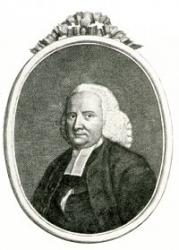
1720 - 1785 Person Name: Gibbons Topics: Christ Life, Office, and Example; Christ our Example Author of "When Jesus dwelt in mortal clay" in The Voice of Praise Gibbons, Thomas, was born at Beak, near Newmarket, May 31, 1720; educated by Dr. Taylor, at Deptford; ordained in 1742, as assistant to the Rev. Mr. Bures, at Silver Street Chapel, London; and in 1743 became minister of the Independent Church, at Haberdashers' Hall, where he remained till his death, Feb. 22, 1785. In addition to his ministerial office he became, in 1754, tutor of the Dissenting Academy at Mile End, London; and, in 1759, Sunday evening lecturer at Monkwell Street. In 1760 the College at New Jersey, U.S., gave him the degree of M.A. and in 1764 that of Aberdeen the degree of D.D. His prose works were (1) Calvinism and Nonconformity defended, 1740; (2) Sermons on various subjects, 1762; (3) Rhetoric, 1767; (4) Female Worthies, 2 vols., 1777. Three volumes of sermons were published after his death. His poetical works were:— (1) Juvenilia; Poems on various subjects of Devotion and Virtue, 1750, was published by subscription. Among the subscribers is found the name of the Rev. Mr. George Whitefield, B.A. It was dedicated to the Countess of Huntingdon, and bears her coat of arms. In this volume are included versions of six of the Psalms, and a few hymns. (2) Hymns adapted to Divine wor¬ship in two books. Book I. Derived from select passages of Holy Scriptures. Book II., Written on sacred subjects and particular occasions, partly collected front various authors, but principally composed by Thomas Gibbons, D.D., 1769. (3) Hymns adapted to Divine worship in two books. Book I. Derived from select passages of the Holy Scriptures. Book II. Written on sacred subjects and particular occasions by Thomas Gibbons, D.D., 1784. (4) The Sermons, published in 1762, included fifteen hymns, one being appended to each sermon. (5) The Christian Minister in three poetical epistles to Philander, 1772. This volume included (i.) Poetical versions of several parts of Scripture, (ii.) Translations of poems from Greek and Latin writers, (iii.) Original pieces on various occasions. (6) An English version of the Latin Epitaphs on the Nonconformist's Memorial, with a poem to the memory of the 2000 ministers ejected in 1662, 1775. (7) Select Portions of Scripture, and Remarkable Occurrences, versified for the Instruction and entertainment of Youth of both Sexes, 1781. Reprinted in America, 1805. Dr. Gibbons may be called a disciple in hymnwriting of Dr. Watts, whose life he wrote. His hymns are not unlike those of the second rank of Watts. He lacked "the vision and faculty divine," which gives life to hymns and renders them of permanent value. Hence, although several are common use in America, they are dying out of use in Great Britain. The most popular are, "Now let our souls on wings sublime"; "Great God, the nations of the earth"; "Thy goodness, Lord, our souls confess"; "To Thee, my God, whose presence fills." [Rev. W. Garrett Horder] The less important of Dr. Gibbons's hymns, which are still in common use are:— 1. And be it so that till this hour. Hope. This is No. 50 in Book ii. of his Hymns adapted to Divine Worship, &c, 1769, in 5 stanzas of 4 lines, and headed, "Encouragement against Despair; or, Hope still set before us." Originally a Sacramental hymn in Rippon's Selections, 1787, No 230, it was altered to a general hymn, with special reference to "Hope." 2. Assist us, Lord, Thy Name to praise. Life, a race. In Rippon's Baptist Selections, 1787, No. 326, in 4 stanzas of 4 lines. 3. Eternal life, how sweet the sound. Eternal Life. This is one of three hymns on Titus iii. 7, in his Hymns adapted to Divine Worship, &c, 1784, Book i., No. 156, in 5 stanzas of 4 lines. In the American Dutch Reformed Hymns of the Church, 1869, No. 843 begins with st. ii., "Eternal life, how will it reign?" 4. Father, is not Thy promise pledged? Missions. This is Pt. iii.of his hymn, "Great God, the nations of the earth" (q. v.). 5. Forgiveness, 'tis a joyful sound. Pardon. From his Hymns adapted to Divine Worship, &c, 1769. Book i., No. 69, in 5 stanzas of 4 lines into several modern collections in Great Britain and America. It is based on St. Luke, vii. 47. 6. From winter's barren clods. [Spring.] Appeared in his Hymns, &c, 1784, Book ii., No. 27, in 5 stanzas of 4 lines, and headed, "The Return of the Spring celebrated in the Powerful and Gracious Work of God." In 1787 it was repeated anonymously in Rippon's Baptist Selections, No. 499. The hymn, "Great God, at Thy command, Seasons in order rise," begins with st. iii. of this hymn. 7. Happy the men in ancient days. Public Worship. In his Hymns adapted to Public Worship, &c, 1784. 8. On Zion, his most holy mount. Gospel Feast. From his Hymns adapted for Divine Worship, &c, 1769, Book i., No. 35, in 6 stanzas of 4 lines. It was originally a Sacramental hymn, but in its abbreviated form, as in use in America, that element is eliminated. 9. Our Father, high enthroned above. Lord's Prayer. Appeared in the Bristol Baptist Collection of Ash & Evans, 1769, No. 41, in 9 stanzas of 4 lines. In 1772 it was reprinted in a revised form, and with an additional stanza, in Gibbons's Christian Minister, p. 74. 10. Thy goodness, Lord, our souls confess. Providence and Grace. Appeared in the Gospel Magazine, 1775, and in his Hymns adapted to Divine Worship, &c, 1784, Bk. ii., No. 11, in 7 stanzas of 4 lines. In Dobell's Selections, 1806, st. i.-iv., and vi. were given with alterations, which were not improvements, as No. 9. This arrangement is repeated in modern hymnbooks, including the Baptist Hymnal, 1879, and others. 11. When Jesus dwelt in mortal clay. Jesus our Example. From his Hymns adapted to Divine Worship, &c, 1784, Book i., No. 128, in 9 stanzas of 4 lines into a few American collections, including the Baptist Praise Book, 1871. The more important of Dr. Gibbons's hymns are annotated under their respective first lines. [William T. Brooke] -- John Julian, Dictionary of Hymnology (1907) ====================== Gibbons, Thomas, p. 420, i. From his Hymns, &c, of 1784, are also in common use:— 1. Lord God, omnipotent to bless. Divine Help desired. 2. Now may the God of peace and love. Close of Service. (1769. Pt. i.) 3. O what stupendous mercy shines. Benevolence. --John Julian, Dictionary of Hymnology, Appendix, Part II (1907)

William Boyd

1847 - 1928 Person Name: Boyd Topics: Christ Example of Composer of "PENTECOST" in Trinity Hymnal (Rev. ed.) William Boyd Jamaica 1847-1928. Born at Montego Bay, he studied under Sabine-Baring Gould, and attended Worcester College,Oxford. He was ordained an Anglican priest in 1877, eventually becoming Vicar at All Saints Church, Norfolk Square, London. John Perry

George Matheson

1842 - 1906 Person Name: G. Matheson Topics: Christ Example of; Christ Example of Author of "Christ our Rest" in Laudes Domini Matheson, George, D.D., was born at Glasgow, March 27, 1842, and although deprived of his eyesight in youth he passed a brilliant course at the University of Edinburgh, where he graduated M.A. in 1862. In 1868 he became the parish minister at Innellan; and subsequently of St. Bernard's, Edinburgh. He was the Baird Lecturer in 1881, and St. Giles Lecturer in 1882. He has published several important prose works. His poetical pieces were collected and published in 1890 as Sacred Songs, Edinburgh: W. Blackwood. In addition to his hymn "O Love that wilt not let me go" (q. v.), four others from his Sacred Songs are in Dr. A. C. Murphey's Book of Common Song, Belfast, 1890. --John Julian, Dictionary of Hymnology, Appendix, Part II (1907) ======================= Matheson, G., p. 1579, i. In addition to Dr. Matheson's hymn, "O Love, that wilt not let me go," p. 1583, i,, the following from his Sacred Songs, 1890, have come into common use since 1892:— 1. Come, let us raise a common song. Brotherhood. 2. Father divine, I come to Thee. Strength for Life. This, in Horder's Worship Song, 1905, is altered to”Saviour divine, I come to Thee." 3. Gather us in, Thou Love that fillest all. One in Christ. 4. Jesus, Fountain of my days. Christian's Polestar. 5. Lend me, O Lord, Thy softening cloud. The Fire and the Cloud. In the Sunday Magazine, 1875. 6. Lord, Thou hast all my frailty made. Strength for the Day. 7. Make me a captive, Lord. Christian Freedom. 8. There are coming changes great. The Glad New Time. 9. Three doors there are in the temple. Prayer. Dr. Matheson informed us that these hymns, together with the rest of his Sacred Songs, 1890, were written at Bow, Dumbartonshire, in 1890. The 3rd ed. of the Sacred Songs was published in 1904. He died suddenly at Avenelle, North Berwick, Aug. 28, 1906. --John Julian, Dictionary of Hymnology, New Supplement (1907)

Juan A. Espinosa

b. 1940 Person Name: Juan Antonio Espinosa Topics: Jesus Christ Example Author of "Todos los Días nace el Señor" in Mil Voces para Celebrar Born: 1940, Badajoz, Spain. Internationally recognized as one of the leading composers of Spanish liturgical music, Juan Antonio Espinosa composes songs that emphasize hope for the oppressed, social justice, and the power of faith. Currently, he directs the Association for the Promotion of Religious Music (APROMUR) in Spain and serves as a liturgical musician at San Estanislao Parish in Madrid. After living for a time in Peru, Juan published music reflecting the Andes style and Latin American social realities. Hispanic assemblies in the U.S. are familiar with Juan's uplifting music through his songs in the OCP collections Pescador de Hombres and Resucitó, and in Cánticos, Segunda Edición, Misal Del Día, Unidos En Cristo Música and Flor y Canto, Segunda Edición. His first collection for OCP was Al Señor del Nuevo Siglo. --www.ocp.org/artists/358

Pages


Export as CSV
It looks like you are using an ad-blocker. Ad revenue helps keep us running. Please consider white-listing Hymnary.org or getting Hymnary Pro to eliminate ads entirely and help support Hymnary.org.