You help make Hymnary.org possible. More than 10 million people from 200+ countries found hymns, liturgical resources and encouragement on Hymnary.org in 2025, including you. Every visit affirms the global impact of this ministry.

If Hymnary has been meaningful to you this year, would you take a moment today to help sustain it? A gift of any size—paired with a note of encouragement if you wish—directly supports the server costs, research work and curation that keep this resource freely available to the world.

Give securely online today, or mail a check to:
Hymnary.org
Calvin University
3201 Burton Street SE
Grand Rapids, MI 49546

Thank you for your partnership, and may the hope of Advent fill your heart.

Person Results

Topics:judgment+of+god
In:people

Planning worship? Check out our sister site, ZeteoSearch.org, for 20+ additional resources related to your search.
Showing 231 - 240 of 375Results Per Page: 102050

Deodotus Dutton

1808 - 1832 Person Name: Deodatus Dutton, Jr. Topics: Christ Glorying in; Christians Evangelists; Church Divinely Furnished; Covenant Keeping; Covenant Making; Covenant Of God; Covenant Promises; Divine Election; Glory of God In Providence; God Love and Mercy; Gospel Invitations of ; Grace Justifying; Grace Restoring; Grace Sovereign ; Miracles; Nations Dependence on God; Praise Calls to; Praise for temporal blessings; Praise For Works of Providence; Prayer Answers to; Protection Unceasing; Providence of God Over Saints; Purposes of God; Retribution Inflicted; Royalty of Christ Civil Rulers in Relation to; Royalty of Christ Guarantee of Salvation; Royalty of Christ Judgment the Prerogative of; Royalty of Christ Providential; Seeking God; Thanksgiving Declared Composer of "WOODSTOCK" in The Psalter Dutton, Deodatus, jun., b. cir. 1810, was a native of Monson, Massachusetts, U.S. He was a Licentiate of the third Presbytery, New York, but died before ordination, about 1832. His hymns in common use are:— 1. On Thibet's snow-capt mountain. Missions. This appeared in pt. ii. of the Christian Lyrics, 1831, in 3 stanzas of 8 lines. It is an imitation of Bp. Heber's “From Greenland's icy mountains." 2. O where can the soul find relief from its foes. Heaven. The date and first published of this hymn is uncertain. It is given, together with the above, in the Plymouth Collection, 1855. [Rev. F. M. Bird, M.A.] -- John Julian, Dictionary of Hymnology (1907) ================= Born: De­cem­ber 22, 1808, Mon­son, Mass­a­chu­setts. Died: De­cem­ber 16, 1832, New York Ci­ty. Buried: Ma­rble Cem­e­te­ry, Man­hat­tan, New York. By age 14, Dut­ton was play­ing the or­gan at Cen­ter Church in Hart­ford, Con­nec­ti­cut. He at­tend­ed Brown Un­i­ver­si­ty and Wash­ing­ton (now Trin­i­ty) Coll­ege (grad­u­at­ed 1828), and was li­censed to preach by the Third Pres­by­tery of New York. How­ev­er, he ne­ver re­ceived a pas­tor­ate, and was still pur­su­ing his stu­dies at the time of his death. His works in­clude: The Amer­i­can Psalm­o­dy, 1829, with El­am Ives, Jr. --www.hymntime.com/tch/

Thomas of Celano

1200 - 1265 Topics: Christ Refuge; Day of Wrath; Judgment; Wrath Of God Author of "The day of wrath, that dreadful day" in Book of Worship with Hymns and Tunes Thomas of Celano was born at Celano in the Abruzzi, and joined St. Francis of Assisi c. 1214. He was commissioned by Gregory IX to write the life of St. Francis: the First Legend, 1229; the Second Legend, 1247; and the Tract on the Miracle of St. Francis a few years later. His Legend of St. Clare was composed in 1255. He was probably among the first band of friars to visit Germany, 1221. --The Hymnal 1940 Companion =============================== Thomas of Celano. It is somewhat remarkable that neither the date of the birth nor of the death of this writer, whose name is so intimately associated with the Dies Irae, is on record. He was a native of Celano, a small town near the lake Fucino, in the farther Abruzzo, and hence his name of Thomas of Celano. Several of the inhabitants of this town were driven therefrom by Frederick II. in 1223, and Thomas with the rest. He found his way to Assisi, and became a monk there during the lifetime of St. Francis. The Franciscan Order was established in 1208, Thomas was therefore one of the early students at Assisi. He was subsequently "custos of the convents of Worms, Mentz, and Cologne, and afterwards sole custos of the Rhine districts." The last named appointment he held till 1230, when he returned to Assisi. As intimated above the date of his death is not on record. It is sometimes given as 1255. Thomas also wrote a Life of St. Francis. --John Julian, Dictionary of Hymnology, Appendix I (1907) See also in: Hymn Writers of the Church

David Gambrell

Topics: Christ's Return and Judgment; Jesus Christ Advent; Justice; Trusting in the Promises of God Author of "The Days Are Surely Coming" in Glory to God Rev. David Gambrell is associate for worship in the PC(USA) Office of Theology and Worship and editor of Call to Worship, and an ex officio advisor to the hymnal committee. Education: Ph.D., liturgical studies Garrett-Evangelical Theological Seminary Austin Presbyterian Theological Seminary --www.presbyterianmission.org/ministries

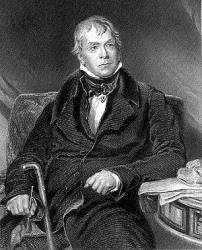
Sir Walter Scott

1771 - 1832 Person Name: Walter Scott Topics: Christ Refuge; Day of Wrath; Judgment; Wrath Of God Translator of "The day of wrath, that dreadful day" in Book of Worship with Hymns and Tunes Walter Scott was born in Edinburgh, August 15, 1771. In 1786, he commenced his apprenticeship as writer to the Signet. In 1796, he first appeared before the public in a translation of Burger's "William and Helen." Many poetical works followed, until in 1814, he began the series of "Waverly Novels." He died at Abbotsford, September 21, 1832. It is related that on his death-bed he distinctly repeated portions of the Latin original, upon which "That day of wrath, that dreadful day" is based. --Annotations of the Hymnal, Charles Hutchins, M.A., 1872 ====================== Scott, Sir Walter, Bart., was born in Edinburgh, Aug. 15, 1771, and died at Abbotsford, Sept. 21, 1832. Although so successful and widely known as a poet, he made no direct contributions to hymnody whatever. His condensed rendering of the “Dies Irae", and his hymn of Rebecca in Ivanhoe, "When Israel of the Lord beloved" (q.v.) were utilized as hymns for congregational use by others, but were never intended for such a purpose by himself. His work and rank as poet, novelist, and historian are fully set forth in his Life by J. G. Lockhart. --John Julian, Dictionary of Hymnology (1907)

Gordon Jacob

1895 - 1984 Person Name: Gordon Jacob, 1895-1984 Topics: Judgment of God Arranger of "JERUSALEM" in Together in Song

Andrew Peterson

Topics: Adoration of God; Heaven; Hope; Jesus as Messiah; Deity of Jesus; Judgment Author of "Is He Worthy?" in The Sing! Hymnal

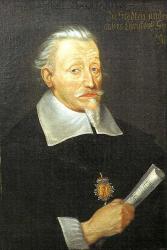
Heinrich Schütz

1585 - 1672 Person Name: Heinrich Schütz, 1585-1672 Topics: Commissioning; Commitment; Courage; Covenant; Faithfulness of God; God the Father (Creator); Holy Name; Judgment; Mission; Providence; Thanksgiving; Unity; World Composer of "DANKET DEM HERREN" in Worship (3rd ed.) Heinrich Schütz (baptized Oct. 9, 1585-1672) was the greatest German composer of the seventeenth century and the first to reach international prominence. His influence was felt for more than two centuries after his death. In 1598, after hearing the young Henrich sing, the Landgrave Moritz of Hessen-Kassel began a campaign to have the boy study at Kassel. In 1599, Christoph Schütz took his son to the landgrave’s seat, where he served as a choirboy and pursued his education showing particular facility in Greek, Latin, and Frence. After he lost his treble voice, he set out for the University of Marburg, where he studied law. But under the sponsorship of the landgrave, Heinrich went to Venice (1609) and studied with Giovanni Gabrieli until Gabrieli’s death in 1612. In 1613 he returned to Germany, once again studying law while serving as organist to the landgrave. He was lent to Johann Georg I of Saxony (1614) and subsequently became director of the chapel, a position he held the rest of his life. The untimely death of his wife after six years of marriage (1625) led him to devote himself to the composition of church music. After several petitions Schütz was granted leave to study with Claudio Monteverdi and once again set out for Venice. For much of his life the Thirty Years’ War obstructed his work, and he spent time moving from court to court in Europe, finally settling in Dresden in 1641, where he died. --The Presbyterian Hymnal Companion, 1993

Elizabeth Howard Cuthbert

1800 - 1857 Person Name: Elizabeth H. Cuthbert Topics: Adoration; Christ Atonement of; Christ Glorying in; Christ Grace and Love of; Christ The Saviour; Christ Worshiped; Christians Christ the Life of; Christians Saved by Grace; Comfort in Trials; Contentment; Covenant Promises; Deliverance From Sickness; Deliverance From Sin; Faith Confession of; God Adored and Exalted; God Attributes of; God Compassion of ; God Goodness of; God Love and Mercy; Gospel Freeness of ; Gospel Fulness of ; Grace Abounding; Grace Justifying; Grace Redeeming; Grace Restoring; Grace Sustaining; Lord's Supper; Mercy of God Great; Pardon Set Forth; Praise Calls to; Praise For God's Mercy; Praise For Spiritual Blessings; Praise for temporal blessings; Praise For Work of Redemption; Royalty of Christ Judgment the Prerogative of; Salvation From Sin and Trouble; Sickness Recovery from; Thanksgiving Declared Composer of "HOWARD" in The Psalter Howard was a native of Dub­lin, Ire­land. --www.hymntime.com/tch/

Thomas Turton

1780 - 1864 Topics: Adoration; Anger of God Fearful; Character Value of Good; Christ Exaltation of; Christ Godhood of; Christ Power of; Christ Worshiped; Christians Blessedness of; Christians Duties of; Christians Graces of; Faith Blessedness of; Glory of God In Creation; God Adored and Exalted; God Glorious; God Holiness of; God Invisibility of; God the judge; God Kingly Character of; God Righteousness of; God Sovereignty of ; Grace Growth in; Holiness Of Christians; Idolatry; Judgment Day; Love For God; Missions Encouragements of; Missions Triumphs of; Nations Owe Allegiance to Christ; Nations Ultimate Subjection of; Praise By Men; Praise Calls to; Praise For God's Holiness; Praise For Spiritual Blessings; The Christian's Reward; Royalty of Christ Guarantee of Salvation; Royalty of Christ Judgment the Prerogative of; Salvation Thanksgiving for; Seedtime and Harvest ; Sin Hatred of; Temperance Songs; Thanksgiving Due to God; Worship Call to Composer of "ELY" in The Psalter Turton, Thomas; b. 25 Feb. 1780 Yorkshire, England; d. 7 Jan. 1864 London; clergyman and scholar

Louis von Esch

1880 - 1980 Person Name: Loius von Esch Topics: Adoption; Adoration; Anger of God Restrained; Christ Atonement of; Christ Grace and Love of; Christ The Saviour; Christ Worshiped; Christians Christ the Life of; Christians Saved by Grace; Comfort in Trials; Contentment; Covenant Promises; Deliverance From Sickness; Deliverance From Sin; Evening Psalms; Faith Confession of; Family; Godly Fear Blessedness of; God Adored and Exalted; God Attributes of; God Compassion of ; God Fatherhood of; God Goodness of; God Love and Mercy; Gospel Freeness of ; Gospel Fulness of ; Grace Abounding; Lord's Supper; Mercy of God Great; Obedience; Pardon Set Forth; Parents and Children; Praise Calls to; Praise For God's Mercy; Praise For Spiritual Blessings; Praise for temporal blessings; Praise For Work of Redemption; Royalty of Christ Judgment the Prerogative of; Salvation From Sin and Trouble; Sickness Recovery from; Thanksgiving Declared; The Wicked Warned Composer of "AUTUMN" in The Psalter

Pages


Export as CSV
It looks like you are using an ad-blocker. Ad revenue helps keep us running. Please consider white-listing Hymnary.org or getting Hymnary Pro to eliminate ads entirely and help support Hymnary.org.