You help make Hymnary.org possible. More than 10 million people from 200+ countries found hymns, liturgical resources and encouragement on Hymnary.org in 2025, including you. Every visit affirms the global impact of this ministry.

If Hymnary has been meaningful to you this year, would you take a moment today to help sustain it? A gift of any size—paired with a note of encouragement if you wish—directly supports the server costs, research work and curation that keep this resource freely available to the world.

Give securely online today, or mail a check to:
Hymnary.org
Calvin University
3201 Burton Street SE
Grand Rapids, MI 49546

Thank you for your partnership, and may the hope of Advent fill your heart.

Person Results

Topics:trust+in+god
In:people

Planning worship? Check out our sister site, ZeteoSearch.org, for 20+ additional resources related to your search.
Showing 231 - 240 of 790Results Per Page: 102050

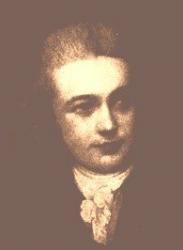
F.-H. Barthélémon

1741 - 1808 Person Name: François Barthélémon Topics: Christian Life Trust in God Composer of "AUTUMN" in Trinity Hymnal French violinist, composer, teacher, he became active in England, playing in an Italian comedy orchestra and led a band. He wrote opera, ballet, theatre music and ballads, popular songs, masques, concertos and 6 symphonies. John Perry

Carl P. Daw Jr.

b. 1944 Person Name: Carl P. Daw Jr., b. 1944 Topics: God Trust in Author of "God's Glory Fills the Heavens" in Psalms for All Seasons Carl P. Daw, Jr. (b. Louisville, KY, 1944) is the son of a Baptist minister. He holds a PhD degree in English (University of Virginia) and taught English from 1970-1979 at the College of William and Mary, Williamsburg, Virginia. As an Episcopal priest (MDiv, 1981, University of the South, Sewanee, Tennesee) he served several congregations in Virginia, Connecticut and Pennsylvania. From 1996-2009 he served as the Executive Director of The Hymn Society in the United States and Canada. Carl Daw began to write hymns as a consultant member of the Text committee for The Hymnal 1982, and his many texts often appeared first in several small collections, including A Year of Grace: Hymns for the Church Year (1990); To Sing God’s Praise (1992), New Psalms and Hymns and Spiritual Songs (1996), Gathered for Worship (2006). Other publications include A Hymntune Psalter (2 volumes, 1988-1989) and Breaking the Word: Essays on the Liturgical Dimensions of Preaching (1994, for which he served as editor and contributed two essays. In 2002 a collection of 25 of his hymns in Japanese was published by the United Church of Christ in Japan. He wrote Glory to God: A Companion (2016) for the 2013 hymnal of the Presbyterian Church (U.S.A.). Emily Brink

Marty Nystrom

Person Name: Martin Nystrom Topics: God Trust in Author of "As the Deer" in Psalms for All Seasons Martin J. Nystrom, a songwriter, was born in 1956 in Seattle, Washington, to a mother who grew up in the Christian Reformed Church; his father was brought up in the Evangelical Covenant Church. After graduating from Oral Roberts University with a degree in music education, Nystrom worked as a music director for the New York branch of Christ for the Nations. More recently he has served as a song development manager for Integrity Music, for whom he has written more than seventy songs. Nystrom is featured as worship leader on five Integrity "Hosanna" tapes. He also gives presentations at numerous conferences throughout the world. --www.reformedworship.org

Owen Alstott

Person Name: OA Topics: Trust in God Composer of "[My soul is thirsting for you, O Lord, my God]" in Catholic Book of Worship III

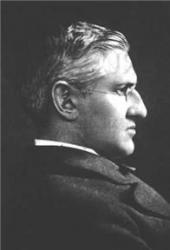
John Ernest Bode

1816 - 1874 Topics: Trusting in the Promises of God Author of "O Jesus, I Have Promised" in Glory to God John E. Bode (b. St. Pancras, England, 1816; d. Castle Camps, Cambridgeshire, England, 1874) A fine student at Christ Church, Oxford, England, and a prominent scholar who gave the famous Bampton Lectures ("for the exposition and defense of the Christian faith") at Oxford in 1855, was a rector in Westwell, Oxfordshire, and in Castle Camps. This gifted poet and hymn writer published Hymns for the Gospel of the Day, for Each Sunday and Festivals of Our Lord in 1860. Bert Polman ============== Bode, John Ernest, M.A., son of Mr. William Bode, late of the General Post Office, b. 1816, and educated at Eton, the Charter House, and at Christ Church, Oxford, graduating B.A. 1837, and M.A. in due course. Taking Holy Orders in 1841, he became Rector of Westwell, Oxfordshire, 1847; and then of Castle Camps, Cambridgeshire, 1860. He was also for a time Tutor of his College, and Classical Examiner. His Bampton Lectures were delivered in 1855. He d. at Castle Camps, Oct. 6, 1874. In addition to his Bampton Lectures, and Ballads from Herodotus, he published Hymns from the Gospel of the Day for each Sunday and Festivals of our Lord, 1860; and Short Occasional Poems, Lond., Longmans, 1858. In addition to his well-known hymn, “O Jesu, I have promised " (q. v.), the following from his Hys. from the Gospel are also in common use:— 1. God of heaven, enthroned in might. H. Trinity. 2. Spirit of Truth, indwelling Light. Whitsuntide. -John Julian, Dictionary of Hymnology (1907) ================= Bode, John E. , p. 151, ii. Additional pieces from his Hys.from the Gospel of the Day, &c, 1800, are in common use :— (1) "Sweetly the Sabbath bell" (Sunday); (2) "Thou Who hast called us by Thy word" (20th S. after Trinity). --John Julian, Dictionary of Hymnology, Appendix, Part II (1907)

Horatio Gates Spafford

1828 - 1888 Person Name: Horatio G. Spafford Topics: Trusting in the Promises of God Author of "When Peace like a River (It Is Well with My Soul)" in Glory to God

Anna Bartlett Warner

1824 - 1915 Person Name: Anna B. Warner, 1820-1915 Topics: Funeral Sacraments; Burdens; Children's Hymns; Death; Eternal Life; Love for Jesus Christ; Love of God for Us; Mercy, Forgiveness; Presence of God; Trust in Jesus Christ Author of "Jesus Loves Me" in Lead Me, Guide Me (2nd ed.) Warner, Anna, daughter of Henry W. Warner, and sister of Sarah Warner, author of Queechy, and other novels, was born near New York City about 1822. She is the author of the novel, Say and Seal, 1859, and others of a like kind. She also edited Hymns of the Church Militant, 1858; and published Wayfaring Hymns, Original and Translated, 1869. Her original hymns in common use include:— l. Jesus loves me, this I know. The love of Jesus. In Say and Seal. 1859. 2. 0 little child, lie still and sleep. A Mother's Evening Hymn. In Temple Choir. 1867. 3. One more day's work for Jesus. Evening. From Wayfaring Hymns. 1869. 4. The world looks very beautiful. A Child Pilgrim, circa 1860. [Rev. F. M. Bird, M.A.] -- John Julian, Dictionary of Hymnology (1907) Pseudonym: Amy Lo­throp ================ See also in: Hymn Writers of the Church

R. L. Pearsall

1795 - 1856 Person Name: Robert Lucas de Pearsall, 1795-1856 Topics: General Hymns Trust in God Composer of "PEARSALL" in CPWI Hymnal

Petrus Herbert

1530 - 1571 Person Name: Petrus Herbert, d. 1571 Topics: Trust in God Author of "Now God be with us" in The Book of Praise Herbert, Petrus, seems to have been a native of or resident at Fulnek in Moravia. He was ordained priest of the Brethren's Unity in 1562, became a member of the Select Council in 1567, and was latterly Consenior of the Unity. By the Unity he was entrusted with many important missions. He was sent as a deputy to confer with Calvin: and again in 1562 to arrange with Duke Christoph of Württemberg for the education at Tübingen of young men from the Bohemian Brethren. He was also one of the deputies sent to Vienna to present the revised form of the Brethren's Confession of Faith to the Emperor Maximilian II. in 1564, and in 1566 to present their new German Hymn Book. He died at Eibenschütz in 1571 (Koch, ii. 414, Allgemeine Deutsche Biographie, xiii. 263-264, &c.). Herbert was one of the principal compilers of the enlarged edition of the Brethren's German Hymn Book published in 1566 as their Kirchengeseng, and contributed to it some 90 hymns. In the ed. of 1639 there are 104 hymns marked as his. His hymns are distinguished by simplicity and beauty of style. A number are translations from the Bohemian. His hymns translated into English include:— i. Die Nacht ist kommen drin wir ruhen sollen. [Evening] Written probably under the pressure of persecution and oppression. In the G. 2?., 1566, as above, in 5 stanzas of 7 lines (the last stanza being a versification of the Lord's Prayer), and thence in Wackernagel, iv. p. 442, and the Unverfälschter Liedersegen, 1851, No. 515. In J. H. Schein's Cantiona, 1627, it appears as No. 99, with an additional stanza not by Herbert, which reads— Denn wir kein besser Zuflucht konnen haben, ,Als zu dir, 0 Herr, in dem Himmel droben, Du veriest keinen, gibst Acht auff die deinen. Die dich recht meyuen," This stanza is included as stanza v. in the version in Bunsen's Versuch, 1833, No. 43. Translated as:— 1. The night is come, wherein at last we rest, in full from Bunsen by Miss Winkworth in her Lyra Germanica, 2nd Ser., 1858, p. 77, repeated as No. 105 in R. Minton Taylor's Collection, 1872. 2. Now God be with us, for the night is closing, a good translation from Bunsen, in the original metre, by Miss Winkworth, as No. 170 in her Chorale Book for England, 1863, and repeated in her Christian Singers of Germany, 1869, p. 139. This version has been included in various recent collections, though generally abridged or altered, as in the Hymnary, 1872; Thring's Collection, 1882; and in America in the Evangelical Hymnal, N. Y., 1880, &c. In Laudes Domini, N.Y., 1884, it is in two parts (Nos. 209-210), the second beginning, "Father, Thy name be praised, Thy kingdom given." This is stanza vi. with an added doxology, as in the Hymnary, 1872. Other translations are:— (1) "The night comes apace," as No. 293 in pt. i. of the Moravian Hymn Book, 1754. (2) “Lo! evening's shades to sleep invite," by H. J. Buckoll, 1842, p. 64. ii. 0 Christenmensch, merk wie sichs halt. [Faith] 1566, as above, in 18 stanzas of 4 lines, repeated in Wackernagel, iv. p. 433. In Bunsen's Versuch , 1833, No. 390 Allgemeine Gesang-Buch, 1846, No. 130), the hymn begins with stanza iii. altered to "Der Glaub’ ist ein lebend'ge Kraft," and consists of stanzas iii., viii., xi., xii., xvi., xviii. Bunsen calls it "a noble confession of the true Christian faith." Translated as:— Faith is a living power from heaven. A good translation from Bunsen by Miss Winkworth in her Lyra Germanica, 2nd ser., 1858, p. 160, and thence in her Chorale Book for England, 1863. It is repeated, more or less altered and abridged, in Kennedy, 1863; and in America in the Presbyterian Hymnal, 1874, Baptist Service of Song, 1871, &c. ii. Hymns not in English common use:— iii. Des Herren Wort bleibt in Ewigkeit. [Holy Scripture.] 1566, as above, in 25 stanzas, and in Wackernagel, iv. p. 432. Translated as "God's holy Word, which ne’er shall cease," by J. Swertner, as No. 3 in the Moravian Hymn Book1789 (1849, No. 2). iv. Fürchtet Gott, 0 lieben Leut. [Martyrs.] 1566, as above, in 13 stanzas, and in Wackernagel, iv. p. 429. The translations are, (i.) "O love God, ye people dear," as No. 267 in pt. i. of the Moravian Hymn Book, 1754. (2) "O exalt and praise the Lord" (from the version in the Brüder Gesang-Buch1778, beginning "Liebet Gott"), as No. 871 in the Moravian Hymn Book, 1789 (1886, No. 1306). v. Lasst uns mit Lust und Freud aus Olauben singen. [Eternal Life.] A fine hymn on the Joys of Heaven. 1566, as above, in 12 stanzas, and in Wackernagel, iv. p. 447. Translated as "In faith we sing this song of thank-fulness," by Mrs. Bevan, 1858, p. 34. vi. 0 höchster Trost, heiliger Geist [Whitsuntide.] 1566, as above, in 13 stanzas, and Wackernagel, iv. p. 407. The translations are, (1) "O highest comfort, Holy Ghost," as No. 262 in pt. i. of the Moravian Hymn Book, 1754. (2) "O Comforter, God Holy Ghost," as No. 203 in the Moravian Hymn Book, 1789 (1849, No. 265). Besides the above a number of hymns by Herbert (all of which appeared in the Kirchengeseng, 1566, and are included in Wackernagel’s vol. iv.) were translated in pt. i. of the Moravian Hymn Book, 1754. The numbers in the 1754 are 166, 259, 263, 264, 265, 266, 274, 277, 281, 287, and 294. [Rev. James Mearns, M.A.] -- John Julian, Dictionary of Hymnology

Henry Smith

b. 1952 Person Name: Henry Smith, 1952- Topics: Trust in God Author of "Give thanks with a grateful heart" in Together in Song Henry Smith must have seen life this way: God’s side of the equation outweighs whatever is on the opposite side. At least, that’s what the words he wrote indicate. God is the ‘all’ of existence, so that I am called to ‘give thanks’ six times in the song’s opening words. When I’m done here on planet Earth, all that will matter is what lies ahead – in God’s presence. That must have been alluring for Henry Smith, who was struggling to find steady work, despite having just earned his college degree. When he says ‘the poor’ are rich in “Give Thanks”, that’s an echo from his difficulty in finding work. His eyesight was also failing because of a degenerative condition that would eventually leave him legally blind, certainly a ‘weakness’ that he expressed in the song as his eyesight faded. Thankfully, theological training informed him that God’s side of the equals sign was what mattered. And other parts of his life further motivated the song that leapt from his heart. He’d found someone to love, his future wife. And, he was grateful to be through school, which his deteriorating vision had made difficult, and to be back home in a church he loved in Williamsburg, Virginia. If God was all Henry Smith had in 1978, He could be praised, and yet He provided even more. It’s no surprise that Smith’s heart overflowed in a song. And, the song resounds still in Henry Smith’s hometown and around the globe today. --songscoops.blogspot.com/2010/

Pages


Export as CSV
It looks like you are using an ad-blocker. Ad revenue helps keep us running. Please consider white-listing Hymnary.org or getting Hymnary Pro to eliminate ads entirely and help support Hymnary.org.