

 My Starred Hymns
 My FlexScores
 My Hymnals
 My Purchased Files
Planning worship?
Check out our sister site, ZeteoSearch.org,
for 20+ additional resources related to your search.
- |
User Links
Person Results
St. Ambrose
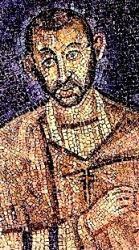
340 - 397 Person Name: Ambrose of Milan (340-397) Topics: Opening and Closing of Service Author of "While now the daylight fills the sky" in Carmina Sanctorum, a selection of hymns and songs of praise with tunes Ambrose (b. Treves, Germany, 340; d. Milan, Italy, 397), one of the great Latin church fathers, is remembered best for his preaching, his struggle against the Arian heresy, and his introduction of metrical and antiphonal singing into the Western church. Ambrose was trained in legal studies and distinguished himself in a civic career, becoming a consul in Northern Italy. When the bishop of Milan, an Arian, died in 374, the people demanded that Ambrose, who was not ordained or even baptized, become the bishop. He was promptly baptized and ordained, and he remained bishop of Milan until his death. Ambrose successfully resisted the Arian heresy and the attempts of the Roman emperors to dominate the church. His most famous convert and disciple was Augustine. Of the many hymns sometimes attributed to Ambrose, only a handful are thought to be authentic. Bert Polman =====================
Ambrosius (St. Ambrose), second son and third child of Ambrosius, Prefect of the Gauls, was born at Lyons, Aries, or Treves--probably the last--in 340 A.D. On the death of his father in 353 his mother removed to Rome with her three children. Ambrose went through the usual course of education, attaining considerable proficiency in Greek; and then entered the profession which his elder brother Satyrus had chosen, that of the law. In this he so distinguished himself that, after practising in the court of Probus, the Praetorian Prefect of Italy, he was, in 374, appointed Consular of Liguria and Aemilia. This office necessitated his residence in Milan. Not many months after, Auxentius, bishop of Milan, who had joined the Arian party, died; and much was felt to depend upon the person appointed as his successor. The church in which the election was held was so filled with excited people that the Consular found it necessary to take steps fur preserving the peace, and himself exhorted them to peace and order: when a voice suddenly exclaimed, "Ambrose is Bishop," and the cry was taken up on all sides. He was compelled to accept the post, though still only a catechumen; was forthwith baptized, and in a week more consecrated Bishop, Dec. 7, 374. The death of the Emperor Valentinian I., in 375, brought him into collision with Justina, Valentinian's second wife, an adherent of the Arian party: Ambrose was supported by Gratian, the elder son of Valentinian, and by Theodosius, whom Gratian in 379 associated with himself in the empire. Gratian was assassinated in 383 by a partisau of Maximus, and Ambrose was sent to treat with the usurper, a piece of diplomacy in which he was fairly successful. He found himself, however, left to carry on the contest with the Arians and the Empress almost alone. He and the faithful gallantly defended the churches which the heretics attempted to seize. Justina was foiled: and the advance of Maximus on Milan led to her flight, and eventually to her death in 388. It was in this year, or more probably the year before (387), that Ambrose received into the Church by baptism his great scholar Augustine, once a Manichaean heretic. Theodosius was now virtually head of the Roman empire, his colleague Valentinian II., Justina's son, being a youth of only 17. In the early part of 390 the news of a riot at Thessalonica, brought to him at Milan, caused him to give a hasty order for a general massacre at that city, and his command was but too faithfully obeyed. On his presenting himself a few days after at the door of the principal church in Milan, he was met by Ambrose, who refused him entrance till he should have done penance for his crime. It was not till Christmas, eight months after, that the Emperor declared his penitence, and was received into communion again by the Bishop. Valentinian was murdered by Arbogastes, a Frank general, in 392; and the murderer and his puppet emperor Eugenius were defeated by Theodosius in 394. But the fatigues of the campaign told on the Emperor, and he died the following year. Ambrose preached his funeral sermon, as he had done that of Valentinian. The loss of these two friends and supporters was a severe blow to Ambrose; two unquiet years passed, and then, worn with labours and anxieties, he himself rested from his labours on Easter Eve, 397. It was the 4th of April, and on that day the great Bishop of Milan is remembered by the Western Church, but Rome commemorates his consecration only, Dec. 7th. Great he was indeed, as a scholar, an organiser, a statesman; still greater as a theologian, the earnest and brilliant defender of the Catholic faith against the Arians of the West, just as Athanasius (whose name, one cannot but remark, is the same as his in meaning) was its champion against those of the East. We are now mainly concerned with him as musician and poet, "the father of Church song" as he is called by Grimm. He introduced from the East the practice of antiphonal chanting, and began the task, which St. Gregory completed, of systematizing the music of the Church. As a writer of sacred poetry he is remarkable for depth and severity. He does not warm with his subject, like Adam of St. Victor, or St. Bernard. "We feel," says Abp. Trench, "as though there were a certain coldness in his hymns, an aloofness of the author from his subject. "A large number of hymns has been attributed to his pen; Daniel gives no fewer than 92 called Ambrosian. Of these the great majority (including one on himself) cannot possibly be his; there is more or less doubt about the rest. The authorities on the subject are the Benedictine ed. of his works, the Psalterium, or Hymnary, of Cardinal Thomasius, and the Thesaurus Hymnologicus of Daniel. The Benedictine editors give 12 hymns as assignable to him, as follows:—1. Aeterna Christi munera. 2. Aeterne rerum Conditor. 3. Consors Paterni luminii. 4. Deus Creator omnium. 5. Fit porta Christi pervia, 6. Illuminans Altissimus. 7. Jam surgit hora tertia. 8. 0 Lux Beata Trinitas. 9. Orabo mente Dominum. 10. Somno refectis artubus. 11. Splendor Paternae gloriae. 12. Veni Redemptor gentium. Histories of these hymns, together with details of translations into English, are given in this work, and may be found under their respective first lines. The Bollandists and Daniel are inclined to attribute to St. Ambrose a hymn, Grates tibi Jesu novas, on the finding of the relics of SS. Gervasius and Protasius. These, we know, were discovered by him in 386, and it is by no means unlikely that the bishop should have commemorated in verse an event which he announces by letter to his sister Marcellina with so much satisfaction, not to say exultation.A beautiful tradition makes the Te Deum laudamus to have been composed under inspiration, and recited alternately, by SS. Ambrose and Augustine immediately after the baptism of the latter in 387. But the story rests upon a passage which there is every reason to consider spurious, in the Chronicon of Dacius, Bishop of Milan in 550. There is no hint of such an occurrence in the Confessions of St. Augustine, nor in Paulinue's life of St. Ambrose, nor in any authentic writing of St. Ambrose himself. The hymn is essentially a compilation, and there is much reason to believe, with Merati, that it originated in the 5th century, in the monastery of St. Honoratus at Lerins. [Te Deum.] -- John Julian, Dictionary of Hymnology (1907)
Also known as: Ambrotio, Ambrosio de Milán Ambrosius Mediolanensis Ambrosius Saint, Bp. of Milan Ambrosius von Mailand Aurelio Ambrogio, Saint, Bishop of Milan Aurelius Ambrosius, Saint, Bishop of Milan Milan, d. 397
St. Ambrose
Gerhardt Tersteegen
1697 - 1769 Person Name: Gerhard Tersteegen (1697-1769) Topics: Opening and Closing of Service Author of "Lo, God is here let us adore" in Carmina Sanctorum, a selection of hymns and songs of praise with tunes Tersteegen, Gerhard, a pious and useful mystic of the eighteenth century, was born at Mörs, Germany, November 25, 1697. He was carefully educated in his childhood, and then apprenticed (1715) to his older brother, a shopkeeper. He was religiously inclined from his youth, and upon coming of age he secured a humble cottage near Mühlheim, where he led a life of seclusion and self-denial for many years. At about thirty years of age he began to exhort and preach in private and public gatherings. His influence became very great, such was his reputation for piety and his success in talking, preaching, and writing concerning spiritual religion. He wrote one hundred and eleven hymns, most of which appeared in his Spiritual Flower Garden (1731). He died April 3, 1769.
Hymn Writers of the Church by Charles S. Nutter and Wilbur F. Tillett, 1911
====================================================
Gerhardt Tersteegen or ter Stegen, was born at Moers, Netherlands [sic. Germany] , November 25, 1697. He was destined for the Reformed ministry, but after his father's death when the boy was only six, his mother was unable to send him to the university. He studied at the Gymnasium in Moers, and then earned a meager living as a silk weaver, sharing his frugal daily fare with the poor. Malnutrition and privation undermined his health to such an extent that he suffered a serious depression for some five years, following which he wrote a new covenant with God, signing it in his own blood. A strong mystic, he did not attend the services of the Reformed Church after 1719. Although forming no sect of his own, he became well known as a religious teacher and leader. His house was known as "The Pilgrim's Cottage" -- a retreat for men seeking a way of life, while he himself was known as "the physician of the poor and forsaken." Barred from preaching in his own country until 1750, he visited Holland annually from 1732 to 1755, holding meetings. In addition to his other labors he carried on a tremendous correspondence. Overwork resulted in physical breakdown, so that during the latter years of his life he could speak only to small gatherings. He died at Muhlheim on April 3, 1769. One of the three most important of Reformed hymn writers, he is also regarded as the chief representative of the mystics. He wrote 111 hymns. His important Geisliches Blumengartlein was published in 1729. H.E. Govan published The Life of Gerhard Tersteegen, with selctions from his writings, in 1902.
--The Hymnal 1940 Companion
===========================
Tersteegen, Gerhard, son of Heinrich Tersteegen (otherwise ter Stegen or zur Stiege), merchant at Mörs (Meurs), in Rhenish Prussia, was born at Mors, Nov. 25, 1697. His parents intended that he should become a minister of the Reformed Church in Germany. His father however died in 1703, and his mother found that after giving him a thorough classical training in the Latin school at Mörs she was unable to afford the cost of his University course. He was accordingly apprenticed, in 1713, to his brother-in-law, a merchant at Mühlheim on the Ruhr, and in 1717 started in business on his own account, at Mühlheim. As he found his time much broken up, and his opportunities of meditation few, he gave up his business in 1719; and, after a short trial of linen weaving, took up the easier and much more lucrative occupation of weaving silk ribbons. During the years 1719-24 he passed through a period of spiritual depression, at the end of which his faith in the reconciling grace of Christ became assured (see No. xxxiv. below), and on Maundy Thursday, 1724, he wrote out a solemn covenant with God which he signed with his own blood. Previous to this, even before 1719, he had ceased to attend the ordinary services of the Reformed Church; and also absented himself from Holy Communion on the ground that he could not in conscience communicate along with open sinners. About the beginning of 1725 he began to speak at the prayer meetings which had been held at Mühlheim, since 1710, by Wilhelm Hoffmann, who was a candidate of theology (licensed preacher) of the Reformed Church. Tersteegen soon became known as a religious teacher among the "Stillen im Lande," as the attenders on these meetings were called, and in 1728 gave up his handicraft in order to devote himself entirely to the translation of works by medieval and recent Mystics and Quietists, including Madame Guyon and others, and the composition of devotional books, to correspondence on religious subjects, and to the work of a spiritual director of the "awakened souls." From this date to his death he was supported by a small regular income which was subscribed by his admirers and friends.
About 1727 a house at Otterbeck, between Mühlheim and Elberfeld, was set apart as a "Pilgerhütte," where the "awakened souls" could go into a spiritual retreat, under the direction of Tersteegen. This house, with accommodation for eight persons, was retained until about 1800. Tersteegen, however, did not confine himself to Mühlheim, but travelled over the district, addressing gatherings of like-minded Christians, giving special attention to Elberfeld, Barmen, Solingen, and Crefeld. From 1732 to 1755 he also went regularly every year to Holland, to visit his spiritual kinsfolk at Amsterdam and elsewhere. From 1730 to 1750 a law against conventicles was strictly enforced, and Tersteegen could not hold meetings except on his visits to Holland. During this period he removed to a house which had been Wilhelm Hoffmann's, where he preached, and provided food and simple medicines for the poor. After 1750 he resumed his public speaking until 1756, when he overstrained himself, and had to confine himself to the smallest gatherings absolutely. In 1769, dropsy set in, and after patient endurance for a season he died on April 3, 1769, at Mühlheim (Koch, vi. 46). Up to the end of his life Tersteegen remained outside the Reformed Church, but never set up a sect of his own. After his death his followers as a rule reunited themselves with it, especially when a less formal type of religion began to prevail therein.
Tersteegen's most important hymnological work was his Geistliches Blümen-Gärtlein, of which many editions were published. Tersteegen ranks as one of the three most important hymnwriters associated with the Reformed Church in Germany, the other two being F. A. Lampe and Joachim Neander.
He is however more closely allied, both as a Mystic and as a Poet, with Johann Scheffler than with either of his co-religionists. He almost equals Scheffler in power of expression and beauty of form, and if Scheffler has more pictorial grace, and a more vivid imagination, Tersteegen has more definiteness of teaching, a firmer grasp of the Christian verities, and a greater clearness in exposition. Inner union of the soul with God and Christ, the childlike simplicity and trust which this brings, renunciation of the world and of self, and daily endeavour to live as in the presence of God and in preparation for the vision of God, are the keynotes of his hymns. To his intense power of realising the unseen, his clear and simple diction, and the evident sincerity with which he sets forth his own Christian experience, his hymns owe much of their attractiveness and influence. During his lifetime they did not come much into use except through the Harfenspiel, as above, and they did not meet the taste of compilers during the Rationalistic period. But since Bunsen in his Yersuch, 1833, and Knapp in his Evangelischer Lieder-Schatz, 1837, brought his hymns once more into notice they have been received in greater or less measure into almost all the German hymnbooks, among the Lutherans as well as among the Reformed, the most popular of all being his “Gott ist gegenwärtig".
A number of Tersteegen's hymns are noted under their own first lines. They appeared, almost all for the first time, in the successive editions of his Geistliches Blümen-Gärtlein, viz., in the 1st ed., 1729; 2nd ed., 1735; 3rd ed., 1738; 4th ed., 1745; 5th ed., 1751; 6th ed., 1757; 7th ed., 1768; and in each case (after 1729) in the Third Book of that work. Those which have passed into English are as follows:—
i. Freue dich, du Kinder-Orden. Christmas. Translated as:—
Little children, God above, 1858, p. 78. Another tr. is: "Children rejoice, for God is come to earth." By Miss Dunn, 1857, p. 30.
ii. Jedes Herz will etwas lieben. Love to Christ. In the 4th ed., 1745, as above, Bk. iii., No. 70, in 8 stanzas of 4 lines, entitled "The Soul wishes to take Jesus as her best Beloved." Translated as:—
1. The heart of man must something love. A cento beginning with st. ii. “Though all the world my choice deride," is in Spurgeon's Our Own Hymn Book, 1866, and also in the Plymouth Collection, 1855, and other American hymnals.
2. Something every heart is loving. A full and good translation by Mrs. Bevan, in her Songs of Eternal Life, 1858, p. 58.
iii. Jesu, der du bist alleine. Communion of Saints. In the 2nd ed., 1735, in 11 stanzas of 6 lines, entitled "Prayer on behalf of the brethren." Translated as:—
Jesus, whom Thy Church doth own. By Miss Winkworth, omitting st. iii., in her Lyra Germanica, 2nd Ser., 1858, p. 99.
iv. Jesu, mein Erbarmer! höre. Lent or Penitence. In the 2nd ed., 1735, in 12 stanzas of 6 lines, entitled "In outward and inward sufferings and Temptations." Translated as:—
Jesus, pitying Saviour, hear me. In full, by Miss Winkworth, in her Lyra Germanica, 2nd Ser., 1858, p. 133. In her Christian Singer, 1869, p. 298, she gave st. ii., v., vi., beginning "Lost in darkness, girt with dangers."
v. Nun so will ich denn mein Leben. Self-Surrender. Translated (omitting st. ii., iii., vi., x.) as:—
1. Lo! my choice is now decided. By Miss Cox, in her Sacred Hymns from the German, 1841, p. 125. Her translations of st. viii., ix., vii., altered and beginning, "One thing first and only knowing," are repeated in Hedge & Huntington's Hymns for the Church of Christ, Boston, U.S., 1853.
2. Now at last I end the strife. By Miss Winkworth, in herLyra Germanica, 2nd Ser., 1858.
vi. 0 liebe Seele! könntst du werden. The Childlike Spirit. Translated as:—
Soul! couldst thou, while on earth remaining. In Miss Cox'sHymns from German, 1864, p. 197, it begins "Soul, while on earth thou still remainest."
Other trs. are: (1) "Wouldst thou, my soul, the secret find." By Lady E. Fortescue, 1843, p. 47. (2) “Dear soul, couldst thou become a child." By Miss Winkworth, 1855, p. 22.
vii. Siegesfürste, Ehrenkönig. Ascension. Translated as:—
Conquering Prince and Lord of Glory, By Miss Winkworth, omitting st. ii., in her Lyra Germanica, 2nd Ser., 1858, p. 48.
viii. Wie gut ists, wenn man abgespehnt. Lent or Self-Renunciation. In the first edition, entitled "Of the sweetness of the hidden life of Christians." Translated as:—
How sweet it is, when, wean'd from all. This is a good and full translation by S. Jackson, in his Life of Tersteegen, 1832 (1837, p. 417).
Other hymns by Tersteegen which have been rendered into English are:—
ix. Ach Gott, es taugt doch draussen nicht. On the Vanity of Earthly Things. Tr. as, "Ah God! the world has nought to please." By Miss Winkworth, 1869, p. 304.
x. Ach, könnt ich stille sein. Peace in God. Translated as (1) "Oh! could I but be still." By Mrs. Bevan, 1859, p. 134. (2) "Ah, could I but be still." By Lady Durand, 1873, p. 77.
xi. Allgenugsam Wesen. God's All-sufficiency . The trs. are (1) "Thou All-sufficient One! Who art." By Miss Warner, 1858, p. 601, repeated in Hymns of the Ages, Boston, U.S., 1865, p. 163. (2) "Thou, whose love unshaken."
xii. Bald endet sich mein Pilgerweg. Eternal Life. Translated as “Weary heart, be not desponding." By Lady Durand, 1873, p. 84.
xiii. Berufne Seelen! schlafet nicht. Lent. The translations are (1) "Ye sleeping souls, awake From dreams of carnal ease." By S. Jackson, in his Life of Tersteegen, 1832 (1837, p, 413). (2) "Sleep not, 0 Soul by God awakened." By Lady Durand, 1873, p. 98.
xiv. Das äussre Sonnenlicht ist da. Morning. Tr. as (1) "The World's bright Sun is risen on high." By H. J. Buckoll, 1842, p. 51. (2) "The outer sunlight now is there." By Lady Durand, 1873, p. 75.
xv. Das Kreuz ist dennoch gut. Cross and Consolation. Translated as "The Cross is ever good." By Mrs. Findlater in Hymns from the Land of Luther, 1862, p. 72 (1884, p. 234).
xvi. Die Blümlein klein und gross in meines Herren Garten. On the Graces of the New Testament. The trs. are (l) "Flowers that in Jesu's garden have a place." By Miss Dunn in her translation of Tholuck's Stunden, 1853, p. 114. (2) "Full many flowers, in my Lord's garden blooming." By Dr. R. Menzies in his translation of Tholuck's Stunden, 1870, p. 182.
xvii. Die Liebe will was gauzes haben.Entire Consecration. Tr. as "Love doth the whole—not part—desire." By Miss Warner, 1869, p. 12.
xviii. Für dich sei ganz mein Herz und Leben. Consecration to Christ. The trs. are (1) "Constrain'd by love so warm and tender." By R. Massie in the British Herald, April, 1865, p. 55. (2) "My soul adores the might of loving." By Mrs. Edmund Ashley in the British Herald, Sept., 1867, p. 136, repeated in Reid's Praise Book, 1872, No. 582.
xix. Grosser Gott, in dem ich schwebe. God's Presence. Translated as "God, in Whom I have my being." By Lady Durand, 1873, p. 81.
xx. Jauchzet ihr Himmel! frohlocket ihr englische Chören. Christmas. Tr. as "Triumph, ye heavens! rejoice ye with high adoration."
xxi. Jesu, den ich meine. Life in Christ. Tr. as ”Jesus, whom I long for." By Lady Durand, 1873, p. 92.
xxii. Jesus-Nam, du höchster Name. The Name of Jesus. Translated as "Jesu's name, thou highest name." By S. Jackson in his Life of Tersteegen, 1832 (1837, p. 415).
xxiii. Liebwerther, süsser Gottes-Wille. Resignation to the Will of God. The translations are (1) "Thou sweet beloved Will of God." By Mrs. Bevan, 1858, p. 14. (2) “Will of God, all sweet and perfect." By Lady Durand, 1873, p. 96.
xxiv. Mein ganzer Sin. Lent. Turning to God. Tr. as "My whole desire Doth deeply turn away." By Miss Warner, 1869, p. 30.
xxv. Mein Gott, mein Gott, mein wahres Leben. Self-Dedication. Tr. as "My God, my God, my life divine!" By S. Jackson in his Life of Tersteegen, 1832 (1837, p. 414).
xxvi. Mein Herz, ein Eisen grob und alt. Cross and Consolation. Tr. as "A rough and shapeless block of iron is my heart." By Lady Durand, 1873, p. 79.
xxvii. Mein'n ersten Augenblick. Morning. Tr. as "Each moment I turn me."
xxviii. Nun lobet alle Gottes Sohn. Praise to Christ. Tr. as "Give glory to the Son of God." By Mrs. Bevan, 1858, p. 75.
xxix. 0 Jesu, König, hoch zu ehren. Self-surrender. Tr. as “0 Jesus, Lord of majesty." By Miss Winkworth, 1858, p. 136.
xxx. So gehts von Schritt zu Schritt. For the Dying. Tr. as "Thus, step by step, my journey to the Infinite." By Lady Durand, 1873, p. 105.
xxxi. So ist denn doch nun abermal ein Jahr. New Year. Tr. as "Thus, then another year of pilgrim-life." By Lady Durand, 1873, p. 73.
xxxii. Sollt ich nicht gelassen sein. Cross and Consolation. Tr. as “Should I not be meek and still." By Mrs. Bevan, 1858, p. 45.
xxxiii. Von allen Singen ab. Turning to God. Tr. as "From all created things." By Lady Durand, 1873, p. 100.
xxxiv. Wie bist du mir so innig gut. The Grace of Christ. Written in 1724 at the close of his time of spiritual despondency. “This state of spiritual darkness continued five years; until at length whilst on a journey to a neighbouring town, the day-spring from on high again visited him; and the atoning mercy of Jesus Christ was made so deeply and convincingly apparent to him, that his heart was set entirely at rest. On this occasion he composed that beautiful hymn, &c." Translated as “How gracious, kind, and good, My great High Priest art Thou" (st. i.-v.), No. 74 in Dr. Leifchild's Original Hymns, 1842.
xxxv. Wiederun ein Augenblick. The Flight of Time. Tr. as: (1) “Of my Time one Minute more." (2) "One more flying moment." By Lady Durand, 1873, p. 26.
xxxvi. Willkomm'n, verklarter Gottes Sohn. Easter. This is translated as "O Glorious Head, Thou livest now." By Miss Winkworth, 1855, p. 89. Repeated in Schaff’s Christ in Song, 1870.
The first Book of the Blumen-Gärtlein contains short poems, more of the nature of aphorisms than of hymns. In the ed. of I76S there are in all 568 pieces in Book i., and of these Miss Winkworth has translated Nos. 429, 474, 565, 573, 575, 577 in her Christian Singers, 1869. Others are tr. by Lady Durand, in her Imitations from the German of Spitta and Terstsegen, 1873, as above, and by S. Jackson, in his Life of Tersteegen, 1832. [Rev. James Mearns, M.A.]
-- Excerpts from John Julian, Dictionary of Hymnology (1907)
==================
See also in:
Hymn Writers of the Church
Gerhardt Tersteegen
Ludvig Mathias Lindeman
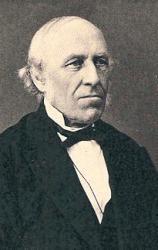
1812 - 1887 Person Name: Ludvig M. Lindeman, 1812-1887 Topics: Close of Service Composer of "FRED TIL BOD" in Lutheran Book of Worship Ludvig M. Lindeman (b. 1812; d. 1887) was a Norwegian composer and organist. Born in Trondheim, he studied theology in Oslo where he remained the rest of his life. In 1839 he succeeded his brother as the organist and cantor of Oslo Cathedral, a position he held for 48 years up until his death. Lindeman was appointed Knight of the Royal Norwegian Order of St. Olav, and was invited to both help christen the new organ in Royal Albert Hall in London, as well as compose for the coronation of King Oscar II and Queen Sophie of Sweden. In 1883, he and his son started the Organist School in Oslo. Lindeman is perhaps best known for his arrangements of Norwegiam folk tales; over the course of his life he collected over 3000 folk melodies and tunes.
Laura de Jong
Ludvig Mathias Lindeman
John Wesley
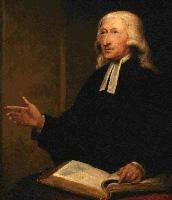
1703 - 1791 Person Name: Rev. John Wesley (1703-1791) Topics: Opening and Closing of Service Translator of "Lo, God is here let us adore" in Carmina Sanctorum, a selection of hymns and songs of praise with tunes John Wesley, the son of Samuel, and brother of Charles Wesley, was born at Epworth, June 17, 1703. He was educated at the Charterhouse, London, and at Christ Church, Oxford. He became a Fellow of Lincoln College, Oxford, and graduated M.A. in 1726. At Oxford, he was one of the small band consisting of George Whitefield, Hames Hervey, Charles Wesley, and a few others, who were even then known for their piety; they were deridingly called "Methodists." After his ordination he went, in 1735, on a mission to Georgia. The mission was not successful, and he returned to England in 1738. From that time, his life was one of great labour, preaching the Gospel, and publishing his commentaries and other theological works. He died in London, in 1791, in his eighty-eighth year. His prose works are very numerous, but he did not write many useful hymns. It is to him, however, and not to his brother Charles, that we are indebted for the translations from the German.
--Annotations of the Hymnal, Charles Hutchins, M.A., 1872
======================
John Wesley, M.A., was born at Epworth Rectory in 1703, and, like the rest of the family, received his early education from his mother. He narrowly escaped perishing in the fire which destroyed the rectory house in 1709, and his deliverance made a life-long impression upon him. In 1714 he was nominated on the foundation of Charterhouse by his father's patron, the Duke of Buckingham, and remained at that school until 1720, when he went up, with a scholarship, from Charterhouse to Christ Church, Oxford. Having taken his degree, he received Holy Orders from the Bishop of Oxford (Dr. Potter) in 1725. In 1726 he was elected Fellow of Lincoln College, and remained at Oxford until 1727, when he returned into Lincolnshire to assist his father as curate at Epworth and Wroot. In 1729 he was summoned back to Oxford by his firm friend, Dr. Morley, Rector of Lincoln, to assist in the College tuition. There he found already established the little band of "Oxford Methodists" who immediately placed themselves under his direction. In 1735 he went, as a Missionary of the Society for the Propagation of the Gospel, to Georgia, where a new colony had been founded under the governorship of General Oglethorpe. On his voyage out he was deeply impressed with the piety and Christian courage of some German fellow travellers, Moravians. During his short ministry in Georgia he met with many discouragements, and returned home saddened and dissatisfied both with himself and his work; but in London he again fell in with the Moravians, especially with Peter Bohler; and one memorable night (May 24, 1738) he went to a meeting in Aldersgate Street, where some one was reading Luther's preface to the Epistle to the Romans. There, "About a quarter before nine, while he was describing the change which God works in the heart through faith in Christ, I felt my heart strangely warmed. I felt I did trust in Christ, Christ alone, for salvation; and an assurance was given me, that He had taken away my sins, even mine, and saved me from the law of sin and death." From that moment his future course was sealed; and for more than half a century he laboured, through evil report and good report, to spread what he believed to be the everlasting Gospel, travelling more miles, preaching more sermons, publishing more books of a practical sort, and making more converts than any man of his day, or perhaps of any day, and dying at last, March 2, 1791, in harness, at the patriarchal age of 88.
The popular conception of the division of labour between the two brothers in the Revival, is that John was the preacher, and Charles the hymnwriter. But this is not strictly accurate. On the one hand Charles was also a great preacher, second only to his brother and George Whitefield in the effects which he produced. On the other hand, John by no means relegated to Charles the exclusive task of supplying the people with their hymns. John Wesley was not the sort of man to depute any part of his work entirely to another: and this part was, in his opinion, one of vital importance. With that wonderful instinct for gauging the popular mind, which was one element in his success, he saw at once that hymns might be utilized, not only for raising the devotion, but also for instructing, and establishing the faith of his disciples. He intended the hymns to be not merely a constituent part of public worship, but also a kind of creed in verse. They were to be "a body of experimental and practical divinity." "In what other publication," he asks in his Preface to the Wesleyan Hymn Book, 1780 (Preface, Oct. 20,1779), "have you so distinct and full an account of Scriptural Christianity; such a declaration of the heights and depths of religion, speculative and practical; so strong cautions against the most plausible errors, particularly those now most prevalent; and so clear directions for making your calling and election sure; for perfecting holiness in the fear of God?" The part which he actually took in writing the hymns, it is not easy to ascertain; but it is certain that more than thirty translations from the German, French and Spanish (chiefly from the German) were exclusively his; and there are some original hymns, admittedly his composition, which are not unworthy to stand by the side of his brother's. His translations from the German especially have had a wide circulation. Although somewhat free as translations they embody the fire and energy of the originals.
It has been the common practice, however for a hundred years or more to ascribe all translations from the German to John Wesley, as he only of the two brothers knew that language; and to assign to Charles Wesley all the original hymns except such as are traceable to John Wesley through his Journals and other works.
The list of 482 original hymns by John and Charles Wesley listed in this Dictionary of Hymnology have formed an important part of Methodist hymnody and show the enormous influence of the Wesleys on the English hymnody of the nineteenth century.
-- Excerpts from John Julian, Dictionary of Hymnology (1907)
===================
See also in:
Hymn Writers of the Church
John Wesley
Johann G. C. Störl
1675 - 1719 Person Name: J. G. C. Storl Topics: Close of Service Composer of "GRAFENBERG" in Laudes Domini Johann Georg Stoerl; b. 1675, Kirchberg; d. 1719, Stuttgart
Evangelical Lutheran Hymnal, 1908
Johann G. C. Störl
Johann Christoph Bach
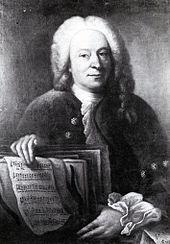
1642 - 1703 Person Name: J. Chr. Bach Topics: Close of Service; Worship in General Close of Service; Close of Service Composer of "[Savior, now the day is ending]" in The Lutheran Hymnary
Johann Christoph Bach
Arthur Cottman
1842 - 1879 Person Name: A. Cottman Topics: Close of Service Composer of "DALEHURST" in Hymns and Tunes for Schools Born: Circa November 1841, Ringwood, Hampshire, England.
Died: Circa May 1879, Brentford, Middlesex, England.
Cottman was a solicitor and amateur musician. His works include:
Ten Original Tunes, 1874
Music:
CATERHAM
COTTMAN
DALEHURST
EVERSLEY
MIRFIELD
MORN OF GLADNESS
--www.hymntime.com/tch
Arthur Cottman
William Croswell Doane
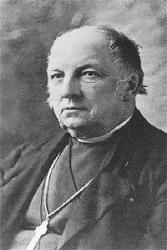
1832 - 1913 Person Name: Bishop William C. Doane Topics: Close of Service Author of "Ancient of days, who sittest throned in glory" in Alleluia Doane, William Croswell, D.D., son of Bp. G. W. Doane (p. 303, ii.), was born at Boston, Mass., March 2, 1832, and ordained D. 1853, and P. 1856, in the Prot. Episcopal Church of America. He was Rector of Burlington, N.J., Hartford, Conn, and Albany; and since 1869 Prot. Episco. Bishop of Albany. He is the author of a Biography of his father, and other works. His fugitive verse was collected and published [in 1902], as Rhymes from Time to Time. His hymn, "Ancient of Days, Who [that] sittest throned in glory" (Holy Trinity), was written for the Bicentenary of the City of Albany, 1886. In some collections it begins with stanza ii., "O Holy Father, Who hast led Thy children." For full text see The Hymnal, edition 1892, of the Prot. Episco. Church of America, No. 311. Bp. Doane is D.D. of Oxford, and LL.D. of Cambridge. [Rev. L. F. Benson, D.D.]
--John Julian, Dictionary of Hymnology, New Supplement (1907)
William Croswell Doane
George Smart
1776 - 1867 Person Name: George Thomas Smart, 1776 - 1867 Topics: The Church Worship - The Close of Service Composer of "WILTSHIRE" in Service Book and Hymnal of the Lutheran Church in America
George Smart
William Cullen Bryant
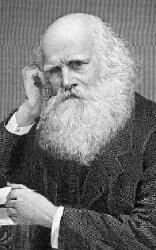
1794 - 1878 Person Name: W. C. Bryant Topics: Close of Service Author of "When this song of praise shall cease" in Hymns and Tunes for Schools Bryant, William Cullen. First in order of time of the great American poets, Bryant was born at Cummington, Mass., Nov. 3, 1794, and was educated at Williams College. In 1815 he'was called to the Bar, and practised for a time at Great Barrington. In 1825 he retired from the Bar, settled at New York, and devoted himself to literary pursuits, founding the New York Review, and editing for a short time the New York Evening Post. He died June 12, 1878. His poetical and other works are well known. His hymns were written at intervals during his long life. They were collected and privately printed in 1869, and number over 20. Those in common use are:—
1. Almighty, listen while we raise. Praise. This is given as "Almighty hear us,” &c, in the Unitarian Hymn and Tune Book, Boston, 1868. It was introduced into Great Britain through Beard's Collection, 1857.
2. Deem not that they are blest alone. Mourning. In this form it is in Beard's Collection, 1837. It is best known as "0 deem not they are," &c, and in this form it is No. 964 in Songs for the Sanctuary, N. Y., 1865-72, No. 452, in Dr. Martineau's Hymns of Prayer and Praise, Lond., 1873, &c.
3. Father, to Thy kind love we owe. God's Lovingkindness. This is given in several modern collections, including the Unitarian Hymn and Tune Book, Boston, 1868, Martineau, 1873, &c.
4. 0 God, whose dread and dazzling brow. Compassion desired. Is No. 57 in the Boston Hymn and Tune Book, 1868, as above.
5. When he who from the scourge of wrong. Hope of the Resurrection. This is seldom found in modern hymnals. Text in Lyra Sacra Americana, 1868.
The above hymns (1-5) appeared in Dr. H. D. Sewall's (Unitarian) Psalms & Hymns for Social and Private Worship, 1820, and were written at the instance of a Miss Sedgwick. Following as near as possible the chronological order of the hymns we have next:—
6. O Thou Whose own vast temple stands. Opening of a Place of Worship. Written in 1835 for the Dedication of a Chapel in Prince Street, N. Y. This is the most widely known of this author's hymns. It was introduced into Great Britain as early as 1837, when it was included in Beard's Collection, No. 405. It is in 4 stanzas of 4 lines. Orig. text in Songs for the Sanctuary, N. Y., 1865, No. 1017, and Martineau, 1873, No. 727. Another form of the hymn is "Thou, Whose unmeasured temple stands," This is No. 569 in the American Presb. Psalms and Hymns, Richmond, 1867, Horder's Congregational Hymns, Lond. 1884, No. 747, and others.
7. All that in this wide world we see. Omnipresence. This is dated 1836. In his Collection in 1837, No. 17, Beard gives it as an original contributed thereto, thus fixing its first publication.
8. Thou unrelenting past. The Past. Dates from 1836. Also in Martineau, 1873, No. 508.
9. Not in the solitude. God in the City. Dates from 1836, and is No. 26 in Martineau, 1873.
10. Whither, midst falling dew. Divine Guidance. This, in common with Nos. 8 and 9, is more a poem than hymn. It is addressed "To a Waterfowl," and dates from 1836. In Martineau, 1873.
11. Dear ties of mutual succour bind. Charity Sermons. No. 905 in the Amer. Methodist Episcopal Hymnal, 1878. It dates from about 1836.
12. 0 Thou whose love can ne'er forget. Ordination. Given (but not as an original contributed thereto) in Beard's Collection (Eng.), 1837.
13. Mighty One, before Whose face. Ordination. This is dated 1840 (but is probably earlier), and is given in several collections, including Mr. Beecher's Plymouth Collection, 1855, and others.
14. Look from Thy sphere of endless day. Home Missions. This hymn has also attained to considerable use both in Great Britain and America. It dates from 1840. It is in the Song. for the Sanctuary, N. Y., 1865, Horder's Congregational Hymns, 1884, &c.
15. Lord, who ordainest for mankind. Thanks for a Mother's love. Written at Dr. Osgood's suggestion, and printed in his Christian Worship, 1862. It is repeated in Martineau, 1873.
16. All praise to Him of Nazareth. Holy Communion. Dr. Hatfield in his Church Hymn Bk., 1872, No. 736, gives this in 3 stanzas of 4 lines. In the Songs for the Sanctuary it is in its full form of 5 stanzas. It dates from 1864.
17. As shadows cast by cloud and sun. Epiphany. In the Methodist Episcopal Hymnal, N. Y., 1878. It was contributed to that Hymnal, 1877, but was composed for the Semi-Centennial Celebration of the Church of the Messiah, Boston, March 19, 1875.
18. When doomed to death the Apostle lay. On behalf of Drunkards. Also in the Methodist Episcopal Hymnal, 1878.
In addition to the above the following hymns by Bryant are in limited use:—
19. All things that are on earth. Love of God. In Beard's Collection, 1837.
20. Close softly, fondly, while ye weep. Death. In Mr. Beecher's Plymouth Coll., 1855.
21. How shall I know thee in the sphere which keeps? The Future Life. In the Supplement to the Boston Hymns for the Church of Christ, 1853.
22. Standing forth in life's rough way. On behalf of Children. In Dr. Alton's Children's Worship, 1878; Horder's Congregational Hymns, 1884, and others.
23. When this song of praise shall cease. Death anticipated. In his Hymns, 1869, and W. R. Stevenson's School Hymnal, 1880, No 313.
24. When the blind suppliant in the way. Opening the eyes of the blind. In the Methodist Episcopal Hymnal, 1878, N. Y., No. 201. It dates from 1874.
25. Wild was the day, the wintry sea. The Pilgrim Fathers. In Hymns of the Spirit, by Longfellow and Johnson. Boston, 1864.
In 1869, Hymns by W. C. Bryant, 12mo, were privately printed. In this work the texts of many of the older hymns are altered. The dates of his hymns are difficult to determine, and many of those given above are approximate only. Bryant's genius was cool, meditative, and not distinguished by lyric fire. His hymns are correct and solid, but none reach the highest rank. [Rev. F. M. Bird, M.A.]
-- John Julian, Dictionary of Hymnology (1907)
William Cullen Bryant
Pages




