You help make Hymnary.org possible. More than 10 million people from 200+ countries found hymns, liturgical resources and encouragement on Hymnary.org in 2025, including you. Every visit affirms the global impact of this ministry.

If Hymnary has been meaningful to you this year, would you take a moment today to help sustain it? A gift of any size—paired with a note of encouragement if you wish—directly supports the server costs, research work and curation that keep this resource freely available to the world.

Give securely online today, or mail a check to:
Hymnary.org
Calvin University
3201 Burton Street SE
Grand Rapids, MI 49546

Thank you for your partnership, and may the hope of Advent fill your heart.

Person Results

Topics:doubts
In:person

Planning worship? Check out our sister site, ZeteoSearch.org, for 20+ additional resources related to your search.
Showing 231 - 240 of 370Results Per Page: 102050

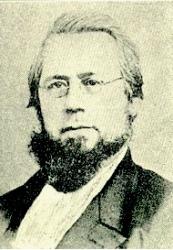
Henry Harbaugh

1817 - 1867 Person Name: Rev. Henry Harbaugh, 1817-1867 Topics: Doubt Author of "Jesus, my Shepherd, let me share" in The Sunday School Hymnal Harbaugh, Henry, D.D., born in Franklin Co., Pennsylvania, Oct. 24, 1817, was of Swiss descent. In early life he was a farmer, carpenter, and teacher; but in 1840 he entered Marshall College, Mercersburg. Entering the ministry of the German Reformed body, he became, in 1844, Pastor at Lewisburg, Lancaster and Lebanon, Pennsylvania, and in 1864 Professor in Theology at Mercersburg. He died Dec. 27, 1867. He was Editor of the Guardian and the Mercersburg Review, in which he advocated what was called "Mercersburg Theology." His published works include sundry books about Heaven; Poems, Philadelphia, 1860, and Hymns & Chants for Sunday Schools, Lebanon, 1861. This last includes his hymns. The best known and most widely used of his compositions are:— 1. Jesus, I live to Thee. [Life consecrated to Jesus.] This hymn is dated 1850. It is No. 391 in the Hymns of the Church, N. Y., 1869; No. 255 in Allon's Supplementary Hymns, London, 1868, and is also in other collections. 2. God most mighty, sovereign Lord. [National Hymn.] Appeared in his Poems, 1860, in 8 stanzas of 8 lines, and headed, "A National Litany hymn." In some collections it is abridged, as in Hatfield's Church Hymnbook, N. Y., 1872, No. 1307; and in others part of it is altered to "Christ by heavenly hosts adored," as in the Reformed Dutch Hymns of the Church, 1869, No. 935, and others. 3. Make the cross your meditation. [Passiontide.] This translation of "Recordare sanctae crucis" (q.v.) appeared in the Mercersburg Review, 1858, p. 481, and in his Poems 1860. It is worthy of more attention than it has received. [Rev. F. M. Bird, M.A.] --John Julian, Dictionary of Hymnology (1907) ================== Harbaugh, H., p. 484, ii. From No. 2, “God most mighty, &c," the cento, "Thou, by heavenly hosts adored" in the Songs of Christian Praise, N. Y., 1880, No. 658, is taken. --John Julian, Dictionary of Hymnology, Appendix, Part II (1907)

Rupert E. Davies

1909 - 1994 Person Name: Rupert E. Davies, 1909-1994 Topics: Conflict, Suffering and Doubt Alterer (v. 4) of "A safe stronghold our God is still" in Singing the Faith

Graham George

1912 - 1993 Topics: Doubt Composer of "THE KING'S MAJESTY" in Trinity Hymnal (Rev. ed.)

Robert Archibald Smith

1780 - 1829 Person Name: Robert Archibald Smith, 1780-1829 Topics: Conflict, Suffering and Doubt Adapter of "MARTYRDOM (FENWICK)" in Singing the Faith Although largely self-taught, Robert A. Smith (b. Reading, Berkshire, England, 1780; d. Edinburgh, Scotland, 1829) was an excellent musician. By the age of ten he played the violin, cello, and flute, and was a church chorister. From 1802 to 1817 he taught music in Paisley and was precentor at the Abbey; from 1823 until his death he was precentor and choirmaster in St. George's Church, Edinburgh. He enlarged the repertoire of tunes for psalm singing in Scotland, raised the precentor skills to a fine art, and greatly improved the singing of the church choirs he directed. Smith published his church music in Sacred Harmony (1820, 1825) and compiled a six-volume collection of Scottish songs, The Scottish Minstrel (1820-1824). Bert Polman

Raphael Courteville

? - 1772 Person Name: R. Courteville Topics: Doubt Composer of "ST. JAMES" in The Church Hymnal Courteville, Raphael or Ralph (d. 1772), organist and political writer, was the son or grandson of one of the gentlemen of the Chapel Royal who bore the same name, and who died on 28 Dec. 1675. The organ from the Chapel Royal was presented by Queen Mary in 1691 to the church of St. James's, Westminster, and on 7 Sept. in the same year a Ralph Courtaville, who had been strongly recommended by the Earl of Burlington, and who had previously been a chorister in the Chapel Royal, was appointed the first organist, with a salary of 20l. per annum for himself and 4l. for a blower. This Courteville, Courtaville, or Courtivill, was no doubt the composer of six ‘Sonatas composed and purposley (sic) contriv'd for two flutes,’ published by Walsh about 1690; of a song introduced in Wright's ‘Female Virtuosoes,’ and supposed to have been written by Ann, countess of Winchilsea; of a very graceful song, ‘To Convent Streams,’ in ‘Duke and no Duke,’ and of songs in ‘Oroonoko.’ He was one of the composers who furnished the music for part iii. of D'Urfey's ‘Don Quixote’ in 1695. The well-known hymn tune, ‘St. James's,’ is also by him. It has been supposed that this Courteville died about 1735, and was succeeded by his son of the same name; but as the vestry minutes of the parish, in which all appointments, &c. are carefully recorded, contain no mention of such a change of organists, while no record of the father's death can be found, we are compelled to believe that the existence of the son is a mere assumption, made in order to account for the long tenure of the post by a person or persons of the name of Courteville. This conclusion is strengthened by various entries in the vestry minutes; in January 1752–3, and again in June 1754, letters are written to him warning him that unless he attends personally to the duties of the post he will be dismissed. Whether he endeavoured to perform the duties himself after this we do not know, but he was certainly not dismissed, and shortly afterwards an assistant, ‘Mr. Richardson,’ was appointed. On 12 June 1771 it was reported to the vestry that Courteville gave this assistant only one quarter of his salary for doing the whole work, and he was thereupon ordered to share the payment equally with Richardson. Seven years before this, in 1764, the assistant, with two others, was consulted as to the state of the organ and the undertaking of repairs to its structure. Neither at this time, nor when the improved instrument, repaired by Byfield, was tried, was Courteville's advice asked in the matter, from which we may conclude that he was long past all work, although he was allowed to keep the post. This Raphael Courteville, whether or not he be identical with the first organist of the church, took a somewhat active part in politics towards the end of Sir Robert Walpole's administration. He is stated to have married, on 14 Sept. 1735, a lady named Miss Lucy Green, with a fortune of 25,000l. In 1738 he published ‘Memoirs of the Life and Administration of William Cecil, Baron Burleigh, &c., including a parallel between the State of Government then and now,’ with preface and appendix of original papers, dedicated to the Right Hon. Edward Walpole, secretary to the Duke of Devonshire. It is signed only ‘R. C.,’ and was printed for the author in London. He was the reputed author of ‘The Gazetteer,’ a paper written in defence of the government, and it was probably in consequence of this production that he acquired the nickname of ‘Court-evil.’ He also wrote a pamphlet published in 1761, entitled ‘Arguments respecting Insolvency.’ On 4 Dec. 1742 a letter appeared in No. 50 of the ‘Westminster Journal’ bearing his signature, to which were appended the words, ‘Organ-blower, Essayist, and Historiographer.’ The letter was undoubtedly written as a joke, probably upon his own genuine productions; it is of course not by himself, and the point of the joke is impossible now to discover, but the appearance of his name in this connection proves that he was more or less a well-known character. He died early in June 1772, as on the 10th of the month he was buried, and his place was declared vacant at the vestry meeting of that date. [Grove's Dict. of Music; Hawkins's Hist. of Music; Notes and Queries, 2nd ser. x. 496; Registers and Vestry Minutes of St. James's, Westminster; Cheque-books of the Chapel Royal; Westminster Journal, quoted above; Brit. Mus. Cat.] --en.wikisource.org/wiki/

Herbert O'Driscoll

b. 1928 Person Name: T. Herbert O'Driscoll Topics: Doubt Author of "God, When I Stand" in Moravian Book of Worship O'Driscoll, Herbert. (Cork, Ireland, October 17, 1928-- ). Anglican. Graduated from Trinity College, Dublin, 1951. Pastorates at Monkstown (Ireland), 1952-1954; Ottawa, Ontario, 1954-1957, 1962-1968; Dartmouth, Nova Scotia, 1957-1960 (naval chaplaincy); Carp, Ont., 1960-1962; Vancouver, British Columbia, (dean), 1968-1982. In 1982 he moved to Washington, D.C. to become the warden of the College of Preachers at Washington Cathedral, but returned to Canada after one year. In both his hymns and his published sermons, he uses traditional techniques to set forth contemporary concerns, so that his work is unusually approachable. --Hugh D. McKellar, DNAH Archives Also: O'Driscoll, T. Herbert (Thomas Herbert) O'Driscoll, Thomas Herbert

Joy Webb

1932 - 2023 Person Name: Joy Webb, b. 1932 Topics: Conflict, Suffering and Doubt Author of "When I'm feeling down and sad" in Singing the Faith

Jack Schrader

b. 1942 Topics: Doubt Composer of "ACCLAMATIONS" in The Book of Praise JACK SCHRADER (b. 1942), arranger, composer, conductor, vocalist, and organist/pianist, is past editor with Hope Publishing Company, retiring in January of 2009. His association with Hope began in 1978. A 1964 graduate of Moody Bible Institute of Chicago, where he majored in Voice and Organ, he also received the Bachelor of Music Education degree from the University of Nebraska (1966). Further studies in theology culminated in Jack's ordination by the Evangelical Free Church of America (1975). Born in St. Louis, Missouri, he now resides in Wheaton, Illinois, with his wife, Karen. They have three children, Beth, Jonathan and Joel, and currently three grandchildren. Jack is the best selling choral composer in the Hope catalog. In addition to choral music Jack has published collections for keyboardists, instrumentalists and vocal soloists. He was a member of the editorial committee for Hope's most recent hymnal, WORSHIP & REJOICE (2001), in which he has 24 hymn credits. His music is heard in hundreds of churches across the country each Sunday, and he can be seen throughout the year as a guest clinician at choral reading sessions and workshops. --www.hopepublishing.com

Martin Tel

Topics: Doubt Adapter of "HARVEY'S CHANT" in Psalms for All Seasons Martin Tel is the C. F. Seabrook Director of Music at Princeton Theological Seminary in Princeton, New Jersey. He conducts the seminary choirs, teaches courses in church music, and administers the music for the daily seminary worship services. He served as senior editor of Psalms for All Seasons: A Complete Psalter for Worship (2012). His love for music began in a dairy barn in rural Washington State, where he heard his father belt out psalms and hymns while milking the cows. Martin earned degrees in church music and theology from Dordt College, the University of Notre Dame, Calvin Theological Seminary, and the University of Kansas. He has served as minister of music in Christian Reformed, Reformed Church in America, and Presbyterian congregations. With his wife, Sharilyn, he is raising three children in Princeton, New Jersey. Lift Up Your Hearts

Brian Doerksen

Person Name: Brian Doerksen, b. 1965 Topics: Conflict, Suffering and Doubt Author of "Faithful One, so unchanging" in Singing the Faith

Pages


Export as CSV
It looks like you are using an ad-blocker. Ad revenue helps keep us running. Please consider white-listing Hymnary.org or getting Hymnary Pro to eliminate ads entirely and help support Hymnary.org.