You help make Hymnary.org possible. More than 10 million people from 200+ countries found hymns, liturgical resources and encouragement on Hymnary.org in 2025, including you. Every visit affirms the global impact of this ministry.

If Hymnary has been meaningful to you this year, would you take a moment today to help sustain it? A gift of any size—paired with a note of encouragement if you wish—directly supports the server costs, research work and curation that keep this resource freely available to the world.

Give securely online today, or mail a check to:
Hymnary.org
Calvin University
3201 Burton Street SE
Grand Rapids, MI 49546

Thank you for your partnership, and may the hope of Advent fill your heart.

Person Results

Topics:the+holy+scriptures
In:person

Planning worship? Check out our sister site, ZeteoSearch.org, for 20+ additional resources related to your search.
Showing 231 - 240 of 313Results Per Page: 102050

T. R. Birks

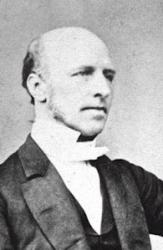
1810 - 1883 Person Name: T. Birks Topics: The Holy Scriptures Author of "The heavens declare Thy glory, Lord!" in Churches of Christ Hymn Book Birks, Thomas Rawson, M.A., b. Sept. 1810, and educated at Trinity College, Cambridge (B.A. 1834, M.A. 1837), of which he subsequently became a Fellow. Having taken Holy Orders in 1837, he became Rector of Kelshall, Herts, 1844; Vicar of Holy Trinity, Cambridge, 1866; Hon. Canon of Ely Cathedral, 1871; and Professor of Moral Philosophy, Cambridge, 1872. He d. at Cambridge, July 21, 1883. His works, to the number of 25, include Biblical, Astronomical, Scientific, Prophetic, and other subjects. He also wrote the Memoirs of the Rev. E Bickersteth (his father-in-law), 2 vols., 1851. His hymns appeared in Bickersteth's Christian Psalmody; 1833; and, together with Versions of the Psalms, in his Companion Psalter, 1874. They number upwards of 100. [Eng. Psalters, § xx.] Very few are in common use in Great Britain, but in America their use is extending. They include:— 1. Except the Lord do build the house. Ps. cxxvii. 2. O come, let us sing to the Lord. Ps. xcv. 3. O King of Mercy, from Thy throne on high. Ps. lxxx. 4. O taste and see that He is good. Ps. xxxiv. 5. O when from all the ends of earth. Psj xiv. 6. The heavens declare Thy glory. Ps. xix. 7. The Lord Himself my Portion is. Ps. liii. 8. The mighty God, the Lord hath spoken. Ps. l. 9. Thou art gone up on high, O Christ, &c. Ps. xlvii. 10. Whom have I [we] Lord in heaven, but Thee. Ps. lxxiii. Of these versions of the Psalms, all of which date from 1874, the most popular is No. 3. Mr. Birks' compositions are worthy of greater attention than they have hitherto received. --John Julian, Dictionary of Hymnology (1907)

William Moore

1811 - 1880 Topics: The Holy Scriptures Composer of "ACCRINGTON" in Redemption Hymnal

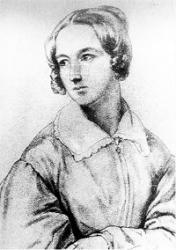
Luise Hensel

1798 - 1876 Person Name: Miss Luise Hensel (1798-1876) Topics: The Holy Scriptures Author of "Ever would I fain be reading" in Carmina for the Sunday School and Social Worship Text of "Müde bin ich geh zur Ruh" is printed in Lutheran Service Book, 2006 #887 ============= Hensel, Luise, daughter of J. J. L. Hensel, Lutheran pastor at Linum, near Fehrbellin, Brandenburg, was born at Linum, March 30, 1798, Though confirmed as a Lutheran in her fifteenth year, she gradually approximated to Roman Catholicism, and was formally received into that Communion, Dec. 7, 1818. During the remaining years of her life, she devoted herself mainly to the education of the young and the care of the sick. In 1874 she entered the Union of Daughters of Christian Love at Paderborn, and died at Paderborn, Dec. 18, 1876. (O. Kraus, 1879, pp. 204-211; Allgemeine Deutsche Biographie, xii. 1-3, &c.) Her best hymns were written before she was 23, and in proportion as she became an Ultramontane the poetical value of her productions declined. Her finest productions are distinguished by childlike simplicity, humility, resignation, and deep Christian love. They have won wide acceptance in Germany. The first two of those noted may be regarded as nursery classics. A number of her hymns came into Clemens Brentano's hands as early as 1819, and were by mistake included as his in his posthumous works. A few were printed in F. Förster's Sängerfahrt, 1818, and a good many more in M. Diepenbrock's Geistlicher Blumenstrauss, Sulzbach, 1829. A complete edition of her hymns was published by Professor C. Schlüter of Münster as her Lieder at Paderborn, 1870 (4th ed., 1879). i. Hymns in English common use: i. Immer muss ich wieder lesen. [Holy Scripture.] This beautiful children's hymn on the Life of Christ as narrated in the Gospels, appeared in Diepenbrock, 1829, p. 265, in 7 stanzas of 4 lines (entitled "On the reading of Holy Scripture "); and in her Lieder, 1870, is dated Berlin, 1815. It is repeated in Knapp's Evangelischer Lieder-Schlatz, &, 1837, the Württemberg Gesang-Buch, 1842, &c. Translated as:— Ever would I fain be reading. A good and full translation by Miss Winkworth in her Lyra Germanica, 2nd Ser., 1858, p. 24. It has been included in full in Psalms & Hymns, Bedford, 1859; Kennedy, 1863; Book of Praise for Children, 1881; and in America in Hatfield's Church Hymn Book, 1872, and others. In some collections it is abridged; and in the Unitarian South Place Collection, 1873, it begins, "Ever find I joy in reading." Other translations are:— (1) “O how sweet the wondrous story," by Mrs. Bevan, 1859, p. 142. (2) "In that book so old and holy," in Dr. H. W. Dulcken's Golden Harp, 1864, p. 25. (3) "Still I read, and weary never," by “A. M. A," in the British Herald, Feb. 1868, p. 211. ii. Müde bin ich, geh' zur Ruh. [Evening.] This beautiful child's evening prayer, the most popular of all her hymns, appeared in Diepenbrock, 1829, p. 270, in 4 stanzas of 4 lines. In her Lieder, 1870, p. 54, dated Berlin, Autumn, 1816. Included in the Unverfälscher Liedersegen, 1851, No. 528. Translated as:— 1. Now that o'er each weary head. A free translation of stanzas i.-iii. as No. 22 in C. H. Bateman's Children's Hymns, 1872. 2. Weary now I go to rest. A good translation of stanzas i.-iii. by E. Cronenwett as No. 324 in the Ohio Lutheran Hymnal 1880. Other translations are:— (1) "Now I close my tired eyes," by Mrs. Bevan, 1859, p. 147. (2) "I am tir'd, and so I seek," by Miss Manington, 1863, p. 126. (3) "Weary now I go to bed," in Dr. H. W. Dulcken's Golden Harp, 1864, p. 40. (4) “Now with weariness opprest," a second translation by Dr. Dulcken, p. 72. (5) “Wearied now I seek repose," by J. Kelly, 1885, p. 111. ii. Hymns not in English common use: iii. Ich liebe einen Königs Sohn. [Love to Christ.] In Diepenbrock, 1829, p. 304, in 9 stanzas, and in her Lieder, 1870, p. 67, dated Berlin, 1817. Translated as "I love a royal only Son," by E. Massie, 1867, p. 174. jv. 0 Sonne, wenn von deinem Licht. [Love to Christ.] In Diepenbrock, 1829, p. 257, in 6 stanzas, and in her Lieder, 1870, p. 128, dated Söndermühlen, 1823. Translated as "O Sun, if from thy light a ray," in J. D. Burns's Memoir and Remains, 1869, p. 270. v. 0 Sorge, die mien niederdrückt. [Encouragement.] In Diepenbrock, 1829, p. 271, in 6 stanzas, and in her Lieder, 1870, p. 13, dated Berlin, 1815. The translations are:—(1l) "O anxious care that weighs me down," by Miss Burlingham, in the British Herald, Sept. 1865, p. 144. (2) "Begone, O load of care, begone," by J. Kelly, 1885, p. 80. vi. Was verlangst du, warumbangst du. [Cross and Consolation.] In Diepenbrock, 1829, p. 261, in 6 stanzas entitled "Suraum corda." In her Lieder, 1870, p. 43, it is dated Berlin, 1816. Translated as "What seekest thou! Why fearest thou," by C. T. Astley, 1860, p. 28. vii. Zu dir, zu dir, hinweg von mir. [Consecration to Christ.] In Diepenbrock, 1829, p. 267, in 5 stanzas In her Lieder, 1870, p. 31, dated Berlin, 1816. Translated as "To Thee, to Thee, away from self," by J. Kelly, 1885, p. 72. [Rev. James Mearns, M.A.] -- John Julian, Dictionary of Hymnology ===================== Hensel, Luise, p. 510, ii., No. v. "O Sorge," &c, appeared in Förster's Sängerfahrt, 1818, p. 266. --John Julian, Dictionary of Hymnology, Appendix, Part II (1907)

Richard Redhead

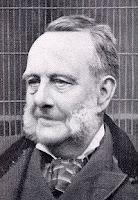
1820 - 1901 Person Name: Richard Redhead (1820-1901) Topics: The Holy Spirit in the Church Illumination of God's Word; God In Creation; Prayer; Scripture Composer of "LAUS DEO (REDHEAD No. 46)" in Church Hymnary (4th ed.) Richard Redhead (b. Harrow, Middlesex, England, 1820; d. Hellingley, Sussex, England, 1901) was a chorister at Magdalen College, Oxford. At age nineteen he was invited to become organist at Margaret Chapel (later All Saints Church), London. Greatly influencing the musical tradition of the church, he remained in that position for twenty-five years as organist and an excellent trainer of the boys' choirs. Redhead and the church's rector, Frederick Oakeley, were strongly committed to the Oxford Movement, which favored the introduction of Roman elements into Anglican worship. Together they produced the first Anglican plainsong psalter, Laudes Diurnae (1843). Redhead spent the latter part of his career as organist at St. Mary Magdalene Church in Paddington (1864-1894). Bert Polman

A. H. Mann

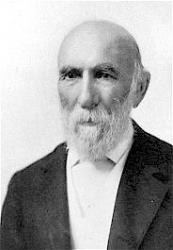
1850 - 1929 Person Name: Arthur H. Mann Topics: Holy Scriptures; Scriptures, The Holy Composer of "BERNO" in The Hymnal Arthur Henry ‘Daddy’ Mann MusB MusD United Kingdom 1850-1929. Born at Norwich, Norfolk, England, he graduated from New College, Oxford. He married Sarah Ransford, and they had five children: Sarah, Francis, Arthur, John, and Mary. Arthur died in infancy. Mann was a chorister and assistant organist at Norwich Cathedral, then, after short stints playing the organ at St Peter’s, Wolverhampton (1870-71); St. Michael’s Tettenhall Parish Church (1871-75); and Beverley Minster (1875-76); he became organist at King’s College Chapel, Cambridge (1876-1929), Cambridge University organist (1897-1929), and music master and organist at the Leys School, Cambridge (1894-1922). In addition to composing an oratorio and some hymn tunes, he was music editor of the Church of England Hymnal (1894). In 1918 he directed the music and first service of “Nine lessons & carols” at King’s College Chapel. He was an arranger, author, composer, and editor. His wife, Sarah, died in 1918. He died at Cambridge, England. John Perry

Matthias Loy

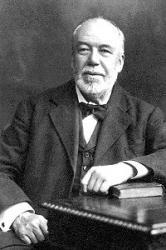
1828 - 1915 Topics: The Holy Scriptures Fall, Depravity, Guilt of Man Translator of "All Mankind Fell in Adam's Fall" in The Christian Hymnary Loy, M., President of the Capital University, Columbus, Ohio, contributed several original hymns, and translations from the German, to the Evangelical Lutheran Hymnal. Published by Order of the Evangelical Lutheran Joint Synod of Ohio and Other States. Columbus, Ohio, 1880. The translations may be found through the Index of Authors, &c.; the original hymns are the following:— 1. An awful mystery is here. Holy Communion. 2. At Jesus' feet our infant sweet. Holy Baptism. 3. Come, humble soul, receive the food. Holy Communion. 4. Give me, 0 Lord, a spirit lowly. Humility desired. 5. God gave His word to holy men. Inspiration of Holy Scripture. 6. God of grace, Whose word is sure. Faithfulness. 7. How matchless is our Saviour's grace. Holy Baptism. 8. I thank Thee, Saviour, for the grief. Lent. 9. Jesus took the lambs and blest them. Holy Baptism. 10. Jesus, Thou art mine for ever. Jesus, All and in All. 11. Launch out into the deep. Call to Duty. 12. Listen to those happy voices. Christmas. 13. O Great High Priest, forget not me. Confirmation. 14. O Lord, Who hast my place assigned. Daily Duties. 15. Our Shepherd of His ransomed flock. Holy Communion. 16. The gospel shows the Father's grace. Holy Scripture. 17. The law of God is good and wise. Holy Scripture. 18. Though angels bright escape our eight. St. Michael and All Angels. 19. When Rome had shrouded earth in night. The Reformation. 20. When souls draw near the holy wave. Confirmation. Several of these hymns, together with some of his translations, previously appeared in the Ohio Synod's preceding Collection of Hymns (3rd ed., 1858; 4th, 1863). --John Julian, Dictionary of Hymnology (1907) ==================== Loy, Matthias, D.D., p. 700, i. Dr. Loy was born in Cumberland County, Pennsylvania, March 17, 1828. He studied at the Evangelical Lutheran Theological Seminary at Columbus, Ohio, of which he became Professor of Theology in 1365. He was appointed President of the Capital University in 1880. --John Julian, Dictionary of Hymnology, Appendix, Part II (1907) ================== See also in: Wikipedia

Jacques Berthier

1923 - 1994 Person Name: Jacques Berthier 1923-1994s Topics: Canticles and Scripture Paraphrases; God the Holy Spirit; Holy Spirit gifts of; Light Paraphraser of "Come, holy spirit (Veni Sancte Spiritus)" in The Book of Praise Jacques Berthier (b. Auxerre, Burgundy, June 27, 1923; d. June 27, 1994) A son of musical parents, Berthier studied music at the Ecole Cesar Franck in Paris. From 1961 until his death he served as organist at St. Ignace Church, Paris. Although his published works include numerous compositions for organ, voice, and instruments, Berthier is best known as the composer of service music for the Taizé community near Cluny, Burgundy. Influenced by the French liturgist and church musician Joseph Gelineau, Berthier began writing songs for equal voices in 1955 for the services of the then nascent community of twenty brothers at Taizé. As the Taizé community grew, Berthier continued to compose most of the mini-hymns, canons, and various associated instrumental arrangements, which are now universally known as the Taizé repertoire. In the past two decades this repertoire has become widely used in North American church music in both Roman Catholic and Protestant traditions. Bert Polman

William Hammond

1719 - 1783 Person Name: William Hammond, 1719-1783 Topics: Scriptures The Holy Author of "Jesus, thy word is my delight" in Hymnal and Liturgies of the Moravian Church Hammond, William, B.A, born at Battle, Sussex, Jan. 6, 1719, and educated at St. John's College, Cambridge. In 1743 he joined the Calvinistic Methodists; and in 1745, the Moravian Brethren. He died in London, Aug. 19, 1783, and was buried in the Moravian burial-ground, Sloane Street, Chelsea. He left an Autobiography in Greek, which remains unpublished. His original hymns, together with his translations from the Latin, were published in his:— Psalms, Hymns, and Spiritual Songs. To which is prefix'd A Preface, giving some Account of a Weak Faith, and a Full Assurance of Faith; and briefly stating the Doctrine of Sanctification; and shewing a Christian's Completeness, Perfection, and Happiness in Christ. By William Hammond, A.B., late of St. John's College, Cambridge. London: Printed by W. Strahan; and sold by J. Oswald, at the Rose and Crown in the Poultry, mdccxlv. A few of his original hymns from scriptural fidelity and earnestness have attained to a foremost position amongst English hymns. These include, "Awake, and sing the song," and "Lord, we come before Thee now." His translations of Latin hymns were amongst the earliest published after those contained in the Primers and other devotional works of 16th and 17th centuries. They are of merit, and worthy of attention. Greater use might also be made of his original compositions. In addition to those named above, the following are also in common use:— 1. Brightness of the Father's Face. God the Son. 2. How great the Christian's portion is. Possession of All in Christ. 3. If Jesus is yours. God's unchangeable Love. 4. In Thine own appointed way. Divine Worship. 5. Jesus, Who died the [a] world to save. Easter. 6. Lord, if on earth the thought of Thee. Heaven anticipated. 1. Now with joint consent we sing. Divine Worship. 8. O Lord, how little do we know. Quinquagesima. 9. Would you win a soul to God ? The Gospel Message. --John Julian, Dictionary of Hymnology (1907)

Harold Horton

Topics: The Holy Scriptures Author of "Thy Words are Sweet" in Redemption Hymnal

Henry K. Oliver

1800 - 1885 Topics: Holy Scriptures Composer of "HARMONY GROVE" in Book of Worship with Hymns and Tunes Henry Kemble Oliver (b. Beverly, MA, 1800; d. Salem, MA, 1885) was educated at Harvard and Dartmouth. He taught in the public schools of Salem (1818-1842) and was superintendent of the Atlantic Cotton Mills in Lawrence, Massachusetts (1848-1858). His civic service included being mayor of Lawrence (1859­1861) and Salem (1877-1880), state treasurer (1861-1865), and organizer of the Massachusetts Bureau of Statistics and Labor (1867-1873). Oliver was organist at several churches, including Park Street Congregational Church in Boston, North Church in Salem, and the Unitarian Church in Lawrence. A founder of the Mozart Association and several choral societies in Salem, he published his hymn tunes in Hymn and Psalm Tunes (1860) and Original Hymn Tunes (1875). Bert Polman

Pages


Export as CSV
It looks like you are using an ad-blocker. Ad revenue helps keep us running. Please consider white-listing Hymnary.org or getting Hymnary Pro to eliminate ads entirely and help support Hymnary.org.