You help make Hymnary.org possible. More than 10 million people from 200+ countries found hymns, liturgical resources and encouragement on Hymnary.org in 2025, including you. Every visit affirms the global impact of this ministry.

If Hymnary has been meaningful to you this year, would you take a moment today to help sustain it? A gift of any size—paired with a note of encouragement if you wish—directly supports the server costs, research work and curation that keep this resource freely available to the world.

Give securely online today, or mail a check to:
Hymnary.org
Calvin University
3201 Burton Street SE
Grand Rapids, MI 49546

Thank you for your partnership, and may the hope of Advent fill your heart.

Person Results

Topics:works+of+god+
In:people

Planning worship? Check out our sister site, ZeteoSearch.org, for 20+ additional resources related to your search.
Showing 231 - 240 of 692Results Per Page: 102050

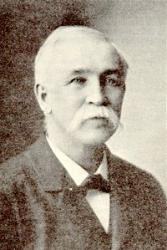
Theodore E. Perkins

1831 - 1912 Topics: Access to God; Adoration; Assurance Declared; Assurance Enjoyed; Character Value of Good; Christ Abiding with Believers; Christ Atonement of; Christ Grace and Love of; Christ Minstry of; Christ Power of; Christ Preciousness of; Christ Righteousness of; Christ The Saviour; Christ Worshiped; Christians Evangelists; Comfort in Trials; Consecration and Dedication; Contentment; Godly Fear Blessedness of; God Adored and Exalted; God Attributes of; God Compassion of ; God Goodness of; God Hearer of Prayer; God Justice of; God Love and Mercy; God Source of All Good; Gospel Freeness of ; Gospel Fulness of ; Gospel Gracious Fruit of; Gospel Prevalence and Power of; Gospel Privileges of; Love For God; Mercy of God Celebrated; Mercy of God Great; Praise By Men; Praise Calls to; Praise For Spiritual Blessings; Praise for temporal blessings; Praise For Works of Providence; Prayer confidence in; Prayer Promise to; Protection Only from God; Providence of God Over His Creatures; Royalty of Christ Providential; Salvation Promised; Salvation Thanksgiving for; Sincerity; Thanksgiving Declared; Truth; Waiting upon God Composer of "NAZARETH" in The Psalter Theodore E. Perkins was born at Poughkeepsie, on the Hudson, N.Y., July 21, 1831. His father was a Baptist clergyman. The family of ten brothers and sisters sang and played various instruments, forming among themselves both choir and orchestra. His musical education began at the early age of three years. During his father's pastorate at Hamilton, N. Y., the choir rehearsals were often held at the parsonage, and the leader used to place the three-year-old on a small stool, on the table around which the choir was assembled, giving him a chance to both see and hear. Later on he played the violincello in church, standing on a stool in order to finger the instrument. The home gatherings — especially on Thanksgiving Day, are the recollections among the happiest of his childhood. His father became pastor of the Berean Baptist Church in New York City, in 1839, giving him the opportunity of studying the pianoforte, of which he became a proficient player. His fine alto voice soon gave him notoriety. At the age of nineteen while filling a position as clerk in New York, all his spare time was given to the study of voice and piano. In 1851 he went to Hamilton, N. Y., taught music in Madison University (now Colgate), and in the Female Seminary. In 1854 he went to Port Jervis, N. Y., where he taught singing school, and April 30, 1855, married Mary Frances Caskey, who was for years his soprano soloist in many musical Festivals and Conventions. Soon after marriage he removed to Salem, N. J., where his lifework as singing school teacher really began, including Bridgeton and prominent towns in southern New Jersey. During the summer of 1856 he and his wife were pupils of the Normal Academy of Music at North Reading, Mass., conducted by Drs. Lowell Mason and Geo. F. Root. During 1856-1858 he was given the position of assistant teacher and manager. His association with these two great men gave an inspiration to all his future work. In 1859 he was co-principal with Wm. B. Bradbury at the Normal Academy of Music, Geneseo, N. Y. He remained at Geneseo until 1863. Professor Perkins also held very successful schools in North Pelham Province of Ontario, Canada, and in 1864-1868 was principal in schools at Tunkhannock and Meadville, Pa. In 1860, The Olive Branch, his first book of church music, was published by F. J. Huntington, New York City, the sales reaching 100,000. Next was Oriental, which sold over 30,000. The Union, Glees and Anthems, and Sabbath Anthems followed ; then The Sacred Lute, which sold over 300,000. His Sunday-school books commenced with The Evergreen, followed by the Shining Star and New Shining Star. Then came Psalm King, which was the last of the books published by Mr. Huntington. Hallowed Songs was published by Philip Phillips; The Sunday School Banner was published by Wm. B. Bradbury. The Royal Standard was published in Toronto, Canada. The Golden Promise, Sabbath Carols, The Mount Zion Collection were published under his own supervision. His Free Sunday School Songs several times numbered over 500,000 a month. Coronation Songs with Rev. Dr. Deems as hymn editor was published by A. S. Barnes Co., who also published Psalms and Hymns and Spiritual Songs, in which Dr. C. S. Robinson was hymn editor, who with Professor Perkins edited Calvary Songs, published by the American S. S. Union. Gospel Tent Songs was evangelical. The Safe-Guard Singer was his temperance book. Mr. Perkins was musical director in the following churches in Brooklyn: The Lafayette Avenue Presbyterian Church, Rev. Dr. Cuyler; Strong Place Baptist Church, Rev. E. E. L. Taylor, D. D.; Madison Avenue Baptist Church, Rev. H. G. Weston, D. D., L. L. D.; Fifth Avenue Presbyterian Church, Rev. Dr. Rice, followed by Dr. John Hall; The Memorial Presbyterian Church, Rev. Dr. C. S. Robinson, who was his close friend; The Church of the Holy Trinity, Rev. Dr. Tyng, Jr. ; Trinity Baptist Church, Rev. Dr. J. B. Simmons, and Washington Square M. E. Church. In Philadelphia: The Fifth Baptist Church, Rev. Dr. Chase; The Eleventh Baptist Church, Rev. Dr. Colman; The Tabernacle M. E. Church, Rev. George Gaul, D. D. He was leader and singer in Evangelistic Services, at the Rink, The Old Madison Square Garden and Cooper Union, all of New York City. The music of the first great meeting of the world's Evangelical Alliance, held for ten days in New York City, was under his direction, as was the first National Sunday School convention, held in Newark, N. J. He was also conductor at the Golden Anniversary of the Female Guardian Society, leading a chorus of forty-two hundred children. In the opening chorus, Great is the Lord, by Dr. Calcott, the word "Great" was given with so much decision and power that the clergymen on the platform sprang to their feet and remained standing until the chorus was finished. He taught voice culture in Princeton and Lafayette Universities, The Union Theological Seminary, New York City; Crozer Seminary, Chester, Pa., and organized the music department of Temple University, Philadelphia, continuing in charge four years. He had charge of the children's choir of Howard Mission, New York City, for twenty-five years, and thinks that some of the happiest and most restful of the working hours were spent in teaching the poor children of the fourth and sixth wards to sing the Gospel. Mr. Sankey said to Mr. Perkins that " Jesus of Nazareth was my banner song for eight years." Jesus is Mine has been sung at the Christian's death-bed, the grave, and once as the convict was going to the scaffold. His Christmas Carol Sweetly Carol had a very large sale in this country, and was republished in England, France, Italy, and Germany. For a period of forty years he has made the study of the voice special work. The most thorough investigations of the voice and its possibilities were made with the assistance of the late John Howard, extending over a period of twenty-five years, during which he has had the care of over two thousand voices. He published a work entitled, Physiological Yoice Culture, edited by his son, the late T. Edward Perkins, M. D., physician and throat specialist of Philadelphia. Mr. Perkins also completed a method of voice culture based on the principles of John Howard's Physiology of Artistic Singing." During these years of work he has found time to edit thirty-four books of church, Sunday-school, day-school, and glee music, the larger portion having been previously mentioned. Also songs and ballads in sheet form, and a cantata entitled, The Excursion, libretto by Fanny Crosby, with whom there has existed an unbroken friendship for over forty years. -Biography of Gospel Song and hymn Writers

Jeffery W. Rowthorn

1934 - 2025 Person Name: Jeffery Rowthorn Topics: God Nature of God; Creation; Family; God Creator; God Images; God Love; God Name; God Nature; God Power/Might; God Presence; God Works; Grace; Healing; Mystery; Peace (World); Praise; Providence; Psalter/Psalm Paraphrases; Social Concerns; Space; Stewardship; Sun; Trinity; Union With God/Christ; Unity; Water; Proper 11 Year A; Proper 25 Year A; All Saints Year A; Advent 1 Year B; Easter 5 Year C; Proper 18 Year C Author of "Creating God, Your Fingers Trace" in Voices United

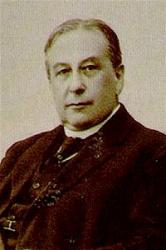
Frank Mason North

1850 - 1935 Person Name: Frank Mason North, 1860-1935 Topics: City / City of God; Grace; Gratitude; Jesus Christ Healer and Teacher; One Life in Christ Mission; Recessionals; Social Concerns / Social Justice; Tears / Weeping; Water; Work Author of "Where cross the crowded ways of life" in The Book of Praise North, Frank Mason, D.D., b. at New York, Dec. 3, 1850, graduated at Wesleyan University 1872, and entered the ministry of the Methodist Episcopal Church 1872. In 1892 he became Correspondence Secretary of the New York City Church Extension and Missionary Society, and is now (1905) editor of The Christian City. His hymns in common use include:— 1. Jesus, the calm that fills my breast. [Peace.] In The Plymouth Hymnal,1894; Sursum Corda, 1898; The Methodist Hymnal, 1905, &c. 2. When cross the crowded ways of life. [City Missions.] In The Methodist Hymnal, 1905. [Rev. L. F. Benson, D.D.] --John Julian, Dictionary of Hymnology, New Supplement (1907) ================= North, Frank Mason, D.D. (December 3, 1850--December 17, 1935). The Appendix Index reference, p.1607 in Julian, to Dr. North is to John Post Attwater who used "Frank North" as his nom de plume. In addition to the information included in the short biographical sketch at p.1677 it should be added that Dr. North continued his studies at Wesleyan University, advancing to the M.A. degree in 1875, later being honored by that institution's D.D., 1894, and L.L.D., 1918. He was a member of the New York East Conference of the Methodist Episcopal Church and served several pastorates in New York State and City as well as one at Middletown, Connecticut, 1887-1892. During the years 1892-1912, while Corresponding Secretary of the New York City Extension and Missionary Society and the editor of The Christian City, he was also Corresponding Secretary of the National City Evangelical Union of the Methodist Episcopal Church. From 1912 to 1924 he was the Secretary of the Board of Foreign Missions of his church and through these years he served as Chairman of its Executive Committee. He was also Secretary, Chairman of the Executive Committee, and President of the Federal Council of the Churches of Christ in America. It was largely through his efforts and influence that the Federal Council was organized. Trustee and member of governing boards of numerous institutions in the United States, China, and Japan, among the additional honors which came to him were Chevalier Legion of Honor and "Officer de l'Instruction Publique," France; Officer of the Royal Order of George I, Greece. He was one of the great Protestant leaders of his generation. The leading article in The Hymn, 30 April 1950, was an excellent appreciation of Dr. North and his work. Sources: Handbooks of various hymnals; Who Was Who I; Foote, Henry Wilder, Three Centuries of American Hymnody; Ninde, Edward S., Story of the American Hymn; Bailey, ALbert E., The Gospel in Hymns; Pratt, John Barnes, Present Day Hymns; correspondence. --Robert G. McCutchan, DNAH Archives

Simon Browne

1680 - 1732 Person Name: Browne Topics: The Works of God Celebrated Author of "Great First of beings, mighty Lord" in A Selection of Sacred Poetry Simon Browne was born at Shepton Mallet, Somersetshire, about 1680. He began to preach as an "Independent" before he was twenty years of age, and was soon after settled at Portsmouth. In 1716, he became pastor in London. In 1723, he met with some misfortunes, which preyed upon his mind, and produced that singular case of monomania, recorded in the text-books of Mental Philosophy; he thought that God had "annihilated in him the thinking substance, and utterly divested him of consciousness." "Notwithstanding," says Toplady, "instead of having no soul, he wrote, reasoned, and prayed as if he had two." He died in 1732. His publications number twenty-three, of which some are still in repute. --Annotations of the Hymnal, Charles Hutchins, M.A., 1872. ================== Browne, Simon. A contemporary of Dr. Watts, born at Shepton Mallet, Somersetshire, cir. 1680, and died in 1732. After studying for the Independent Ministry under the Rev. John Moore, of Bridgewater, he became pastor of an Independent charge in Portsmouth, and then, in 1716, of the Independent-Chapel in Old Jewry, London. His lateryears were clouded by a peculiar malady, under the influence of which "he imagined that God had in a gradual manner annihilated in him the thinking substance, and utterly divested him of consciousness." It is supposed that the death of a highwayman at his hands during a violent struggle, followed by that of his wife and son a short time after, had much to do in producing this sad result. Whilst thus contending that he had no power to think, he produced a work in defence of Christianity, another in defence of the Trinity, a third as an Exposition of the 1st Epistle to the Corinthians, and a fourth in the form of a Dictionary. His publications number over 20. Of these works, he is known to hymnology through his:— Hymns and Spiritual Songs, in Three Books, designed as a Supplement to Dr. Watts, &c, 1720, 2nd edition 1741, 3rd edition 1760. It contains 166 hymns, 7 doxologies, and a Preface of some historical interest. In the old collections Simon Browne's hymns (all of which are from the above collection) held a prominent position, but in modern hymnals they are fast passing out of use. The best known and most widely used are "Come, Holy [gracious] Spirit, Heavenly Dove," "O God, on Thee we all depend," and "Lord, at Thy feet we sinners lie." In addition the following are also in common use:— 1. Eternal God, Almighty Cause. Unity of God. 2. Eternal God, of beings First. God all in all . 3. Frequent the day of God returns. Sunday. 4. Great First of beings, Mighty Lord. Creation. 5. Great God, my joyful thanks to Thee. Thanksgiving. 6. Great God, Thy peerless excellence. Imitation of God. 7. Great Lord of earth and seas and skies. Providence. 8. Great Ruler of the earth and sky. Providence. 9. Hail, Holy Spirit, bright, immortal, Dove. Whitsuntide. 10. Hail, happy day, the [thou] day of holy rest. Sunday. 11. I cannot shun the stroke of death. Death. 12. Lord, Thou art good; all nature shows. Divine Goodness. 13. Lord, what a feeble frame is ours. Frailty of Life. 14. O God, on Thee we all depend. Confidence in God. -- John Julian, Dictionary of Hymnology (1907)

William H. Walter

1825 - 1893 Person Name: William Henry Walter (1825-1893) Topics: Jesus Christ His Atoning Work; Christ Lamb of God; Family Worship; Imputation of Sin Composer of "FESTAL SONG" in Trinity Hymnal (Rev. ed.)

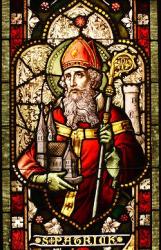
Saint Patrick

372 - 466 Person Name: St. Patrick, 372-466 Topics: Christ, the Lord Jesus Presence of; God: His Being, Word and Works God the Trinity; Vows Author of "I bind unto myself today" in The Book of Praise Patrick, St., the 2nd Bishop and Patron Saint of Ireland, was the son of Calpurnius, a deacon, and grandson of Potitus, a presbyter, and great grandson of Odissus, a deacon, was born most probably near Dumbarton, in North Britain, in 372. According to his epistle to Coroticus, his father was also a decurio, a member of the local town council, and a Roman by descent. Hence probably the name Patricius. St. Patrick alludes in Coroticus, § 5, to his having been originally a freeman, and of noble birth. His birthplace is termed in his Confession, § 1, Bannavem Taberniæ. Some have identified that place with Boulogne-sur-Mer, in France. His mother's name was Concessa, said to have been sister of St. Martin of Tours. According to Tirechan's Collections (circa A.D. 690), Patrick had four names—-(1) Magonus, which Tirechan explains by clarus, illustrious; (2) Sucat (Succetus), god of war, or brave in war, said to have been his baptismal name; (3) Patricius; and (4) Cothraige (Cothrighe), given because he had been a slave to four masters. At the age of 16 he was carried off with many others to Ireland, and sold as a slave. There he remained six years with Milcho, or Miliuc. He was engaged in feeding cattle (pecora), though the later writers say that he fed swine. In his captivity he became acquainted with the Irish language. His misfortunes were the means of leading him to Christ, and be devoted himself to prayer, and often frequented, for that purpose, the woods on Mount Slemish. Having escaped after six years, he spent some years with his parents, and then was stirred up, when still a youth (puer), to devote himself to the evangelisation of Ireland. According to Secundinus's Hymn (St. Sechnall), which is probably not much later than the age of St. Patrick himself, the saint received his apostleship "from God," like St. Paul. No reference is made in that hymn, or in the later so-called Hymn of St. Fiacc, to any commission received from Pope Celestine, as is asserted by later writers. St. Patrick does not in his own writings allude to the external source whence he obtained ordination, and, as he speaks of his Roman descent, it would be strange for him not to have mentioned his Roman consecration, if it had been a fact. From some “sayings" of his, preserved on a separate page of the Book of Armagh, it is probable that he travelled through Gaul and Italy, and that he was ordained in Gaul as deacon, priest, and, afterwards, as bishop. He was probably a bishop when he commenced his missionary labours in Ireland. There were, however, Christians in Ireland before that period. Palladius, the senior Patrick, who preceded our saint by a few years, was, according to the chronicle of Prosper (the secretary of Pope Celestine), "ordained and sent to the Scots (the Irish) believing in Christ, by Pope Celestine, as their first bishop." Palladius's mission was a failure, while that of the second Patrick, which was quite independent of the former, was successful in a high degree. Its success, however, has been greatly exaggerated; for St. Patrick, in the close of his Confession, or autobiography, written in old age, speaks of the high probability of his having to lay down his life as a martyr for Christ. The date of St. Patrick's mission is not certain, but the internal evidence of his writings indicate that it was most probably about A.D. 425. The day and month of his death (March 17), but not the year [466] is mentioned in the Book of Armagh. St. Patrick's claim to a record in this Dictionary is associated with the celebrated hymn or “Breastplate," a history of which we now subjoin. 1. St. Patrick's Irish Hymn is referred to in Tirechan's Collections (A.D. 690). It was directed to be sung in "all monasteries and churches through the whole of Ireland," "canticum ejus scotticum semper canere," which is a proof that it was at that time universally acknowledged to be his composition. That regulation was very naturally lost sight of when the old Celtic Church lapsed into the Roman, (a) The expressions used in the hymn correspond entirely with the circumstances under which St. Patrick visited Tara. (b) Moreover, although all the ancient biographies of St. Patrick (with the exception of his own Confession, and of Secundinus's Hymn) speak of him as a worker of miracles, and as having performed miracles at Tara, there is no trace of such a fact in St. Patrick's Hymn, (c) Further, the phrase, "creator of doom," which twice occurs in it, according to the most approved translation, curiously corresponds with another fact that, "my God's doom," or “the doom," or "judgment of my God," was, according to the ancient biographies, one of St. Patrick's favourite expressions. 2. The first notice of the existence at the present time of an ancient manuscript copy of St. Patrick's "Hymn or Breastplate," was made known by the late Dr. Petrie in his Memoir of Tara, published in the Transactions of the Royal Irish Academy, 1839, vol. xviii. Dr. Petrie gave the original in Irish characters, an interlineary Latin version and an English translation by himself, together with copious notes. Dr. Petrie found the original in the Liber Hymnorum, in the Library of Trinity College, Dublin (iv. E. 4, 2, fol. 19 b). “The tradition respecting its primary use by the saint is that he recited it on Easter Sunday, when proceeding to encounter the droidical fire-worshippers, with their pagan king, Laoghaire, and his court, at Tara, the royal residence." (Lyra Hibernica Sacra, 1878, p. 2.) 3. Dr. Todd in his work, S. Patrick, Apostle of Ireland, 1864, gives a metrical rendering of the “Breastplate” which begins:— "I bind to myself today, The strong power of an invocation of the Trinity, The faith of the Trinity in Unity, The Creator of the elements." The translation, which extends to 78 lines, was mainly the work of Dr. Whitley Stokes. A more correct version by the same scholar is given in the Rolls's edition of the Tripartite Life, 1887; and that revised version, with a few modifications, accompanied with critical notes, explanatory of the alterations made on the former version, is given in the 2nd and 3rd editions of the Writings of St. Patrick, by Dr. V. H. H. Wright. Dr. Whitley Stokes, therefore, is to be regarded as the real translator from the original Irish. Dr. Petrie's translation, though highly meritorious as a first attempt, has been proved in many particulars to be erroneous. There is no mention of Tara in the hymn. An uncertainty yet exists as to the meaning of a few words. 4. In Dr. W. MacIlwaine's Lyra Hibernica Sacra, 1878, Dr. Todd's translation was repeated (with notes), together with a second translation by James Clarence Mangan, the opening lines of which are:— "At Tara to-day, in this awful hour, I call on the Holy Trinity! Glory to Him Who reigneth in power, The God of the elements, Father, and Son, And Paraclete Spirit, which Three are the One, The everlasting Divinity." 5. A popular version of the hymn for congregational use was written by Mrs. Cecil F. Alexander, for St. Patrick's Day, 1889, and sung generally throughout Ireland on that day. The opening lines are:— "I bind unto myself to-day The strong Name of the Trinity, By invocation of the same, The Three in One and One in Three. ”I bind this day to me for ever, By power of faith, Christ's Incarnation; His baptism in Jordan river; His death on Cross for my salvation; His bursting from the spiced tomb; His riding up the heav'nly way; His coming at the day of doom; I bind unto myself to-day." Mrs. Alexander's version is given, along with that of James Clarence Mangan, in the Appendix to the Writinqs of St. Patrick, edited by Dr. C. H. H. Wright (R.T.S.), 1889. 6. Another metrical version of this hymn was given in the Irish Ecclesiastical Gazette for April 5, 1889. It is by Joseph John Murphy, and the opening lines are:— "I bind as armour on my breast The Threefold Name whereon I call, Of Father, Son, and Spirit blest, The Maker and the Judge of all." 7. The translation in Stokes and Wright's edition of St. Patrick's writings was set to music as a cantata by Sir R. Stewart, and was performed for the first time in St. Patrick's Cathedral, Dublin, on St. Patrick's Day, 1888. 8. Mr. Thomas French, Assistant Librarian of Trinity College, Dublin, writes as follows respecting this hymn:— "The manuscript called the 'Liber Hymnorum' belonged to Archbishop Ussher, and forms one of the volumes of the Ussher Collection now in the Library of Trinity College, Dublin. There is no interlineary Latin translation in the original. It was given by Petrie in his account of the hymn 'for the satisfaction of the learned’ [The St. Patrick authorship is tradition only, so far as I know.] Dr. Todd in his S. Patrick, Apostle of Ireland, p. 426, says ‘It is undoubtedly of great antiquity, although it may now be difficult, if not impossible, to adduce proof in support of the tradition that St. Patrick was its author.'...... Petrie and Todd make the age of the manuscript 9th or 10th century, Whitley Stokes 11th or 12th." We may add that St. Patrick's Latin works were published by Sir James Ware, 1656, in the Acta Sanctorum of the Bollandist Fathers, 1668, by Villanueva, 1835, and by others, as B. S. Nicholson, 1868, Miss Cusack, 1871, and, above all, by Dr. Whitley Stokes, in the Rolls' Edition of the Tripartite Life, 1887. The latter three works contain also translations. Translations of the whole, or a portion of St. Patrick's writings, have been published by Rev. T. Olden, 1876; Sir S. Ferguson, LL.D. Transactions of Royal Irish Academy, 1885, and more completely in the Writings of St. Patrick, edited by Prof. G. T. Stokes and Dr. C. H. H. Wright, 1st ed. 1887, 2nd ed. 1888, 3rd ed., edited, with notes critical and historical, and an introduction by Dr. C. H. H. Wright revised and enlarged. London: Religious Tract Society, 1889. [Rev. Charles H. H. Wright, D.D., Ph.D.] --John Julian, Dictionary of Hymnology (1907) ==================== Patrick, St., p. 885, ii. (l) In the Oxford University Herald of April 6, 1889, is an anonymous paraphrase in 7 stanzas of 4 lines of a portion of "St. Patrick's Hymn," beginning- "Father, Son, and Holy Ghost! May Thine overshadowing might Be as armour to my soul, Be my weapon in the fight." (2) Note concerning § 3, on p. 885, i., that Dr., W. Stokes's translation appeared in its original form in the Saturday Review, Sept. 5, 1857. In his Goidilica, Calcutta, 1866, p. 66, in an altered form to that of 1857 and 1864. --John Julian, Dictionary of Hymnology, Appendix, Part II (1907)

Johann Heermann

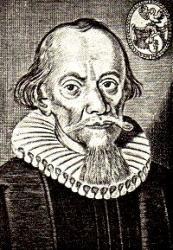
1585 - 1647 Person Name: Johann Heermann, 1585-1649 Topics: Duty; Ministry Work of; Service of God Author of "Lord, grant Thy servants grace" in Hymnal and Liturgies of the Moravian Church Johann Heermann's (b. Raudten, Silesia, Austria, 1585; d. Lissa, Posen [now Poland], 1647) own suffering and family tragedy led him to meditate on Christ's undeserved suffering. The only surviving child of a poor furrier and his wife, Heermann fulfilled his mother's vow at his birth that, if he lived, he would become a pastor. Initially a teacher, Heermann became a minister in the Lutheran Church in Koben in 1611 but had to stop preaching in 1634 due to a severe throat infection. He retired in 1638. Much of his ministry took place during the Thirty Years' War. At times he had to flee for his life and on several occasions lost all his possessions. Although Heermann wrote many of his hymns and poems during these devastating times, his personal faith and trust in God continued to be reflected in his lyrics. He is judged to be the finest hymn writer in the era between Martin Luther and Paul Gerhardt, one whose work marks a transition from the objective hymns of the Reformation to the more subjective hymns of the seventeenth century. His hymn texts were published in collections such as Devoti Musica Cordis, Hauss- und Hertz-Musica (1630, expanded in 1636, 1644), and Sontags- und Fest-evangelia (1636). Bert Polman =================== Heermann, Johann, son of Johannes Heermann, furrier at Baudten, near Wohlau, Silesia, was born at Baudten, Oct. 11, 1585. He was the fifth but only surviving child of his parents, and during a severe illness in his childhood his mother vowed that if he recovered she would educate him for the ministry, even though she had to beg the necessary money. He passed through the schools at Wohlau; at Fraustadt (where he lived in the house of Valerius Herberger, q. v., who took a great interest in him); the St. Elizabeth gymnasium at Breslau; and the gymnasium at Brieg. At Easter, 1609, he accompanied two young noblemen (sons of Baron Wenzel von Rothkirch), to whom he had been tutor at Brieg, to the University of Strassburg; but an affection of the eyes caused him to return to Baudten in 1610. At the recommendation of Baron Wenzel he was appointed diaconus of Koben, a small town on the Oder, not far from Baudten, and entered on his duties on Ascension Day, 1611, and on St. Martin's Day, 1611, was promoted to the pastorate there. After 1623 he suffered much from an affection of the throat, which compelled him to cease preaching in 1634, his place being supplied by assistants. In October, 1638, he retired to Lissa in Posen, and died there on Septuagesima Sunday (Feb. 17), 1647. (Koch, iii. 16-36; Allgemeine Deutsche Biographie, xi. 247-249, &c.) Much of Heermann's manhood was spent amid the distressing scenes of the Thirty Years' War; and by his own ill health and his domestic trials he was trained to write his beautiful hymns of “Cross and Consolation." Between 1629 and 1634, Koben was plundered four times by the Lichtenstein dragoons and the rough hordes under Wallenstein sent into Silesia by the King of Austria in order to bring about the Counter-Reformation and restore the Roman Catholic faith and practice; while in 1616 the town was devastated by fire, and in 1631 by pestilence. In these troublous years Heermann several times lost all his moveables; once he had to keep away from Koben for seventeen weeks; twice he was nearly sabred; and once, while crossing the Oder in a frail boat loaded almost to sinking, he heard the bullets of the pursuing soldiers whistle just over his head. He bore all with courage and patience, and he and his were wonderfully preserved from death and dishonour. He was thus well grounded in the school of affliction, and in his House and Heart Music some of his finest hymns are in the section entitled "Songs of Tears. In the time of the persecution and distress of pious Christians." As a hymnwriter Heermann ranks with the beat of his century, some indeed regarding him as second only to Gerhardt. He had begun writing Latin poems about 1605, and was crowned as a poet at Brieg on Oct. 8, 1608. He marks the transition from the objective standpoint of the hymnwriters of the Reformation period to the more subjective and experimental school that followed him. His hymns are distinguished by depth and tenderness of feeling; by firm faith and confidence in face of trial; by deep love to Christ, and humble submission to the will of God. Many of them became at once popular, passed into the hymnbooks, and still hold their place among the classics of German hymnody. They appeared principally in— (1) Devoti Musica Cordis. Hauss-und Hertz-Musica &c. Leipzig and Breslau, 1630, with 49 hymns (2nd edition 1636, with 64; 3rd edition 1644, with 69). The first section is entitled "Hymns of Penitence and Consolation from the words of the Ancient Fathers of the Church." Seven of these, however, have no mention in their individual titles of the sources from which they are derived; and the remainder are mostly based not on Latin hymns, but on the prose meditations in Martin Moller's Meditationes sanctorum patrum, or on the mediaeval compilations known as the Meditationes and the Manuale of St. Augustine. (2) Sontags-und Fest-Evangelia. Leipzig and Breslau, 1636, being hymns on the Gospels for Sundays and festivals. (3) Poetische Erquickstunden, Nürnberg, 1656; and its Fernere Fortsetzung, also Nürnberg, 1656 [both in Wernigerode], are poems rather than hymns. The hymns of the Hauss-und Hertz-Musica, with a representative selection from Heermann's other poetical works, were edited by C. E. P. Wackernagel, prefaced by a long biographical and critical introduction, and published at Stuttgart, 1855. Six of the most important of Heermann's hymns are annotated under their respective first lines. The other hymns by Heermann which have passed into English are :— I. Hymns in English common use:-- i. 0 Jesu, du mein Bräutigam. Holy Communion. In his Devoti Musica Cordis, Breslau, 1630, p. 78, in 12 stanzas of 4 lines. Thence in Mützell, 1858, No. 34, in Wackernagel's ed. of his Geistliche Lieder, No. 22, and the Unverfälschter Liedersegen, 1851, No. 283. Seems to be founded on Meditation xi. in the mediaeval compilation known as St. Augustine's Manuale. Translated as:— 0 Jesu, Lord, who once for me, a good translation of stanzas i., ii., iv., v., viii., by A. T. Russell, as No. 158 in his Psalms & Hymns, 1851. Other translations are: (l) 0 Jesu! Bridegroom of my Soul," by J. C. Jacobi, 1722, p. 44 (1732, p. 73). (2) "Dear Saviour, who for me hast borne," by Miss Dunn, 1857. ii. Rett, 0 Herr Jesu, rett dein Ehr. In Time of Trouble. A prayer for deliverance and peace for the Church. In his Devoti Musica Cordis, 1630, p. 119, in 5 stanzas of 4 lines, among the "Songs of Tears." Thence in Mützell, 1858, No. 48, in Wackernagel’s ed., No. 36, and the Unverfälschter Liedersegen, 1851, No. 245. Translated as:— Thine honour rescue, righteous Lord, in full, by Dr. M. Loy, in the Ohio Lutheran Hymnal, 1880. iii. Treuer Wächter Israel. In Time of War. 1630, p. 115, in 13 stanzas of 7 lines, among the "Songs of Tears." In Mützell, 1858, No. 47; in Wackernagel's edition, No. 35, and the Unverfälschter Liedersegen, 1851, No. 594. Lauxmann, in Koch, viii. 549, says of it:— "It is a powerful hymn filled with that prevailing prayer that takes heaven by force," and relates of st. vii.,11. v-7, "Eine Mauer um uns bau," that on Jan. 6, 1814, the Allied Forces were about to enter Schleswig. A poor widow with her daughter and grandson lived in a little house near the entrance of the town. The grandson was reading in his hymnbook those in time of war, and when he came to this said, “It would be a good thing, grandmother, if our Lord God would build a wall around us." Next day all through the town cries of distress were heard, but all was still before their door. On the following morning they had courage to open the door, and lo a snowdrift concealed them from the view of the enemy. On this incident Clemens Brentano composed a beautiful poem "Draus vor Schleswig." It is translated as:— Jesu! as a Saviour, aid. A good tr. of st; vii., viii., xiii., by A. T. Russell, as No. 138 in his Psalms & Hymns, 1851. iv. Zionklagt mit Angst und Schmerzen. Church of Christ. First published in his Devoti Musica Cordis, 2nd ed., 1636 (1644, p. 196), in 6 stanzas of 8 lines, entitled, "From the beautiful golden saying of Isaiah, Chapter xlix." In Mützell, 1858, No. 101, in Wackernagel’s ed., No. 53, and the Unverfälschter Liedersegen, 1851, No. 256. Translated as:— Sion bow'd with anguish weepeth A good translation of stanzas i., iii., v., by A. T. Russell, as No. 141 in his Psalms & Hymns, 1851. Another translation is: "Zion mourns in fear and anguish," by Miss Winkworth, 1869, p. 198. II. Hymns not in English common use:-- v. Ach Jesu! dessen Treu. Love to Christ. 1630, p. 144, in 33 stanzas. One of his finest hymns, full of deep love to Christ, but from its great length very little used in Germany. Translated as, "Ah! Jesus! Lord! whose faithfulness," by Miss Burlingham, in the British Herald, May, 1867, p. 72. vi. Der Tod klopft bei mir an. For the Dying. 1656, p. 22, in 121. Translated as, "That Death is at my door," by Miss Winkworth, 1869, p. 201. vii. Du weinest für Jerusalem. Christ weeping over Jerusalem. 1630, p. 81, in 6 stanzas, entitled, "On the Tears of Christ." Founded on St. Luke xix. 41-44, part of the Gospel for the 10 Sundays after Trinity. The translations are: (1) "With tears o'er lost Jerusalem," by Miss Cox, 1841, p. 159. (2) "Our Lord wept o'er Jerusalem," by Dr. H. Mills, 1845 (1856, p. 295). (3) "Thou weepest o'er Jerusalem," by Miss Winkworth, 1855,p. 70. viii. Herr Jesu Christe mein getreuer Hirte. Holy Communion. 1630, p. 74, in 9 stanzas, founded on M. Moller's Meditationes sanctorum patrum, pt. i. c. 11, and pt. v. c. 2. The translations are: (1) "Dear Saviour, Thou my faithful Shepherd, come” by Miss Dunn, 1857, p. 111. (2) "Lord Jesus Christ, my faithful Shepherd, hear," by Miss Winkworth, 1858, p. 93, repeated in Lyra Eucharistica, 1863-64. ix. Herr unser Gott, lass nicht zu Schanden werden. Christ's Church. 1630, p. 114, as one of the "Songs of Tears," in 5 stanzas. Translated as, "Ah! Lord our God, let them not be confounded," by Miss Winkworth, 1869, p. 197. x. Hilf mir, mein Oott, hilf dass nach dir. Christian Conduct. 1630, p. 32, in 7 stanzas, entitled, "For a better life. From the words of Augustine." Founded on No. i. of the Meditationes current under the name of St. Augustine. This meditation is apparently by St. Anselm of Canterbury. Translated as, "Lord, raise in me a constant Flame," by J. C. Jacobi, 1725, p. 27 (1732, p. 105). xi. Jesu, der du tausend Schmerzen. In Sickness. 1656, in the Fernere Fortsetzung, p. 79, in 12 lines, entitled, "In great bodily pain." Translated as, “Jesu, who didst stoop to prove," by Miss Winkworth, 1869, p. 200. xii. Jesu Tilger meiner Sünden. Lent. 1656, in the Fernere Fortsetzung, p. 1, in 10 lines, entitled, "For Victory in Temptation." Translated as, "Jesu, Victor over sin," by Miss Winkworth, 1869, p. 201. xiii. 0 Jesu, Jesu, Gottes Sohn. Love to Christ, 1630, p. 83, in 7 stanzas, entitled, “Of the Love, which a Christian heart bears to Christ, and will still bear." A beautiful expansion of his motto "Mihi omnia Jesus." The translations are: (1) "What causes me to mourn is this," a translation of stanza ii. by P. H. Molther, as No. 371, in the Moravian Hymn Book, 1789 (1886, No. 461). (2) "O Jesus, Jesus, Son of God," by Miss Burlingham, in the British Herald, Oct. 1865, p. 153, and in Reid's Praise Book, 1872. xiv. Treuer Gott ich muss dir klagen. In Trouble. 1630, p. 103, in 12 stanzas, entitled, "Hymn of a sorrowful heart for increase of faith." Translated as, "Faithful God! I lay before Thee," by J. C. Jacobi, 1720, p. 9(1722, p. 70; 1732, p. 117), and as No. 538 in pt. i. of the Moravian Hymn Book, 1754. xv. Wollt ihr euch nicht, o ihr frommen Christen. Second Advent. 1636, p. 210, in 9 stanzas, entitled, "On the day of the Holy Bishop Nicolaus. Gospel of Luke, 12 Chapter." Translated as: (l) "0 dear Christians, as 'tis needful, wou'd ye," as No. 153 in pt. i. of the Moravian Hymn Book, 1754. (2) “Help us, 0 Christ, to watch and pray," a tr. of st. ix. as st. iii. of No. 868 in the Moravian Hymn Book, 1789 (1849, No. 1221). xvi. Wo soll ich fliehen hin. Lent. 1630, p. 20, in 11 stanzas, entitled, "A hymn of consolation in which a troubled heart lays all its sins in true faith upon Christ. From Tauler." Based on M. Moller's Meditationes, vol. i. pt. i., No. 10. Translated as, "0 whither shall I fly," as No. 447 in pt. i. of the Moravian Hymn Book, 1754. In 1886, No. 279, it begins with "0 Jesus, source of Grace" (stanza ii.). [Rev. James Mearns, M.A.] --John Julian, Dictionary of Hymnology (1907)

George Croly

1780 - 1860 Person Name: George Croly, 1780-1860 Topics: Christ, the Lord Jesus Teacher; Doubt; God: His Being, Word and Works God the Holy Spirit: His Person and Work; Heart Surrendered; Holy Spirit Descent of; Holy Spirit Prayers to; Holy Spirit Teacher Author of "Spirit of God, descend" in The Book of Praise Croly, George, LL.D., born in Dublin, Aug. 17, 1780, and educated at the Dublin University (M.A. 1804, LL.D. 1831). After taking Holy Orders, he laboured in Ireland till about 1810, when he took up his residence in London, and devoted himself to literature. In 1835 he succeeded to the united benefices of St. Stephen's, Walbrook, and St. Benet Sherehog, retaining the same till his death, which occurred suddenly in the public street, Holborn, Nov. 24, 1860. His prose publications, in addition to contributions to Blackwood's Magazine, were numerous, and dealt with biographical, historical, and scriptural subjects. His hymns were given in his— Psalms and Hymns for Public Worship. Written and compiled by the Rev. George Croly, LL.D. London Kendrick, 1854. This collection contained 25 psalms, 50 hymns, and 6 poems. Of these 10 psalms, 12 hymns, and the 6 poems bear Dr. Croly's initial. The following have come into common use mainly through Windle's Collection:— 1. Be still, be still, impatient soul. Patience. 2. Behold me, Lord, and if thou find. Lent. 3. Lift up your heads, ye gates of light. Ascension. 4. Lord, who hast sought us out, unsought. Public Worship. 5. Teach us, O Lord, this day. Sunday. 6. Thou, Lord of mercy and of might. Lent. All these date from 1854, with the exception of No. 6, which appeared in his Scenes from Scripture and other Poems, 1851. -- John Julian, Dictionary of Hymnology (1907)

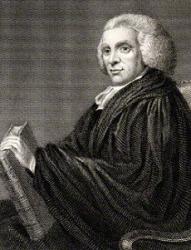
William Jones

1726 - 1800 Person Name: William Jones, 1726-1800 Topics: God Love and Grace of; God: His Being, Word and Works God the Son: His Coming in Power Composer of "NEWINGTON" in The Book of Praise Born: Ju­ly 30, 1726, Lo­wick, North­amp­ton­shire, Eng­land. Died: Jan­u­ary 6, 1800, Hol­ling­bourne, Kent, Eng­land. Pseudonym: Jones of Nay­land. Jones was ed­u­cat­ed at Char­ter­house and Un­i­ver­si­ty Coll­ege, Ox­ford. He be­came Vi­car of Beth­ers­den, Kent (1764); Pluck­ley, Kent; and Pas­ton, North­amp­ton­shire; per­pe­tu­al Cur­ate of Nay­land, Suf­folk (1777); and Rec­tor of Hol­ling­bourne, Kent (1798). He be­came a Fel­low of the Roy­al So­ci­e­ty in 1775. His works in­clude: The Ca­tho­lic Doc­trine of the Trin­i­ty, 1756 Fairchild Dis­cours­es, 1775 Physiological Dis­qui­si­tions, 1781 A Treatise on the Art of Mu­sic, 1784 Church Piec­es for the Or­gan with Four An­thems in Score, 1789 Jones was a de­scend­ant of the Col. J. Jones, who was one of the sig­na­tor­ies to the death war­rant of King Charles I of Eng­land. He used to reg­u­lar­ly ob­serve Jan­u­a­ry 30 as a day of fast­ing and hu­mil­i­a­tion for his an­ces­tor’s sin. Music: ST. STEPHEN --www.hymntime.com/tch/

Franz Xaver Gruber

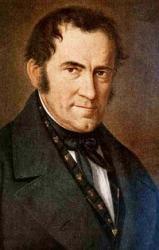
1787 - 1863 Person Name: Franz Gruber, 1787 - 1863 Topics: Christ, the Lord Jesus Divinity of; God: His Being, Word and Works God the Son: His Nativity: Christmas Composer of "STILLE NACHT" in The Book of Praise Franz Xaver Gruber (1787-1863) was born into a linen weaver's family and studied violin and organ even though his father wanted him to work in the family business. In addition to serving as parish organist for St. Nicholas Church in Obendorf, he taught school in nearby Arnsdorf (1807-1829) and Berndorf (1829-1833). He spent the balance of his career as organist and choir director in Hallein, where he founded the famous Hallein Choral Society. Bert Polman

Pages


Export as CSV
It looks like you are using an ad-blocker. Ad revenue helps keep us running. Please consider white-listing Hymnary.org or getting Hymnary Pro to eliminate ads entirely and help support Hymnary.org.