You help make Hymnary.org possible. More than 10 million people from 200+ countries found hymns, liturgical resources and encouragement on Hymnary.org in 2025, including you. Every visit affirms the global impact of this ministry.

If Hymnary has been meaningful to you this year, would you take a moment today to help sustain it? A gift of any size—paired with a note of encouragement if you wish—directly supports the server costs, research work and curation that keep this resource freely available to the world.

Give securely online today, or mail a check to:
Hymnary.org
Calvin University
3201 Burton Street SE
Grand Rapids, MI 49546

Thank you for your partnership, and may the hope of Advent fill your heart.

Person Results

Topics:the+holy+scriptures
In:people

Planning worship? Check out our sister site, ZeteoSearch.org, for 20+ additional resources related to your search.
Showing 241 - 250 of 313Results Per Page: 102050

Frank Leroy Cross

1904 - 2004 Person Name: F. Cross Topics: The Holy Scriptures Author of "Go forth, strong word of God" in Churches of Christ Hymn Book Cross, Frank LeRoy. (Oklahoma, 1904- ). Evangelical United Brethren. Graduated from United Theological Seminary, Dayton. Pastor in Oklahoma, editor of Lorenz Publishing Co., Dayton. Winner of the Hymn Society of America contest for hymns based on the Bible, with "Go forth, strong word of God," issued at the time of the introduction of the Revised Standard Version. Has written other hymns for various denominations. --Ellen Jane Lorenz, DNAH Archives ========================= Frank Cross is a member of the faculty of Bonebrake Theological Seminary, an institution of the Evangelical United Brethren Church. He is a graduate of Oklahoma City University and had theological training at Bonebrake Seminary. He was the pastor of the First United Brethren Church in Oklahoma City from 1934 to 1946. He has written a number of hymns for the services of his own congregation, and some of these have been used elsewhere. This Bible hymn is the first to be published. --Ten New Hymns on the Bible, 1952. Used by permission.

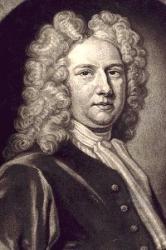
Henry Carey

1687 - 1743 Person Name: Henry Carey, c.1687-1743 Topics: Divine Inspiration; Eternity of God; Holy Spirit; Jesus Christ Friend and Companion; Prayer for Illimination; Sanctification; Scripture; Worship The Word Composer of "SURREY" in Together in Song Henry Carey, b. 1685 (?); d. London, 1743 Evangelical Lutheran Hymnal, 1908

Edgar L. Maxwell

1878 - 1940 Person Name: Edgar L. Maxwell (1878-1940) Topics: The Holy Scripture Vers. esp. of "Dadme la Biblia" in Himnario Adventista del Séptimo Día

Kazu Nakaseko

Topics: The Church The Holy Scriptures Harmonizer of "MŌSŌ" in Hymns from the Four Winds

Thomas MacKellar

1812 - 1899 Topics: The Holy Scriptures Author of "Book of grace, and book of glory" in The Sanctuary Hymnal, published by Order of the General Conference of the United Brethren in Christ Mackellar, Thomas, was born in New York, Aug. 12, 1812. At the age of 14 he entered the printing establishment of Harper Brothers. In 1833 he removed to Philadelphia and joined the type-foundry firm of Johnson & Smith, as proof reader. He subsequently became a foreman, and then a partner in that firm, which has been known from 1860 as Mackellar, Smiths, and Jordan, type-founders of Philadelphia. His publications include The American Printer, 1866, a prose work, and the following in verse:— (1) Droppings from the Heart, 1844; (2) Tam's Fortnight Ramble, 1847; (3) Lines for the Gentle and Loving, 1853; (4) Rhymes Atween Times, 1872. The last contains some of his hymns. (5) Hymns and a few Metrical Psalms, Phila. 1883 (71 hymns, 3 psalms), 2nd edition, 1887 (84 hymns, 3 psalms). Those of his hymns in common use include :— 1. At the door of mercy sighing. Lent. Published in his Rhymes Atween Times, 1872, as, "Long of restful peace forsaken," and again in Dr. Hitchcock's Hymns & Songs of Praise, 1874, as "At the door of mercy sighing." 2. Bear the burden of the present. Resignation. Written in 1852, and published in his Lines for the Gentle and Loving, 1853; and Lyra Sacra Americana, 1868. Part of this hymn, beginning "All unseen the Master walketh," was in common use in Great Britain. 3. Book of grace, and book of glory. Holy Scripture. Written in 1843. It was given in the Sunday School Union Collection, 1860, and his Hymns and a few M. Psalms, &c, 1883, and a few collections, including Allon's Children's Worship, 1878, &c. 4. Draw nigh to the Holy. Jesus, the soul’s Refuge. In Sumner's Songs of Zion, 1851, and the Lyra Sacra Americana, 1868, in 5 st. of 8 1ines. 5. Father, in my life's young morning. A Child's Prayer. Written in 1841. 6. In the vineyard of our Father. Work for God. Written in 1845. It was given in the Hymns for Church & Home, Philadelphia, I860, and other collections. 7. Jesus! when my soul is parting. Continued presence of Jesus desired. Written in 1848, and included in Lyra Sacra Americana, 1868, in 4 stanzas of 6 lines, and entitled "Jesus first and last." 8. There is a land immortal. Heaven. Mr. Mackellar says that this hymn was written "One evening as a fancy suddenly struck me of a religious nature, I laid aside the work in hand, and pursuing the new idea, I at once produced the hymn, ‘There is a land immortal,' and sent it to the editor [of Neale's Gazette], who referred to it as a religious poem from ‘Tam,' my assumed name, under which I had already acquired considerable notoriety. This was in 1845. It was widely copied, and afterwards inserted in a volume published by me." Duffield's English Hymns, &c, 1886, p. 551. Mr. Mackellar was an Elder of the Presbyterian Church. [Rev. F. M. Bird, M.A.] -- John Julian, Dictionary of Hymnology (1907) ====================== Mackellar, T., p. 708, ii. Additional hymns are:— (1) "I have no hiding-place" (Safety in Jesus), (2) “I will extol Thee every day" (Praise to God). These are dated 1880 and 1871 respectively in Stryker's Church Songs, N. Y., 1889. He died Dec. 29, 1899. --John Julian, Dictionary of Hymnology, Appendix, Part II (1907) ============ Mackellar, T., pp. 708, ii.; 1578, ii. He died Dec. 29, 1899. His hymn, “O the darkness, O the sorrow" (Redemption through Christ), was written in 1886, and added to the latest 1668 editions of his Hymns & Metrical Psalms. It is found in Summa Corda, 1898, and several other collections. His Hymns and Poems were collected and published in 1900. [Rev. L. F. Benson, D.D.] --John Julian, Dictionary of Hymnology, New Supplement (1907)

Paul Leddington Wright

b. 1951 Person Name: Paul Leddington Wright, b. 1951 Topics: The Holy Scriptures Arranger of "[Speak, O Lord as we come to you]" in Singing the Faith

Edward Bunnett

1834 - 1923 Topics: The Holy Scriptures Composer of "[Christ in his word draws near]" in Alleluia Edward Bunnett, born at Shipham, Norfolk, England, June 25, 1834. Organist, pupil of Dr. Zechariah Buck at Norwich Cathedral, of which he was a chorister in 1842 and assistant organist in 1844-77. He became organist of St. Peter's Church in 1877, and organist to the corporation of Norwich in 1880. Mus. Bac., Cambridge, 1856; Mus. Coc. do., 1869. Works: Songs of Praise, 1869; Rhineland cantata for soprano solo, chorus and orchestra. composed for mlle Tietjens, Norwich Festival, 1872; Lors, cantata, text by W. W. Turnbull, 1876; magnificat, Nunc dimittis, Cantate Domino, and Deus misereatur, 1860; Te Deum in Gd; Te DEum in F; Benedictus and Jubilate in F; Volume of Chants, Kyrie, Anthems, etc. 1865; Ofice of the Holy Communion in E., 1883; Anthems' Songs, Sonata fr violin and pianoforte, 1873; Trio for pianoforte, violin, and violoncello, 1873. Cyclopedia of Music and Musicians John Denison Champlin (New York: C. Scribner's Sons, 1903)

Johann G. C. Störl

1675 - 1719 Person Name: Johann Georg Christian Störl, 1675-1719 Topics: Scriptures The Holy Composer of "MUNICH" in Hymnal and Liturgies of the Moravian Church Johann Georg Stoerl; b. 1675, Kirchberg; d. 1719, Stuttgart Evangelical Lutheran Hymnal, 1908

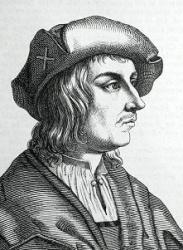
Lazarus Spengler

1479 - 1534 Person Name: Lazarus Spengler (1479-1534) Topics: The Holy Scriptures Fall, Depravity, Guilt of Man Cento of "All Mankind Fell in Adam's Fall" in The Christian Hymnary Spengler, Lazarus, was the 9th of the 21 children of Georg Spengler and Agnes his wife, and was born March 13,1479, at Nürnberg, where his father was clerk of the Imperial court of Justice (Landgerichtschreiber). He entered the University of Leipzig in 1494; but on the death of his father on Dec. 27, 1496, he returned to Nürnberg, obtained a position in the town clerk's office, in 1507 became himself town clerk (Raths Syndikus), and in 1516 also Rathsherr. When Luther was passing through Nürnberg, in 1518, on his way to Augsburg, Spengler made his acquaintance. He warmly espoused the Reformation doctrines, published in 1519 his Schutzre in Luther's favour, and himself became one of the leaders in the Reformation work at Nürnberg. He was one of those condemned by name in the Bull of Excommunication launched by Pope Leo the Tenth, on June 15, 1520, against Luther and his friends. Dr. Eck sent the Bull to the Town Council of Nürnberg, and urged them to proceed against Spengler, but they ignored it, and then sent him as one of their representatives to the Diet of Worms, in April 1521. In 1525 Spengler went to Wittenberg to consult with Luther and Melanchthon as to turning the Benedictine Aegidienstift (Schottenkloster) into an Evangelical Gymnasium, and this was opened as such by Melanchthon on May 23, 1526. Spengler was also the prime mover to the Visitation of 1528, and upheld strict Lutheranism in the negotiations at the Diet of Augsburg in 1530. He died at Nürnberg, Sept. 7, 1534 (Koch, i, 308 ; Will's Nürnbergisches Gelehrten-Lexikon, iii., p. 731; Herzog's Real-Encyklopädie, xiv., 516). Spengler was a trusty friend and valued counsellor of Luther and the principal Reformers of Germany. He also interested himself in the improvement of the church services, and in 1532 was able to have an authorised Liturgy (Kirchenordnung) printed. He wrote a considerable quantity of verse, sacred and secular ; but only two hymns are ascribed to him. The one is an indifferent version of Ps. cxxvii., beginning "Vergebens ist all Müh und Kost." The other is:— Durch Adams Fall ist ganz verderbt. Fall and Redemption. First published in the Geystliche Gesangk Buchleyn, Wittenberg, 1524, and thence in Wackernagel, iii. p. 48, in 9 stanzas of 10 lines…During the Reformation period it attained a wide popularity as a didactic and confessional hymn of the Evangelical faith. It is one of the most characteristic hymns of the time, conceived in the spirit of deep and earnest piety, eminently Scriptural, and setting forth the Reformation teachings in concise and antithetical form, but is however too much like a system of theology in rhyme. The translations are:—- 1. "By Adam's fall was so forlorne." By Bishop Coverdale, 1539, reprinted in his Remains, 1846, p. 556. 2. "When Adam fell our total Frame." By J. C. Jacobi in his Psalmodia Germanica, pt. ii., 1725, p. 17. [Rev. James Mearns, M.A.] --Excerpts from John Julian, Dictionary of Hymnology (1907)

Petrus Herbert

1530 - 1571 Person Name: Petrus Herbert, -1571 Topics: The Holy Scriptures Author of "The Word of God, Which Ne'er Shall Cease" in Hymnal and Liturgies of the Moravian Church Herbert, Petrus, seems to have been a native of or resident at Fulnek in Moravia. He was ordained priest of the Brethren's Unity in 1562, became a member of the Select Council in 1567, and was latterly Consenior of the Unity. By the Unity he was entrusted with many important missions. He was sent as a deputy to confer with Calvin: and again in 1562 to arrange with Duke Christoph of Württemberg for the education at Tübingen of young men from the Bohemian Brethren. He was also one of the deputies sent to Vienna to present the revised form of the Brethren's Confession of Faith to the Emperor Maximilian II. in 1564, and in 1566 to present their new German Hymn Book. He died at Eibenschütz in 1571 (Koch, ii. 414, Allgemeine Deutsche Biographie, xiii. 263-264, &c.). Herbert was one of the principal compilers of the enlarged edition of the Brethren's German Hymn Book published in 1566 as their Kirchengeseng, and contributed to it some 90 hymns. In the ed. of 1639 there are 104 hymns marked as his. His hymns are distinguished by simplicity and beauty of style. A number are translations from the Bohemian. His hymns translated into English include:— i. Die Nacht ist kommen drin wir ruhen sollen. [Evening] Written probably under the pressure of persecution and oppression. In the G. 2?., 1566, as above, in 5 stanzas of 7 lines (the last stanza being a versification of the Lord's Prayer), and thence in Wackernagel, iv. p. 442, and the Unverfälschter Liedersegen, 1851, No. 515. In J. H. Schein's Cantiona, 1627, it appears as No. 99, with an additional stanza not by Herbert, which reads— Denn wir kein besser Zuflucht konnen haben, ,Als zu dir, 0 Herr, in dem Himmel droben, Du veriest keinen, gibst Acht auff die deinen. Die dich recht meyuen," This stanza is included as stanza v. in the version in Bunsen's Versuch, 1833, No. 43. Translated as:— 1. The night is come, wherein at last we rest, in full from Bunsen by Miss Winkworth in her Lyra Germanica, 2nd Ser., 1858, p. 77, repeated as No. 105 in R. Minton Taylor's Collection, 1872. 2. Now God be with us, for the night is closing, a good translation from Bunsen, in the original metre, by Miss Winkworth, as No. 170 in her Chorale Book for England, 1863, and repeated in her Christian Singers of Germany, 1869, p. 139. This version has been included in various recent collections, though generally abridged or altered, as in the Hymnary, 1872; Thring's Collection, 1882; and in America in the Evangelical Hymnal, N. Y., 1880, &c. In Laudes Domini, N.Y., 1884, it is in two parts (Nos. 209-210), the second beginning, "Father, Thy name be praised, Thy kingdom given." This is stanza vi. with an added doxology, as in the Hymnary, 1872. Other translations are:— (1) "The night comes apace," as No. 293 in pt. i. of the Moravian Hymn Book, 1754. (2) “Lo! evening's shades to sleep invite," by H. J. Buckoll, 1842, p. 64. ii. 0 Christenmensch, merk wie sichs halt. [Faith] 1566, as above, in 18 stanzas of 4 lines, repeated in Wackernagel, iv. p. 433. In Bunsen's Versuch , 1833, No. 390 Allgemeine Gesang-Buch, 1846, No. 130), the hymn begins with stanza iii. altered to "Der Glaub’ ist ein lebend'ge Kraft," and consists of stanzas iii., viii., xi., xii., xvi., xviii. Bunsen calls it "a noble confession of the true Christian faith." Translated as:— Faith is a living power from heaven. A good translation from Bunsen by Miss Winkworth in her Lyra Germanica, 2nd ser., 1858, p. 160, and thence in her Chorale Book for England, 1863. It is repeated, more or less altered and abridged, in Kennedy, 1863; and in America in the Presbyterian Hymnal, 1874, Baptist Service of Song, 1871, &c. ii. Hymns not in English common use:— iii. Des Herren Wort bleibt in Ewigkeit. [Holy Scripture.] 1566, as above, in 25 stanzas, and in Wackernagel, iv. p. 432. Translated as "God's holy Word, which ne’er shall cease," by J. Swertner, as No. 3 in the Moravian Hymn Book1789 (1849, No. 2). iv. Fürchtet Gott, 0 lieben Leut. [Martyrs.] 1566, as above, in 13 stanzas, and in Wackernagel, iv. p. 429. The translations are, (i.) "O love God, ye people dear," as No. 267 in pt. i. of the Moravian Hymn Book, 1754. (2) "O exalt and praise the Lord" (from the version in the Brüder Gesang-Buch1778, beginning "Liebet Gott"), as No. 871 in the Moravian Hymn Book, 1789 (1886, No. 1306). v. Lasst uns mit Lust und Freud aus Olauben singen. [Eternal Life.] A fine hymn on the Joys of Heaven. 1566, as above, in 12 stanzas, and in Wackernagel, iv. p. 447. Translated as "In faith we sing this song of thank-fulness," by Mrs. Bevan, 1858, p. 34. vi. 0 höchster Trost, heiliger Geist [Whitsuntide.] 1566, as above, in 13 stanzas, and Wackernagel, iv. p. 407. The translations are, (1) "O highest comfort, Holy Ghost," as No. 262 in pt. i. of the Moravian Hymn Book, 1754. (2) "O Comforter, God Holy Ghost," as No. 203 in the Moravian Hymn Book, 1789 (1849, No. 265). Besides the above a number of hymns by Herbert (all of which appeared in the Kirchengeseng, 1566, and are included in Wackernagel’s vol. iv.) were translated in pt. i. of the Moravian Hymn Book, 1754. The numbers in the 1754 are 166, 259, 263, 264, 265, 266, 274, 277, 281, 287, and 294. [Rev. James Mearns, M.A.] -- John Julian, Dictionary of Hymnology

Pages


Export as CSV
It looks like you are using an ad-blocker. Ad revenue helps keep us running. Please consider white-listing Hymnary.org or getting Hymnary Pro to eliminate ads entirely and help support Hymnary.org.