You help make Hymnary.org possible. More than 10 million people from 200+ countries found hymns, liturgical resources and encouragement on Hymnary.org in 2025, including you. Every visit affirms the global impact of this ministry.

If Hymnary has been meaningful to you this year, would you take a moment today to help sustain it? A gift of any size—paired with a note of encouragement if you wish—directly supports the server costs, research work and curation that keep this resource freely available to the world.

Give securely online today, or mail a check to:
Hymnary.org
Calvin University
3201 Burton Street SE
Grand Rapids, MI 49546

Thank you for your partnership, and may the hope of Advent fill your heart.

Person Results

Topics:proper+7
In:person

Planning worship? Check out our sister site, ZeteoSearch.org, for 20+ additional resources related to your search.
Showing 241 - 250 of 315Results Per Page: 102050

David Lakie Ritchie

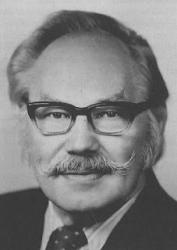
1865 - 1951 Topics: Holy Spirit Praise and Invocation; Healing; Holy Spirit; Hope; Inspiration; Joy; Morning; Music and Singing; Peace (Inner, Calmness, Serenity; Regeneration; Rogation; Seasons Changing; Truth; Venture; Wholeness; Easter 7 Year A; Proper 17 Year B; Easter 2 Year C; Easter 6 Year C Author of "As Comes The Breath Of Spring" in Voices United Ritchie, David Lakie. (Kingsmuir, Scotland, September 15, 1864--December 14, 1951, Montreal, Quebec). Congregationalist/United Church. Studied at the University of Edinburgh, whose D.D. he received in 1917. Pastorates at Dunfermline (1890-1896) and Newcastle (1896-1903) in Britain; principal of Nottingham Theological Institute, 1903-1919; of Congregational College (Montreal), 1919-1925; and of United Theological College (1925-1939), with which his previous school merged when Canada's Congregationalists entered the church union of 1925. Although he published several works, he was best known in his own day as an effective trainer of ministers for a church in the throes of reorganization. --Hugh D. McKellar, DNAH Archives

Graham Maule

1958 - 2019 Person Name: Graham Maule, b. 1958 Topics: Year A Proper 7 Author of "When God Almighty came to earth (God on earth)" in Complete Anglican Hymns Old and New

Jan Wesson

Topics: Biblical Names; Jesus Christ Life and Ministry; Service; Year C Epiphany 7; Year C Proper 10 Author of "They Asked, "Who's My Neighbor?"" in The New Century Hymnal

John L. Bell

b. 1949 Person Name: John L. Bell, b. 1949 Topics: Year A Proper 7 Author of "When God Almighty came to earth (God on earth)" in Complete Anglican Hymns Old and New John Bell (b. 1949) was born in the Scottish town of Kilmarnock in Ayrshire, intending to be a music teacher when he felt the call to the ministry. But in frustration with his classes, he did volunteer work in a deprived neighborhood in London for a time and also served for two years as an associate pastor at the English Reformed Church in Amsterdam. After graduating he worked for five years as a youth pastor for the Church of Scotland, serving a large region that included about 500 churches. He then took a similar position with the Iona Community, and with his colleague Graham Maule, began to broaden the youth ministry to focus on renewal of the church’s worship. His approach soon turned to composing songs within the identifiable traditions of hymnody that began to address concerns missing from the current Scottish hymnal: "I discovered that seldom did our hymns represent the plight of poor people to God. There was nothing that dealt with unemployment, nothing that dealt with living in a multicultural society and feeling disenfranchised. There was nothing about child abuse…,that reflected concern for the developing world, nothing that helped see ourselves as brothers and sisters to those who are suffering from poverty or persecution." [from an interview in Reformed Worship (March 1993)] That concern not only led to writing many songs, but increasingly to introducing them internationally in many conferences, while also gathering songs from around the world. He was convener for the fourth edition of the Church of Scotland’s Church Hymnary (2005), a very different collection from the previous 1973 edition. His books, The Singing Thing and The Singing Thing Too, as well as the many collections of songs and worship resources produced by John Bell—some together with other members of the Iona Community’s “Wild Goose Resource Group,” —are available in North America from GIA Publications. Emily Brink

Giovanni Pierluigi da Palestrina

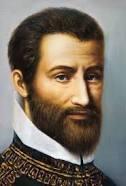
1525 - 1594 Person Name: Giovanni Palestrina Topics: The Christian Year Easter; Christian Year Easter; Eternal Life; Funeral Vigil; Funerals and Memorial Services; Hallelujah; Hell; Hope; Jesus Christ Kingship, Conqueror; Jesus Christ Reign; Jesus Christ Resurrection; Praise; Victory; Worship; Easter 1 Year A; Easter 2 Year A; Easter 3 Year A; Proper 27 Year A; Easter 1 Year B; Easter 3 Year B; Proper 27 Year B; Epiphany 5 Year C; Epiphany 7 Year C; Easter 1 Year C; Easter Evening Year ABC Composer of "VICTORY" in Voices United Giovanni Pierluigi (da Palestrina) Italy 1525-1594. Born at Palestrina, Italy, near Rome, then part of the Papal States to Neopolitan parents. As a youth he became a chorister at the Santa Maria Maggiore basilica in the Rome Diocese. This allowed him to learn literature and music. In 1540 he moved to Rome, where he studied in the school ofr the Hugenot, Claude Goudimel. He also studied with Robin Mallapert and Firmin Lebel. Orlando Di Lasso was also a musical advisor to him. From 1544-1551 he was organist at the Cathedral of St Agapito, the principle church of his native city. In 1547 he married Lucrezia Gori, and they had four children: Rodolfo, Angelo, Iginio, and a daughter. In 1551 Pope Julius III (previously Bishop of Palestrina) appointed him ‘maestro di cappella’, or musical director of the Cappella Giulia (choir). Pierluigi dedicated his first published compositions to Pope Julius III (1554), known as ‘the book of Masses’. It was the first book of masses by a native composer, since most sacred works in those days were from low countries (France or Spain). In 1555 Pope Paul IV ordered that all papal choristers should be clerical. As Pierluigi married early in life and had four children, he was unable to continue in the chapel as a layman. During the next decade he held positions similar to his Julian Chapel appointment at other chapels and churches in Rome, including St John Lateran (1555-1560), and Santa Maria Maggiore (1561-1566). In 1571 he returned to the Julian Chapel and remained at St Peter’s for the rest of his life. The 1570s was a decade of difficulty for him, as he lost his brother, two sons, and his wife in three separate outbreaks of plague (1572-1575-1580). In 1578 he was given the title of ‘Master of Music’ at the Vatican Basilica. He thought of becoming a priest at this time, but instead married a wealthy widow, Virginia Formoli, in 1581, widow of a wealthy merchant, which gave him financial independence (he was not well-paid as choirmaster). He spent considerable time administering to her fortune, but also was able to compose prolifically until his death. He also helped to found an association of professional musicians called the Vertuosa Compagnia dei Musici. He died in Rome of pleurisy. He left hundreds of compositions, including 1045 masses, 68 offertories, 140 madrigals, 300+ motets, 72 hymns, 35 magnificats, 11 litanies and several sets of lamentations. There are two comprehensive editions of his works: a 33-volume edition published by Breitkopf and Hartel, in Leigzig, Germany, between 1862-1894, edited by Franz Xaver Habert, and a 34-volume edition published in the mid 20th century by Fratelli Scalera, in Rome, Italy, edited by R Casimiri and others. As a Renaissance musician and composer of sacred music he was the best known 16th century representative of the Roman School of musical composition. He had a long-lasting influence on the development of church and secular music in Europe, especially on the development of counterpoint, his work considered the culmination of Renaissance polyphony. Very famous in his day, he was considered by some the legendary ‘savior of church music’. A 2009 film was produced by German television about him, titled: ‘Palestrina – Prince of Music’. John Perry

Ruth C. Duck

1947 - 2024 Author of "Out of the Depths"

Omer Westendorf

1916 - 1997 Author of "Gift of Finest Wheat" Omer Westendorf, one of the earliest lyricists for Roman Catholic liturgical music in English, died on October 22, 1997, at the age of eighty-one. Born on February 24, 1916, Omer got his start in music publishing after World War II, when he brought home for his parish choir in Cincinnati some of the Mass settings he had discovered in Holland. Interest in the new music being published in Europe led to his creation of the World Library of Sacred Music, initially a music-importing firm that brought much of this new European repertoire to U.S. parishes. Operating out of a garage in those early years, Omer often joked about the surprised expressions of visitors who stopped by and found a wide range of sheet music in various states of “storage” (read disarray). Later, as World Library Publications, the company began publishing some of its own music, including new works with English texts by some of those same Dutch composers, for example, Jan Vermulst. In 1955 World Library published the first edition of The Peoples Hymnal, which would become the People's Mass Book in 1964, one of the first hymnals to reflect the liturgical reforms proposed by Vatican II. Omer also introduced the music of Lucien Deiss to Catholic parishes through the two volumes of Biblical Hymns and Psalms. Using his own name and several pen names, Omer composed numerous compositions for liturgical use, though his best-known works may be the texts for the hymns “Where Charity and Love Prevail,” “Sent Forth by God’s Blessing,” and especially “Gift of Finest Wheat.” As he lay dying, his family and friends gathered around his bed to sing his text “Shepherd of Souls, in Love, Come, Feed Us.” NPM honored Omer as its Pastoral Musician of the Year in 1985. --liturgicalleaders.blogspot.com/2008 =========================== Pseudonyms: Paul Francis Mark Evans J. Clifford Evers --Letter from Tom Smith, Executive Director of The Hymn Society, to Leonard Ellinwood, 6 February 1980. DNAH Archives.

George Keith

1638 - 1716 Person Name: "K" Topics: The Church in the World Commitment: Trust; Adversity, Affliction & Tribulation; Assurance; Bible; Church Anniversaries; Church Education; Comfort/Consolation; Commitment; Courage; Eternal Life; Faith; God Faithfulness; God Presence; God Protection; God Strength and Refuge; Good News, Gospel; Grace; Grief; Guidance; Hope; Jesus Christ Strength and Refuge; Mercy; Perseverance; Pilgrimage and Conflict; Promise(s); Saints; Security; Steadfastness; Strength; Struggle and Conflict; Suffering; Trials; Trust; Victory; Wholeness; Word of God; Epiphany 7 Year A; Epiphany 9 Year A; Easter 5 Year A; Trinity Sunday Year A; Proper 4 Year A; Proper 12 Year A; Proper 14 Year A; Proper 22 Year A; Proper 6 Year B; Baptism of Jesus Year C; Epiphany 4 Year C; Epiphany 5 Year C; Epiphany 8 Year C; Lent 2 Year C; Lent 4 Year C; Proper 14 Year C; Proper 17 Year C; Proper 18 Year C; Proper 26 Year C; All Saints Year C Author of "How Firm a Foundation" in Voices United George Keith, according to D. Sedgwick, was the author of "How firm a foundation, ye saints of the Lord." Little is known about Keith, save that he was a publisher, a son-in-law of Dr. Gill, and the composer of several hymns. --Annotations of the Hymnal, Charles Hutchins, M.A. 1872.

William Daman

1540 - 1591 Person Name: William Daman (1540-1591) Topics: Proper 7 Year C Adapter of "SOUTHWELL" in Ancient and Modern Aliases: Damon; Damano; Demaunde; Damond; Dymond Born: ca.1540 Died: 1591 Damon was a foreign composer resident in England. He arrived probably in England in 1566 as a servant of Sir Thomas Sackville. In 1576 he became a recorder player at the Court of Elizabeth I. He was described as having been born in "Luke" and "Lewklande" and, on the assumption that these names refer to Luik or Liège, it has been inferred that he was a Walloon. However contemporary London records describe him as an Italian and a later reference refers to him having been born in "Luke in Italy", i.e. Lucca. His unanglicised name may have been Gulielmo (or Gulielmus) Damano. Daman died from the effects of an ulcer and was buried at St Peter-le-Poer, London, on 26 March 1591. List of choral works: Beati omnes qui timent Dominum Confitebor tibi Domine Miserere nostri Domine Omnis caro gramen sit Praedicabo laudes tuae Domine Spem in alium Publications: The Psalmes of David in English Metre (1579) The Former Booke of Musicke of M. William Damon (1591) The Second Booke of Musicke of M. William Damon (1591) --www3.cpdl.org/wiki/index.php/

Frank Mason North

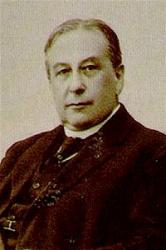
1850 - 1935 Topics: The Church in the World Commitment: Peace and Justice; Calling and Response; Church Community in Christ; City/City of God; Commitment; Compassion; Concern; God Kingdom, Majesty, Realm; Jesus Christ Love of; Jesus Christ Master; Jesus Christ Presence; Justice; Love; Mercy; Peace (World); Poverty; Service; Suffering; Union With God/Christ; Vision/Dream; Baptism of Jesus Year A; Lent 2 Year A; Proper 8 Year A; Proper 9 Year A; Epiphany 7 Year B; Lent 2 Year B; Proper 11 Year B; Proper 18 Year B; Proper 21 Year B; Epiphany 7 Year C; Lent 2 Year C; Easter 7 Year C; Proper 10 Year C; Proper 16 Year C; Proper 17 Year C; Proper 19 Year C; Proper 28 Year C; New Year Year ABC Author of "Where Cross the Crowded Ways of Life" in Voices United North, Frank Mason, D.D., b. at New York, Dec. 3, 1850, graduated at Wesleyan University 1872, and entered the ministry of the Methodist Episcopal Church 1872. In 1892 he became Correspondence Secretary of the New York City Church Extension and Missionary Society, and is now (1905) editor of The Christian City. His hymns in common use include:— 1. Jesus, the calm that fills my breast. [Peace.] In The Plymouth Hymnal,1894; Sursum Corda, 1898; The Methodist Hymnal, 1905, &c. 2. When cross the crowded ways of life. [City Missions.] In The Methodist Hymnal, 1905. [Rev. L. F. Benson, D.D.] --John Julian, Dictionary of Hymnology, New Supplement (1907) ================= North, Frank Mason, D.D. (December 3, 1850--December 17, 1935). The Appendix Index reference, p.1607 in Julian, to Dr. North is to John Post Attwater who used "Frank North" as his nom de plume. In addition to the information included in the short biographical sketch at p.1677 it should be added that Dr. North continued his studies at Wesleyan University, advancing to the M.A. degree in 1875, later being honored by that institution's D.D., 1894, and L.L.D., 1918. He was a member of the New York East Conference of the Methodist Episcopal Church and served several pastorates in New York State and City as well as one at Middletown, Connecticut, 1887-1892. During the years 1892-1912, while Corresponding Secretary of the New York City Extension and Missionary Society and the editor of The Christian City, he was also Corresponding Secretary of the National City Evangelical Union of the Methodist Episcopal Church. From 1912 to 1924 he was the Secretary of the Board of Foreign Missions of his church and through these years he served as Chairman of its Executive Committee. He was also Secretary, Chairman of the Executive Committee, and President of the Federal Council of the Churches of Christ in America. It was largely through his efforts and influence that the Federal Council was organized. Trustee and member of governing boards of numerous institutions in the United States, China, and Japan, among the additional honors which came to him were Chevalier Legion of Honor and "Officer de l'Instruction Publique," France; Officer of the Royal Order of George I, Greece. He was one of the great Protestant leaders of his generation. The leading article in The Hymn, 30 April 1950, was an excellent appreciation of Dr. North and his work. Sources: Handbooks of various hymnals; Who Was Who I; Foote, Henry Wilder, Three Centuries of American Hymnody; Ninde, Edward S., Story of the American Hymn; Bailey, ALbert E., The Gospel in Hymns; Pratt, John Barnes, Present Day Hymns; correspondence. --Robert G. McCutchan, DNAH Archives

Pages


Export as CSV
It looks like you are using an ad-blocker. Ad revenue helps keep us running. Please consider white-listing Hymnary.org or getting Hymnary Pro to eliminate ads entirely and help support Hymnary.org.