

 My Starred Hymns
 My FlexScores
 My Hymnals
 My Purchased Files
Planning worship?
Check out our sister site, ZeteoSearch.org,
for 20+ additional resources related to your search.
- |
User Links
Person Results
Juan N. De Los Santos
1876 - 1944 Person Name: Juan N. de los Santos (1876-1944) Topics: La Vida Christian Confianza y seguridad; The Christian Life Trust and safety Author of "Hay quien vela mis pisadas" in Himnario Adventista del Séptimo Día
Juan N. De Los Santos
Mary Kay Beall
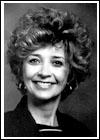
b. 1943 Person Name: Mary Kay Beall Topics: God As Refuge/Safety/Shelter; Grateful Living Composer of "GRATUS " in Lift Up Your Hearts Mary Kay Beall was born in Akron, Ohio in 1943. She holds a B.M. degree from Ohio Wesleyan University, an M.A. from Ohio State University, and a Masters in Theological Studies from Trinity Seminary in Columbus, Ohio. She was ordained in the American Baptist church and ministers to church musicians and choirs as well as conducting clinics and reading sessions in the United States and Canada.
NN, Hymnary editor. Source: www.hopepublishing.com/
Mary Kay Beall
Gaetano Donizetti
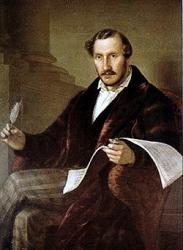
1797 - 1848 Person Name: Donizetti Topics: Afflictions Watchfulness in; Anger of God Invoked; Assurance Declared; Assurance Desired; Christian Charity; Christians Conflicts of; Christians Conscious of Safety; Christians Persecuted and Sorrowing; Faith Confidence of; God the judge; Judgment Day; Judgments On the Wicked; Prayer Imprecations in; Retribution Threatened; Royalty of Christ Judgment the Prerogative of; Safety Assured; The Wicked Character of; The Wicked Fate of; The Wicked Self-Destroyed Composer of "PAULINA" in The Psalter Domenico Gaetano Maria Donizetti (born 29 November 1797 – died 8 April 1848) was an Italian composer from Bergamo, Lombardy.
Donizetti came from a non-musical background but, at an early age, he was taken under the wing of composer Simon Mayr who had set up the Lezioni Caritatevoli and had enrolled him by means of a full scholarship. There he received detailed training in the arts of fugue and counterpoint, and it was from there that Mayr was instrumental in obtaining a place for the young man at the Bologna Academy. In Bologna, at the age of 19, he wrote his first one-act opera, the comedy Il Pigmalione, although it does not appear to have been performed during his lifetime.
Through his life, Donizetti wrote about 70 operas, but an offer in 1822 from Domenico Barbaja, the impresario of the Teatro San Carlo in Naples, which followed the composer's ninth opera, led to his move to that city and the composition of 28 operas which were given their premieres at that house or in one of the city's smaller houses including the Teatro Nuovo or the Teatro del Fondo. This continued until the production of Caterina Cornaro in January 1844. In all, Naples presented 51 of Donizetti's operas.
During this period, success came primarily with the comic operas, the serious ones failing to attract significant audiences. However, the situation changed with the appearance in 1830 of the serious opera, Anna Bolena which was the first to make a major impact on the Italian and international opera scene and, at the same time, to shift the balance for the composer away from success with only comedic operas. However, even after 1830, his best-known works did also include comedies such as L'elisir d'amore (1832) and Don Pasquale (1843). But significant historical dramas did appear and became successful, sometimes outside Naples before reaching that city. Most significantly, they included Lucia di Lammermoor (the first to be written by librettist Salvadore Cammarano) in 1835, as well as "one of [his] most successful Neapolitan operas", Roberto Devereux in Up to that point, all of his operas had been written to Italian librettos.
However, moving to Paris in 1838, Donizetti set his operas to French texts; these include La favorite and La fille du régiment and were first performed in that city from 1840 onward. It appears that much of the attraction of moving to Paris was not just for larger fees and prestige, but his chafing against the censorial limitations which existed in Italy, thus giving him a much greater freedom to choose subject matter. By 1845 severe illness caused him to be moved back to Bergamo to die in 1848.
Along with Gioachino Rossini and Vincenzo Bellini, he was a leading composer of bel canto opera during the first fifty years of the Nineteenth Century.
The youngest of three sons, Donizetti was born in 1797 in Bergamo's Borgo Canale quarter located just outside the city walls. His family was very poor and had no tradition of music, his father Andrea, being the caretaker of the town pawnshop. Simone Mayr, a German composer of internationally successful operas had become maestro di cappella at Bergamo's principal church in 1802 and he then founded the Lezioni Caritatevoli school in Bergamo in 1805 for the purpose of providing musical training, including classes in literature, beyond that which choirboys ordinarily received up until the time that their voices broke. In 1807, Andrea Donizetti attempted to enroll both his sons, but the elder, Giuseppe (then 18), was considered too old. Gaetano (then 9) was accepted.
While not especially successful as a choirboy during the first three trial months of 1807, there being some concern about a diffetto di gola (throat defect), in every other regard Mayr was reporting that Gaetano "surpasses all the others in musical progress". Mayr was able to persuade the authorities that the young boy's talents were worthy of keeping him in the school, and he remained there for nine years until 1815.
However, as William Ashbrook notes, in 1809 he was threatened with having to leave because his voice was changing. In 1810 he applied for and was accepted by the local art school, the Academia Carrara, but it is unknown whether he attended classes. Then, in 1811, Mayr once again intervened. Having written both libretto and music for a "pasticcio-farsa", Il piccolo compositore di musica, as the final concert of the academic year, he cast five your students amongst them Donizetti, his young pupil, as "the little composer". As Ashbrook notes this "was nothing less than Mayr's argument that Donizetti be allowed to continue his musical studies".
In Bologna, he justified the faith which Mayr had placed in him and in 1816 he wrote what Allitt describes as "his initial exercises in operatic style", the opera Il pigmalione, as well as composing portions of Olympiade and L'ira d'Achille in 1817, these two being no more than "suggest[ing] the work of a student". Encouraged by Mayr to return to Bergamo in 1817, he began his "quartet years" as well as composing piano pieces and most likely being part of quartets where he would have played and heard music of other composers. In addition, he began seeking employment.
After some minor compositions under the commission of Paolo Zancla, Donizetti wrote his ninth opera, Zoraida di Granata. This work impressed Domenico Barbaia, a prominent theatre manager, and Donizetti was offered a contract to compose in Naples. Writing in Rome and Milan in addition to Naples, Donizetti achieved some popular success in the 1820s (although critics were often unimpressed). It was not until 1830 that he became well known internationally, when his Anna Bolena was premiered in Milan, and this brought him instant fame throughout Europe.
L'elisir d'amore, a comedy produced in 1832, came soon after, and is deemed to be one of the masterpieces of 19th-century opera buffa (as is his Don Pasquale, written for Paris in 1843). Shortly after L'elisir d'amore, Donizetti composed Lucia di Lammermoor, based on The Bride of Lammermoor, the novel by Sir Walter Scott. This became his most famous opera, and one of the high points of the bel canto tradition, reaching a stature similar to that of Bellini's Norma.
Donizetti's wife, Virginia Vasselli, gave birth to three children, none of whom survived. Within a year of his parents' deaths, on 30 July 1837 his wife died from cholera. By 1843, Donizetti was exhibiting symptoms of syphilis and probable bipolar disorder. After being institutionalized in 1845, he was sent to Paris, where he could be cared for. After visits from friends, including Giuseppe Verdi, Donizetti was taken back to Bergamo, his hometown. After several years in the grip of insanity, he died in 1848 in the house of a noble family, the Scotti. Donizetti was buried in the cemetery of Valtesse but in the late 19th century his body was transferred to Bergamo's Basilica of Santa Maria Maggiore near the grave of his teacher Simon Mayr.
Donizetti, a prolific composer, is best known for his operatic works, but he also wrote music in a number of other forms, including some church music, a number of string quartets, and some orchestral pieces. Altogether, he composed about 75 operas, 16 symphonies, 19 string quartets, 193 songs, 45 duets, 3 oratorios, 28 cantatas, instrumental concertos, sonatas, and other chamber pieces.
--en.wikipedia.org/wiki/ (excerpts)
Gaetano Donizetti
H. H. McGranahan
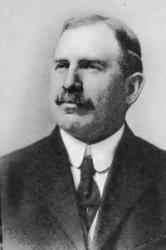
1854 - 1931 Topics: Afflictions Promises for; Assurance Enjoyed; Bible A Guide; Bible Instrument of Salvation; Character Good and Bad Contrasted; Christians Conscious of Safety; Church Christ the Head of; Covenant Promises; Faith Walking by; God Adored and Exalted; God Glorious; God Hearer of Prayer; God King; Gospel Fullness of; Gospel Prevalence and Power of; Humble, The; Mercy of God Everlasting; Missions Influence of; Nations Ultimate Subjection of; Patience; Praise By Nations; Praise For God's Mercy; Praise Of the Lord; Prayer God Hears; Pride; Revival; Royalty of Christ Bible His Law; Royalty of Christ Civil Rulers His Ministers; Royalty of Christ Nations His Subjects; Strength in God; Truth; Worship Acts of Composer of "[With all my heart I'll praise Thy name]" in Bible Songs Hugh Henry McGranahan USA 1854-1931. Born at Jamestown, PA, nephew of James McGranahan, gospel hymnist, he studied music under hymnists, George Root, and Horatio Palmer, and at the New England Conservatory of Music in Boston, MA. He married Grace McKinley, and they had two sons: Joseph and James. He became an editor and author. His most widely held publications include: “The juvenile class and concert” (1882,1895), “The choral class book” (1898), “Hymn and Psalm selections compiled” (1914), “Glad praises” (1914), and “Select temperance songs, new and old” (1915). He began his career directing musical institute conventions and later had charge of church choral unions in New York, NY, and Philadelphia, PA. He also headed the music department at Moody Bible Institute in Chicago, IL, for five years. After leaving the music field for health reasons, he entered the insurance business in Pittsburgh, PA, where he directed music in the educational department of the Bellefield Presbyterian Church. In 1880 he taught music in South Shenango, PA. In 1914 he was back in Jamestown, PA, where he later died.
John Perry
H. H. McGranahan
Luis Olivieri
1937 - 2017 Person Name: Louis Olivieri Topics: Affliction; Angels; Church Year Lent; Comfort and Encouragement; Daily Prayer Night Prayer; Darkness; Enemies; Fear; Freedom from Fear; God Trust in; God as Refuge; God's Safety; God's Wings; God's Love; God's Name; God's Power; God's Protection; Hope; Love for God; Occasional Services Funerals; Occasional Services New Year; People of God / Church Suffering; Prayer Answer to; Prayer; Temptation And Trial; Trust; Year B, Ordinary Time after Pentecost, October 16-22; Year C, Lent, 1st Sunday; Year C, Ordinary Time after Pentecost, September 25-October 1; Texts in Languages Other than English Spanish Harmonizer of "ABRIGO DE DIOS" in Psalms for All Seasons Puerto Rico, University and Seminary Professor, Baptist Minister
Sing a New Song No. 3 by Patrick Prescod (Bridgetown, Barbados: Cedar Press, 1981)
Luis Olivieri
Maurice A. Clifton
Topics: La Vida Christian Confianza y seguridad; The Christian Life Trust and safety Composer of "[Pertenezco a mi Rey, hijo soy de su amor]" in Himnario Adventista del Séptimo Día Pseudonym. See also Hall, J. Lincoln (Joseph Lincoln), 1866-1930
Maurice A. Clifton
John Campbell Shairp
1819 - 1885 Person Name: John C. Shairp Topics: Safety and Comfort Author of "Hold Thou Me Up and I Shall be Safe" in The Pilgrim Hymnal Shairp, John Campbell, LL.D., s. of Major Norman Shairp, was b. at Houstoun, West Lothian, July 30, 1819; student at the Univ. of Glasgow 1836-9; Snell Exhib., Balliol College Ox., 1840, and Newdigate Prize 1842. For a time he was assistant master at Rugby, then Professor of Latin at St. Andrews 1861; Principal of the United Coll., St Andrews, 1868, and Prof, of Poetry, Oxford, 1877. He died at Ormsary, Argyllshire, Sept. 18, 1885. The LL.D. was conferred upon him by the University of Edinburgh in 1884. His hymn:—
Twixt gleams of joy and clouds of doubt. [God the Unchangeable.] Appeared in his Glen Desseray and other Poems, 1888, p. 265, and marked as having been written in 1871. It is in several collections, especially in America (e.g. The Pilgrim Hymnal, 1904). Also in Horder's Worship Song, 1905. The cento, "Let me no more my comfort draw," in Sursum Corda, 1898, is from this hymn.
--John Julian, Dictionary of Hymnology, New Supplement (1907)
John Campbell Shairp
Johann Caspar Schade
1666 - 1698 Person Name: Rev. Johann K. Schade, 1666-1698 Topics: Christ Preciousness of; Christians Safety of; Faith and Justification; Looking to Jesus; Trust and Resignation Author of "Look up my soul to Christ thy joy" in Hymnal and Liturgies of the Moravian Church Schade, Johann Caspar, son of Jakob Schad or Schade, pastor and decan at Kühndorf, near Suhl, in Thuriugia, was born at Kühndorf, Jan. 18, 1666. He entered the University of Leipzig in 1685 (where he became a great friend of A. H. Francke), and then went to Wittenberg, where he graduated M.A. in 1687. On his return to Leipzig he began to hold Bible readings for the students. This soon raised ill-will against him among the Leipzig professors, and when, in 1690, he was invited to become diaconus at Würzen, near Leipzig, they interfered and prevented his settlement. In 1691 he was invited to become diaconus of St. Nicholas's church, at Berlin (where P. J. Spener had just become probst, or chief pastor), and entered on his work there on the 2nd Sunday in Advent. In his later years he raised a storm of feeling against himself by refusing to hear private confessions. The Elector of Brandenburg, in order to end the strife, appointed him, in June 1698, pastor at Derenburg, near Halberstadt. Meantime he was seized with a fever, which ended fatally at Berlin, July 25, 1698 (Koch, iv. 222, 468; Wetzel, iii. p. 23, &c).
Schade was a most earnest and faithful pastor and preacher, and specially interested himself in the children of his flock. As a hymnwriter he was not particularly prolific, but of his 45 hymns a good many passed into the German hymnbooks of the period. His hymns are clear and simple in style, are composed in a considerable variety of metres, and are full of fervent love to the Lord Jesus, and of zeal for a living and practical Christianity; but they are frequently spun out, or are too subjective. A number appeared in A. Luppius's Andächtig singender Christenmund Wosel, 1692-94, and in the Geistreiches Gesang-Buch, Halle, 1697. They were collected and posthumously published as Fasciculus Cantionum, Das ist zusammen getragene geistliche Lieder, &c, Cüstrin, N.D. [1699].
Those of Schade's hymns which have passed into English are:—
i. Auf! Hinauf! zu deiner Freude. Faith. First published in the Geistreiches Gesang-Buch, Halle, 1697, p. 402, in 6 stanzas of 8 lines; repeated in 1699, as above, p. 83. Recently, as No. 403, in the Unverfälschter Liedersegen 1851. The translations in common use are:—
1. Up! yes upward to thy gladness Rise, my heart. This is a good and full translation by Miss Winkworth, in her Lyra Germanica, 2nd Ser., 1858, p. 171, repeated in full in Reid's Praise Book, 1872, and, omitting st. v., in Kennedy, 1863. In her Chorale Book for England, 1863, No. 157, it is slightly altered, and st. iii. is omitted.
2. Rise, my soul! with joy and gladness. A translation of st. i., ii., vi., by F. C. C, as No. 233 in Dr. Pagenstecher's Collection, 1864.
Other translations are:—
(1) "Look up, my soul, to Christ thy joy," by J. B. Holmes, as No. 1099 in the Supplement of 1808 to the Moravian Hymn Book, 1801 (1886, No. 600), repeated in Bishop Kyle's Collection, 1860. (2) "Upwards, upwards to thy gladness," by Miss Dunn, 1857, p. 13. (3) "Up! yes upward to thy gladness, Rise, my soul," by W. Reid in his Praise Book, 1872.
ii. Heine Seel ermuntre dich. Passiontide. In the Geistreiches Gesang-Buch, Halle, 1697, p. 215, in 15 stanzas of 6 lines, repeated in 1699, as above, p. 9, entitled "Contemplation of the suffering of Christ and surrender of His will." In the Unverfälschter Liedersegen, 1851, No. 106. Tr. as, "Rouse thyself, my Soul, and dwell." In the Supplement to German Psalmody , ed. 1765, p. 20, and in Select Hymns from German Psalmody, Tranquebar, 1754, p. 31.
iii. Meine Seele willt du ruhn. This hymn, frequently ascribed to Schade, is noted under Scheffler. [Rev. James Mearns, M.A.]
--John Julian, Dictionary of Hymnology (1907)
Johann Caspar Schade
Henry A. Lewis
Topics: Aspirations For Heaven; Assurance Declared; Assurance Enjoyed; Christ Confessing; Christ Ressurection of; Christians Believers; Christians Christ the Life of; Christians Conscious of Safety; Christians Fellowship of; Christians Heirs of Heaven; Etermal Life; Faith Act of; Faith Blessedness of; God Omnipotence of; God Source of All Good; Heaven; Immortality; Joy Divinely Bestowed; Joy Reasons for; Praise For Spiritual Blessings; Providence of God Over Saints; Resurrection; The Christian's Reward Composer of "MARY" in The Psalter
Henry A. Lewis
Arthur H. Dyke Acland
1811 - 1857 Person Name: Arthur H. D. Troyte Topics: Afflictions Promises for; Backsliding; Benevolence; Character Value of Good; Christian Charity; Christ Providences of; Christ Righteousness of; Christians Blessedness of; Contentment; Covenant Promises; Faith Confession of; Fidelity; Glory of God In Providence; God the judge; Old Age; Perseverance; The Poor Duty Towards; Preservation; Prosperity Without God's Blessing; Providence of God Over Saints; Retribution Threatened; The Christian's Reward; The Righteous Character of; The Righteous Contrasted with the Wicked; The Righteous Honor and Safety of; Safety Assured Composer of "LONSDALE" in The Psalter Arthur Henry Dyke Acland changed his last name to Troyte in 1852 when he succeeded to the estates of Rev. Edward Berkeley Troyte. A part of the requirement for this succession was that he change his last name to Troyte. Therefore he is also known as A. H. D. Troyte, however, Acland is his authority name.
Arthur H. Dyke Acland
Pages




