You help make Hymnary.org possible. More than 10 million people from 200+ countries found hymns, liturgical resources and encouragement on Hymnary.org in 2025, including you. Every visit affirms the global impact of this ministry.

If Hymnary has been meaningful to you this year, would you take a moment today to help sustain it? A gift of any size—paired with a note of encouragement if you wish—directly supports the server costs, research work and curation that keep this resource freely available to the world.

Give securely online today, or mail a check to:
Hymnary.org
Calvin University
3201 Burton Street SE
Grand Rapids, MI 49546

Thank you for your partnership, and may the hope of Advent fill your heart.

Person Results

Topics:grief+
In:person

Planning worship? Check out our sister site, ZeteoSearch.org, for 20+ additional resources related to your search.
Showing 251 - 260 of 357Results Per Page: 102050

Bob Moore

b. 1962 Person Name: Bob Moore, 1962- Topics: Grief Composer of "DUNSTAN" in Hymns for a Pilgrim People

Théodore de Bèze

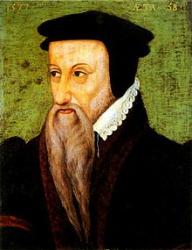
1519 - 1605 Person Name: Théodore de Béze, 1519-1605 Topics: Grief Author of "Como el Ciervo ansioso Brama (As a Deer in Want of Water)" in Oramos Cantando = We Pray In Song Bèze, Théodore de, born at Vezelay, in Burgundy, 1519; died 1605. Bèze’s father was of noble birth. He occupied the post of bailiff at Vezelay. Bèza received a first-rate classical education under Melchior Wolmar. Before he was 20 he wrote some poetry in imitation of Catullus and Ovid, the licentiousness of which he mourned and condemned in alter years. A brilliant prospect of Church emoluments turned his attention from the distasteful study of law. The income of the Priory of Longjumeau made him rich, and he became a prominent member of the literary world at Paris. But his entrance into Orders was barred by a secret marriage with Claudine Denosse. Subsequently, when the offer of the abbey of Froidmont by his uncle made it necessary for him to decide between avowing his marriage and renouncing the prospect, or repudiating his wife, he decided, under the solemn conversion produced by a dangerous illness, to abandon the Roman Church, and break with his whole past life. He left for Geneva (1548), and there publicly married. His first scheme for a living was to join his old comrade Jean Crespin, then at Geneva, in printing; but his appointment to the Professorship of Greek at Lausanne (1549), left the printing office in the hands of Crespin. Before his departure fiom Geneva ho had been on intimate terms with Calvin; and the discovery of a metrical rendering of Ps. 16 on Beza's table at Geneva led Calvin to suggest to him the completion of Marot's Psalms. At Lausanne he became a friend of Viret. He stayed there ten years, during which he wrote a tragi-comedy, and 40 of his metrical Psalms (36 published in 1551, 6 more in 1554). He had whilst at Lausanne a narrow escape from death by the plague. In 1557 he went with Karel and Budams to ask for the intercession of the German Protestant Princes in behalf of the persecuted Hugue-nots, and had interviews with Melanchthon. In 1559 he was appointed pastor at Geneva, Assistant Professor of Theology to Calvin, and the first Rector of the newly founded College of Geneva. With Peter Martyr and others he represented the Huguenots in the conference with the Queen-Mother and Cardinal Lorraine, at Poissy (1561), and remained at Paris nearly two years afterwards. His French metrical Psalter, in continuation of Marot, was completed in 1562. Calvin's death, 1564, left Beza the foremost figure at Geneva. In 1571, at the summons of the King of Navarre, he presided at the Synod of the Reformed Churches at Rochelle; and again (1572) at Nismes. His wife died in 1588, and he married again soon afterwards. His public life, as a theologian, a preacher, and administrator, ceased about 1598, though he preached again for the last time in 1600. He was honoured till his death; only three years before which the Landgrave of Hesse visited him, when passing through Geneva. The works of Beza are very numerous. As a controversialist, a commentator, an investigator of the text of the New Testament, he occupied a high place in his time. Among his chief works are: Annotationes in N. T.., 1556; Novum Testamentum, 1556; Psalms, with paraphrase in Latin, 1579; Life of Calvin, 1563. [Rev. H. Leigh Bennett, M.A.] -- John Julian, Dictionary of Hymnology (1907)

Kermit Moldenhauer

b. 1949 Person Name: Kermit G. Moldenhauer Topics: Grief Composer (tone) of "[Why does such grief weigh down my soul]" in Christian Worship

Mark Edwards

Topics: Grief Arranger of "CHARLESTOWN" in Celebrating Grace Hymnal

Robert Leaf

b. 1936 Person Name: Robert Leaf, 1936-2005 Topics: Grief, Sorrow; Grief, Sorrow Translator of "Day by Day" in Evangelical Lutheran Worship

Linnea Good

Topics: Grief Author of "A Light Is Gleaming" in Voices United

Severus Gastorius

1646 - 1682 Topics: Grief and sorrow Composer of "WAS GOTT TUT, DAS IST WOHLGETAN" in Moravian Book of Worship Severus Gastorius (1647-1682 ) was a cantor in Jena, central Germany. The son of a Weimar school teacher, Severus was born with the family name Bauchspiess (later Latinised to Gastorius) in Oettern, near Weimar. In 1667, he started studying at the University of Jena. From 1670, he deputized for cantor Andreas Zöll in Jena and married his daughter the following year. Gastorius assumed Zöll's position after his death in 1677. One of his friends, Samuel Rodigast, wrote the hymn "Was Gott tut, das ist wohlgetan" for Gastorius when he was sick (to cheer him up as Rodigast writes in his dedication). Even before he recovered, Gastorius set it to music based on a melody by Werner Fabricius. The tune became widely known in Germany as the cantor students of Jena cantor sang it every week at Gastorius' door as well as when they returned home. Gastorius was buried on 8 May 1682 in Jena's Johanniskirche cemetery. Gastorius had requested that the hymn "Was Gott tut, das ist wohlgetan" be sung at his funeral. Gastorius is also credited with composing music for the funeral motet Du aber gehe hin bis das Ende komme. It was sung at the funeral of the Jena professor of medicine Johann Arnold Friderici on 2 June 1672. --en.wikipedia.org/wiki/

Wayne L. Wold

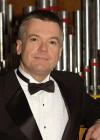
b. 1954 Person Name: Wayne L. Wold, 1954- Topics: Grief Composer of "PITNEY" in Together in Song Wayne L. Wold was born April 16, 1954 in Fosston, Minnesota. He presently serves as Associate Professor of Music and College Organist at Hood College in Frederick, MD. His educational background includes a Bachelor of Music degree from Concordia College in Moorhead, Minnesota, a Master of Sacred Music degree from Wittenberg University in Springfield, Ohio, and a Doctor of Musical Arts degree from Shenandoah University in Winchester, Virginia. Professional Accomplishments: Over 200 compositions in print. Numerous articles, several hymn and anthem texts, and two books in print. Performed with the Maryland Symphony Orchestra, in Lincoln Center, and in numerous churches across the U.S. and in Europe. Past president of Region One of the Association of Lutheran Church Musicians. Member of the editorial committee for the ELCA's Evangelical Lutheran Worship. --www.morningstarmusic.com/composers-wold.cfm

Jeeva Sam

Topics: Grief Composer of "OUT OF THE DEPTHS" in Voices United Jeeva Sam (b. 1957) is an ordained minister in the United Church of Canada, currently serving two congregations at Morgan’s Point and Forks Road East United Churches in the Niagara region of Ontario. Sam received a Bachelor of Science from the University of Waterloo and a Master of Divinity from Queen’s Theological College. He is also a professional proofreader and editor, and a columnist for two local papers. Laura de Jong

Heather Moen-Boyd

b. 1953 Person Name: Heather Moen-Boyd, 1953- Topics: Grief Composer of "MELISSA" in Together in Song

Pages


Export as CSV
It looks like you are using an ad-blocker. Ad revenue helps keep us running. Please consider white-listing Hymnary.org or getting Hymnary Pro to eliminate ads entirely and help support Hymnary.org.