You help make Hymnary.org possible. More than 10 million people from 200+ countries found hymns, liturgical resources and encouragement on Hymnary.org in 2025, including you. Every visit affirms the global impact of this ministry.

If Hymnary has been meaningful to you this year, would you take a moment today to help sustain it? A gift of any size—paired with a note of encouragement if you wish—directly supports the server costs, research work and curation that keep this resource freely available to the world.

Give securely online today, or mail a check to:
Hymnary.org
Calvin University
3201 Burton Street SE
Grand Rapids, MI 49546

Thank you for your partnership, and may the hope of Advent fill your heart.

Person Results

Topics:trust+in+god
In:people

Planning worship? Check out our sister site, ZeteoSearch.org, for 20+ additional resources related to your search.
Showing 261 - 270 of 790Results Per Page: 102050

Elvina M. Hall

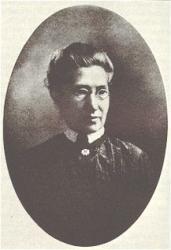
1820 - 1889 Person Name: Hall Topics: Access to God; Atonement Completed; Dependence On Grace; Faith Gift of God; God Savior; Hope Under Conviction; Trust In Christ; Way of Salvation Author of "Jesus paid it all" in Psalms and Hymns and Spiritual Songs Hall, Elvina Mable, was born at Alexandria, Virginia, in 1818; and was married, first to Mr. Richard Hall, and then, in 1885, to the Rev. Thomas Myers. Her hymn, "I hear the Saviour say" (Christ All and in All), in I. D. Sankey's Sacred Songs and Solos, 1878, is somewhat popular in Great Britain and America. It was "written on the fly-leaf of the New Lute of Zion, in the choir of the Methodist Episcopal Church, Baltimore, in the spring of 1865." --John Julian, Dictionary of Hymnology, Appendix, Part II (1907)

Paulus Speratus

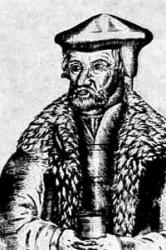
1484 - 1554 Person Name: Paul Speratus, 1484-1551 Topics: Trust in God Author of "Salvation now to us has come" in Together in Song Speratus, Paulus, D.D., was born in Swabia, Dec. 13, 1484. In a poem, written circa 1516, on Dr. J. Eck, he calls himself Elephangius, i.e. of Ellwangen; and in his correspondence, preserved at Königsberg, he often styles himself "a Rutilis" or "von Rötlen." These facts would seem to indicate that he was born at the castle of Röthlen, near Ellwangen. This property belonged to the Probst of the ecclesiastical corporation at Ellwangen, and Speratus's father was probably their bailiff or agent. The family name seems to have been Hoffer or Offer, and to have been in later years, following a practice common in the 16th cent., Latinized by himself into Speratus. He is probably the "Paul Offer de Ellwangen," who matri¬culated at the University of Freiburg (Baden) in l503. He is also said to have studied at Paris, and at some of the Italian universities. In 1518 we find him settled as a preacher at Dinkelsbühl, in Bavaria. In the end of that year he was invited to become preacher in the cathedral at Würzburg. He went to Würzburg in Feb. 1519, but his preaching was much too evangelical for the new bishop, and he had to leave, apparently in the beginning of 1520. Proceeding to Salzburg he preached for sometime in the cathedral, until the archbishop there also would not tolerate his pronounced opinions. He left Salzburg in the autumn of 1520, and went to Vienna, where he appears to have graduated D.D. at the University. He was already married (probably as early as 1519), and was one of the first priests who had dared to take this step. After a violent sermon against marriage, delivered by a monk in St. Peter's church, at Vienna, the governor of Lower Austria (Count Leonhard von Zech) asked Speratus to make a reply. With the consent of the bishop he did so, and preached, on Jan. 12, 1522, a sermon in the cathedral (St. Stephen's), founded on the Epistle for the 1st Sunday after the Epiphany, in which he expressed his opinions very freely regarding the monastic life and enforced celibacy, and also clearly set forth the doctrine of Justification by Faith. This sermon (published at Königsberg in 1524) made a great impression, and was condemned by the Theological Faculty at Vienna, who also prevented Speratus from accepting an invitation to become preacher at Ofen, near Vienna. On his way from Vienna to the north he stayed at Iglau in Moravia, where the abbot of the Dominican monastery appointed him as preacher. Here the people became greatly enamoured of him and of the Reformation doctrines,and stood firmly by him, notwithstanding the remonstrances and threats of the king, and of the bishop of Olmütz. In the summer of 1523 king Ludwig came to Olmütz and summoned Speratus to him. Without even the form of a trial he put him in prison, but after three months he released him, probably through the influence of his queen (Maria of Hungary), and of his cousin, the Margrave Albrecht of Brandenburg, but on the condition of his leaving Iglau and Moravia. In the end of 1523 Speratus came to Wittenberg, where he worked with Luther, and assisted him in the preparation of the first Lutheran hymn book (the Etlich cristlich lider. It contained 4 German hymns by Luther, 3 by Speratus, and 1 anonymous German hymn). Luther then recommended him to the Margrave Albrecht, and about May 1524 the Margrave appointed him as court preacher at Königsberg. Here he had also charge of the Altstadt church till Graumann came into residence, in Oct. 1525. He seems to have had the principal share in drawing up the Liturgy and Canons (Kirchenordnung or "Book of Church Order") for the Prussian church, which was presented to the Diet in December 1525, and printed in 1526. On March 31, 1526, he was chosen as the clerical commissioner to visit the parishes of Prussia and see that the new arrangements were carried out; and in the end of 1529 he was appointed Lutheran bishop of Pomesania, with his residence at Marienwerder. Here he remained until his death on Aug. 12, 1551. Speratus was the author of various works, hut was best known as the Reformer of Prussia. Feeling that for the working of ordinary parishes it was necessary to have pastors who had been brought up in Prussia, and could preach, if need be, in Polish or Lettish, he gladly welcomed the foundation at Königsberg (1544) of the first Prussian university. Among other important events affecting his administration may be mentioned the Visitations of 1528, of 1538, and especially that which lasted from Dec. 15, 1542, to the middle of February 1543; the Synods of 1529 (the Synodical Constitutions were pub. in 1530), of 1530, and of 1531; the new Kirchenordnung of 1544; and the welcome he extended, in 1548, to the exiled Bohemian Brethren who settled iu Prussia. As a hymn writer Speratus is principally known by the three hymns published in the Etlich cristlich lider, 1524. He also published (no place or date but Königsberg, 1527), in 1527, a version of Ps. xxvii., beginning, " Erzurn dich nicht, sei nicht neidisch;" and a Hymn of Thanksgiving, to be used after the sermon, beginning, "Gelobet sei Gott, unser Gott." These five are all that can be confidently ascribed to him. Of the five hymns mentioned above two have passed into English, viz.:— i. Es ist das Heil uns kommen her. Law and Gospel. This, his most famous hymn, is founded on Rom. iii. 28. It was probably written in the autumn of 1523, either during his imprisonment at Olmütz, or else during his stay at Wittenberg. Included as one of the 8 hymns in the Etlich cristlich lider1524, dated 1523, and entitled, “A hymn of Law and Faith, powerfully furnished with God's Word. Doctor Paul Speratus." Lauxmann, in Koch, viii. 236, calls it "the true confessional hymn of the Reformation, or, as Albert Knapp puts it, 'the poetical counterpart of Luther's preface to the Epistle to the Romans.'" He relates many instances of the effects it produced. It is a Scriptural ballad, setting forth, in what was, for the time, excellent verse, the characteristic teachings of the German Reformers; and is indeed of considerable historical importance. But for present day use it is too long, somewhat harsh in style, and too much a compend of doctrinal theology. The only version we have found in English common use is:— To us salvation now is come. In full by Dr. H. Mills, in his Horae Germanicae, 1845, p. 44. Other translations are:— (1) "Now is our health come from above." By Bishop Coverdale, 1539 (Remains. (2) "Our whole Salvation doth depend." By J. C. Jacobi, 1725, p. 23. (3) "Now comes salvation from above." By Dr. G. Walker, 1860, p. 79. (4) "Salva¬tion hath come down to us." By Miss Winkworth, 1869, p. 123. ii. In Gott gelaub ich, dass er hat aus nich.The Apostles' Creed. This is a free version, in 9 stanzas of 19 lines. First published in the Etlich cristlich lider, 1524. It was included in V. Babst's Gesang-Buch, 1545, and many others, but on account of its length and its unusual metre it has not found a place in recent hymnals. It is translated as "In God I trust, for so I must." By Bishop Coverdale, 1539. (Remain, 1846, p. 547.) [Rev. James Mearns, M.A.] --Excerpts from John Julian, Dictionary of Hymnology (1907)

Richard Leach

b. 1953 Topics: God Trust in Author of "Silent Voices" in Psalms for All Seasons

St. Bernard of Clairvaux

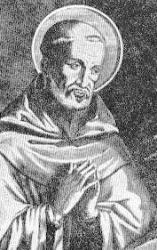
1090 - 1153 Person Name: Bernard of Clairvaux, 1091-1153 Topics: Palm Sunday of the Passion of the Lord; Good Friday; Jesus Christ; Love of God for Us; Paschal Mystery; Petition, Prayer; Shepherd; Sickness; Suffering; Trust in Jesus Christ Author (attributed to) of "O Sacred Head, Surrounded" in Lead Me, Guide Me (2nd ed.) Bernard of Clairvaux, saint, abbot, and doctor, fills one of the most conspicuous positions in the history of the middle ages. His father, Tecelin, or Tesselin, a knight of great bravery, was the friend and vassal of the Duke of Burgundy. Bernard was born at his father's castle on the eminence of Les Fontaines, near Dijon, in Burgundy, in 1091. He was educated at Chatillon, where he was distinguished for his studious and meditative habits. The world, it would be thought, would have had overpowering attractions for a youth who, like Bernard, had all the advantages that high birth, great personal beauty, graceful manners, and irresistible influence could give, but, strengthened in the resolve by night visions of his mother (who had died in 1105), he chose a life of asceticism, and became a monk. In company with an uncle and two of his brothers, who had been won over by his entreaties, he entered the monastery of Citeaux, the first Cistercian foundation, in 1113. Two years later he was sent forth, at the head of twelve monks, from the rapidly increasing and overcrowded abbey, to found a daughter institution, which in spite of difficulties and privations which would have daunted less determined men, they succeeded in doing, in the Valley of Wormwood, about four miles from the Abbey of La Ferté—itself an earlier swarm from the same parent hive—on the Aube. On the death of Pope Honorius II., in 1130, the Sacred College was rent by factions, one of which elected Gregory of St. Angelo, who took the title of Innocent II., while another elected Peter Leonis, under that of Anacletua II. Innocent fled to France, and the question as to whom the allegiance of the King, Louie VI., and the French bishops was due was left by them for Bernard to decide. At a council held at Etampes, Bernard gave judgment in favour of Innocent. Throwing himself into the question with all the ardour of a vehement partisan, he won over both Henry I., the English king, and Lothair, the German emperor, to support the same cause, and then, in 1133, accompanied Innocent II., who was supported by Lothair and his army, to Italy and to Rome. When Lothair withdrew, Innocent retired to Pisa, and Bernard for awhile to his abbey of Clairvaux. It was not until after the death of Anacletus, the antipope, in January, 1138, and the resignation of his successor, the cardinal-priest Gregory, Victor II., that Innocent II., who had returned to Rome with Bernard, was universally acknowledged Pope, a result to which no one had so greatly contributed as the Abbot of Clairvaux. The influence of the latter now became paramount in the Church, as was proved at the Lateran Council of 1139, the largest council ever collected together, where the decrees in every line displayed the work of his master-hand. After having devoted four years to the service of the Pope, Bernard, early in 1135, returned to Clairvaux. In 1137 he was again at Rome, impetuous and determined as ever, denouncing the election of a Cluniac instead of a Clairvaux monk to the see of Langres in France, and in high controversy in consequence with Peter, the gentle Abbot of Cluny, and the Archbishop of Lyons. The question was settled by the deposition by the Pope of the Cluniac and the elevation of a Clairvaux monk (Godfrey, a kinsman of St. Bernard) into his place. In 1143, Bernard raised an almost similar question as to the election of St. William to the see of York, which was settled much after the same fashion, the deposition, after a time, if only for a time, of William, and the intrusion of another Clairvaux monk, Henry Murdac, or Murduch, into the archiepiccopal see. Meantime between these two dates—in 1140—the condemnation of Peter Abilaid and his tenets, in which matter Bernard appeared personally as prosecutor, took place at a council held at Sens. Abelard, condemned at Sens, appealed to Rome, and, resting awhile on his way thither, at Cluny, where Peter still presided as Abbot, died there in 1142. St. Bernard was next called upon to exercise his unrivalled powers of persuasion in a very different cause. Controversy over, he preached a crusade. The summer of 1146 was spent by him in traversing France to rouse the people to engage in the second crusade; the autumn with a like object in Germany. In both countries the effect of his appearance and eloquence was marvellous, almost miraculous. The population seemed to rise en masse, and take up the cross. In 1147 the expedition started, a vast horde, of which probably not a tenth ever reached Palestine. It proved a complete failure, and a miserable remnant shared the flight of their leaders, the Emperor Conrad, and Louis, King of France, and returned home, defeated and disgraced. The blame was thrown upon Bernard, and his apology for his part in the matter is extant. He was not, however, for long to bear up against reproach; he died in the 63rd year of his age, in 1153, weary of the world and glad to be at rest. With the works of St. Bernard, the best ed. of which was pub. by Mabillon at Paris in the early part of the 18th cent. (1719), we are not concerned here, except as regards his contributions, few and far between as they are, to the stores of Latin hymnology. There has been so much doubt thrown upon the authorship of the hymns which usually go by his name,—notably by his editor, Mabillon himself,—that it is impossible to claim any of them as having been certainly written by him; but Archbishop Trench, than whom we have no greater modern authority on such a point, is satisfied that the attribution of them all, except the "Cur mundus militat," to St. Bernard is correct. "If he did not write," the Archbishop says, "it is not easy to guess who could have written them; and indeed they bear profoundly the stamp of his mind, being only inferior in beauty to his prose." The hymns by which St. Bernard is best known as a writer of sacred poetry are: (1.) "Jesu duicis memoria," a long poem on the " Name of Jesus"—known as the "Jubilus of St. Bernard," and among mediaeval writers as the " Rosy Hymn." It is, perhaps, the best specimen of what Neale describes as the "subjective loveliness " of its author's compositions. (2.) "Salve mundi Salutore," an address to the various limbs of Christ on the cross. It consists of 350 lines, 50 lines being addressed to each. (3.) "Laetabundus, exultet fidelis chorus: Alleluia." This sequence was in use all over Europe. (4.) "Cum sit omnis homo foenum." (5.) " Ut jucundas cervus undas." A poem of 68 lines, and well known, is claimed for St. Bernard by Hommey in his Supplementum Patrum, Paris, 1686, p. 165, but on what Archbishop Trench, who quotes it at length, (Sac. Lat. Poetry, p. 242,) deems " grounds entirely insufficient." (6.) " Eheu, Eheu, mundi vita," or " Heu, Heu, mala mundi vita." A poem of nearly 400 lines, is sometimes claimed for St. Bernard, but according to Trench, “on no authority whatever." (7.) “O miranda vanitas." This is included in Mabillon's ed. of St. Bernard's Works. It is also attributed to him by Rambach, vol. i. p. 279. Many other hymns and sequences are attributed to St. Bernard. Trench speaks of a " general ascription to him of any poems of merit belonging to that period whereof the authorship was uncertain." Hymns, translated from, or founded on, St. Bernard's, will be found in almost every hymnal of the day, details of which, together with many others not in common use, will be found under the foregoing Latin first lines. -John Julian, Dictionary of Hymnology (1907) See also in: Hymn Writers of the Church

E. E. Hewitt

1851 - 1920 Person Name: Eliza E. Hewitt, 1851-1920 Topics: All Souls November 2nd; Funeral Sacraments; City of God; Eternal Life; Grace; Heaven; Journey, Pilgrimage; Joy; Mercy, Forgiveness; Praise; Service; Trust in Jesus Christ; Victory over Sin and Death; Worship and Adoration Author of "When We All Get to Heaven" in Lead Me, Guide Me (2nd ed.) Pseudonym: Li­die H. Ed­munds. Eliza Edmunds Hewitt was born in Philadelphia 28 June 1851. She was educated in the public schools and after graduation from high school became a teacher. However, she developed a spinal malady which cut short her career and made her a shut-in for many years. During her convalescence, she studied English literature. She felt a need to be useful to her church and began writing poems for the primary department. she went on to teach Sunday school, take an active part in the Philadelphia Elementary Union and become Superintendent of the primary department of Calvin Presbyterian Church. Dianne Shapiro, from "The Singers and Their Songs: sketches of living gospel hymn writers" by Charles Hutchinson Gabriel (Chicago: The Rodeheaver Company, 1916)

Johann Sebastian Bach

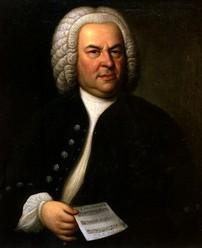
1685 - 1750 Person Name: J. S. Bach, 1685-1750 Topics: Palm Sunday of the Passion of the Lord; Good Friday; Jesus Christ; Love of God for Us; Paschal Mystery; Petition, Prayer; Shepherd; Sickness; Suffering; Trust in Jesus Christ Harmonizer of "PASSION CHORALE" in Lead Me, Guide Me (2nd ed.) Johann Sebastian Bach was born at Eisenach into a musical family and in a town steeped in Reformation history, he received early musical training from his father and older brother, and elementary education in the classical school Luther had earlier attended. Throughout his life he made extraordinary efforts to learn from other musicians. At 15 he walked to Lüneburg to work as a chorister and study at the convent school of St. Michael. From there he walked 30 miles to Hamburg to hear Johann Reinken, and 60 miles to Celle to become familiar with French composition and performance traditions. Once he obtained a month's leave from his job to hear Buxtehude, but stayed nearly four months. He arranged compositions from Vivaldi and other Italian masters. His own compositions spanned almost every musical form then known (Opera was the notable exception). In his own time, Bach was highly regarded as organist and teacher, his compositions being circulated as models of contrapuntal technique. Four of his children achieved careers as composers; Haydn, Mozart, Beethoven, Mendelssohn, Schumann, Brahms, and Chopin are only a few of the best known of the musicians that confessed a major debt to Bach's work in their own musical development. Mendelssohn began re-introducing Bach's music into the concert repertoire, where it has come to attract admiration and even veneration for its own sake. After 20 years of successful work in several posts, Bach became cantor of the Thomas-schule in Leipzig, and remained there for the remaining 27 years of his life, concentrating on church music for the Lutheran service: over 200 cantatas, four passion settings, a Mass, and hundreds of chorale settings, harmonizations, preludes, and arrangements. He edited the tunes for Schemelli's Musicalisches Gesangbuch, contributing 16 original tunes. His choral harmonizations remain a staple for studies of composition and harmony. Additional melodies from his works have been adapted as hymn tunes. --John Julian, Dictionary of Hymnology (1907)

Gregory Murray

1905 - 1992 Person Name: A. Gregory Murray, OSB, 1905-1992 Topics: Body and Blood of Christ; Sacred Heart of Jesus; All Souls November 2nd; Eucharist Sacraments; Pastoral Care of the Sick Sacraments; Funeral Sacraments; Comfort; Communion; Courage; Cross; Eternal Life; Food; Guidance; Homecoming; Hope; Journey, Pilgrimage; Joy; Love of God for Us; Mercy, Forgiveness; Petition, Prayer; Praise; Providence; Reconciliation, Atonement, Forgiveness; Shepherd; Sickness; Trust in Jesus Christ; Worship and Adoration Harmonizer of "ST. COLUMBA" in Lead Me, Guide Me (2nd ed.)

Jonathan C. Woodman

1813 - 1894 Topics: Trust In God Composer of "STATE STREET" in Book of Worship with Hymns and Tunes

Willard F. Jabusch

1930 - 2018 Topics: God Trust in Author (Refrain) of "Lift Up the Gates Eternal" in Psalms for All Seasons Willard F. Jabusch (b. 1930) received degrees from St. Mary of the Lake Seminary, Mundelein, Illinois, and Loyola University, Chicago. He also earned a doctorate at Northwestern University, Evanston, Illinois (1986), and studied music at the Chicago Conservatory and the University of London. A parish priest at St. James Roman Catholic Church in Chicago from 1956 to 1961, he taught at Niles College of Loyola University from 1963 to 1966 and at the Mundelein Seminary from 1968 to 1990. Since 1990 Jabusch has been director of Calvert House, the Roman Catholic student center at the University of Chicago. His theological publications include The Person in the Pulpit (1980), Walk Where Jesus Walked (1986), and The Spoken Christ (1990). He has written some forty tunes and one hundred hymn texts, often pairing them with eastern European and Israeli folk tunes. Bert Polman

Amzi Chapin

1768 - 1835 Topics: Trust In God Composer of "FOREST" in Book of Worship with Hymns and Tunes Amzi Chapin USA 1768-1835. Born in Springfield. MA, into a family of cabinetmakers, jewelers, and watchmakers, he followed in the same trade in Hartford, CT. for several years, then moved to New Haven, CT. He embarked on a career as an itinerant singing teacher, composer, and cabinetmaker in the South and Midwest. He married Hannah Power and they had eight children. They lived in Mount Pleasant, PA, where he taught singing and farmed for the next 30 years. He also founded a mill. He co-founded the Presbyterian congregation in Northfield Township. Chapin taught singing schools in VA, NC, KY, and PA. In 1831, he and his family moved to Northfield, OH. His older brother, Lucius, was also a singing teacher, and they were among the first to teach sacred music west of the Allegheny Mountains. John Perry

Pages


Export as CSV
It looks like you are using an ad-blocker. Ad revenue helps keep us running. Please consider white-listing Hymnary.org or getting Hymnary Pro to eliminate ads entirely and help support Hymnary.org.