You help make Hymnary.org possible. More than 10 million people from 200+ countries found hymns, liturgical resources and encouragement on Hymnary.org in 2025, including you. Every visit affirms the global impact of this ministry.

If Hymnary has been meaningful to you this year, would you take a moment today to help sustain it? A gift of any size—paired with a note of encouragement if you wish—directly supports the server costs, research work and curation that keep this resource freely available to the world.

Give securely online today, or mail a check to:
Hymnary.org
Calvin University
3201 Burton Street SE
Grand Rapids, MI 49546

Thank you for your partnership, and may the hope of Advent fill your heart.

Person Results

Topics:works+of+god+
In:people

Planning worship? Check out our sister site, ZeteoSearch.org, for 20+ additional resources related to your search.
Showing 261 - 270 of 692Results Per Page: 102050

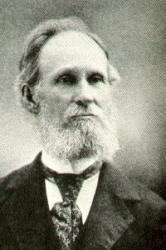
J. H. Tenney

1840 - 1918 Topics: Adoration; Afflictions Prayer in; Anger of God Slow; Aspirations For Christ; Aspirations For Grace; Aspirations For Holiness; Bible Spirit's Aid in Study; Christ Exaltation; Christ Glorying in; Christ The Savior; Christ Worshiped; Comfort in Trials; Deliverance from death; Faith Confession of; Faith Walking by; God Compassionate; God Father; God Glorious; God Hearer of Prayer; God Supremacy of; God Our Teacher; Gospel Sanctifying and Saving; Grace Growth in; Hell; Holiness; Idolatry; Mercy of God Great; Mercy of God Prayer for the; Miracles; Missions Encouragements; Missions Triumphs of; Nations Ultimate Subjection of; Pardon; Praise By All men; Praise For God's Power; Praise For Work of Redemption; Praise To God; Prayer confidence in; Prayer For Deliverance from Trouble; Prayer Pleas in; Salvation Prayers for; Truth; Worship Only as God Appoints Composer of "[O Lord, do Thou bow down Thy ear]" in Bible Songs John Harrison Tenney, 1840-1918 Born: No­vem­ber 22, 1840, Row­ley, Mass­a­chu­setts. Born just af­ter the pre­si­den­tial cam­paign of "Tip­pe­ca­noe and Ty­ler, too," Ten­ney was named af­ter Amer­i­can pre­si­dent Will­iam Hen­ry Har­ri­son. A dea­con in the Con­gre­ga­tion­al Church in Line­brook, Mass­a­chu­setts, he ed­it­ed or was as­so­ci­ate ed­it­or of over 30 books, and con­trib­ut­ed to hun­dreds more. His works in­clude: Amer­i­can Male Choir Temperance Jew­els, with Eli­sha Hoff­man (Bos­ton, Mass­a­chu­setts: Ol­iv­er Dit­son & Com­pa­ny, 1879) Bells of Vic­to­ry, with Eli­sha Hoff­man (Bos­ton, Mass­a­chu­setts: Oliv­er Dit­son & Com­pa­ny, 1888) Gems of Gos­pel Song Golden Sun­beams Sharon’s Dewy Rose Songs of Faith Shining Light Songs of Joy Sparkling and Bright Spiritual Songs, Nos. 1 and 2 Sweet Fields of Eden The Bea­con Light The Sing­ing School Ban­ner The An­them Of­fer­ing The Amer­i­can An­them Book The Crown of Praise Sources-- Hall, pp. 219-22 Music-- Asilomar Bogotá Beyond the Swell­ing Flood Cancún Come to Je­sus Ever Will I Pray Hallowed Hour of Pray­er Jesus Is Pass­ing This Way Jubilate! My An­chor Is Hold­ing Nothing Be­tween Onward Christ­ian Sol­diers Sabbath Bell San Fran­cis­co We’ll Ne­ver Say Good­bye Where Will You Spend Eter­ni­ty? --www.hymntime.com/tch

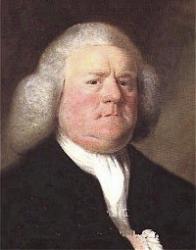
William Boyce

1711 - 1779 Person Name: W. Boyce Topics: Church Beloved of God; Church Missions of; Church Work of Composer of "APPLETON" in Laudes Domini William Boyce (baptised 1711 – d. 7 February 1779) was an English composer and organist. See also in: Wikipedia

Johann Mentzer

1658 - 1734 Topics: The Praise of God In his works Author of "O that I had a thousand voices" in The Hymnal of the Protestant Episcopal Church in the United States of America 1940 Mentzer, Johann, was born July 27, 1658, at Jahmen, near Rothenburg, in Silesia, and became a student of theology at Wittenberg, In 1691 he was appointed pastor at Merzdorf; in 1693 at Hauswalde, near Bischofswerda; and in 1696 at Kemnitz, near Bernstadt, Saxony. He died at Kemnitz, Feb. 24, 1734 (G. F. Otto's Lexicon . . . Oberlausizischer Schriftsteller, ii., 581; ms. from Pastor Richter of Kemnitz, &c). He was a great friend of J. C. Schwedler, of Henrietta Catherine von Gersdorf, and of N. L. von Zinzendorf, all hymnwriters, and all his near neighbours. He was himself greatly tried in the furnace of affliction. He wrote a large number of hymns, over 30 of which appeared in the various hymnbooks of his time. Many of them, especially those of Praise and Thanksgiving, and those of Cross and Consolation, are of high merit, though sometimes exaggerated and not very refined in their imagery, and are full of ardent love to Christ, Scriptural, poetical, and also popular in style. The only one in English common use is:— 0 dass ich tausend Zungen hatte. Praise and Thanksgiving. His best hymn. First published as No. 496, in Freylinghausen's Gesang-Buch, 1704, in 15 st. of 6 1., and repeated in many later collections as the Unverfälschter Liedersegen, 1851, No. 719. Lauxmann, in Koch viii. 350, says this hymn was written in 1704 after his house was burned down. In reply to enquiries addressed to Kemnitz, pastor Richter informs me that the parsonage house there was built in the years 1696 and 1697, and has never been burned down. In 1697 a farmhouse near was destroyed by lightning, and possibly Mentzer may have been living there at the time; or at any rate this may have suggested the hymn and the story. Lauxmann speaks of the hymn as having been a great favourite of Caroline Perthes of Hamburg, and of J. C. Schlipalius of Dresden, and relates various incidents regarding its blessed and comforting effects. The translations in common use are:— 1. Oh that I had a thousand voices! A mouth. A full translation by Dr. H. Mills, in his Horae Germanica, 1845 (1856, p. 189); repeated, abridged, in the American Lutheran General Synod's Collection, 1850-52, the Ohio Lutheran Hymnal, 1880, &c. 2. Oh be unceasing praise ascending. A good translation of st. i., vii., viii., by A. T. Russell, as No. 203, in his Psalms & Hymns, 1851. 3. Oh would I had a thousand tongues. A good translation, omitting stanzas ix., x., xiii., by Miss Winkworth, in her Lyra Germanica, 1st Ser., 1855, p. 170; and repeated, abridged, in the Methodist New Congregational Hymn Book, 1863. 4. 0 would, my God, that I could praise Thee. A good translation, in the original metre, by Miss Winkworth, in her Chorale Book for England, 1863, No. 5, being of stanzas i., iii.—v, xiv., xv. This was repeated in the Evangelical Hymnal, N. Y., 1830. A filtered form, beginning with st. iii., "0 all ye powers that God implanted” is in Dr. Knight's Collection, Dundee, 1871 and 1874. 5. I praise Thee, 0 my God and Father. By Miss Winkworth, in her Chorale Book for England, 1863, No. 6. This is of st. vi.-viii., xi., xii., and fol¬lows the text of Bunsen's Versuch, 1833, No. 846, this stanza beginning there, "Lob sei dir, treuer Gott und Vater." Her translation is repeated in Dr. Thomas's Augustine Hymn Book, 1866. Other translations are:— (1) "0 that a thousand tongues were granted," by N. L. Frothingham, 1810, p. 155. (2) "0 that a thousand tongues were mine, And each," by Dr. Alexander Mair in the Family Treasury, 1872, p. 462. Other hymns by Mentzer, translated into English but not in common use are:— ii. Du gehest in den Garten beten. Passiontide. First published in the Löbau Gesang-Buch, 1725, as No. 370, in 12 stanzas of 6 lines, marked as by Mentzer and entitled "The true school of prayer of Jesus, praying on the Mount of Olives, Matt. xxvi. 36-46." In the Berlin Geistliche Lieder, ed. 1863, No. 223, beginning "Du gehst zum Garten urn zu beten," and wrongly ascribed to B. Schmolck. Translated as "Into the garden shade to pray," by J. Kelly, in the Family Treasury, 1868, p. 691. iii. Wer das Kleinod will erlangen. Christian Warfare. A call to spiritual energy, founded on 1 Cor. ix. 24, 25. Included as No. 783 in the Neuvermehrtes Geistreiches Gesang-Buch Berlin, 1711, in 6 stanzas of 8 lines; and previously in Schlechtiger's Gesang-Buch, Berlin, 1704. In the Berlin Geistliche Lieder, ed. 1863, No. 679. Translated as "Who would make the prize his own." By Miss Winkworth, 1858, p. 167. [Rev. James Mearns, M.A.] -- John Julian, Dictionary of Hymnology (1907)

Julia C. Cory

1882 - 1963 Person Name: Julia Bulkley Cady Topics: God of our fathers; Guidance of God, of Christ; Praise for Blessings; Praise for God's Works; Praise in Worship; Thanksgiving; Thanksgiving Day; Victory; Christian Warfare Translator of "We Praise Thee, O God" in Psalter Hymnal (Red) Julia C. Cory (Julia Buckley Cady Cory) was born in New York, NY in 1882. She was the daughter of a prominent New York architect, J. Cleveland Cady. Her father was also a Sunday school superintendent and amateur hymnologist. Partly because of his influence Julia began to write hymns at an early age. She was a member of the Brick Presbyterian Church. She married Robert Haskell Cory in 1911 and was a member of the Presbyterian Church in Englewood, NJ for all of her married life. She was a member of the Hymn Society that met in New York City all her adult life and died in Englewood, NJ in 1963. She raised 3 sons and they had 15 grandchildren. Psalter Hymnal Handbook, 1998 and D. Lincoln Cory

John H. Gower

1855 - 1922 Topics: Good Works; Jesus Christ His Death; Christ Suffering of; Imputation of Righteousness; Love For Christ of God Composer of "MEDITATION" in Trinity Hymnal (Rev. ed.)

R. Birch Hoyle

1875 - 1939 Person Name: R. Birch Hoyle, 1875-1939 Topics: God Glory of; God: His Being, Word and Works God the Son: His Resurrection; Recessionals Translator of "Thine be the glory" in The Book of Praise Born: March 8, 1875, Clough­fold, Lan­ca­shire, Eng­land. Died: De­cem­ber 14, 1939, Wim­ble­don, Sur­rey, Eng­land. Hoyle at­tend­ed Re­gent’s Park Coll­ege in Lon­don, then pas­tored in Sud­bu­ry, Ab­er­deen, and Lon­don (1900-17), and in Bel­ve­dere, Kent (1923-26). He ed­it­ed the YMCA’s Red Tri­an­gle mag­az­ine, and was pro­fess­or of the­ol­o­gy at West­ern The­o­lo­gic­al Sem­in­a­ry, Pitts­burgh, Penn­syl­van­ia (1934-36). He lat­er re­turned to Eng­land, pas­tor­ing at the Bap­tist church in Kings­ton-on-Thames. Some of his work ap­pears in the World Stu­dent Chris­tian Fed­er­a­tion hym­nal Can­ta­te Do­mi­no (1925). Translations: Holy God, Thy Name We Bless My Sav­ior and My Lord Thine Is the Glo­ry What Joy, to Think of That Vast Host --www.hymntime.com/tch

Johann Georg Ebeling

1637 - 1676 Person Name: Johann G. Ebeling Topics: Christ, The Lord Jesus; Christ Atoning work of; Christ Birth of; Christ Conqueror; Christ Lamb of God; Christ Love and Grace of Composer of "WARUM SOLLT' ICH MICH DENN GRÄMEN" in Trinity Hymnal Johann George Ebeling Germany 1637-1676. Born at Luneburg, Germany, he studied theology at the University of Helmstedt. He was a composer, author, editor, and collector of music. In 1660 he became head of the Hamburg Collegium, and in 1662 cantor of St. Nicholas Church in Berlin. In 1667 he begam teaching music and Greek in Stettin. He wrote choruses, chorales, cantatas, instrumentals oratorios, requiems and music for over 100 lyrics of Paul Gerhardt. He also wrote about music history. 278 works. He died in Stettin. John Perry

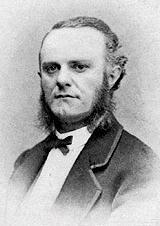
Lewis H. Redner

1831 - 1908 Topics: Works of God Composer of "ST. LOUIS" in Psalter Hymnal (Red) Lewis Henry Redner (1831-1908) was born in Philadelphia, where he became a real estate agent and served on weekends as an organist and Sunday School Superintendent. He spent nineteen years at Holy Trinity church where Phillips Brooks was rector, and is credited with increasing attendance at the Sunday School from thirty-one to more than a thousand. In 1868 Brooks asked him to write a tune for his new text for children inspired by his recent trip to Bethlehem. Redner composed the tune the night before it was to be sung in worship on Sunday morning. The text and tune were first published in 1894 in The Church Porch, where the tune was named ST. LOUIS, possibly after the composer’s name. Redner is remembered today because of this one tune that has remained a Christmas favorite. Emily Brink

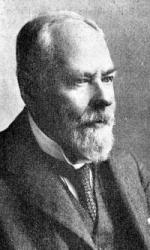
Basil Harwood

1859 - 1949 Person Name: Basil Harwood, 1859 - 1949 Topics: Christ, the Lord Jesus Kingly Office of; God Praise of; God: His Being, Word and Works God the Father Almighty: The Divine Perfections Composer of "LUCKINGTON" in The Book of Praise Basil Harwood (11 April 1859 – 3 April 1949) was an English organist and composer. Basil Harwood was born in Woodhouse, Gloucestershire (the second youngest of 12 children) on 11 April 1859. His mother died in 1867 when Basil was eight. His parents were Quakers but his elder sister Ada, on reaching 21 in 1867, converted to the Anglican Church. Basil was allowed to attend the ceremony at the Church of England in Almondsbury and this is where he was first drawn to organ music and choral singing. His father, Edward, remarried two years later in 1869 to a lady from an Anglican family. Basil was now sent to the Montpellier School in Weston-super-Mare for a year. In 1871, at 12 he was enrolled in Clevedon, the preparatory school for Charterhouse where he was first to formally study music. He went up to Charterhouse in 1874 and left in 1876 having won a leaving Exhibition to Trinity College, Oxford where he initially studied Classics (1879) and Modern History (1880). He then studied for a further two years, 1881–1882, at the Leipzig Conservatory under Carl Reinecke and Salomon Jadassohn. It was here in 1882, Basil composed his first anthem for chorus and organ "O Saving Grace." He returned from Leipzig to realise that he had now passed the age limit to study music formally. In 1883, Basil became organist of St. Barnabas Church, Pimlico completing his Sonata in C# Minor here in 1885, selling the copyright to the publisher Schott for one shilling a year or two later. After this success, he then moved to Ely Cathedral in 1887 where he wrote the bulk of Dithyramb, possibly his greatest organ work. His final appointment was as organist at Christ Church, Oxford and as precentor of Keble College, Oxford from 1892 to 1909. Whilst there he co-founded and conducted the Oxford Bach Choir which helped to earn him his degree as Doctor of Music. He conducted the Oxford Orchestral Association (1892–1898). He was musical editor of the 1908 Oxford Hymn Book and Examiner for Musical Degrees (1900–1925). During this time, he met and married Mabel Ada Jennings (the daughter of George Jennings) (who had become a pupil of his in 1896) at All Souls St. Marylebone, London (27 December 1899). Mabel had studied music herself, piano and composition, and was also a writer. She may well have composed lyrics for some of his lesser known tunes. At an advanced age she wrote a small volume of collected poems named Questing Soul. He retired early at 50 (in 1909) after the death of his father, Edward Harwood, from whom he inherited the family estate of Woodhouse having outlived his seven older brothers. Soon after moving in he had a three manual chamber organ built in the library by Bishop & Sons of Ipswich (now in Minehead Parish Church), on which he promptly finished his Sonata in F# Minor. He continued to compose prolifically. He was a keen walker, and named many of his hymn tunes after local places that he loved to visit, the most notable being the hymn tunes such as Tockington, Olveston, Almondsbury and Thornbury. In 1936 advancing in years, he let the Woodhouse estate and moved to Bournemouth. Part of the estate, Woodhouse Down, was later sold to his contemporary Robert Baden-Powell who was two years older than he was and who had also attended Charterhouse School, and is used as a Scout Camp to this day. In 1939, at eighty, he moved to London, taking a flat in Fleet Street. After a long life, he died on 3 April 1949, eight days short of his 90th birthday, at Courtfield Gardens in the Royal Borough of Kensington, London. A memorial service was held in St Paul's Cathedral on 22 April 1949. Mabel survived him, dying shortly before her 103rd birthday on 20 July 1974. He was survived by two sons; Major John Edward Godfrey Harwood (1900–1996) and Basil Antony Harwood (1903–1990) Senior Master of the Supreme Court, Q.B.D. and Queen's Remembrancer. His remains are interred in St. Barnabas Church, Pimlico and marked by a plaque inset in floor of the chancel, close to where he would have stood to conduct the choir. He composed cantatas, church music and works for the organ; his Service in A flat, the anthem O how Glorious and the hymn tunes LUCKINGTON ("Let all the world in every corner sing") and THORNBURY ("Thy hand O God has guided"), first used during a festival of the London Church Choir Association, remain in the Anglican repertory. --en.wikipedia.org/wiki

L. G. Hayne

1836 - 1883 Person Name: Leighton George Hayne, 1836 - 1883 Topics: God Kingdom of; God: His Being, Word and Works God the Son: His Coming in Power Composer of "ST. CECILIA" in The Book of Praise Born: February 28, 1836, St. David’s Hall, Exeter, England. Died: March 3, 1883, Bradfield, Essex, England. Son of Richard Hayne, Rector of Mistley, Leighton graduated from Eton and Queen’s College, Oxford (BMus 1856, DMus 1860); at school, he was Eton College’s organist and conducted the Oxford University chorus. He also served as chaplain of Queen’s College; Vicar of Helston, Cornwall (1866-67); Succentor of Eton (1867-71); and Rector of Mistley, Essex (1871-83), and was well known as an organ builder. Music: BUCKLAND CHALVEY ST. CECILIA ST. LAWRENCE --www.hymntime.com/tch/

Pages


Export as CSV
It looks like you are using an ad-blocker. Ad revenue helps keep us running. Please consider white-listing Hymnary.org or getting Hymnary Pro to eliminate ads entirely and help support Hymnary.org.