You help make Hymnary.org possible. More than 10 million people from 200+ countries found hymns, liturgical resources and encouragement on Hymnary.org in 2025, including you. Every visit affirms the global impact of this ministry.

If Hymnary has been meaningful to you this year, would you take a moment today to help sustain it? A gift of any size—paired with a note of encouragement if you wish—directly supports the server costs, research work and curation that keep this resource freely available to the world.

Give securely online today, or mail a check to:
Hymnary.org
Calvin University
3201 Burton Street SE
Grand Rapids, MI 49546

Thank you for your partnership, and may the hope of Advent fill your heart.

Person Results

Topics:judgment+of+god
In:people

Planning worship? Check out our sister site, ZeteoSearch.org, for 20+ additional resources related to your search.
Showing 271 - 280 of 375Results Per Page: 102050

Eddie Espinosa

Person Name: Eddie Espinosa, b. 1953 Topics: Biblical Names and Places Jerusalem; Biblical Names and Places Zion; Broken-hearted; Church Year Ash Wednesday; Church Year Good Friday; Church Year Lent; Church Year Pentecost; Church Year Transfiguration; Cry to God; Daily Prayer Morning Prayer; Elements of Worship Assurance of Pardon; Elements of Worship Baptism; Elements of Worship Confession (Individual); Elements of Worship Lord's Supper; Elements of Worship Offering; Endurance; Forgiveness; God Trust in; God as Refuge; God as Spirit; God's Wisdom; God's Face; God's Forgiveness; God's Goodness; God's Justice; God's Love; God's Protection; Grace; Guilt; Humility; Joy; Judgment; Lord's Prayer 5th petition (forgive us our sins as we forgive…); Mercy; Offering of Sacrifice; Renewal; Servants of God; Sorrow; Suffering; Temptation And Trial; Temptation And Trial; Temptation And Trial; Temptation And Trial; Temptation And Trial; Temptation And Trial; Temptation And Trial; Temptation And Trial; Temptation And Trial; Temptation And Trial; Temptation And Trial; Temptation And Trial; Temptation And Trial; Temptation And Trial; Temptation And Trial; Temptation And Trial; Temptation And Trial; Ten Commandments 7th Commandmnet (do not commit adultery); The Fall; Year A, B, C, Lent, Ash Wednesday; Year B, Lent, 5th Sunday; Year B, Ordinary Time after Pentecost, July 31-August 6; Year C, Ordinary Time after Pentecost, September, 11-17; Texts in Languages Other than English Spanish Author of "Cámbiame, Señor (Change My Heart, O God)" in Psalms for All Seasons

Edward Harwood

1707 - 1787 Topics: Afflictions Deliverance from; Afflictions Promises for; Cares; Character Good and Bad Contrasted; Christians Persecuted and Sorrowing; Contentment; Death Of Saints; Death Of the Wicked; Faith Walking by; Glory of God In Providence; God the judge; Judgments On the Wicked; Man Mortal and Frail; Nature Sinners Typified in; Old Age; Peace; Preservation; Prosperity Without God's Blessing; Providence of God Over Saints; Retribution Threatened; The Christian's Reward; The Righteous Character of; The Righteous Contrasted with the Wicked; The Righteous Hated by the Wicked; The Righteous Honor and Safety of; Royalty of Christ Guarantee of Salvation; Safety Assured; Salvation God's Gift; Salvation Promised; Trust in God Exhortation to; Waiting upon God ; The Wicked Fate of Composer of "RAPTURE" in The Psalter Edward Harwood (of Darwen) (1707–1787) was an English composer of hymns, anthems and songs. His setting of Alexander Pope's The Dying Christian (Vital spark of heav'nly flame) was enormously popular at one time and was widely performed at funerals. Edward Harwood was born at Hoddlesden, near Darwen, Lancashire, in 1707. His early training was as a hand-loom weaver, but he subsequently became a professional musician in Liverpool. His first collection of psalmody, A set of hymns and psalm tunes, was published in London in 1781 and a second collection, entitled A Second Set of Hymns and Psalm Tunes/ was published at Chester in 1786. He died in 1787. Harwood's setting of Pope's ode "Vital spark of heav'nly flame" was first published in Harwood's A set of hymns and psalm tunes: it is written in the style of a glee, and in the original publication is written for the most part for three voices (two trebles and bass), with a fourth (tenor) part being added for the last few bars only. It was, however, often arranged for the more usual four part-choir. The piece was very popular in the first half of the 19th century, being widely sung among Anglicans, Methodists and dissenters, and Lightwood noted in 1935 that it 'certainly had a long and prosperous run, and even now it is not quite extinct'. However, it was not always a great favourite with the clergy, whose objections were mainly to do with the text, which is not explicitly religious (also, it's a poem written by a Catholic, after the last words of the Emperor Hadrian). --en.wikipedia.org/wik

William Dixon

1750 - 1825 Topics: Afflictions From the Wicked; Backsliding; Character Value of Good; Christ Abiding with Believers; Christ Providences of; Christ Righteousness of; Christian Charity; Christians Happiness of; Covenant Promises; Faith Confession of; Fidelity; Glory of God In Creation; God the judge; Judgments On Righteous; Old Age; Perseverance; The Poor Duty Towards; Prosperity No Proof of God's Blessing; Providence of God Over Saints; The Righteous Character of; The Righteous Contrasted with Wicked; The Righteous Hated by the Wicked; The Righteous Reward of; Royalty of Christ Bible His Law; Safety Assured Composer of "[The footsteps of the righteous man]" in Bible Songs William Dixon b. ? Lndon, c. 1760; d. there 1825) composer, writer, teacher and music-engraver; lived partly in London, partly in Liverpool, where he was apparently connected with All Saints' Church. He composed 'Psalmodia Christiana," a collection of sacred music (1790); 'Euphonia,' 62 psalm and hymn tunes in 4 parts for All Saints' Church, Liverpool' Moralities, or verses on music, friendship, avarice, etc.' services, anthems, glees; also som numbers in Arnold's collection of hymn tunes. He also wrote an Introduction ot Singing, 1795) Groves Dictionary of Music and Musicians (vol. 2) by H. C. Colles (Macmillan Company, 1906)

Kenneth Munson

1916 - 1986 Topics: Christ's Return and Judgment; Hope; Jesus Christ Advent; Justice; Sovereignty of God; Thanksgiving Harmonizer of "SALVATION" in Glory to God Kenneth John Munson (b. Galesburg, IL, 1916; d. Burlington, VT, 1986) and first appeared in the Unitarian Universalist Hymns for the Celebration of Life (1964) set to three different texts. Munson studied at Knox College, Galesburg, Illinois, and received a Ph.D. in music from Eastman School of Music, Rochester, New York. He served as chair of the music department at St. Lawrence University in Canton, New York, from 1942-1981, and was organist and choir director in several churches throughout his career. --Psalter Hymnal Handbook, 1988

Chrysogonus Waddell

1930 - 2008 Person Name: Chysogonus Waddell, OCSO Topics: Alienation; Death; Evening; Faithfulness of God; Freedom; Grief; Judgment; Justice; Lament; Mercy; Perseverance; Petition/Prayer; Presence of God Composer (Psalm tone) of "[Day and night I cry to you, my God]" in Gather (3rd ed.)

William U. Butcher

1829 - 1910 Topics: Affliction; Angels; Biblical Names and Places Israel; Bitterness; Boasting; Church Year Advent; Desiring God; Discipleship; Doubt; Eternal Life; God as Refuge; God as King; God's Seeing; God's Deeds; God's Forgiveness; God's Goodness; God's Nearness; God's Presence; Grace; Hope; Humanity Redeemed by God; Humanity Sustained by God; Jesus Christ Teacher; Judgment; Life Stages Death; New Creation; Occasional Services Funerals; Occasional Services New Year; People of God / Church Citizens of Heaven; Salvation; Temple; Ten Commandments 10th Commandment (do not covet); Victory; Wisdom Psalms; Witness Composer of "PRAYER" in Psalms for All Seasons He died on January 21, 1910 and is buried at Ivy Hill Cemetery, Philadelphia, Pennsylvania.

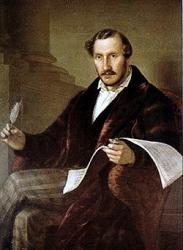
Gaetano Donizetti

1797 - 1848 Person Name: Donizetti Topics: Afflictions Watchfulness in; Anger of God Invoked; Assurance Declared; Assurance Desired; Christian Charity; Christians Conflicts of; Christians Conscious of Safety; Christians Persecuted and Sorrowing; Faith Confidence of; God the judge; Judgment Day; Judgments On the Wicked; Prayer Imprecations in; Retribution Threatened; Royalty of Christ Judgment the Prerogative of; Safety Assured; The Wicked Character of; The Wicked Fate of; The Wicked Self-Destroyed Composer of "PAULINA" in The Psalter Domenico Gaetano Maria Donizetti (born 29 November 1797 – died 8 April 1848) was an Italian composer from Bergamo, Lombardy. Donizetti came from a non-musical background but, at an early age, he was taken under the wing of composer Simon Mayr who had set up the Lezioni Caritatevoli and had enrolled him by means of a full scholarship. There he received detailed training in the arts of fugue and counterpoint, and it was from there that Mayr was instrumental in obtaining a place for the young man at the Bologna Academy. In Bologna, at the age of 19, he wrote his first one-act opera, the comedy Il Pigmalione, although it does not appear to have been performed during his lifetime. Through his life, Donizetti wrote about 70 operas, but an offer in 1822 from Domenico Barbaja, the impresario of the Teatro San Carlo in Naples, which followed the composer's ninth opera, led to his move to that city and the composition of 28 operas which were given their premieres at that house or in one of the city's smaller houses including the Teatro Nuovo or the Teatro del Fondo. This continued until the production of Caterina Cornaro in January 1844. In all, Naples presented 51 of Donizetti's operas. During this period, success came primarily with the comic operas, the serious ones failing to attract significant audiences. However, the situation changed with the appearance in 1830 of the serious opera, Anna Bolena which was the first to make a major impact on the Italian and international opera scene and, at the same time, to shift the balance for the composer away from success with only comedic operas. However, even after 1830, his best-known works did also include comedies such as L'elisir d'amore (1832) and Don Pasquale (1843). But significant historical dramas did appear and became successful, sometimes outside Naples before reaching that city. Most significantly, they included Lucia di Lammermoor (the first to be written by librettist Salvadore Cammarano) in 1835, as well as "one of [his] most successful Neapolitan operas", Roberto Devereux in Up to that point, all of his operas had been written to Italian librettos. However, moving to Paris in 1838, Donizetti set his operas to French texts; these include La favorite and La fille du régiment and were first performed in that city from 1840 onward. It appears that much of the attraction of moving to Paris was not just for larger fees and prestige, but his chafing against the censorial limitations which existed in Italy, thus giving him a much greater freedom to choose subject matter. By 1845 severe illness caused him to be moved back to Bergamo to die in 1848. Along with Gioachino Rossini and Vincenzo Bellini, he was a leading composer of bel canto opera during the first fifty years of the Nineteenth Century. The youngest of three sons, Donizetti was born in 1797 in Bergamo's Borgo Canale quarter located just outside the city walls. His family was very poor and had no tradition of music, his father Andrea, being the caretaker of the town pawnshop. Simone Mayr, a German composer of internationally successful operas had become maestro di cappella at Bergamo's principal church in 1802 and he then founded the Lezioni Caritatevoli school in Bergamo in 1805 for the purpose of providing musical training, including classes in literature, beyond that which choirboys ordinarily received up until the time that their voices broke. In 1807, Andrea Donizetti attempted to enroll both his sons, but the elder, Giuseppe (then 18), was considered too old. Gaetano (then 9) was accepted. While not especially successful as a choirboy during the first three trial months of 1807, there being some concern about a diffetto di gola (throat defect), in every other regard Mayr was reporting that Gaetano "surpasses all the others in musical progress". Mayr was able to persuade the authorities that the young boy's talents were worthy of keeping him in the school, and he remained there for nine years until 1815. However, as William Ashbrook notes, in 1809 he was threatened with having to leave because his voice was changing. In 1810 he applied for and was accepted by the local art school, the Academia Carrara, but it is unknown whether he attended classes. Then, in 1811, Mayr once again intervened. Having written both libretto and music for a "pasticcio-farsa", Il piccolo compositore di musica, as the final concert of the academic year, he cast five your students amongst them Donizetti, his young pupil, as "the little composer". As Ashbrook notes this "was nothing less than Mayr's argument that Donizetti be allowed to continue his musical studies". In Bologna, he justified the faith which Mayr had placed in him and in 1816 he wrote what Allitt describes as "his initial exercises in operatic style", the opera Il pigmalione, as well as composing portions of Olympiade and L'ira d'Achille in 1817, these two being no more than "suggest[ing] the work of a student". Encouraged by Mayr to return to Bergamo in 1817, he began his "quartet years" as well as composing piano pieces and most likely being part of quartets where he would have played and heard music of other composers. In addition, he began seeking employment. After some minor compositions under the commission of Paolo Zancla, Donizetti wrote his ninth opera, Zoraida di Granata. This work impressed Domenico Barbaia, a prominent theatre manager, and Donizetti was offered a contract to compose in Naples. Writing in Rome and Milan in addition to Naples, Donizetti achieved some popular success in the 1820s (although critics were often unimpressed). It was not until 1830 that he became well known internationally, when his Anna Bolena was premiered in Milan, and this brought him instant fame throughout Europe. L'elisir d'amore, a comedy produced in 1832, came soon after, and is deemed to be one of the masterpieces of 19th-century opera buffa (as is his Don Pasquale, written for Paris in 1843). Shortly after L'elisir d'amore, Donizetti composed Lucia di Lammermoor, based on The Bride of Lammermoor, the novel by Sir Walter Scott. This became his most famous opera, and one of the high points of the bel canto tradition, reaching a stature similar to that of Bellini's Norma. Donizetti's wife, Virginia Vasselli, gave birth to three children, none of whom survived. Within a year of his parents' deaths, on 30 July 1837 his wife died from cholera. By 1843, Donizetti was exhibiting symptoms of syphilis and probable bipolar disorder. After being institutionalized in 1845, he was sent to Paris, where he could be cared for. After visits from friends, including Giuseppe Verdi, Donizetti was taken back to Bergamo, his hometown. After several years in the grip of insanity, he died in 1848 in the house of a noble family, the Scotti. Donizetti was buried in the cemetery of Valtesse but in the late 19th century his body was transferred to Bergamo's Basilica of Santa Maria Maggiore near the grave of his teacher Simon Mayr. Donizetti, a prolific composer, is best known for his operatic works, but he also wrote music in a number of other forms, including some church music, a number of string quartets, and some orchestral pieces. Altogether, he composed about 75 operas, 16 symphonies, 19 string quartets, 193 songs, 45 duets, 3 oratorios, 28 cantatas, instrumental concertos, sonatas, and other chamber pieces. --en.wikipedia.org/wiki/ (excerpts)

Lillian Bouknight

Topics: Anniversaries; Assurance; Church Year Lent; Church Year Transfiguration; Conflict; Courage; Darkness; Elements of Worship Call to Worship; Elements of Worship Confession (Individual); Elements of Worship Gathering; Elements of Worship Prayer for Illumination; Enemies; Freedom from Fear; God Dependence on; God as Refuge; God as Shelter; God's Armor; God's Love; God's Presence; God's Protection; God's Strength; Hope; Joy; Judgment; Lament Individual; Mercy; Occasional Services Dedication / Consecration / Anniversary; Occasional Services Funerals; Occasional Services Ordination and/or Installation; Peace; People of God / Church Suffering; Prayer; Temptation And Trial; Truth; Year A, Ordinary Time after Epiphany, 3rd Sunday; Year C, Lent, 2nd Sunday Author of "The Lord Is My Light" in Psalms for All Seasons Very little is known about Lillian Bouknight (d. 1990), except that she was an African American from North Carolina, and a soloist and composer in the Pentecostal Holiness movement in the Aliquippam, PA Community, also serving as a prayer warrior and on the Mother’s Board. Laura de Jong

David Clark Isele

Person Name: David Isele Topics: Biblical Names and Places Jerusalem; Biblical Names and Places Zion; Broken-hearted; Church Year Ash Wednesday; Church Year Good Friday; Church Year Lent; Church Year Pentecost; Church Year Transfiguration; Cry to God; Daily Prayer Morning Prayer; Elements of Worship Assurance of Pardon; Elements of Worship Baptism; Elements of Worship Confession (Individual); Elements of Worship Lord's Supper; Elements of Worship Offering; Endurance; Forgiveness; God Trust in; God as Refuge; God as Spirit; God's Wisdom; God's Face; God's Forgiveness; God's Goodness; God's Justice; God's Love; God's Protection; Grace; Guilt; Humility; Joy; Judgment; Lord's Prayer 5th petition (forgive us our sins as we forgive…); Mercy; Offering of Sacrifice; Renewal; Servants of God; Sorrow; Suffering; Ten Commandments 7th Commandmnet (do not commit adultery); The Fall; Year A, B, C, Lent, Ash Wednesday; Year B, Lent, 5th Sunday; Year B, Ordinary Time after Pentecost, July 31-August 6; Year C, Ordinary Time after Pentecost, September, 11-17 Composer of "[The sacrifice you accept, O God]" in Psalms for All Seasons

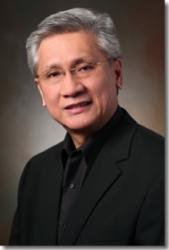
Joel Navarro

b. 1955 Topics: Biblical Names and Places Jerusalem; Biblical Names and Places Zion; Broken-hearted; Church Year Ash Wednesday; Church Year Good Friday; Church Year Lent; Church Year Pentecost; Church Year Transfiguration; Cry to God; Daily Prayer Morning Prayer; Elements of Worship Assurance of Pardon; Elements of Worship Baptism; Elements of Worship Confession (Individual); Elements of Worship Lord's Supper; Elements of Worship Offering; Endurance; Forgiveness; God Trust in; God as Refuge; God as Spirit; God's Wisdom; God's Face; God's Forgiveness; God's Goodness; God's Justice; God's Love; God's Protection; Grace; Guilt; Humility; Joy; Judgment; Lord's Prayer 5th petition (forgive us our sins as we forgive…); Mercy; Offering of Sacrifice; Renewal; Servants of God; Sorrow; Suffering; Ten Commandments 7th Commandmnet (do not commit adultery); The Fall; Year A, B, C, Lent, Ash Wednesday; Year B, Lent, 5th Sunday; Year B, Ordinary Time after Pentecost, July 31-August 6; Year C, Ordinary Time after Pentecost, September, 11-17 Arranger of "[My offenses truly I know them]" in Psalms for All Seasons Joel Navarro (b. 1955) is a professor of music at Singapore Bible College. Until 2014 he taught at Calvin College in Grand Rapids, Michigan, teaching conducting and directing campus choirs. As the recipient of numerous awards in performance and education in his native Philippines, he is widely known as a conductor, educator, clinician, lecturer, writer, singer, recording artist, composer, arranger, stage actor, record producer, and music consultant. An active performer of music from different eras and ethnic traditions, he takes an ardent interest in post modern music and the music traditions and liturgies of the world. Navarro earned a master of music degree in choral conducting from the University of the Philippines and a doctor of musical arts degree in conducting at Michigan State University. He is known internationally as the former music director and conductor of the Ateneo de Manila University Glee Club, which has amassed a string of top prizes during the past 20 years in choral competitions worldwide. He also was a member of the 12 member editorial team for Lift Up Your Hearts. Lift Up Your Hearts (https://liftupyourheartshymnal.org/)

Pages


Export as CSV
It looks like you are using an ad-blocker. Ad revenue helps keep us running. Please consider white-listing Hymnary.org or getting Hymnary Pro to eliminate ads entirely and help support Hymnary.org.