

 My Starred Hymns
 My FlexScores
 My Hymnals
 My Purchased Files
Planning worship?
Check out our sister site, ZeteoSearch.org,
for 20+ additional resources related to your search.
- |
User Links
Person Results
Thomas Augustine Arne
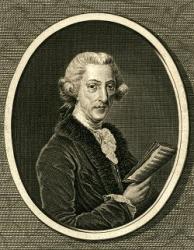
1710 - 1778 Person Name: Thomas Arne Topics: Ordinary Time Week 11 Composer of "ARLINGTON" in Hymns and Devotions for Daily Worship Dr. Thomas Augustine Arne was born March 12, 1710, in London; became early celebrated as a composer, and established his reputation by settling Milton's "Comus" to music - light, airy, and original; he composed many songs, and nearly all his attempts were successful; died March 5, 1778, aged 68.
A Dictionary of Musical Information by John W. Moore, Boston: Oliver, Ditson & Company, 1876
Thomas Augustine Arne
Kathleen A. Harmon
b. 1944 Person Name: Kathleen Harmon, S. N. D. de N. Topics: Year A, Ordinary Time after Pentecost, September 11-17; Year B, Ordinary Time after Epiphany, 8th Sunday; Year B, Ordinary Time after Pentecost, May 24-May 28 (if after Trinity Sunday); Year C, Ordinary Time after Pentecost, August 21-27; Year B, Ordinary Time after Pentecost, August 7-13; Year B, Ordinary Time after Pentecost, June 5-11 (if after Trinity Sunday); Year B. Ordinary Time after Pentecost, June 26-July 2 Composer of "[Out of the depths I cry to you, O Lord]" in Psalms for All Seasons Kathleen A. Harmon; b. Jan. 8, 1944; Music Director for programs of the Institute for Liturgical Ministry, Dayton, Ohio, A sister of the Sisters of Notre Dame de Namar
Kathleen A. Harmon
Theodore E. Perkins
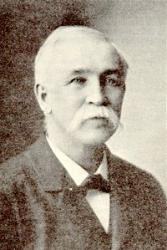
1831 - 1912 Topics: Ordinary Time Week 9 Composer of "LUNDIE" in Hymns and Devotions for Daily Worship Theodore E. Perkins was born at Poughkeepsie, on the Hudson, N.Y., July 21, 1831. His father was a Baptist clergyman. The family of ten brothers and sisters sang and played various instruments, forming among themselves both choir and orchestra. His musical education began at the early age of three years. During his father's pastorate at Hamilton, N. Y., the choir rehearsals were often held at the parsonage, and the leader used to place the three-year-old on a small stool, on the table around which the choir was assembled, giving him a chance to both see and hear. Later on he played the violincello in church, standing on a stool in order to finger the instrument.
The home gatherings — especially on Thanksgiving Day, are the recollections among the happiest of his childhood. His father became pastor of the Berean Baptist Church in New York City, in 1839, giving him the opportunity of studying the pianoforte, of which he became a proficient player. His fine alto voice soon gave him notoriety. At the age of nineteen while filling a position as clerk in New York, all his spare time was given to the study of voice and piano. In 1851 he went to Hamilton, N. Y., taught music in Madison University (now Colgate), and in the Female Seminary.
In 1854 he went to Port Jervis, N. Y., where he taught singing school, and April 30, 1855, married Mary Frances Caskey, who was for years his soprano soloist in many musical Festivals and Conventions. Soon after marriage he removed to Salem, N. J., where his lifework as singing school teacher really began, including Bridgeton and prominent towns in southern New Jersey. During the summer of 1856 he and his wife were pupils of the Normal Academy of Music at North Reading, Mass., conducted by Drs. Lowell Mason and Geo. F. Root. During 1856-1858 he was given the position of assistant teacher and manager. His association with these two great men gave an inspiration to all his future work.
In 1859 he was co-principal with Wm. B. Bradbury at the Normal Academy of Music, Geneseo, N. Y. He remained at Geneseo until 1863. Professor Perkins also held very successful schools in North Pelham Province of Ontario, Canada, and in 1864-1868 was principal in schools at Tunkhannock and Meadville, Pa.
In 1860, The Olive Branch, his first book of church music, was published by F. J. Huntington, New York City, the sales reaching 100,000. Next was Oriental, which sold over 30,000. The Union, Glees and Anthems, and Sabbath Anthems followed ; then The Sacred Lute, which sold over 300,000. His Sunday-school books commenced with The Evergreen, followed by the Shining Star and New Shining Star. Then came Psalm King, which was the last of the books published by Mr. Huntington. Hallowed Songs was published by Philip Phillips; The Sunday School Banner was published by Wm. B. Bradbury. The Royal Standard was published in Toronto, Canada. The Golden Promise, Sabbath Carols, The Mount Zion Collection were published under his own supervision.
His Free Sunday School Songs several times numbered over 500,000 a month. Coronation Songs with Rev. Dr. Deems as hymn editor was published by A. S. Barnes Co., who also published Psalms and Hymns and Spiritual Songs, in which Dr. C. S. Robinson was hymn editor, who with Professor Perkins edited Calvary Songs, published by the American S. S. Union. Gospel Tent Songs was evangelical. The Safe-Guard Singer was his temperance book.
Mr. Perkins was musical director in the following churches in Brooklyn: The Lafayette Avenue Presbyterian Church, Rev. Dr. Cuyler; Strong Place Baptist Church, Rev. E. E. L. Taylor, D. D.; Madison Avenue Baptist Church, Rev. H. G. Weston, D. D., L. L. D.; Fifth Avenue Presbyterian Church, Rev. Dr. Rice, followed by Dr. John Hall; The Memorial Presbyterian Church, Rev. Dr. C. S. Robinson, who was his close friend; The Church of the Holy Trinity, Rev. Dr. Tyng, Jr. ; Trinity Baptist Church, Rev. Dr. J. B. Simmons, and Washington Square M. E. Church.
In Philadelphia: The Fifth Baptist Church, Rev. Dr. Chase; The Eleventh Baptist Church, Rev. Dr. Colman; The Tabernacle M. E. Church, Rev. George Gaul, D. D. He was leader and singer in Evangelistic Services, at the Rink, The Old Madison Square Garden and Cooper Union, all of New York City. The music of the first great meeting of the world's Evangelical Alliance, held for ten days in New York City, was under his direction, as was the first National Sunday School convention, held in Newark, N. J. He was also conductor at the Golden Anniversary of the Female Guardian Society, leading a chorus of forty-two hundred children. In the opening chorus, Great is the Lord, by Dr. Calcott, the word "Great" was given with so much decision and power that the clergymen on the platform sprang to their feet and remained standing until the chorus was finished.
He taught voice culture in Princeton and Lafayette Universities, The Union Theological Seminary, New York City; Crozer Seminary, Chester, Pa., and organized the music department of Temple University, Philadelphia, continuing in charge four years. He had charge of the children's choir of Howard Mission, New York City, for twenty-five years, and thinks that some of the happiest and most restful of the working hours were spent in teaching the poor children of the fourth and sixth wards to sing the Gospel. Mr. Sankey said to Mr. Perkins that " Jesus of Nazareth was my banner song for eight years." Jesus is Mine has been sung at the Christian's death-bed, the grave, and once as the convict was going to the scaffold.
His Christmas Carol Sweetly Carol had a very large sale in this country, and was republished in England, France, Italy, and Germany.
For a period of forty years he has made the study of the voice special work. The most thorough investigations of the voice and its possibilities were made with the assistance of the late John Howard, extending over a period of twenty-five years, during which he has had the care of over two thousand voices. He published a work entitled, Physiological Yoice Culture, edited by his son, the late T. Edward Perkins, M. D., physician and throat specialist of Philadelphia. Mr. Perkins also completed a method of voice culture based on the principles of John Howard's Physiology of Artistic Singing."
During these years of work he has found time to edit thirty-four books of church, Sunday-school, day-school, and glee music, the larger portion having been previously mentioned. Also songs and ballads in sheet form, and a cantata entitled, The Excursion, libretto by Fanny Crosby, with whom there has existed an unbroken friendship for over forty years.
-Biography of Gospel Song and hymn Writers
Theodore E. Perkins
H. W. Greatorex
1813 - 1858 Person Name: Henry W. Greatorex Topics: Ordinary Time Week 22 Composer of "MANOAH" in Hymns and Devotions for Daily Worship Henry Wellington Greatorex United Kingdom 1813-1858. Born at Burton upon Trent, England, he received a thorough musical education from his father, Thomas Greatorex, who was for many years organist of Westminster Abbey, and conductor of the London concerts of ancient music. Henry became a composer, author, compiler, editor, and arranger of music. He emigrated to the U.S. In 1839. In 1849 he married artist Eliza Pratt, and they had four children: Elizabeth, Kathleen, Thomas, and Francis Henry. Prior to settling in New York City as a music teacher and organist at Calvary Church, he played at churches in Hartford, CT, including Center Church and St Johns Episcopal Church in West Hartford, CT. He frequently sang in oratorios and concerts. For some years he was also organist and conductor of the choir at St. Paul's Chapel. In 1853 he was an organist at St. Philip's Episcopal Church in Charleston, SC. He did much to advance the standard of sacred music in the U.S. In days when country singing school teachers imposed more rudimentary melodies on hymn books. He published a collection of “Psalm & hymn tunes, chants, anthems & sentences” (Boston 1851). He died of yellow fever in Charleston, SC.
John Perry
H. W. Greatorex
Johnson Oatman, Jr.
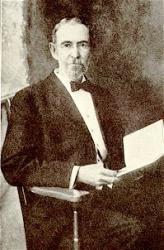
1856 - 1922 Person Name: Johnson Oatman Jr. Topics: Ordinary Time Week 22 Author of "Higher Ground" in Hymns and Devotions for Daily Worship Johnson Oatman, Jr., son of Johnson and Rachel Ann Oatman, was born near Medford, N. J., April 21, 1856. His father was an excellent singer, and it always delighted the son to sit by his side and hear him sing the songs of the church.
Outside of the usual time spent in the public schools, Mr. Oatman received his education at Herbert's Academy, Princetown, N. J., and the New Jersey Collegiate Institute, Bordentown, N. J. At the age of nineteen he joined the M.E. Church, and a few years later he was granted a license to preach the Gospel, and still later he was regularly ordained by Bishop Merrill. However, Mr. Oatman only serves as a local preacher.
For many years he was engaged with his father in the mercantile business at Lumberton, N. J., under the firm name of Johnson Oatman & Son. Since the death of his father, he has for the past fifteen years been in the life insurance business, having charge of the business of one of the great companies in Mt. Holly, N. J., where he resides.
He has written over three thousand hymns, and no gospel song book is considered as being complete unless it contains some of his hymns.
In 1878 he married Wilhelmina Reid, of Lumberton, N.J. and had three children, Rachel, Miriam, and Percy.
Excerpted from Biography of Gospel Song and Hymn Writers by Jacob Henry Hall; Fleming H. Revell, Co. 1914
Johnson Oatman, Jr.
Kathrina von Schlegel
1697 - 1777 Person Name: Catharina von Schlegel Topics: Ordinary Time Week 25 Author of "Be Still, My Soul" in Hymns and Devotions for Daily Worship Schlegel, Catharina Amalia Dorothea von. Little is known of this lady. According to Koch, iv., p. 442, she was born Oct. 22, 1697, and was "Stiftsfräulein" in the Evangelical Lutheran Stift (i.e. Protestant nunnery) at Cöthen. On applying to Cöthen, however, her name did not occur in the books of the Stift; and from the correspondence which she carried on, in 1750-52, with Heinrich Ernst, Count Stolberg, it would rather seem that she was a lady attached to the little ducal court at Cöthen. (manuscript from Dr. Eduard Jacobs, Wernigerode, &c.) Further details of her life it has been impossible to obtain.
The only one of her hymns which has passed into English is:—
Stille, mein Wille, dein Jesus hilft siegen. Cross and Consolation. A fine hymn on waiting for God. It appeared in 1752, as above, No. 689, in 6 stanzas of 6 lines; and is included in Knapp's Evangelischer Lieder-Schatz, 1837, No. 2249 (1865, No. 2017). The translation in common "Be still my soul!—-the Lord is on thy side." This is a good translation, omitting stanzas iii., by Miss Borthwick, in Hymns from the Land of Luther, 2nd Ser., 1855, p. 37 (1884, p. 100). [Rev. James Mearns, M.A.]
--Excerpts from John Julian, Dictionary of Hymnology (1907)
==========
For a detailed biography of Schlegel, see James R. Eggert, “Catharina von Schlegel and Be Still, My Soul,” Logia, vol. 34, no. 2 (Eastertide 2025), pp. 37–44.
Kathrina von Schlegel
Henry Van Dyke
1852 - 1933 Topics: Ordinary Time Week 29 Author of "Joyful, Joyful, We Adore Thee" in Hymns and Devotions for Daily Worship
See biography and works at CCEL
Henry Van Dyke
George Matheson
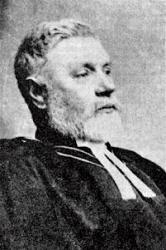
1842 - 1906 Topics: Ordinary Time Week 11 Author of "O Love that Will Not Let Me Go" in Hymns and Devotions for Daily Worship Matheson, George, D.D., was born at Glasgow, March 27, 1842, and although deprived of his eyesight in youth he passed a brilliant course at the University of Edinburgh, where he graduated M.A. in 1862. In 1868 he became the parish minister at Innellan; and subsequently of St. Bernard's, Edinburgh. He was the Baird Lecturer in 1881, and St. Giles Lecturer in 1882. He has published several important prose works. His poetical pieces were collected and published in 1890 as Sacred Songs, Edinburgh: W. Blackwood. In addition to his hymn "O Love that wilt not let me go" (q. v.), four others from his Sacred Songs are in Dr. A. C. Murphey's Book of Common Song, Belfast, 1890.
--John Julian, Dictionary of Hymnology, Appendix, Part II (1907)
=======================
Matheson, G., p. 1579, i. In addition to Dr. Matheson's hymn, "O Love, that wilt not let me go," p. 1583, i,, the following from his Sacred Songs, 1890, have come into common use since 1892:—
1. Come, let us raise a common song. Brotherhood.
2. Father divine, I come to Thee. Strength for Life. This, in Horder's Worship Song, 1905, is altered to”Saviour divine, I come to Thee."
3. Gather us in, Thou Love that fillest all. One in Christ.
4. Jesus, Fountain of my days. Christian's Polestar.
5. Lend me, O Lord, Thy softening cloud. The Fire and the Cloud. In the Sunday Magazine, 1875.
6. Lord, Thou hast all my frailty made. Strength for the Day.
7. Make me a captive, Lord. Christian Freedom.
8. There are coming changes great. The Glad New Time.
9. Three doors there are in the temple. Prayer.
Dr. Matheson informed us that these hymns, together with the rest of his Sacred Songs, 1890, were written at Bow, Dumbartonshire, in 1890. The 3rd ed. of the Sacred Songs was published in 1904. He died suddenly at Avenelle, North Berwick, Aug. 28, 1906.
--John Julian, Dictionary of Hymnology, New Supplement (1907)
George Matheson
Samuel Stennett
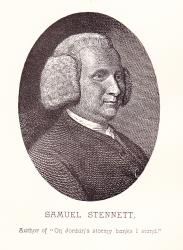
1727 - 1795 Topics: Ordinary Time Week 26 Author of "The Promised Land" in Hymns and Devotions for Daily Worship Samuel Stennett was born at Exeter, in 1727. His father was pastor of a Baptist congregation in that city; afterwards of the Baptist Chapel, Little Wild Street, London. In this latter pastorate the son succeeded the father in 1758. He died in 1795. Dr. Stennett was the author of several doctrinal works, and a few hymns.
--Annotations of the Hymnal, Charles Hutchins, M.A. 1872.
======================
Stennett, Samuel, D.D., grandson of Joseph Stennett, named above, and son of the Rev. Joseph Stennett, D.D., was born most pro;bably in 1727, at Exeter, where his father was at that time a Baptist minister. When quite young he removed to London, his father having become pastor of the Baptist Church in Little Wild Street, Lincoln's Inn Fields. In 1748, Samuel Stennett became assistant to his father in the ministry, and in 1758 succeeded him in the pastoral office at Little Wild Street. From that time until his death, on Aug. 24, 1795, he held a very prominent position among the Dissenting ministers of London. He was much respected by some of the statesmen of the time, and used his influence with them in support of the principles of religious freedom. The celebrated John Howard was a member of his congregation and an attached friend. In 1763, the University of Aberdeen conferred on him the degree of D.D. Dr. S. Stennett's prose publications consist of volumes of sermons, and pamphlets on Baptism and on Nonconformist Disabilities. He wrote one or two short poems, and contributed 38 hymns to the collection of his friend, Dr. Rippon (1787). His poetical genius was not of the highest order, and his best hymns have neither the originality nor the vigour of some of his grandfather's. The following, however, are pleasing in sentiment and expression, and are in common use more especially in Baptist congregations:—
1. And have I, Christ, no love for Thee? Love for Christ desired.
2. And will the offended God again? The Body the Temple of the Holy Ghost.
3. As on the Cross the Saviour hung. The Thief on the Cross.
4. Behold the leprous Jew. The healing of the Leper.
5. Come, every pious heart. Praise to Christ.
6. Father, at Thy call, I come. Lent.
7. Great God, amid the darksome night. God, a Sun.
8. Great God, what hosts of angels stand. Ministry of Angels.
9. Here at Thy Table, Lord, we meet. Holy Communion.
10. How charming is the place. Public Worship.
11. How shall the sons of men appear? Acceptance through Christ alone.
12. How soft the words my [the] Saviour speaks. Early Piety.
13. How various and how new. Divine Providence.
14. Not all the nobles of the earth. Christians as Sons of God.
15. On Jordan's stormy banks I stand. Heaven anticipated.
16. Prostrate, dear Jesus, at thy feet. Lent. Sometimes, "Dear Saviour, prostrate at Thy feet."
17. Should bounteous nature kindly pour. The greatest of these is Love. From this, "Had I the gift of tongues," st. iii., is taken.
18. Thy counsels of redeeming grace. Holy Scripture. From "Let avarice, from shore to shore."
19. Thy life 1 read, my dearest Lord. Death in Infancy. From this "'Tis Jesus speaks, I fold, says He."
20. 'Tis finished! so the Saviour cried. Good Friday.
21. To Christ, the Lord, let every tongue. Praise of Christ. From this,"Majestic sweetness sits enthroned," st. iii., is taken.
22. To God, my Saviour, and my King. Renewing Grace.
23. To God, the universal King. Praise to God.
24. What wisdom, majesty, and grace. The Gospel. Sometimes, “What majesty and grace."
25. Where two or three with sweet accord. Before the Sermon.
26. Why should a living man complain? Affliction. From this, "Lord, see what floods of sorrow rise," st. iii., is taken.
27. With tears of anguish I lament. Lent.
28. Yonder amazing sight I see. Good Friday.
All these hymns, with others by Stennett, were given in Rippon's Baptist Selection, 1787, a few having previously appeared in A Collection of Hymns for the use of Christians of all Denominations, London. Printed for the Booksellers, 1782; and No. 16, in the 1778 Supplement to the 3rd edition of the Bristol Baptist Selection of Ash and Evans. The whole of Stennett's poetical pieces and hymns were included in vol. ii. of his Works, together with a Memoir, by W. J. Jones. 4 vols., 1824. [Rev. W. R. Stevenson, M.A.]
--John Julian, Dictionary of Hymnology (1907)
Samuel Stennett
Civilla D. Martin
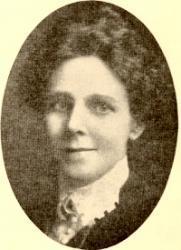
1866 - 1948 Topics: Ordinary Time Week 7 Author of "His Eye Is on the Sparrow" in Hymns and Devotions for Daily Worship Martin, Civilla Durfee (Jordan Falls, Nova Scotia, August 21, 1866--March 9, 1948, Atlanta, Georgia). Daughter of James N. and Irene (Harding) Holden. She married Rev. John F. Geddes, Congregational minister of Coventryvilee, N.Y. at Jordan Falls Methodist Church, Shelbourne Co., Nova Scotia, on May 19, 1891. There is thus far no information about their marriage and its end. After several years of teaching school, she married Walter Stillman Martin, a Baptist minister, and traveled with him in evangelistic work. However, because of frail health, she was compelled to remain home much of the time. In 1916, they became members of the Christian Church (Disciples of Christ). They had one son, A.G. Martin. In her writing, she used only her initials, "C.D." rather than her full name of that of her composer-husband. She is reputed to have written several hundred hymns and religious songs. Her first one, "God Will Take Care of You," written in 1904 became world-famous. Her husband wrote the music for this and many of her other hymns. "His Eye is on the Sparrow" written in 1906 and set to music by Charles H. Gabriel, has also received wide acclaim. In addition to the above, "Like As A Father," "A Welcome for Me," and "The Blood Will Never Lose Its Power" are among her better-known hymns.
Her husband and collaborator, W.S. Martin (1862-1935) preceded her in death. For the last 29 years of her life, she made her home in Atlanta, Georgia, where she was a member of the First Christian Church. Her funeral was held on March 10, 1948 at Spring Hill and the interment was in the West View Cemetery in Atlanta.
--Carlton C. Buck, DNAH Archives and email from Rev. Lester M. Settle (Glenholme, Nova Scotia) to Mary Louise VanDyke 18 September 2008, DNAH Archives.
Civilla D. Martin
Pages




