

 My Starred Hymns
 My FlexScores
 My Hymnals
 My Purchased Files
Planning worship?
Check out our sister site, ZeteoSearch.org,
for 20+ additional resources related to your search.
- |
User Links
Person Results
John Roberts
1807 - 1876 Person Name: John Roberts (Henllan) Topics: The Church in the World Commitment: Trust; Adversity, Affliction & Tribulation; Assurance; Bible; Church Anniversaries; Church Education; Comfort/Consolation; Commitment; Courage; Eternal Life; Faith; God Faithfulness; God Presence; God Protection; God Strength and Refuge; Good News, Gospel; Grace; Grief; Guidance; Hope; Jesus Christ Strength and Refuge; Mercy; Perseverance; Pilgrimage and Conflict; Promise(s); Saints; Security; Steadfastness; Strength; Struggle and Conflict; Suffering; Trials; Trust; Victory; Wholeness; Word of God; Epiphany 7 Year A; Epiphany 9 Year A; Easter 5 Year A; Trinity Sunday Year A; Proper 4 Year A; Proper 12 Year A; Proper 14 Year A; Proper 22 Year A; Proper 6 Year B; Baptism of Jesus Year C; Epiphany 4 Year C; Epiphany 5 Year C; Epiphany 8 Year C; Lent 2 Year C; Lent 4 Year C; Proper 14 Year C; Proper 17 Year C; Proper 18 Year C; Proper 26 Year C; All Saints Year C Arranger of "ST DENIO" in Voices United John Roberts was a Welsh musician, born 30 March 1807 at Henllan, near Denbigh. He collected a large number of hymn tunes. Some of these were included in John Parry's Peroriaeth Hyfryd, 1837. In 1839 he published Caniadau y Cysegr which contained 55 tunes that he harmonized. He died 4 April 1876 near Denbigh.
Dianne Shapiro, from Dictionary of Welsh Biography (http://yba.llgc.org.uk/en/index.html) accessed 11/27/2017
John Roberts
Friedrich Silcher
1789 - 1860 Person Name: Friedrich Silcher, 1789-8160 Topics: Comfort; Eternal Life; Guidance; Jesus Christ Friend and Companion; New Year; Night; Pilgrimage; Protection; Suffering; Trust in God Composer of "SO NIMM DENN" in Together in Song
Friedrich Silcher
Thomas Kingo
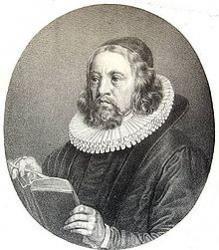
1634 - 1703 Person Name: Kingo Topics: Alle Helgens Dag (Reformationsfest) Til Aftengudstjeneste; All Saints Day (Reformation Day); Second Sunday in Advent; Second Sunday in Advent; Sunday after Christmas; Søndag efter Nyaar Til Høimesse -Til Tredje Teksxtækkes Evangelium; Sunday after New Years; Sjette Søndag efter Hellig 3 Kongers Dag Til Aftengudstjeneste; Sixth Sunday after Epiphany; Kristi Himmelfarts Dag Til Høimesse -Til Sekund Tekstrækkes Evangelium; Ascension of Christ; Fjerde Søndag efter Trefoldiheds Fest Til Aftengudstjeneste; Fourth Sunday after Trinity Sunday; Nittende Søndag efter Trefoldiheds Fest Til Aftengudstjeneste - Til Tredje Tekstrækkes Epistel; Nineteenth Sunday after Trinity Sunday; Tjuefemte Søndag efter Trefoldiheds Fest Til Høimesse -Til Tredje Teksxtækkes Evangelium; Tjuefemte Søndag efter Trefoldiheds Fest Til Høimesse -Til Tredje Teksxtækkes Evangelium; Tjuefemte Søndag efter Trefoldiheds Fest Til Aftengudstjeneste - Til Sekund Tekstrækkes Epistel; Twenty fifth Sunday after Trinity Sunday; Twenty fifth Sunday after Trinity Sunday; Twenty fifth Sunday after Trinity Sunday; Endens Tid; End of Time; Frimodighed; Boldness; Himmellængsel; Longing for Heaven; Jesus, vor Retfærdighed; Jesus, Our Righteousness; Pilgrimsvandring, de Kristnes; The Christian Pilgrimage; Tillid; Trust; Anden Søndag I Advent Til Aftengudstjeneste - Til Anden Tekstrækkes Lektie; Anden Søndag I Advent Til Høimesse -Til Tredje Teksxtækkes Evangelium; Søndag efter Jul Til Aftengudstjeneste - Til Anden Tekstrækkes Lektie Author of "O kjære Sjæl, frygt aldrig mer" in Salmebog for Lutherske Kristne i Amerika
Thomas Kingo
Marie J. Post
1919 - 1990 Topics: Alleluias; Biblical Names and Places Israel; Biblical Names and Places Jacob; Biblical Names and Places Jerusalem; Biblical Names and Places Zion; Broken-hearted; Church Year Christmas; Earth; Elements of Worship Gathering; Elements of Worship Praise and Adoration; God Trust in; God as Spirit; God as Creator; God's Sovereignty; God's Sustaining Power; God's Wisdom; God's Word; God's Deeds; God's Faithfulness; God's Greatness; God's Knowing; God's law; God's Love; God's Majesty; God's People (flock, sheep); God's Providence; God's Strength; God's Way; Grace; Guilt; Healing; Hope; Hymns of Praise; Jesus Christ Healer; Jesus Christ Mind of; Joy; Life Stages Generations; Love; Occasional Services Dedication / Consecration / Anniversary; Occasional Services Healing Service; Occasional Services Thanksgving Day / Harvest Festival; Pain; Peace; People of God / Church Family of God; People of God / Church Serving; Rejoicing; Remnant of Isarel; Shame; Sorrow; The Creation; Unity and Fellowship; Witness; Worship; Year A, B, C, Christmas, 2nd Sunday; Year B, Ordinary Time after Epiphany, 5th Sunday Author of "Sing Praise to Our Creator" in Psalms for All Seasons Marie (Tuinstra) Post (b. Jenison, MI, 1919; d. Grand Rapids, MI, 1990) While attending Dutch church services as a child, Post was first introduced to the Genevan psalms, which influenced her later writings. She attended Calvin College, Grand Rapids, Michigan, where she studied with Henry Zylstra. From 1940 to 1942 she taught at the Muskegon Christian Junior High School. For over thirty years Post wrote poetry for the Grand Rapids Press and various church periodicals. She gave many readings of her poetry in churches and schools and has been published in a number of journals and poetry anthologies. Two important collections of her poems are I Never Visited an Artist Before (1977) and the posthumous Sandals, Sails, and Saints (1993). A member of the 1987 Psalter Hymnal Revision Committee, Post was a significant contributor to its array of original texts and paraphrases.
Bert Polman
Marie J. Post
Jean Calvin
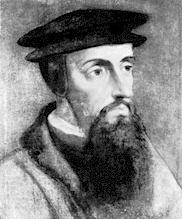
1509 - 1564 Person Name: John Calvin, 1509-64 Topics: Confession of Faith; Endurance; Faith; Grace; Hope; Inner Peace; Jesus Christ Friend and Companion; Jesus Christ Kingship; Jesus Christ Redeemer; Personal Response to Jesus; Salvation; Trust in God Author of "I greet you my Redeemer sure, who lives" in Together in Song
Jean Calvin
A. J. Abbey
1825 - 1887 Topics: God The Lord Jesus Christ - His Living Presence, Sympathy, and Intercession; The Life in Christ Trust and Submission Composer of "COOLING" in The Hymnary Alonzo Judson Abbey, USA 1825-1887 Professor Abbey was a music teacher, collector, writer-composer, tune book compiler and sacred music publisher. George F Root often edited his published works.
John Perry
A. J. Abbey
Owen Alstott
Person Name: Owen Alstott, b. 1947 Topics: Good Shepherd; Healing; Hope; Retreats; Trust; Lent 4 Year A; Easter 4 Year A; Good Shepherd; Healing; Hope; Retreats; Trust; Lent 4 Year A; Easter 4 Year A; Good Shepherd; Healing; Hope; Retreats; Trust; Lent 4 Year A; Easter 4 Year A; The Most Sacred Heart of Jesus Year C; Sixteenth Ordinary Year B; Twenty-Eighth Ordinary Year A; Our Lord Jesus Christ the King Year A; The Commemoration of All the Faithful Departed (All Souls) (November 2); Service Music for Mass: Liturgy of the Word Responsorial Psalm; Sunday Celebrations in the Absence of a Priest Responsorial Psalm Composer of "[The Lord is my shepherd; there is nothing I shall want]" in Journeysongs (2nd ed.)
Owen Alstott
Brent Chambers
b. 1948 Topics: Assurance; Biblical Names and Places Israel; Biblical Names and Places Jacob; Church Year Good Friday; Church Year Passion/Palm Sunday; Cry to God; Despair; Doubt; Elements of Worship Lord's Supper; God Trust in; God's Nearness; God's Presence; Jesus Christ Cross and Crucifiction; Lament General; Lament Individual; Life Stages Death; Loneliness; Longing for God; Mission; Mocking; Pain; People of God / Church Suffering; Prayer Answer to; Prayer; Questioning; Sorrow; Suffering; Victory; Vows; Year A, B, C, Holy Week, Good Friday; Year B, Easter, 5th Sunday; Year B, Lent, 2nd Sunday; Year B, Ordinary Time after Pentecost, October 9-15; Year C, Ordinary Time after Pentecost, June 19-25 (if after Trinity Sunday) Author (st. 1) of "In the Presence of Your People" in Psalms for All Seasons Brent Sinclair Chambers (b. Napier, Hawkes Bay, New Zealand, 1948) composed this song after experiencing an evening of ethnic music and dance in 1977. Chambers attended the Bible College of New Zealand and Auckland University and then became a self-employed painting contractor and song writer. He has written or co-written over five hundred songs, a number of which have been recorded or published. He based the text on Psalm 22:3, 22 and Psalm 145:7, though the words of the first line could also have been taken from Psalm 52:9b. He named his tune CELEBRATION, and both text and music were published in Scripture in Song (1977), one of the most important Scripture-chorus collections (initially from New Zealand) of the 1970s. The vocable "lai," suggested for the descant line on the repetition of the music, can be replaced with combinations of "ah" and "alleluia." Other stanzas can be added as well.
--www.hymnary.org/hymn/PsH/160
Brent Chambers
Paulus Speratus
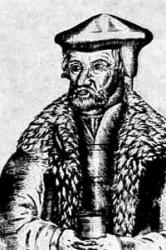
1484 - 1554 Person Name: Paul Speratus, 1484-1551 Topics: Faith; Grace; Jesus Christ Redeemer; Justification; Law of God; Salvation; Service; Sin; Trust in God Author of "Salvation now to us has come" in Together in Song Speratus, Paulus, D.D., was born in Swabia, Dec. 13, 1484. In a poem, written circa 1516, on Dr. J. Eck, he calls himself Elephangius, i.e. of Ellwangen; and in his correspondence, preserved at Königsberg, he often styles himself "a Rutilis" or "von Rötlen." These facts would seem to indicate that he was born at the castle of Röthlen, near Ellwangen. This property belonged to the Probst of the ecclesiastical corporation at Ellwangen, and Speratus's father was probably their bailiff or agent. The family name seems to have been Hoffer or Offer, and to have been in later years, following a practice common in the 16th cent., Latinized by himself into Speratus. He is probably the "Paul Offer de Ellwangen," who matri¬culated at the University of Freiburg (Baden) in l503. He is also said to have studied at Paris, and at some of the Italian universities.
In 1518 we find him settled as a preacher at Dinkelsbühl, in Bavaria. In the end of that year he was invited to become preacher in the cathedral at Würzburg. He went to Würzburg in Feb. 1519, but his preaching was much too evangelical for the new bishop, and he had to leave, apparently in the beginning of 1520. Proceeding to Salzburg he preached for sometime in the cathedral, until the archbishop there also would not tolerate his pronounced opinions. He left Salzburg in the autumn of 1520, and went to Vienna, where he appears to have graduated D.D. at the University. He was already married (probably as early as 1519), and was one of the first priests who had dared to take this step. After a violent sermon against marriage, delivered by a monk in St. Peter's church, at Vienna, the governor of Lower Austria (Count Leonhard von Zech) asked Speratus to make a reply. With the consent of the bishop he did so, and preached, on Jan. 12, 1522, a sermon in the cathedral (St. Stephen's), founded on the Epistle for the 1st Sunday after the Epiphany, in which he expressed his opinions very freely regarding the monastic life and enforced celibacy, and also clearly set forth the doctrine of Justification by Faith. This sermon (published at Königsberg in 1524) made a great impression, and was condemned by the Theological Faculty at Vienna, who also prevented Speratus from accepting an invitation to become preacher at Ofen, near Vienna.
On his way from Vienna to the north he stayed at Iglau in Moravia, where the abbot of the Dominican monastery appointed him as preacher. Here the people became greatly enamoured of him and of the Reformation doctrines,and stood firmly by him, notwithstanding the remonstrances and threats of the king, and of the bishop of Olmütz. In the summer of 1523 king Ludwig came to Olmütz and summoned Speratus to him. Without even the form of a trial he put him in prison, but after three months he released him, probably through the influence of his queen (Maria of Hungary), and of his cousin, the Margrave Albrecht of Brandenburg, but on the condition of his leaving Iglau and Moravia. In the end of 1523 Speratus came to Wittenberg, where he worked with Luther, and assisted him in the preparation of the first Lutheran hymn book (the Etlich cristlich lider. It contained 4 German hymns by Luther, 3 by Speratus, and 1 anonymous German hymn). Luther then recommended him to the Margrave Albrecht, and about May 1524 the Margrave appointed him as court preacher at Königsberg. Here he had also charge of the Altstadt church till Graumann came into residence, in Oct. 1525. He seems to have had the principal share in drawing up the Liturgy and Canons (Kirchenordnung or "Book of Church Order") for the Prussian church, which was presented to the Diet in December 1525, and printed in 1526. On March 31, 1526, he was chosen as the clerical commissioner to visit the parishes of Prussia and see that the new arrangements were carried out; and in the end of 1529 he was appointed Lutheran bishop of Pomesania, with his residence at Marienwerder. Here he remained until his death on Aug. 12, 1551.
Speratus was the author of various works, hut was best known as the Reformer of Prussia. Feeling that for the working of ordinary parishes it was necessary to have pastors who had been brought up in Prussia, and could preach, if need be, in Polish or Lettish, he gladly welcomed the foundation at Königsberg (1544) of the first Prussian university. Among other important events affecting his administration may be mentioned the Visitations of 1528, of 1538, and especially that which lasted from Dec. 15, 1542, to the middle of February 1543; the Synods of 1529 (the Synodical Constitutions were pub. in 1530), of 1530, and of 1531; the new Kirchenordnung of 1544; and the welcome he extended, in 1548, to the exiled Bohemian Brethren who settled iu Prussia.
As a hymn writer Speratus is principally known by the three hymns published in the Etlich cristlich lider, 1524. He also published (no place or date but Königsberg, 1527), in 1527, a version of Ps. xxvii., beginning, " Erzurn dich nicht, sei nicht neidisch;" and a Hymn of Thanksgiving, to be used after the sermon, beginning, "Gelobet sei Gott, unser Gott." These five are all that can be confidently ascribed to him. Of the five hymns mentioned above two have passed into English, viz.:—
i. Es ist das Heil uns kommen her. Law and Gospel. This, his most famous hymn, is founded on Rom. iii. 28. It was probably written in the autumn of 1523, either during his imprisonment at Olmütz, or else during his stay at Wittenberg. Included as one of the 8 hymns in the Etlich cristlich lider1524, dated 1523, and entitled, “A hymn of Law and Faith, powerfully furnished with God's Word. Doctor Paul Speratus."
Lauxmann, in Koch, viii. 236, calls it "the true confessional hymn of the Reformation, or, as Albert Knapp puts it, 'the poetical counterpart of Luther's preface to the Epistle to the Romans.'" He relates many instances of the effects it produced. It is a Scriptural ballad, setting forth, in what was, for the time, excellent verse, the characteristic teachings of the German Reformers; and is indeed of considerable historical importance. But for present day use it is too long, somewhat harsh in style, and too much a compend of doctrinal theology.
The only version we have found in English common use is:—
To us salvation now is come. In full by Dr. H. Mills, in his Horae Germanicae, 1845, p. 44. Other translations are:—
(1) "Now is our health come from above." By Bishop Coverdale, 1539 (Remains. (2) "Our whole Salvation doth depend." By J. C. Jacobi, 1725, p. 23. (3) "Now comes salvation from above." By Dr. G. Walker, 1860, p. 79. (4) "Salva¬tion hath come down to us." By Miss Winkworth, 1869, p. 123.
ii. In Gott gelaub ich, dass er hat aus nich.The Apostles' Creed. This is a free version, in 9 stanzas of 19 lines. First published in the Etlich cristlich lider, 1524. It was included in V. Babst's Gesang-Buch, 1545, and many others, but on account of its length and its unusual metre it has not found a place in recent hymnals. It is translated as "In God I trust, for so I must." By Bishop Coverdale, 1539. (Remain, 1846, p. 547.) [Rev. James Mearns, M.A.]
--Excerpts from John Julian, Dictionary of Hymnology (1907)
Paulus Speratus
Pages




