You help make Hymnary.org possible. More than 10 million people from 200+ countries found hymns, liturgical resources and encouragement on Hymnary.org in 2025, including you. Every visit affirms the global impact of this ministry.

If Hymnary has been meaningful to you this year, would you take a moment today to help sustain it? A gift of any size—paired with a note of encouragement if you wish—directly supports the server costs, research work and curation that keep this resource freely available to the world.

Give securely online today, or mail a check to:
Hymnary.org
Calvin University
3201 Burton Street SE
Grand Rapids, MI 49546

Thank you for your partnership, and may the hope of Advent fill your heart.

Person Results

Topics:ordinary+time
In:people

Planning worship? Check out our sister site, ZeteoSearch.org, for 20+ additional resources related to your search.
Showing 291 - 300 of 956Results Per Page: 102050

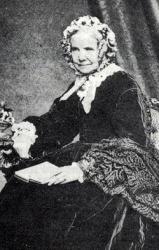
Charlotte Elliott

1789 - 1871 Topics: Ordinary Time Week 14 Author of "Just As I Am" in Hymns and Devotions for Daily Worship Elliott, Charlotte, daughter of Charles Elliott, of Clapham and Brighton, and granddaughter of the Rev. H. Venn, of Huddersfield, was born March 18, 1789. The first 32 years of her life were spent mostly at Clapham. In 1823 she removed to Brighton, and died there Sept. 22, 1871. To her acquaintance with Dr. C. Malan, of Geneva, is attributed much of the deep spiritual-mindedness which is so prominent in her hymns. Though weak and feeble in body, she possessed a strong imagination, and a well-cultured and intellectual mind. Her love of poetry and music was great, and is reflected in her verse. Her hymns number about 150, a large percentage of which are in common use. The finest and most widely known of these are, "Just as I am” and "My God, my Father, while I stray." Her verse is characterized by tenderness of feeling, plaintive simplicity, deep devotion, and perfect rhythm. For those in sickness and sorrow she has sung as few others have done. Her hymns appeared in her brother's Psalms & Hymns and elsewhere as follows:— (1) Psalms and Hymns for Public, Private, and Social Worship; selected by the Rev. H. V. Elliott, &c., 1835-48. In this Selection her signature is "C. E." (2) The Christian Remembrancer Pocket Book. This was originally edited by Miss Kiernan, of Dublin. Miss Elliott undertook the editorship in 1834. (3) The Invalid's Hymn Book. This was originally compiled by Miss Kiernan, but before publication was re-arranged by Miss Elliott, who also added 23 hymns in the first edition., 1834. These were increased in the following edition to the sixth in 1854, when her contributions amounted to 112. From that date no change was made in the work. (4) Hours of Sorrow Cheered and Comforted; or, Thoughts in Verse, 1836. (5) Morning and Evening Hymns for a Week, printed privately in 1839 for sale for a benevolent institution in Brighton, and published in 1842. (6) Thoughts in Verse on Sacred Subjects, 1869. Miss Elliott's Poems were published, with a Memoir by her sister, Mrs. Babington, in 1873, and an additional volume of Leaves from her unpublished Journals and Poems, also appeared in 1870. In addition to her more important hymns, which are annotated under their respective first lines, there are in common use:— i. From The Invalid's Hymn-book, 1834-1841:— 1. Clouds and darkness round about thee. (1841.) Resignation. 2. Not willingly dost Thou afflict [reject]. (1841.) Divine Chastisement. 3. O God, may I look up to Thee. (1841.) Teach us to Pray. 4. This is enough; although 'twere sweet. (1834.) On being debarred from Divine Worship. 5. With tearful eyes I look around. (1841.) The Invitation "Come Unto Me." ii. From H. V. Elliott's Psalms & Hymns, 1835-1839:— 6. Glorious was that primal light. Christmas. 7. Hail, holy day, most blest, most dear. Easter. 8. My only Saviour, when I feel. Jesus His people's Rest. 9. Now let our heavenly plants and flowers. Monday Morning. 10. The Sabbath-day has reached its close. Sunday Evening. iii. From Miss Elliott's Hours of Sorrow, 1836:— 11. Father, when Thy child is dying. Prayer for a Departing Spirit. 12. Leaning on Thee, my Guide, my Friend. Death Anticipated. 13. My God, is any hour so sweet? The Hour of Prayer. 14. O faint and feeble-hearted. Resignation enforced. 15. There is a holy sacrifice. The Contrite Heart. iv. From her Hymns for a Week, 1839:— 16. Guard well thy lips; none, none can know. Thursday Morning. 17. There is a spot of consecrated ground. Pt. i. 18. This is the mount where Christ's disciples see. Pt. ii. Monday Evening. 19. This is the day to tune with care. Saturday Morning. v. From Thoughts in Verse on Sacred Subjects, 1869:— 20. As the new moons of old were given. On a Birthday. 21. I need no other plea. Pt. i. 22. I need no prayers to saints. Pt. ii. Christ, All in All. 23. Jesus, my Saviour, look on me. Christ, All in All. Several of the earlier of these hymns were repeated in the later works, and are thus sometimes attributed to the wrong work. [Rev. James Davidson, B.A.] -- John Julian, Dictionary of Hymnology (1907) ================ Elliott, Charlotte, p. 328, i. Other hymns are:— 1. O how I long to reach my home. Heaven desired. From the Invalid's Hymn Book, 1834. 2. The dawn approaches, golden streaks. Second Advent. From Thoughts in Verse, &c, 1869. Of her hymns noted on p. 328, Nos. 6, 7, 8, 9, 10,11, and 13, all appeared in the 1st edition of Elliott's Psalms & Hymns, 1835. --John Julian, Dictionary of Hymnology, Appendix, Part II (1907) ======================== Elliott, Charlotte, pp. 328, i.; 1561, ii. Further research enables us to give amended dates to some of her hymns as follows:— 1. With tearful eyes I look around (No. 5). This is in the 1835 Appendix to The Invalid's Hymn Book. 2. My only Saviour, when I feel (No. 8). Also in the 1835 Appendix. 3. Father, when Thy child is dying (No. 11). In the 1833 Appendix. 4. I want that adorning divine, p. 559, i. In the Christian Remembrancer 1848, p. 22. --John Julian, Dictionary of Hymnology, New Supplement (1907)

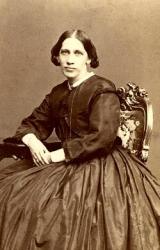
Carolina Sandell

1823 - 1903 Person Name: Lina Sandell Topics: Ordinary Time Week 25 Author of "Children of the Heavenly Father" in Hymns and Devotions for Daily Worship Caroline W. Sandell Berg (b. Froderyd, Sweden, 1832; d. Stockholm, Sweden, 1903), is better known as Lina Sandell, the "Fanny Crosby of Sweden." "Lina" Wilhelmina Sandell Berg was the daughter of a Lutheran pastor to whom she was very close; she wrote hymns partly to cope with the fact that she witnessed his tragic death by drowning. Many of her 650 hymns were used in the revival services of Carl O. Rosenius, and a number of them gained popularity particularly because of the musical settings written by gospel singer Oskar Ahnfelt. Jenny Lind, the famous Swedish soprano, underwrote the cost of publishing a collection of Ahnfelt's music, Andeliga Sänger (1850), which consisted mainly of Berg's hymn texts. Bert Polman

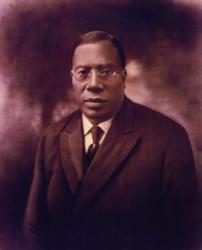
Charles Albert Tindley

1851 - 1933 Person Name: Charles A. Tindley Topics: Ordinary Time Week 11 Author of "We'll Understand It Better By and By" in Hymns and Devotions for Daily Worship

Gerhardt Tersteegen

1697 - 1769 Person Name: Gerhard Tersteegen Topics: Ordinary Time Week 29 Author of "God Himself Is Present" in Hymns and Devotions for Daily Worship Tersteegen, Gerhard, a pious and useful mystic of the eighteenth century, was born at Mörs, Germany, November 25, 1697. He was carefully educated in his childhood, and then apprenticed (1715) to his older brother, a shopkeeper. He was religiously inclined from his youth, and upon coming of age he secured a humble cottage near Mühlheim, where he led a life of seclusion and self-denial for many years. At about thirty years of age he began to exhort and preach in private and public gatherings. His influence became very great, such was his reputation for piety and his success in talking, preaching, and writing concerning spiritual religion. He wrote one hundred and eleven hymns, most of which appeared in his Spiritual Flower Garden (1731). He died April 3, 1769. Hymn Writers of the Church by Charles S. Nutter and Wilbur F. Tillett, 1911 ==================================================== Gerhardt Tersteegen or ter Stegen, was born at Moers, Netherlands [sic. Germany] , November 25, 1697. He was destined for the Reformed ministry, but after his father's death when the boy was only six, his mother was unable to send him to the university. He studied at the Gymnasium in Moers, and then earned a meager living as a silk weaver, sharing his frugal daily fare with the poor. Malnutrition and privation undermined his health to such an extent that he suffered a serious depression for some five years, following which he wrote a new covenant with God, signing it in his own blood. A strong mystic, he did not attend the services of the Reformed Church after 1719. Although forming no sect of his own, he became well known as a religious teacher and leader. His house was known as "The Pilgrim's Cottage" -- a retreat for men seeking a way of life, while he himself was known as "the physician of the poor and forsaken." Barred from preaching in his own country until 1750, he visited Holland annually from 1732 to 1755, holding meetings. In addition to his other labors he carried on a tremendous correspondence. Overwork resulted in physical breakdown, so that during the latter years of his life he could speak only to small gatherings. He died at Muhlheim on April 3, 1769. One of the three most important of Reformed hymn writers, he is also regarded as the chief representative of the mystics. He wrote 111 hymns. His important Geisliches Blumengartlein was published in 1729. H.E. Govan published The Life of Gerhard Tersteegen, with selctions from his writings, in 1902. --The Hymnal 1940 Companion =========================== Tersteegen, Gerhard, son of Heinrich Tersteegen (otherwise ter Stegen or zur Stiege), merchant at Mörs (Meurs), in Rhenish Prussia, was born at Mors, Nov. 25, 1697. His parents intended that he should become a minister of the Reformed Church in Germany. His father however died in 1703, and his mother found that after giving him a thorough classical training in the Latin school at Mörs she was unable to afford the cost of his University course. He was accordingly apprenticed, in 1713, to his brother-in-law, a merchant at Mühlheim on the Ruhr, and in 1717 started in business on his own account, at Mühlheim. As he found his time much broken up, and his opportunities of meditation few, he gave up his business in 1719; and, after a short trial of linen weaving, took up the easier and much more lucrative occupation of weaving silk ribbons. During the years 1719-24 he passed through a period of spiritual depression, at the end of which his faith in the reconciling grace of Christ became assured (see No. xxxiv. below), and on Maundy Thursday, 1724, he wrote out a solemn covenant with God which he signed with his own blood. Previous to this, even before 1719, he had ceased to attend the ordinary services of the Reformed Church; and also absented himself from Holy Communion on the ground that he could not in conscience communicate along with open sinners. About the beginning of 1725 he began to speak at the prayer meetings which had been held at Mühlheim, since 1710, by Wilhelm Hoffmann, who was a candidate of theology (licensed preacher) of the Reformed Church. Tersteegen soon became known as a religious teacher among the "Stillen im Lande," as the attenders on these meetings were called, and in 1728 gave up his handicraft in order to devote himself entirely to the translation of works by medieval and recent Mystics and Quietists, including Madame Guyon and others, and the composition of devotional books, to correspondence on religious subjects, and to the work of a spiritual director of the "awakened souls." From this date to his death he was supported by a small regular income which was subscribed by his admirers and friends. About 1727 a house at Otterbeck, between Mühlheim and Elberfeld, was set apart as a "Pilgerhütte," where the "awakened souls" could go into a spiritual retreat, under the direction of Tersteegen. This house, with accommodation for eight persons, was retained until about 1800. Tersteegen, however, did not confine himself to Mühlheim, but travelled over the district, addressing gatherings of like-minded Christians, giving special attention to Elberfeld, Barmen, Solingen, and Crefeld. From 1732 to 1755 he also went regularly every year to Holland, to visit his spiritual kinsfolk at Amsterdam and elsewhere. From 1730 to 1750 a law against conventicles was strictly enforced, and Tersteegen could not hold meetings except on his visits to Holland. During this period he removed to a house which had been Wilhelm Hoffmann's, where he preached, and provided food and simple medicines for the poor. After 1750 he resumed his public speaking until 1756, when he overstrained himself, and had to confine himself to the smallest gatherings absolutely. In 1769, dropsy set in, and after patient endurance for a season he died on April 3, 1769, at Mühlheim (Koch, vi. 46). Up to the end of his life Tersteegen remained outside the Reformed Church, but never set up a sect of his own. After his death his followers as a rule reunited themselves with it, especially when a less formal type of religion began to prevail therein. Tersteegen's most important hymnological work was his Geistliches Blümen-Gärtlein, of which many editions were published. Tersteegen ranks as one of the three most important hymnwriters associated with the Reformed Church in Germany, the other two being F. A. Lampe and Joachim Neander. He is however more closely allied, both as a Mystic and as a Poet, with Johann Scheffler than with either of his co-religionists. He almost equals Scheffler in power of expression and beauty of form, and if Scheffler has more pictorial grace, and a more vivid imagination, Tersteegen has more definiteness of teaching, a firmer grasp of the Christian verities, and a greater clearness in exposition. Inner union of the soul with God and Christ, the childlike simplicity and trust which this brings, renunciation of the world and of self, and daily endeavour to live as in the presence of God and in preparation for the vision of God, are the keynotes of his hymns. To his intense power of realising the unseen, his clear and simple diction, and the evident sincerity with which he sets forth his own Christian experience, his hymns owe much of their attractiveness and influence. During his lifetime they did not come much into use except through the Harfenspiel, as above, and they did not meet the taste of compilers during the Rationalistic period. But since Bunsen in his Yersuch, 1833, and Knapp in his Evangelischer Lieder-Schatz, 1837, brought his hymns once more into notice they have been received in greater or less measure into almost all the German hymnbooks, among the Lutherans as well as among the Reformed, the most popular of all being his “Gott ist gegenwärtig". A number of Tersteegen's hymns are noted under their own first lines. They appeared, almost all for the first time, in the successive editions of his Geistliches Blümen-Gärtlein, viz., in the 1st ed., 1729; 2nd ed., 1735; 3rd ed., 1738; 4th ed., 1745; 5th ed., 1751; 6th ed., 1757; 7th ed., 1768; and in each case (after 1729) in the Third Book of that work. Those which have passed into English are as follows:— i. Freue dich, du Kinder-Orden. Christmas. Translated as:— Little children, God above, 1858, p. 78. Another tr. is: "Children rejoice, for God is come to earth." By Miss Dunn, 1857, p. 30. ii. Jedes Herz will etwas lieben. Love to Christ. In the 4th ed., 1745, as above, Bk. iii., No. 70, in 8 stanzas of 4 lines, entitled "The Soul wishes to take Jesus as her best Beloved." Translated as:— 1. The heart of man must something love. A cento beginning with st. ii. “Though all the world my choice deride," is in Spurgeon's Our Own Hymn Book, 1866, and also in the Plymouth Collection, 1855, and other American hymnals. 2. Something every heart is loving. A full and good translation by Mrs. Bevan, in her Songs of Eternal Life, 1858, p. 58. iii. Jesu, der du bist alleine. Communion of Saints. In the 2nd ed., 1735, in 11 stanzas of 6 lines, entitled "Prayer on behalf of the brethren." Translated as:— Jesus, whom Thy Church doth own. By Miss Winkworth, omitting st. iii., in her Lyra Germanica, 2nd Ser., 1858, p. 99. iv. Jesu, mein Erbarmer! höre. Lent or Penitence. In the 2nd ed., 1735, in 12 stanzas of 6 lines, entitled "In outward and inward sufferings and Temptations." Translated as:— Jesus, pitying Saviour, hear me. In full, by Miss Winkworth, in her Lyra Germanica, 2nd Ser., 1858, p. 133. In her Christian Singer, 1869, p. 298, she gave st. ii., v., vi., beginning "Lost in darkness, girt with dangers." v. Nun so will ich denn mein Leben. Self-Surrender. Translated (omitting st. ii., iii., vi., x.) as:— 1. Lo! my choice is now decided. By Miss Cox, in her Sacred Hymns from the German, 1841, p. 125. Her translations of st. viii., ix., vii., altered and beginning, "One thing first and only knowing," are repeated in Hedge & Huntington's Hymns for the Church of Christ, Boston, U.S., 1853. 2. Now at last I end the strife. By Miss Winkworth, in herLyra Germanica, 2nd Ser., 1858. vi. 0 liebe Seele! könntst du werden. The Childlike Spirit. Translated as:— Soul! couldst thou, while on earth remaining. In Miss Cox'sHymns from German, 1864, p. 197, it begins "Soul, while on earth thou still remainest." Other trs. are: (1) "Wouldst thou, my soul, the secret find." By Lady E. Fortescue, 1843, p. 47. (2) “Dear soul, couldst thou become a child." By Miss Winkworth, 1855, p. 22. vii. Siegesfürste, Ehrenkönig. Ascension. Translated as:— Conquering Prince and Lord of Glory, By Miss Winkworth, omitting st. ii., in her Lyra Germanica, 2nd Ser., 1858, p. 48. viii. Wie gut ists, wenn man abgespehnt. Lent or Self-Renunciation. In the first edition, entitled "Of the sweetness of the hidden life of Christians." Translated as:— How sweet it is, when, wean'd from all. This is a good and full translation by S. Jackson, in his Life of Tersteegen, 1832 (1837, p. 417). Other hymns by Tersteegen which have been rendered into English are:— ix. Ach Gott, es taugt doch draussen nicht. On the Vanity of Earthly Things. Tr. as, "Ah God! the world has nought to please." By Miss Winkworth, 1869, p. 304. x. Ach, könnt ich stille sein. Peace in God. Translated as (1) "Oh! could I but be still." By Mrs. Bevan, 1859, p. 134. (2) "Ah, could I but be still." By Lady Durand, 1873, p. 77. xi. Allgenugsam Wesen. God's All-sufficiency . The trs. are (1) "Thou All-sufficient One! Who art." By Miss Warner, 1858, p. 601, repeated in Hymns of the Ages, Boston, U.S., 1865, p. 163. (2) "Thou, whose love unshaken." xii. Bald endet sich mein Pilgerweg. Eternal Life. Translated as “Weary heart, be not desponding." By Lady Durand, 1873, p. 84. xiii. Berufne Seelen! schlafet nicht. Lent. The translations are (1) "Ye sleeping souls, awake From dreams of carnal ease." By S. Jackson, in his Life of Tersteegen, 1832 (1837, p, 413). (2) "Sleep not, 0 Soul by God awakened." By Lady Durand, 1873, p. 98. xiv. Das äussre Sonnenlicht ist da. Morning. Tr. as (1) "The World's bright Sun is risen on high." By H. J. Buckoll, 1842, p. 51. (2) "The outer sunlight now is there." By Lady Durand, 1873, p. 75. xv. Das Kreuz ist dennoch gut. Cross and Consolation. Translated as "The Cross is ever good." By Mrs. Findlater in Hymns from the Land of Luther, 1862, p. 72 (1884, p. 234). xvi. Die Blümlein klein und gross in meines Herren Garten. On the Graces of the New Testament. The trs. are (l) "Flowers that in Jesu's garden have a place." By Miss Dunn in her translation of Tholuck's Stunden, 1853, p. 114. (2) "Full many flowers, in my Lord's garden blooming." By Dr. R. Menzies in his translation of Tholuck's Stunden, 1870, p. 182. xvii. Die Liebe will was gauzes haben.Entire Consecration. Tr. as "Love doth the whole—not part—desire." By Miss Warner, 1869, p. 12. xviii. Für dich sei ganz mein Herz und Leben. Consecration to Christ. The trs. are (1) "Constrain'd by love so warm and tender." By R. Massie in the British Herald, April, 1865, p. 55. (2) "My soul adores the might of loving." By Mrs. Edmund Ashley in the British Herald, Sept., 1867, p. 136, repeated in Reid's Praise Book, 1872, No. 582. xix. Grosser Gott, in dem ich schwebe. God's Presence. Translated as "God, in Whom I have my being." By Lady Durand, 1873, p. 81. xx. Jauchzet ihr Himmel! frohlocket ihr englische Chören. Christmas. Tr. as "Triumph, ye heavens! rejoice ye with high adoration." xxi. Jesu, den ich meine. Life in Christ. Tr. as ”Jesus, whom I long for." By Lady Durand, 1873, p. 92. xxii. Jesus-Nam, du höchster Name. The Name of Jesus. Translated as "Jesu's name, thou highest name." By S. Jackson in his Life of Tersteegen, 1832 (1837, p. 415). xxiii. Liebwerther, süsser Gottes-Wille. Resignation to the Will of God. The translations are (1) "Thou sweet beloved Will of God." By Mrs. Bevan, 1858, p. 14. (2) “Will of God, all sweet and perfect." By Lady Durand, 1873, p. 96. xxiv. Mein ganzer Sin. Lent. Turning to God. Tr. as "My whole desire Doth deeply turn away." By Miss Warner, 1869, p. 30. xxv. Mein Gott, mein Gott, mein wahres Leben. Self-Dedication. Tr. as "My God, my God, my life divine!" By S. Jackson in his Life of Tersteegen, 1832 (1837, p. 414). xxvi. Mein Herz, ein Eisen grob und alt. Cross and Consolation. Tr. as "A rough and shapeless block of iron is my heart." By Lady Durand, 1873, p. 79. xxvii. Mein'n ersten Augenblick. Morning. Tr. as "Each moment I turn me." xxviii. Nun lobet alle Gottes Sohn. Praise to Christ. Tr. as "Give glory to the Son of God." By Mrs. Bevan, 1858, p. 75. xxix. 0 Jesu, König, hoch zu ehren. Self-surrender. Tr. as “0 Jesus, Lord of majesty." By Miss Winkworth, 1858, p. 136. xxx. So gehts von Schritt zu Schritt. For the Dying. Tr. as "Thus, step by step, my journey to the Infinite." By Lady Durand, 1873, p. 105. xxxi. So ist denn doch nun abermal ein Jahr. New Year. Tr. as "Thus, then another year of pilgrim-life." By Lady Durand, 1873, p. 73. xxxii. Sollt ich nicht gelassen sein. Cross and Consolation. Tr. as “Should I not be meek and still." By Mrs. Bevan, 1858, p. 45. xxxiii. Von allen Singen ab. Turning to God. Tr. as "From all created things." By Lady Durand, 1873, p. 100. xxxiv. Wie bist du mir so innig gut. The Grace of Christ. Written in 1724 at the close of his time of spiritual despondency. “This state of spiritual darkness continued five years; until at length whilst on a journey to a neighbouring town, the day-spring from on high again visited him; and the atoning mercy of Jesus Christ was made so deeply and convincingly apparent to him, that his heart was set entirely at rest. On this occasion he composed that beautiful hymn, &c." Translated as “How gracious, kind, and good, My great High Priest art Thou" (st. i.-v.), No. 74 in Dr. Leifchild's Original Hymns, 1842. xxxv. Wiederun ein Augenblick. The Flight of Time. Tr. as: (1) “Of my Time one Minute more." (2) "One more flying moment." By Lady Durand, 1873, p. 26. xxxvi. Willkomm'n, verklarter Gottes Sohn. Easter. This is translated as "O Glorious Head, Thou livest now." By Miss Winkworth, 1855, p. 89. Repeated in Schaff’s Christ in Song, 1870. The first Book of the Blumen-Gärtlein contains short poems, more of the nature of aphorisms than of hymns. In the ed. of I76S there are in all 568 pieces in Book i., and of these Miss Winkworth has translated Nos. 429, 474, 565, 573, 575, 577 in her Christian Singers, 1869. Others are tr. by Lady Durand, in her Imitations from the German of Spitta and Terstsegen, 1873, as above, and by S. Jackson, in his Life of Tersteegen, 1832. [Rev. James Mearns, M.A.] -- Excerpts from John Julian, Dictionary of Hymnology (1907) ================== See also in: Hymn Writers of the Church

B. B. McKinney

1886 - 1952 Person Name: B.B. McKinney Topics: Ordinary Time Week 11 Arranger of "BY AND BY" in Hymns and Devotions for Daily Worship Pseudonyms-- Martha Annis (his mother’s maiden name was Martha Annis Heflin) Otto Nellen Gene Routh (his wife’s maiden name was Leila Irene Routh) ----- Son of James Calvin McKinney and Martha Annis Heflin McKinney, B . B. attended Mount Lebanon Academy, Louisiana; Louisiana College, Pineville, Louisiana; the Southwestern Baptist Seminary in Fort Worth, Texas; the Siegel-Myers Correspondence School of Music, Chicago, Illinois (BM.1922); and the Bush Conservatory of Music, Chicago. Oklahoma Baptist University awarded him an honorary MusD degree in 1942. McKinney served as music editor at the Robert H. Coleman company in Dallas, Texas (1918–35). In 1919, after several months in the army, McKinney returned to Fort Worth, where Isham E. Reynolds asked him to join the faculty of the School of Sacred Music at Southwestern Baptist Theological Seminary. He taught at the seminary until 1932, then pastored in at the Travis Avenue Baptist Church in Fort Worth (1931–35). In 1935, McKinney became music editor for the Baptist Sunday School Board in Nashville, Tennessee. McKinney wrote words and music for about 150 songs, and music for 115 more. --© Cyber Hymnal™ (www.hymntime.com/tch)

S. J. Stone

1839 - 1900 Person Name: Samuel Stone Topics: Ordinary Time Week 11 Author of "The Church's One Foundation" in Hymns and Devotions for Daily Worship Stone, Samuel John, a clergyman of the Church of England, the son of Rev. William Stone, was born at Whitmore, Staffordshire, April 25, 1839. He was educated at Pembroke College, Oxford, where he was graduated B.A. in 1862. Later he took orders and served various Churches. He succeeded his father at St. Paul's, Haggerstown, in 1874. He was the author of many original hymns and translations, which were collected and published in 1886. His hymns are hopeful in spirit and skillfully constructed. He published several poetic volumes. He died November 19, 1900 --Hymn Writers of the Church, 1915 (Charles Nutter) ============================ Stone, Samuel John, M.A., son of the Rev. William Stone, M.A., was born at Whitmore, Staffordshire, April 25, 1839, and educated at the Charterhouse; and at Pembroke College, Oxford, B.A. 1862; and M.A. 1872. On taking Holy Orders he became Curate of Windsor in 1862, and of St. Paul's, Haggerston, 1870. In 1874 he succeeded his father, at St. Paul's, Haggerston. Mr. Stone's poetical works are (1) Lyra Fidelium, 1866; (2) The Knight of Intercession and Other Poems, 1872, 6th edition, 1887; (3) Sonnets of the Christian Year, first printed in the Leisure Hour, and then published by the R. T. Society, 1875; (4) Hymns, a collection of his original pieces and translations, 1886. He has also published Order of The Consecutive Church Service for Children, with Original Hymns, 1883. Mr. Stone's hymns, most of which are in common use, and several of which have a wide popularity, include:— 1. A sower went to sow his seed. The Sower. In his Hymns, 1886, the author says this hymn was ”Written specially in allusion to the sixteen years' work of the first Vicar [his Father] of St. Paul's, Haggerston, to whom the Parish was given in 1858, without Church, or School, or "Vicarage, or Endowment." 2. Bear the troubles of thy life. Patience. A translation of Thomas a Kempis's “Ad versa mundi tolera" (p. 23, ii.) made for the Rev. S. Kettlewell's Thomas á Kempis, 1882. 3. By Paul at war in Gentile lands. St. Mark. Written at Windsor in 1870, and published in his Knight of Intercession, 1872. 4. By Shepherds first was heard. Carol. Written in 1885, and published in the Parochial Magazine, 1885. 5. By Thy love which shone for aye. Litany of the Love of God. Written at Haggerston in 1883, and printed in the Monthly Packet, 1884. 6. Christ the Wisdom and the Power. For Church Workers. Written for the Church Society of St. Paul's, Haggerston in 1812, and published in The Knight of Intercession, 1872. 7. Dark is the sky that overhangs my soul. Sorrow succeeded by Joy. Written at Windsor in 1869 for the Monthly Packet, and printed therein 1869. Published in The Knight of Intercession, 1872, under the title of "Light at Eventide." 8. Deeply dark and deeply still. The Transfiguration. Written in 1871 and published in The Knight of Intercession, 1872. 9. Eastward, ever eastward. Processional for Sunday Morning. Written at Haggerston in 1876, and published in the Monthly Packet, 1884. 10. Faith, who sees beyond the portal. Faith, Hope, and Charity. Written at Windsor in 1869, and published in the Monthly Packet, 1869, and The Knight of Intercession, 1872. 11. Far off our brethren's voices. Missions. Written for the First Day of Intercession for Foreign Missions, 1871, and published in The Knight of Intercession, 1872. "For Colonial Missions." 12. Give the word, Eternal King. Missions. Written for the First Day of Intercession for Foreign Missions, 1871. 13. Glory in heaven to God. Christmas Carol. Written in 1882 for G. H. Leslie's Cantata The First Christmas Morn, 1882. 14. God the Father, All, and One. For Unity. Written in 1883 for Canon G. Venables's Service for Unity, and appeared in the Monthly Packet, 1884. 15. God the Father's Only Son. Offices of Christ. Published in his Lyra Fidelium, 1866, on Article ii.of the Apostles' Creed, "And in Jesus Christ His Only Son our Lord." 16. God the Spirit, we adore Thee. The Holy Ghost. Published in his Lyra Fidelium, 1866, or) Article viii. of the Apostles' Creed, "I believe in the Holy Ghost." 17. Great Captain of God's armies. For Purity. Written in 1884 for the Church of England Purity Society, and printed in Church Bells, April 10, 1885. 18. Homeward we pass in peace. Close of Divine Service. Written in 1884 at Haggerston; and included in the author's Hymns, 1886, as a "Hymn after Benediction." 19. How can we praise Thee, Father? For the Fatherless. Written by request for "The Church of England Central Home for Waifs and Strays," 1882, and printed in the Monthly Packet, 1884. 20. Is there no hope for those who lie? Missions. Written in 1870 for the Monthly Packet; and also included in The Knight of Intercession, 1872. 21. Jesu, to my heart most precious. Jesus, All in All. A translation of Thomas á Kempis's "De dulcedine Jesu," made for the Rev. S. Kettlewell's Thomas á Kempis, 1882. 22. Lo! They were, and they are, and shall be. St. Michael and All Angels. Written in 1875 for The Scottish Guardian, in which it was given in 1875. 23. Lord Christ, my Master dear. For Church Workers. Written for the Sunday School Teachers of St. Paul's, Haggerston, 1885, and given in his Hymns, 1886. 24. Lord of the harvest, it is right and meet. Missions, Thanksgiving. Written for the Second Day of Intercession for Foreign Missions, 1871, and published in The Knight of Intercession, 1872. In the 1889 Appendix to Hymns Ancient & Modern it is somewhat altered. 25. Most true, most High; O Trinity. Holy Trinity. A translation of Thomas á Kempis's "O vera summa Trinitas" made for the Rev. S. Kettlewell's Thomas á Kempis, 1882. 26. My Saviour! I behold Thy life. Passiontide. Published in his Lyra Fidelium, 1866, on Article iv. of the Apostles' Creed, "Suffered under Pontius Pilate, was Crucified, Dead, and Buried." 27. Need hath the golden city none. Evening. Written at Windsor in 1869, and was published in the Monthly Packet in 1870. Also in The Knight of Intercession, 1872. 28. None else but Thee for evermore. God the Father. The opening hymn of his Lyra Fidelium, 1866, on Article i. of the Apostles' Creed, "I believe in God the Father Almighty, Maker of Heaven and Earth." 29. 0 joy, the purest, noblest. Evening. A translation in two parts of Thomas á Kempis's "O qualis quantaque laetitia" made for the Rev. S. Kettlewell's Thomas á Kempis, 1882. Pt. ii. begins "State of divinest splendour!" 30. 0 Thou by Whom the saints abide. Litany of the Holy Spirit. Written for a Confirmation at Haggerston, 1875, and included in the 3rd edition of The Knight of Intercession, 1875. 31. 0 Thou Whose love paternal. Holy Matrimony. Written at Windsor in 1863. 32. On Olivet a little band. Ascension. Published in his Lyra Fidelium, 1866, on Article vi. of the Apostles’ Creed, “He ascended into Heaven," &c. 33. Peace: legacy of mystic power. Peace . Written in 1882 for The Society of St. Katharine for Invalids, and published in the Monthly Packet, 1884. 34. Remember Me, show forth My death. Holy Communion. Written at Windsor for the Monthly Packet, in 1870; and included in The Knight of Intercession, 1872. 35. The Son forsook the Father's home. Christmas. Published in his Lyra Fidelium, 1866, on Art. iii. of the Apostles' Creed, “Who was conceived by the Holy Ghost, Born of the Virgin Mary." 36. The old year's long campaign is o'er. The New Year. Written at Windsor in 1868, and published in The Knight of Intercession, 1872. 37. The whole creation groans and cries. Travail of the Creation. Written at Windsor for the Monthly Packet, 1869, and included in The Knight of Intercession, 1872. 38. The world is sad with hopes that die. Everlasting Life. Published in his Lyra Fidelium, 1866, on Art. xii. of the Apostles' Creed, "The Life Everlasting." 39. Their names are names of Kings. Saints Days. Written at Windsor for the Monthly Packet in 1869, and included in The Knight of Intercession, 1872. 40. There is an ancient river. The Spiritual River. Written at Windsor for the Monthly Packet, in 1870; and given in The Knight of Intercession, 1872. 41. Thou Who hast charged Thine elder sons. For School Teachers. Written in 1881 for St. Katharine's Training College for Mistresses; and subsequently adapted for use by teachers of both sexes. 42. Thou Who didst love us when our woes began. Temperance. Written for the Church of England Temperance Society Magazine, 1866. 43. Through midnight gloom from Macedon. Missions. Written for the First Day of Intercession for Foreign Missions, 1871. 44. Unchanging God, hear from eternal heaven. On behalf of the Jews. Written for the East London Mission to the Jews, 1885. It is included in an abridged form in the 1889 Appendix to Hymns Ancient & Modern. 45. While the Shepherds kept their vigil. Christmas Carol. Written at Windsor in 1868. 46. Winter in his heart of gloom. The Resurrection of the Body. Published in his Lyra Fidelium, 1866, on Article xi. of the Apostles' Creed, "The Resurrection of the Body." 47. Wistful are our waiting eyes. The Judgment. Published in his Lyra Fidelium, 1866, on Art. vii. of the Apostles' Creed, "From thence He shall come to judge the quick and the dead." 48. Ye faithful few of Israel's captive days. Holy Scriptures. Written at Windsor for the Monthly Packet, in 1869. Some of Mr. Stone's finer hymns, including "Round the Sacred City gather;" "The Church's One Foundation;" "Weary of earth and laden with my sin," and others, are annotated under their respective first lines. These, together with the 48 above, are given in his Hymns, 1886, some of the translations being recast. Additional translations from Thomas á Kempis are also noted under his name. Another hymn, inseparably associated with Mr. Stone's name is:— 49. Lord of our Soul's salvation. National Thanksgiving. This was ordered by command of Her Majesty the Queen to be sung at the Thanksgiving for the recovery of H. R. H. The Prince of Wales, on Feb. 27, 1872. In its original form it was in 7 stanzas of 8 lines, and was thus sung throughout the country. Owing however to the necessary restrictions as to time in the Cathedral service, a selection of four verses only--the First, a combination of the 2nd and 4th, the 6th, and the 7th--was adapted by the author for use in St. Paul's." The full text was included in The Knight of Intercession, 1872. Mr. Stone's hymns vary considerably in metre and subject, and thus present a pleasing variety not always found in the compositions of popular hymnwriters. His best hymns are well designed and clearly expressed. The tone is essentially dogmatic and hopeful. The absence of rich poetic thought and graceful fancy is more than atoned for by a masterly condensation of Scripture facts and of Church teaching given tersely and with great vigour. His changes and antitheses are frequently abrupt, in many instances too much so for congregational purposes, and his vocabulary is somewhat limited. His rhythm, except where broken either by long or by compound words, is rarely at fault, and his rhyme is usually perfect. A few of his hymns are plaintive and pathetic, as the tender "Weary of earth and laden with my sin;" others are richly musical, as "Lord of the harvest! it is right and meet:" but the greater part are strongly outspoken utterances of a manly faith, where dogma, prayer, and praise are interwoven with much skill. Usually the keynote of his song is Hope. He died Nov. 19, 1900. -- John Julian, Dictionary of Hymnology (1907) ===================== Stone, S. J. , p. 1095, i. Of his hymns noted there the following appeared in Mission Life, 1872, vol. iii., pt. ii., pp. 685-88. No. 11, "Far off our brethren's voices," for Church Missionary Hymn Book, Colonial Missions, and No. 12, "Give the word, Eternal King," and No. 43, "Through midnight gloom from Macedon," for "Foreign Missions." In addition the following are also in common use:— 1. Awake, 0 Lord, the zeal of those who stand. Intercession for the Clergy. In the Church Missionary Hymn Book, 1899. 2. England, by thine own Saint Alban. St. Alban. In C. W. A. Brooke's Additional Hymns, 1903. 3. Our God of love Who reigns above. For Children. Appeared in the Church Monthly, July 1899, and Hymns Ancient & Modern, 1904. --John Julian, Dictionary of Hymnology, New Supplement (1907)

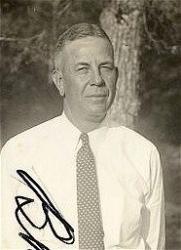
Robert J. Fryson

Person Name: Robert Fryson Topics: Ordinary Time Week 24 Author of "God Is" in Hymns and Devotions for Daily Worship (African American Edition)

Thomas Hastings

1784 - 1872 Topics: Ordinary Time Week 13 Alterer of "Come, Ye Disconsolate" in Hymns and Devotions for Daily Worship Hastings, Thomas, MUS. DOC., son of Dr. Seth Hastings, was born at Washington, Lichfield County, Connecticut, October 15, 1784. In 1786, his father moved to Clinton, Oneida Co., N. Y. There, amid rough frontier life, his opportunities for education were small; but at an early age he developed a taste for music, and began teaching it in 1806. Seeking a wider field, he went, in 1817, to Troy, then to Albany, and in 1823 to Utica, where he conducted a religious journal, in which he advocated his special views on church music. In 1832 he was called to New York to assume the charge of several Church Choirs, and there his last forty years were spent in great and increasing usefulness and repute. He died at New York, May 15, 1872. His aim was the greater glory of God through better musical worship; and to this end he was always training choirs, compiling works, and composing music. His hymn-work was a corollary to the proposition of his music-work; he wrote hymns for certain tunes; the one activity seemed to imply and necessitate the other. Although not a great poet, he yet attained considerable success. If we take the aggregate of American hymnals published duriug the last fifty years or for any portion of that time, more hymns by him are found in common use than by any other native writer. Not one of his hymns is of the highest merit, but many of them have become popular and useful. In addition to editing many books of tunes, Hastings also published the following hymnbooks:— (1) Spiritual Songs for Social Worship: Adapted to the Use of Families and Private Circles in Seasons of Revival, to Missionary Meetings, &c, Utica, 1831-2, in which he was assisted by Lowell Mason; (2) The Mother's Hymn-book, 1834; (3) The Christian Psalmist; or, Watts's Psalms and Hymns, with copious Selections from other Sources, &c, N. Y., 1836, in connection with "William Patton; (4) Church Melodies, N. Y., 1858, assisted by his son, the Rev. T. S. Hastings; (5) Devotional Hymns and Poems, N. Y., 1850. The last contained many, but not all, of his original hymns. (6) Mother's Hymn-book, enlarged 1850. The authorship of several of Hastings's hymns has been somewhat difficult to determine. All the hymns given in the Spiritual Songs were without signatures. In the Christian Psalmist some of his contributions were signed "Anon." others "M. S.," whilst others bore the names of the tune books in which they had previously appeared; and in the Church Melodies some were signed with his name, and others were left blank. His MSS [manuscript] and Devotional Hymns, &c, enable us to fix the authorship of over 50 which are still in common use. These, following the chronological order of his leading work, are:— i. From the Spiritual Songs, 1831:— 1. Before Thy footstool kneeling. In Sickness. No. 358, in 3 stanzas of 8 lines. 2. Bleeding hearts defiled by sin. Fulness of Christ. No. 261, in 5 stanzas of 4 lines. 3. Child of sin and sorrow, Filled with dismay. Lent. No. 315, in 2 stanzas of 8 lines. It is sometimes given as "Child of sin and sorrow, Where wilt thou flee?" It is in extensive use. 4. Delay not, delay not, 0 sinner draw near. Exhortation to Repentance. No. 145, in 5 stanzas of 4 lines. Given in several important collections. 5. Forgive us, Lord, to Thee we cry. Forgiveness desired. No. 165, in 4 stanzas of 4 lines. 6. Gently, Lord, 0 gently lead us. Pilgrimage of Life. No. 29, in 2 stanzas of 8 lines. It is given in several collections. The first two lines are taken from a hymn which appeared in the Christian Lyre, 1830. 7. Go forth on wings of fervent prayer. For a blessing on the distribution of Books and Tracts. No. 250, in 4 stanzas of 5 lines. It is sometimes given as “Go forth on wings of faith and prayer," as in the Baptist Praise Book, N. Y., 1871, No. 1252; but the alterations are so great as almost to constitute it a new hymn. 8. Hail to the brightness of Zion's glad morning. Missionary Success. No. 239, in 4 stanzas of 4 lines. In several hymnbooks in Great Britain and America. 9. How calm and beautiful the morn. Easter. No. 291, in 5 stanzas of 6 lines. Very popular. 10. In this calm, impressive hour. Early Morning. No. 235, pt. i. in 3 stanzas of 6 lines. In several collections. 11. Jesus, save my dying soul. Lent. No. 398, in 4 stanzas of 4 lines. A deeply penitential hymn. 12. Now be the gospel banner. Missions. No. 178, in 2 stanzas of 8 lines. In several collections (see below). 13. Now from labour, and from care. Evening. No. 235. Pt. ii. in 3 stanzas of 6 lines. This hymn, with No. 10 above, "In this calm," &c, constitute one hymn of 6 st. in the Spiritual Songs, but divided into two parts, one for Morning and the other for Evening. Both parts are popular as separate hymns. 14. 0 God of Abraham, hear. Prayer on behalf of Children. No. 288, in 5 stanzas of 4 lines. In use in Great Britain. 15. 0 tell me, Thou Life and delight of my soul. Following the Good Shepherd. No. 151, in 5 stanzas of 4 lines, on Cant. i. 7, 8. 16. Return, O wanderer, to thy home. The Prodigal recalled. No. 183, in 3 stanzas of 4 lines, with the refrain, " Return, return " (see below). 17. Soft and holy is the place. Public Worship. No. 351, in 4 stanzas of 4 lines. In Dr. Hatfield's Church Hymn Book, N. Y., 1872, and some other collections, the opening line is altered to "Sweet and holy is the place." 18. That warning voice, 0 sinner, hear. Exhortation to Repentance. No. 231, in 4 stanzas of 6 lines. 19. To-day the Saviour calls. Lent. No. 176, in 4 stanzas of 4 lines. Dr. Hastings says, in a communication to Dr. Stevenson (Hymns for Church and Home, 1873), this hymn “was offered me in a hasty sketch which I retouched." The sketch was by the Rev. S. F. Smith. 20. Why that look of sadness. Consolation. No. 268, in 3 stanzas of 8 lines. 21. Zion, dreary and in anguish. The Church Comforted. No. 160, in 4 stanzas of 4 lines. Concerning the two hymns, No. 12, "Now be the gospel banner"; and No. 16, "Beturn, O wanderer, to thy home," Dr. Stevenson has the following note in his Hymns for Church and Home, London, 1873:— "In a letter to the Editor, Dr. Hastings wrote, not more than a fortnight before his death, 'These two hymns of mine were earlier compositions, the former ["Now be," &c.] for a Utica Sunday School celebration, the latter ["Return, 0 wanderer," &c.] after hearing a stirring revival sermon on the Prodigal Son, by the Rev. Mr. Kint, at a large union meeting in the Presbyterian Church, where two hundred converts were present. The preacher at the close eloquently exclaimed with tender emphasis, "Sinner, come home! come home! come home!" It was easy afterwards to write, "Return, 0 wanderer."'" Several additional hymns in the Spiritual Songs, 1831, have been ascribed to Dr. Hastings, but without confirmation. The sum of what can be said on his behalf is that the hymns are in his style, and that they have not been claimed by others. They are:— 22. Drooping souls, no longer mourn. Pardon promised. No. 40, in 3 stanzas of 8 1., of which st. i., ii. are altered from J. J. Harrod's Public, Parlour, and Cottage Hymns, Baltimore, 1823, that is, 8 years before the Spiritual Songs were published. 23. Dying souls, fast bound in sin. Pardon offered. No. 41, in 5 stanzas of 8 lines. It is usually given in an abridged form. ii. From his Mother's Hymn Book, 1834:—- 24. Forbid them not, the Saviour cried. Holy Baptism. No. 44. 25. God of mercy, hear our prayer. On behalf of Cliildrcn, No. 48, in 5 stanzas of 4 lines. It was included in J. Campbell's Comprehensive Hymn Book, Lond., 1837, and subsequently in several collections. 26. God of the nations, bow Thine ear. Missions. No. 115, in 4 stanzas of 6 lines. In several collections. 27. How tender is Thy hand. Affliction. No. 99, in 5 stanzas of 41. 28. Jesus, while our hearts are bleeding. Death. Resignation. No. 95, in 5 stanzas of 4 lines. This is in extensive use and is one of his best and most popular hymns. 29. Lord, I would come to Thee. Self-dedication of a Child. No. 72, in 4 stanzas of 4 lines. 30. 0 Lord, behold us at Thy feet. Lent. No. 59, in 4 stanzas of 4 lines. It is doubtful if this is by Hastings. It is sometimes signed "Mrs. T." 31. The rosy light is dawning. Morning. No. 11, in 3 stanzas of 8 lines. 32. The Saviour bids us [thee] watch and pray. Watch and Pray. No. 119, in 4 stanzas of 4 lines. 33. Thou God of sovereign grace. On behalf of Children. No. 66, in 6 stanzas of 4 lines. 34. Wherever two or three may meet. Divine Service. No. 56. 35. Within these quiet walls, 0 Lord. Mothers' Meetings. No. 58, in 5 stanzas of 4 lines. In Spurgeon's Our Own Hymn Book, 1866, No. 1010, it begins, "Within these peaceful walls." This reading is from J. Campbell's Comprehensive Hymn Book, London, 1837. It is very doubtful if this is by Hastings. iii. From the Christian Psalmist, 1836:— 36. Children, hear the melting story. On the life of Christ. No. 430, in 3 stanzas of 6 lines. It is given as from the Union Minstrel, and the statement that it is by Hastings is very doubtful, no evidence to that effect being in the possession of his family. Dr. Hatfield, in his Church Hymn Book, dates it 1830, and gives it as "Anon." 37. Go, tune thy voice to sacred song. Praise No. 190, in 5 stanzas of 5 lines, and given as from "ms." 38. He that goeth forth with weeping. Missions No. 212, in 2 stanzas of 8 lines, and given as from "ms." It is in several collections. 39. I love the Lord, Whose gracious ear. Ps. cxvi. Page 186, in 4 stanzas of 6 lines, as from "ms." 40. Lord of the harvest, bend Thine ear. For the Increase of the Ministry. No. 407, in 6 stanzas of 4 lines, as from "ms." This hymn Dr. Hastings altered for his Devotional Hymns & Poems, 1850, but it has failed to replace the original in the hymnbooks. iv. From the Reformed Dutch Additional Hymns, 1846:— 41. Child of sorrow, child of care [woe]. Trust. No. 168, in 2 stanzas of 8 lines, appeared in W. Hunter's Minstrel of Zion, 1845. 42. Heirs of an immortal crown. Christian Warfare. No. 136, in 2 stanzas of 8 lines. 43. O Saviour, lend a listening ear. Lent. No. 175. Stanzas vi., i., iv., v., altered. 44. The Lord Jehovah lives. Ps. xviii. No. 26, in 4 stanzas of 6 lines. These three hymns, together with many others, are given in the Dutch Reformed Hymns of the Church, N. Y., 1869. In the 1847 Psalms & Hymns there were, including these, 38 hymns by Hastings, and 2 which are doubtful. v. From Dr. Hastings's Devotional Hymns and Religious Poems, 1850:— 45. In time of fear, when trouble's near. Encouragement in Trial. Page 95, in 3 stanzas of 4 lines. In use in Great Britain. vi. From Church Melodies, 1858:—- 46. For those in bonds as bound with them. Missions. No. 416, in 5 stanzas of 4 lines, on Heb. xiii. 3. 47. Forget thyself, Christ bids thee come. Holy Communion. No. 683, in 3 stanzas of 6 lines. 48. Jesus, Merciful and Mild. Leaning on Christ. No. 585, in 4 stanzas of 8 1. In several collections. 49. Pilgrims in this vale of sorrow. Self-denial. No. 397, in 4 stanzas of 4 lines. 50. Saviour, I look to Thee. Lent. In time of Trouble. No. 129, in 4 stanzas of 7 lines. 51. Saviour of our ruined race. Holy Communion. No. 379, in 3 stanzas of 6 lines. 52. Why that soul's commotion? Lent. No. 211, in 3 stanzas of 8 lines. It is doubtful if this is by Hastings. vii. In Robinson's Songs of the Church, 1862: 53. Be tranquil, 0 my soul. Patience in Affliction. No. 519, in 4 stanzas of 4 lines. Altered in Robinson's Songs for the Sanctuary, 1865. 54. Peace, peace, I leave with you. Peace, the benediction of Christ. No. 386, in 3 stanzas of 7 lines. 55. Saviour, Thy gentle voice. Christ All in All. No. 492, in 3 stanzas of 7 lines. viii. In Bobinson's Songs for the Sanctuary, 1865:— 56. God of the morning ray. Morning. No. 53, in 2 stanzas of 7 lines. Of Hastings's hymns about 40 are in the Reformed Dutch Psalms & Hymns, 1847; 39 in Robinson's Songs for the Sanctuary, 1865; 15 in Hatfield's Church Hymn Book, 1872; and 13 in the Lyra Sacra Americana, 1868. They are also largely represented in other collections. Many other of his compositions are found in collections now or recently in common use, but these are not of the highest merit. [Rev. F. M. Bird, M.A.] --John Julian, Dictionary of Hymnology (1907) ======================== Hastings, T., p. 494, i. Additional hymns are:— 1. Children hear the wondrous story; and "Sinners, hear the melting story," are altered forms of No. 36, on p. 495, i. 2. Father, we for our children plead. On behalf of Children. 3. Forgive my folly, O Lord most holy. Lent. 4. Hosanna to the King, That for, &c. Praise to Jesus. 5. I look to Thee, O Lord, alone. Pardon desired. 6. Jesus, full of every grace. Pardon desired. 7. O why should gloomy thoughts arise? The Mourner Encouraged. 8. Peace to thee, O favoured one. Peace in Jesus. 9. Saviour, hear us through Thy merit. Forgiveness. Of these hymns, No. 3 is in Hasting’s Spiritual Songs, 1831; No. 9 in his Mother's Hymn Book, 1834, and his Devotional Hymns, 1850; and Nos. 4, 5 & 8 in his Devotional Hymns, 1850. --John Julian, Dictionary of Hymnology, Appendix, Part II (1907)

Adelaide A. Pollard

1862 - 1934 Topics: Ordinary Time Week 18 Author of "Have Thine Own Way" in Hymns and Devotions for Daily Worship Not to be confused with Adelaide A. Procter

Chas. H. Gabriel

1856 - 1932 Person Name: Charles H. Gabriel Topics: Ordinary Time Week 7 Composer of "SPARROW" in Hymns and Devotions for Daily Worship Pseudonyms: C. D. Emerson, Charlotte G. Homer, S. B. Jackson, A. W. Lawrence, Jennie Ree ============= For the first seventeen years of his life Charles Hutchinson Gabriel (b. Wilton, IA, 1856; d. Los Angeles, CA, 1932) lived on an Iowa farm, where friends and neighbors often gathered to sing. Gabriel accompanied them on the family reed organ he had taught himself to play. At the age of sixteen he began teaching singing in schools (following in his father's footsteps) and soon was acclaimed as a fine teacher and composer. He moved to California in 1887 and served as Sunday school music director at the Grace Methodist Church in San Francisco. After moving to Chicago in 1892, Gabriel edited numerous collections of anthems, cantatas, and a large number of songbooks for the Homer Rodeheaver, Hope, and E. O. Excell publishing companies. He composed hundreds of tunes and texts, at times using pseudonyms such as Charlotte G. Homer. The total number of his compositions is estimated at about seven thousand. Gabriel's gospel songs became widely circulated through the Billy Sunday­-Homer Rodeheaver urban crusades. Bert Polman

Pages


Export as CSV
It looks like you are using an ad-blocker. Ad revenue helps keep us running. Please consider white-listing Hymnary.org or getting Hymnary Pro to eliminate ads entirely and help support Hymnary.org.