

 My Starred Hymns
 My FlexScores
 My Hymnals
 My Purchased Files
Planning worship?
Check out our sister site, ZeteoSearch.org,
for 20+ additional resources related to your search.
- |
User Links
Person Results
Timothy Rees
1874 - 1939 Person Name: Timothy Rees C.R., 1874-1939 Meter: 8.7.8.7.8.7.8.7 Author of "God is love: come heaven, adoring" in The Book of Praise
Timothy Rees
H. C. Ball
1896 - 1989 Person Name: Henry C. Ball, n. 1896 Meter: 8.7.8.7.8.7.8.7 Translator of "A los pies de Jesucristo" in Culto Cristiano
H. C. Ball
Walter Shirley
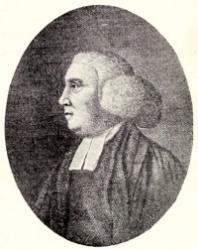
1725 - 1786 Person Name: Hon. and Rev. Walter Shirley Meter: 8.7.8.7.8.7.8.7 Alterer of "Sweet the moments, rich in blessing" in The Evangelical Hymnal with Tunes Walter Shirley was born in 1725. He was the friend of Whitefield and Wesley. After preaching with great success in England, he received the living of Loughrea, Ireland, where he continued to exercise his ministry for many years. His last sickness was of a lingering character, and it is related of him that when no longer able to leave his house he used to preach, seated in his chair in his drawing room, to many who gladly assembled to hear. He died in 1786. He published one volume of sermons and two poems.
--Annotations of the Hymnal by The Rev. Charles L. Hutchins, M.A. (1872).
===================================
Shirley, Hon. Walter, M.A., fourth son of the Hon. Laurence Shirley (son of the 1st Earl Ferrers, and cousin of the Countess of Huntingdon), was born in 1725. He was a friend of Whitefield and the Wesleys, and often preached in their chapels. He was for sometime Rector of Loughrea, county of Galway. He died April 7, 1786. A selection of his sermons was published; also two poems in 1761—-Liberty, an Ode, and The Judgment. In 1774 he assisted the Countess of Huntingdon in revising the collection of hymns used in her chapels, and therein a few of his productions are found. In the Life of Selina, Countess of Huntingdon, 1839, vol. ii., p. 291, the following note is given on Shirley's hymn-writing:—
"Mr. Shirley was the author of several well-known hymns in Lady Huntingdon's collection, particularly:—
‘From heaven the loud angelic song began.'
‘Hark! in the wilderness a try.'
‘Flow fast my tears, the cause is great.'
‘Sweet as the shepherd's tuneful reed.'
‘Source of light and power divine.'
“There are also some in other collections; and a few little poems scattered in various periodical publications. The lines on the departure of the Missionaries from Lady Huntingdon's College for America, in 1772, under the direction of Mr. Piercy, have been much admired; they were re-published in the Evangelical Magazine, in 1796, on the departure of the ship Duff, for the South Sea inlands.....He likewise assisted Lady Huntingdon in the Selection of hymns now in use in the congregations in her Connexion."
The Missionary hymn here referred to is:— "Go, destined vessel, heavenly-freighted, go!" His hymns now in common use include:—
1. Flow fast, my tears, the cause is great. Good Friday. Published in the Countess of Huntingdon's Collection, circa 1773, p. 294, in 3 stanzas of 8 lines. It is in several modern hymn-books; and especially in America, including Hatfield's Church Hymn Book, 1872.
2. From heaven the loud angelic song began. Ascension. Also in the C. of Huntingdon's Collection, circa 1773, p. 312, in 7 stanzas of 4 lines. The hymn, "Worthy the Lamb of boundless sway," in Hatfield's Church Hymn Book, 1872, and others, is composed of st. ii. and vii.
3. Hark, in the wilderness a cry. St. John Baptist. Also in the C. of Huntingdon's Collection, circa 1773, p. 245, in 7 st. of 4 1.
4. Source of light and power divine. Before Sermon. Also in the C. of Huntingdon's Collection, circa 1773, p. 231, in 4 st. of 6 1. In Snepp's Songs of Grace & Glory, 1872, No. 812, st. i. and iv. are given in an altered form; and the first two lines of the hymn are added as a refrain.
5. Sweet as the shepherd's tuneful reed. Peace. Also in the above Collection, circa 1773, p. 126, in 4 st. of 6 1. The hymn, “Peace, troubled soul, whose plaintive moan," in Laudes Domini, N. Y., 1884, and others, is composed of stanza ii. and iii.
For Shirley's popular recast, "Sweet the moments, rich in blessing," see “While my Jesus I'm possessing."
-- John Julian, Dictionary of Hymnology (1907)
Walter Shirley
Joseph Medlicott Scriven
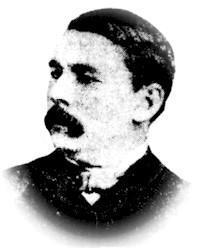
1819 - 1886 Person Name: Joseph Scriven, 1820-1886 Meter: 8.7.8.7.8.7.8.7 Author of "¡Oh, qué amigo nos es Cristo!" in Culto Cristiano Joseph M. Scriven (b. Seapatrick, County Down, Ireland, 1819; d. Bewdley, Rice Lake, ON, Canada, 1886), an Irish immigrant to Canada, wrote this text near Port Hope, Ontario, in 1855. Because his life was filled with grief and trials, Scriven often needed the solace of the Lord as described in his famous hymn.
Educated at Trinity College, Dublin, Ireland, he enrolled in a military college to prepare for an army career. However, poor health forced him to give up that ambition. Soon after came a second blow—his fiancée died in a drowning accident on the eve of their wedding in 1844. Later that year he moved to Ontario, where he taught school in Woodstock and Brantford. His plans for marriage were dashed again when his new bride-to-be died after a short illness in 1855. Following this calamity Scriven seldom had a regular income, and he was forced to live in the homes of others. He also experienced mistrust from neighbors who did not appreciate his eccentricities or his work with the underprivileged. A member of the Plymouth Brethren, he tried to live according to the Sermon on the Mount as literally as possible, giving and sharing all he had and often doing menial tasks for the poor and physically disabled. Because Scriven suffered from depression, no one knew if his death by drowning in Rice Lake was suicide or an accident.
Bert Polman
================
Scriven, Joseph. Mr. Sankey, in his My Life and Sacred Songs, 1906, p. 279, says that Scriven was b. in Dublin in 1820, was a graduate of Trinity College, Dublin, and went to Canada when he was 25, and died there at Port Hope, on Lake Ontario, in 1886. His hymn:—
What a Friend we have in Jesus. [Jesus our Friend] was, according to Mr. Sankey, discovered to be his in the following manner: "A neighbour, sitting up with him in his illness, happened upon a manuscript of 'What a Friend we have in Jesus.' Reading it with great delight, and questioning Mr. Scriven about it, he said he had composed it for his mother, to comfort her in a time of special sorrow, not intending any one else should see it." We find the hymn in H. 1... Hastings's Social Hymns, Original and Selected, 1865, No. 242; and his Song of Pilgrimage, 1886, No. 1291, where it is attributed to "Joseph Scriven, cir. 1855." It is found in many modern collections.
--John Julian, Dictionary of Hymnology, New Supplement (1907)
Joseph Medlicott Scriven
William Cowper
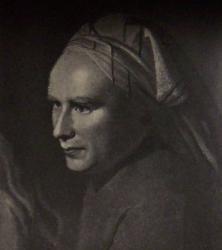
1731 - 1800 Person Name: W. Cowper Meter: 8.7.8.7.8.7.8.7 Author of "Hear what God the Lord hath spoken" in Methodist Hymn-Book William Cowper (pronounced "Cooper"; b. Berkampstead, Hertfordshire, England, 1731; d. East Dereham, Norfolk, England, 1800) is regarded as one of the best early Romantic poets. To biographers he is also known as "mad Cowper." His literary talents produced some of the finest English hymn texts, but his chronic depression accounts for the somber tone of many of those texts. Educated to become an attorney, Cowper was called to the bar in 1754 but never practiced law. In 1763 he had the opportunity to become a clerk for the House of Lords, but the dread of the required public examination triggered his tendency to depression, and he attempted suicide. His subsequent hospitalization and friendship with Morley and Mary Unwin provided emotional stability, but the periods of severe depression returned. His depression was deepened by a religious bent, which often stressed the wrath of God, and at times Cowper felt that God had predestined him to damnation.
For the last two decades of his life Cowper lived in Olney, where John Newton became his pastor. There he assisted Newton in his pastoral duties, and the two collaborated on the important hymn collection Olney Hymns (1779), to which Cowper contributed sixty-eight hymn texts.
Bert Polman
============
Cowper, William, the poet. The leading events in the life of Cowper are: born in his father's rectory, Berkhampstead, Nov. 26, 1731; educated at Westminster; called to the Bar, 1754; madness, 1763; residence at Huntingdon, 1765; removal to Olney, 1768; to Weston, 1786; to East Dereham, 1795; death there, April 25, 1800.
The simple life of Cowper, marked chiefly by its innocent recreations and tender friendships, was in reality a tragedy. His mother, whom he commemorated in the exquisite "Lines on her picture," a vivid delineation of his childhood, written in his 60th year, died when he was six years old. At his first school he was profoundly wretched, but happier at Westminster; excelling at cricket and football, and numbering Warren Hastings, Colman, and the future model of his versification. Churchill, among his contemporaries or friends. Destined for the Bar, he was articled to a solicitor, along with Thurlow. During this period he fell in love with his cousin, Theodora Cowper, sister to Lady Hesketh, and wrote love poems to her. The marriage was forbidden by her father, but she never forgot him, and in after years secretly aided his necessities. Fits of melancholy, from which he had suffered in school days, began to increase, as he entered on life, much straitened in means after his father's death. But on the whole, it is the playful, humorous side of him that is most prominent in the nine years after his call to the Bar; spent in the society of Colman, Bonnell Thornton, and Lloyd, and in writing satires for The Connoisseur and St. James's Chronicle and halfpenny ballads. Then came the awful calamity, which destroyed all hopes of distinction, and made him a sedentary invalid, dependent on his friends. He had been nominated to the Clerkship of the Journals of the House of Lords, but the dread of appearing before them to show his fitness for the appointment overthrew his reason. He attempted his life with "laudanum, knife and cord,"—-in the third attempt nearly succeeding. The dark delusion of his life now first showed itself—a belief in his reprobation by God. But for the present, under the wise and Christian treatment of Dr. Cotton (q. v.) at St. Albans, it passed away; and the eight years that followed, of which the two first were spent at Huntingdon (where he formed his lifelong friendship with Mrs. Unwin), and the remainder at Olney in active piety among the poor, and enthusiastic devotions under the guidance of John Newton (q. v.), were full of the realisation of God's favour, and the happiest, most lucid period of his life. But the tension of long religious exercises, the nervous excitement of leading at prayer meetings, and the extreme despondence (far more than the Calvinism) of Newton, could scarcely have been a healthy atmosphere for a shy, sensitive spirit, that needed most of all the joyous sunlight of Christianity. A year after his brother's death, madness returned. Under the conviction that it was the command of God, he attempted suicide; and he then settled down into a belief in stark contradiction to his Calvinistic creed, "that the Lord, after having renewed him in holiness, had doomed him to everlasting perdition" (Southey). In its darkest form his affliction lasted sixteen months, during which he chiefly resided in J. Newton's house, patiently tended by him and by his devoted nurse, Mrs. Unwin. Gradually he became interested in carpentering, gardening, glazing, and the tendance of some tame hares and other playmates. At the close of 1780, Mrs. Unwin suggested to him some serious poetical work; and the occupation proved so congenial, that his first volume was published in 1782. To a gay episode in 1783 (his fascination by the wit of Lady Austen) his greatest poem, The Task, and also John Gilpin were owing. His other principal work was his Homer, published in 1791. The dark cloud had greatly lifted from his life when Lady Hesketh's care accomplished his removal to Weston (1786): but the loss of his dear friend William Unwin lowered it again for some months. The five years' illness of Mrs. Unwin, during which his nurse of old became his tenderly-watched patient, deepened the darkness more and more. And her death (1796) brought “fixed despair," of which his last poem, The Castaway, is the terrible memorial. Perhaps no more beautiful sentence has been written of him, than the testimony of one, who saw him after death, that with the "composure and calmness" of the face there “mingled, as it were, a holy surprise."
Cowper's poetry marks the dawn of the return from the conventionality of Pope to natural expression, and the study of quiet nature. His ambition was higher than this, to be the Bard of Christianity. His great poems show no trace of his monomania, and are full of healthy piety. His fame as a poet is less than as a letter-writer: the charm of his letters is unsurpassed. Though the most considerable poet, who has written hymns, he has contributed little to the development of their structure, adopting the traditional modes of his time and Newton's severe canons. The spiritual ideas of the hymns are identical with Newton's: their highest note is peace and thankful contemplation, rather than joy: more than half of them are full of trustful or reassuring faith: ten of them are either submissive (44), self-reproachful (17, 42, 43), full of sad yearning (1, 34), questioning (9), or dark spiritual conflict (38-40). The specialty of Cowper's handling is a greater plaintiveness, tenderness, and refinement. A study of these hymns as they stood originally under the classified heads of the Olney Hymns, 1779, which in some cases probably indicate the aim of Cowper as well as the ultimate arrangement of the book by Newton, shows that one or two hymns were more the history of his conversion, than transcripts of present feelings; and the study of Newton's hymns in the same volume, full of heavy indictment against the sins of his own regenerate life, brings out the peculiar danger of his friendship to the poet: it tends also to modify considerably the conclusions of Southey as to the signs of incipient madness in Cowper's maddest hymns. Cowper's best hymns are given in The Book of Praise by Lord Selborne. Two may be selected from them; the exquisitely tender "Hark! my soul, it is the Lord" (q. v.), and "Oh, for a closer walk with God" (q. v.). Anyone who knows Mrs. Browning's noble lines on Cowper's grave will find even a deeper beauty in the latter, which is a purely English hymn of perfect structure and streamlike cadence, by connecting its sadness and its aspiration not only with the “discord on the music" and the "darkness on the glory," but the rapture of his heavenly waking beneath the "pathetic eyes” of Christ.
Authorities. Lives, by Hayley; Grimshaw; Southey; Professor Goldwin Smith; Mr. Benham (attached to Globe Edition); Life of Newton, by Rev. Josiah Bull; and the Olney Hymns. The numbers of the hymns quoted refer to the Olney Hymns. [Rev. H. Leigh Bennett, M.A.]
--John Julian, Dictionary of Hymnology (1907)
================
Cowper, W. , p. 265, i. Other hymns are:—
1. Holy Lord God, I love Thy truth. Hatred of Sin.
2. I was a grovelling creature once. Hope and Confidence.
3. No strength of nature can suffice. Obedience through love.
4. The Lord receives His highest praise. Faith.
5. The saints should never be dismayed. Providence. All these hymns appeared in the Olney Hymns, 1779.
--John Julian, Dictionary of Hymnology, Appendix, Part II (1907)
=====================
Cowper, W., p. 265, i. Prof. John E. B. Mayor, of Cambridge, contributed some letters by Cowper, hitherto unpublished, together with notes thereon, to Notes and Queries, July 2 to Sept. 24, 1904. These letters are dated from Huntingdon, where he spent two years after leaving St. Alban's (see p. 265, i.), and Olney. The first is dated "Huntingdon, June 24, 1765," and the last "From Olney, July 14, 1772." They together with extracts from other letters by J. Newton (dated respectively Aug. 8, 1772, Nov. 4, 1772), two quotations without date, followed by the last in the N. & Q. series, Aug. 1773, are of intense interest to all students of Cowper, and especially to those who have given attention to the religious side of the poet's life, with its faint lights and deep and awful shadows. From the hymnological standpoint the additional information which we gather is not important, except concerning the hymns "0 for a closer walk with God," "God moves in a mysterious way," "Tis my happiness below," and "Hear what God, the Lord, hath spoken." Concerning the last three, their position in the manuscripts, and the date of the last from J. Newton in the above order, "Aug. 1773," is conclusive proof against the common belief that "God moves in a mysterious way" was written as the outpouring of Cowper's soul in gratitude for the frustration of his attempted suicide in October 1773.
--John Julian, Dictionary of Hymnology, New Supplement (1907)
William Cowper
Leandro Garza Mora
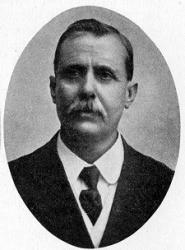
1854 - 1938 Person Name: L. Garza Mora, 1854-1938 Meter: 8.7.8.7.8.7.8.7 Translator of "¡Oh, qué amigo nos es Cristo!" in Culto Cristiano Born: August 10, 1854, Rancho del Rosario, Hidalgo County, Texas.
Died: December 19, 1938, Montemorelos, Nuevo León, Mexico.
Buried: Montemorelos, Nuevo León, Mexico.
Garza Mora’s father died when he was five years old. He came to Christ around age 20, under the influence of Dr. Tomas Graybill. At the time, he was working as a bartender in Matamoros, Mexico. He eventually started theological studies and served as a Presbyterian minister for seven decades.
© The Cyber Hymmal™ (hymntime.com/tch)
Leandro Garza Mora
Bernhard Severin Ingemann
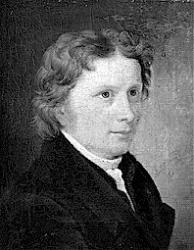
1789 - 1862 Person Name: Bernhard Severin Ingemann, 1789-1862 Meter: 8.7.8.7.8.7.8.7 Author of "¡Adelante, peregrinos!" in Culto Cristiano Ingemann, Bernhardt Severin, was born at Thor Kildstrup, Island of Falster, May 28, 1789. From 1822 to his death in 1862, he was Professor of the Danish Language and Literature at the Academy of Sorö, Zealand, Denmark. He was a poet of some eminence. His collected works were pub, in 1851, in 34 volumes. Seven of his hymns translated into English are given in Gilbert Tait's Hymns of Denmark, 1868. The only hymn by him in English common use is:—
Igjennem Nat og Traengael. Unity and Progress. It is dated 1825, and is given in the Nyt Tillaeg til Evangelisk-christelig. Psalmebog, Copenhagen, 1859, No. 502. In its translated form as "Through the night of doubt and sorrow," by the Rev. S. Baring-Gould, it has become widely known in most English-speaking countries. The translation was published in the People's Hymnal, 1861. It was greatly improved in Hymns Ancient & Modern, 1875, and has been specially set to music by several composers.
--John Julian, Dictionary of Hymnology (1907)
Bernhard Severin Ingemann
John Burton
1773 - 1822 Person Name: J. Burton, sr. Meter: 8.7.8.7.8.7.8.7 Author of "Holy Father, send thy blessing" in Methodist Hymn-Book Burton, John, born 1773, in Nottingham, where he resided until 1813, when he removed to Leicester, at which town he died in 1822. He was a Baptist, a very earnest Sunday School teacher, and one of the compilers of the Nottingham Sunday School Union Hymn Book, 1812. This book reached the 20th edition in 1861. The 1st edition contains 43 hymns which have his signature. He is known almost exclusively by one hymn, "Holy Bible, book divine" (q.v.). He was also author of The Youth's Monitor, and other similar productions for the young. Robert Hall wrote a recommendatory preface to one of his works. [Rev. W. R. Stevenson, M. A.]
-- John Julian, Dictionary of Hymnology (1907)
John Burton
A. Cleveland Coxe
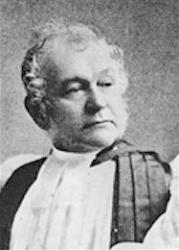
1818 - 1896 Person Name: A.C. Coxe Meter: 8.7.8.7.8.7.8.7 Author of "Saviour, sprinkle many nations" in Methodist Hymn-Book Coxe, Arthur Cleveland, D.D. LL.D. One of the most distinguished of American prelates, and son of an eminent Presbyterian minister, the Rev. Samuel H. Cox, D.D., was born at Mendham, New Jersey, May 10,1818. Graduating at the University of New York in 1838, and taking Holy Orders in 1841, he became Rector of St. John's, Hartford, Connecticut, in the following year. In 1851 he visited England, and on his return was elected Rector of Grace Church, Baltimore, 1854, and Calvary, New York, 1863. His consecration as Bishop of the Western Diocese of New York took place in 1865. His residence is at Buffalo. Bishop Coxe is the author of numerous works. His poetical works were mostly written in early life, and include Advent, 1837; Athanasion, &c, 1842; Christian Ballads, 1840 (Preface to the English edition, April, 1848); Hallowe'en and Other Poems, 1844; Saul, a Mystery, 1845, &c. Some of Bishop Coxe's hymns are found in the collections of every religious body in America, except the official collections of his own. This is accounted for by his too scrupulous modesty. As a member of the Hymnal Committee, in 1869-71, he refused to permit the insertion of his own lyrics. As he has not preserved memoranda, and has no precise recollection of dates, several dates here given are somewhat uncertain.
1. Behold an Israelite indeed. St. Bartholomew. First appeared in "Poems," published with his Christian Ballads, 1840, and found in an altered form in the People's H. and the Hymnary.
2. Body of Jesus, 0 sweet Food. Holy Communion. Written at St. James's College, Maryland (since broken up by the Civil War), Ascension Day, 1858. It was first printed for private use, and then published in the Cantate Domino, Boston, 1859, No. 53, and again in other American collections. It is also in Schaff’s Christ in Song, 1869, and in The Churchman's Altar Manual, 2nd ed., 1883.
3. Breath of the Lord, 0 Spirit blest.Whitsuntide. Bishop Coxe considers this more worthy of being called a hymn than anything else from his pen. It was written long before it appeared in the New York Independent, Whitsuntide, 1878. It is in the Schaff-Gilman Library of Religious Poetry, 1881, and Brooke's Churchman's Manual of Private and Family Devotion, 1883.
4. Christ is arisen. Easter. This is suggested by, and partly translated from, the famous Easter Chorus in Goethe's Faust, "Christ ist erstanden" (see Goethe), and appeared in Hallowe'en, 1844.
5. He who for Christ hath left behind. St. Matthew. From his Christian Ballads, &c, 1840.
6. In the silent midnight watches. Christ knocking. From his Athanasion, &c, 1842; an impressive moral poem rather than a hymn on Christ knocking at the door, extensively used in America, and sometimes in England. Original text, Schaff's Christ in Song, 1869.
7. Lord, when Thou didst come from heaven. A hymn for Epiphany, on behalf of Western Missions, appeared among the "Lays "appended to Hallowe'en, 1844, and again in later editions of the Christian Ballad. It is sometimes abbreviated, as in Lyra Sac. Amer., " Westward, Lord, the world alluring."
8. Now pray we for our country. National Hymn. A stanza from Chronicles, or meditations on events in the history of England, called up by visiting her abbeys and cathedrals, and appeared in Christian Ballads, 1840. Originally it began, "Now pray we for our mother," and, with the succeeding stanza, was a call upon Americans to pray for their mother country. It is adopted by Dr. Martineau in his Hys., 1873.
9. 0 walk with God, and thou shalt find. Holiness. Appeared in his Hallowe’en, &c, 1844, and is found in Lyra Sac. Amer.
10. 0 where are kings and empires now! Church of God. The 6th stanza of his ballad "Chelsea," which appeared in the Churchman, 1839, and again in his Christian Ballads, 1840.
11. Saviour, sprinkle many nations. Missions. “Begun on Good Friday, 1850, and completed 1851, in the grounds of Magdalen College, Oxford." 1st published. in Verses for 1851, in Commemoration of the third Jubilee of the Society for the Propagation of the Gospel, edited by the Rev. Ernest Hawkins, 1851. It was subsequently appended to the English edition of his Christian Ballads. It is regarded as Bishop Coxe's best piece, and to many minds it is the loveliest of missionary hymns. Its use in England is very extensive. It is not found in the American Episcopal hymnal for the reason given above.
12. Still as our day our strength shall be. Temptation. Appeared in his Hallowe'en, &c, 1844, and Lyra Sac. Amer.
13. Soldier, to the contest pressing. Christian Conflict. From his Hallowe'en, &c, 1844, and Lyra Sac. Amer. It was written in 1834.
14. There is a land like Eden fair. From Hallowe'en, &c, into a few collections.
15. We are living, we are dwelling. Christian Soldiers. An impressive moral poem rather than a hymn, but extensively used. It appeared in his Athanasion, &c, 1840, and Lyra &xc.
16. Who is this, with garments gory. Passiontide. From his “Lays" appended to Hallowe'en, 1844, and again in his Christian Ballads. It is found in the Child's Christian Year, 4th ed. N.D., the People's Hymns, and other collections. It is in 4 stanza of 8 1. The last stanza is sometimes given as a separate hymn:—"Hail, all hail, Thou Lord of Glory."
17. When o'er Judea's vales and hills. Written cir. 1840, and published in his Hallowe'en, &c, 1844, and again, with the author's final corrections, made in 1869, in Schaff's Christ in Song (1870 ed. p. 112). Also in the English edition of his Christian Ballads. From this "Hymn to the Redeemer," two shorter hymns have been com¬piled : (1) " How beauteous were the marks divine." This is in almost universal American and occasional English use. (2) "O who like Thee, so calm, so bright," in the Hymnary, 1872.
Bishop Coxe has also translated the Pange lingua gloriosi corporis (q. v.), and is the author of the beautiful Christmas Carol, "Carol, carol, Christians," given in his Christian Ballads, &c. [Rev. F. M. Bird]
-- John Julian, Dictionary of Hymnology (1907)
A. Cleveland Coxe
John Bakewell
1721 - 1819 Person Name: J. Bakewell Meter: 8.7.8.7.8.7.8.7 Author of "Hail! thou once despised Jesus!" in Methodist Hymn-Book Bakewell, John, born at Brailsford, Derbyshire, 1721. At about the age of eighteen his mind was turned towards religious truths by reading Boston's Fourfold State. From that date he became an ardent evangelist, and in 1744 (the year of the first Methodist Conference) he begun to preach. Removing to London some short time after, he became acquainted with the Wesleys, M. Madan, A. M. Toplady, J. Fletcher, and other earnest evangelical men. After conducting for some years the Greenwich Royal Park Academy, he resigned in favour of his son-in-law, Dr. James Egau, and employed much of his time in preaching at various places for the Wesleyans. He died at Lewisham, near Greenwich, March 18, 1819, aged 98, and was buried in the Wesleyan burying ground connected with the City Road Chapel, London. Mr. Bakewell was the author of a few hymns, the best known being, "Hail Thou once despised Jesus," the abbreviations of the same, "Paschal Lamb, by God appointed," and “Jesus, hail, enthroned in glory." A short memoir of him was published by Mr. Stelfox, Belfast, 1864.
- John Julian, Dictionary of Hymnology (1907)
See also in:
Hymn Writers of the Church
John Bakewell
Pages




