You help make Hymnary.org possible. More than 10 million people from 200+ countries found hymns, liturgical resources and encouragement on Hymnary.org in 2025, including you. Every visit affirms the global impact of this ministry.

If Hymnary has been meaningful to you this year, would you take a moment today to help sustain it? A gift of any size—paired with a note of encouragement if you wish—directly supports the server costs, research work and curation that keep this resource freely available to the world.

Give securely online today, or mail a check to:
Hymnary.org
Calvin University
3201 Burton Street SE
Grand Rapids, MI 49546

Thank you for your partnership, and may the hope of Advent fill your heart.

Person Results

Text Identifier:"^father_of_mercies_in_thy_word$"
In:people

Planning worship? Check out our sister site, ZeteoSearch.org, for 20+ additional resources related to your search.
Showing 31 - 40 of 41Results Per Page: 102050

Joseph Barnby

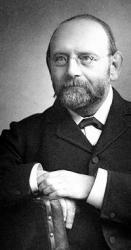
1838 - 1896 Person Name: Barnby Composer of "HOLY TRINITY" in New Manual of Praise Joseph Barnby (b. York, England, 1838; d. London, England, 1896) An accomplished and popular choral director in England, Barnby showed his musical genius early: he was an organist and choirmaster at the age of twelve. He became organist at St. Andrews, Wells Street, London, where he developed an outstanding choral program (at times nicknamed "the Sunday Opera"). Barnby introduced annual performances of J. S. Bach's St. John Passion in St. Anne's, Soho, and directed the first performance in an English church of the St. Matthew Passion. He was also active in regional music festivals, conducted the Royal Choral Society, and composed and edited music (mainly for Novello and Company). In 1892 he was knighted by Queen Victoria. His compositions include many anthems and service music for the Anglican liturgy, as well as 246 hymn tunes (published posthumously in 1897). He edited four hymnals, including The Hymnary (1872) and The Congregational Sunday School Hymnal (1891), and coedited The Cathedral Psalter (1873). Bert Polman

Charles John Dickinson

1822 - 1883 Person Name: C. J. Dickinson, 1822-1883 Composer of "CHILDHOOD" in Church Hymns Dickinson is­sued a col­lect­ion of his own tunes in 1861, and con­trib­ut­ed five tunes to The Ir­ish Hym­nal. The 1881 cen­sus lists him as Vi­car of Bod­min, Corn­wall. --www.hymntime.com/tch/

George Hews

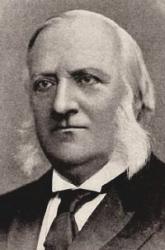
1806 - 1873 Composer of "NICHOLS" in Hymns of Grace and Truth Born: January 6, 1806, Weston, Massachusetts. Died: July 6, 1873, Boston, Massachusetts.

George M. Garrett

1834 - 1897 Person Name: G. M. Garrett Composer of "[Father of mercies, in Thy Word]" in Songs of Worship Born: June 8, 1834, Winchester, Hampshire, England. Died: April 9, 1897, Cambridge, England. Buried: Cambridge Mill Road Cemetery, Cambridge, England

W. Wheal

1690 - 1727 Person Name: William Wheall Composer of "BEDFORD" in The Lutheran Hymnal William Wheal (Weale) c. 1690-1727 was the organist at St. Paul's, Bedford. He graduated with a Bachelor's in Music from Cambridge in 1719. The tune BEDFORD appeared in the "Psalm Singer's Magazine" of 1729, but it was probably first published earlier. It appears in The Divine Musick Scholars Guide by Francis Timbrell, which has an unknown date of publication, but copies found in personal libraries have dates beginning in 1723. Dianne Shapiro, from "The Musical Times" Vol. 49, #781 (Mar. 1, 1908) pp. 165-169

Clark

Composer of "KENDALL" in The American Vocalist

Charles H. Purday

1799 - 1885 Person Name: C. H. Purdy Composer of "NOTTING HILL" in The Brethren Hymnal Charles H. Purday (1799-1885) A publisher, composer, lecturer, and writer, Purday had a special interest in church music. He published Crown Court Psalmody (1854), Church and Home Metrical Psalter and Hymnal (1860), which included SANDON, and, with Frances Havergal, Songs of Peace and Joy (1879). A precentor in the Scottish Church in Crown Court, London, Purday sang at the coronation of Queen Victoria. In the publishing field he is known as a strong proponent of better copyright laws to protect the works of authors and publishers. Bert Polman

Charles Edward Pollock

1853 - 1928 Person Name: Chas. Edw. Pollock Composer of "PRINCETON" in The Songs of Zion Charles Edward Pollock USA 1853-1928. Born at Newcastle, PA, he moved to Jefferson City, MO, when age 17. He was a cane maker for C W Allen. He also worked 20 years for the MO Pacific Railroad, as a depot clerk and later as Assistant Roadmaster. He was a musician and prolific songwriter, composing 5000+ songs, mostly used in Sunday school settings and church settings. He took little remuneration for his compositions, preferring they be freely used. He produced three songbooks: “Praises”, “Beauty of praise”, and “Waves of melody”. In 1886 he married Martha (Mattie) Jane Harris, and they had three children: Robert, Edward, and a daughter. He died in Merriam, KS. John Perry ================= Pollock, Charles Edward. (Jefferson City, Missouri, 1853-1924). Records of Jefferson City indicate the following: 1897 clerk at depot; residence at 106 Broadway (with Mildred Pollock) 1904-1905 cane maker for C. W. Allen 1908-1909 musician; residence at 106 Broadway (with wife Matty) 1912-1913 residence at St. Louis Road, east city limits --Wilmer Swope, DNAH Archives Note: not to be confused with Charles Edward Pollock (c.1871-1924).

C. E. Miller

1856 - 1933 Person Name: Charles Edward Miller Composer of "WALDRONS" in Hymns of the Living Church

George Frideric Handel

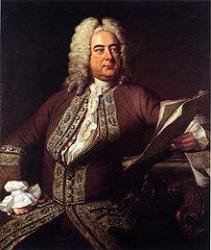
1685 - 1759 Person Name: Handel Composer of "ANTIOCH" in Exalted Praise George Frideric Handel (b. Halle, Germany, 1685; d. London, England, 1759) became a musician and composer despite objections from his father, who wanted him to become a lawyer. Handel studied music with Zachau, organist at the Halle Cathedral, and became an accomplished violinist and keyboard performer. He traveled and studied in Italy for some time and then settled permanently in England in 1713. Although he wrote a large number of instrumental works, he is known mainly for his Italian operas, oratorios (including Messiah, 1741), various anthems for church and royal festivities, and organ concertos, which he interpolated into his oratorio performances. He composed only three hymn tunes, one of which (GOPSAL) still appears in some modern hymnals. A number of hymnal editors, including Lowell Mason, took themes from some of Handel's oratorios and turned them into hymn tunes; ANTIOCH is one example, long associated with “Joy to the World.” Bert Polman

Pages


Export as CSV
It looks like you are using an ad-blocker. Ad revenue helps keep us running. Please consider white-listing Hymnary.org or getting Hymnary Pro to eliminate ads entirely and help support Hymnary.org.