You help make Hymnary.org possible. More than 10 million people from 200+ countries found hymns, liturgical resources and encouragement on Hymnary.org in 2025, including you. Every visit affirms the global impact of this ministry.

If Hymnary has been meaningful to you this year, would you take a moment today to help sustain it? A gift of any size—paired with a note of encouragement if you wish—directly supports the server costs, research work and curation that keep this resource freely available to the world.

Give securely online today, or mail a check to:
Hymnary.org
Calvin University
3201 Burton Street SE
Grand Rapids, MI 49546

Thank you for your partnership, and may the hope of Advent fill your heart.

Person Results

Topics:alternative+harmonizations
In:people

Planning worship? Check out our sister site, ZeteoSearch.org, for 20+ additional resources related to your search.
Showing 31 - 40 of 49Results Per Page: 102050

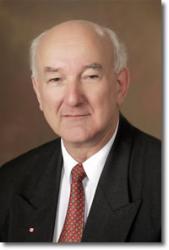
Dale Grotenhuis

1931 - 2012 Topics: Alternative Harmonizations Harmonizer of "GENEVAN 100" in Psalter Hymnal (Gray) Dale Grotenhuis (b. Cedar Grove, WI, 1931; d. Jenison, Mi, August 17, 2012) was a member of the 1987 Psalter Hymnal 1987 Revision Committee, and was professor of music and director of choral music at Dordt College, Sioux Center, Iowa, from 1960 until he retired in 1994 to concentrate on composition. Educated at Calvin College; Michigan State University, Lansing; and Ohio State University, Columbus; he combined teaching with composition throughout his career and was a widely published composer of choral music. He also directed the Dordt choir in a large number of recordings, including many psalm arrangements found in the 1959 edition of the Psalter Hymnal. Before coming to Dordt, Grotenhuis taught music at Christian high schools in Washington and Michigan. Under his direction, the Dordt College concert choir participated in annual tours that took members throughout the United States, Canada and Europe. He loved the church and the music of the church. His favorite song was "All Glory Be to God on High". Bert Polman (last two sentences from Joy Grotenhuis, daughter-in-law)

Erik Routley

1917 - 1982 Person Name: Erik R. Routley Topics: Alternative Harmonizations Harmonizer of "DISTRESS" in Psalter Hymnal (Gray)

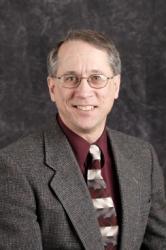
Bertus Frederick Polman

1945 - 2013 Person Name: Bert Polman Topics: Alternative Harmonizations Versifier of "Come Quickly, LORD, to Rescue Me" in Psalter Hymnal (Gray) Bert Frederick Polman (b. Rozenburg, Zuid Holland, the Netherlands, 1945; d. Grand Rapids, Michigan, July 1, 2013) was chair of the Music Department at Calvin College and senior research fellow for the Calvin Institute of Christian Worship. Dr. Polman studied at Dordt College (BA 1968), the University of Minnesota (MA 1969, PhD in musicology 1981), and the Institute for Christian Studies. Dr. Polman was a longtime is professor of music at Redeemer College in Ancaster, Ontario, and organist at Bethel Christian Reformed Church, Waterdown, Ontario. His teaching covered a wide range of courses in music theory, music history, music literature, and worship, and Canadian Native studies. His research specialty was Christian hymnody. He was also an organist, a frequent workshop leader at music and worship conferences, and contributor to journals such as The Hymn and Reformed Worship. Dr. Polman was co-editor of the Psalter Hymnal Handbook (1989), and served on the committees that prepared Songs for Life (1994) and Sing! A New Creation (2001), both published by CRC Publications. Emily Brink

Dewey Westra

1899 - 1979 Person Name: Dewey Westra, 1899-1979 Topics: Alternative Harmonizations Versifier of "The Ten Commandments" in Psalter Hymnal (Gray) Dewey D. Westra (b. Holland, MI, 1899; d. Wyoming, MI, 1979) was a dedicated educator, writer, and musician who faithfully served the Christian Reformed Church. He attended Calvin College, Grand Rapids, Michigan, and Wayne State University in Detroit. In the 1920s and 30s he was a Christian school Principal in Byron Center and Detroit, Michigan. During the 1940s he was involved in various ventures, including becoming a diesel instructor for the Ford Motor Company. After 1947 he became a principal again, serving at Christian schools in Sioux Center, Iowa; Randolph, Wisconsin; and Walker, Michigan. Westra wrote poetry in English, Dutch, and Frisian, and translated poetry into English from Dutch and Frisian. He arranged many songs and composed songs for children's choirs. He also versified all one hundred and fifty psalms and the Lord's Prayer, as well as the songs of Mary, Zechariah, and Simeon, in meters that fit the corresponding Genevan psalm tunes. His manuscripts are housed in the library of Calvin College. Seventeen of his psalm versifications and his paraphrases of the Lucan canticles were included in the 1934 and in the 1959 editions of the Psalter Hymnal. Much of the credit for keeping the Genevan psalms alive in the Christian Reformed Church goes to Westra. Bert Polman

Roy Hopp

Topics: Alternative Harmonizations Arranger (alt. arr.) of "STAR IN THE EAST" in Psalter Hymnal (Gray) Roy Hopp (b. 1951) is the Director of Music at Woodlawn Christian Reformed Church in Grand Rapids, MI and Adjunct Professor of Choral Music at Calvin Theological Seminary, where he directs the Calvin Theological Seminary Choir. Hopp graduated from Calvin College with a Bachelor’s Degree in Music Education and from Michigan State University with a Master’s Degree in Choral Conducting. He did further studies in church music and composition with Richard Hillert at Concordia University in River Forest, IL. He has served as a Director of Music in churches in West Michigan and Colorado for the past twenty years. His choral compositions have appeared in the catalogues of AugsburgFortress, earthsongs, GIA Publications, Inc., Kjos, MorningStar, and Selah and his hymn tunes have been published in hymnals and collections in the United States, Canada, England, Wales and Scotland. Emily Brink

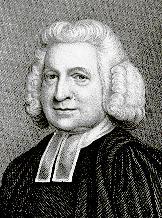
Charles Wesley

1707 - 1788 Topics: Alternative Harmonizations Author of "Hark! The Herald Angels Sing" in Psalter Hymnal (Gray) Charles Wesley, M.A. was the great hymn-writer of the Wesley family, perhaps, taking quantity and quality into consideration, the great hymn-writer of all ages. Charles Wesley was the youngest son and 18th child of Samuel and Susanna Wesley, and was born at Epworth Rectory, Dec. 18, 1707. In 1716 he went to Westminster School, being provided with a home and board by his elder brother Samuel, then usher at the school, until 1721, when he was elected King's Scholar, and as such received his board and education free. In 1726 Charles Wesley was elected to a Westminster studentship at Christ Church, Oxford, where he took his degree in 1729, and became a college tutor. In the early part of the same year his religious impressions were much deepened, and he became one of the first band of "Oxford Methodists." In 1735 he went with his brother John to Georgia, as secretary to General Oglethorpe, having before he set out received Deacon's and Priest's Orders on two successive Sundays. His stay in Georgia was very short; he returned to England in 1736, and in 1737 came under the influence of Count Zinzendorf and the Moravians, especially of that remarkable man who had so large a share in moulding John Wesley's career, Peter Bonier, and also of a Mr. Bray, a brazier in Little Britain. On Whitsunday, 1737, [sic. 1738] he "found rest to his soul," and in 1738 he became curate to his friend, Mr. Stonehouse, Vicar of Islington, but the opposition of the churchwardens was so great that the Vicar consented that he "should preach in his church no more." Henceforth his work was identified with that of his brother John, and he became an indefatigable itinerant and field preacher. On April 8, 1749, he married Miss Sarah Gwynne. His marriage, unlike that of his brother John, was a most happy one; his wife was accustomed to accompany him on his evangelistic journeys, which were as frequent as ever until the year 1756," when he ceased to itinerate, and mainly devoted himself to the care of the Societies in London and Bristol. Bristol was his headquarters until 1771, when he removed with his family to London, and, besides attending to the Societies, devoted himself much, as he had done in his youth, to the spiritual care of prisoners in Newgate. He had long been troubled about the relations of Methodism to the Church of England, and strongly disapproved of his brother John's "ordinations." Wesley-like, he expressed his disapproval in the most outspoken fashion, but, as in the case of Samuel at an earlier period, the differences between the brothers never led to a breach of friendship. He died in London, March 29, 1788, and was buried in Marylebone churchyard. His brother John was deeply grieved because he would not consent to be interred in the burial-ground of the City Road Chapel, where he had prepared a grave for himself, but Charles said, "I have lived, and I die, in the Communion of the Church of England, and I will be buried in the yard of my parish church." Eight clergymen of the Church of England bore his pall. He had a large family, four of whom survived him; three sons, who all became distinguished in the musical world, and one daughter, who inherited some of her father's poetical genius. The widow and orphans were treated with the greatest kindness and generosity by John Wesley. As a hymn-writer Charles Wesley was unique. He is said to have written no less than 6500 hymns, and though, of course, in so vast a number some are of unequal merit, it is perfectly marvellous how many there are which rise to the highest degree of excellence. His feelings on every occasion of importance, whether private or public, found their best expression in a hymn. His own conversion, his own marriage, the earthquake panic, the rumours of an invasion from France, the defeat of Prince Charles Edward at Culloden, the Gordon riots, every Festival of the Christian Church, every doctrine of the Christian Faith, striking scenes in Scripture history, striking scenes which came within his own view, the deaths of friends as they passed away, one by one, before him, all furnished occasions for the exercise of his divine gift. Nor must we forget his hymns for little children, a branch of sacred poetry in which the mantle of Dr. Watts seems to have fallen upon him. It would be simply impossible within our space to enumerate even those of the hymns which have become really classical. The saying that a really good hymn is as rare an appearance as that of a comet is falsified by the work of Charles Wesley; for hymns, which are really good in every respect, flowed from his pen in quick succession, and death alone stopped the course of the perennial stream. It has been the common practice, however for a hundred years or more to ascribe all translations from the German to John Wesley, as he only of the two brothers knew that language; and to assign to Charles Wesley all the original hymns except such as are traceable to John Wesley through his Journals and other works. The list of 482 original hymns by John and Charles Wesley listed in this Dictionary of Hymnology have formed an important part of Methodist hymnody and show the enormous influence of the Wesleys on the English hymnody of the nineteenth century. -- Excerpts from John Julian, Dictionary of Hymnology (1907) ================== Charles Wesley, the son of Samuel Wesley, was born at Epworth, Dec. 18, 1707. He was educated at Westminster School and afterwards at Christ Church, Oxford, where he graduated M.A. In 1735, he took Orders and immediately proceeded with his brother John to Georgia, both being employed as missionaries of the S.P.G. He returned to England in 1736. For many years he engaged with his brother in preaching the Gospel. He died March 29, 1788. To Charles Wesley has been justly assigned the appellation of the "Bard of Methodism." His prominence in hymn writing may be judged from the fact that in the "Wesleyan Hymn Book," 623 of the 770 hymns were written by him; and he published more than thirty poetical works, written either by himself alone, or in conjunction with his brother. The number of his separate hymns is at least five thousand. --Annotations of the Hymnal, Charles Hutchins, M.A., 1872.

Timothy Dudley-Smith

1926 - 2024 Topics: Alternative Harmonizations Author of "Tell Out, My Soul" in Psalter Hymnal (Gray) Timothy Dudley-Smith (b. 1926) Educated at Pembroke College and Ridley Hall, Cambridge, Dudley-Smith has served the Church of England since his ordination in 1950. He has occupied a number of church posi­tions, including parish priest in the diocese of Southwark (1953-1962), archdeacon of Norwich (1973-1981), and bishop of Thetford, Norfolk, from 1981 until his retirement in 1992. He also edited a Christian magazine, Crusade, which was founded after Billy Graham's 1955 London crusade. Dudley-Smith began writing comic verse while a student at Cambridge; he did not begin to write hymns until the 1960s. Many of his several hundred hymn texts have been collected in Lift Every Heart: Collected Hymns 1961-1983 (1984), Songs of Deliverance: Thirty-six New Hymns (1988), and A Voice of Singing (1993). The writer of Christian Literature and the Church (1963), Someone Who Beckons (1978), and Praying with the English Hymn Writers (1989), Dudley-Smith has also served on various editorial committees, including the committee that published Psalm Praise (1973). Bert Polman

Bert Witvoet

b. 1934 Topics: Alternative Harmonizations Versifier of "My Heart Speaks Out on Those Who Sin" in Psalter Hymnal (Gray) b. Joure, Friesland, the Netherlands, 1934

Alan Gray

1855 - 1935 Topics: Alternative Harmonizations Harmonizer (alt. harm.) of "ST. FLAVIAN" in Psalter Hymnal (Gray) Born: December 23, 1855, York, England. Died: September 27, 1935, Cambridge, England. Buried: Trinity College, Cambridge, England. Alan Gray (23 December 1855, York – 27 September 1935, Cambridge) was a British organist and composer. Born in York, he attended St Peter's School in York and Trinity College, Cambridge. From 1883 until 1893 he was Director of Music at Wellington College. In 1893 he returned to Cambridge to be organist at Trinity College, and remained organist there until 1930. Among his compositions are liturgical music for Morning and Evening Prayer and the Office of Holy Communion for use in the Church of England according to the Book of Common Prayer, including an Evening Service in f minor, a setting of Holy Communion in G, several anthems, including 'What are these that glow from afar?', and a collection of descants to various hymn tunes, several of which are still in use today (Common Praise (2000) includes four). He also composed a number of items for organ, for violin solo, and for voice and orchestra to religious and secular texts. --en.wikipedia.org/wiki/

Matthias Greiter

1495 - 1550 Person Name: Matthäus Greiter Topics: Alternative Harmonizations Composer (attr.) of "GENEVAN 68" in Psalter Hymnal (Gray) Greitter, Matthäus, was a monk and chorister of Strassburg Cathedral, but in 1524 espoused the cause of the Reformation. In 1528 he was appointed assistant pastor of St. Martin's Church, and afterwards at St. Stephen's. When the Interim [Agricola] was forced on Strassburg, he was the only one of the Lutheran pastors that sought to further it, a course which he afterwards deeply regretted. His death is dated by Wetzel, i. 349, as Dec. 20, 1550; by the Allgemeine Deutsche Biographie, ix. 636, as Nov. 20, 1550; while Koch, ii. 104, says he died of the pestilence in 1552. Greitter was a distinguished musician, and with his friend Dachstein (q.v.) edited the Strassburg Kirchen ampt, 1524-5. Four psalm tunes by Greitter, and one by Dachstein were inserted by Calvin in his first Hymnbook published at Strassburg, 1539. All these were transferred to the first edition of the French-Genevan Psalter in 1542, and two of them, both by Greitter (the tunes to psalms 36 and 91), were retained in the final edition of 1562. Of his seven Psalm versions 4 have been translated into English :— i. Ach Gott, wie lang vergissest mein. Ps. xiii. 1524. Wackernagel, iii. p. 89, in 4 st. Translated as, "O Lord, how lang forever wil thow foirget," in the Gude and Godly Ballates, ed. 1568, folio 46 (1868, p. 78). ii. Da Israel aus Egypten zog. Ps. cxiv. In Die Zwen Psalmen: In exitu Israel, &c, Strassburg, 1527, thence in Wackernagel, iii. p. 93, in 2 stanzas. Translated as, "Quhen, fra Egypt departit Israeli," In the Gude & Godly Ballates, ed. 1568, folio 56 (1868, p. 95). iii. Nicht uns, nicht uns, o ewiger Herr. Ps. cxv, 1527, as ii., and Wackernagel, iii. p. 93, in 4 st. Translated as, “Not unto us, not unto us, O Lord," in the G. & G. Ballates, ed. 1568, folio 56 (1868, p. 95). iv. 0 Herre Gott, begnade mich. Ps. li. 1525. Wackernagel, iii. p. 90, in 5 st. Translated as, "O Lorde God, have mercy on me," by Bishop Coverdale, 1539 (Remains, 1846, p. 574). [Rev.James Mearns, M.A.] --John Julian, Dictionary of Hymnology (1907)

Pages


Export as CSV
It looks like you are using an ad-blocker. Ad revenue helps keep us running. Please consider white-listing Hymnary.org or getting Hymnary Pro to eliminate ads entirely and help support Hymnary.org.