You help make Hymnary.org possible. More than 10 million people from 200+ countries found hymns, liturgical resources and encouragement on Hymnary.org in 2025, including you. Every visit affirms the global impact of this ministry.

If Hymnary has been meaningful to you this year, would you take a moment today to help sustain it? A gift of any size—paired with a note of encouragement if you wish—directly supports the server costs, research work and curation that keep this resource freely available to the world.

Give securely online today, or mail a check to:
Hymnary.org
Calvin University
3201 Burton Street SE
Grand Rapids, MI 49546

Thank you for your partnership, and may the hope of Advent fill your heart.

Person Results

Topics:help
In:people

Planning worship? Check out our sister site, ZeteoSearch.org, for 20+ additional resources related to your search.
Showing 31 - 40 of 303Results Per Page: 102050

Martin Luther

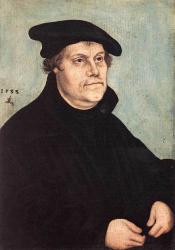
1483 - 1546 Topics: God as Help Author of "A Mighty Fortress Is Our God" in Christian Worship Luther, Martin, born at Eisleben, Nov. 10, 1483; entered the University of Erfurt, 1501 (B.A. 1502, M.A.. 1503); became an Augustinian monk, 1505; ordained priest, 1507; appointed Professor at the University of Wittenberg, 1508, and in 1512 D.D.; published his 95 Theses, 1517; and burnt the Papal Bull which had condemned them, 1520; attended the Diet of Worms, 1521; translated the Bible into German, 1521-34; and died at Eisleben, Feb. 18, 1546. The details of his life and of his work as a reformer are accessible to English readers in a great variety of forms. Luther had a huge influence on German hymnody. i. Hymn Books. 1. Ellich cristlich lider Lobgesang un Psalm. Wittenberg, 1524. [Hamburg Library.] This contains 8 German hymns, of which 4 are by Luther. 2. Eyn Enchiridion oder Handbuchlein. Erfurt, 1524 [Goslar Library], with 25 German hymns, of which 18 are by Luther. 3. Geystliche Gesangk Buchleyn. Wittenberg, 1524 [Munich Library], with 32 German hymns, of which 24 are by Luther. 4. Geistliche Lieder auffs new gebessert. Wittenberg. J. Klug, 1529. No copy of this book is now known, but there was one in 1788 in the possession of G. E. Waldau, pastor at Nürnberg, and from his description it is evident that the first part of the Rostock Gesang-Buch, 1531, is a reprint of it. The Rostock Gesang-Buch, 1531, was reprinted by C. M. Wiechmann-Kadow at Schwerin in 1858. The 1529 evidently contained 50 German hymns, of which 29 (including the Litany) were by Luther. 5. Geistliche Lieder auffs new gebessert. Erfurt. A. Rauscher, 1531 [Helmstädt, now Wolfenbüttel Library], a reprint of No. 4. 6. Geistliche Lieder. Wittenberg. J. Klug, 1535 [Munich Library. Titlepage lost], with 52 German hymns, of which 29 are by Luther. 7. Geistliche Lieder auffs new gebessert. Leipzig. V. Schumann, 1539 [Wernigerode Library], with 68 German hymns, of which 29 are by Luther. 8. Geistliche Lieder. Wittenberg. J. Klug, 1543 [Hamburg Library], with 61 German hymns, of which 35 are by Luther. 9. Geystliche Lieder. Leipzig. V. Babst, 1545 [Gottingen Library]. This contains Luther's finally revised text, but adds no new hymns by himself. In pt. i. are 61 German hymns, in pt. ii. 40, of which 35 in all are by Luther. For these books Luther wrote three prefaces, first published respectively in Nos. 3, 4, 9. A fourth is found in his Christliche Geseng, Lateinisch und Deudsch, zum Begrebnis, Wittenberg, J. Klug, 1542. These four prefaces are reprinted in Wackernagel’s Bibliographie, 1855, pp. 543-583, and in the various editions of Luther's Hymns. Among modern editions of Luther's Geistliche Lieder may be mentioned the following:— Carl von Winterfeld, 1840; Dr. C. E. P. Wackernagel, 1848; Q. C. H. Stip, 1854; Wilhelm Schircks, 1854; Dr. Danneil, 1883; Dr. Karl Gerok, 1883; Dr. A. F. W. Fischer, 1883; A. Frommel, 1883; Karl Goedeke, 1883, &c. In The Hymns of Martin Luther. Set to their original melodies. With an English version. New York, 1883, ed. by Dr. Leonard Woolsey Bacon and Nathan H. Allen, there are the four prefaces, and English versions of all Luther's hymns, principally taken more or less altered, from the versions by A. T. Russell, R. Massie and Miss Winkworth [repub. in London, 1884]. Complete translations of Luther's hymns have been published by Dr. John Anderson, 1846 (2nd ed. 1847), Dr. John Hunt, 1853, Richard Massie, 1854, and Dr. G. Macdonald in the Sunday Magazine, 1867, and his Exotics, 1876. The other versions are given in detail in the notes on the individual hymns. ii. Classified List of Luther's Hymns. Of Luther's hymns no classification can be quite perfect, e.g. No. 3 (see below) takes hardly anything from the Latin, and No. 18 hardly anything from the Psalm. No. 29 is partly based on earlier hymns (see p. 225, i.). No. 30 is partly based on St. Mark i. 9-11, and xvi., 15, 16 (see p. 226, ii.). No. 35 is partly based on St. Luke ii. 10-16. The following arrangement, however, will answer all practical purposes. A. Translations from the Latin. i. From Latin Hymns: 1. Christum wir sollen loben schon. A solis ortus cardine 2. Der du bist drei in Einigkeit. O Lux beata Trinitas. 3. Jesus Christus unser Heiland, Der von. Jesus Christus nostra salus 4. Komm Gott Schopfer, heiliger Geist. Veni Creator Spiritus, Mentes. 5. Nun komm der Beidenheiland. Veni Redemptor gentium 6. Was flirchst du Feind Herodes sehr. A solis ortus cardine ii. From Latin Antiphons, &c.: 7. Herr Gott dich loben wir. Te Deum laudamus. 8. Verleih uns Frieden gnädiglich. Dapacem, Domine 9. Wir glauben all an einen Gott. iii. Partly from the Latin, the translated stanzas being adopted from Pre-Reformation Versions: 10. Komm, heiliger Geist, Herre Gott. 11. Mitten wir im Leben sind. Media vita in morte sumus. B. Hymns revised and enlarged from Pre-Reformation popular hymns. 12. Gelobet seist du Jesus Christ. 13. Gott der Vater wohn uns bei. 14. Gott sei gelobet und gebenedeiet. 15. Nun bitten wir den heiligen Geist. C. Psalm versions. 16. Ach Gott vom Himmel, sieh darein. 17. Aus tiefer Noth schrei ich zu dir. 18. Ein' feste Burg ist unser Gott. 19. Es spricht der Unweisen Mund wohl. 20. Es wollt uns Gott genädig sein. 21. War Gott nicht mit uns diese Zeit. 22. Wohl dem, der in Gotten Furcht steht. D. Paraphrases of other portions of Holy Scripture. 23. Diess sind die heilgen zehn Gebot. 24. Jesaia dem Propheten das geschah. 25. Mensch willt du leben seliglich. 26. Mit Fried und Freud ich fahr dahin. 27. Sie ist mir lieb die werthe Magd. 28. Vater unser im Himmelreich. E. Hymns mainly Original. 29. Christ lag in Todesbanden. 30. Christ unser Herr zum Jordan kam. 31. Ein neues Lied wir heben an. 32. Erhalt uns Herr bei deinem Wort. 33. Jesus Christus unser Heiland, Der den, 34. Nun freut euch lieben Christengemein. 35. Vom Himmel hoch da komm ich her. 36. Vom Himmel kam der Engel Schaar. In addition to these — 37. Fur alien Freuden auf Erden. 38. Kyrie eleison. In the Blätter fur Hymnologie, 1883, Dr. Daniel arranges Luther's hymns according to what he thinks their adaptation to modern German common use as follows:— i. Hymns which ought to be included in every good Evangelical hymn-book: Nos. 7-18, 20, 22, 28, 29, 30, 32, 34, 35, 36, 38. ii. Hymns the reception of which into a hymn-book might be contested: Nos. 2, 3, 4, 19, 21, 22, 23, 24, 25, 33. iii. Hymns not suited for a hymn-book: Nos. 1, 5, 6, 27, 31, 37. [Rev. James Mearns, M.A.] --John Julian, Dictionary of Hymnology (1907)

John R. Clements

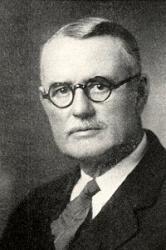
1868 - 1946 Topics: Helpfulness Author of "Somebody" in Service Songs for Young People's Societies, Sunday Schools and Church Prayer Meetings John R. Clements was born in County Armagh, Ireland 28 November 1868 and was brought to the United States at the age of two years. He worked at the age of thirteen as a retail grocery clerk and had a successful wholesale grocery business. He began writing poetry when he was young. Dianne Shapiro, from "The Singers and Their Songs: sketches of living gospel hymn writers" by Charles Hutchinson Gabriel (Chicago: The Rodeheaver Company, 1916)

Jan Struther

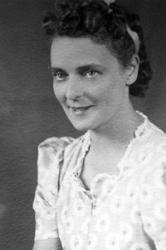
1901 - 1953 Topics: Jesus Help of Author of "Lord of all hopefulness, Lord of all joy" in Magnify the Lord Jan Struther, given name: Joyce Torrens-Graham [sic Joyce Anstruther] (b. Westminster, London, England, 1901; d. New York, NY, 1953) wrote many poems and essays under the pen name of Jan Struther (derived from her mother's maiden name, Eva Anstruther). In addition to her pen name, Struther also had the married names of Mrs. Anthony Maxtone Graham and, from a second marriage, Mrs. Adolf Kurt Placzek. During World War II she moved with her children to New York City and remained there until her death. In England she is best known for her novel Mrs. Miniver (1940), which consists of sketches of British family life before World War II. Immensely popular, the book was later made into a movie. Struther also wrote comic and serious poetry, essays, and short stories, published in Betsinda Dances and Other Poems (1931), Try Anything Twice (1938), The Glass Blower (1941), and, posthumously, The Children's Bells (1957). Songs of Praise (1931) included twelve of her hymn texts. Bert Polman

S. Trevor Francis

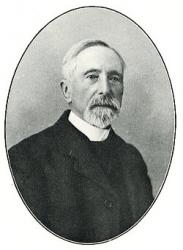
1834 - 1925 Person Name: S. Trevor Francis (1834-1925) Topics: Jesus Help of Author of "O the deep, deep love of Jesus, Vast, unmeasured, boundless, free" in Magnify the Lord Francis, Samuel Trevor, son of an artist, was born at Cheshunt, Herts, in 1835, and is a merchant in London. He has written numerous hymns, which have been printed in various religious newspapers and periodicals during the past 30 years. Of these hymns the following are in the Enlarged London Hymn Book, 1873:— 1. Blessed, blessed Jesus. Pressing Onward. 2. Gracious Saviour, grant Thy word. Lent. 3. Home, home of light and glory. Heaven Desired. 4. I am waiting for the dawning. Heaven Anticipated. 5. Jesus, we remember Thee. Passiontide. 6. O child of sorrow, weary, distressed. Salvation in Jesus only. 7. O Jesus, how great is Thy mercy. Salvation in Jesus. 8. Safe to land, no shadows darken. Death and Burial. Printed in Word and Work. 9. The pearly gates are open. Heaven. In W. Carter's Gospel Hymn Book, 1863. 10. We are pilgrims far from our fatherland. Heaven Desired. Of these hymns Nos. 1, 2, 4-7 first appeared in the Enlarged London Hymn Book, 1873. Mr. Francis also published in 1891 Gems from the Revised Version with Poems. --John Julian, Dictionary of Hymnology, Appendix, Part II (1907)

Kate Hankey

1834 - 1911 Person Name: A. Katherine Hankey Topics: Jesus Help of Author of "I love to tell the story; 'Twill be my theme in glory" in Magnify the Lord Arabella Katherine Hankey (b. Clapham, England, 1834; d. Westminster, London, England, 1911) was the daughter of a wealthy banker and was associated with the Clapham sect of William Wilberforce, a group of prominent evangelical Anglicans from the Clapham area. This group helped to establish the British and Foreign Bible Society, promoted the abolition of slavery, and was involved in improving the lot of England's working classes. Hankey taught Bible classes for shop girls in London, visited the sick in local hospitals, and used the proceeds of her writings to support various mission causes. Her publications include Heart to Heart (1870) and The Old, Old Story and Other Verses (1879). Bert Polman =============== Hankey, Katharine, has published several hymns of great beauty and simplicity which are included in her:— (1) The Old, Old Story, 1866; (2) The Old, Old Story, and other Verses, 1879; (3) Heart to Heart, 1870, enlarged in 1873 and 1876. In 1878 it was republished with music by the author. Miss Hankey's hymns which have come into common use are:— 1. Advent tells us, Christ is near. The Christian Seasons. Written for the Sunday School of St. Peter's, Eaton Square, London, and printed on a card with music by the author. 2. I love to tell the story Of unseen things above. The love of Jesus. This is a cento from No. 3, and is given in Bliss's Gospel Songs, Cincinnati, 1874, and other American collections. 3. I saw Him leave His Father's throne. Lovest than Me? Written in 1868. It is No. 33 of the Old, Old Story, and other Verses, 1879. 4. Tell me the old, old story. This Life of Jesus in verse was written in two parts. Pt. i., "The Story Wanted," Jan. 29; and Pt. ii., "The Story Told," Nov. 18, 1866. It has since been published in several forms, and sometimes with expressive music by the author, and has also been translated into various languages, including Welsh, German, Italian, Spanish, &c. The form in which it is usually known is that in I. P. Sankey's Sacred Songs & Solos. This is Part i. slightly altered. Miss Hankey's works contain many suitable hymns for Mission Services and Sunday Schools, and may be consulted both for words and music with advantage. --John Julian, Dictionary of Hymnology (1907)

John Ernest Bode

1816 - 1874 Topics: Jesus Help of Author of "O Jesus, I have promised To serve thee to the end" in Magnify the Lord John E. Bode (b. St. Pancras, England, 1816; d. Castle Camps, Cambridgeshire, England, 1874) A fine student at Christ Church, Oxford, England, and a prominent scholar who gave the famous Bampton Lectures ("for the exposition and defense of the Christian faith") at Oxford in 1855, was a rector in Westwell, Oxfordshire, and in Castle Camps. This gifted poet and hymn writer published Hymns for the Gospel of the Day, for Each Sunday and Festivals of Our Lord in 1860. Bert Polman ============== Bode, John Ernest, M.A., son of Mr. William Bode, late of the General Post Office, b. 1816, and educated at Eton, the Charter House, and at Christ Church, Oxford, graduating B.A. 1837, and M.A. in due course. Taking Holy Orders in 1841, he became Rector of Westwell, Oxfordshire, 1847; and then of Castle Camps, Cambridgeshire, 1860. He was also for a time Tutor of his College, and Classical Examiner. His Bampton Lectures were delivered in 1855. He d. at Castle Camps, Oct. 6, 1874. In addition to his Bampton Lectures, and Ballads from Herodotus, he published Hymns from the Gospel of the Day for each Sunday and Festivals of our Lord, 1860; and Short Occasional Poems, Lond., Longmans, 1858. In addition to his well-known hymn, “O Jesu, I have promised " (q. v.), the following from his Hys. from the Gospel are also in common use:— 1. God of heaven, enthroned in might. H. Trinity. 2. Spirit of Truth, indwelling Light. Whitsuntide. -John Julian, Dictionary of Hymnology (1907) ================= Bode, John E. , p. 151, ii. Additional pieces from his Hys.from the Gospel of the Day, &c, 1800, are in common use :— (1) "Sweetly the Sabbath bell" (Sunday); (2) "Thou Who hast called us by Thy word" (20th S. after Trinity). --John Julian, Dictionary of Hymnology, Appendix, Part II (1907)

Joseph Medlicott Scriven

1819 - 1886 Person Name: Joseph Scriven Topics: Jesus Help of Author of "What a friend we have in Jesus, All our sins and griefs to bear!" in Magnify the Lord Joseph M. Scriven (b. Seapatrick, County Down, Ireland, 1819; d. Bewdley, Rice Lake, ON, Canada, 1886), an Irish immigrant to Canada, wrote this text near Port Hope, Ontario, in 1855. Because his life was filled with grief and trials, Scriven often needed the solace of the Lord as described in his famous hymn. Educated at Trinity College, Dublin, Ireland, he enrolled in a military college to prepare for an army career. However, poor health forced him to give up that ambition. Soon after came a second blow—his fiancée died in a drowning accident on the eve of their wedding in 1844. Later that year he moved to Ontario, where he taught school in Woodstock and Brantford. His plans for marriage were dashed again when his new bride-to-be died after a short illness in 1855. Following this calamity Scriven seldom had a regular income, and he was forced to live in the homes of others. He also experienced mistrust from neighbors who did not appreciate his eccentricities or his work with the underprivileged. A member of the Plymouth Brethren, he tried to live according to the Sermon on the Mount as literally as possible, giving and sharing all he had and often doing menial tasks for the poor and physically disabled. Because Scriven suffered from depression, no one knew if his death by drowning in Rice Lake was suicide or an accident. Bert Polman ================ Scriven, Joseph. Mr. Sankey, in his My Life and Sacred Songs, 1906, p. 279, says that Scriven was b. in Dublin in 1820, was a graduate of Trinity College, Dublin, and went to Canada when he was 25, and died there at Port Hope, on Lake Ontario, in 1886. His hymn:— What a Friend we have in Jesus. [Jesus our Friend] was, according to Mr. Sankey, discovered to be his in the following manner: "A neighbour, sitting up with him in his illness, happened upon a manuscript of 'What a Friend we have in Jesus.' Reading it with great delight, and questioning Mr. Scriven about it, he said he had composed it for his mother, to comfort her in a time of special sorrow, not intending any one else should see it." We find the hymn in H. 1... Hastings's Social Hymns, Original and Selected, 1865, No. 242; and his Song of Pilgrimage, 1886, No. 1291, where it is attributed to "Joseph Scriven, cir. 1855." It is found in many modern collections. --John Julian, Dictionary of Hymnology, New Supplement (1907)

H. W. Baker

1821 - 1877 Person Name: Henry Williams Baker Topics: Jesus Help of Author of "The King of love my shepherd is" in Magnify the Lord Baker, Sir Henry Williams, Bart., eldest son of Admiral Sir Henry Loraine Baker, born in London, May 27, 1821, and educated at Trinity College, Cambridge, where he graduated, B.A. 1844, M.A. 1847. Taking Holy Orders in 1844, he became, in 1851, Vicar of Monkland, Herefordshire. This benefice he held to his death, on Monday, Feb. 12, 1877. He succeeded to the Baronetcy in 1851. Sir Henry's name is intimately associated with hymnody. One of his earliest compositions was the very beautiful hymn, "Oh! what if we are Christ's," which he contributed to Murray's Hymnal for the Use of the English Church, 1852. His hymns, including metrical litanies and translations, number in the revised edition of Hymns Ancient & Modern, 33 in all. These were contributed at various times to Murray's Hymnal, Hymns Ancient & Modern and the London Mission Hymn Book, 1876-7. The last contains his three latest hymns. These are not included in Hymns Ancient & Modern. Of his hymns four only are in the highest strains of jubilation, another four are bright and cheerful, and the remainder are very tender, but exceedingly plaintive, sometimes even to sadness. Even those which at first seem bright and cheerful have an undertone of plaintiveness, and leave a dreamy sadness upon the spirit of the singer. Poetical figures, far-fetched illustrations, and difficult compound words, he entirely eschewed. In his simplicity of language, smoothness of rhythm, and earnestness of utterance, he reminds one forcibly of the saintly Lyte. In common with Lyte also, if a subject presented itself to his mind with striking contrasts of lights and shadows, he almost invariably sought shelter in the shadows. The last audible words which lingered on his dying lips were the third stanza of his exquisite rendering of the 23rd Psalm, "The King of Love, my Shepherd is:"— Perverse and foolish, oft I strayed, But yet in love He sought me, And on His Shoulder gently laid, And home, rejoicing, brought me." This tender sadness, brightened by a soft calm peace, was an epitome of his poetical life. Sir Henry's labours as the Editor of Hymns Ancient & Modern were very arduous. The trial copy was distributed amongst a few friends in 1859; first ed. published 1861, and the Appendix, in 1868; the trial copy of the revised ed. was issued in 1874, and the publication followed in 1875. In addition he edited Hymns for the London Mission, 1874, and Hymns for Mission Services, n.d., c. 1876-7. He also published Daily Prayers for those who work hard; a Daily Text Book, &c. In Hymns Ancient & Modern there are also four tunes (33, 211, 254, 472) the melodies of which are by Sir Henry, and the harmonies by Dr. Monk. He died Feb. 12, 1877. --John Julian, Dictionary of Hymnology (1907)

Winfred Douglas

1867 - 1944 Person Name: Winfred Douglas (1867-1944) Topics: Jesus Help of Arranger of "CHRISTE REDEMPTOR" in Magnify the Lord Charles Winfred Douglas (b. Oswego, NY, 1867; d. Santa Rosa, CA, 1944), an influential leader in Episcopalian liturgical and musical life. Educated at Syracuse University and St. Andrews Divinity School, Syracuse, New York, he moved to Colorado for his health. There he studied at St. Matthew's Hall, Denver, and founded the Mission of the Transfiguration in Evergreen (1897). Ordained a priest in the Episcopal Church in 1899, he also studied in France, Germany and England, where he spent time with the Benedictines of Solesmes on the Island of Wight from 1903 to 1906. For much of his life, Douglas served as director of music at the Community of St. Mary in Peekskill, New York, and had associations with cathedrals in Denver, Colorado, and Fond du Lac, Wisconsin. He promoted chanting and plainsong in the Episcopal Church through workshops and publications such as The American Psalter (1929), the Plainsong Psalter (1932), and the Monastic Diurnal (1932). His writings include program notes for the Denver Symphony Orchestra, various hymn preludes; organ, as well as the book, Church Music in History and Practice (1937). He was editor of both the Hymnal 1916 and its significant successor, Hymnal 1940, of the Episcopal Church. Douglas's other achievements include a thorough knowledge of the life and culture of Hopi and Navajo natives, among whom he lived for a number of years. Bert Polman

John Wesley

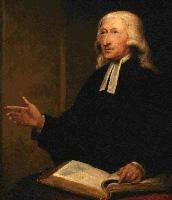
1703 - 1791 Topics: God Help Adapter of "I'll Praise My Maker" in The Presbyterian Hymnal John Wesley, the son of Samuel, and brother of Charles Wesley, was born at Epworth, June 17, 1703. He was educated at the Charterhouse, London, and at Christ Church, Oxford. He became a Fellow of Lincoln College, Oxford, and graduated M.A. in 1726. At Oxford, he was one of the small band consisting of George Whitefield, Hames Hervey, Charles Wesley, and a few others, who were even then known for their piety; they were deridingly called "Methodists." After his ordination he went, in 1735, on a mission to Georgia. The mission was not successful, and he returned to England in 1738. From that time, his life was one of great labour, preaching the Gospel, and publishing his commentaries and other theological works. He died in London, in 1791, in his eighty-eighth year. His prose works are very numerous, but he did not write many useful hymns. It is to him, however, and not to his brother Charles, that we are indebted for the translations from the German. --Annotations of the Hymnal, Charles Hutchins, M.A., 1872 ====================== John Wesley, M.A., was born at Epworth Rectory in 1703, and, like the rest of the family, received his early education from his mother. He narrowly escaped perishing in the fire which destroyed the rectory house in 1709, and his deliverance made a life-long impression upon him. In 1714 he was nominated on the foundation of Charterhouse by his father's patron, the Duke of Buckingham, and remained at that school until 1720, when he went up, with a scholarship, from Charterhouse to Christ Church, Oxford. Having taken his degree, he received Holy Orders from the Bishop of Oxford (Dr. Potter) in 1725. In 1726 he was elected Fellow of Lincoln College, and remained at Oxford until 1727, when he returned into Lincolnshire to assist his father as curate at Epworth and Wroot. In 1729 he was summoned back to Oxford by his firm friend, Dr. Morley, Rector of Lincoln, to assist in the College tuition. There he found already established the little band of "Oxford Methodists" who immediately placed themselves under his direction. In 1735 he went, as a Missionary of the Society for the Propagation of the Gospel, to Georgia, where a new colony had been founded under the governorship of General Oglethorpe. On his voyage out he was deeply impressed with the piety and Christian courage of some German fellow travellers, Moravians. During his short ministry in Georgia he met with many discouragements, and returned home saddened and dissatisfied both with himself and his work; but in London he again fell in with the Moravians, especially with Peter Bohler; and one memorable night (May 24, 1738) he went to a meeting in Aldersgate Street, where some one was reading Luther's preface to the Epistle to the Romans. There, "About a quarter before nine, while he was describing the change which God works in the heart through faith in Christ, I felt my heart strangely warmed. I felt I did trust in Christ, Christ alone, for salvation; and an assurance was given me, that He had taken away my sins, even mine, and saved me from the law of sin and death." From that moment his future course was sealed; and for more than half a century he laboured, through evil report and good report, to spread what he believed to be the everlasting Gospel, travelling more miles, preaching more sermons, publishing more books of a practical sort, and making more converts than any man of his day, or perhaps of any day, and dying at last, March 2, 1791, in harness, at the patriarchal age of 88. The popular conception of the division of labour between the two brothers in the Revival, is that John was the preacher, and Charles the hymnwriter. But this is not strictly accurate. On the one hand Charles was also a great preacher, second only to his brother and George Whitefield in the effects which he produced. On the other hand, John by no means relegated to Charles the exclusive task of supplying the people with their hymns. John Wesley was not the sort of man to depute any part of his work entirely to another: and this part was, in his opinion, one of vital importance. With that wonderful instinct for gauging the popular mind, which was one element in his success, he saw at once that hymns might be utilized, not only for raising the devotion, but also for instructing, and establishing the faith of his disciples. He intended the hymns to be not merely a constituent part of public worship, but also a kind of creed in verse. They were to be "a body of experimental and practical divinity." "In what other publication," he asks in his Preface to the Wesleyan Hymn Book, 1780 (Preface, Oct. 20,1779), "have you so distinct and full an account of Scriptural Christianity; such a declaration of the heights and depths of religion, speculative and practical; so strong cautions against the most plausible errors, particularly those now most prevalent; and so clear directions for making your calling and election sure; for perfecting holiness in the fear of God?" The part which he actually took in writing the hymns, it is not easy to ascertain; but it is certain that more than thirty translations from the German, French and Spanish (chiefly from the German) were exclusively his; and there are some original hymns, admittedly his composition, which are not unworthy to stand by the side of his brother's. His translations from the German especially have had a wide circulation. Although somewhat free as translations they embody the fire and energy of the originals. It has been the common practice, however for a hundred years or more to ascribe all translations from the German to John Wesley, as he only of the two brothers knew that language; and to assign to Charles Wesley all the original hymns except such as are traceable to John Wesley through his Journals and other works. The list of 482 original hymns by John and Charles Wesley listed in this Dictionary of Hymnology have formed an important part of Methodist hymnody and show the enormous influence of the Wesleys on the English hymnody of the nineteenth century. -- Excerpts from John Julian, Dictionary of Hymnology (1907) =================== See also in: Hymn Writers of the Church

Pages


Export as CSV
It looks like you are using an ad-blocker. Ad revenue helps keep us running. Please consider white-listing Hymnary.org or getting Hymnary Pro to eliminate ads entirely and help support Hymnary.org.