You help make Hymnary.org possible. More than 10 million people from 200+ countries found hymns, liturgical resources and encouragement on Hymnary.org in 2025, including you. Every visit affirms the global impact of this ministry.

If Hymnary has been meaningful to you this year, would you take a moment today to help sustain it? A gift of any size—paired with a note of encouragement if you wish—directly supports the server costs, research work and curation that keep this resource freely available to the world.

Give securely online today, or mail a check to:
Hymnary.org
Calvin University
3201 Burton Street SE
Grand Rapids, MI 49546

Thank you for your partnership, and may the hope of Advent fill your heart.

Person Results

Topics:holy+scriptures
In:people

Planning worship? Check out our sister site, ZeteoSearch.org, for 20+ additional resources related to your search.
Showing 31 - 40 of 452Results Per Page: 102050

Anonymous

Person Name: Unknown Topics: The Holy Scriptures; Holy Scripture Author of "My Shepherd Is the Lord" in African Methodist Episcopal Church Hymnal In some hymnals, the editors noted that a hymn's author is unknown to them, and so this artificial "person" entry is used to reflect that fact. Obviously, the hymns attributed to "Author Unknown" "Unknown" or "Anonymous" could have been written by many people over a span of many centuries.

Amy Grant

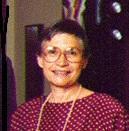
b. 1960 Topics: The Book of the Church : Holy Scripture Author of "Thy Word Is a Lamp" in The United Methodist Hymnal Amy Lee Grant PhD USA 1960-present Born at Augusta, GA, the youngest of four girls, her family moved to Nashville, TN, in 1967. She is the great granddaughter of Nashville philanthropist, A M Burton (founder of Life & Casualty Tower, WLAC Radio, and WLAC TV, and Lillie Burton). The Burtons attended the Nashville Ashwood Church of Christ, as did she. She wrote her first song: ‘Mountain Top’, at Harpeth School, Nashville, an all-girls school where she attended. In 1977 Grant was offered a recording contract before her 16th birthday after a recording studio owner heard her sing on a demo tape. That studio recorded her first 11 albums. She attended Furman U, Greenville, SC, and later Vanderbilt U, Nashville, TN. She held her first ticketed concert while attending Furman in 1978. In 1982 she married Gary Chapman. They had three children: Matthew Garrison, Gloria Mills (Millie), and Sarah Cannon. Chapman wrote the title track for her 2nd album, and they toured together in 1979. In 1980 she transferred to Vanderbilt U. She became a member of the Kappa Alpha Theta sorority. She made a few more albums before dropping out of college to pursue her recording career. In 1989 her album released was titled: ‘Never Alone’. Another album in 1982 was titled: ‘Age to Age’. In the mid-80s, she began touring and recording with Michael W Smith, and they developed a strong friendship, sometimes writing songs or contributing vocals to each other’s albums. Grant was also a back-up singer for Bill Gaither. She released her first Christmas album in 1983. NBC noticed and asked her to star in her own Christmas special. She developed a reputation as ‘Queen of Christian Pop. In 1984 her album: ‘Straight Ahead’ was released. She also saw success in 1985 as a contemporary pop singer, and released an album titled: ‘Unguarded’. In 1986 she performed secular music with a number of other artists, including, Peter Cetera, Randy Stonehill, and Art Garfunkel. Her album: ‘The Animals Christmas’ came out, and her first book came out that year titled: Amy Grant’s Heart to Heart Bible Stories’. In 1988 her album: ‘Lead Me On’, containing both Christian and secular music was voted the ‘greatest Contemporary Christian album of all time’. In 1991 she released her album: ‘Heart in Motion’, strictly contemporary pop music. Her famous track, ‘Baby, Baby’ was dedicated to her six-week-old daughter, Millie. To date, it has sold over 5 million copies. In 1992 she released her 2nd Christmas album: ‘Home for Christmas’. Another album followed in 1994: ‘House of Love’. In 1997 she released an album: ‘Behind the Eyes’. In 1999, she released her 3rd Christmas album: ‘A Christmas to Remember’. She and Gary Chapman also divorced that year. In 2000 she remarried to Vince Gill, and they have remained married to date. They have a daughter, Corina Grant from this marriage. In 2001 she won $125,000 on the TV show: ‘Who Wants to Be a Millionaire’. That year she also did an audio book titled: ‘The Creation’ (Bible stories for children). In 2002 Grant returned to Christian pop music and released an album of hymns: ‘Legacy.. Hymns and Faith’, a mix of bluegrass and pop music. This was her 25th anniversary in the music industry. Another album in 2003, ‘Simple Things’, was not as successful as earlier releases. In 2005 she released another album: ‘Rock of Ages.. Hymns and Faith’. That year she also hosted a NBC TV show titled ‘Three Wishes’. It featured a team of helpers making wishes come true for small-town residents. It was canceled after its first season due to high production costs. In 2006 she recorded a live CD/DVD titled: ‘Time Again’ at Fort Worth, TX, in Bass Performance Hall. In 2007 she released her book: “Pieces of My Life So Far’ (memories, song lyrics, poetry, and some pictures). In 2007, Grant left Word/Warner and contracted with EMI CMG, who released her regular studio albums as remastered versions. In 2008 she joined a writing team from Compassionart and recorded as a guest vocalist in London. That year she also re-released her 1988 album, ‘Lead Me On’. In 2009 she released an EP with two new songs and some old ones to benefit the Entertainment Industry Foundation’s (EIF) Women’s Cancer Research Fund. In 2010 she released an album titled: ‘Somewhere Down the Road’. In 2012 she received an honorary doctorate degree from Grand Canyon U, Phoenix, AZ, for music performance. That year Grant took part in a campaign called ’30 Songs / 30 Days’ to support the group ‘Half the Sky: Turning Oppression into Opportunity for Women Worldwide’. It was a multi-platform media project. That year she also was a guest narrator for Disney’s Candlelight Processional at Walt Disney World. She repeated as narrator in 2013 and 2015. In 2013 she released an album: ‘How Mercy Looks from Here’. In 2014 she released an album: ‘In motion: the Remixes’. That year she also had a new single in honor of Breast Cancer Awareness Month titled: ‘Welcome Yourself’. In 2015 she released a new compilation album: ‘Be still and Know’. In 2016 she released another album: ‘Tennessee Christmas’. It contained old and new music. She and her husband toured the U S and Canada with Christmas concerts, along with Michael W Smith and Jordan Smith. More similar concerts ensued in 2017. In 2020, Grant had an open-heart surgery to repair a congenital heart condition (PAPVR). In 2022 she sustained a concussion, cuts and bruises, requiring hospitalization, after falling from her bicycle while riding near Nashville’s Harpeth Hills Golf Course. Between 1983-2007 Grant received some 22 Dove Awards for music performance; six Grammies; and other awards, including: JCC Young Tennessean (1992); Pax Christi, St Johns U; Harmony, Nashville Symphony (1994); Sarah Cannon Humanitarian; Minnie Pearl Humanitarian; Voice of America; Golden Plate: Academy of Achievement (1996); Nashville Symphony: TN Performing Arts Center; Amy Grant Room for Music & Entertainment at Target House, St Jude’s Children Hospital (1999); Easter Seals Nashvillian of the Year (2001); Gospel Music Hall of Fame: GMA; Summit: Seminar in the Rockies (2003); Amy Grant Performance Platform: Nashville Schermerhorn Symphony Center; Hollywood Walk of fame (a star) (2006); Christian Music Hall of Fame (2007); Class of 1966 Friend of West Point (2008); Number 52 in the Top Female Artists of the Rock Era-1955-2015 (2015); Kennedy Center Honoree (2022). In 2023 she was again honored with a doctorate in Fine Arts degree from the University of Notre Dame, South Bend, IN. The family continues to live in the Nashville, TN, area. John Perry

E. E. Hewitt

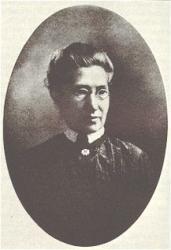
1851 - 1920 Person Name: Eliza E. Hewitt Topics: Holy Scriptures Illumination of Author of "More about Jesus Would I Know" in Trinity Hymnal (Rev. ed.) Pseudonym: Li­die H. Ed­munds. Eliza Edmunds Hewitt was born in Philadelphia 28 June 1851. She was educated in the public schools and after graduation from high school became a teacher. However, she developed a spinal malady which cut short her career and made her a shut-in for many years. During her convalescence, she studied English literature. She felt a need to be useful to her church and began writing poems for the primary department. she went on to teach Sunday school, take an active part in the Philadelphia Elementary Union and become Superintendent of the primary department of Calvin Presbyterian Church. Dianne Shapiro, from "The Singers and Their Songs: sketches of living gospel hymn writers" by Charles Hutchinson Gabriel (Chicago: The Rodeheaver Company, 1916)

Gerard Francis Cobb

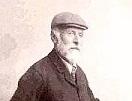
1838 - 1904 Person Name: Gerard F. Cobb, 1838-1904 Topics: Holy Scriptures Composer of "COBB" in The Hymnal of the Protestant Episcopal Church in the United States of America 1940 Gerard Francis Cobb was born at Nettlestead (near Maidstone), Kent, on 15 October 1838, the youngest of five children of the Reverend William Francis Cobb (1795-1862) - the rector of Nettlestead - and his wife, Mary Blackburn. The five children were:- 1. Mary (1826-1906), 2. Clement Francis (1821-1896), 3. William Francis (1831-1916), 4. Francis (1834-1920), and 5. Gerard Francis (1838-1904). (The patronymic ‘Francis' occurs in several generations. Gerard's grandfather was Francis Cobb (1759-1831), a brewer and banker of Margate, whose sons were William Francis (Gerard's father), John Francis and Thomas Francis. Gerard's brother Clement also had a son Francis William (1872-1938). The parents were both musical, the mother being a pianist (and latterly organist at Nettlestead) and the father a ’cellist. Gerard early showed an aptitude for music and was able to pick out a tune on the piano while still a child, and without any formal instruction. Gerard Francis Cobb was educated at Marlborough College from 1849 to 1857. (His brothers William and Clement were also educated there.) He was a bright pupil, reaching the Sixth Form in September 1854 (still aged 15) and winning several prizes - the Divinity Prize (Summer 1853), the Upper Fifth Prize (Summer 1854), the Lower Sixth Prize (Christmas 1854) and the English Essay Prize (1856). He was also appointed a College Prefect and (when he left school) donated a cup as an inter-house singing trophy. (Inter-house singing competitions continue to be popular at Marlborough to this day.) Two concert programmes from Marlborough College (Christmas 1854 and Christmas 1856) show his active involvement as singer, pianist and harmonium player, although in neither programme is there any indication of a composition by him. From Marlborough Cobb went up to Trinity College, Cambridge, matriculating in 1857. He was elected a Scholar in 1860, and graduated B.A. in 1861 with a double first in the Classical and Moral Science Triposes. He then went to Dresden for a short time, to study music. While there, he perfected his knowledge of German, later providing English translations for three of the texts of his own Lieder und Gesang (1885); he was also proficient in French and Italian, as well as being an excellent classical scholar. (Cobb wrote the words of at least one of his own songs - "Reconciliation" (c.1891) - and inserted a verse of his own into another song - "Drawbacks" (1892), words by Henry S. Leigh.) It may have been at this time that he decided not to make music his profession: he returned to Cambridge, where he spent the rest of his life. He was elected a Fellow of Trinity in 1863, proceeding M.A. in 1864, and in 1869 was appointed Junior Bursar of his college. This office, which he held for twenty-five years and in which he showed great business capacity, seems to have centered around the day-to-day running of the college, which included looking after the accommodation of some six hundred students (Trinity was the largest of all the Oxbridge colleges) and even making sure that the brewery horse had the correct number of nails in his shoes! (The college had a small brewery). Cobb's interests were many and varied. There was music, of course, but (appropriately, as the son, brother and uncle of rectors) he was also much interested in Church matters: he was in sympathy with the Tractarian movement (associated with Newman, Pusey, Keble, Forbes and Froude) and at one time contemplated (but finally declined) holy orders. He actively advocated union between the Anglican and Roman communities, and published an elaborate treatise which caused a sensation in ecclesiastical circles. A second edition (with a sequel) followed and this, in turn, was followed by two short tracts. Even as late as the 1860s there was a form of religious intolerance which although not life-threatening (as in the reigns of earlier monarchs) nevertheless ensured that a career in the Church would no longer be an option for Cobb. His appointment at Trinity was timely, and his energies were then directed towards the running of the College and to the pursuit of music. Cobb was a fine organist, and gave occasional recitals at Trinity. His writings include a history of the organ and an account of the choir which, apparently, he also trained. He was, too, the University’s representative on municipal affairs and produced pamphlets on rather more mundane matters than were normally dealt with in "the olive-grove of Academe". When Cobb went up to Trinity in 1857 the Professor of Music was the recently appointed (1856) William Sterndale Bennett (1816-1875). Cobb enjoyed Bennett's friendship and was helpful to him in dealing with the Faculty of Music. In the last years of his life, Bennett made use of two bound octavo music note-books in which he jotted down sketches and ideas; these books had been brought to him from Germany by Cobb. On Bennett's death, the Professorship passed to the blind George Macfarren (1813-1887). Cobb proved equally helpful to the new incumbent, particularly in the reform of the Faculty. He had been elected President of the Cambridge University Musical Society in 1874 and became Chairman of the University Board of Musical Studies in 1877, serving in that capacity for fifteen years. Aside from his work at Trinity, and his musical, religious, and municipal interests, there is yet one more facet of this Victorian polymath which must command our attention. He was, perhaps surprisingly, a great lover of outdoor activities - swimming, walking, hill climbing, and - above all - cycling. He was one of the founders - and first President (1878) - of the National Cyclists' Union (originally the Bicycle Union) and was also President of the Cambridge University Cycling Club. For the International Health Exhibition (1884) he contributed a chapter on 'Cycling' to the handbook on athletics, part 11. Cobb thought so much of cycling that his enthusiasm induced not only undergraduates but even many of the Dons to take to it (33). He celebrated his sixtieth birthday by undertaking a cycle run of sixty miles in company with one of his nephews. Cobb was not very tall and was almost equalled in height by his earlier high cycle, although in later years he rode what was then called a 'safety cycle' (which was smaller) and, eventually a 'free wheel bicycle'. (The cycle which features in the accompanying photograph is presumably a 'safety' or 'free wheel' machine.) Little is known of Cobb's life outside Cambridge. His duties at Trinity would have kept him there for most of the year, and his dealings with his London publishers were probably conducted by letter. His name appears on the invitation lists of several of the Royal Society of Musicians' annual dinners in the 1880s and, although he did not attend any of these, he is recorded as having made several donations to the Society. In 1893 Cobb married Elizabeth Lucy Parkinson, widow of Stephen Parkinson, Fellow and Tutor of St. John’s College, Cambridge, and (in accordance with the custom of the time) resigned his offices at Trinity. He continued to reside in Cambridge - at The Hermitage Silver Street - and devoted himself mainly to musical composition. From this last period of his life came the second (1893) and third (1897) sets of Barrack-Room Ballads (the first having appeared in 1892) and his delightful Twenty-four Songs for Little People (1897) to words by Norman Gale (d. 1942), as well as works on a larger canvas, including his most ambitious work - A Song of Trafalgar Op. 41, a Ballad for men's voices (solo and chorus) and orchestra (1900), to words by Edith Nesbit (1858-1924) - remembered today as the author of The Railway Children (1906). Among Cobb's large-scale works is reputed to be a Symphony although no trace of this has yet come to light. What can be stated with certainty, however, is that on 27 November 1902 a concert was held at the Winter Gardens, Bournemouth, given by the Municipal Orchestra under the direction of Dan Godfrey, jun. - later Sir Dan Godfrey (1868-1939) - and Gerard Cobb, who conducted "For the first time in Bournemouth" (and probably the first time anywhere) three of his own works - Introduction and Allegro Giocoso in B flat, Valse Pathétique 'Niobe', and Romanza for Orchestra, in E flat (performed at a Prom in 1901); two of Cobb's earlier songs - "I wish to tune my quivering lyre" (written in 1868) and "Mount, Gallants all!" (published c.1890 were sung by Henry Corner. (An orchestral score and band parts for "Mount, Gallants all!" were available for hire from the publishers, and it must be assumed that both songs were given with orchestral accompaniment.) Cobb's last-known compositions were three further settings of poems by Kipling - not from the Barrack-Room Ballads this time, but from a similar collection, Service Songs. The three songs. - "M.I." (Mounted Infantry of the Line), "The Married Man" (Reservist of the Line), and "Lichtenberg" (New South Wales Contingent) - had been commissioned by Charles Sheard, who had published his settings of the Barrack-Room Ballads and they were completed just a few days before his death. Sheard published them later that year. Gerard Francis Cobb died at The Hermitage on 31 March 1904. having succumbed to an attack of pneumonia. He was cremated at Woking on 5 April at 12.00 noon, at which precise time a memorial service was held at Trinity College Chapel; the music was all by Cobb. His ashes were laid to rest on 8 April in the churchyard at Nettlestead, where his widow erected a handsome cross in his memory. http://www.musicweb-international.com/classrev/2004/oct04

Joan Larie Sutton

1930 - 2016 Person Name: Joan Sutton Topics: Songs for Worship Holy Scripture Translator (English) of "Tua Palavra é lâmpada (Es tu Palabra lámpara para mis pies) (I know your Word is a lamp to my feet)" in Global Praise 2 Joan Larie Sutton (nee Riffey) was born in Louisville, KY but lived most of her life in Brazil with her missionary parents. She began the study of violin at the age of ten, continuing her studies at Baylor University. She earned a Masters Degree in sacred music at Southern Baptist Theological Seminary in Louisville. She married William Boyd Sutton and together they worked in Brazil. She translated many hymns into Portuguese. ================ JOAN SUTTON LARIE (Married to Pastor John Boyd Sutton) Brazilian Baptists owe much to this American musician who, after more than 30 years of fruitful work in Brazil (see: "Nassau", p.l66). was the catalyst for musical talent, natives and aliens in the preparation of "Hymns for Christian Worship," which contributed to the translations, which revealed hymns by contemporary authors. http://www.abordo.com.br/nassau/galeria.htm

T. R. Birks

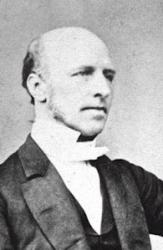
1810 - 1883 Person Name: T. Birks Topics: The Holy Scriptures Author of "The heavens declare Thy glory, Lord!" in Churches of Christ Hymn Book Birks, Thomas Rawson, M.A., b. Sept. 1810, and educated at Trinity College, Cambridge (B.A. 1834, M.A. 1837), of which he subsequently became a Fellow. Having taken Holy Orders in 1837, he became Rector of Kelshall, Herts, 1844; Vicar of Holy Trinity, Cambridge, 1866; Hon. Canon of Ely Cathedral, 1871; and Professor of Moral Philosophy, Cambridge, 1872. He d. at Cambridge, July 21, 1883. His works, to the number of 25, include Biblical, Astronomical, Scientific, Prophetic, and other subjects. He also wrote the Memoirs of the Rev. E Bickersteth (his father-in-law), 2 vols., 1851. His hymns appeared in Bickersteth's Christian Psalmody; 1833; and, together with Versions of the Psalms, in his Companion Psalter, 1874. They number upwards of 100. [Eng. Psalters, § xx.] Very few are in common use in Great Britain, but in America their use is extending. They include:— 1. Except the Lord do build the house. Ps. cxxvii. 2. O come, let us sing to the Lord. Ps. xcv. 3. O King of Mercy, from Thy throne on high. Ps. lxxx. 4. O taste and see that He is good. Ps. xxxiv. 5. O when from all the ends of earth. Psj xiv. 6. The heavens declare Thy glory. Ps. xix. 7. The Lord Himself my Portion is. Ps. liii. 8. The mighty God, the Lord hath spoken. Ps. l. 9. Thou art gone up on high, O Christ, &c. Ps. xlvii. 10. Whom have I [we] Lord in heaven, but Thee. Ps. lxxiii. Of these versions of the Psalms, all of which date from 1874, the most popular is No. 3. Mr. Birks' compositions are worthy of greater attention than they have hitherto received. --John Julian, Dictionary of Hymnology (1907)

Miles Coverdale

1488 - 1569 Person Name: Miles Coverdale, 1487-1568 Topics: Holy Scripture Author of "I call on thee, Lord Jesus Christ" in The Hymnal 1982 Coverdale, Miles, D.D., a celebrated English Divine and Reformer, born in Yorkshire, 1487, and educated at Cambridge. He was for some time a Canon of the Order of St. Augustine. On embracing the reformed faith, he went abroad, 1528, and associated with Tyndale and various continental Reformers. His translation of the Bible was published in 1535, and the second version of the New Testament, 1538. Returning to England, in 1551 he was promoted to the see of Exeter. On the accession of Mary he went to Denmark, and then to Geneva. At the latter place he assisted his fellow refugees in producing the celebrated Geneva Bible. In 1560, on the accession of Elizabeth, he returned to England, but instead of resuming his see, he accepted the Rectory of St. Magnus, London Bridge. He died in Feb. 1569, and was buried in St. Bartholomew's church, by the Exchange, Feb. 19, 1569. For his Goostly Psalmes, one of the earliest metrical efforts in the English language, but mainly from the German. --John Julian, Dictionary of Hymnology (1907)

Lawrence C. Roff

Topics: God's Word The Holy Scriptures Arranger of "GRIEG" in Trinity Hymnal (Rev. ed.)

William Leighton

1565 - 1622 Topics: Holy Scriptures Composer of "LEIGHTON" in Trinity Hymnal Sir William Leighton (/ˈleɪtən/; c. 1565–1622) was an Elizabethan composer and editor who published The Teares and Lamentatacions of a Sorrowfull Soule (1614) which comprised 55 pieces by 21 composers (among them John Bull, William Byrd, John Dowland and Martin Peerson), including eight by himself. There is a modern edition published by Stainer and Bell and a modern facsimile. Several radio broadcasts have been made but no commercial recording has been carried out yet. The book is historically important because it has parts for an instrumental accompaniment of broken consort and introduces the term "consort song". --en.wikipedia.org/wiki/William_Leighton

Robert Clatterbuck

1924 - 2017 Topics: Adoration; God Holiness; Scripture Songs; Aspiration; Service Music Calls to Worship Author of "O Worship the Lord" in Sing Joyfully Robert Craig (Bob) Clatterbuck USA 1934-2017. Born at Luray, VA, he was raised in Cleveland, OH. He served in the U S Army for two years. He made an early decision to follow the Lord, and majored in music composition at Moody Bible Institute, Chicago, IL, graduating from the Sacred Music Department. He married Patricia (Patsy) Duvall (1944-present) in 1971, and they had two sons: Matthew and Mark, and two daughters: Lindsey and Kylie. He served as minister of music, pianist, or praise team leader at several churches in Cleveland, OH, Baltimore, MD, Richmond, VA, and Bakersfield, CA (1978), where is home church was First Presbyterian. There is continued music studies under Dr John Douglas Davis at Cal State U, Bakersfield. He taught piano for 30 years in his home. He wrote numerous choral pieces, many being published. He also arranged a large number of worship songs. He retired in 1998. His sons were also musical. He died at Bakersfield, CA. John Perry

Pages


Export as CSV
It looks like you are using an ad-blocker. Ad revenue helps keep us running. Please consider white-listing Hymnary.org or getting Hymnary Pro to eliminate ads entirely and help support Hymnary.org.