You help make Hymnary.org possible. More than 10 million people from 200+ countries found hymns, liturgical resources and encouragement on Hymnary.org in 2025, including you. Every visit affirms the global impact of this ministry.

If Hymnary has been meaningful to you this year, would you take a moment today to help sustain it? A gift of any size—paired with a note of encouragement if you wish—directly supports the server costs, research work and curation that keep this resource freely available to the world.

Give securely online today, or mail a check to:
Hymnary.org
Calvin University
3201 Burton Street SE
Grand Rapids, MI 49546

Thank you for your partnership, and may the hope of Advent fill your heart.

Person Results

Topics:jesus+our+savior
In:people

Planning worship? Check out our sister site, ZeteoSearch.org, for 20+ additional resources related to your search.
Showing 31 - 40 of 363Results Per Page: 102050

Carl Boberg

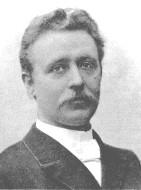
1859 - 1940 Person Name: Carl Boberg, 1859-1940 Topics: Jesus Our Savior Return Author of "How Great Thou Art!" in Great Hymns of the Faith Boberg, Carl Gustaf. (Mönsterås, Sweden, August 16, 1859--January 7, 1940, Kalmar). Swedish Covenant. Bible school at Kristinehamn. Editor of Sanningsvittnet 1890-1916, organ of the Evangelical National Foundation. Member of the Swedish Parliament, 1912-1931. Popular speaker and appreciated writer. Published several collections of poetry and a number of hymns. Member of committee responsible for first two hymnals of the Swedish Covenant. Author of "Jesus, Jesus, O det ordet" ("Jesus, Jesus, Name Most Precious"); "Min själ berömmer Gud med fröjd" (My Soul Now Magnifies the Lord"); "O store Gud" ("O Mighty God"). The text now known as "How Great Thou Art" is an English translation of a Russian version based on an earlier German translation of "O store Gud." --J. Irving Erickson, DNAH Archives

R. E. Hudson

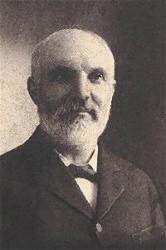
1843 - 1901 Person Name: Ralph E. Hudson, 1843-1901 Topics: Jesus Our Savior His Suffering and Death Author (Chorus) of "At the Cross" in Great Hymns of the Faith Ralph Hudson (1843-1901) was born in Napoleon, OH. He served in the Union Army in the Civil War. After teaching for five years at Mt. Union College in Alliance he established his own publishing company in that city. He was a strong prohibitionist and published The Temperance Songster in 1886. He compiled several other collections and supplied tunes for gospel songs, among them Clara Tear Williams' "All my life long I had panted" (Satisfied). See 101 More Hymn Stories, K. Osbeck, Grand Rapids, MI: Kregel Publications, 1985). Mary Louise VanDyke

Chas. H. Gabriel

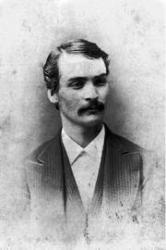
1856 - 1932 Person Name: Charles H. Gabriel, 1856-1932 Topics: Jesus Our Savior Suffering and Death Author of "My Savior's Love" in Great Hymns of the Faith Pseudonyms: C. D. Emerson, Charlotte G. Homer, S. B. Jackson, A. W. Lawrence, Jennie Ree ============= For the first seventeen years of his life Charles Hutchinson Gabriel (b. Wilton, IA, 1856; d. Los Angeles, CA, 1932) lived on an Iowa farm, where friends and neighbors often gathered to sing. Gabriel accompanied them on the family reed organ he had taught himself to play. At the age of sixteen he began teaching singing in schools (following in his father's footsteps) and soon was acclaimed as a fine teacher and composer. He moved to California in 1887 and served as Sunday school music director at the Grace Methodist Church in San Francisco. After moving to Chicago in 1892, Gabriel edited numerous collections of anthems, cantatas, and a large number of songbooks for the Homer Rodeheaver, Hope, and E. O. Excell publishing companies. He composed hundreds of tunes and texts, at times using pseudonyms such as Charlotte G. Homer. The total number of his compositions is estimated at about seven thousand. Gabriel's gospel songs became widely circulated through the Billy Sunday­-Homer Rodeheaver urban crusades. Bert Polman

Frederick Whitfield

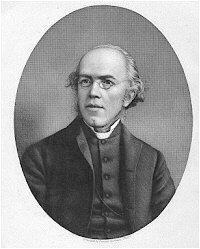
1829 - 1904 Person Name: Frederick Whitfield, 1829-1904 Topics: Jesus Our Savior His Name Author of "O How I Love Jesus" in Great Hymns of the Faith Whitfield, Frederick, B.A., son of H. Whitfield, was born at Threapwood, Shropshire, Jan. 7, 1829, and educated at Trinity College, Dublin, where he took his B.A. in 1859. On taking Holy Orders, he was successively curate of Otley, vicar of Kirby-Ravensworth, senior curate of Greenwich, and Vicar of Stanza John's, Bexley. In 1875 he was preferred to St. Mary's, Hastings. Mr. Whitfield's works in prose and verse number upwards of thirty, including Spiritual unfolding from the Word of Life; Voices from the Valley Testifying of Jesus; The Word Unveiled; Gleanings from Scripture, &c. Several of his hymns appeared in his Sacred Poems and Prose, 1861, 2nd Series, 1864; The Casket, and Quiet Hours in the Sanctuary. The hymn by which he is most widely known is I need Thee, precious Jesu.” Other hymns by him in common use include:~ 1. I have a Great High Priest above. Christ the High Priest. 2. I saw the Cross of Jesus. The Cross. 3. In spirit, Lord, we meet Thee now. Missions. This was written at the request of the Committee of the Irish Church Missions for one of their annual meetings in London. 4. Jesus, Thou Name of magic power. The Name of Jesus. Sometimes given as "Jesus, Thou Name of power divine." 5. The sprinkled blood is speaking. The Blood of Christ. 6. There is a day I long to see. Heaven Anticipated. 7. There is a Name I love to hear. The Name of Jesus. Published in 1855 in hymnsheets and leaflets in various languages. From this the hymn “Jesus, the Name I love so well" is taken. 8. There's naught on earth to rest upon. God Unchangeable. 9. When dead in sin and far from God. Redemption. All these hymns, with the exception of No. 3, are in his Sacred Poems and Prose, 1861, and several of them have been printed as leaflets, and set to special music. The Sacred Poems, &c, contains 26 hymns, some of which are of considerable merit. -- John Julian, Dictionary of Hymnology (1907)

Julia H. Johnston

1849 - 1919 Topics: Adoration and Praise Jesus Our Savior Author of "Grace Greater Than Our Sin" in The Hymnal for Worship and Celebration Julia Harriet Johnston, who was born on Jan. 21, 1849, at Salineville, OH, in Columbiana County. Her father was a minister and he mother was a poet. She began writing when she was nine years old but really started writing verse in high school. She lived in Peoria, Ill. Dianne Shapiro, from "The Singers and Their Songs: sketches of living gospel hymn writers" by Charles Hutchinson Gabriel (Chicago: The Rodeheaver Company, 1916)

Joseph Barnby

1838 - 1896 Topics: Jesus Our Savior : His Adoration and Praise Composer of "LAUDES DOMINI" in The Hymnal for Worship and Celebration Joseph Barnby (b. York, England, 1838; d. London, England, 1896) An accomplished and popular choral director in England, Barnby showed his musical genius early: he was an organist and choirmaster at the age of twelve. He became organist at St. Andrews, Wells Street, London, where he developed an outstanding choral program (at times nicknamed "the Sunday Opera"). Barnby introduced annual performances of J. S. Bach's St. John Passion in St. Anne's, Soho, and directed the first performance in an English church of the St. Matthew Passion. He was also active in regional music festivals, conducted the Royal Choral Society, and composed and edited music (mainly for Novello and Company). In 1892 he was knighted by Queen Victoria. His compositions include many anthems and service music for the Anglican liturgy, as well as 246 hymn tunes (published posthumously in 1897). He edited four hymnals, including The Hymnary (1872) and The Congregational Sunday School Hymnal (1891), and coedited The Cathedral Psalter (1873). Bert Polman

William Cowper

1731 - 1800 Person Name: William Cowper, 1731-1800 Topics: Jesus Our Savior Suffering and Death Author of "There Is a Fountain" in Great Hymns of the Faith William Cowper (pronounced "Cooper"; b. Berkampstead, Hertfordshire, England, 1731; d. East Dereham, Norfolk, England, 1800) is regarded as one of the best early Romantic poets. To biographers he is also known as "mad Cowper." His literary talents produced some of the finest English hymn texts, but his chronic depression accounts for the somber tone of many of those texts. Educated to become an attorney, Cowper was called to the bar in 1754 but never practiced law. In 1763 he had the opportunity to become a clerk for the House of Lords, but the dread of the required public examination triggered his tendency to depression, and he attempted suicide. His subsequent hospitalization and friendship with Morley and Mary Unwin provided emotional stability, but the periods of severe depression returned. His depression was deepened by a religious bent, which often stressed the wrath of God, and at times Cowper felt that God had predestined him to damnation. For the last two decades of his life Cowper lived in Olney, where John Newton became his pastor. There he assisted Newton in his pastoral duties, and the two collaborated on the important hymn collection Olney Hymns (1779), to which Cowper contributed sixty-eight hymn texts. Bert Polman ============ Cowper, William, the poet. The leading events in the life of Cowper are: born in his father's rectory, Berkhampstead, Nov. 26, 1731; educated at Westminster; called to the Bar, 1754; madness, 1763; residence at Huntingdon, 1765; removal to Olney, 1768; to Weston, 1786; to East Dereham, 1795; death there, April 25, 1800. The simple life of Cowper, marked chiefly by its innocent recreations and tender friendships, was in reality a tragedy. His mother, whom he commemorated in the exquisite "Lines on her picture," a vivid delineation of his childhood, written in his 60th year, died when he was six years old. At his first school he was profoundly wretched, but happier at Westminster; excelling at cricket and football, and numbering Warren Hastings, Colman, and the future model of his versification. Churchill, among his contemporaries or friends. Destined for the Bar, he was articled to a solicitor, along with Thurlow. During this period he fell in love with his cousin, Theodora Cowper, sister to Lady Hesketh, and wrote love poems to her. The marriage was forbidden by her father, but she never forgot him, and in after years secretly aided his necessities. Fits of melancholy, from which he had suffered in school days, began to increase, as he entered on life, much straitened in means after his father's death. But on the whole, it is the playful, humorous side of him that is most prominent in the nine years after his call to the Bar; spent in the society of Colman, Bonnell Thornton, and Lloyd, and in writing satires for The Connoisseur and St. James's Chronicle and halfpenny ballads. Then came the awful calamity, which destroyed all hopes of distinction, and made him a sedentary invalid, dependent on his friends. He had been nominated to the Clerkship of the Journals of the House of Lords, but the dread of appearing before them to show his fitness for the appointment overthrew his reason. He attempted his life with "laudanum, knife and cord,"—-in the third attempt nearly succeeding. The dark delusion of his life now first showed itself—a belief in his reprobation by God. But for the present, under the wise and Christian treatment of Dr. Cotton (q. v.) at St. Albans, it passed away; and the eight years that followed, of which the two first were spent at Huntingdon (where he formed his lifelong friendship with Mrs. Unwin), and the remainder at Olney in active piety among the poor, and enthusiastic devotions under the guidance of John Newton (q. v.), were full of the realisation of God's favour, and the happiest, most lucid period of his life. But the tension of long religious exercises, the nervous excitement of leading at prayer meetings, and the extreme despondence (far more than the Calvinism) of Newton, could scarcely have been a healthy atmosphere for a shy, sensitive spirit, that needed most of all the joyous sunlight of Christianity. A year after his brother's death, madness returned. Under the conviction that it was the command of God, he attempted suicide; and he then settled down into a belief in stark contradiction to his Calvinistic creed, "that the Lord, after having renewed him in holiness, had doomed him to everlasting perdition" (Southey). In its darkest form his affliction lasted sixteen months, during which he chiefly resided in J. Newton's house, patiently tended by him and by his devoted nurse, Mrs. Unwin. Gradually he became interested in carpentering, gardening, glazing, and the tendance of some tame hares and other playmates. At the close of 1780, Mrs. Unwin suggested to him some serious poetical work; and the occupation proved so congenial, that his first volume was published in 1782. To a gay episode in 1783 (his fascination by the wit of Lady Austen) his greatest poem, The Task, and also John Gilpin were owing. His other principal work was his Homer, published in 1791. The dark cloud had greatly lifted from his life when Lady Hesketh's care accomplished his removal to Weston (1786): but the loss of his dear friend William Unwin lowered it again for some months. The five years' illness of Mrs. Unwin, during which his nurse of old became his tenderly-watched patient, deepened the darkness more and more. And her death (1796) brought “fixed despair," of which his last poem, The Castaway, is the terrible memorial. Perhaps no more beautiful sentence has been written of him, than the testimony of one, who saw him after death, that with the "composure and calmness" of the face there “mingled, as it were, a holy surprise." Cowper's poetry marks the dawn of the return from the conventionality of Pope to natural expression, and the study of quiet nature. His ambition was higher than this, to be the Bard of Christianity. His great poems show no trace of his monomania, and are full of healthy piety. His fame as a poet is less than as a letter-writer: the charm of his letters is unsurpassed. Though the most considerable poet, who has written hymns, he has contributed little to the development of their structure, adopting the traditional modes of his time and Newton's severe canons. The spiritual ideas of the hymns are identical with Newton's: their highest note is peace and thankful contemplation, rather than joy: more than half of them are full of trustful or reassuring faith: ten of them are either submissive (44), self-reproachful (17, 42, 43), full of sad yearning (1, 34), questioning (9), or dark spiritual conflict (38-40). The specialty of Cowper's handling is a greater plaintiveness, tenderness, and refinement. A study of these hymns as they stood originally under the classified heads of the Olney Hymns, 1779, which in some cases probably indicate the aim of Cowper as well as the ultimate arrangement of the book by Newton, shows that one or two hymns were more the history of his conversion, than transcripts of present feelings; and the study of Newton's hymns in the same volume, full of heavy indictment against the sins of his own regenerate life, brings out the peculiar danger of his friendship to the poet: it tends also to modify considerably the conclusions of Southey as to the signs of incipient madness in Cowper's maddest hymns. Cowper's best hymns are given in The Book of Praise by Lord Selborne. Two may be selected from them; the exquisitely tender "Hark! my soul, it is the Lord" (q. v.), and "Oh, for a closer walk with God" (q. v.). Anyone who knows Mrs. Browning's noble lines on Cowper's grave will find even a deeper beauty in the latter, which is a purely English hymn of perfect structure and streamlike cadence, by connecting its sadness and its aspiration not only with the “discord on the music" and the "darkness on the glory," but the rapture of his heavenly waking beneath the "pathetic eyes” of Christ. Authorities. Lives, by Hayley; Grimshaw; Southey; Professor Goldwin Smith; Mr. Benham (attached to Globe Edition); Life of Newton, by Rev. Josiah Bull; and the Olney Hymns. The numbers of the hymns quoted refer to the Olney Hymns. [Rev. H. Leigh Bennett, M.A.] --John Julian, Dictionary of Hymnology (1907) ================ Cowper, W. , p. 265, i. Other hymns are:— 1. Holy Lord God, I love Thy truth. Hatred of Sin. 2. I was a grovelling creature once. Hope and Confidence. 3. No strength of nature can suffice. Obedience through love. 4. The Lord receives His highest praise. Faith. 5. The saints should never be dismayed. Providence. All these hymns appeared in the Olney Hymns, 1779. --John Julian, Dictionary of Hymnology, Appendix, Part II (1907) ===================== Cowper, W., p. 265, i. Prof. John E. B. Mayor, of Cambridge, contributed some letters by Cowper, hitherto unpublished, together with notes thereon, to Notes and Queries, July 2 to Sept. 24, 1904. These letters are dated from Huntingdon, where he spent two years after leaving St. Alban's (see p. 265, i.), and Olney. The first is dated "Huntingdon, June 24, 1765," and the last "From Olney, July 14, 1772." They together with extracts from other letters by J. Newton (dated respectively Aug. 8, 1772, Nov. 4, 1772), two quotations without date, followed by the last in the N. & Q. series, Aug. 1773, are of intense interest to all students of Cowper, and especially to those who have given attention to the religious side of the poet's life, with its faint lights and deep and awful shadows. From the hymnological standpoint the additional information which we gather is not important, except concerning the hymns "0 for a closer walk with God," "God moves in a mysterious way," "Tis my happiness below," and "Hear what God, the Lord, hath spoken." Concerning the last three, their position in the manuscripts, and the date of the last from J. Newton in the above order, "Aug. 1773," is conclusive proof against the common belief that "God moves in a mysterious way" was written as the outpouring of Cowper's soul in gratitude for the frustration of his attempted suicide in October 1773. --John Julian, Dictionary of Hymnology, New Supplement (1907)

William B. Bradbury

1816 - 1868 Person Name: William B. Bradbury, 1816-1868 Topics: Jesus Our Savior His Name Composer of "[There is no name so sweet on earth]" in Great Hymns of the Faith William Batchelder Bradbury USA 1816-1868. Born at York, ME, he was raised on his father's farm, with rainy days spent in a shoe-shop, the custom in those days. He loved music and spent spare hours practicing any music he could find. In 1830 the family moved to Boston, where he first saw and heard an organ and piano, and other instruments. He became an organist at 15. He attended Dr. Lowell Mason's singing classes, and later sang in the Bowdoin Street church choir. Dr. Mason became a good friend. He made $100/yr playing the organ, and was still in Dr. Mason's choir. Dr. Mason gave him a chance to teach singing in Machias, ME, which he accepted. He returned to Boston the following year to marry Adra Esther Fessenden in 1838, then relocated to Saint John, New Brunswick. Where his efforts were not much appreciated, so he returned to Boston. He was offered charge of music and organ at the First Baptist Church of Brooklyn. That led to similar work at the Baptist Tabernacle, New York City, where he also started a singing class. That started singing schools in various parts of the city, and eventually resulted in music festivals, held at the Broadway Tabernacle, a prominent city event. He conducted a 1000 children choir there, which resulted in music being taught as regular study in public schools of the city. He began writing music and publishing it. In 1847 he went with his wife to Europe to study with some of the music masters in London and also Germany. He attended Mendelssohn funeral while there. He went to Switzerland before returning to the states, and upon returning, commenced teaching, conducting conventions, composing, and editing music books. In 1851, with his brother, Edward, he began manufacturring Bradbury pianos, which became popular. Also, he had a small office in one of his warehouses in New York and often went there to spend time in private devotions. As a professor, he edited 59 books of sacred and secular music, much of which he wrote. He attended the Presbyterian church in Bloomfield, NJ, for many years later in life. He contracted tuberculosis the last two years of his life. John Perry

John Francis Wade

1711 - 1786 Topics: Adoration and Praise Jesus Our Savior Author (attributed to) of "O Come, All Ye Faithful" in The Celebration Hymnal John Francis Wade (b. England, c. 1711; d. Douay, France, 1786) is now generally recognized as both author and composer of the hymn "Adeste fideles," originally written in Latin in four stanzas. The earliest manuscript signed by Wade is dated about 1743. By the early nineteenth century, however, four additional stanzas had been added by other writers. A Roman Catholic, Wade apparently moved to France because of discrimination against Roman Catholics in eighteenth-century England—especially so after the Jacobite Rebellion of 1745. He taught music at an English college in Douay and hand copied and sold chant music for use in the chapels of wealthy families. Wade's copied manuscripts were published as Cantus Diversi pro Dominicis et Festis per annum (1751). Bert Polman

Felice Giardini

1716 - 1796 Person Name: Felice de Giardini Topics: Adoration and Praise Jesus Our Savior Composer of "ITALIAN HYMN" in The Celebration Hymnal Felice Giardini, born in Italy. When young, he studied singing, harpsichord, and violin. He became a composer and violin virtuoso. By age 12 he was playing in theatre orchestras. His most instructive lesson: While playing a solo passage during an opera, he decided to show off his skills by improvising several bravura variations that the composer, Jommelli, had not written . Although the audience applauded loudly, Jomelli, who happened to be there, went up and slapped Giardini in the face. He learned a lesson from that. He toured Europe as a violinist, considered one of the greatest musical artists of his time. He served as orchestra leader and director of the Italian Opera in London, giving concerts. He tried to run a theatre in Naples, but encountered adversity. He went to Russia, but had little fortune there, where he died. John Perry

Pages


Export as CSV
It looks like you are using an ad-blocker. Ad revenue helps keep us running. Please consider white-listing Hymnary.org or getting Hymnary Pro to eliminate ads entirely and help support Hymnary.org.