You help make Hymnary.org possible. More than 10 million people from 200+ countries found hymns, liturgical resources and encouragement on Hymnary.org in 2025, including you. Every visit affirms the global impact of this ministry.

If Hymnary has been meaningful to you this year, would you take a moment today to help sustain it? A gift of any size—paired with a note of encouragement if you wish—directly supports the server costs, research work and curation that keep this resource freely available to the world.

Give securely online today, or mail a check to:
Hymnary.org
Calvin University
3201 Burton Street SE
Grand Rapids, MI 49546

Thank you for your partnership, and may the hope of Advent fill your heart.

Person Results

Topics:order+of+christian+funerals
In:people

Planning worship? Check out our sister site, ZeteoSearch.org, for 20+ additional resources related to your search.
Showing 31 - 40 of 168Results Per Page: 102050

Edward Hodges

1796 - 1867 Person Name: Edward Hodges, 1796-1867 Topics: Rites of the Church Order of Christian Funerals: Funeral Liturgy for Adults; Rites of the Church Order of Christian Funerals: Funeral Liturgy for Children Adapter of "HYMN TO JOY" in Journeysongs (3rd ed.) Born: Ju­ly 20, 1796, Bris­tol, Eng­land. Died: Sep­tem­ber 1, 1867, Clif­ton, Bris­tol, Eng­land. Buried: Church of St. Mary the Vir­gin, Stan­ton Drew (about eight miles south of Bristol). Hodges’ mu­sic­al gift showed it­self at an ear­ly age; by 1819, he was play­ing the or­gan at St. James’ Church in Bris­tol, and at St. Nicholas’, 1821-1838. He al­so had an in­ter­est­ing me­chan­ic­al bent, and spurred sev­er­al tech­ni­cal im­prove­ments in or­gan de­sign. He com­posed a num­ber of serv­ic­es and an­them piec­es, and Cam­bridge Un­i­ver­si­ty award­ed him a doc­tor­ate in mu­sic in 1825. Hodges event­u­al­ly em­i­grat­ed, ac­cept­ing a post at the ca­thed­ral in To­ron­to, Ca­na­da, in 1838. The next year, he be­came mu­sic di­rect­or at Trin­i­ty Par­ish in New York Ci­ty. He be­came the or­gan­ist at Trin­i­ty Church when it opened in 1846 (the church had its or­gan built to his spe­ci­fi­ca­tions). He re­tired for health rea­sons in 1859, and re­turned to his native Eng­land in 1863. Hodges’ works in­clude: An Apol­o­gy for Church Mu­sic and Mu­sic­al Fes­tiv­als, in Ans­wer…to the Stan­dard and the Re­cord (Lond­on: 1834) Essays on the Ob­jects of Mu­sic­al Study (Bris­tol, Eng­land: 1838) An Es­say on the Cul­ti­va­tion of Church Mu­sic (New York: 1841) Contributions to the Quar­ter­ly Mu­sic­al Mag­a­zine & Mu­sic­al World Trin­i­ty Col­lect­ion of Church Mu­sic (Bos­ton, Mass­a­chu­setts: 1864) (ed­it­or) Music-- BRISTOL GLOUCESTER HABAKKUK HYMN TO JOY --www.hymntime.com/

William J. Irons

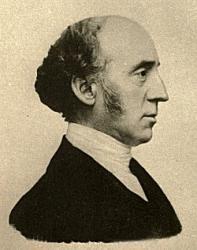
1812 - 1883 Person Name: William J. Irons, 1812-1893 Topics: Rites of the Church Order of Christian Funerals: Funeral Liturgy for Adults; Rites of the Church Order of Christian Funerals: Funeral Liturgy for Children Author of "Sing with All the Saints in Glory" in Journeysongs (3rd ed.) Irons, William Josiah, D.D., son of Joseph Irons, was born at Hoddesdon, Herts, Sep. 12, 1812, and educated at Queen's College, Oxford (B.A. 1833, D.D. 1854), and took Holy Orders 1835. In 1837 he became Incumbent of St. Peter's, Walworth, and was subsequently Vicar of Barkway, Incumbent of Brompton, Rector of Wadingham; and in 1872, Rector of St. Mary-Woolnoth, formerly held by his father's friend, John Newton. He was also Bampton Lecturer in 1870, and Prebendary of St. Paul's Cathedral. He died June 18, 1883. Dr. Irons took a somewhat prominent part in the ecclesiastical controversies of his day, and published extensively thereon in the form of Sermons, Letters, Pamphlets, &c. His important work, the Bampton Lectures, 1870, was on Christianity as taught by St. Paul. His hymnwriting and translating began during his Curacy at St. Mary, Newington, 1835-1837, and was continued to his death. Many were first printed as broadsheets, and subsequently included in the Rev. R. T. Lowe's (Rector of Lea, Lincolnshire) Hymns for the Christian Seasons, Gainsburgh, 1st ed., 1854, and in his own collections. Of these separate publications the most important were his translation of the Dies Irae, and Quicumque vult, and a few special Hymns (Hayes) in 1867. His hymnological works, in addition to these, were:— (1) Metrical Psalter, 1857; (2) Appendix to the Brompton Metrical Psalter, 1861 (22 hymns); (3) Hymns for Use in Church, 1866 (100 hymns). These contained hymns by Dr. Irons, and others. The next contains his Translations and Original Hymns only. (4) Psalms and Hymns for the Church, 1st ed., 1873 (126 h.); 2nd ed., 1875 (190 h.); 3rd ed., 1883 (308 h.). The principal object of this last work was to supply special hymns on the Collects, Epistles, and Gospels, and for Advent and Lent, together with special hymns for the Festivals; and this to a great extent Dr. Irons was enabled to accomplish. His versions of individual Psalms are directly from the Hebrew, line for line. In addition to those of Dr. Irons's hymns and translations, which are annotated under their respective first lines, the following are in common use outside of his own collections, the details appended being from his MS. notes:— 1. Blest voice of love, 0 Word divine. Confirmation. Written for a Confirmation at Brompton, and published in Lowe's Hymns for the Christian Seasons, 1854, No. 184; in the Appendix to the Brompton Metrical Psalter, 1861; and the author's later collections. 2. Can earthly voices fitly sing. Public Opening of a School. Written at Brompton on the occasion of the opening of a School, and published in the 1861Appendix as above, and in the author's later collections. 3. Children of earth, for heaven we seek. Epiphany. A meditation on the Collect for the first Sunday after the Epiphany, and published in his Psalms & Hymns, 1875. 4. Eternal Spirit, God of Grace. Whitsuntide. Written in 1865, and published in his Hymns for Use in Church, 1866, and in a revised form in his Psalms & Hymns, 1873. 5. Faithful Creator, Lord Divine. Consecration to God. Published in his Psalms & Hymns, &c, 1873. 6. Father of love, our Guide and Friend. Confirmation. Written for a large Confirmation at Brompton, in 1844, and published in Lowe's Hymns for the Christian Seasons, 1854, No. 185, and in the 1861 Appendix as above, and the author's later collections. 7. Hail, holy rest, calm herald of that day. Sunday. Published in his Psalms & Hymns, &c, 1873. 8. Is not this our King and Prophet? Palm Sunday. Published in his Psalms & Hymns, &c, 1873. 9. It is not finished, Lord of grace. Preparation for Heaven. Written in 1850. It is No. 45 of his Hymns, 1866, in 6 stanzas of 5 lines. 10. Jesu, Who for us didst bear. Words from the Cross. In his Hymns, 1866, No. 42. 11. Joy of joys, He lives, He lives. Easter. Written in 1873. In the New Mitre, 1875; and the author's Hymns, 1875. 12. Lord, hear my prayer, bow down Thine ear. Lent. Published in Psalms & Hymns, 1873. 13. Lord, in Thy wrath Thou thinkest yet. Lent. In his Hymns, 1866, No. 91. 14. Lord, Thy voice hath spoken. The Beatitudes. In Hymns for use in the Church of Saint Ethelburga, Bishopsgate, 1873, and Dr. Irons's Psalms & Hymns, 1875. 15. No sorrow and no sighing. Heaven. Published in his Psalms & Hymns, 1873, in 5 stanzas of 4 lines. In Thring's Collection 1882, stanzas i.-iii. were given from the 1875 text, and a new stanza was added by Dr. Irons at Prebendary Thring's request. 16. 0 God with us, the Saviour. For use during a Retreat. Given in Psalms & Hymns, 1873. 17. 0 how long, how long. Ps. xiii. Appeared in his Psalms & Hymns, &c, 1873. 18. 0 Saviour, now at God's right hand. Jesus the High Priest. Published in the 1861 Appendix as above, and revised in the author's latter collections. In the Psalms & Hymns, 1873., stanzas i., ii., v. are from 1861, iv. from 1866; and iii. is new. 19. 0 who are they so pure and bright? Holy Innocents . Written on the death of Infants in the Epidemic of 1837, and published in Lowe's Hymns for the Christian Seasons, 1854, No. 20, and in the 1861 Appendix as above, in 3 stanzas of 8 lines. In the 1866 Hymns it was divided into 6 stanzas of 4 lines, and this arrangement was repeated in the 1873 Psalms & Hymns. 20. Sing with all the sons of men. Easter. Given in his Psalms & Hymns, 1873. 21. Thanks be to God for meet and right. Processional. Published in his Hymns, &c, 1866, and again in his Psalms & Hymns, 1873. 22. To whom but Thee, 0 God of Grace. Passiontide. Appeared in his Hymns, &c, 1866; and in his Psalms & Hymns, 1873. 23. Triumphant Lord, Thy work is done. Ascension. Published in the 1861 Appendix as above, in 3 st. of 4 1. In the 1866 Hymns the st. (iii.) “0 by Thy spotless, wondrous birth " was added; and in this enlarged form the hymn was repeated in the Psalms & Hymns, 1873. 24. We praise Thee, 0 our God--to Thee. Children's Hymn of Praise to the Holy Trinity. Written for the Schools at St. Mary's Newington, and published in the 1861 Appendix as above, and repeated in the Hymns, &c, 1866, and the Psalms & Hymns, 1873. 25. Who is this from Bethlehem coming? Purification of Blessed Virgin Mary. Appeared in the Psalms & Hymns, 1873. 26. Why art thou weary, 0 my soul? Ps. lxi. Given in his Hymns, &c, 1866, and his Psalms & Hymns, 1873, in 6 stanzas of 7 lines. In Thring's Collection, 1882, stanza iii. is omitted. Amongst modern hymnwriters, Dr. Irons ranks with the first. His hymns have not been largely used outside of his own congregation; but their high excellence, variety of subjects and metres, intense earnestness, powerful grasp of the subject, and almost faultless rhythm must commend them to the notice of hymnbook compilers. Prebendary Thring has enriched his Collection (1882) with most of those named above. They are of more than usual excellence, and others remain of equal merit. -- John Julian, Dictionary of Hymnology (1907) ====================== Irons, W. J., p. 571, ii. Of the hymns noted under his name, Nos. 13, 21, and 26, appeared in Chope's Hymnal, 1862. --John Julian, Dictionary of Hymnology, Appendix, Part II (1907)

Daniel L. Schutte

b. 1947 Person Name: Dan Schutte, b. 1947 Topics: Rites of the Church Order of Christian Funerals: Funeral Liturgy for Adults; Rites of the Church Order of Christian Funerals: Funeral Liturgy for Children; Rites of the Church Order of Christian Funerals: Vigil for the Deceased Author of "You Are Near" in Journeysongs (3rd ed.)

Hal H. Hopson

1933 - 2025 Topics: Order of Christian Funerals Vigils - Hymns; Order of Christian Funerals Funeral Liturgy Composer of "MERLE'S TUNE" in Catholic Book of Worship III Hal H. Hopson (b. Texas, 1933) is a prolific composer, arranger, clinician, teacher and promoter of congregational song, with more than 1300 published works, especially of hymn and psalm arrangements, choir anthems, and creative ideas for choral and organ music in worship. Born in Texas, with degrees from Baylor University (BA, 1954), and Southern Baptist Seminary (MSM, 1956), he served churches in Nashville, TN, and most recently at Preston Hollow Presbyterian Church in Dallas, Texas. He has served on national boards of the Presbyterian Association of Musicians and the Choristers Guild, and taught numerous workshops at various national conferences. In 2009, a collection of sixty four of his hymn tunes were published in Hymns for Our Time: The Collected Tunes of Hal H. Hopson. Emily Brink

Gregory Murray

1905 - 1992 Person Name: AGM Topics: Order of Christian Funerals Funeral Liturgy Composer of "[Have mercy on me, God, in your kindness]" in Catholic Book of Worship III

Bernadette Farrell

b. 1957 Person Name: Bernadette Farrell, b. 1957 Topics: Rites of the Church Order of Christian Funerals: Vigil for the Deceased; Rites of the Church Order of Christian Funerals: Funeral Liturgy Author of "O God, You Search Me" in Glory and Praise (3rd. ed.)

Richard Frederick Littledale

1833 - 1890 Person Name: Richard F. Littledale, 1833-1890 Topics: Order of Christian Funerals Vigils - Hymns; Order of Christian Funerals Funeral Liturgy Author of "O Lord, You Died That All Might Live" in Catholic Book of Worship III Richard Frederick Littledale (b. Dublin, 1833; d. London, 1890) entered Trinity College, Dublin, as a foundation scholar, graduated with a bachelors degree in classics, a Masters of Divinity in 1858, then a Bachelors and Doctorate in Civil Law at Oxford in 1862. From 1856 to 1857 he was the curate of St. Matthew in Thorpe Hamlet, Norfolk, and from 1857 to 1861 was the curate of St. Mary the Virgin, in Soho, London. For the remainder of his life he suffered from chronic illness and spent most of his time writing. He authored many books and pamphlets on Anglican liturgy, theology, and the church’s engagement with society, and completed his good friend John Mason Neale’s work on the psalms after Neale died in 1866. Laura de Jong ================ Littledale, Richard Frederick, LL.D., D.C.L., son of John Richard Littledale, merchant, was born at Dublin on the 14th of Sept, 1833, and was educated at Bective House Seminary, and Trinity College, Dublin. His University course was distinguished. In 1852 he became a University Scholar; in 1854 he was first class in Classics and gold medallist; in 1856 he won the Berkeley gold medal (for Greek), and other honours. He graduated B.A., 1855, M.A., 1858, LL.D., 1862, and D.C.L. at Oxford, 1862. Taking Holy Orders in 1856, he was Curate of St. Matthew's, in Thorpe Hamlet, Norwich, from 1856 to 1857, and of St. Mary the Virgin, Soho, London, from 1857 to 1861. Through ill-health he retired from parochial work in 1861, and devoted himself to literature. Dr. Littledale's publications amount to about fifty in all, and embrace Theological, Historical, Liturgical, and Hymnological subjects chiefly. His prose works include:— (1) Application of Colour to the Decoration of Churches, 1857; (2) Religious Communities of Women in the Early Church, 1862; (3) Catholic Ritual in the Church of England, 1861; (4) Continuation of Dr. Neale's Commentary on the Psalms, vols. ii., iii., iv., 1868-74; (5) Commentary on the Song of Songs, 1869; (6) The Petrine Claims, 1878-84; (7) Plain Reasons against joining the Church of Rome, 1880, &c.; (8) Short History of the Council of Trent; and several articles in the Encyclopaedia Britannica, 1882-88. His contributions to periodical literature have been also extensive and valuable. Dr. Littledale's Liturgical, Devotional, and Hymnological works include:— (1) Offices of the Holy Eastern Church, in the Original Greek, with translation into English, Notes, &c, 1863; (2) Carols for Christmas and Other Seasons, 1863; (3)The Priest's Prayer Book, with hymns, 1864, and with Brief Pontifical in 1870 and later editions; (4)The People's Hymnal, 1867 ; (5) The Children's Bread. A Communion Office for the Young, with hymns, 1868; (6) Primitive Liturgies and Translations, 1868-69; (7) Children at Calvary: being The Stations of the Cross in Metre for Singing, 1872; (8) the Christian Passover, 1873; (9) The Altar Manual, 1863-77. He was joint Editor of Nos. 3, 4, 8 and 9 with the Rev. J. E. Vaux; and of No. 6 with Dr. Neale. In addition to a large number of hymns, original and translated, in the above works, Dr. Littledale has also directly contributed original and translated hymns to:— (1) Lyra Eucharistica, 1863; (2) Lyra Messianica, 1864; (3) Lyra Mystica, 1865; (4) The Eucharistic Hymnal, 1877; (5) The Roman Breviary in English, by the Marquess of Bute, 1879; (6) The Altar Hymnal, 1884; (7) Supplement to Hymns Ancient & Modern, 1889; (8) to the Night Hours of the Church; (9) to the St. Margaret's Hymnal [East Grinstead], 1875; and (10) to the Church Times, The Guardian, &c, &c. Dr. Littledale's Hymnological works in verse consist of translations of Danish, Swedish, Greek, Latin, Syriac, German, and Italian hymns, together with original Carols, Hymns, and Metrical Litanies. His original hymns remain to be noted. These include the following:— i. In the Priest's Prayer Book, 1864 :— 1. Captain of Salvation. Christian Warfare. 2. Christ, on Whose Face the soldiers. Passiontide. 3. Christ, Who hast for sinners suffered. Passiontide. 4. God the Father, from on high. For the Sick. 5. Lord Jesu, by Thy passion. Passiontide. 6. Lord, Who in pain and weariness. Passiontide. 7. 0 Jesu, in Thy torture. Passiontide. In Meditations and Prayers on the Passion of Our Lord Jesus Christ, 1863. 8. 0 Lord, to Whom the spirits live. All Souls. 9. The clouds of sorrow rest upon mine eyes. For the Sorrowing. ii. In the People's Hymnal, 1867:— 10. Christ, our song we lift to Thee. Blessed Virgin Mary. 11. Christ, our Sun, on us arose. Whitsuntide. In Carols for Christmas, &c, 3rd series, 1864. 12. Christ, the Lord, Whose mighty hand. Prayer for Peace. 13. Day is past and gone. Evening. In the Church Times, Feb. 17, 1866. 14. Eternal Shepherd, God most high. Vacancy of a See or Parish. 15. Eternal Wisdom, God most high. Common of Doctors. 16. God eternal, infinite. Septuagesima. 17. Hidden Saviour, great High Priest. Holy Communion. 18. I believe in God the Father. The Creed. 19. I worship Thee, Lord Jesu. Holy Communion. In the Church Times, May 10, 1865. 20. In Paradise reposing. Burial of a Child. 21. In songs of glad thanksgiving. General Thanksgiving. 22. Lord, Whose goodwill is ever sure. In time of Famine. 23. Now the sun is in the skies. Morning. In the Church Times, Jan. 27, 1866. 24. 0 God of mercy, God of love. For Rain. 25. 0 God, Who metest in Thine hand. For those at Sea. 26. 0 God, Whose Sole-Begotten left. Almsgiving. 27. 0 sing to the Lord, Whose bountiful hand. Thanksgiving for Rain. 28. Set upon Sion's wall. Ember Days. 29. The Cedar of Lebanon, Plant of renown. Christmas. First published in Sedding's Christmas Carols, 1863. 30. The fight is o'er, the crown is won. Burial of a Sister of Mercy. 31. The wintry time hath ended. Thanksgiving for Fair Weather. 32. We are marching through the desert. Processional. 33. When the day hath come at last. The Judgment. In addition to these, a few of the more widely used of Dr. Littledale's original hymns, as "From hidden source arising," and others, are annotated under their respective first lines. In the People's Hymnal, 1867, Dr. Littledale adopted the following signatures:— A. L. P., i.e., A London Priest. B., i.e., An initial of a former address. B. T., i.e., The initials of a former address. D. L., i.e. Dr. Littledale. F., i.e., Frederick. F. R., i.e., Frederick Richard. L., i.e., Littledale. P. C. E., i.e., Priest of the Church of England. P. P. Bk., i.e., Priest's Prayer Book. Taken as a whole, Dr. Littledale's translations from the seven languages named above are characterised by general faithfulness to the originals, great simplicity of diction, good metre, smooth rhythm, and deep earnestness. His original compositions are usually on special subjects, for which, at th$ time they were written, there were few hymns, and are marked by the same excellent features of a good hymn as his translations. His main object throughout is to teach through Praise and Prayer. --John Julian, Dictionary of Hymnology (1907) ====================== Littledale, Richard F., p. 679, ii. He died at Red Lion Square, London, Jan. 11, 1890. --John Julian, Dictionary of Hymnology, Appendix, Part II (1907)

Jean Sibelius

1865 - 1957 Person Name: Jean Sibelius, 1865-1957 Topics: Order of Christian Funerals Vigils - Hymns; Order of Christian Funerals Funeral Liturgy Composer of "FINLANDIA" in Catholic Book of Worship III Johann Julius Christian [Jean] Sibelius DM Finland 1865-1957. Born at Hameenlinna, Finland, the son of a Swedish-speaking medical doctor, he lost his father to typhoid in 1868, leaving the family in substantial debt. His mother, again pregnant, had to sell their property and move in with her widowed mother. His aunt Julia gave him piano lessons when he was seven on the family upright piano, wrapping him on the knuckles when he played a wrong note. He learned to improvise as he played. His uncle, Pehr Ferdinand Sibelius, was interested in music, especially the violin, and gave Jean a violin when he was 10. As his musical advisor his uncle encouraged him to play and compose music. He played music with sister on piano, brother on cello, and himself on violin. He attended a Finnish-speaking prep school in 1874 and continued his education at the Hameenlinna Normal Lyceum thereafter. Jean also showed a strong interest in nature, frequently walking around the countryside when the family moved to the Loviisa coast for the summer months. In 1881 he took violin lessons from the local bandmaster, and developed a strong interest in violin. He became an accomplished player, and thought of becoming a virtuoso, but realizing he began study too late in life for that, instead opted to compose. He often played music in quartets with neighboring families, adding to his chamber music experience. He took the French form of his name, Jean. He studied law at the Imperial Alexander University in Finland, but showed far more interest in music. He then studied music at the Helsinki Music Institute (now Sibelius Academy) from 1885-1889. The school’s founder, Martin Wegelius, did much to support education development in Finland and gave Sibelius his first lessons in composition. Another teacher,,Ferruccio Busoni, a pianist-composer, helped him as well and became a life-long friend. Other friends, pianist Adolf Paul, and conductor-to-be, Armas Jarnefelt, also helped him. In 1892 he married Armas ‘s sister, Aino Jarnefelt, daughter of General Alexander Jarnefelt, governor of Vaasa. They had six daughters, Eva, Ruth, Kirsti, Katarina, Margareta, and Heidi. He continued his musical studies in Berlin (1889-1890) with Albert Becker, and in Vienna (1890-1891) with Robert Fuchs and Karl Goldmark. In Berlin he had opportunity to attend concerts and operas. In Vienna he turned to orchestral composition and had much success, although he had gallstone surgery during that period. He also traveled to the UK, France, Germany, and the USA during this time in his life, composing, conducting, and socializing. In 1892 he took on teaching assignments at the Music Institute and at Kajanus’s conducting school, but this left him with little time for composing. Sibelius’ works were more and more appreciated in Helsinki concert halls as he composed and conducted symphonies in the mid-1890s. In 1898 he was awarded a substantial grant, initially for 10 years, and later extended for life, allowing him to concentrate on composition. Much of his music became popular in Finland and in Germany. In 1899 he began work on his first symphony. It went well, but other patriotic music hehad composed did even better, since Russia was trying to restrict the powers of the Grand Duchy of Finland. In 1900 Sibelius went on an international tour with Kajanus and his orchestra, presenting his recent works. In 1901 he wrote his second symphony, which received rave reviews. He continued to compose as he became popular and well-known. In 1903 he had a new home built near Lake Tuusula north of Helsinki, calleed Ainola (after his wife). He gave concerts in and around Finland, spending more and more time away from home, to the chagrin of his wife. After a time he returned home and composed from there. He spent much time wining and dining in Helsinki, and it had a disastrous effect on his wife, who finally entered a sanitorium. He resolved again to give up drinking and concentrate on composing his 3rd symphony. He met Gustav Mahler in Helsinki and they became friends. He performed his 3rd symphony in St Petersburg, Russia. In 1907 he underwent a serious operation for suspected throat cancer, and spent time in the hospital in 1908. His smoking and drinking had now become life-threatening. He cancelled concerts for Rome, Warsaw, and Berlin, but kept one in London. His health deteriorated further, And his brush with death inspired him to compose his 4th symphony. In 1909 his successful throat operation resulted in renewed happiness for him and his wife, Aino. He continued conducting concerts, and met Claude Debussy, who further encouraged his musical efforts. He began working on his 4th symphony in 1910, but had to write other music to compensate for dwindling funds. He finished his 4th symphony in Berlin and conducted concerts in Sweden in 1911. In 1912 he completed short orchestral works. Over the next several years he continued producing a variety of pieces of music, well-received, especially in America. He was given an honorary DM degree from Yale University and also another from the University of Helsinki about the same time. WW1 interrupted his music royalties in 1915, and he was forced to compose smaller works for publication to make ends meet. He completed his 5th symphony at age 50, but he was dissatisfied with it and reworked it three times In 1917 he starting drinking again, triggering arguments with his wife. The Russian Revolution in 1917 caused an improvement in their personal relationship, and he wrote his ‘Jager March’ to celebrate Finnish independence from Russia. The next year the Finnish Civil War began, putting a damper on his march. In 1919, after the war, he completed his 6th symphony. In 1920 George Eastman , of Eastman Kodak, asked him to teach for a year in New York, but he declined. He did enjoy a trip conducting several concerts in England in 1921. He premiered his 6th symphony in 1923. In 1924 he completed his 7th symphony. The next year he composed a number of small pieces. He began drinking again. He did write a few more major works, but for the last thirty years of his life he avoided publicly talking about his music. He tried to write an 8th symphony, but was unsatisfied with it and burned the scores. In fact, he burned a laundry basket full of music he had written, to the chagrin of his wife. But, afterward, he became calmer and gradually had a lighter mood. In 1935 he was awarded the Goethe-Metal, with a certificate signed by Adolf Hitler. A Soviet invasion of Finland in 1939 was repelled, but Finland gave up territory to Russia as a result. In 1941 Sibelius and his wife returned to their Finland home, Ainola, after a long absence. He did not compose much the last few years, and died at Ainola. His wife outlived him by 12 years. John Perry

Rory Cooney

b. 1952 Person Name: Rory Cooney, b. 1952 Topics: Rites of the Church Order of Christian Funerals: Vigil for the Deceased; Rites of the Church Order of Christian Funerals: Funeral Liturgy; Rites of the Church Order of Christian Funerals: Rite of Committal Author of "Do Not Fear to Hope" in Glory and Praise (3rd. ed.)

Christopher Walker

b. 1947 Person Name: Christopher Walker, b. 1947 Topics: Rites of the Church Order of Christian Funerals: Funeral Liturgy for Adults; Rites of the Church Order of Christian Funerals: Funeral Liturgy for Children; Rites of the Church Order of Christian Funerals: Vigil for the Deceased Author of "Because the Lord Is My Shepherd" in Journeysongs (3rd ed.)

Pages


Export as CSV
It looks like you are using an ad-blocker. Ad revenue helps keep us running. Please consider white-listing Hymnary.org or getting Hymnary Pro to eliminate ads entirely and help support Hymnary.org.