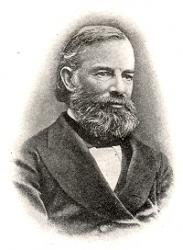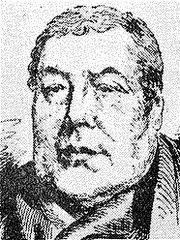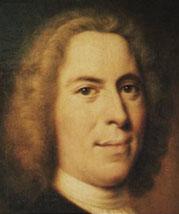
1700 - 1760 Person Name: Nicolaus L. Zinzendorf Topics: Self-Dedication Author of "Immanuel, God with us" in Hymnal of the Methodist Episcopal Church Zinzendorf, Count Nicolaus Ludwig, the founder of the religious community of Herrnhut and the apostle of the United Brethren, was born at Dresden May 26, 1700. It is not often that noble blood and worldly wealth are allied with true piety and missionary zeal. Such, however, was the case with Count Zinzendorf. In 1731 Zinzendorf resigned all public duties and devoted himself to missionary work. He traveled extensively on the Continent, in Great Britain, and in America, preaching "Christ, and him crucified," and organizing societies of Moravian brethren. John Wesley is said to have been under obligation to Zinzendorf for some ideas on singing, organization of classes, and Church government. Zinzendorf was the author of some two thousand hymns. Many of them are of little worth, but a few are very valuable, full of gospel sweetness and holy fervor. He died at Herrnhut May 6, 1760.
—Hymn Writers of the Church by Charles Nutter
================
Zinzendorf, Nicolaus Ludwig, Count von, was born at Dresden, May 26, 1700; was educated at the Paedagogium at Halle (1710-1716), and at the University of Wittenberg (1716-1719); became Hof-und Justizrath at the Saxon court at Dresden in the autumn of 1721; received a license to preach from the Theological Faculty of the University of Tubingen in 1734; was consecrated Bishop of the Moravian Brethren's Unity at Berlin, May 10, 1737; and died at Herrnhut, May 9, 1760.
An adequate sketch of the life and labours of this remarkable man would far exceed the limits of our space. The details of his life are fully given in his Leben, by A. G. Spangenberg, 8 vols., Barby, 1772-75 (English version, abridged, by Samuel Jackson, London, 1838); and good sketches, with references to the fuller biographies, will be found in Koch, v. 248, Herzog's Real-Encyklopädie, xvii. 513, &c. The English reader may also consult T. Kübler's Historical Notes to the Lyra Germanica, 1865, p. 107; Josiah Miller's Singers and Songs, 1869, p. 160; Miss Winkworth's Christian Singers of Germany, 1869, p. 305, &c. It is impossible to speak of Zinzendorf apart from the religious Communion of which he was the Second Founder.
Zinzendorf's first hymn was written at Halle in 1712, and his last at Herrnhut, May 4, 1760. Between these dates he wrote more than 2000 hymns. He himself published an edition of his poems as his Teutsche Gedichte at Herrnhut, 1735 (2nd ed., Barby, 1766), but this only contains 128 hymns. The fullest representation of them is in Albert Knapp's Geistliche Gedichte des Graf en von Zinzendorf, published at Stuttgart in 1845 (hereafter, in this article, referred to as Knapp, 1845). This contains 770 pieces, arranged in three books, with an introduction and a biographical sketch by Knapp.
In preparing this edition Knapp had access to much unpublished material in the archives at Herrnhut, and found there many of the hymns in Zinzendorf's autograph. But too much of the labour he bestowed thereon was spent in endeavouring, not so much to reconstruct the text from the original sources, as to modernise it. In various instances the hymns are altogether rewritten, so that the form in which they appear is not that in which, as a matter of fact, Zinzendorf did write them, but that in which he might have written them had he been Albert Knapp, and lived in the year of grace 1845. So much is this the case, that comparatively few of the hymns are given in Knapp's edition in their original form. If not altered they are often either abridged or else combined with others.
The keynote of Zinzendorf's hymns, and of his religious character, was a deep and earnest personal devotion to and fellowship with the crucified Saviour. This is seen even in his worst pieces, where it is his perverted fervour that leads him into objectionable familiarity with sacred things both in thought and in expression. If his self-restraint had been equal to his imaginative and productive powers, he would have ranked as one of the greatest German hymnwriters. As it is, most even of his best pieces err in some way or other, for if they are reverent and in good taste, they are apt to lack concentration and to be far too diffuse. His best hymns, and those which have been most popular in German and English beyond the Moravian connection, are those of the period prior to 1734. Among the characteristically Moravian hymns of the period 1734 to 1742 there are also, various noble pieces. The later productions, especially from 1743 to 1750, are as a rule one-sided, unreal, and exaggerated in sentiment, and debased in style; exemplifying a tendency inherited from Scheffler, and suffered to run to riot. Without doubt he wrote too much (especially considering the limited range of subjects treated of in his hymns), and gave too little care to revision and condensation. Yet many of his hymns are worthy of note, and are distinguished by a certain noble simplicity, true sweetness, lyric grace, unshaken faith in the reconciling grace of Christ, entire self-consecration, willingness to spend and be spent in the Master's service, and fervent brotherly love.
The more important hymnbooks in which Zinzendorf’s productions mainly appeared may for convenience be briefly noted here, as follows:—
(1) Sammlung geistlicher und lieblicher Lieder, Leipzig, 1725, with 889 hymns. The 2nd edition was published circa 1728, and contains anAnhäng with Nos. 890-1078 [Berlin Library, Ei. 2017]; while some copies have a Zugabe with Nos. 1079-1149 [Berlin, Ei. 2016], and others have also an Andere Zugabe, circa 1730, with hymns 1-44, bound up with them [Berlin, Ei, 2014, and British Museum]. The 3rd edition, with 1416 hymns in all, was published at Görlitz in 1731. A copy of this, now in the Hamburg Library, has bound up with Nachlese einiger geistlicher Lieder, dated 1733.
(2) Herrnhut Gesang-Buch 1735 (Das Gesang-Buch der Gemeine in Herrn-Huth) with its various Anhange and Zugaben up to 1748.
(3) London Gesang-Buch 1753-54 (Etwas vom Liede Mosis ... das ist: Alt- und neuer Brüder-Gesang, &c), published at London, vol. i. 1753, ii. 1754.
(4) Brüder Gesang-Buch 1778 (Gesangbuch zum Gebrauch der evangelischen Brüdergemeinen), published at Barby in 1778.
Zinzendorf's hymns passed into German non-Moravian use mainly through the Ebersdorf Gesang-Buch, 1742 (Evangelisches Gesangbuch in einen hinlänglichen Auszug der Alten, Neuern und Neuesten Lieder, &c), and in recent times through Knapp's Evangelischer Lieder-Schatz, 1837-1865. Comparatively few are found in non-Moravian English hymnbooks prior to 1840, save in the versions made by John Wesley. The translations made by the English Moravians have been very little used by others, except by those who were connected by birth with the Moravians, such as James Montgomery (through whose influence several were included in Mercer's Church Psalter & Hymn Book, 1855 and 1857), J. A. Latrobe and C. H. Bateman. The versions made by English non-Moravians since 1840 have been mostly of hymns which the Moravians themselves had not thought good to translate.
In the larger edition of the English Moravian Hymn Book of 1886, hymns which are by Zinzendorf may easily be traced, his name being added to them, and the first line of the original German prefixed. The others which have passed into use outside the Moravian connection, or have been translated by non-Moravians, are here noted as follows:—
i. Ach Bein von meinen Beinen. Longing for Heaven. Written circa 1750 (Knapp, 1845, p. 176). Included in the Kleine Brüder Gesang-Buch, 2nd ed. Barby, 1761, No. 2110, in 2 stanzas of 8 lines; repeated, altered, in the Brüder Gesang-Buch,1778. No. 1681. Translated as:—
1. The seasons, Lord! are Thine—how soon. A free version as No. 479 in J. A. Latrobe's Psalms & Hymns, 1841.
2. How soon, exalted Jesus. This is No. 838 in the Moravian Hymn Book, 1789 (1886, No. 1233).
ii. Ach! mein verwundter Fürste. Union with Christ. Written Aug. 1737 (Knapp, 1845, p. 125). First published in Appendix viii., circa 1738, to the Herrnhut Gesang-Buch as No. 1197, and in 4 stanzas of 6 lines. In the Brüder Gesang-Buch, 1778, No. 774, stanza iv. was omitted.
The translation in common use is of stanzas i., ii. Another translation is, "My wounded Prince enthron'd on high," by C. Kinchen, as No. 85 in the Moravian Hymn Book, 1742. In the 1808 and later editions(1886, No. 352), stanza iii. altered to "Lord, take my sinful, worthless heart "is continued.
iii. Der Gott von unserm Bunde. Supplication. Written in 1737 ( Knap , 1845, p. 231). First published in Appendix vii., circa 1738, to the Herrnhut Gesang-Buch, as No. 1201, in 5 stanzas of 6 lines, entitled, "Hymn for the Hours of Prayer." In the Brüder Gesang-Buch, 1778, No. 1474.
The translation in common use is based on stanza i., ii. Other translations are (1) "The God to whom we homage pay." This is No. 97 in pt. iii. 1748 of the Moravian Hymn Book. (2) "O may the God of mercies." This is No. 592 in the Moravian Hymn Book, 1801. In the ed. of 1886, No. 706, it begins with stanza iii., "Lord, our High Priest and Saviour."
iv. Die Bäume blühen ab. Autumn . In the Teutsche Gedichte, 1735, No. 12, dated Autumn, 1721, and entitled "Comforting thoughts on Death." It is in Knapp, 1845, p. 17. Further noted under "Wie wird mir einst doch sein".
v. Du Vater aller Kreatur. Work for Christ. Written 1722 (Knapp, 1845, p. 26). First published in Appendix. vi., circa 1737, to the Herrnhut Gesang-Buch, as No. 1159, and in 13 stanzas of 4 lines. In the Brüder Gesang-Buch, 1778, No. 1717 consists of stanza viii.-xiii. beginning, "Des Lebens abgestecktes Ziel." Translated as:—
Whether the period of this life. This is a translation of stanza viii.-x. as No. 847 in the Moravian Hymn Book, 1789. To this in later eds. (1886, No. 1235) No. 848 was added. This is "Lord may 1 live to Thee by faith," and is a translation of an anonymous 17th century stanza, "Herr Jesu! dir leb ich," which is No. 1686 in the Brüder Gesang-Buch, 1778. The full form is in J. A. Latrobe's Psalms & Hymns, 1841.
vi. Geschwister! wir geben uns Herzen und Hände. Christian Work. Written 1737 (Knap p, 1845, p. 234). First published in Appendix vii., circa 1738, to the Herrnhut Gesang-Buch as No. 1217, and in 8 stanzas of 4 lines. In the Brüder Gesang-Buch, 1778, No. 1391, it is united, as in Knapp, with "Gesinde des Heilands". Translated as:—
Grace! how good, how cheap, how free. This is a translation, by C. Kinchen, of stanza v., as No. 28 in the Moravian Hymn Book, 1742. Included in Spurgeon's Our Own Hymn Book, 1866.
vii. Glanz der Ewigkeit. Morning. In the Teutsche Gedichte, 1735, p. 13, dated Berlin, May, 1721. First published as No. 470 in the Sammlung, 1725, in 15 stanzas of 6 lines. In Knapp, 1845, p. 16. The only stanza translated into English is stanza xi. as part of "Jesu, geh' voran”.
viii. Grosser Bundes-Engel. Ascensiontide. Written for Ascension Day (his birthday), 1740 (Knapp, 1845, p. 144, dated May 26, 1740). First published in Appendix xi.,
circa 1741, to the Herrnhut Gesang-Buch as No. 1426, in 27 stanzas of 8 lines. In the Brüder Gesang-Buch, 1778, No. 603. Translated as:—
Lord, when Thou saidst, So let it be. This is a translation, by C. G. Clemens, of stanza iii., as No. 156 in the Moravian Hymn Book , 1789 (1849, No. 190). Included in the Congregational Hymn Book, 1836, and in Dr. Martineau's Hymns, 1840 and 1873.
ix. Heiliger, heiliger, heiliger Herr Zebaoth. Eternal Life. Heaven Anticipated. The Rev. J. T. Müller, of Herrnhut, informs me that this was written in 1723 on the occasion of the birthday (Oct.6) of Zinzendorf s grandmother, H. C. von Gersdorf. Knapp, 1845, p. 193, dates it Oct. 18, 1723. First published as No. 1078 (2) in the 2nd ed., circa 1728, of the Sammlung in 7 stanzas of 7 lines, entitled, Closing Hymn. In the Brüder Gesang-Buch, 1778, stanza ii., iii., beginning "Hatten wir," are included as stanzas i., ii., of No. 1739. Translated as:—
Had we nought, had we nought. This is a translation of stanzas ii., iii., by W. O. Keley, as No. 1189 in the 1808 Supplement to the Moravian Hymn Book, 1801 (1849, No. 1186), and repeated in J. A. Latrobe's Psalms & Hymns, 1841, No. 475.
x. Ich bin ein kleines Kindelein. Children. This is No. 1022 in the 3rd ed., 1731, of the Sammlung, in 13 stanzas of 4 lines. In the Brüder Gesang-Buch, 1778, No. 1214, and in the Hist. Nachricht thereto (1835, p. 188) marked as a catechetical hymn for children, and dated 1723. Knapp, 1845, p. 40, dates it June, 1723, and alters it to "Ich bin ein Kindlein, arm und klein." It is a simple and beautiful hymn, and is contained in a number of recent German non-Moravian collections, e.g. in the Berlin Geistliche Lieder, ed. 1863, No. 1408. Translated as:—
1. Saviour, who didst from Heaven come down. This is a free translation of stanzas ii.,iii., v., made by James Bullivant Tomalin in 1860, and contributed to Lord Selborne's Book of Praise, ed. 1866, Appendix, No. 27, with the note at p. 500, "I am indebted for this to the kindness of the translator." Repeated in S. D. Major's Book of Praise for Home & School, 1869, and in America in the Baptist Service of Song, 1871, &c. In M. W. Stryker's Christian Chorals, 1885, and Church Song, 1889, it is altered, beginning, "O Saviour, Who from Heav'n came down."
2. I am a little child you see. By C. Kinchen, as No. 49 in the Moravian Hymn Book 1742. This form is followed in the edition of 1886, No. 1038, and in the Bible Hymn Book, 1845. In the Moravian Hymn Book, 1789, it begins with stanza ii., "Thou, gracious Saviour, for my good;" and this form altered to, "My Saviour dear, Thou for my good," is in Montgomery's Christian Psalmist, 1825.
xi. Kommt, Sünder, und blicket dem ewigen Sohne. Repentance or Lent. Mr. Müller informs me that this was written in Aug. 1736, at , 1845, p. 130, dates it Nov. 22,1738. First published in Appendix viii., circa 1739, to the Herrnhut Gesang-Buch as No. 1308, in 9 stanzas of 4 lines. In the Brüder Gesang-Buch 1778, No. 321. Translated as:—
Sinners! come; the Saviour see. This a good and full translation by C. Kinchen, as No. 120, in the Moravian Hymn Book, 1742. Of this stanzas i., ii. are included in Spurgeon's Our Own Hymn Book, 1866. Other forms are (1) "Are you formed a creature new" (stanza vi.). In the Moravian Hymn Book, 1769 (1886, No. 1280), Montgomery's Christian Psalmist, 1825, &c. (2) "Rise, go forth to meet the Lamb" (stanza viii. alt.). In J. A. Latrobe's Psalms & Hymns, 1852, No. 457.
xii. Kron' und Lohn behertzter Ringer. The Beatitudes. Founded on St. Matt. v. 3-12. In his Teutsche Gedichte, 1735. p. 41, dated, Sept. 7, 1722 (his marriage day), and entitled, "Thoughts on my own marriage." First published as No. 700 in the Sammlung, 1725, in 16 stanzas of 12 lines. In Knapp, 1845, p. 30. In the Brüder Gesang-Buch, 1778, No. 513, beginning, "Jesu, der du uns erworben." Translated as:—
Jesu! Lord so great and glorious. This, omitting stanzas xiv., xv., is No. 226 in pt. ii. of the Moravian Hymn Book, 1754, as "Jesus, Lord most great and glorious"). The versions of stanzas i., ix., xvi., from the Moravian Hymn Book, 1789, were included in the Dalston Hospital Hymn Book, 1848.
xiii. Naht heran, ihr lieben Glieder. Holy Communion. Written in 1731 (Knapp, 1845, p. 212). 1st published in the 3rd ed., 1731, of the Sammlung as No. 1416 in 16 stanzas of 4 lines. Also in the Brüder Gesang-Buch 1778, No. 1148. Translated as:—
1. Friends in Jesus, now draw near. This is a free translation, omitting stanza v., vi., viii.-x.,xiv., by Miss Borthwick in Hymns from the Land of Luther, 4th ser., 1862, p. 57, the German being quoted as "Kommt herein, ihr lieben Glieder." This translation is repeated in full in Lyra Eucharistica, 1863, p. 34, and abridged in G. S. Jellicoe's Collection 1867, Windle, No. 480, and Harland, 1876, No. 451.
2. Come, approach to Jesu's table. This is No. 556 in the Moravian Hymn Book, 1789 (1849, No. 965),
xiv. 0 du Hüter Ephraim. Supplication for Grace. In his Teutsche Gedichte, 1735,p. 158, dated 1728,entitled, "On his wife's 28th birthday " (she was born Nov. 7, 1700), and with the note, "This poem was written for the birthday festival of the Countess, was sung by a company or coterie of friends, each member of which was indicated according to their circumstances at the time." It had previously appeared, without the first stanza, and this form, which begins, "Herz der göttlichen Natur".
xv. Rath, Kraft, und Held, und Wunderbar. Christmas. Founded on Is. ix. 6. In his Teutsche Gedichte, 1735, p. 25, in 9 stanzas of 6 lines, entitled, "Christmas Thoughts," and dated 1721; and in the Herrnhut Gesang-Buch,1735, No. 827. In Knapp, 1845, p. 21. In the Brüder Gesang-Buch, 1778, No. 488, it begins with stanza vi., "Mein alles! mehr als alle Welt." Translated as:—
My all things more than earth and sky. This is a translation of stanza vi., by C. G. Clemens, as No. 306 in the Moravian Hymn Book, 1789. In 1801 altered to "My all in all, my faithful Friend;" and to this in 1826, trs. of stanzas ii., vii.-ix.,by P. Latrobe, were added (1886.No. 399). From this form a cento in 5 stanzas of L. M., beginning, "O Lord! Thou art my rock, my guide," was included in Dr. Martineau's Hymns, 1840.
xvi. Ruht aus von eurer Mühe. Christian Church. Written in 1737 (Knapp 1845, p. 232, as Du gestern und auch heute). First published in Appendix vi., circa 1737, to the Herrnhut Gesang-Buch, as No. 1183, in 8 stanzas of 8 lines, entitled, "Hymn of the witnesses." In the Brüder Gesang-Buch, 1778, stanza iv. is given as No. 1042. Translated as:—
0 Jesus Christ, most holy. This is a translation of stanza iv. by C. G. Clemens, as No. 487 in the Moravian Hymn Book, 1789 (1849, No. 807 ; 1886, No. 795, beginning, "Lord Jesus Christ") Included in Spurgeon's Our Own Hymn Book, 1866.
xvii. Seligs Volk der Zeugenwolk. Holy Communion. Written in 1739 (Knapp, 1845, p. 138, beginning, "Christi Blut, Die Segensfluth," and p. 256, "Selig Volk.") First published in Appendix viii., circa 1739, to the Herrnhut Gesang-Buch, as No. 1340, in 14 stanzas of 8 lines, entitled, "Hymn at the Feast of Love." In the Brüder Gesang-Buch, 1778, as Nos. 1127 and 1422, the latter beginning, "Werther Tod und Wunden roth; " and including stanza xi. ("Wisst ihr was? So heisst der Pass"), xiii., xiv. Translated as:—
1. Would the world our passport see. This is a translation of stanza xi., xiii. as No. 1152 in the 1808 Supplement to the Moravian Hymn Book of 1801 (1886, No. 895). Included as No. 212 in J. A. Latrobe's Psalms & Hymns, 1841.
2. Flock of Grace, ye Witnesses. This is No. 40 in pt. iii. 1748 of the Moravian Hymn Book.
3. Happy race of witnesses. By C. Kinchen as No. 551 in the Moravian Hymn Book, 1789. In 1886 four stanzas are given as No. 951, and the other two beginning, "Eat and rest at this great feast" (stanza viii.) as No. 1022.
xviii. Was hatten wir für Freude oder Ehre . Repentance. Written in 1739 (Knapp, 1845, p. 139). First published in Appendix viii., circa 1739, to the Herrnhut Gesang-Buch as No. 1349, and in 48 stanza of 2 lines. In the Brüder Gesang-Buch, 1778, No. 396, reduced to 19 stanzas. Translated as:—
What Joy or Honour could we have. In full as No. 161 in the Moravian Hymn Book, 1742; abridged in 1789 to 12, and in 1801 to 7 stanzas. The 1801 version, which represents stanzas i.-iv., viii., ix., xi. was included in Montgomery's Christian Psalmist, 1825; and with the trs. of stanzas iii., xi. omitted, and a hortatory stanza added, as No. 268 in J. A. Latrobe's Psalms & Hymns, 1841. In the Moravian Hymn Book, 1886, No. 322, it begins with the translation of stanza iii., "None is so holy, pure, and just."
xix. Wenn sich die Kinder freuen. Christian Work. Written about 1752 (Knapp, 1845, p. 179, as "Wenn wir uns kindlich freuen"). Included as No. 2101 in the London Gesang-Buch (Etwas vom Liede Mosis, &c), 1753, in 15 stanzas of 4 lines. In the Brüder Gesang-Buch, 1778, No. 490 consists of stanzas i.—iii., vi., ix., xiii.-xv. beginning, "Wenu wir uns kindlich freuen." Translated as:—
1. When we seek with loving heart. By Miss Borthwick, in full from the 1778 (with an original stanza as stanza ix.) in the Family Treasury, 1861, pt. ii., p. 112, and in Hymns from the Land of Luther, 1862, p. 89 (1884, p. 250). Repeated, abridged, in E. T. Prust's Supplemental Hymn Book, 1869.
2. When the children joyful are. This is No. 312 in pt. ii. of the Moravian Hymn Book, 1754.
3. When children are rejoicing . This is at p. 373 of pt. ii. in the Moravian Hymn Book, 1754.
xx. Wir sind nur dazu. Christian Warfare. Written in 1734 (Knapp, 1845, p. 113). First published in Appendix iii., circa 1737, to the Herrnhut Gesang-Buch, as No. 1073, and in 21 stanzas of 6 lines. In the Brüder Gesang-Buch, 1778, No. 1330 has 13 stanzas; while stanza xvii. ("Die Streitertreue") is given as stanza v. of No. 1394. Translated as:—
Warrior, on thy station stand. This is a translation of stanza xvii. as No. 1161 in the 1808 Supplement to the Moravian Hymn Book, 1801 (1886, No. 896). Adopted by Dr. Martineau in his Hymns, 1840 and 1873, altered to "Warrior! to thy duty stand."
Hymns not in English common use:—
xxi. Auf, auf, es ist geschehe. Holy Communion. This is No. 166 in the Sammlung, 1725, in 12 stanzas of 4 lines, and in the Teutsche Gedichte, 1735, p. 2. In the Brüder Gesang-Buch, 1778, No. 1188 it begins, "Ich eil in Jesu Armen" (5 stanzas being added, and stanzas viii., xi. omitted), and in the Hist. Nachricht thereto (ed. 1851, p. 188) is marked as written on the occasion of his first communion in 1714. In Knapp, 1845, p. 6, it begins, "Ist's ja, es ist geschehen," Translated as "Happy, thrice happy hour of grace." By L. T. Nyberg, of stanzas i., xii., as No. 693 in the Moravian Hymn Book, 1789 (1886, No. 1021) ; repeated in C. H. Bateman's Congregational Psalmist, 1846.
xxii. Christen sind ein göttlich Volk. Christian Life. In the Teutsche Gedichte, 1735, p. 231, dated 1731, and entitled, "Hymn for a Royal Princess-apparent," viz. for Charlotte Amelia, daughter of King Christian VI. of Denmark. It had appeared in the Nachlese of 1733 to Knapp, 1845, p. 97, and in the Brüder Gesang-Buch, 1778, No. 491. Translated as “Christians are a holy band, Gathered by the Saviour's hand." This is by Dr. J. F. Hurst in his translation of K. R. Hagenbach's History of the Church in the 18th and 19th Centuries, N. Y., 1869, vol. i., p. 434.
xxiii. Das äussre Schifflein wälgert sich. For those at Sea. First published in the Zugabe, circa 1744, to Appendix xi. to the Herrnhut Gesang-Buch as No. 1855, in 16 stanzas of 4 lines entitled, "Hymn for the ship's company, February, 1743." Written during a stormy passage from America to Germany. In Knapp, 1845, p. 164. The translations are: (1) "Our ship upon the surging sea." In the British Herald, Aug. 1866, p. 313, repeated in Reid's Praise Book, 1872. (2) "Our little bark, it rocks itself." In L. Rehfuess's Church at Sea, 1868, p. 18.
xxiv. Die Christen gehn von Ort zu Ort. Burial of the Dead. In the Teutsche Gedichte, 1735, p. 113, as part of No. 45, which is entitled "Over the grave of the grandmother" (Henriette Catharine von Gersdorf. She died March 6, 1726), and dated March, 1726. The hymn itself is entitled, "Air after the funeral rites." It had appeared in the Andere Zugabe, circa 1730, to the Sammlung as No. 6 (ed. 1731, No. 1246), in 3 stanzas of 8 lines entitled, “Funeral Hymn." In Knapp, 1845, p. 72, and in the Brüder Gesang-Buch, 1778, No. 1701. The translations are : 1) "Believers go from place to place." By Dr. J. Hunt in his Spiritual Songs of Martin Luther, 1853, p. 146. (2) "Through scenes of woe, from place to place." By Dr. G. Walker, 1860, p. 50. (3) "From place to place the Christian goes." By J. D. Burns in his Memoir & Remains, 1869, p. 263. (4) “From land to land the Christian goes." This is No. 1251 in the Moravian Hymn Book, 1886.
xxv. Du innig geliebter Erloser der Sünder. Readiness to serve Christ. Written in 1735 (Knapp, 1845, p. 222). First published in Appendix iv., circa 1737, to the Herrnhut Gesang-Buch, as No. 1080, and in 6 stanzas of 4 lines. In the Brüder Gesang-Buch, 1778, No. 1335. Translated as "Sinners' Redeemer whom we only love." This is a translation of stanzas i., iv., v., by C. Kinchen, as No. 121 in the Moravian Hymn Book, 1742. In the 1789 and later editions (1886, No. 861), it begins, "Sinners' Redeemer, gracious Lamb of God." The text of 1742, slightly altered, is No. 206 in Lady Huntingdon's Selection, 1780.
xxvi. Du Vater aller Geister. Evening. In the Teutsche Gedichte, 1735, p. 15, entitled, "Evening Thoughts," and dated Oct. 1721. It is No. 497 in the Sammlung, 1725, in 6 stanzas of 8 lines. In Knapp, 1845, p. 16, and in the Brüder Gesang-Buch, 1778, No. 235. Translated as “Father of living Nature." By H. J. Buckoll, 1842, p. 102.
xxvii. Gesinde des Heilands des seligen Gottes. Christian Work. Written in 1737 (Knapp, 1845, p. 234), first published in Appendix vii., circa 1738, to the Herrnhut Gesang-Buch as No. 1216, and in 10 stanzas of 4 lines. In the Brüder Gesang-Buch, 1778, No. 1391. Translated as "Ye blest Domestics of the slaughter'd Lamb." In full as No. 178 in the Moravian Hymn Book, 1742 (1754, pt. ii., No. 250). Repeated, abridged, in the Bible Hymn Book, 1845, No. 286.
xxviii. Ich bitt dich, herzliches Gottes-Lamm! Love to Christ. Written in Oct. 1741 (Knapp, 1845, p. 152, as "Ein selig Herze führt diese Sprach"). First published in Appendix xi., circa 1743, to the Herrnhut Gesang-Buch, as No. 1724, and in 12 stanzas of 5 lines, In the Brüder Gesang-Buch, 1778, No. 704, it begins, with stanza ii., altered to "Ein selges Herze führt diese Sprach." Translated as "When heavenwards my best affections move." By Miss Borthwick (from the 1778), dated April, 1861, in the Family Treasury , 1861, p. 328. In Hymns from the Land of Luther, 4th ser., 1862, p. 60 (1884, p. 223), altered to "When towards heaven."
xxix. 0 du Hüter Ephraim. Burial of the Dead. This is included at p. 10 in the Nachlese of 1733 to the 3rd ed. 1731 of the Sammlung, and is in 8 stanzas of 8 lines, entitled, "Of departure to the Father;" and in the Teutsche Gedichte, 1735, p. 256, entitled, "In the name of the community." Included as No. 695 in the Herrnhut Gesang-Buch, 1735, beginning with stanza ii. altered to "Tödten ist dem Herrn erlaubt." In the Brüder Gesang-Buch, 1778, No. 1715, it begins with stanza iii., "Ehmals sollts gestorben sein," and in the Hist. Nachricht thereto (1835, p. 190) is marked as written on the death of Matthaus Linner in 1732. In Knapp, 1845, p. 101. Translated as "Once the sentence justly sounded." By Miss Borthwick in Hymns from the Land of Luther, 1862, p. 92 (1884, p. 252).
xxx. 0 Liebe, die in fremde Noth. On Unity. In the Teutsche Gedichte, 1735, p. 94, dated 1725, and entitled, "On the Saviour's faithfulness." First published as No. 198 (b) in the 1725 Sammlung, in 18 stanzas of 4 lines. In the London Gesang-Buch, 1753, No. 1764, stanzas ix., x., beginning, " Der du noch in der letzten Nacht," were given as a separate hymn; and this form is repeated in the Brüder Gesang-Buch, 1778, No. 714, the Berlin Geistliches Lieder, ed. 1863, No. 1037, &c. In Knapp, 1845, p. 70. The translations, all of stanza ix., x., are: (1) "Lord Jesus, who that very night." By P. H. Molther, as stanzas ii., iii. of No. 387 in the Moravian Hymn Book, 1789 (1886, No. 477, beginning, "Lord Jesus, in that"). (2) "Thou Who didst die for all and each." By Miss Cox, 1841, p. 147. (3) "O Thou, Who with Thy latest breath." By Lady E. Fortescue, 1843, p. 66. (4) "Thou who in that bitter night." By Miss Warner, 1858, p. 436. (5) "Thou who in that last sad night." By Miss Fry, 1859, p. 151. (6) "Thou who upon that last sad night." In the Family Treasury, 1859, p. 200. (7) "O Thou who didst on that last night." By R. Massie in the British Herald, Feb. 1865, p. 28. (8) "O Thou, who on that last sad eve." By E. Massie, 1866, p. 69.
xxxi. O wie so gliicklich waren wir. Love to Christ. On the blessedness of union with Christ. First published in Appendix vii., circa 1738, to the Herrnhut Gesang-Buch as No. 1237, and in 8 stanzas of 8 lines. In the Brüder Gesang-Buch, 1778, No. 829, and in the Hist. Nachricht thereto (1835, p. 186) marked as written for J. A. Rothe (p. 978, i.), and dated 1737. In Knapp, 1845, p. 236. Translated as "How full our cup of joy would be." By Miss Burlingham in the British Herald, Sept. 1865, p. 131, and in Reid's Praise Book, 1872.
xxxii. Reiner Bräutgam meiner Seelen. Desire for Holiness. Written in 1721 (Knapp, 1845, p. 21). Included in the 2nd edition, circa 1728, of the Sammlung as No. 1001, and in the Christ-Catholisches Singe- und Bet-Büchlein, 1727, p. 133, in 30 stanzas of 4 lines. In the Brüder Gesang-Buch, 1778, No. 798. Translated as "Jesu, to Thee my heart I bow." This is a free translation of stanzas i., x.-xii., xvi., xvii., by J. Wesley in Psalms & Hymns, Charlestown, 1736-7, and Hymns and Sacred Poems, 1739 (Poetical Works 1868-72, vol i., p. 109). Repeated in the Wesley Hymns & Spiritual Songs, 1753, Moravian Hymn Book, 1754, Bayley's Selection, Manchester, 1789, Bateman's Congregational Psalmist, 1846.
xxxiii. Schau von deinem Thron. Supplication. Written in 1720 (Knapp, 1845, p. 14), and founded on the Lord's Prayer. In the Sammlung, 1725, No. 443, in 6 stanzas of 6 lines. Translated as "All glory to the Eternal Three." By J. Wesley in Hymns & Sacred Poems, 1739 (Poetical Works, 1868-72, vol. i., p. 130).
xxxiv. Solche Leute will der König küssen. Humility. First published in Appendix vii., circa 1738, to the Herrnhut Gesang-Buch, as No. 1241, and in 4 stanzas of 4 lines. Mr. Müller informs me that it was written in 1738, and was dedicated to Eva Maria Immig née Ziegelbauer, who on March 5,1740, became the wife of A. G. Spangenberg. In the Brüder Gesang-Buch, 1778, No. 842, stanzas ii., iii. are stanzas i., iv. of this Knapp, 1845, p. 89 dates it 1728. The translations are:—(1) "To such the King will give a kiss of Love." This is No. 154 in the Moravian Hymn Book, 1742 (1754, pt. ii., No. 62).
(2) "His loving kindness those shall richly share." This is No. 508 in the Moravian Hymn Book, 1801. (3) "Such the King will stoop to and embrace." By Miss Winkworth, 1869, p. 310.
xxxv. Verliebter in die Sünderschaft. Love to Christ. First published in Appendix iii., circa 1737, to the Herrnhut Gesang-Buch, as No. 1072, in 4 stanzas of 8 lines. In the Brüder Gesang-Buch
Nicolaus Ludwig, Graf von Zinzendorf


 My Starred Hymns
 My FlexScores
 My Hymnals
 My Purchased Files