

 My Starred Hymns
 My FlexScores
 My Hymnals
 My Purchased Files
Planning worship?
Check out our sister site, ZeteoSearch.org,
for 20+ additional resources related to your search.
- |
User Links
Person Results
Nicolaus Decius
1485 - 1541 Topics: Son Of God, Christ The Composer (ascr.) of "ALLEIN GOTT" in Psalter Hymnal (Blue) Decius, Nicolaus (Nicolaus a Curia or von Hofe, otherwise Hovesch, seems to have been a native of Hof, in Upper Franconia, Bavaria, and to have been originally called Tech. He became a monk, and was in 1519 Probst of the cloister at Steterburg, near Wolfenbüttel. Becoming favourable to the opinions of Luther, he left Steterburg in July, 1522, and went to Brunswick, where he was appointed a master in the St. Katherine and Egidien School. In 1523 he was invited by the burgesses of Stettin to labour there as an Evangelical preacher along with Paulus von Rhode. He became preacher at the Church of St. Nicholas; was probably instituted by the Town Council in 1526, when von Rhode was instituted to St. Jacob's; and at the visitation in 1535 was recognized as pastor of St. Nicholas'. He died suddenly at Stettin, March 21, 1541, with some suspicion of being poisoned by his enemies of the Roman Catholic faction (Koch, i. 419-421, 471, 472; ii. 483; Allg. Deutsche Biography, iii. 791-793).He seems to have been a popular preacher and a good musician. Three hymns are ascribed to him. These are versions of the “Sanctus," the "Gloria in excelsis," and the "Agnus Dei." The second and third are noted under these Latin first lines. He is also said to have composed or adapted the melodies set to them. [Rev. James Mearns, M.A.]
-- John Julian, Dictionary of Hymnology (1907)
Nicolaus Decius
Timothy R. Matthews
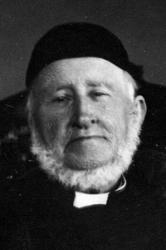
1826 - 1910 Topics: The Son of God Nativity Composer of "MARGARET" in Hymns for the Living Age Timothy Richard Matthews MusB United Kingdom 1826-1910. Born at Colmworth, England, son of the Colmworth rector, he attended the Bedford and Gonville Schools and Caius College, Cambridge. In 1853 he became a private tutor to the family of Rev Lord Wriothesley Russell, a canon of St. George’s Chapel, Windsor Castle, where he studied under organist, George Elvey, subsequently a lifelong friend. He married Margaret Mary Thompson, and they had 11 children: Norton, Mary, George, Cecil, Evelyn, Eleanor, Anne, Arthur, Wilfred, Stephen, and John. Matthews served as Curate and Curate-in-Charge of St Mary’s Church, Nottingham (1853-1869). While there, he founded the Nottingham Working Men’s Institute. He became Rector at North Coates, Lincolnshire (1869-1907). He retired in 1907 to live with his eldest son, Norton, at Tetney vicarage. He edited the “North Coates supplemental tune book” and “Village organist”. An author, arranger, and editor, he composed morning and evening services, chants, and responses, earning a reputation for simple but effective hymn tunes, writing 100+. On a request he wrote six tunes for a children’s hymnal in one day. He composed a Christmas carol and a few songs. His sons, Norton, and Arthur, were also known as hymn tune composers. He died at Tetney, Lincolnshire, England.
John Perry
Timothy R. Matthews
Harriet Auber
1773 - 1862 Topics: The Son of God Ascension and Reign Author of "Our blest Redeemer, ere he breathed" in Hymns for the Living Age Auber, Harriet, daughter of Mr. James Auber, b. in London, Oct. 4, 1773. During the greater part of her quiet and secluded life she resided at Broxbourne and Hoddesdon, Herts, and died at the latter place on the 20th Jan., 1862. Miss Auber wrote devotional and other poetry, but only a portion of the former was published in her Spirit of the Psalms, in 1829. This collection is mainly her work, and from it some useful versions of the Psalms have been taken and included in modern hymn-books, about 20 appearing in Spurgeon's Our Own Hymn Book, 1866. Miss Auber's name is widely known, but it is principally through her exquisite lyric, "Our blest Redeemer, ere He breathed," and the Epiphany hymn, "Bright was the guiding star that led." (For criticism of her work, see English Psalters, §. 17.)
In addition to these and other hymns by Miss Auber, which are annotated under their respective first lines, the following are also in C. V., but principally in America:—
1. Arise, ye people, and adore. Easter.
2. As Thy chosen people, Lord. Ps. lxciii.
3. Can guilty man indeed believe? Ps. xciv.
4. Delightful is the task to sing. Ps. cxlvii.
5. Father of Spirits, Nature's God. Ps. cxxxi.
6. Hail, gracious Source of every good. Ps. Ixv.
7. Hasten, Lord, the glorious time. Ps. lxxii.
8. Jehovah reigns, O earth, rejoice. Ps. xccii.
9. Join, all ye servants of the Lord. H. Scriptures.
10. Jesus, Lord, to Thee we sing. Ps. cx.
11. O all ye lands, rejoice in God. Ps. lxvi.
12. O God our Strength, to Thee the song. Ps. lIxxxi.
13. O praise our great and gracious Lord. Ps. lxxviii.
14. On thy church, O power divine. Ps. lxvii.
15. Sweet is the work, O Lord. Sunday.
16. That Thou, O Lord, art ever nigh. Ps. lxxv.
17. The Lord, Who hath redeemed our souls. Ps. xxxi.
18. When all bespeaks a Father's love. Ps. set.
19. When dangers press and fears invade. Ps. lxii.
20. Who, O Lord, when life is o'er. Ps. xv.
21. Whom have we Lord, in heaven, but Thee. Ps. lxxiii.
22. Wide, ye heavenly gates, unfold. Ascension.
23. With hearts in love abounding. Ps. xlv.
24. With joy we hail the sacred day. Sunday.
25. Vainly through the night the ranger. Ps. cxvii.
All these psalm-versions and hymns are from her Spirit of the Psalms, London, 1829.
- John Julian, Dictionary of Hymnology (1907)
=========================
Auber, Harriet, p. 90, ii. The following versions of psalms from her Spirit of the Psalms, 1829, are also in common use:-
1. Great God, wert Thou extreme to mark. Ps. cxxx. "Thy servants in the temple watched," begins with stanza ii. of this.
2. How blest are they who daily prove. Ps. xli.
3. How blest the children of the Lord. Altered from Ps. cxii.
4. Jehovah, great and awful name. Part of Ps. Ixxviii.
5. 0 Thou Whom heaven's bright host revere. Ps. Ixxxiv.
6. Praise the Lord, our mighty King. Ps. cxxxv.
7. Spirit of peace, Who as a [celestial] Dove. Ps. cxxxiii.
8. Thou by Whose strength the mountains stand. Ps. Ixv.
9. To heaven our longing eyes we raise. Ps. cxxi.
10. Vainly through night's weary hours. Ps. cxxvii. Sometimes "Vainly through the night the ranger."
11. While all the golden harps above. Easter.
--John Julian, Dictionary of Hymnology, Appendix, Part II (1907)
See also in:Hymn Writers of the Church
Harriet Auber
A. Cleveland Coxe
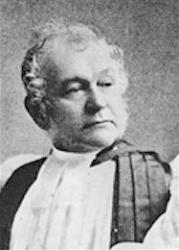
1818 - 1896 Topics: Christ Son of God Author of "O who like Thee so calm, so bright" in The Hymnal Coxe, Arthur Cleveland, D.D. LL.D. One of the most distinguished of American prelates, and son of an eminent Presbyterian minister, the Rev. Samuel H. Cox, D.D., was born at Mendham, New Jersey, May 10,1818. Graduating at the University of New York in 1838, and taking Holy Orders in 1841, he became Rector of St. John's, Hartford, Connecticut, in the following year. In 1851 he visited England, and on his return was elected Rector of Grace Church, Baltimore, 1854, and Calvary, New York, 1863. His consecration as Bishop of the Western Diocese of New York took place in 1865. His residence is at Buffalo. Bishop Coxe is the author of numerous works. His poetical works were mostly written in early life, and include Advent, 1837; Athanasion, &c, 1842; Christian Ballads, 1840 (Preface to the English edition, April, 1848); Hallowe'en and Other Poems, 1844; Saul, a Mystery, 1845, &c. Some of Bishop Coxe's hymns are found in the collections of every religious body in America, except the official collections of his own. This is accounted for by his too scrupulous modesty. As a member of the Hymnal Committee, in 1869-71, he refused to permit the insertion of his own lyrics. As he has not preserved memoranda, and has no precise recollection of dates, several dates here given are somewhat uncertain.
1. Behold an Israelite indeed. St. Bartholomew. First appeared in "Poems," published with his Christian Ballads, 1840, and found in an altered form in the People's H. and the Hymnary.
2. Body of Jesus, 0 sweet Food. Holy Communion. Written at St. James's College, Maryland (since broken up by the Civil War), Ascension Day, 1858. It was first printed for private use, and then published in the Cantate Domino, Boston, 1859, No. 53, and again in other American collections. It is also in Schaff’s Christ in Song, 1869, and in The Churchman's Altar Manual, 2nd ed., 1883.
3. Breath of the Lord, 0 Spirit blest.Whitsuntide. Bishop Coxe considers this more worthy of being called a hymn than anything else from his pen. It was written long before it appeared in the New York Independent, Whitsuntide, 1878. It is in the Schaff-Gilman Library of Religious Poetry, 1881, and Brooke's Churchman's Manual of Private and Family Devotion, 1883.
4. Christ is arisen. Easter. This is suggested by, and partly translated from, the famous Easter Chorus in Goethe's Faust, "Christ ist erstanden" (see Goethe), and appeared in Hallowe'en, 1844.
5. He who for Christ hath left behind. St. Matthew. From his Christian Ballads, &c, 1840.
6. In the silent midnight watches. Christ knocking. From his Athanasion, &c, 1842; an impressive moral poem rather than a hymn on Christ knocking at the door, extensively used in America, and sometimes in England. Original text, Schaff's Christ in Song, 1869.
7. Lord, when Thou didst come from heaven. A hymn for Epiphany, on behalf of Western Missions, appeared among the "Lays "appended to Hallowe'en, 1844, and again in later editions of the Christian Ballad. It is sometimes abbreviated, as in Lyra Sac. Amer., " Westward, Lord, the world alluring."
8. Now pray we for our country. National Hymn. A stanza from Chronicles, or meditations on events in the history of England, called up by visiting her abbeys and cathedrals, and appeared in Christian Ballads, 1840. Originally it began, "Now pray we for our mother," and, with the succeeding stanza, was a call upon Americans to pray for their mother country. It is adopted by Dr. Martineau in his Hys., 1873.
9. 0 walk with God, and thou shalt find. Holiness. Appeared in his Hallowe’en, &c, 1844, and is found in Lyra Sac. Amer.
10. 0 where are kings and empires now! Church of God. The 6th stanza of his ballad "Chelsea," which appeared in the Churchman, 1839, and again in his Christian Ballads, 1840.
11. Saviour, sprinkle many nations. Missions. “Begun on Good Friday, 1850, and completed 1851, in the grounds of Magdalen College, Oxford." 1st published. in Verses for 1851, in Commemoration of the third Jubilee of the Society for the Propagation of the Gospel, edited by the Rev. Ernest Hawkins, 1851. It was subsequently appended to the English edition of his Christian Ballads. It is regarded as Bishop Coxe's best piece, and to many minds it is the loveliest of missionary hymns. Its use in England is very extensive. It is not found in the American Episcopal hymnal for the reason given above.
12. Still as our day our strength shall be. Temptation. Appeared in his Hallowe'en, &c, 1844, and Lyra Sac. Amer.
13. Soldier, to the contest pressing. Christian Conflict. From his Hallowe'en, &c, 1844, and Lyra Sac. Amer. It was written in 1834.
14. There is a land like Eden fair. From Hallowe'en, &c, into a few collections.
15. We are living, we are dwelling. Christian Soldiers. An impressive moral poem rather than a hymn, but extensively used. It appeared in his Athanasion, &c, 1840, and Lyra &xc.
16. Who is this, with garments gory. Passiontide. From his “Lays" appended to Hallowe'en, 1844, and again in his Christian Ballads. It is found in the Child's Christian Year, 4th ed. N.D., the People's Hymns, and other collections. It is in 4 stanza of 8 1. The last stanza is sometimes given as a separate hymn:—"Hail, all hail, Thou Lord of Glory."
17. When o'er Judea's vales and hills. Written cir. 1840, and published in his Hallowe'en, &c, 1844, and again, with the author's final corrections, made in 1869, in Schaff's Christ in Song (1870 ed. p. 112). Also in the English edition of his Christian Ballads. From this "Hymn to the Redeemer," two shorter hymns have been com¬piled : (1) " How beauteous were the marks divine." This is in almost universal American and occasional English use. (2) "O who like Thee, so calm, so bright," in the Hymnary, 1872.
Bishop Coxe has also translated the Pange lingua gloriosi corporis (q. v.), and is the author of the beautiful Christmas Carol, "Carol, carol, Christians," given in his Christian Ballads, &c. [Rev. F. M. Bird]
-- John Julian, Dictionary of Hymnology (1907)
A. Cleveland Coxe
Carl Maria von Weber
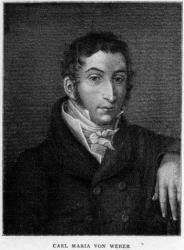
1786 - 1826 Person Name: C. M. von Weber Topics: Christ, the Son of God Titles, Life and Character Composer of "SEYMOUR" in The Evangelical Hymnal Carl Maria von Weber; b. 1786, Oldenburg; d. 1826, London
Evangelical Lutheran Hymnal, 1908
Carl Maria von Weber
Chester G. Allen
1838 - 1878 Topics: Son of God Composer of "JOYFUL SONG" in Great Songs of the Church (Revised) Chester Gilbert Allen (Feb. 15, 1838 – Oct. 18, 1878) was an American music educator, compiler, and hymn composer. He taught music in the Cleveland, Ohio, public schools and edited or co-edited Sunday-school songbooks that shaped the gospel repertoire of his day. Allen is best remembered for the tune Joyful Song, written for Fanny J. Crosby’s hymn Praise Him! Praise Him! Jesus, our blessed Redeemer and first published in Bright Jewels (1869). His lively, march-like melodies typify mid-nineteenth-century American gospel hymnody and remain in use today.
J. S. McDuff (from nineteenth-century American hymn collections and public-domain historical notices, retrieved 9/15/2025)
Chester G. Allen
Frederick Oakeley
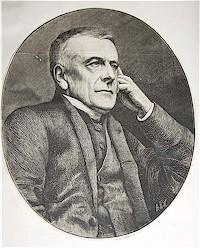
1802 - 1880 Topics: The Son of God Nativity Translator of "O come, all ye faithful, Joyful and triumphant" in Hymns for the Living Age Frederic Oakeley graduated M.A. at Oxford, and took Orders in the Church of England. He became Prebendary of Lichfield Cathedral, preacher at Whitehall, and incumbent of Margaret Chapel, London. He was active in the "Oxford Movement," and in 1845, called attention to his views for the purpose of seeing if he could continue to hold an Oxford degree, with so great a change in his opinions. The question was tried, and he was perpetually suspended unless he retracted. He then resigned his positions in the Church of England, and entered the Church of Rome, in which he became a Priest, and Canon of the diocese of Westminster. His publications are numerous, and some of them have considerable value.
--Annotations of the Hymnal, Charles Hutchins, M.A., 1872
=================
Oakeley, Frederick, D.D., youngest son of Sir Charles Oakeley, Bart., sometime Governor of Madras, was born at Shrewsbury, Sept. 5, 1802, and educated at Christ Church, Oxford (B.A. 1824). In 1825 he gained a University prize for a Latin Essay; and in 1827 he was elected a Fellow of Balliol. Taking Holy Orders, he was a Prebendary of Lichfield Cathedral, 1832; Preacher at Whitehall, 1837; and Minister of Margaret Chapel, Margaret Street, London, 1839. In 1845 he resigned all his appointments in the Church of England, and was received into the Roman Communion. Subsequently he became a Canon of the Pro-Cathedral in the Roman Catholic ecclesiastical district of Westminster. He died January 29, 1880. Miller (Singers and Songs of the Church, 1869, p. 497), writing from information supplied to him by Canon Oakeley, says:—
”He traces the beginning of his change of view to the lectures of Dr. Charles Lloyd, Regius Professor, delivered at Oxford about the year 1827, on the 'History and Structure of the Anglican Prayer Book.' About that time a great demand arose at Oxford for Missals and Breviaries, and Canon Oakeley, sympathising with the movement, co-operated with the London booksellers in meeting that demand.....He promoted the [Oxford] movement, and continued to move with it till, in 1845, he thought it right to draw attention to his views, to gee if he could continue to hold an Oxford degree in conjunction with so great a change in opinion. The question having been raised, proceedings were taken against him in the Court of Arches, and a sentence given that he was perpetually suspended unless he retracted. He then resigned his Prebendal stall at Lichfield, and went over to the Church of Rome."
Canon Oakeley's poetical works included:—
(1) Devotions Commemorative of the Most Adorable Passion of Our Lord and Saviour Jesus Christ, 1842; (2) The Catholic Florist; (3) The Youthful Martyrs of Rome, a Christian Drama, 1856; (4) Lyra Liturgica; Reflections in Verse for Holy Days and Seasons, 1865.
Canon Oakeley also published several prose works, including a translation of J. M. Horst's Paradise of the Christian Soul, London, Burns, 1850. He is widely known through his translation of the “Adeste fideles.” Several of his original hymns are also in Roman Catholic collections.
--John Julian, Dictionary of Hymnology (1907)
Frederick Oakeley
Louis Spohr
1784 - 1859 Person Name: Ludwig Spohr Topics: The Son of God Life and Ministry Composer of "SPOHR" in Hymns for the Living Age Also:
Spohr, Ludwig, 1784-1859
Shpor, Lui, 1784-1859
Spohr, L. (Louis), 1784-1859
Shpor, Ludvig, 1784-1859
Spohr, Ludewig, 1784-1859
Louis Spohr
Jack Boyd
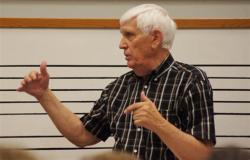
b. 1932 Topics: Son of God Arranger of "VENI EMMANUEL" in Great Songs of the Church (Revised) Jack Arthur Boyd (b. Indianapolis, Indiana, February 9, 1932) was the music editor of *Great Songs of the Church, Revised*, published by ACU Press in 1986. He earned a B.S. degree in music education from Abilene Christian University, a masters degree in music composition and theory from the University of North Texas, and a Ph.D. in choral literature from the University of Iowa. Boyd edited *Children, Rejoice!* (Sweet, 1979) and he authored *Rehearsal Guide for the Choral Director* (Parker, 1970) and *Leading the Lord's Singing* (Quality, 1981). He is a member of Churches of Christ and lives in Abilene, Texas.
Monty Lynn
Jack Boyd
Richard Storrs Willis
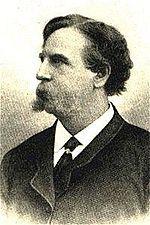
1819 - 1900 Person Name: Richard S. Willis Topics: The Son of God Nativity Composer of "CAROL" in Hymns for the Living Age Richard Storrs Willis (February 10, 1819 – May 10, 1900) was an American composer, notably of hymn music. One of his hymns is "It Came Upon the Midnight Clear" (1850), with lyrics by Edmund Sears. He was also a music critic and journal editor.
Willis, whose siblings included Nathaniel Parker Willis and Fanny Fern, was born on February 10, 1819, in Boston, Massachusetts. He attended Chauncey Hall, the Boston Latin School, and Yale College where he was a member of Skull and Bones in 1841.
Willis then went to Germany, where he studied six years under Xavier Schnyder and Moritz Hauptmann. While there, he became a personal friend of Felix Mendelssohn. After returning to America, Willis served as music critic for the New York Tribune, The Albion, and The Musical Times, for which he served as editor for a time. He joined the New-York American-Music Association, an organization which promoted the work native of naturalized American composers. He reviewed the organization's first concert for their second season, held December 30, 1856, in the Musical World, as a "creditable affair, all things considered".
Willis began his own journal, Once a Month: A Paper of Society, Belles-Lettres and Art, and published its first issue in January 1862.
Willis died on May 7, 1900. His interment was located at Woodlawn Cemetery.
His works and music compilations include:
Church Chorals and Choir Studies (1850)
Our Church Music (1856)
Waif of Song (1876)
Pen and Lute (1883)
--en.wikipedia.org
Richard Storrs Willis
Pages




