

 My Starred Hymns
 My FlexScores
 My Hymnals
 My Purchased Files
Planning worship?
Check out our sister site, ZeteoSearch.org,
for 20+ additional resources related to your search.
- |
User Links
Person Results
Henri F. Hemy
1818 - 1888 Person Name: Henri Fredrick Hemy Topics: Way of Salvation Faith and Justification; Advent, Third Sunday; Lent, Fourth Sunday; Trinity, Sixth Sunday; Names and Office of Christ Righteousness; Death Prayer for help in Composer of "ST. CATHERINE" in The Hymnal and Order of Service Henri F. Hemy, born in the United Kingdom. Hemy spent time at sea as a young man, emigrating to Australia in 1850 with his family. Unable to make a decent living in Melbourne, he returned to Newcastle England. He was organist at St. Andrews Roman Catholic Church in Newcastle, later teaching professor of music at Tynemouth and at St. Cuthbert's College in Durham. He was pianist to Lord Ravensworth, Music Director of Ushaw College, and his orchestra played at fashionable venues in the region. He sang baritone as well. He composed waltzes, polkas, quadrilles, and galops. 3 music works: Easy Hymn Tunes for Catholic Schools; Royal Modern Tutor for Pianoforte; Crown of Jesus. He was active in local politics and published a manifesto in the daily newspaper. He lost a ward election. He also painted artwork. He set most of Longfellow's works to music.
John Perry
Henri F. Hemy
James Quinn
1919 - 2010 Person Name: James Quinn, SJ (1919-2010) Topics: Advent; Christ the King (The Sunday next before Advent) Year C; Church Year Advent; God in grace and mercy; Jesus Names and images for; Light; The Third Sunday of Advent Year A Author of "O Child of promise, come!" in Ancient and Modern James Quinn (b. Glasgow, Scotland, April 21, 1919; d. Edinburgh, Scotland, April 8, 2010) was a Roman Catholic Jesuit priest who was ordained in 1950. As a consultant for the International Commission on English in the Liturgy, sparked by Vatican II, he has exerted influence far beyond his native Scotland. A collection of his hymn texts is available from Selah Publishing company.
Sing a New Creation
James Quinn
Johann G. C. Störl
1675 - 1719 Person Name: J. G. C. Störl Topics: The Church Year Third Sunday in Advent; The Church Year Third Sunday in Advent Composer of "[Lo, He comes with clouds descending]" in The Lutheran Hymnary Johann Georg Stoerl; b. 1675, Kirchberg; d. 1719, Stuttgart
Evangelical Lutheran Hymnal, 1908
Johann G. C. Störl
James Turle
1802 - 1882 Person Name: James Turle (1802-1882) Topics: Adoration; Devotion; Future hope; God in grace and mercy; God in majesty; Love for God; Penitence; The Third Sunday before Advent Year C; Wisdom Composer of "WESTMINSTER" in Ancient and Modern TURLE, JAMES (1802–1882), organist and composer, son of James Turle, an amateur 'cello-player, was born at Taunton, Somerset, on 5 March 1802. From July 1810 to December 1813 he was a chorister at Wells Cathedral under Dodd Perkins, the organist. At the age of eleven he came to London, and was articled to John Jeremiah Goss, but he was largely self-taught. He had an excellent voice and frequently sang in public. John Goss [q. v.], his master's nephew, was his fellow student, and thus the future organists of St. Paul's Cathedral and Westminster Abbey were pupils together. Turle was organist of Christ Church, Surrey (Blackfriars Road), 1819–1829, and of St. James's, Bermondsey, 1829–31. His connection with Westminster Abbey began in 1817, when he was only fifteen. He was at first pupil of and assistant to G. E. Williams, and subsequently deputy to Thomas Greatorex [q. v.], Williams's successor as organist of the abbey. On the death of Greatorex on 18 July 1831, Turle was appointed organist and master of the choristers, an office which he held for a period of fifty-one years. Turle played at several of the great musical festivals, e.g. Birmingham and Norwich, under Mendelssohn and Spohr, but all his interests were centred in Westminster Abbey. His playing at the Handel festival in 1834 attracted special attention. At his own request the dean and chapter relieved him of the active duties of his post on 26 Sept. 1875, when his service in D was sung, and Dr. (now Professor Sir John Frederick) Bridge, the present organist, became permanent deputy-organist. Turle continued to hold the titular appointment till his death, which took place at his house in the Cloisters on 28 June 1882. The dean offered a burial-place within the precincts of the abbey, but he was interred by his own express wish beside his wife in Norwood cemetery. A memorial window, in which are portraits of Turle and his wife, was placed in the north aisle of the abbey by one of his sons, and a memorial tablet has been affixed to the wall of the west cloister. Turle married, in 1823, Mary, daughter of Andrew Honey, of the exchequer office. She died in 1869, leaving nine children. Henry Frederic Turle [q. v.] was his fourth son. His younger brother Robert was for many years organist of Armagh Cathedral.
Turle was an able organist of the old school, which treated the organ as essentially a legato instrument. He favoured full ‘rolling’ chords, which had a remarkable effect on the vast reverberating space of the abbey. He had a large hand, and his ‘peculiar grip’ of the instrument was a noticeable feature of his playing. His accompaniments were largely traditional of all that was best in his distinguished predecessors, and he greatly excelled in his extemporaneous introductions to the anthems. Like Goss, he possessed great facility in reading from a ‘figured bass.’ Of the many choristers who passed through his hands, one of the most distinguished is Mr. Edward Lloyd, the eminent tenor singer.
His compositions include services, anthems, chants, and hymn-tunes. Several glees remain in manuscript. In conjunction with Professor Edward Taylor [q. v.] he edited ‘The People's Music Book’ (1844), and ‘Psalms and Hymns’ (S. P. C. K. 1862). His hymn-tunes were collected by his daughter, Miss S. A. Turle, and published in one volume (1885). One of these, ‘Westminster,’ formerly named ‘Birmingham,’ has become widely known, and is very characteristic of its composer.
--en.wikisource.org/
James Turle
Ludvig Mathias Lindeman
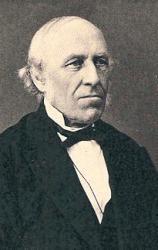
1812 - 1887 Person Name: Ludv. M. Lindeman Topics: The Church Year Third Sunday in Advent; The Church Year Third Sunday in Advent Composer of "[Jesus, Jesus, come to me]" in The Lutheran Hymnary Ludvig M. Lindeman (b. 1812; d. 1887) was a Norwegian composer and organist. Born in Trondheim, he studied theology in Oslo where he remained the rest of his life. In 1839 he succeeded his brother as the organist and cantor of Oslo Cathedral, a position he held for 48 years up until his death. Lindeman was appointed Knight of the Royal Norwegian Order of St. Olav, and was invited to both help christen the new organ in Royal Albert Hall in London, as well as compose for the coronation of King Oscar II and Queen Sophie of Sweden. In 1883, he and his son started the Organist School in Oslo. Lindeman is perhaps best known for his arrangements of Norwegiam folk tales; over the course of his life he collected over 3000 folk melodies and tunes.
Laura de Jong
Ludvig Mathias Lindeman
Graham Kendrick
b. 1950 Person Name: Graham Kendrick (b. 1950) Topics: Christingle; The Presentation of Christ in the Temple; Transfiguration; Children and All-Age Worship; God in glory; God in grace and mercy; Jesus Names and images for; Light; Nation and Society; Other Saints and Festivals The Presentation of Christ in the Temple (Candlemas); Other Saints and Festivals The Transfiguration; The Sunday next before Lent Years A, B & C; The Third Sunday of Advent Year B Author of "Shine, Jesus, shine" in Ancient and Modern Graham Kendrick (b. England, August 2, 1950), the son of a Baptist minister in Northamptonshire, is one of the most prolific Christian singer-songwriters in the United Kingdom. He’s written music for over thirty years, and to date has released thirty-eight albums. He is best known for his songs “Shine, Jesus, Shine,” “Knowing You,” and “The Servant King.” Kendrick has received honorary doctorates in divinity from Brunel University and Wycliffe College. In 1987 he helped co-found the March for Jesus, which today is a global phenomenon in which Christians take their faith to the streets in a celebration of Christ. In 1995 Kendrick received a Dove Award for his international work, and he remains an active advocate for Compassion International, which is a Christian child sponsorship organization dedicated to the long-term development of children living in poverty around the world, and also is a contributor to CompassionArt, an organization with the aim of generating income from works of art to assist in the relief of suffering around the planet.
Laura de Jong
Graham Kendrick
John Morison
1750 - 1798 Person Name: John Morrison (1750-1798) Topics: Adoration; Advent; Church Year Advent; Deliverance; God in judgement and justice; Jesus Names and images for; Kingdom of God; Light; The Third Sunday of Advent Year B; The Third Sunday of Advent Year C; The Third Sunday of Epiphany Year C Author of "The people that in darkness sat" in Ancient and Modern Morison, John, D.D., was born in Aberdeenshire in 1749. He studied at the University of Aberdeen (King's College), where he graduated M.A. in 1771. In 1780 he became parish minister of Canisbay, Caithness. He received the degree of D.D. from the University of Edinburgh in 1792. He died at Canisbay, June 12, 1798. He was one of the members added on May 26, 1781, to the Committee appointed by the General Assembly of 1775 to revise the Translations and Paraphrases of 1745. To him are ascribed Nos. 19, 21, 29, 30 and 35, in the 1781 collection, and he is said to have been joint author with John Logan of Nos. 27 and 28. [Rev. James Mearns, M.A.]
--John Julian, Dictionary of Hymnology (1907)
John Morison
Johann Heinrich Schröder
1667 - 1699 Person Name: Joh. Schrøder Topics: Third Sunday in Advent Author of "Jesus, giv Seier! Livs-Fyrste og Kilde!" in Salmebog for Lutherske Kristne i Amerika Schröder, Johann Heinrich, was born Oct. 4,1667, at Springe (Hallerspringe) near Hannover. He studied at the University of Leipzig, where he experienced the awakening effects of A. H. Francke's lectures. In 1696 he was appointed pastor at Meseberg, near Neuhaldensleben; and in the registers there records of himself (writing in the third person), " 1696, on the 17th Sunday after Trinity, viz. on Oct. 4, on which day he was born, with the beginning of his 30th year, he entered on the pastorate of this parish." He died at Meseberg, June 30, 1699 (Koch, iv., 381; Blatter für Hymnologie, 1883, p. 192, &c).
Schröder is best known by the four hymns which he contributed to the Geistreiches Gesang-Buch, Halle, 1697; and which are repeated in the Geistreiches Gesang-Buch, Darmstadt, 1698; and in Freylinghausen's Gesang-Buch, 1704. They are very good examples of the early hymns of the Pietists, being genuine and earnest outpourings of Love to Christ, not unmixed with Chiliastic hopes for the victory of Zion and the overthrow of Babylon. In the same books are two hymns by his wife (Tranquilla Sophia née Wolf), who died at Meseberg, April 29, 1697.
Two of Schröder's hymns have passed into English, viz.:—
i. Eins ist noth, aoh Herr, dies eine. Love to Christ. This is included in the Geistreiches Gesang-Buch, Halle, 1097, p. 505, in 10 stanzas of 8 lines, entitled, "One thing is needful. Luke x. 42. Jesus, Who of God is made unto us wisdom, and righteousness, and sanctification, and redemption. 1 Cor. i. 30."
Its popularity has been due, not only to its own beauty and power, but also to the taking character of the melody to which it is set. This is by J. Neander, in his Bundes Lieder, Bremen, 1680, as the melody of Grosser Prophete; and was altered in Freylinghausen to suit Schroder's hymn. The full form from Freylinghausen is in Mercer's The Church Psalter & Hymn Book, and there called Landsberg. The second part is given in the Bristol Tune Book as Ems. A greatly altered form, as Ratisbon, has passed through W. H. Havergal's Old Church Psalmody into the Irish Church Hymnal, the Scottish Presbyterian Hymnal and others.
The translation in common use from Schröder is:—
One thing's needful, then, Lord Jesus. This is a good and full tr., by Miss Cox, in her Sacred Hymns from the German, 1841, p. 137. Other translations are:—
(1) "One thing is needful! Let me deem." By Miss Winkworth, 1855, p. 183. (2) "One thing's needful:— this rich treasure." By Dr. H. Mills, 1856, p. 92.
ii. Jesu, hilf siegen, du Furste des Lebens. Christian Warfare…It is said to have been written, in 1696, as a companion to his wife's hymn, "Trautster Jesu, Ehrenkonig". It was accused of Chiliasm, by the Theological Faculty of Wittenberg, but still holds an honoured place in German collections. The translations are:—(1) "Jesus, help conquer ! Thou Prince everliving." By Dr. H. Mills, 1856, p. 126. (2) "Jesus, help conquer. Thou Prince of my being." By Miss Manington, 1863, p. 2.
The hymn beginning, "Jesus, help conquer! my spirit is sinking," by Miss Warner, in 6 stanzas, in her Hymns of the Church Militant, N. Y., 1858, p. 161, borrows little more than the first line from the German. It is repeated in Boardman's Selection, Philadelphia, 1861, No. 463. [Rev. James Mearns, M.A.]
--Excerpts from John Julian, Dictionary of Hymnology (1907)
Johann Heinrich Schröder
Sydney H. Nicholson

1875 - 1947 Person Name: Sydney Hugo Nicholson (1875-1947) Topics: Angels; Church year Passiontide; Church Year Good Friday; Courage; God in grace and mercy; God Love of; Palm Sunday Year B; Passiontide; Praise; Proper 9 Year C; The Fifth Sunday of Lent Year C; The Third Sunday before Advent Year B Composer of "BOW BRICKHILL" in Ancient and Modern Sydney H. Nicholson, (b. St. Marylebone, London, England, 1875; d. Ashford, Kent, England, 1947) was an organist and church music educator who greatly influenced English hymnody. Educated at Oxford's New College, the Royal College of Music in London, and in Frankfurt, Germany, he became organist at several famous cathedrals, including Westminster Abbey (1919-1928). Nicholson founded and administered the School of English Church Music at Chislehurst in 1927; this important institution, with branches throughout the English-speaking world, was renamed the Royal School of Church Music in 1945. Located in Canterbury after World War II, its headquarters were moved to Addington Palace, Croydon, in 1954. Nicholson was music adviser for the 1916 Supplement of Hymns Ancient and Modern and prepared the way for its 1950 edition. He wrote Church Music: a Practical Handbook (1920) and Quires and Places Where They Sing (1932) and composed operettas, anthems, and hymn tunes. In 1938 he was knighted for his contributions to church music.
Bert Polman
Sydney H. Nicholson
Benjamin Schmolck
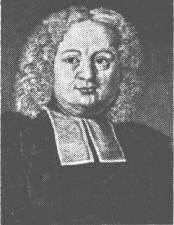
1672 - 1737 Person Name: Benjamin Schmolke Topics: The Catechism The Word; Second Sunday of Advent; Fourth Sunday after Easter; Ninth Sunday after Trinity; Twenty Second Sunday after Trinity; Sexagesima; Third Sunday in Lent; Twenty First Sunday after Trinity Author of "Precious Word from God in heaven" in Evangelical Lutheran hymnal Schmolck, Benjamin, son of Martin Schmolck, or Schmolcke, Lutheran pastor at Brauchitschdorf (now Chrόstnik) near Liegnitz in Silesia (now Poland) was born at Brauchitschdorf, Dec. 21, 1672. He entered the Gymnasium at Lauban in 1688, and spent five years there. After his return home he preached for his father a sermon which so struck the patron of the living that he made Benjamin an allowance for three years to enable him to study theology. He matriculated, at Michaelmas, 1693, at the University of Leipzig, where he came under the influence of J. Olearius, J. B. Carpzov, and others, and throughout his life retained the character of their teaching, viz. a warm and living practical Christianity, but Churchly in tone and not Pietistic. In the autumn of 1697, after completing his studies at Leipzig (during his last year there he supported himself mainly by the proceeds of occasional poems written for wealthy citizens, for which he was also, crowned as a poet), he returned to Brauchitzchdorf to help his father, and, in 1701, was ordained as his assistant.
On Feb. 12, 1702, he married Anna Rosina, daughter of Christoph Rehwald, merchant in Lauban and in the end of the same year was appointed diaconus of the Friedenskirche at Schweidnitz in Silesia. As the result of the Counter-Reformation in Silesia, the churches in the principality of Schweidnitz had been taken from the Lutherans, and for the whole district the Peace of Westphalia (1648) allowed only one church (and that only of timber and clay, without tower or bells), which the Lutherans had to build at Schweidnitz, outside the walls of the town; and the three clergy attached to this church had to minister to a population scattered over some thirty-six villages, and were moreover hampered by many restrictions, e.g. being unable to communicate a sick person without a permit from the local Roman Catholic priest. Here Schmolck remained till the close of his life, becoming in 1708 archidiaconus, in 1712 senior, and in 1714 pastor primarius and inspector. Probably as the result of his exhausting labours he had a stroke of paralysis on Laetare (Mid-Lent) Sunday, 1730, which for a time laid him aside altogether, and after which he never recovered the use of his right hand. For five years more he was still able to officiate, preaching for the last time on a Fastday in 1735. But two more strokes of paralysis followed, and then cataract came on, relieved for a time by a successful operation, but returning again incurably. For the last months of his life he was confined to bed, till the message of release came to him, on the anniversary of his wedding, Feb. 12, 1737. (Koch, v. 463; Bode, p. 144; Goedeke's Grundriss, vol. iii., 1887, p. 306; sketch prefixed to Ledderhose's edition of Schmolck's Geistliche Lieder, Halle, 1857, &c.)
Schmolck was well known in his own district as a popular and useful preacher, a diligent pastor, and a man of wonderful tact and discretion. It was however his devotional books, and the original hymns therein contained, that brought him into wider popularity, and carried his name and fame all over Germany. Long lists of his works and of the various editions through which many of them passed are given by Koch, Bode and Goedehe. It is rather difficult to trace the hymns, as they are copied from one book of his into another, &c. Schmolck was the most popular hymnwriter of his time, and was hailed as the "Silesian Rist," as the "second Gerhardt," &c. Nor was he altogether unworthy of such praise. It is true that he did not possess the soaring genius of Gerhardt. Nor had he even Gerhardt's concise, simple style, but instead was too fond of high-sounding expressions, of plays upon words, of far-fetched but often recurring contrasts, and in general of straining after effect, especially in the pieces written in his later years. In fact he wrote a great deal too much, and latterly without proper attention to concentration or to proportion. Besides Cantatas, occasional pieces for weddings, funerals, &c, he is the author of some 900 hymns, properly so called. These were written for all sorts of occasions, and range over the whole field of churchly, family, and individual life. Naturally they are not all alike good; and those in his first three collections are decidedly the best. A deep and genuine personal religion, and a fervent love to the Saviour, inspire his best hymns; and as they are not simply thought out but felt, they come from the heart to the heart. The best of them are also written in a clear, flowing, forcible, natural, popular style, and abound in sententious sayings, easily to be remembered. Even of these many are, however, more suited for family use than for public worship. Nevertheless they very soon came into extensive use, not only in Silesia, but all over Germany.
A number of Schmolck's hymns [that] have passed into English are:—
i. Der beste Freund ist in dem Himmel. Love of Jesus. First published in his Heilige Flammen (ed. 1709, p. 100), in 6 stanzas of 6 lines, entitled "The best Friend." The translation in common use is:—
A faithful friend is waiting yonder. This is a good translation, omitting stanza v., as No. 293, in Kennedy, 1863.
ii. Die Woche geht zum Ende. Saturday Evening. In his Andächtige Hertze, 1714, p. 116, in 10 stanzas of 8 lines, entitled "Evening Hymn," and appointed for Evening Prayer on Saturday. In the Berlin Geistliche Lieder, ed. 1863, No. 1158. Translated as:—
The week draws near its ending. This is a good translation of stanzas i., vi., vii., x., marked as by "A. G.," as No. 81 in the Dalston Hospital Hymn Book 1848.
Other trs. are: (1) “Though now the week is ending," by H. J. Buckoll, 1842, p. 107. (2) “The week at length is over," by Miss Manington, 1863, p. 137.
iii. Gott du hist selbst die Liehe. Holy Matrimony. Translated as:—
O God, "Who all providest. This is a good translation, omitting stanza iii., by J. M. Sloan, as No. 312 in J. H. Wilson's Service of Praise, 1865.
iv. Halleluja! Jesus lebt. Easter. In his Bochim und Elim, 1731, p. 67, in 5 stanzas of 6 lines, entitled "Hallelujah! at the grave of Jesus." In the Berlin Geistliche Lieder, ed. 1863, No. 296. Tr. as:—
Hallelujah! Lo, He wakes. By E. Cronenwett, omitting st. iv., as No. 79 in the Ohio Lutheran Hymnal 1880.
Another translation is: "Hallelujah! Jesus lives! Life, immortal life, He gives." This is a full and good translation, by Miss Warner, 1858, p. 486, repeated in the Treasury of Sacred Song, Kirkwall, n.d.
v. Heute mir und Morgen dir. Funeral Hymn. In his Schmuck und Asche, 1717, p. 252, in 6 stanzas of 6 lines, entitled "Daily Dying". The tr. in common use is:—
Today mine, tomorrow thine. This is a good and full translation, by Miss Warner, in her Hymns of the Church Militant, 1858, p. 260.
vi. Je grösser Kreuz, je näher Himmel. Cross and Consolation. In his Andächtige Hertz, 1714, p. 273, in 9 stanzas of 6 lines, entitled "Hymn of Cross and Consolation." By its sententiousness and its manifold illustrations of the power of the Cross it has been a favourite with many. Translated as:—
1. Greater the Cross, the nearer heaven.
2. The more the cross, the nearer heaven. Another translation is: "The heavier the cross, the nearer heaven," by J. D. Burns, in the Family Treasury, 1859, p. 160.
vii. Jesus soil die Losung sein. New Year. The translation in common use is:—
Jesus shall the watchword he. Another translation is: "Jesu's name shall be our watchword," by J. Kelly, in the Family Treasury, 1868, p. 689.
viii. Licht vom Licht, erleuchte mich. Sunday Morning. Translated as:—
Light of Light, enlighten me. This is a very good tr. omitting stanza vii., by Miss Winkworth, in her Lyra Germanica, 2nd Ser., 1858, p. 66, and thence in her Chorale Book for England, 1863, No. 17. Other translations are: (1) "Light of Light! illumine me," by H. J. Buckoll, 1842, p. 6. (2) "O thou blessed Light of Light," by Miss Dunn, 1857, p. 74.
ix. Meinen Jesum lass ich nicht, Ach was wollt ich hessres haben. Love to Christ. Translated as:—
I'll with Jesus never part. This is a translation of st. i., ii., iv., as stanzas iii.-v. of No. 378 in the Moravian Hymn Book, 1789. In the ed. of 1886, No. 452 (see p. 614, i.), the part from Schmolck begins, "He is mine and I am His" (the translation of stanza ii.).
Another tr. is: "I'll not leave Jesus—-never, never," by Miss Warner, 1858, p. 509.
x. Mein Gott, ich weiss wohl dass ich sterbe. For the Dying. Translated as:—
My God! I know that I must die, My mortal. Other trs. are: (1) "That I shall die full well 1 know," by Dr. H. Mills, 1845 (1856, p. 232). (2) "My God! I know full well that I must die," by Miss Warner, 1858, p. 344. (3) "My God, I know that I must die; I know," by G. Moultrie, in his Espousals of S. Dorothea, 1870.
xi. Mein Jesus lebt! was soil ich sterben. Easter. Translated as:—
My Saviour lives; I shall not perish.
xii. 0 wie fröhlich, o wie selig. Eternal Life. Translated as:—
Oh how joyous, oh how blessed. Another tr. is: "Oh, how blest beyond our telling."
xiii. Schmückt das Fest mit Maien. Whitsuntide. Translated as:—
Come, deck our feast today.
xiv. Thut mir auf die schöne Pforte. Sunday. Translated as:—
1. Open now thy gates of beauty. This is a good tr., omitting stanza iii., vii., by Miss Winkworth, in her Chorale Book for England, 1863, No. 15.
2. Open wide the gates of beauty. This is a translation of stanzas i., ii., iv., vi.-vii., by H. L. Hastings, dated 1885, as No. 1076, in his Songs of Pilgrimage, 1886.
Another tr. is: "Throw the glorious gates wide open," by Miss Manington, 1863, p. 146.
xv. Weine nicht, Gott lebet noch. Cross and Consolation. Tr. as:— "Weep not,-—Jesus lives on high. Another tr. is: "Weep not, for God, our God, doth live," by Dr. R. Maguire, 1883, p. 59.
xvi. Willkommen, Held im Streite. Easter. The translation in common use is:—
Welcome Thou victor in the strife. This is a good translation omitting st. ii.—iv., by Miss Winkworth, in her Lyra Germanica, 1st Ser., 1855, p. 91.
Hymns not in English common use:--
xvii. Ach wenn ich dich, mein Gott, nur habe. Love to God. Founded on Ps. lxxiii. 25, 26. Translated as "My God, if I possess but Thee," by G. Moultrie, in his Espousals of S. Dorothea, 1870.
xviii. An Gott will ich gedenken. Remembering God's Love and Care. In his Heilige Flammen (ed. 1707, p. 59; ed. 1709, p. 131), in 6 stanzas of 8 lines, and Burg's Gesang-Buch, Breslau, 1746, No. 112. Translated as "My God will I remember," by J. Kelly, in the Family Treasury, 1868.
xix. Der Sabbath ist vergangen. Sunday Evening. Tr. as "The Sabbath now is over," by Dr. H. Mills, 1856, p. 226.
xx. Du angenehmer Tag. Sunday. In his Lustige Sabbath, 1712, p. 1, in 8 stanzas of 6 lines. Tr. as “Thou ever welcome day," by J. Kelly, in the Family Treasury, 1868, p. 688.
xxi. Endlich, endlich, muss es doch. Cross and Consolation. Translated as "Yes, at last, our God shall make," in the Christian Examiner, Boston, U.S., Sept., 1860, p. 251.
xxii. Gedenke mein, mein Gott, gedenke mein. For the Dying. Translated as "Remember me, my God! remember me," by Miss Borthwick, in Hymns from the Land of Luther 1854, p. 9.
xxiii. Geh, müder Leib, zu deiner Euh. Evening. Translated as "Go, wearied body, to thy rest," by J. Kelly, in the Family Treasury, 1868. In his Lustige Sabbath, 1712, p. 35, in 10 stanzas of 6 lines, and Burg’s Gesang-Buch, Breslau, 1746, No. 403. Translated as "King, to Jews and Gentiles given," by Dr. H. Mills, 1845.
xxiv. Gott der Juden,Gott der Heiden. Epiphany. Translated as “King, to Jews and Gentiles given,” by Dr. H. Mills, 1845.
xxv. Gott lebt, wie kann ich traurig sein. Trust in God. Translated as "God lives! Can I despair," by Miss Warner, 1869, p. 44.
xxvi. Gott mit uns, Immanuel. New Year. Translated as "God with us! Immanuel, Open with the year before us," by Dr. R. P. Dunn, in Sacred Lyrics from the German, Philadelphia, U.S., 1859, p. 166.
xxvii. Hier ist Immanuel! New Year. Translated as "Here is Immanuel!" by Miss Manington, 1864, p. 24.
xxviii. Hilf, Heifer, hilf! ich muss verzagen. Cross and Consolation. Translated as "Help, Saviour, help, I sink, I die,” in the Monthly Packet, vol. xviii., 1859, p. 664.
xix. Ich habe Lust zu scheiden. For the Dying. Tr. as "Weary, waiting to depart," by Mrs. Findlater, in Hymns from the Land of Luther, 1855, p 130.
xxx. Ich sterbe täglich, und mein Leben. For the Dying. Translated as "Both life and death are kept by Thee" (st. iv.), by J. Kelly, in the Family Treasury, 1868, p. 689.
xxxi. Mein Gott, du hast mich eingeladen. Sunday. Translated as "My God, Thou hast the invite given," by Miss Manington, 1863, p. 150.
xxxii. Mein Gott! du wohnst in einem Lichte. Holy Scripture. Translated as "In glory bright, O God, Thou dwellest," by Dr. H. Mills, 1845.
xxxiii. Mein Gott, ich klopf an deine Pforte. Supplication. Tr.Translated as "given as "Mein Gott, mein Erstes und mein Alles." Translated as "My God! the Source of all my blessing," in the British Herald, August, 1866, p. 312; repeated in Reid's Praise Book, 1872.
xxxv. Mein Gott, weil ich in meinem Leben. The ChristiaWho, Lord, has any good whatever," by Dr. H. Mills, 1845, p. 91.
xxxiv. Mein Gott, mein Alles Uber Alles. Trust in God. Sometimes n Life. Translated as "Most High! with reverence to fear Thee," by Dr. H. Mills, 1845, p. 114.).
xxxvi. Nun hab ich überwunden; Zu guter Nacht, o Welt. For the Dying. Translated as "Now soon I shall have conquer'd," by Miss Manington, 1863, p. 87.
xxxvii. Seht welch ein Mensch ist das. Passiontide. The translations are (1) "See, what a man is this! How tearful is His glance," by J. Kelly, in the British Messenger, Feb., 1S68; repeated in the Family Treasury, 1868, p. 691. (2) "See what a man is this, O glances," by Miss Warner, 1869, p. 32.
xxxviii. Sei getreu bis in den Tod. Christian Faithfulness. Translated as "Be thou faithful unto death! Let not troubles nor distresses," by R. Massie, in the Day of Rest, 1878, vol. ix. p. 219.
xxxix. Theures Wort aus Gottes Munde. Holy Scripture. Translated as "Word by God the Father spoken," by Miss Manington, 1863.
xl. Was Gott thut das ist wohlgethan! Er giebt und nimmt auch wieder. On the Death of a Child. The trs. are (1) "What God does is well done, "Who takes what He gave," by W. Graham, in his The Jordan and the Rhine, London, 1854, p. 251. (2) "Whatever God doth is well done, He gives, &c," by J. Kelly, in the Family Treasury, 1868, p. 688.
xli. Wer will mich von der Liebe scheiden. Faith. Translated as "Who can my soul from Jesus sever," by Miss Manington, 1863, p. 39. [Rev. James Mearns, M.A.]
--Excerpts from John Julian, Dictionary of Hymnology (1907)
Benjamin Schmolck
Pages




