You help make Hymnary.org possible. More than 10 million people from 200+ countries found hymns, liturgical resources and encouragement on Hymnary.org in 2025, including you. Every visit affirms the global impact of this ministry.

If Hymnary has been meaningful to you this year, would you take a moment today to help sustain it? A gift of any size—paired with a note of encouragement if you wish—directly supports the server costs, research work and curation that keep this resource freely available to the world.

Give securely online today, or mail a check to:
Hymnary.org
Calvin University
3201 Burton Street SE
Grand Rapids, MI 49546

Thank you for your partnership, and may the hope of Advent fill your heart.

Person Results

Topics:tuesday+before+easter
In:people

Planning worship? Check out our sister site, ZeteoSearch.org, for 20+ additional resources related to your search.
Showing 31 - 40 of 45Results Per Page: 102050

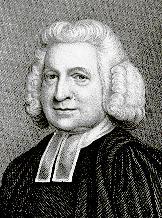
Charles Wesley

1707 - 1788 Topics: Jesus Christ Praise and Thanksgiving; Adoration and Praise; Adoration and Praise; Closing Hymns; God Kingdom, Majesty, Realm; Gratitude; Jesus Christ Adoration and Praise; Jesus Christ Lamb of God; Jesus Christ Master; Jesus Christ name; Jesus Christ Praise; Jesus Christ Reign; Jesus Christ Saviour; Reverence/Wonder Before God; Salvation; Service; Service Music Sending Forth/Commissioning; Testimony; Epiphany 2 Year A; Easter 4 Year A; Trinity Sunday Year A; Proper 6 Year A; Proper 9 Year A; All Saints Year A; Epiphany 3 Year B; Proper 20 Year B; Proper 24 Year B; Easter 4 Year C; Proper 13 Year C; Proper 20 Year C; Proper 22 Year C; Reign of Christ Year C; Tuesday in Holy Week Year ABC Author of "You Servants of God" in Voices United Charles Wesley, M.A. was the great hymn-writer of the Wesley family, perhaps, taking quantity and quality into consideration, the great hymn-writer of all ages. Charles Wesley was the youngest son and 18th child of Samuel and Susanna Wesley, and was born at Epworth Rectory, Dec. 18, 1707. In 1716 he went to Westminster School, being provided with a home and board by his elder brother Samuel, then usher at the school, until 1721, when he was elected King's Scholar, and as such received his board and education free. In 1726 Charles Wesley was elected to a Westminster studentship at Christ Church, Oxford, where he took his degree in 1729, and became a college tutor. In the early part of the same year his religious impressions were much deepened, and he became one of the first band of "Oxford Methodists." In 1735 he went with his brother John to Georgia, as secretary to General Oglethorpe, having before he set out received Deacon's and Priest's Orders on two successive Sundays. His stay in Georgia was very short; he returned to England in 1736, and in 1737 came under the influence of Count Zinzendorf and the Moravians, especially of that remarkable man who had so large a share in moulding John Wesley's career, Peter Bonier, and also of a Mr. Bray, a brazier in Little Britain. On Whitsunday, 1737, [sic. 1738] he "found rest to his soul," and in 1738 he became curate to his friend, Mr. Stonehouse, Vicar of Islington, but the opposition of the churchwardens was so great that the Vicar consented that he "should preach in his church no more." Henceforth his work was identified with that of his brother John, and he became an indefatigable itinerant and field preacher. On April 8, 1749, he married Miss Sarah Gwynne. His marriage, unlike that of his brother John, was a most happy one; his wife was accustomed to accompany him on his evangelistic journeys, which were as frequent as ever until the year 1756," when he ceased to itinerate, and mainly devoted himself to the care of the Societies in London and Bristol. Bristol was his headquarters until 1771, when he removed with his family to London, and, besides attending to the Societies, devoted himself much, as he had done in his youth, to the spiritual care of prisoners in Newgate. He had long been troubled about the relations of Methodism to the Church of England, and strongly disapproved of his brother John's "ordinations." Wesley-like, he expressed his disapproval in the most outspoken fashion, but, as in the case of Samuel at an earlier period, the differences between the brothers never led to a breach of friendship. He died in London, March 29, 1788, and was buried in Marylebone churchyard. His brother John was deeply grieved because he would not consent to be interred in the burial-ground of the City Road Chapel, where he had prepared a grave for himself, but Charles said, "I have lived, and I die, in the Communion of the Church of England, and I will be buried in the yard of my parish church." Eight clergymen of the Church of England bore his pall. He had a large family, four of whom survived him; three sons, who all became distinguished in the musical world, and one daughter, who inherited some of her father's poetical genius. The widow and orphans were treated with the greatest kindness and generosity by John Wesley. As a hymn-writer Charles Wesley was unique. He is said to have written no less than 6500 hymns, and though, of course, in so vast a number some are of unequal merit, it is perfectly marvellous how many there are which rise to the highest degree of excellence. His feelings on every occasion of importance, whether private or public, found their best expression in a hymn. His own conversion, his own marriage, the earthquake panic, the rumours of an invasion from France, the defeat of Prince Charles Edward at Culloden, the Gordon riots, every Festival of the Christian Church, every doctrine of the Christian Faith, striking scenes in Scripture history, striking scenes which came within his own view, the deaths of friends as they passed away, one by one, before him, all furnished occasions for the exercise of his divine gift. Nor must we forget his hymns for little children, a branch of sacred poetry in which the mantle of Dr. Watts seems to have fallen upon him. It would be simply impossible within our space to enumerate even those of the hymns which have become really classical. The saying that a really good hymn is as rare an appearance as that of a comet is falsified by the work of Charles Wesley; for hymns, which are really good in every respect, flowed from his pen in quick succession, and death alone stopped the course of the perennial stream. It has been the common practice, however for a hundred years or more to ascribe all translations from the German to John Wesley, as he only of the two brothers knew that language; and to assign to Charles Wesley all the original hymns except such as are traceable to John Wesley through his Journals and other works. The list of 482 original hymns by John and Charles Wesley listed in this Dictionary of Hymnology have formed an important part of Methodist hymnody and show the enormous influence of the Wesleys on the English hymnody of the nineteenth century. -- Excerpts from John Julian, Dictionary of Hymnology (1907) ================== Charles Wesley, the son of Samuel Wesley, was born at Epworth, Dec. 18, 1707. He was educated at Westminster School and afterwards at Christ Church, Oxford, where he graduated M.A. In 1735, he took Orders and immediately proceeded with his brother John to Georgia, both being employed as missionaries of the S.P.G. He returned to England in 1736. For many years he engaged with his brother in preaching the Gospel. He died March 29, 1788. To Charles Wesley has been justly assigned the appellation of the "Bard of Methodism." His prominence in hymn writing may be judged from the fact that in the "Wesleyan Hymn Book," 623 of the 770 hymns were written by him; and he published more than thirty poetical works, written either by himself alone, or in conjunction with his brother. The number of his separate hymns is at least five thousand. --Annotations of the Hymnal, Charles Hutchins, M.A., 1872.

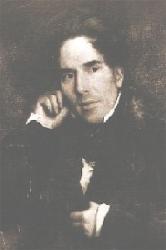
William Gardiner

1770 - 1853 Topics: Jesus Christ Praise and Thanksgiving; Adoration and Praise; Adoration and Praise; Closing Hymns; God Kingdom, Majesty, Realm; Gratitude; Jesus Christ Adoration and Praise; Jesus Christ Lamb of God; Jesus Christ Master; Jesus Christ name; Jesus Christ Praise; Jesus Christ Reign; Jesus Christ Saviour; Reverence/Wonder Before God; Salvation; Service; Service Music Sending Forth/Commissioning; Testimony; Epiphany 2 Year A; Easter 4 Year A; Trinity Sunday Year A; Proper 6 Year A; Proper 9 Year A; All Saints Year A; Epiphany 3 Year B; Proper 20 Year B; Proper 24 Year B; Easter 4 Year C; Proper 13 Year C; Proper 20 Year C; Proper 22 Year C; Reign of Christ Year C; Tuesday in Holy Week Year ABC Composer of "LYONS" in Voices United William Gardiner (b. Leicester, England, 1770; d. Leicester, 1853) The son of an English hosiery manufacturer, Gardiner took up his father's trade in addition to writing about music, composing, and editing. Having met Joseph Haydn and Ludwig van Beethoven on his business travels, Gardiner then proceeded to help popularize their compositions, especially Beethoven's, in England. He recorded his memories of various musicians in Music and Friends (3 volumes, 1838-1853). In the first two volumes of Sacred Melodies (1812, 1815), Gardiner turned melodies from composers such as Haydn, Mozart, and Beethoven into hymn tunes in an attempt to rejuvenate the singing of psalms. His work became an important model for American editors like Lowell Mason (see Mason's Boston Handel and Haydn Collection, 1822), and later hymnbook editors often turned to Gardiner as a source of tunes derived from classical music. Bert Polman

William Tans'ur

1699 - 1783 Topics: Tuesday before Easter Gospel Composer of "BANGOR" in Magnify the Lord William Tansur, b. about 1700, Dunchurch of Barnes; d. 1783, St. Neots Evangelical Lutheran Hymnal, 1908 Also known as Tansur; Tanzer; le Tansur

Friedrich von Spee

1591 - 1635 Person Name: Friedrich von Spee (1591-1635) Topics: Tuesday before Easter Gospel Author (stanza 1) of "O sorrow deep! Who would not weep" in Magnify the Lord Spee, Friedrich von, son of Peter Spee (of the family of Spee, of Langenfeld), judge at Kaisers worth, was born at Kaisersworth, Feb. 25, 1591. He was educated in the Jesuit gymnasium at Cologne, entered the order of the Jesuits there on Sept. 22, 1610, and was ordained priest about 1621. From 1613 to 1624 he was one of the tutors in the Jesuit college at Cologne, and was then sent to Paderborn to assist in the Counter Reformation. In 1627 he was summoned by the Bishop of Würzburg to act as confessor to persons accused of witchcraft, and, within two years, had to accompany to the stake some 200 persons, of all ranks and ages, in whose innocence he himself firmly believed (His Cautio criminalis, sen de processibus contra sagas lib, Rinteln, 1631, was the means of almost putting a stop to such cruelties). He was then sent to further the Counter Reformation at Peine near Hildesheim, but on April 29, 1629, he was nearly murdered by some persons from Hildesheim. In 1631 he became professor of Moral Theology at Cologne. The last years of his life were spent at Trier, where, after the city had been stormed by the Spanish troops on May 6, 1635, he contracted a fever from some of the hospital patients to whom he was ministering, and died there Aug. 7, 1635. (Koch, iv. 185; Goedeke's Grundriss, vol. iii., 1887, p. 193,

Andrew Dittman

Topics: Tuesday before Easter Gospel Arranger of "WERE YOU THERE" in Magnify the Lord

Leland B. Sateren

1913 - 2007 Topics: Tuesday before Easter Gospel Composer of "MARLEE" in Magnify the Lord From the obituary in the Star Tribune, Nov. 11-13, 2007:Sateren, Leland B. 94, Edina, died Saturday, Nov. 10, 2007. Sateren, a renowned composer and conductor, served as chairman of the Augsburg College Department of Music from 1950 to 1973, and as director of the Augsburg Choir from 1950 until his retirement in 1979. Survived by devoted wife, Pauline; sons, Terry, Mark (Judi), Roald (Shelley); daughter, Kirsten Bergherr (Jon); and grandchildren, Stacy Lindholm (Pete), Anne Sateren Burow (Matt), Ben Bergherr, Sara Bergherr, Erik Sateren, and Anders Sateren. Sateren is also survived by sisters, Margaret Trautwein, Norma (Ray) Anderson, Sylvia (Dean) Elness; and brother, Donald Sateren. The family would like to thank the staff at Redeemer Residence in Minneapolis for their concern and care. Memorial service at 11 am Saturday, Nov. 17 at the Augsburg College Foss Chapel. Visitation will be from 9:30-10:30 am. Memorials preferred to the Leland B. Sateren Choral Scholarship Fund at Augsburg. From Inside Augsburg:The campus community mourns the death of one of Augsburg’s music giants, composer and conductor Leland Sateren ‘35, who died on Saturday, Nov. 10, at the age of 94. His work includes more than 400 choral pieces he composed, which are sung in churches around the county. Sateren was passionate about Scandinavian choral music and introduced the work of many Scandinavian composers to American choral directors. Sateren graduated from Augsburg in 1935, and for the next 10 years, he attended graduate school at the University of Minnesota, was music director at the university’s KUOM radio station, and served in public service during World War II. In 1946, he returned to Augsburg; 4 years later, he became chair of the Music Department and director of the Augsburg Choir, which he led until his retirement in 1979. He is recognized for the excellence he brought to the Augsburg Choir and Augsburg’s choral arts program. During his long tenure, the choir developed a more contemporary sound and expanded its reach beyond churches into the community, and beyond the Midwest into Europe and international locations. Among Sateren’s many notable accomplishments are premieres of works with the Minnesota Symphony Orchestra and a commissioned piece at the United Nations to commemorate the 20th anniversary of the Universal Declaration of Human Rights. Sateren was the first recipient of the F. Melius Christiansen Memorial Award for choral directors. In 2002 he was awarded the Weston Noble Choral Directors Award. He was also honored with the St. Olaf Medal, presented by King Olav V of Norway, and received two honorary doctorates. Sateren’s impact on the many hundreds of Augsburg students who sang in his choir was remarkable. Peter Hendrickson ’76, director of choral activities and current conductor of the Augsburg Choir, studied with Sateren. A number of other choir alumni who studied under Sateren currently sing in the Masterworks Chorale at Augsburg, also directed by Hendrickson. Sateren’s first wife, Eldora, died in 1968. He is survived by his second wife, Pauline. He is also survived by four siblings, all of whom attended Augsburg — Margaret Trautwein ’37, Norma Anderson ’46, Sylvia Elness ’48, and Donald. Sateren’s four children also all graduated from Augsburg — Terry ’68, Mark ’69, Kirsten Bergherr ’78, and Roald ’80.

Anonymous

Person Name: Unknown Topics: Pentecost; The Pilgrim Community; Year A Lent 5; Year A Proper 10; Year B Easter 2; Year C Fourth Sunday Before Advent; Years A, B, and C Tuesday of Holy Week Composer of "[The Spirit lives to set us free]" in Complete Anglican Hymns Old and New In some hymnals, the editors noted that a hymn's author is unknown to them, and so this artificial "person" entry is used to reflect that fact. Obviously, the hymns attributed to "Author Unknown" "Unknown" or "Anonymous" could have been written by many people over a span of many centuries.

Francis Bland Tucker

Person Name: F. Bland Tucker Topics: Tuesday before Easter Gospel Translator of "Alone thou goest forth, O Lord, In sacrifice to die" in Magnify the Lord See Tucker, Bland

William Johnson

b. 1906 Topics: Tuesday before Easter Gospel Author of "Deep were his wounds, and red" in Magnify the Lord William Johnson was born in 1906 on a farm near Center City, Minnesota. He published two collections of poetry: Wild Flowers (1948) and Bill’s Poems (1969). --The Presbyterian Hymnal Companion, 1993

R. Gerald Hobbs

b. 1941 Topics: Jesus Christ Praise and Thanksgiving; Adoration and Praise; Adoration and Praise; Closing Hymns; God Kingdom, Majesty, Realm; Gratitude; Jesus Christ Adoration and Praise; Jesus Christ Lamb of God; Jesus Christ Master; Jesus Christ name; Jesus Christ Praise; Jesus Christ Reign; Jesus Christ Saviour; Reverence/Wonder Before God; Salvation; Service; Service Music Sending Forth/Commissioning; Testimony; Epiphany 2 Year A; Easter 4 Year A; Trinity Sunday Year A; Proper 6 Year A; Proper 9 Year A; All Saints Year A; Epiphany 3 Year B; Proper 20 Year B; Proper 24 Year B; Easter 4 Year C; Proper 13 Year C; Proper 20 Year C; Proper 22 Year C; Reign of Christ Year C; Tuesday in Holy Week Year ABC Alterer of "You Servants of God" in Voices United

Pages


Export as CSV
It looks like you are using an ad-blocker. Ad revenue helps keep us running. Please consider white-listing Hymnary.org or getting Hymnary Pro to eliminate ads entirely and help support Hymnary.org.