

 My Starred Hymns
 My FlexScores
 My Hymnals
 My Purchased Files
Planning worship?
Check out our sister site, ZeteoSearch.org,
for 20+ additional resources related to your search.
- |
User Links
Person Results
John Goss
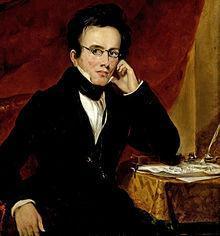
1800 - 1880 Person Name: John Goss, 1800-1880 Topics: God Images (Father) Composer of "PRAISE, MY SOUL" in The Book of Praise John Goss (b. Fareham, Hampshire, England, 1800; d. London, England, 1880). As a boy Goss was a chorister at the Chapel Royal and later sang in the opera chorus of the Covent Garden Theater. He was a professor of music at the Royal Academy of Music (1827-1874) and organist of St. Paul Cathedral, London (1838-1872); in both positions he exerted significant influence on the reform of British cathedral music. Goss published Parochial Psalmody (1826) and Chants, Ancient and Modern (1841); he edited William Mercer's Church Psalter and Hymn Book (1854). With James Turle he published a two-volume collection of anthems and Anglican service music (1854).
Bert Polman
John Goss
Erik Routley
1917 - 1982 Person Name: Erik Routley, 1917-1982 Topics: God Images (Father) Harmonizer of "SLANE" in The Book of Praise
Erik Routley
Johann Jakob Schütz
1640 - 1690 Person Name: Johann J. Schutz Topics: Worship & Praise God Our Father Author of "Sing Praise To God Who Reigns" in Rejoice Schütz, Johann Jakob, was born Sept. 7, 1640, at Frankfurt am Main. After studying at Tübingen (where he became a licentiate in civil and canon law), he began to practise as an advocate in Frankfurt, and in later years with the title of Rath. He seems to have been a man of considerable legal learning as well as of deep piety. He was an intimate friend of P. J. Spener; and it was, in great measure, at his suggestion, that Spener began his famous Collegia Pietatis. After Spener left Frankfurt, in 1686, Schütz came under the influence of J. W. Petersen; and carrying out Petersen's prin¬ciples to their logical conclusion, he became a Separatist, and ceased to attend the Lutheran services or to communicate. He died at Frankfurt, May 22, 1690 (Koch, iv. 220; Blätter fur Hymnologie, Feb. 1883).
Schütz is known as an author by two tractates; one being his Christliche Lebensregeln, Frankfurt, 1677; the other, that which contains his hymns, Christliches Gedenckbüchlein, zu Beforderung eines anfangenden neuen Lebens, &c, Frankfurt am Main, 1675 [Library of the Predigerministerium at Frankfurt]. This work includes 5 hymns, in a separate section, which is headed, “Hierauf folgen etliche Gesänge." These hymns are:—
i. Die Wollust dieser Welt.
ii. Was inich auf dieser Welt betrübt.
iii. So komm, geliebte Todes-Stund.
iv. Scheuet ihr, ihr matten Glieder.
v. Sei Lob und Ehr dem höchsten Gut.
Of these No. v. is undoubtedly by Schütz, and the other four exhibit much the same style of thought as, and frequent parallels to, the prose portions of the work. None of these have been traced earlier than 1675; and until this has been done, it is pretty safe to ascribe them all to Schütz.
Three of these hymns have passed into English, viz.:—
i. Sei Lob und Ehr dem höchsten Gut. Praise and Thanksgiving. First published in 1675, as above, No. v. It is founded on Deut. xxxii. 3; entitled, "Hymn of Thanksgiving ;" and is in 9 stanzas of 6 lines, and the refrain, "Gebt unserm Gott die Ehre”.
Koch, iv. 220, speaks of this hymn as "outweighing many hundred others; and a classical hymn, which, from its first appearance, attracted unusual attention." And Lauxmann, in Koch, viii. 334-339, relates how delighted J. J. Moser was, when, on entering church the first Sunday after his captivity at Hohentwiel, he heard this hymn, and how heartily he joined in it; how it comforted the dying G. C. Rieger, of Stuttgart, on Tuesday, in Easter Week, 1743, and many other incidents.
Translations in common use:—
1. All Glory to the Sov'reign Good. This is a full and good translation by J. OJacobi, in his Psalter Germanica, 2nd ed., 1732, p. 151, where it is entitled, "The Malabarian Hymn."
2. All glory be to God most high. A good translation by A. T. Russell, of st. i., iv., viii., for the Dalston Hospital Hymn Book, 1848, No. 59.
3. All praise and thanks to God most high. This is a good tr., omitting st. ix., by Miss Winkworth, in her Lyra Germanica, 2nd Ser., 1858, p. 146.
4. Sing praise to God Who reigns above. A good tr., omitting st. ix., contributed by Miss Cox to Lyra Eucharistica, 1864, p. 33, and included in her Hymns from the German, 1864, p. 235.
5. To God a joyful anthem raise. A good tr. of st. i., ii., iv., v., viii., by J. M. Sloan, as No. 314, in J. H. Wilson's Service of Praise, 1865.
The following are also translated into English:—
ii. So komm, geliebte Todes-Stund. For the Dying. First published in 1675, as above, No. iii., in 11 st. of 8 1., entitled, "The thoughts on Death of a Royal Princess, after the usual interpretation of Job xix. 25." This Princess was Sophie Elisabethe. daughter of Duke Philipp Ludwig, of Holstein-Sonderburg (b. at Homburg vor der Hohe, May 4, 1653; married, in 1676. to Duke Moritz, of Sachse-Zeitz; d. at Schleusingen, Aug. 19, 1684), who had been a regular attender at Spener's conferences at Frankfurt, and thus associated with Schütz. This hymn has often been ascribed to her; and she had already chosen Job xix. 25, as the text of her funeral sermon. But it is more probable that both hymns were written by Schütz for her use, or in her honour. The trs. are :—(1) "Come, happy hour of death, and close." By Dr. G. Walker, 1860, p. 56. (2) "O come, delightful hour of death." By Dr. G. Walker, 1860, p. 106.
iii. Was mich auf dieser Welt betriibt. Earthly Vanities. This hymn, on Renunciation of the World, first appeared in 1675, as above, No. ii., in 4 st. of 10 1., and entitled "From the World to God." It has sometimes been erroneously ascribed to Michael Franck. It is tr. as "The woes that weigh my body down." By Miss Manington, 1863, p. 32. [Rev. James Mearns, M.A.]
--Excerpts from John Julian, Dictionary of Hymnology (1907)
Johann Jakob Schütz
Mary E. Byrne
1880 - 1931 Person Name: Mary Byrne, 1880-1931 Topics: God Images (Father) Translator of "Be thou my vision" in The Book of Praise Mary Elizabeth Byrne, M.A. (July 2, 1880 – January 19, 1931) was born in Ireland.
She translated the Old Irish Hymn, "Bí Thusa 'mo Shúile," into English as "Be Thou My Vision" in Ériu (the journal of the School of Irish Learning), in 1905.
See also in:
Wikipedia
Mary E. Byrne
W. A. Ogden
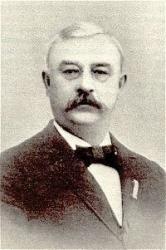
1841 - 1897 Person Name: W. A. O. Topics: God Father Author of "He Is Able to Deliver Thee" in The Popular Hymnal William Augustine Ogden USA 1841-1897. Born at Franklin County, OH, his family moved to IN when he was age six. He studied music in local singing schools at age 8, and by age 10 could read church music fairly well. Later, he could write out a melody by hearing it sung or played. He enlisted in the American Civil War in the 30th IN Volunteer Infantry. During the war he organized a male choir which became well known throughout the Army of the Cumberland. After the war, he returned home, resumed music study, and taught school. He married Jennie V Headington, and they had two children: Lowell and Marian. He worked for the Iowa Normal School, Toledo Public School System. Among his teachers: Lowell Mason, Thomas Hastings, E E Baily and B F Baker, president of the Boston Music School. He wrote many hymns, both lyrics and/or music. He later issued his first song book, “The silver song” (1870). It became quite popular, selling 500,000 copies. He went on to publish other song books. Ogden also taught music at many schools in the U S and Canada. In 1887 he became superintendent of music in the public schools of Toledo, OH. His works include: “New silver songs for Sunday school” (1872), “Crown of life” (1875), “Notes of victory” (1885), “The way of life” (1886), “Gathering jewels” (1886). He was known as a very enthusiastic person in his work and a very congenial one as well. He died at Toledo, OH.
John Perry
W. A. Ogden
Ralph Vaughan Williams
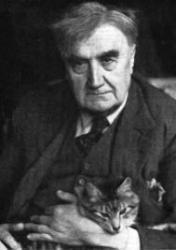
1872 - 1958 Topics: God Our Father : His Adoration and Praise; God Our Father : His Works in Creation Arranger of "LASST UNS ERFREUEN" in The Hymnal for Worship and Celebration Through his composing, conducting, collecting, editing, and teaching, Ralph Vaughan Williams (b. Down Ampney, Gloucestershire, England, October 12, 1872; d. Westminster, London, England, August 26, 1958) became the chief figure in the realm of English music and church music in the first half of the twentieth century. His education included instruction at the Royal College of Music in London and Trinity College, Cambridge, as well as additional studies in Berlin and Paris. During World War I he served in the army medical corps in France. Vaughan Williams taught music at the Royal College of Music (1920-1940), conducted the Bach Choir in London (1920-1927), and directed the Leith Hill Music Festival in Dorking (1905-1953). A major influence in his life was the English folk song. A knowledgeable collector of folk songs, he was also a member of the Folksong Society and a supporter of the English Folk Dance Society. Vaughan Williams wrote various articles and books, including National Music (1935), and composed numerous arrangements of folk songs; many of his compositions show the impact of folk rhythms and melodic modes. His original compositions cover nearly all musical genres, from orchestral symphonies and concertos to choral works, from songs to operas, and from chamber music to music for films. Vaughan Williams's church music includes anthems; choral-orchestral works, such as Magnificat (1932), Dona Nobis Pacem (1936), and Hodie (1953); and hymn tune settings for organ. But most important to the history of hymnody, he was music editor of the most influential British hymnal at the beginning of the twentieth century, The English Hymnal (1906), and coeditor (with Martin Shaw) of Songs of Praise (1925, 1931) and the Oxford Book of Carols (1928).
Bert Polman
Ralph Vaughan Williams
David Evans
1874 - 1948 Person Name: David Evans, 1874-1948 Topics: God Father Arranger of "BUNESSAN" in Community of Christ Sings David Evans (b. Resolven, Glamorganshire, Wales, 1874; d. Rosllannerchrugog, Denbighshire, Wales, 1948) was an important leader in Welsh church music. Educated at Arnold College, Swansea, and at University College, Cardiff, he received a doctorate in music from Oxford University. His longest professional post was as professor of music at University College in Cardiff (1903-1939), where he organized a large music department. He was also a well-known and respected judge at Welsh hymn-singing festivals and a composer of many orchestral and choral works, anthems, service music, and hymn tunes.
Bert Polman
David Evans
Anonymous
Person Name: anonymous Topics: God As Father Author of "Come, Thou Almighty King" in Lift Up Your Hearts In some hymnals, the editors noted that a hymn's author is unknown to them, and so this artificial "person" entry is used to reflect that fact. Obviously, the hymns attributed to "Author Unknown" "Unknown" or "Anonymous" could have been written by many people over a span of many centuries.
Anonymous
William Croft
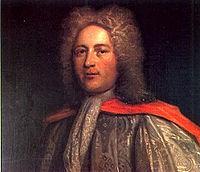
1678 - 1727 Person Name: William Croft, 1678-1727 Topics: God our Father Composer (Attributed to) of "ST. ANNE" in Great Hymns of the Faith William Croft, Mus. Doc. was born in the year 1677 and received his musical education in the Chapel Royal, under Dr. Blow. In 1700 he was admitted a Gentleman Extraordinary of the Chapel Boyd; and in 1707, upon the decease of Jeremiah Clarke, he was appointed joint organist with his mentor, Dr. Blow. In 1709 he was elected organist of Westminster Abbey. This amiable man and excellent musician died in 1727, in the fiftieth year of his age. A very large number of Dr. Croft's compositions remain still in manuscript.
Cathedral chants of the XVI, XVII & XVIII centuries, ed. by Edward F. Rimbault, London: D. Almaine & Co., 1844
William Croft
John Bowring
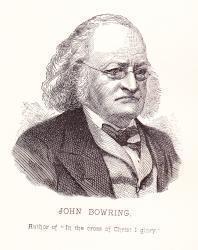
1792 - 1872 Person Name: Sir John Bowring Topics: God our Father Author of "God is love; His mercy brightens" in The New Baptist Praise Book James Bowring was born at Exeter, in 1792. He possessed at an early age a remarkable power of attaining languages, and acquired some reputation by his metrical translations of foreign poems. He became editor of "The Westminster Review" in 1825, and was elected to Parliament in 1835. In 1849, he was appointed Consul at Canton, and in 1854, was made Governor of Hong Kong, and received the honour of knighthood. He is the author of some important works on politics and travel, and is the recipient of several testimonials from foreign governments and societies. His poems and hymns have also added to his reputation. His "Matins and Vespers" have passed through many editions. In religion he is a Unitarian.
--Annotations of the Hymnal, Charles Hutchins, M.A., 1872
=======================================
Bowring, Sir John, LL.D., a distinguished man of letters, was born at Exeter, Oct. 17, 1792. His studies extended to philology, poetry, politics, and other branches of learning, whilst as editor of the Westminster Review for some years (he received the appointment in 1825) he did considerable work as a reviewer. He held several official appointments under the Government as Commissioner to France on commercial matters (1831-5); British Consul at Hong Kong (1849); and Governor of Hong Kong (1854). He was twice Member of Parliament, and was knighted in 1854. He died Nov. 23rd, 1872. His published works are very numerous, and display an astonishing acquaintance with various languages. Those specially bearing on poetry include:—
(1) Russian Anthology, with Biographical and Critical notices of the Poets of Russia, 1821; (2) Specimens of the Russian Poets, 1823; (3) Ancient Poetry and Romance of Spain, 1824; (4) Batavian Anthology, or Specimens of Dutch Poets, 1824; (5) Servian Popular Poetry, 1821; (6) Specimens of Polish Poets, 1827; (1) Poetry of the Magyars, 1830; (8) History of the Poetical Literature of Bohemia, 1832, &c.
In addition to these works, which are mainly translations, Sir John Bowring wrote original verse. This was published interspersed with a few translations, as follows:—
(1) Matins and Vespers with Hymns and Occasional Devotional Pieces, Lond., 1823; 2nd edition, enlarged, 1824; 3rd edition, again enlarged, 1841; and the 4th, still further enlarged, in 1851. (2) Hymns: as a Sequel to the Matins, 1825. In addition he contributed to a few Unitarian hymnals, especially that of the Rev. J. R. Beard of Manchester, 1837. In that Collection many of the hymns added to the 3rd edition of Matins, &c, 1841, were first published A selection from these, together with a biographical sketch, was published by Lady Bowring in 1873, as a Memorial Volume of Sacred Poetry. This work contains hymns from the Matins and Vespers, together with others from Periodicals, and from his manuscripts.
Of his hymns a very large percentage have come into common use. A few have been adopted by almost all denominations, as, "God is love, His mercy brightens;" "How sweetly flow'd the gospel sound;" "In the Cross of Christ I glory;" "Watchman, tell us of the night;"; and others, but the greater portion are confined to the Unitarian collections of Great Britain and America, of which denomination he was a member. In addition to the more important, which are annotated under their first lines, there are also the following in common use:—-
1. Clay to clay, and dust to dust. Burial. From his Hymns, 1825, into the Hymn & Tune Book, Boston, U.S., 1868, &c.
2. Come the rich, and come the poor. Divine Worship. Contributed to Beard's Collection, 1837, No. 290, and repeated in Bowring's Matins, &c., 3rd edition, 1841. It is in a few American collections.
3. Drop the limpid waters now. Holy Baptism. From Matins and Vespers, 3rd edition, 1841, into Kennedy, 1863.
4. Earth's transitory things decay. The Memory of the Just. From his Hymns, 1825, into Beard, 1837; the American Plymouth Collection, 1855; and the Songs for the Sanctuary, N.Y., 1865, &c.
5. Father, glorify Thy name. The Father glorified. Also from Hymns, 1825, into Beard, 1837; the Hymns of the Spirit, Boston, U.S., 1864, &c.
6. Father and Friend, Thy light, Thy love. Omnipresence. From Matins and Vespers, 2nd edition, 1824, into several collections, and sometimes in an abbreviated form.
7. Father of Spirits, humbly bent before Thee. Also in Hymns, 1825, and Dr. Martineau's Hymns of Praise & Prayer, 1873. In Longfellow and Johnson's Hymns of the Spirit, Boston, U.S., 1864, it is given as, "Father of Spirits, gathered now before Thee."
8. From all evil, all temptation. Preservation implored. Contributed to Beard's Collection, 1837.
9. From the recesses of a lowly spirit. Prayer of trust. From Matins and Vespers, 1st edition, 1823, into several American collections.
10. Gather up, 0 earth, thy dead. Published in his Matins & Vespers, 3rd ed., 1841, in 3 stanzas of 8 lines and repeated, slightly altered, in Kennedy, 1863, No. 753.
11. Gently the shades of night descends Evening. A cento from his poem on "Sunday Evening," in the Matins, &c, 1st edition, 1823, p. 6. It is given in the Boston Hymns of the Spirit, 1864; the Boston Hymn & Tune Book, 1868, and other collections.
12. How dark, how desolate. Hope. 1st published in his Matins, &c, 1823, p. 246. In Dr. Martineau's Hymns of Praise & Prayer, 1873, it is No. 515.
13. How shall we praise Thee, Lord of Light! Evening. A cento from the same poem as No. 7 above. It is given in the Hymns of the Spirit, 1864, and other American collections.
14. Lead us with Thy gentle sway. Divine Guidance desired. Hymns, 1825, into Hymns of the Spirit, 1864, and others.
15. Lord, in heaven, Thy dwelling-place. Praise. Contributed to Beard's Collection, 1837, No. 70, repeated in the author's Matins, &c, 3rd edition 1841, p. 235, and given in a few American collections. In the Hymns of the Spirit, 1864, it is altered to "Lord of every time and place."
16. 0 let my [thy] trembling soul be still. Resignation. From the 1st edition of the Matins, &c, 1823, p. 251, in 3 stanzas of 6 lines, into Beard's Collection, 1837; the Hymns of the Spirit, 1864, and others. It is sometimes given as, "0 let thy," &c.
17. 0, sweet it is to feel and know. Monday Morning. A poem in 16 stanzas of 4 lines, given in his Matins, &c, 1823, p. 60. In 1837 stanzas i.-iii. were given in Beard's Collection as No. 448, and entitled "God near in sorrow." In the 3rd edition of the Matins, &c, 1841, this cento was repeated (p. 245), with the same title, notwithstanding the full poem was in the same book.
18. On the dust I'm doomed to sleep. Resurrection. Appeared in his Matins, &c, 1st edition, 1823, p. 252, in 2 stanzas of 8 lines. In the 2nd edition, 1824, p. 232, it was altered to "In the dust," &c. This was repeated in 1841. In some hymnals it reads:—
19. The heavenly spheres to Thee, 0 God. Evening. This "Hymn to the Deity" appeared in the 2nd edition of his Matins, &c, 1824, pp. 235-6, in 4 stanzas of 4 double lines. It is also in the 3rd edition, 1841; the Boston Hymns of the Spirit, 1864 and other American collections.
20. When before Thy throne we kneel. Divine Worship. From his Hymns, 1825, into Beard's Collection, 1837, No. 93; the Boston Hymn & Tune Book, 1868, No. 21, and others.
21. Where is thy sting, 0 death! Death. Also from the Hymns, 1825, into the same collections as No. 20 above.
It will be noted that Beard's Collection, 1837, is frequently named above. The full title of that hymnal is—
A Collection of Hymns for Public and Private Worship. Compiled by John R. Board, Lond., John Green, 1837.
The Rev. John Relly Beard was an Unitarian Minister in Manchester, and the collection is dedicated "To the Manchester Meeting of Ministers." It contained a large number of original hymns. Bowring contributed 82, of which 33 were published therein for the first time. Some of his hymns are of great merit, and most of them are characterised by great earnestness and deep devotion.
-- John Julian, Dictionary of Hymnology (1907)
==================
Bowring, Sir John, p. 166, i. In the article on Bowring the hymns numbered therein as 4 and 20 are stated to have appeared in his Hymns, 1825, but in error. The earliest date to which we can positively trace them is Beard's Collection, 1837. From the Hymns, 1825, we find, however, that the following are in modern hymnals:—
1. Our God is nigh. Divine Presence.
2. 'Tis not the gift; but 'tis the spirit. Outward and Inward Virtue.
3. When the storms of sorrow gather. God our Guide.
From the various editions of his Matins and Vespers additional hymns arc also in modern use:—
4. If all our hopes and all our fears. Heaven Anticipated. (1823.)
5. In Thy courts let peace be found. Public Worship. (1841.)
6. The offerings to Thy throne which rise. Heart Worship. (1824.)
7. Who shall roll away the stone? Easter. In Beard's Collection, 1837, and Matins & Vespers, 1841.
--John Julian, Dictionary of Hymnology, Appendix, Part II (1907)
John Bowring
Pages




