You help make Hymnary.org possible. More than 10 million people from 200+ countries found hymns, liturgical resources and encouragement on Hymnary.org in 2025, including you. Every visit affirms the global impact of this ministry.

If Hymnary has been meaningful to you this year, would you take a moment today to help sustain it? A gift of any size—paired with a note of encouragement if you wish—directly supports the server costs, research work and curation that keep this resource freely available to the world.

Give securely online today, or mail a check to:
Hymnary.org
Calvin University
3201 Burton Street SE
Grand Rapids, MI 49546

Thank you for your partnership, and may the hope of Advent fill your heart.

Person Results

Topics:pentecost+7
In:people

Planning worship? Check out our sister site, ZeteoSearch.org, for 20+ additional resources related to your search.
Showing 31 - 40 of 165Results Per Page: 102050

Wade Robinson

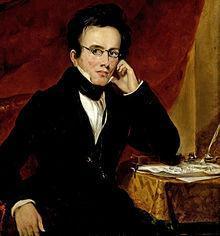
1838 - 1876 Person Name: G. W. Robinson (1838-1877) Topics: Pentecost 7 The More Excellent Way Author of "Loved with everlasting love" in Hymns for Today's Church (2nd ed.) George Wade Robinson, born at Cork in 1838, Robinson, George, contributed five hymns to J. Leifchild's Original Hymns, 1842, from which "One sole baptismal sign" (Unity), and educated at Trinity College, Dublin, and New College, St. John's Wood, London. He entered the Congregational Ministry, and was co-pastor at York Street Chapel, Dublin, with Dr. Urwick; then pastor at St. John's Wood, at Dudley, and at Union Street, Brighton. He d. at Southhampton, Jan. 28, 1877. He published two vols. of poems, (1) Songs in God's World; (2) Loveland. His hymn, "Strangers and pilgrims here below" (Jesus Only), from his Songs in God's World, is in Horder's Congregational Hymns, 1884, in an abridged form; and "Weary with my load of sin" (Contrition), is in the 1874 Supplement "When to the New Congregational Hymn Book -- exiled seer were given" (New Jerusalem), are taken with alterations. --John Julian, Dictionary of Hymnology, John Julian, 1907. Hymnology, Appendix, Part II (1907)

Henry Collins

1827 - 1919 Person Name: H. Collins (1827-1919) Topics: Pentecost 7 The More Excellent Way Author of "Jesus, my Lord, whom I adore" in Hymns for Today's Church (2nd ed.) Collins, Henry, M.A., educated at Oxford, where he graduated about 1854. He was ordained to the Ministry of the Church of England, but in Nov., 1857, he entered the Roman communion, becoming a member of the Cistercian Order in 1860. Author of Life of the Rev. Father Gentili, &c, 1861; The Spirit and Mission of the Cistercian Order , &c. His hymns were published by him before leaving the Church of England, in his Hymns for Missions , 1854, first published at Leeds, and then by Shrimpton of Oxford, and Masters of London. It contains 37 hymns, of which two only were by him:—"Jesu, meek and lowly" (Passiontide), and "Jesu, my Lord, my God, my all." (Love of Jesus desired) These hymns are in extensive use. --John Julian, Dictionary of Hymnology (1907)

Franklin L. Sheppard

1852 - 1930 Topics: God Creation and Providence; Assurance; Children Praising; Confidence; Creation; Ecology; God Creator; God Presence; God Providence; God Sovereignty; Jesus Christ Kingship, Conqueror; Joy; Kingdom of God; Music and Singing; Nature; Revelation; Trust; Warfare (Spiritual); Wonder; Epiphany 7 Year A; Easter 7 Year A; Pentecost Year A; Trinity Sunday Year A; Proper 7 Year A; Pentecost Year B; Proper 10 Year B; Proper 24 Year B; Proper 25 Year B Adapter of "TERRA BEATA" in Voices United Franklin L. Sheppard (b. Philadelphia, PA, 1852; d. Germantown, PA, 1930) arranged the tune for Babcock's text and published it in the Presbyterian church school hymnal Alleluia (1915), edited by Sheppard (Babcock and Sheppard were friends). After graduating from the University of Pennsylvania, Philadelphia, Sheppard entered the family foundry business in Baltimore, Maryland, in 1875. He was organist at Zion Episcopal Church and later was an elder and music director of the Second Presbyterian Church in Baltimore. President of the Presbyterian Board of Publications, Sheppard also served on the committee that prepared the Presbyterian Hymnal of 1911. In the history of hymnody he is remembered primarily for arranging the tune TERRA BEATA for “This Is My Father's World.” Bert Polman

M. P. Ferguson

1850 - 1932 Person Name: Manie Payne Ferguson, b. 1850 Topics: Healing; Holy Spirit Comforter; Jesus Christ Presence of; Pentecost Hymns of the Spirit; Year A Pentecost; Year B Pentecost; Year B Proper 7; Year C Pentecost Author of "Joys Are Flowing like a River (Blessed Quietness)" in The New Century Hymnal Manie Payne Ferguson United Kingdom 1850-1932. Born in Carlow, Ireland, in 1883 she married Theodore Pollock Ferguson, a past Presbyterian minister from Ohio, who had become an itinerant evangelical preacher. They moved to Los Angeles, CA, in 1885. He became a pioneer leader in the American Holiness Movement, a Christian evangelist, and social worker, founding, along with her husband, the non-denominational Peniel Mission in 1886. In 1894 they received a significant financial donation from George Studd allowing them to expand the mission. They constructed a 900-seat auditorium and ministry centre there in Los Angeles. They partnered with Studd and Phineas Bresee, each acting as a superintendent of the mission organization. In 1894 Dr. Joseph Widney, President of USC, led the dedication Praise service, and Bresee preached the later service. Widney and Bresee separated from the mission in 1895 to form the Church of the Nazarene, and Manie Fergusion provided primary leadership of the Peniel Mission. The mission provided ministry especially for single women, who lived in rented rooms near the auditorium, where evangelical services were held. The Fergusions managed to live on income from three small houses they owned, and mission rents and donations covered mission expenses. Street-corner meetings were held in the afternoon, evangelical services at night, and a meal was served afterward. Converts were asked to join a local church of their choice. Manie continued the mission work after her husband's death until her own death. In 1947 the mission became part of the World Gospel Mission enterprise. Manie wrote many poems and also authored hymn lyrics. She died in Los Angeles. John Perry

William Penfro Rowlands

1860 - 1937 Person Name: W. P. Rowlands (1860-1937) Topics: Pentecost 7 The More Excellent Way Composer of "BLAENWERN" in Hymns for Today's Church (2nd ed.)

N. F. S. Grundtvig

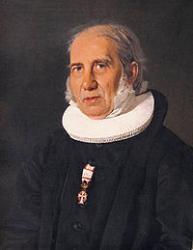
1783 - 1872 Person Name: Nikolai F. S. Grundtvig, 1783-1887 Topics: Pentecost 7 (Year A) Author of "Peace, to Soothe Our Bitter Woes" in Lutheran Book of Worship Nicolai Frederik Severin Grundtvig was the son of a pastor, and was born at Udby, in Seeland, in 1783. He studied in the University of Copenhagen from 1800-1805; and, like some other eminent men, did not greatly distinguish himself; his mind was too active and his imagination too versatile to bear the restraint of the academic course. After leaving the university he took to teaching; first in Langeland, then (1808) in Copenhagen. Here he devoted his attention to poetry, literature, and Northern antiquities. In 1810 he became assistant to his father in a parish in Jutland. The sermon he preached at his ordination, on the subject "Why has the Lord's word disappeared from His house," attracted much attention, which is rarely the case with "probationers'" sermons. On his father's death, in 1813, he returned to Copenhagen, and for eight years devoted himself mainly to literature. The poetry, both secular and religious, that he produced, drew from a friend the remark that "Kingo's harp had been strung afresh." In 1821 King Frederik vi. appointed him pastor of Prasloe, a parish in Seeland, from which he was the next year removed to Copenhagen, and made chaplain of St. Saviour's church in Christianshavn. From the time of his ordination he had been deeply impressed with Evangelical church sentiments, in opposition to the fashionable Rationalism and Erastianism of the day; and adhered to the anti-rationalist teaching of Hauge, whose death at this time (1824) seemed to be a call to Grundtvig to lift up his voice. An opportunity soon presented itself; Professor Clausen brought out a book entitled Katholicismens og Protestantismens Forfatning, Ldre, og Ritus ("The condition, teaching, and ritual of Catholicism and Protestantism"). This book was replete with the Erastian Rationalism which was so especially distasteful to Grundtvig, who forthwith, in his Kirkens Gjenmsele ("The Church's Reply," 1825), strongly opposed its teaching, and laid down truer principles of Christian belief, and sounder views of the nature of the Church. This caused a sensation: Grandtvig (who had not spared his opponent) was fined 100 rixdollars, and the songs and hymns which he had written for the coming celebration of the tenth centenary of Northern Christianity were forbidden to be used. On this he resigned his post at St. Saviour's, or rather was forced to quit it by a sentence of suspension which was pronounced in 1826, and under which he was kept for 13 years. He took the opportunity of visiting England in 1829, 30, and 31, and consulting its libraries, mainly with a view to a further insight into Northern antiquities, and to help his studies in the early English tongue. His edition of Cynewulfs beautiful poem of the Phenix from the Codex Exoniensis, the Anglo-Saxon (so-called) text, with a preface in Danish, and a fri Fordanskning (free rendering in Danish), published in 1840*, is a result of this journey and enforced leisure. Tired of his long silence, his numerous friends and admirers proposed to erect a church for him, and form themselves into an independent congregation, but this was not permitted. He was allowed, however, to hold an afternoon service in the German church at Christianshavn. There ho preached for eight years, and compiled and wrote his hymn-book, Sang-Vdrk til den Danske Kirkce ("Song-work for the Danish Church"). He still worked on towards his object of raising the Christian body to which ho belonged from the condition of a mere slate establishment to the dignity of a gospel-teaching national church. In 1839 (the year of the death of King Frederik vr., and the accession of his cousin Chrisliem vni.) the suspension was removed, and he was appointed chaplain of the hospital Vartou, a position which he held till his death. In 1863 the king (Frederik vn.) conferred on him the honorary title of bishop. The good old man died suddenly, in his 89th year, on Sept. 2, 1872, having officiated the day before. As Kingo is the poet of Easter, and Brorson of Christmas, so Grundtvig is spoken of as the poet of Whitsuntide. --John Julian, Dictionary of Hymnology,, p. 1001 (1907)

Edward Cooper

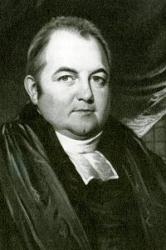
1770 - 1833 Person Name: E. Cooper (1770-1833) Topics: Pentecost 7 The More Excellent Way Author of "Father of heaven, whose love profound" in Hymns for Today's Church (2nd ed.) Edward Cooper, B.A. of Queen's College, and sometime Fellow of All Souls' College, Oxford, was Rector of Hamstall-Ridware from 1799 to 1833, and of Yoxall, Staffordshire, from 1809 to 1833. He published several volumes of Sermons, and edited a small Collection of Hymns. b. 1770, d. 1833. --John Julian, Dictionary of Hymnology

Johann Crüger

1598 - 1662 Topics: Holy Spirit Praise and Invocation; Christian Year Pentecost; God House, Home; Holy Spirit; Holy Spirit Illumination; Holy Spirit Presence; Holy Spirit Work; Light; Petition; Prayer; Sacrifice; Lent 5 Year A; Pentecost Year A; Epiphany 2 Year B; Epiphany 7 Year B; Pentecost Year B; Proper 15 Year B; Proper 21 Year B; Pentecost Year C Composer of "GRÄFENBURG" in Voices United Johann Crüger (b. Grossbriesen, near Guben, Prussia, Germany, 1598; d. Berlin, Germany, 1662) Crüger attended the Jesuit College at Olmutz and the Poets' School in Regensburg, and later studied theology at the University of Wittenberg. He moved to Berlin in 1615, where he published music for the rest of his life. In 1622 he became the Lutheran cantor at the St. Nicholas Church and a teacher for the Gray Cloister. He wrote music instruction manuals, the best known of which is Synopsis musica (1630), and tirelessly promoted congregational singing. With his tunes he often included elaborate accom­paniment for various instruments. Crüger's hymn collection, Neues vollkomliches Gesangbuch (1640), was one of the first hymnals to include figured bass accompaniment (musical shorthand) with the chorale melody rather than full harmonization written out. It included eighteen of Crüger's tunes. His next publication, Praxis Pietatis Melica (1644), is considered one of the most important collections of German hymnody in the seventeenth century. It was reprinted forty-four times in the following hundred years. Another of his publications, Geistliche Kirchen Melodien (1649), is a collection arranged for four voices, two descanting instruments, and keyboard and bass accompaniment. Crüger also published a complete psalter, Psalmodia sacra (1657), which included the Lobwasser translation set to all the Genevan tunes. Bert Polman =============================== Crüger, Johann, was born April 9, 1598, at Gross-Breese, near Guben, Brandenburg. After passing through the schools at Guben, Sorau and Breslau, the Jesuit College at Olmütz, and the Poets' school at Regensburg, he made a tour in Austria, and, in 1615, settled at Berlin. There, save for a short residence at the University of Wittenberg, in 1620, he employed himself as a private tutor till 1622. In 1622 he was appointed Cantor of St. Nicholas's Church at Berlin, and also one of the masters of the Greyfriars Gymnasium. He died at Berlin Feb. 23, 1662. Crüger wrote no hymns, although in some American hymnals he appears as "Johann Krüger, 1610,” as the author of the supposed original of C. Wesley's "Hearts of stone relent, relent" (q.v.). He was one of the most distinguished musicians of his time. Of his hymn tunes, which are generally noble and simple in style, some 20 are still in use, the best known probably being that to "Nun danket alle Gott" (q.v.), which is set to No. 379 in Hymns Ancient & Modern, ed. 1875. His claim to notice in this work is as editor and contributor to several of the most important German hymnological works of the 16th century, and these are most conveniently treated of under his name. (The principal authorities on his works are Dr. J. F. Bachmann's Zur Geschichte der Berliner Gesangbücher 1857; his Vortrag on P. Gerhard, 1863; and his edition of Gerhardt's Geistliche Lieder, 1866. Besides these there are the notices in Bode, and in R. Eitner's Monatshefte für Musik-Geschichte, 1873 and 1880). These works are:— 1. Newes vollkömmliches Gesangbuch, Augspur-gischer Confession, &c, Berlin, 1640 [Library of St. Nicholas's Church, Berlin], with 248 hymns, very few being published for the first time. 2. Praxis pietatis melica. Das ist: Ubung der Gottseligkeit in Christlichen und trostreichen Gesängen. The history of this, the most important work of the century, is still obscure. The 1st edition has been variously dated 1640 and 1644, while Crüger, in the preface to No. 3, says that the 3rd edition appeared in 1648. A considerable correspondence with German collectors and librarians has failed to bring to light any of the editions which Koch, iv. 102, 103, quotes as 1644, 1647, 1649, 1650, 1651, 1652, 1653. The imperfect edition noted below as probably that of 1648 is the earliest Berlin edition we have been able to find. The imperfect edition, probably ix. of 1659, formerly in the hands of Dr. Schneider of Schleswig [see Mützell, 1858, No. 264] was inaccessible. The earliest perfect Berlin edition we have found is 1653. The edition printed at Frankfurt in 1656 by Caspar Röteln was probably a reprint of a Berlin edition, c. 1656. The editions printed at Frankfurt-am-Main by B. C. Wust (of which the 1666 is in the preface described as the 3rd) are in considerable measure independent works. In the forty-five Berlin and over a dozen Frankfurt editions of this work many of the hymns of P. Gerhardt, J. Franck, P. J. Spener, and others, appear for the first time, and therein also appear many of the best melodies of the period. 3. Geistliche Kirchen-Melodien, &c, Leipzig, 1649 [Library of St. Katherine's Church, Brandenburg]. This contains the first stanzas only of 161 hymns, with music in four vocal and two instrumental parts. It is the earliest source of the first stanzas of various hymns by Gerhardt, Franck, &c. 4. D. M. Luther's und anderer vornehmen geisU reichen und gelehrten Manner Geistliche Lieder und Psalmen, &c, Berlin, 1653 [Hamburg Town Library], with 375 hymns. This was edited by C. Runge, the publisher, and to it Crüger contributed some 37 melodies. It was prepared at the request of Luise Henriette (q.v.), as a book for the joint use of the Lutherans and the Re¬formed, and is the earliest source of the hymns ascribed to her, and of the complete versions of many hymns by Gerhardt and Franck. 5. Psalmodia Sacra, &c, Berlin, 1658 [Royal Library, Berlin]. The first section of this work is in an ed. of A. Lobwasser's German Psalter; the second, with a similar title to No. 4, and the date 1657, is practically a recast of No. 4,146 of those in 1653 being omitted, and the rest of the 319 hymns principally taken from the Praxis of 1656 and the hymn-books of the Bohemian Brethren. New eds. appeared in 1676, 1700, 1704, 1711, and 1736. [Rev. James Mearns, M.A.] -- Excerpt from John Julian, Dictionary of Hymnology (1907) ======================= Crüger, Johann, p. 271, ii. Dr. J. Zahn, now of Neuendettelsau, in Bavaria, has recently acquired a copy of the 5th ed., Berlin, 1653, of the Praxis. --John Julian, Dictionary of Hymnology, Appendix, Part II (1907)

John Goss

1800 - 1880 Person Name: J. Goss (1800-1880) Topics: Pentecost 7 The More Excellent Way Composer of "PRAISE, MY SOUL" in Hymns for Today's Church (2nd ed.) John Goss (b. Fareham, Hampshire, England, 1800; d. London, England, 1880). As a boy Goss was a chorister at the Chapel Royal and later sang in the opera chorus of the Covent Garden Theater. He was a professor of music at the Royal Academy of Music (1827-1874) and organist of St. Paul Cathedral, London (1838-1872); in both positions he exerted significant influence on the reform of British cathedral music. Goss published Parochial Psalmody (1826) and Chants, Ancient and Modern (1841); he edited William Mercer's Church Psalter and Hymn Book (1854). With James Turle he published a two-volume collection of anthems and Anglican service music (1854). Bert Polman

John Oxenham

1852 - 1941 Topics: Church in the World Discipleship: Love in Action; Body of Christ; Brotherhood/Sisterhood; Church Community in Christ; Church Ecumenism; Church Universal; Community; Family; Freedom; Jesus Christ Example; Jesus Christ Friend; Justice; Love; Love for Others; Service; Social Concerns; Unity; World; Pentecost Year A; Proper 4 Year A; Proper 11 Year A; Proper 15 Year A; Easter 5 Year B; Trinity Sunday Year B; Proper 5 Year B; Proper 11 Year B; Proper 18 Year B; Advent 2 Year C; Epiphany 2 Year C; Epiphany 3 Year C; Lent 1 Year C; Easter 5 Year C; Pentecost Year C; Proper 7 Year C; Proper 13 Year C Author of "In Christ There Is No East or West" in Voices United John Oxenham is a pseudonym for William Arthur Dunkerley, and is used as the name authority by the Library of Congress.

Pages


Export as CSV
It looks like you are using an ad-blocker. Ad revenue helps keep us running. Please consider white-listing Hymnary.org or getting Hymnary Pro to eliminate ads entirely and help support Hymnary.org.