You help make Hymnary.org possible. More than 10 million people from 200+ countries found hymns, liturgical resources and encouragement on Hymnary.org in 2025, including you. Every visit affirms the global impact of this ministry.

If Hymnary has been meaningful to you this year, would you take a moment today to help sustain it? A gift of any size—paired with a note of encouragement if you wish—directly supports the server costs, research work and curation that keep this resource freely available to the world.

Give securely online today, or mail a check to:
Hymnary.org
Calvin University
3201 Burton Street SE
Grand Rapids, MI 49546

Thank you for your partnership, and may the hope of Advent fill your heart.

Person Results

Topics:proper+17
In:person

Planning worship? Check out our sister site, ZeteoSearch.org, for 20+ additional resources related to your search.
Showing 31 - 40 of 206Results Per Page: 102050

Joseph Parry

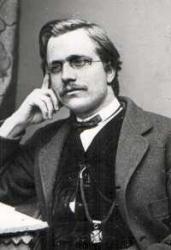
1841 - 1903 Person Name: Joseph Parry, 1841-1903 Topics: Proper 17 Year C Composer of "ABERYSTWYTH" in Common Praise Joseph Parry (b. Merthyr Tydfil, Glamorganshire, Wales, 1841; d. Penarth, Glamorganshire, 1903) was born into a poor but musical family. Although he showed musical gifts at an early age, he was sent to work in the puddling furnaces of a steel mill at the age of nine. His family immigrated to a Welsh settlement in Danville, Pennsylvania in 1854, where Parry later started a music school. He traveled in the United States and in Wales, performing, studying, and composing music, and he won several Eisteddfodau (singing competition) prizes. Parry studied at the Royal Academy of Music and at Cambridge, where part of his tuition was paid by interested community people who were eager to encourage his talent. From 1873 to 1879 he was professor of music at the Welsh University College in Aberystwyth. After establishing private schools of music in Aberystwyth and in Swan sea, he was lecturer and professor of music at the University College of South Wales in Cardiff (1888-1903). Parry composed oratorios, cantatas, an opera, orchestral and chamber music, as well as some four hundred hymn tunes. Bert Polman

Johann Crüger

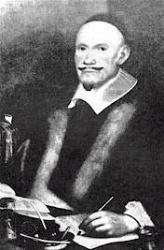
1598 - 1662 Topics: Proper 17 Year C Composer of "NUN DANKET ALL' (GRÄFENBERG)" in Common Praise Johann Crüger (b. Grossbriesen, near Guben, Prussia, Germany, 1598; d. Berlin, Germany, 1662) Crüger attended the Jesuit College at Olmutz and the Poets' School in Regensburg, and later studied theology at the University of Wittenberg. He moved to Berlin in 1615, where he published music for the rest of his life. In 1622 he became the Lutheran cantor at the St. Nicholas Church and a teacher for the Gray Cloister. He wrote music instruction manuals, the best known of which is Synopsis musica (1630), and tirelessly promoted congregational singing. With his tunes he often included elaborate accom­paniment for various instruments. Crüger's hymn collection, Neues vollkomliches Gesangbuch (1640), was one of the first hymnals to include figured bass accompaniment (musical shorthand) with the chorale melody rather than full harmonization written out. It included eighteen of Crüger's tunes. His next publication, Praxis Pietatis Melica (1644), is considered one of the most important collections of German hymnody in the seventeenth century. It was reprinted forty-four times in the following hundred years. Another of his publications, Geistliche Kirchen Melodien (1649), is a collection arranged for four voices, two descanting instruments, and keyboard and bass accompaniment. Crüger also published a complete psalter, Psalmodia sacra (1657), which included the Lobwasser translation set to all the Genevan tunes. Bert Polman =============================== Crüger, Johann, was born April 9, 1598, at Gross-Breese, near Guben, Brandenburg. After passing through the schools at Guben, Sorau and Breslau, the Jesuit College at Olmütz, and the Poets' school at Regensburg, he made a tour in Austria, and, in 1615, settled at Berlin. There, save for a short residence at the University of Wittenberg, in 1620, he employed himself as a private tutor till 1622. In 1622 he was appointed Cantor of St. Nicholas's Church at Berlin, and also one of the masters of the Greyfriars Gymnasium. He died at Berlin Feb. 23, 1662. Crüger wrote no hymns, although in some American hymnals he appears as "Johann Krüger, 1610,” as the author of the supposed original of C. Wesley's "Hearts of stone relent, relent" (q.v.). He was one of the most distinguished musicians of his time. Of his hymn tunes, which are generally noble and simple in style, some 20 are still in use, the best known probably being that to "Nun danket alle Gott" (q.v.), which is set to No. 379 in Hymns Ancient & Modern, ed. 1875. His claim to notice in this work is as editor and contributor to several of the most important German hymnological works of the 16th century, and these are most conveniently treated of under his name. (The principal authorities on his works are Dr. J. F. Bachmann's Zur Geschichte der Berliner Gesangbücher 1857; his Vortrag on P. Gerhard, 1863; and his edition of Gerhardt's Geistliche Lieder, 1866. Besides these there are the notices in Bode, and in R. Eitner's Monatshefte für Musik-Geschichte, 1873 and 1880). These works are:— 1. Newes vollkömmliches Gesangbuch, Augspur-gischer Confession, &c, Berlin, 1640 [Library of St. Nicholas's Church, Berlin], with 248 hymns, very few being published for the first time. 2. Praxis pietatis melica. Das ist: Ubung der Gottseligkeit in Christlichen und trostreichen Gesängen. The history of this, the most important work of the century, is still obscure. The 1st edition has been variously dated 1640 and 1644, while Crüger, in the preface to No. 3, says that the 3rd edition appeared in 1648. A considerable correspondence with German collectors and librarians has failed to bring to light any of the editions which Koch, iv. 102, 103, quotes as 1644, 1647, 1649, 1650, 1651, 1652, 1653. The imperfect edition noted below as probably that of 1648 is the earliest Berlin edition we have been able to find. The imperfect edition, probably ix. of 1659, formerly in the hands of Dr. Schneider of Schleswig [see Mützell, 1858, No. 264] was inaccessible. The earliest perfect Berlin edition we have found is 1653. The edition printed at Frankfurt in 1656 by Caspar Röteln was probably a reprint of a Berlin edition, c. 1656. The editions printed at Frankfurt-am-Main by B. C. Wust (of which the 1666 is in the preface described as the 3rd) are in considerable measure independent works. In the forty-five Berlin and over a dozen Frankfurt editions of this work many of the hymns of P. Gerhardt, J. Franck, P. J. Spener, and others, appear for the first time, and therein also appear many of the best melodies of the period. 3. Geistliche Kirchen-Melodien, &c, Leipzig, 1649 [Library of St. Katherine's Church, Brandenburg]. This contains the first stanzas only of 161 hymns, with music in four vocal and two instrumental parts. It is the earliest source of the first stanzas of various hymns by Gerhardt, Franck, &c. 4. D. M. Luther's und anderer vornehmen geisU reichen und gelehrten Manner Geistliche Lieder und Psalmen, &c, Berlin, 1653 [Hamburg Town Library], with 375 hymns. This was edited by C. Runge, the publisher, and to it Crüger contributed some 37 melodies. It was prepared at the request of Luise Henriette (q.v.), as a book for the joint use of the Lutherans and the Re¬formed, and is the earliest source of the hymns ascribed to her, and of the complete versions of many hymns by Gerhardt and Franck. 5. Psalmodia Sacra, &c, Berlin, 1658 [Royal Library, Berlin]. The first section of this work is in an ed. of A. Lobwasser's German Psalter; the second, with a similar title to No. 4, and the date 1657, is practically a recast of No. 4,146 of those in 1653 being omitted, and the rest of the 319 hymns principally taken from the Praxis of 1656 and the hymn-books of the Bohemian Brethren. New eds. appeared in 1676, 1700, 1704, 1711, and 1736. [Rev. James Mearns, M.A.] -- Excerpt from John Julian, Dictionary of Hymnology (1907) ======================= Crüger, Johann, p. 271, ii. Dr. J. Zahn, now of Neuendettelsau, in Bavaria, has recently acquired a copy of the 5th ed., Berlin, 1653, of the Praxis. --John Julian, Dictionary of Hymnology, Appendix, Part II (1907)

Charles Wesley

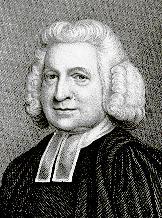
1707 - 1788 Person Name: Charles Wesley, 1707-1788 Topics: Proper 17 Year C Author of "O for a heart to praise my God" in Common Praise Charles Wesley, M.A. was the great hymn-writer of the Wesley family, perhaps, taking quantity and quality into consideration, the great hymn-writer of all ages. Charles Wesley was the youngest son and 18th child of Samuel and Susanna Wesley, and was born at Epworth Rectory, Dec. 18, 1707. In 1716 he went to Westminster School, being provided with a home and board by his elder brother Samuel, then usher at the school, until 1721, when he was elected King's Scholar, and as such received his board and education free. In 1726 Charles Wesley was elected to a Westminster studentship at Christ Church, Oxford, where he took his degree in 1729, and became a college tutor. In the early part of the same year his religious impressions were much deepened, and he became one of the first band of "Oxford Methodists." In 1735 he went with his brother John to Georgia, as secretary to General Oglethorpe, having before he set out received Deacon's and Priest's Orders on two successive Sundays. His stay in Georgia was very short; he returned to England in 1736, and in 1737 came under the influence of Count Zinzendorf and the Moravians, especially of that remarkable man who had so large a share in moulding John Wesley's career, Peter Bonier, and also of a Mr. Bray, a brazier in Little Britain. On Whitsunday, 1737, [sic. 1738] he "found rest to his soul," and in 1738 he became curate to his friend, Mr. Stonehouse, Vicar of Islington, but the opposition of the churchwardens was so great that the Vicar consented that he "should preach in his church no more." Henceforth his work was identified with that of his brother John, and he became an indefatigable itinerant and field preacher. On April 8, 1749, he married Miss Sarah Gwynne. His marriage, unlike that of his brother John, was a most happy one; his wife was accustomed to accompany him on his evangelistic journeys, which were as frequent as ever until the year 1756," when he ceased to itinerate, and mainly devoted himself to the care of the Societies in London and Bristol. Bristol was his headquarters until 1771, when he removed with his family to London, and, besides attending to the Societies, devoted himself much, as he had done in his youth, to the spiritual care of prisoners in Newgate. He had long been troubled about the relations of Methodism to the Church of England, and strongly disapproved of his brother John's "ordinations." Wesley-like, he expressed his disapproval in the most outspoken fashion, but, as in the case of Samuel at an earlier period, the differences between the brothers never led to a breach of friendship. He died in London, March 29, 1788, and was buried in Marylebone churchyard. His brother John was deeply grieved because he would not consent to be interred in the burial-ground of the City Road Chapel, where he had prepared a grave for himself, but Charles said, "I have lived, and I die, in the Communion of the Church of England, and I will be buried in the yard of my parish church." Eight clergymen of the Church of England bore his pall. He had a large family, four of whom survived him; three sons, who all became distinguished in the musical world, and one daughter, who inherited some of her father's poetical genius. The widow and orphans were treated with the greatest kindness and generosity by John Wesley. As a hymn-writer Charles Wesley was unique. He is said to have written no less than 6500 hymns, and though, of course, in so vast a number some are of unequal merit, it is perfectly marvellous how many there are which rise to the highest degree of excellence. His feelings on every occasion of importance, whether private or public, found their best expression in a hymn. His own conversion, his own marriage, the earthquake panic, the rumours of an invasion from France, the defeat of Prince Charles Edward at Culloden, the Gordon riots, every Festival of the Christian Church, every doctrine of the Christian Faith, striking scenes in Scripture history, striking scenes which came within his own view, the deaths of friends as they passed away, one by one, before him, all furnished occasions for the exercise of his divine gift. Nor must we forget his hymns for little children, a branch of sacred poetry in which the mantle of Dr. Watts seems to have fallen upon him. It would be simply impossible within our space to enumerate even those of the hymns which have become really classical. The saying that a really good hymn is as rare an appearance as that of a comet is falsified by the work of Charles Wesley; for hymns, which are really good in every respect, flowed from his pen in quick succession, and death alone stopped the course of the perennial stream. It has been the common practice, however for a hundred years or more to ascribe all translations from the German to John Wesley, as he only of the two brothers knew that language; and to assign to Charles Wesley all the original hymns except such as are traceable to John Wesley through his Journals and other works. The list of 482 original hymns by John and Charles Wesley listed in this Dictionary of Hymnology have formed an important part of Methodist hymnody and show the enormous influence of the Wesleys on the English hymnody of the nineteenth century. -- Excerpts from John Julian, Dictionary of Hymnology (1907) ================== Charles Wesley, the son of Samuel Wesley, was born at Epworth, Dec. 18, 1707. He was educated at Westminster School and afterwards at Christ Church, Oxford, where he graduated M.A. In 1735, he took Orders and immediately proceeded with his brother John to Georgia, both being employed as missionaries of the S.P.G. He returned to England in 1736. For many years he engaged with his brother in preaching the Gospel. He died March 29, 1788. To Charles Wesley has been justly assigned the appellation of the "Bard of Methodism." His prominence in hymn writing may be judged from the fact that in the "Wesleyan Hymn Book," 623 of the 770 hymns were written by him; and he published more than thirty poetical works, written either by himself alone, or in conjunction with his brother. The number of his separate hymns is at least five thousand. --Annotations of the Hymnal, Charles Hutchins, M.A., 1872.

Matthew Bridges

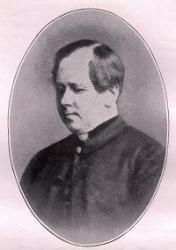
1800 - 1894 Person Name: Matthew Bridges (1800-1894) Topics: Proper 17 Year B Author of "My God, accept my heart this day" in Ancient and Modern Matthew Bridges

Kathrina von Schlegel

1697 - 1777 Person Name: Katherina von Schlegel, b. 1697 Topics: Year B Proper 17 Author of "Be still, my soul" in Complete Anglican Hymns Old and New Schlegel, Catharina Amalia Dorothea von. Little is known of this lady. According to Koch, iv., p. 442, she was born Oct. 22, 1697, and was "Stiftsfräulein" in the Evangelical Lutheran Stift (i.e. Protestant nunnery) at Cöthen. On applying to Cöthen, however, her name did not occur in the books of the Stift; and from the correspondence which she carried on, in 1750-52, with Heinrich Ernst, Count Stolberg, it would rather seem that she was a lady attached to the little ducal court at Cöthen. (manuscript from Dr. Eduard Jacobs, Wernigerode, &c.) Further details of her life it has been impossible to obtain. The only one of her hymns which has passed into English is:— Stille, mein Wille, dein Jesus hilft siegen. Cross and Consolation. A fine hymn on waiting for God. It appeared in 1752, as above, No. 689, in 6 stanzas of 6 lines; and is included in Knapp's Evangelischer Lieder-Schatz, 1837, No. 2249 (1865, No. 2017). The translation in common "Be still my soul!—-the Lord is on thy side." This is a good translation, omitting stanzas iii., by Miss Borthwick, in Hymns from the Land of Luther, 2nd Ser., 1855, p. 37 (1884, p. 100). [Rev. James Mearns, M.A.] --Excerpts from John Julian, Dictionary of Hymnology (1907) ========== For a detailed biography of Schlegel, see James R. Eggert, “Catharina von Schlegel and Be Still, My Soul,” Logia, vol. 34, no. 2 (Eastertide 2025), pp. 37–44.

Jane Borthwick

1813 - 1897 Person Name: Jane L. Borthwick Topics: Year B Proper 17 Translator of "Be still, my soul" in Complete Anglican Hymns Old and New Miss Jane Borthwick, the translator of this hymn and many others, is of Scottish family. Her sister (Mrs. Eric Findlater) and herself edited "Hymns from the Land of Luther" (1854). She also wrote "Thoughts for Thoughtful Hours (1859), and has contributed numerous poetical pieces to the "Family Treasury," under the signature "H.L.L." --Annotations of the Hymnal, Charles Hutchins, M.A. 1872. ================================= Borthwick, Jane, daughter of James Borthwick, manager of the North British Insurance Office, Edinburgh, was born April 9, 1813, at Edinburgh, where she still resides. Along with her sister Sarah (b. Nov. 26, 1823; wife of the Rev. Eric John Findlater, of Lochearnhead, Perthshire, who died May 2, 1886) she translated from the German Hymns from the Land of Luther, 1st Series, 1854; 2nd, 1855; 3rd, 1858; 4th, 1862. A complete edition was published in 1862, by W. P. Kennedy, Edinburgh, of which a reprint was issued by Nelson & Sons, 1884. These translations, which represent relatively a larger proportion of hymns for the Christian Life, and a smaller for the Christian Year than one finds in Miss Winkworth, have attained a success as translations, and an acceptance in hymnals only second to Miss Winkworth's. Since Kennedy's Hymnologia Christiana, 1863, in England, and the Andover Sabbath Hymn Book, 1858, in America, made several selections therefrom, hardly a hymnal in England or America has appeared without containing some of these translations. Miss Borthwick has kindly enabled us throughout this Dictionary to distinguish between the 61 translations by herself and the 53 by her sister. Among the most popular of Miss Borthwick's may be named "Jesus still lead on," and "How blessed from the bonds of sin;" and of Mrs. Findlater's "God calling yet!" and "Rejoice, all ye believers." Under the signature of H. L. L. Miss Borthwick has also written various prose works, and has contributed many translations and original poems to the Family Treasury, a number of which were collected and published in 1857, as Thoughts for Thoughtful Hours (3rd edition, enlarged, 1867). She also contributed several translations to Dr. Pagenstecher's Collection, 1864, five of which are included in the new edition of the Hymns from the Land of Luther, 1884, pp. 256-264. Of her original hymns the best known are “Come, labour on” and "Rest, weary soul.” In 1875 she published a selection of poems translated from Meta Heusser-Schweizer, under the title of Alpine Lyrics, which were incorporated in the 1884 edition of the Hymns from the Land of Luther. She died in 1897. [Rev. James Mearns, M.A.] -- John Julian, Dictionary of Hymnology (1907) ======================== Borthwick, Jane, p. 163, ii. Other hymns from Miss Borthwick's Thoughtful Hours, 1859, are in common use:— 1. And is the time approaching. Missions. 2. I do not doubt Thy wise and holy will. Faith. 3. Lord, Thou knowest all the weakness. Confidence. 4. Rejoice, my fellow pilgrim. The New Year. 5. Times are changing, days are flying. New Year. Nos. 2-5 as given in Kennedy, 1863, are mostly altered from the originals. --John Julian, Dictionary of Hymnology, Appendix, Part II (1907) ============= Works: Hymns from the Land of Luther

H. W. Baker

1821 - 1877 Person Name: Henry W. Baker Topics: Year C Proper 17 Composer of "HESPERUS (QUEBEC)" in The New Century Hymnal Baker, Sir Henry Williams, Bart., eldest son of Admiral Sir Henry Loraine Baker, born in London, May 27, 1821, and educated at Trinity College, Cambridge, where he graduated, B.A. 1844, M.A. 1847. Taking Holy Orders in 1844, he became, in 1851, Vicar of Monkland, Herefordshire. This benefice he held to his death, on Monday, Feb. 12, 1877. He succeeded to the Baronetcy in 1851. Sir Henry's name is intimately associated with hymnody. One of his earliest compositions was the very beautiful hymn, "Oh! what if we are Christ's," which he contributed to Murray's Hymnal for the Use of the English Church, 1852. His hymns, including metrical litanies and translations, number in the revised edition of Hymns Ancient & Modern, 33 in all. These were contributed at various times to Murray's Hymnal, Hymns Ancient & Modern and the London Mission Hymn Book, 1876-7. The last contains his three latest hymns. These are not included in Hymns Ancient & Modern. Of his hymns four only are in the highest strains of jubilation, another four are bright and cheerful, and the remainder are very tender, but exceedingly plaintive, sometimes even to sadness. Even those which at first seem bright and cheerful have an undertone of plaintiveness, and leave a dreamy sadness upon the spirit of the singer. Poetical figures, far-fetched illustrations, and difficult compound words, he entirely eschewed. In his simplicity of language, smoothness of rhythm, and earnestness of utterance, he reminds one forcibly of the saintly Lyte. In common with Lyte also, if a subject presented itself to his mind with striking contrasts of lights and shadows, he almost invariably sought shelter in the shadows. The last audible words which lingered on his dying lips were the third stanza of his exquisite rendering of the 23rd Psalm, "The King of Love, my Shepherd is:"— Perverse and foolish, oft I strayed, But yet in love He sought me, And on His Shoulder gently laid, And home, rejoicing, brought me." This tender sadness, brightened by a soft calm peace, was an epitome of his poetical life. Sir Henry's labours as the Editor of Hymns Ancient & Modern were very arduous. The trial copy was distributed amongst a few friends in 1859; first ed. published 1861, and the Appendix, in 1868; the trial copy of the revised ed. was issued in 1874, and the publication followed in 1875. In addition he edited Hymns for the London Mission, 1874, and Hymns for Mission Services, n.d., c. 1876-7. He also published Daily Prayers for those who work hard; a Daily Text Book, &c. In Hymns Ancient & Modern there are also four tunes (33, 211, 254, 472) the melodies of which are by Sir Henry, and the harmonies by Dr. Monk. He died Feb. 12, 1877. --John Julian, Dictionary of Hymnology (1907)

Jean Sibelius

1865 - 1957 Person Name: Jean Sibelius, 1865-1957 Topics: Year B Proper 17 Composer of "FINLANDIA" in Complete Anglican Hymns Old and New Johann Julius Christian [Jean] Sibelius DM Finland 1865-1957. Born at Hameenlinna, Finland, the son of a Swedish-speaking medical doctor, he lost his father to typhoid in 1868, leaving the family in substantial debt. His mother, again pregnant, had to sell their property and move in with her widowed mother. His aunt Julia gave him piano lessons when he was seven on the family upright piano, wrapping him on the knuckles when he played a wrong note. He learned to improvise as he played. His uncle, Pehr Ferdinand Sibelius, was interested in music, especially the violin, and gave Jean a violin when he was 10. As his musical advisor his uncle encouraged him to play and compose music. He played music with sister on piano, brother on cello, and himself on violin. He attended a Finnish-speaking prep school in 1874 and continued his education at the Hameenlinna Normal Lyceum thereafter. Jean also showed a strong interest in nature, frequently walking around the countryside when the family moved to the Loviisa coast for the summer months. In 1881 he took violin lessons from the local bandmaster, and developed a strong interest in violin. He became an accomplished player, and thought of becoming a virtuoso, but realizing he began study too late in life for that, instead opted to compose. He often played music in quartets with neighboring families, adding to his chamber music experience. He took the French form of his name, Jean. He studied law at the Imperial Alexander University in Finland, but showed far more interest in music. He then studied music at the Helsinki Music Institute (now Sibelius Academy) from 1885-1889. The school’s founder, Martin Wegelius, did much to support education development in Finland and gave Sibelius his first lessons in composition. Another teacher,,Ferruccio Busoni, a pianist-composer, helped him as well and became a life-long friend. Other friends, pianist Adolf Paul, and conductor-to-be, Armas Jarnefelt, also helped him. In 1892 he married Armas ‘s sister, Aino Jarnefelt, daughter of General Alexander Jarnefelt, governor of Vaasa. They had six daughters, Eva, Ruth, Kirsti, Katarina, Margareta, and Heidi. He continued his musical studies in Berlin (1889-1890) with Albert Becker, and in Vienna (1890-1891) with Robert Fuchs and Karl Goldmark. In Berlin he had opportunity to attend concerts and operas. In Vienna he turned to orchestral composition and had much success, although he had gallstone surgery during that period. He also traveled to the UK, France, Germany, and the USA during this time in his life, composing, conducting, and socializing. In 1892 he took on teaching assignments at the Music Institute and at Kajanus’s conducting school, but this left him with little time for composing. Sibelius’ works were more and more appreciated in Helsinki concert halls as he composed and conducted symphonies in the mid-1890s. In 1898 he was awarded a substantial grant, initially for 10 years, and later extended for life, allowing him to concentrate on composition. Much of his music became popular in Finland and in Germany. In 1899 he began work on his first symphony. It went well, but other patriotic music hehad composed did even better, since Russia was trying to restrict the powers of the Grand Duchy of Finland. In 1900 Sibelius went on an international tour with Kajanus and his orchestra, presenting his recent works. In 1901 he wrote his second symphony, which received rave reviews. He continued to compose as he became popular and well-known. In 1903 he had a new home built near Lake Tuusula north of Helsinki, calleed Ainola (after his wife). He gave concerts in and around Finland, spending more and more time away from home, to the chagrin of his wife. After a time he returned home and composed from there. He spent much time wining and dining in Helsinki, and it had a disastrous effect on his wife, who finally entered a sanitorium. He resolved again to give up drinking and concentrate on composing his 3rd symphony. He met Gustav Mahler in Helsinki and they became friends. He performed his 3rd symphony in St Petersburg, Russia. In 1907 he underwent a serious operation for suspected throat cancer, and spent time in the hospital in 1908. His smoking and drinking had now become life-threatening. He cancelled concerts for Rome, Warsaw, and Berlin, but kept one in London. His health deteriorated further, And his brush with death inspired him to compose his 4th symphony. In 1909 his successful throat operation resulted in renewed happiness for him and his wife, Aino. He continued conducting concerts, and met Claude Debussy, who further encouraged his musical efforts. He began working on his 4th symphony in 1910, but had to write other music to compensate for dwindling funds. He finished his 4th symphony in Berlin and conducted concerts in Sweden in 1911. In 1912 he completed short orchestral works. Over the next several years he continued producing a variety of pieces of music, well-received, especially in America. He was given an honorary DM degree from Yale University and also another from the University of Helsinki about the same time. WW1 interrupted his music royalties in 1915, and he was forced to compose smaller works for publication to make ends meet. He completed his 5th symphony at age 50, but he was dissatisfied with it and reworked it three times In 1917 he starting drinking again, triggering arguments with his wife. The Russian Revolution in 1917 caused an improvement in their personal relationship, and he wrote his ‘Jager March’ to celebrate Finnish independence from Russia. The next year the Finnish Civil War began, putting a damper on his march. In 1919, after the war, he completed his 6th symphony. In 1920 George Eastman , of Eastman Kodak, asked him to teach for a year in New York, but he declined. He did enjoy a trip conducting several concerts in England in 1921. He premiered his 6th symphony in 1923. In 1924 he completed his 7th symphony. The next year he composed a number of small pieces. He began drinking again. He did write a few more major works, but for the last thirty years of his life he avoided publicly talking about his music. He tried to write an 8th symphony, but was unsatisfied with it and burned the scores. In fact, he burned a laundry basket full of music he had written, to the chagrin of his wife. But, afterward, he became calmer and gradually had a lighter mood. In 1935 he was awarded the Goethe-Metal, with a certificate signed by Adolf Hitler. A Soviet invasion of Finland in 1939 was repelled, but Finland gave up territory to Russia as a result. In 1941 Sibelius and his wife returned to their Finland home, Ainola, after a long absence. He did not compose much the last few years, and died at Ainola. His wife outlived him by 12 years. John Perry

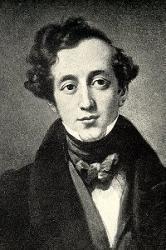
Felix Mendelssohn-Bartholdy

1809 - 1847 Person Name: Felix Mendelssohn, 1809-1847 Topics: Year A Proper 17 Arranger of "BRESLAU" in Complete Anglican Hymns Old and New Felix Mendelssohn-Bartholdy (b. Hamburg, Germany, 1809; d. Leipzig, Germany, 1847) was the son of banker Abraham Mendelssohn and the grandson of philosopher Moses Mendelssohn. His Jewish family became Christian and took the Bartholdy name (name of the estate of Mendelssohn's uncle) when baptized into the Lutheran church. The children all received an excellent musical education. Mendelssohn had his first public performance at the age of nine and by the age of sixteen had written several symphonies. Profoundly influenced by J. S. Bach's music, he conducted a performance of the St. Matthew Passion in 1829 (at age 20!) – the first performance since Bach's death, thus reintroducing Bach to the world. Mendelssohn organized the Domchor in Berlin and founded the Leipzig Conservatory of Music in 1843. Traveling widely, he not only became familiar with various styles of music but also became well known himself in countries other than Germany, especially in England. He left a rich treasury of music: organ and piano works, overtures and incidental music, oratorios (including St. Paul or Elijah and choral works, and symphonies. He harmonized a number of hymn tunes himself, but hymnbook editors also arranged some of his other tunes into hymn tunes. Bert Polman

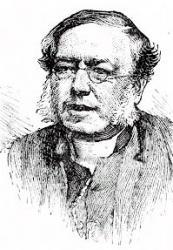
John S. B. Monsell

1811 - 1875 Person Name: John Samuel Bewley Monsell, 1811-1875 Topics: Year B Proper 17 Author of "Fight the good fight" in Complete Anglican Hymns Old and New John Samuel Bewley Monsell (b. St. Colomb's, Londonderry, Ireland, 1811; d. Guilford, Surrey, England, 1875) was educated at Trinity College in Dublin and served as a chaplain and rector of several churches in Ireland after his ordination in 1835. Transferred to England in 1853, he became rector of Egham in Surrey and was rector of St. Nicholas Church in Guilford from 1870 until his death (caused by a construction accident at his church). A prolific poet, Monsell published his verse in eleven volumes. His three hundred hymns, many celebrating the seasons of the church year, were issued in collections such as Hymns and Miscellaneous Poems (1837), Spiritual Songs (1857), Hymns of Love and Praise (1863), and The Parish Hymnal (1873). Bert Polman =============================== Monsell, John Samuel Bewley, L.L.D., son of Thomas Bewley Monsell, Archdeacon of Londonderry, was born at St. Columb's, Londonderry, March 2,1811, and educated at Trinity College, Dublin (B.A. 1832, LL.D. 1856). Taking Holy Orders in 1834, "he was successively Chaplain to Bishop Mant, Chancellor of the diocese of Connor, Rector of Ramoan, Vicar of Egham, diocese Worcester, and Rector of St. Nicholas's, Guildford. He died in consequence of a fall from the roof of his church, which was in the course of rebuilding, April 9, 1875. His prose works include Our New Vicar, 1867; The Winton Church Catechist, &c. His poetical works are:— (1) Hymns and Miscellaneous Poems, Dublin, W. Curry, Jun., & Co., 1837; (2) Parish Musings, or Devotional Poems, 1850; (3) Spiritual Songs for the Sundays and Holy Days throughout the Year. 1857 (People's Ed., 1875); (4) His Presence, not His Memory, 1855, 1858; (5) Hymns of Love and Praise for the Church's Year, 1863 (2nd ed. 1866); (6) The Passing Bell; Ode to The Nightingales, and Other Poems, 1867; (7) Litany Hymns, 1869; (8) The Parish Hymnal after the Order of The Book of Common Prayer, 1873; (9)Watches by the Cross, 1874; (10) Simon the Cyrenian; and Other Poems; (11) Nursery Carols. In these works several hymns which appeared in the earlier books are repeated in the later, and thus at first sight his compositions seem to be more in number than they really are. The total amounts to nearly 300, and of these about one-fourth are in common use. The most popular of these are, "God is love; that anthem olden"; "God of that glorious gift of grace"; "Holy offerings, rich and rare"; “Lord of the living harvest"; "Mighty Father, Blessed Son"; and "Sing to the Lord a joyful song." In addition to those which are annotated under their respective first lines, the following are in common use:— i. Appeared in his Hymns and Miscellaneous Poems, Dublin, 1837. 1. Birds have their quiet nests. Humility of Christ. 2. Dark and dim the day-light rose. Good Friday. 3. Friend of the friendless and the lone. Jesus, the Friend. 4. My God, what wondrous love was Thine. Whitsuntide. 5. O for a heart more fervent. Holiness desired. 6. O for the time when on the world. Missions. 7. The springtide hour brings leaf and flower. Spring. 8. This day the Lord is risen. Easter. 9. When cold our hearts and far from Thee. Teach us to Pray. 10. Why restless, why so weary? Providence. 11. Yes, I do feel, my God, that I am Thine. Assurance. ii. Appeared in his Parish Musings, 1850. 12. In Thee, my [O] God, will we rejoice. Trust in God. 13. Lord, dependent on Thy promise. Holy Baptism. 14. Members of Christ, Children of God. Confirmation. 15. So teach me, Lord, to number. The Old and New Year. 16. Soon [soon] and for ever. Death anticipated. 17. The broken, contrite heart oppress'd. Promises of God. 18. Thou art near, yes, Lord, I feel it. Divine Support. 19. Would'st thou learn the depths of sin? Passiontide. iii. Appeared in his Spiritual Songs, 1857. 20. A few bright leaders of her host. All Saints. 21. A happy, happy [merry, merry] Christmas. New Year's Day. 22. Blessed hope, that we the fallen [sinful]. Hope. 23. Heart in heart, and hand in hand. SS. Simon and Jude. 24. Jesus, my loving Lord! I know. Resignation. 25. Last Sunday of the work-day year. Sunday after Christmas Day. 26. Loved by God the Father. Holy Baptism. 27. Mercy, mercy, God the Father. Lent. 28. My head is low, my heart is sad. Confirmation. (Penitential.) 29. Oft doth the Christian's heart inquire. Christian Duty. 30. 0 God, most mighty, listen now. Charities. From "When languid frame or throbbing pulse." 31. 0 holy Sabbath day. Sunday. 32. 0 Lord, what records of Thy love. St. Barnabas. Sometimes, “Lord God, what records of Thy love." 33. 0 love, divine and golden. Holy Matrimony. From this, "Love divine and tender" is taken. 34. One lesson more the Church must learn. Waiting on God. From this, “One lesson Christ His own would teach" is taken. 35. Proudly in his [the] hall of judgment. Tuesday before Easter. 36. Sinful, sighing to be blest. Lent. 37. The Church of God, with equal care. St. James. 38. The journey done; The rest begun. Burial. 39. The simple trust that can confide. Trust. 40. Weary and sad, a wanderer from Thee. Lent. iv. Appeared, in his Hymns of Love and Praise, 1863, and 2nd ed., 1866. 41. Bounteous blesser of the seedtime. Sexagesima. Seed Time. 42. Brightly hopeful for the future. God's mercy through life. 43. Christ is risen! Alleluia! Easter. 44. Come and deck the grave with flowers. Easter Eve. 45. Fight the good fight with all thy might. Fight of Faith. 46. Holy Spirit, long expected. Whitsuntide. 47. Hours and days and months and years. The Circumcision. 48. I have no comfort but Thy love. The Comfort of Love. 49. I knew Thee in the land of drought. A Song of Love. 60. I think of Thee, my God by night. Evening. 61. Jesu, gentle Sufferer, say. Good Friday. 52. Labouring and heavy-laden. Lent. 53. Light of the world, we hail Thee. Missions. 54. Lord, to whom except to Thee? Holy Communion. 55. My sins, my sins, my Saviour. Ash Wednesday. 56. O'er the distant mountains breaking. Second Advent. 57. Other Name than our dear Lord's. Jesus All and in All. 58. Pity on us, heavenly Father. Litany Hymn for Lent. 59. Praise the Lord, rejoice, ye Gentiles. Advent, or Missions. 60. Rest of the weary, joy of the sad. Jesus, the Saviour and Friend. 61. Shadow of a mighty Rock. Jesus, the Rock of Ages. 62. Sing, 0 heaven; 0 earth rejoice. Ascension. 63. Sweet is the gentle voice of spring. Seed Time. 64. Sweet is Thy mercy, Lord. Divine Mercy. 65. Teach me to do the thing that pleaseth Thee. Divine Teaching. 66. The good old times, how glorious. Advent. 67. The world may in its wealth delight. Rejoicing in the Lord. An altered form of "Let others in their wealth delight." 68. Though Thou slay me, I will trust. Faith. 69. To Christ the Lord! The Incarnate Word. Christmas. 70. When I had wandered from His fold. The Love of God. v. Appeared in his Litany Hymns, 1869. 71. Lay the precious body, In the quiet grave. Burial. 72. My sins have taken such a hold on me. Litany of Repentance. vi. Appeared in his Parish Hymnal, 1873. 73. I hunger and I thirst. Septuagesima. Dr. Monsell’s hymns are as a whole bright, joyous, and musical; but they lack massiveness, concentration of thought, and strong emotion. A few only are of enduring excellence. --John Julian, Dictionary of Hymnology 1907 ===================== Monsell, J, S. B., p. 762, ii. Additional hymns in common use include:— 1. Blessed Lord, Who, till the morning. Holy Scriptures. From his Spiritual Songs, 1857. 2. Christ incarnate in His poor. Christ in His Poor. From his Hymns of Love and Praise, 1863. 3. We ask for life, and mean thereby. Life and Work. From his Hymns of Love and Praise, 1863. --John Julian, Dictionary of Hymnology, Appendix, Part II (1907) ==================== Monsell, J. S. B. Since the article on pp. 762-3 was written, copies of the original editions of Dr. Monsell's works have come into our hands, and from them we have to make the following corrections, the numbers following being those given to the first lines of the hymns on pp. 762-3:— 15. So teach me, &c. Hymns and Misc. Poems, 1837, p. 30. 17. The broken, &c. Hymns and Misc. Poems, 1837, p. 49. 18. Thou art near, &c. Hymns and Misc. Poems, 1837, p. 21. 19. Would'st thou, &c. Hymns and Misc. Poems, 1837, p. 14. 26. Loved by God, &c. Parish Hymnal, 1873, No. 181. 27. Mercy, mercy, &c. Prayers and Litanies, 1861, p. 119. 28. My head is low, &c. Hymns of Love and Praise, 1866, p. 125. 33. O Love divine, &c. Hymns of Love and Praise, p. 131. 38. The journey done, &c. Hymns of Love and Praise, p. 134. 40. Weary and sad, &c. Parish Hymnal, 1873, No. 209. 41-50. Hymns of Love and Praise, 1863. 51. See "Day of loss," &c, p. 282, i. 52. Labouring, &c. Prayers and Litanies, 1861, p. 116. 53-57. Hymns of Love and Praise, 1863. 58. Pity on us, &c. Prayers and Litanies, 1861, p. 125. 59. Praise the Lord, &c. Hymns of Love and Praise, 1863, p. 13. 60. 61, 62, 64, 65. Prayers and Litanies, 1861. 63, 66-70. Hymns of Love and Praise, 1863. 72. My sins, &c. Hymns of Love and Praise, 1866, p. 34. 73. I hunger, &c. Hymns of Love and Praise, 1866, p. 128. It will be seen from this list of additions and corrections that Dr. Monsell multiplied his works by giving much the same material under new titles, and that his Prayers and Litanies of 1861 were unknown to us when the original article was written. "We can sincerely add that few hymn writers are so perplexing to the annotator as Dr. Monsell. [Rev. James Mearns, M.A.] --John Julian, Dictionary of Hymnology, New Supplement (1907)

Pages


Export as CSV
It looks like you are using an ad-blocker. Ad revenue helps keep us running. Please consider white-listing Hymnary.org or getting Hymnary Pro to eliminate ads entirely and help support Hymnary.org.