You help make Hymnary.org possible. More than 10 million people from 200+ countries found hymns, liturgical resources and encouragement on Hymnary.org in 2025, including you. Every visit affirms the global impact of this ministry.

If Hymnary has been meaningful to you this year, would you take a moment today to help sustain it? A gift of any size—paired with a note of encouragement if you wish—directly supports the server costs, research work and curation that keep this resource freely available to the world.

Give securely online today, or mail a check to:
Hymnary.org
Calvin University
3201 Burton Street SE
Grand Rapids, MI 49546

Thank you for your partnership, and may the hope of Advent fill your heart.

Person Results

Topics:trinity+9
In:person

Planning worship? Check out our sister site, ZeteoSearch.org, for 20+ additional resources related to your search.
Showing 31 - 40 of 134Results Per Page: 102050

W. Chatterton Dix

1837 - 1898 Person Name: William Chatterton Dix, 1837-1898 Topics: Easter; Holy Communion; Hope and Consolation; Redemption and Salvation; Year A Easter 6; Year A Easter 7; Year A Proper 9; Year A Trinity Sunday; Year B Fourth Sunday Before Advent; Year B Proper 13; Years A, B, and C Ascension Day Author of "Alleluia, sing to Jesus" in Complete Anglican Hymns Old and New Most British hymn writers in the nineteenth century were clergymen, but William C. Dix (b. Bristol, England, 1837; d. Cheddar, Somerset, England, 1898) was a notable exception. Trained in the business world, he became the manager of a marine insurance company in Glasgow, Scotland. Dix published various volumes of his hymns, such as Hymns of Love and Joy (1861) and Altar Songs: Verses on the Holy Eucharist (1867). A number of his texts were first published in Hymns Ancient and Modern (1861). Bert Polman ======================== Dix, William Chatterton, son of John Dix, surgeon, of Bristol, author of the Life of Chatterton; Local Legends, &c, born at Bristol, June 14, 1837, and educated at the Grammar School of that city. Mr. Chatterton Dix's contributions to modern hymnody are numerous and of value. His fine Epiphany hymn, "As with gladness men of old,” and his plaintive ”Come unto Me, ye weary," are examples of his compositions, many of which rank high amongst modern hymns. In his Hymns of Love and Joy, 1861, Altar Songs, Verses on the Holy Eucharist, 1867; Vision of All Saints, &c, 1871; and Seekers of a City, 1878, some of his compositions were first published. The greater part, however, were contributed to Hymns Ancient & Modern; St. Raphaels Hymnbook, 1861; Lyra Eucharidica, 1863; Lyra Messianica, 1864; Lyra Mystica, 1865; The People's Hymns, 1867; The Hymnary, 1872; Church Hymns, 1871, and others. Many of his contributions are renderings in metrical form of Dr. Littledale's translation from the Greek in his Offices . . . of the Holy Eastern Church, 1863; and of the Rev. J. M. Rodwell's translation of hymns of the Abyssinian Church. These renderings of the "songs of other Churches" have not received the attention they deserve, and the sources from whence they come are practically unknown to most hymnal compilers. Mr. Dix has also written many Christmas and Easter carols, the most widely known of which is "The Manger Throne."   In addition to detached pieces in prose and verse for various magazines, he has published two devotional works, Light; and The Risen Life, 1883; and a book of instructions for children entitled The Pattern Life, 1885. The last-named contains original hymns by Mr. Dix not given elsewhere. In addition to the more important of Mr. Dix's hymns which are annotated under their respective first lines, the following are also in common use:- 1. God cometh, let the heart prepare.  Advent. In his Vision of All Saints, &c, 1871.      2. Holy, holy, holy, to Thee our vows we pay.  Holy Communion.   Published in his Altar Songs, 1867, in 6 stanzas of 6 lines, and headed "Eucharistic Processional for Dedication Feast."    In the Society for Promoting Christian Knowledge Church Hymns, 1871, and others in an abridged form.      3. How long, O Lord, how long, we ask.   Second Advent.   Appeared in the Appendix to the Society for Promoting Christian Knowledge Psalms & Hymns, 1869, and repeated in several collections.        4. In our work and in our play.    Children's Hymn. Published in his Hymns and Carols for Children, 1869, and is largely adopted  in  children's  hymnbooks, as  Mrs. Brock's Children's Hymnbook, 1881, and others.   Also in the Society for Promoting Christian Knowledge Church Hymns, 1871.      5.  In the hollow of Thine hand.   For Fair Weather. Appeared in the People's Hymns, 1867, and repeated in several others.      6.  Joy fills our inmost heart today.    Christmas. Printed in the Church Times, and  then on a Flysheet by Gr. J. Palmer, as the third of Four Joyful Hymns for Christmas, circa 1865. It is in the Society for Promoting Christian Knowledge Church Hymns, 1871, and other hymnals. It is also one of Mr. Dix's Christmas Customs & Christmas Carols, not dated.      7. Lift up your songs, ye thankful.   St. Ambrose. Contributed to the People's Hymns, 1867.  8. Now in numbers softly flowing.    St. Cecilia. Contributed to the People's Hymns, 1867.    9.  Now, our Father, we adore Thee.   Praise to the Father.   Appeared in the Appendix to the S. P. C. K. Psalms & Hymns, 1869.   10.  O Christ, Thou Son of Mary.   St. Crispin.   First printed in the Union Review, Sept., 1866, and thence into the People's Hymns, 1887.   11. O Cross which only canst allay.   Glorying and Trusting in the Cross.   Published in the People's Hymns, 1867.   12. O Thou the Eternal Son of God.   Good Friday. Appeared in Lyra Messianica, 1864; the author's Hymns and Carols for Children, 1869; the S. P. C. K. Church Hymns, 1871, &c.   13. On the waters dark and drear.   For use at Sea. Published in Hymns for Public Worship, &c. (St. Raphael's, Bristol), 1861; the S. P. C. K. Church Hymns, 1871, &c.   14. Only one prayer to-day.   Ash Wednesday.   Contributed to the People's Hymns, 1867.   15. Sitting at receipt of custom.  St. Matthew.  Appeared in the People's Hymns, 1867.   16. The Cross is on thy brow.   Confirmation.   In the 1869 Appendix to the S. P. C. K. Psalms & Hymns.   17.  The stars above our head.   Work and Humility. In the 1869 Appendix to the S. P. C. K. Psalms & Hymns.  18. When the shades of night are falling.   Evening Hymn to the Good Shepherd.   In the author's Seekers of a City, &c. [1878]. Most of Mr. Dix's best-known hymns, and also some of those named above, are in common use in America and other English-speaking countries. In Great Britain and America from 30 to 40 are in common use.  He died Sept. 9, 1898. -- John Julian, Dictionary of Hymnology (1907) ====================== Dix, William Chatterton, p. 302, ii. Additional hymns by Mr. Dix now in common use are:— 1. Lift up your songs, ye angel choirs. Ascension. 2. Now, my soul rehearse the story. Christ Feeding the Multitude. 3. Within the temple's hallowed courts. Blessed Virgin Mary. These hymns are from his Altar Songs, 1867. --John Julian, Dictionary of Hymnology, Appendix, Part II (1907)

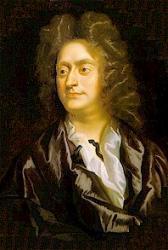
Henry Purcell

1659 - 1695 Topics: Jesus Christ Praise and Thanksgiving; Adoration and Praise; Blessings; Church Anniversaries; Church Dedication of a Building; Church Education; Church Triumphant; Comfort/Consolation; Glory; God House, Home; Healing; Heaven(s)/Paradise; Jesus Christ Images of; Jesus Christ Praise; Jesus Christ Reign; Jesus Christ Rock; Jesus Christ Strength and Refuge; Love; Opening Hymns; Petition; Prayer; Processionals (Opening of Worship); Service Music Gathering, Call to Worship, Greeting; Service Music Doxologies; Supplication; Trinity; Trust; Unity; Worship; Zion; Epiphany 7 Year A; Easter 5 Year A; Proper 17 Year A; Proper 18 Year A; Lent 3 Year B; Easter 4 Year B; Proper 11 Year B; Christmas 2 Year C; Epiphany 3 Year C; Easter 7 Year C; Pentecost Year C; Proper 9 Year C; All Saints Year C; Proper 27 Year C; Reign of Christ Year C Composer of "WESTMINSTER ABBEY" in Voices United Henry Purcell (b. Westminster, London, England, 1659; d. Westminster, 1695), was perhaps the greatest English composer who ever lived, though he only lived to the age of thirty-six. Purcell's first piece was published at age eight when he was also a chorister in the Chapel Royal. When his voice changed in 1673, he was appointed assistant to John Hingston, who built chamber organs and maintained the king's instruments. In 1674 Purcell began tuning the Westminster Abbey organ and was paid to copy organ music. Given the position of composer for the violins in 1677, he also became organist at Westminster Abbey in 1679 (at age twenty) and succeeded Hingston as maintainer of the king's instruments (1683). Purcell composed music for the theater (Dido and Aeneas, c. 1689) and for keyboards, provided music for royal coronations and other ceremonies, and wrote a substantial body of church music, including eighteen full anthems and fifty-six verse anthems. Bert Polman

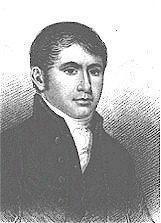
William Gardiner

1770 - 1853 Topics: Jesus Christ Praise and Thanksgiving; Adoration and Praise; Adoration and Praise; Closing Hymns; God Kingdom, Majesty, Realm; Gratitude; Jesus Christ Adoration and Praise; Jesus Christ Lamb of God; Jesus Christ Master; Jesus Christ name; Jesus Christ Praise; Jesus Christ Reign; Jesus Christ Saviour; Reverence/Wonder Before God; Salvation; Service; Service Music Sending Forth/Commissioning; Testimony; Epiphany 2 Year A; Easter 4 Year A; Trinity Sunday Year A; Proper 6 Year A; Proper 9 Year A; All Saints Year A; Epiphany 3 Year B; Proper 20 Year B; Proper 24 Year B; Easter 4 Year C; Proper 13 Year C; Proper 20 Year C; Proper 22 Year C; Reign of Christ Year C; Tuesday in Holy Week Year ABC Composer of "LYONS" in Voices United William Gardiner (b. Leicester, England, 1770; d. Leicester, 1853) The son of an English hosiery manufacturer, Gardiner took up his father's trade in addition to writing about music, composing, and editing. Having met Joseph Haydn and Ludwig van Beethoven on his business travels, Gardiner then proceeded to help popularize their compositions, especially Beethoven's, in England. He recorded his memories of various musicians in Music and Friends (3 volumes, 1838-1853). In the first two volumes of Sacred Melodies (1812, 1815), Gardiner turned melodies from composers such as Haydn, Mozart, and Beethoven into hymn tunes in an attempt to rejuvenate the singing of psalms. His work became an important model for American editors like Lowell Mason (see Mason's Boston Handel and Haydn Collection, 1822), and later hymnbook editors often turned to Gardiner as a source of tunes derived from classical music. Bert Polman

Hans G. Nägeli

1773 - 1836 Person Name: Johann G. Nägeli Topics: Church in the World Discipleship: Love in Action; Brotherhood/Sisterhood; Church Community in Christ; Communion of Saints; Community; Compassion; Eternal Life; Farewell Service; Friendship; Funerals and Memorial Services; Heaven(s)/Paradise; Home and Family; Love; Love Feast; Love for Others; Prayer; Reconciliation; Service Music Sending Forth/Commissioning; Sin; Sympathy of Christians; Unity; Epiphany 3 Year A; Trinity Sunday Year A; Proper 15 Year A; Easter 5 Year B; Proper 27 Year B; Easter 5 Year C; Proper 9 Year C Composer (attributed to) of "DENNIS" in Voices United Johann G. Nageli (b. Wetzikon, near Zurich, Switzerland, 1773; d. Wetzikon, 1836) was an influential music educator who lectured throughout Germany and France. Influenced by Johann Pestalozzi, he published his theories of music education in Gangbildungslehre (1810), a book that made a strong impact on Lowell Mason. Nageli composed mainly" choral works, including settings of Goethe's poetry. He received his early instruction from his father, then in Zurich, where he concentrated on the music of. S. Bach. In Zurich, he also established a lending library and a publishing house, which published first editions of Beethoven’s piano sonatas and music by Bach, Handel, and Frescobaldi. Bert Polman

Lowell Mason

1792 - 1872 Topics: Church in the World Discipleship: Love in Action; Brotherhood/Sisterhood; Church Community in Christ; Communion of Saints; Community; Compassion; Eternal Life; Farewell Service; Friendship; Funerals and Memorial Services; Heaven(s)/Paradise; Home and Family; Love; Love Feast; Love for Others; Prayer; Reconciliation; Service Music Sending Forth/Commissioning; Sin; Sympathy of Christians; Unity; Epiphany 3 Year A; Trinity Sunday Year A; Proper 15 Year A; Easter 5 Year B; Proper 27 Year B; Easter 5 Year C; Proper 9 Year C Arranger of "DENNIS" in Voices United Dr. Lowell Mason (the degree was conferred by the University of New York) is justly called the father of American church music; and by his labors were founded the germinating principles of national musical intelligence and knowledge, which afforded a soil upon which all higher musical culture has been founded. To him we owe some of our best ideas in religious church music, elementary musical education, music in the schools, the popularization of classical chorus singing, and the art of teaching music upon the Inductive or Pestalozzian plan. More than that, we owe him no small share of the respect which the profession of music enjoys at the present time as contrasted with the contempt in which it was held a century or more ago. In fact, the entire art of music, as now understood and practiced in America, has derived advantage from the work of this great man. Lowell Mason was born in Medfield, Mass., January 8, 1792. From childhood he had manifested an intense love for music, and had devoted all his spare time and effort to improving himself according to such opportunities as were available to him. At the age of twenty he found himself filling a clerkship in a banking house in Savannah, Ga. Here he lost no opportunity of gratifying his passion for musical advancement, and was fortunate to meet for the first time a thoroughly qualified instructor, in the person of F. L. Abel. Applying his spare hours assiduously to the cultivation of the pursuit to which his passion inclined him, he soon acquired a proficiency that enabled him to enter the field of original composition, and his first work of this kind was embodied in the compilation of a collection of church music, which contained many of his own compositions. The manuscript was offered unavailingly to publishers in Philadelphia and in Boston. Fortunately for our musical advancement it finally secured the attention of the Boston Handel and Haydn Society, and by its committee was submitted to Dr. G. K. Jackson, the severest critic in Boston. Dr. Jackson approved most heartily of the work, and added a few of his own compositions to it. Thus enlarged, it was finally published in 1822 as The Handel and Haydn Society Collection of Church Music. Mason's name was omitted from the publication at his own request, which he thus explains, "I was then a bank officer in Savannah, and did not wish to be known as a musical man, as I had not the least thought of ever making music a profession." President Winchester, of the Handel and Haydn Society, sold the copyright for the young man. Mr. Mason went back to Savannah with probably $500 in his pocket as the preliminary result of his Boston visit. The book soon sprang into universal popularity, being at once adopted by the singing schools of New England, and through this means entering into the church choirs, to whom it opened up a higher field of harmonic beauty. Its career of success ran through some seventeen editions. On realizing this success, Mason determined to accept an invitation to come to Boston and enter upon a musical career. This was in 1826. He was made an honorary member of the Handel and Haydn Society, but declined to accept this, and entered the ranks as an active member. He had been invited to come to Boston by President Winchester and other musical friends and was guaranteed an income of $2,000 a year. He was also appointed, by the influence of these friends, director of music at the Hanover, Green, and Park Street churches, to alternate six months with each congregation. Finally he made a permanent arrangement with the Bowdoin Street Church, and gave up the guarantee, but again friendly influence stepped in and procured for him the position of teller at the American Bank. In 1827 Lowell Mason became president and conductor of the Handel and Haydn Society. It was the beginning of a career that was to win for him as has been already stated the title of "The Father of American Church Music." Although this may seem rather a bold claim it is not too much under the circumstances. Mr. Mason might have been in the average ranks of musicianship had he lived in Europe; in America he was well in advance of his surroundings. It was not too high praise (in spite of Mason's very simple style) when Dr. Jackson wrote of his song collection: "It is much the best book I have seen published in this country, and I do not hesitate to give it my most decided approbation," or that the great contrapuntist, Hauptmann, should say the harmonies of the tunes were dignified and churchlike and that the counterpoint was good, plain, singable and melodious. Charles C. Perkins gives a few of the reasons why Lowell Mason was the very man to lead American music as it then existed. He says, "First and foremost, he was not so very much superior to the members as to be unreasonably impatient at their shortcomings. Second, he was a born teacher, who, by hard work, had fitted himself to give instruction in singing. Third, he was one of themselves, a plain, self-made man, who could understand them and be understood of them." The personality of Dr. Mason was of great use to the art and appreciation of music in this country. He was of strong mind, dignified manners, sensitive, yet sweet and engaging. Prof. Horace Mann, one of the great educators of that day, said he would walk fifty miles to see and hear Mr. Mason teach if he could not otherwise have that advantage. Dr. Mason visited a number of the music schools in Europe, studied their methods, and incorporated the best things in his own work. He founded the Boston Academy of Music. The aim of this institution was to reach the masses and introduce music into the public schools. Dr. Mason resided in Boston from 1826 to 1851, when he removed to New York. Not only Boston benefited directly by this enthusiastic teacher's instruction, but he was constantly traveling to other societies in distant cities and helping their work. He had a notable class at North Reading, Mass., and he went in his later years as far as Rochester, where he trained a chorus of five hundred voices, many of them teachers, and some of them coming long distances to study under him. Before 1810 he had developed his idea of "Teachers' Conventions," and, as in these he had representatives from different states, he made musical missionaries for almost the entire country. He left behind him no less than fifty volumes of musical collections, instruction books, and manuals. As a composer of solid, enduring church music. Dr. Mason was one of the most successful this country has introduced. He was a deeply pious man, and was a communicant of the Presbyterian Church. Dr. Mason in 1817 married Miss Abigail Gregory, of Leesborough, Mass. The family consisted of four sons, Daniel Gregory, Lowell, William and Henry. The two former founded the publishing house of Mason Bros., dissolved by the death of the former in 1869. Lowell and Henry were the founders of the great organ manufacturer of Mason & Hamlin. Dr. William Mason was one of the most eminent musicians that America has yet produced. Dr. Lowell Mason died at "Silverspring," a beautiful residence on the side of Orange Mountain, New Jersey, August 11, 1872, bequeathing his great musical library, much of which had been collected abroad, to Yale College. --Hall, J. H. (c1914). Biography of Gospel Song and Hymn Writers. New York: Fleming H. Revell Company.

Emily R. Brink

b. 1940 Person Name: Emily R. Brink, b. 1940 Topics: Assurance; Biblical Names and Places Israel; Biblical Names and Places Jacob; Church Year Good Friday; Church Year Passion/Palm Sunday; Cry to God; Despair; Doubt; Elements of Worship Lord's Supper; God Trust in; God's Nearness; God's Presence; Jesus Christ Cross and Crucifiction; Lament General; Lament Individual; Life Stages Death; Loneliness; Longing for God; Mission; Mocking; Pain; People of God / Church Suffering; Prayer Answer to; Prayer; Questioning; Sorrow; Suffering; Victory; Vows; Year A, B, C, Holy Week, Good Friday; Year B, Easter, 5th Sunday; Year B, Lent, 2nd Sunday; Year B, Ordinary Time after Pentecost, October 9-15; Year C, Ordinary Time after Pentecost, June 19-25 (if after Trinity Sunday) Harmonizer of "WONDROUS LOVE (fragment)" in Psalms for All Seasons Emily R. Brink is a Senior Research Fellow of the Calvin Institute of Christian Worship and Adjunct Professor of Church Music and Worship at Calvin Theological Seminary, Grand Rapids, Michigan. Her main areas of responsibility are conference planning and global resources. She is program manager of the annual Calvin Symposium on Worship, which draws more than 70 presenters and 1600 participants from around the world. She also travels widely to lecture and to learn about worship in different parts of the world, especially in Asia, where she has lectured in Bangladesh, China, Hong Kong, India, Indonesia, Japan, Nepal, Pakistan, Philippines, Singapore, and Taiwan. Her areas of interest include congregational song from all times and places; psalmody; hymnal editing. She was editor of four hymnals and consults with a wide range of churches on worship renewal issues. Dr. Brink is active in the American Guild of Organists, serving in both local and national offices, as well as in the Hymn Society in the United States and Canada (president from 1990 1992) and named a Fellow of the Hymn Society in 2004 in recognition of distinguished services to hymnody and hymnology. --internal.calvinseminary.edu/

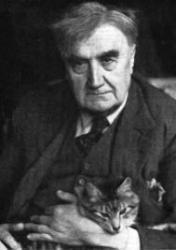
Ralph Vaughan Williams

1872 - 1958 Topics: Holy Communion; Jesus Christ Advent; Jesus Christ Return of; Year B Epiphany 9; Year B Trinity Sunday; Year B Proper 4; Year C Advent 1; Year C Epiphany 5; Year C Proper 21 Harmonizer of "PICARDY" in The New Century Hymnal Through his composing, conducting, collecting, editing, and teaching, Ralph Vaughan Williams (b. Down Ampney, Gloucestershire, England, October 12, 1872; d. Westminster, London, England, August 26, 1958) became the chief figure in the realm of English music and church music in the first half of the twentieth century. His education included instruction at the Royal College of Music in London and Trinity College, Cambridge, as well as additional studies in Berlin and Paris. During World War I he served in the army medical corps in France. Vaughan Williams taught music at the Royal College of Music (1920-1940), conducted the Bach Choir in London (1920-1927), and directed the Leith Hill Music Festival in Dorking (1905-1953). A major influence in his life was the English folk song. A knowledgeable collector of folk songs, he was also a member of the Folksong Society and a supporter of the English Folk Dance Society. Vaughan Williams wrote various articles and books, including National Music (1935), and composed numerous arrange­ments of folk songs; many of his compositions show the impact of folk rhythms and melodic modes. His original compositions cover nearly all musical genres, from orchestral symphonies and concertos to choral works, from songs to operas, and from chamber music to music for films. Vaughan Williams's church music includes anthems; choral-orchestral works, such as Magnificat (1932), Dona Nobis Pacem (1936), and Hodie (1953); and hymn tune settings for organ. But most important to the history of hymnody, he was music editor of the most influential British hymnal at the beginning of the twentieth century, The English Hymnal (1906), and coeditor (with Martin Shaw) of Songs of Praise (1925, 1931) and the Oxford Book of Carols (1928). Bert Polman

Rowland Hugh Prichard

1811 - 1887 Person Name: Rowland Huw Pritchard, 1811-1887 Topics: Easter; Holy Communion; Hope and Consolation; Redemption and Salvation; Year A Easter 6; Year A Easter 7; Year A Proper 9; Year A Trinity Sunday; Year B Fourth Sunday Before Advent; Year B Proper 13; Years A, B, and C Ascension Day Composer of "HYFRYDOL" in Complete Anglican Hymns Old and New Rowland H. Prichard (sometimes spelled Pritchard) (b. Graienyn, near Bala, Merionetshire, Wales, 1811; d. Holywell, Flintshire, Wales, 1887) was a textile worker and an amateur musician. He had a good singing voice and was appointed precentor in Graienyn. Many of his tunes were published in Welsh periodicals. In 1880 Prichard became a loom tender's assistant at the Welsh Flannel Manufacturing Company in Holywell. Bert Polman

Bernard Barton

1784 - 1849 Topics: Trinity 9 Old Testament Author of "Lamp of our feet, whereby we trace Our path when wont to stray" in Magnify the Lord Barton, Bernard, commonly known as the "Quaker Poet," was born in London Jan. 31, 1784, and educated at a Quaker school at Ipswich. In 1798 he was apprenticed to Mr. S. Jesup, a shopkeeper at Halstead, Essex, with whom he remained until 1806, when he removed to Woodbridge, Suffolk, and entered into business with his brother, as a coal and corn merchant. On the death of his wife at the end of the first year of their married life, he proceeded to Liverpool, where he acted as a private tutor for a short time. He returned to Woodbridge in 1810, where he secured an engagement in the local bank of the Messrs. Alexander. This appointment he held for 40 years. He died at Woodbridge, Feb. 19, 1849. During the same year his daughter published his Poems and Letters, with a Memoir. His poetical works were numerous, including:— (1) Metrical Effusions , 1812; (2) Poems by an Amateur, 1818; (3) Poems , 1820; (4) Napoleon, and other Poems, 1822; (5) Poetic Vigils, 1824; (6) Devotional Verses founded on Select Texts of Scripture, 1826; (7) A Widow's Tale, 1S27; (8) New Year's Eve, 1829; (9) The Reliquary, 1836; (10) Household Verses, 1845. A complete list of his works is given in Joseph Smith's Descriptive Catalogue of Friends' Books, Lond., J. Smith, 1867, vol. i. pp. 196-200. From these works about 20 pieces have come into common use as hymns. These are found principally in the Scottish Evangelical Union Hymnal, on the one hand, and various American Unitarian collections on the other. The best known are, “Lamp of our feet, whereby we trace," and "Walk in the light, so shalt thou know." From his Devotional Poems, &c, 1826, the following have passed into the Scottish Evangelical Union Hymnal, 1878:— 1. Fear not, Zion's sons and daughters. Gracious Promises. This is part of a poem on Isaiah xliii. 1, “Fear not, Jacob, tabulated." 2. Hath the invitation ended? Invitation. 3. See we not beyond the portal? Present vision Imperfect. This is part of the poem on 1 Cor. xiii. 12, “Dim and dark our present vision." 4. Those who live in love shall know. Peace. 5. Would'st thou share this benediction! Poor in Spirit. In addition, there are also in various collections:— 6. Around Bethesda's healing wave. Consolation. This is on pp. 182-185, in his Napoleon, and other Poems, 1822, in 10 stanzas of 6 lines. A cento therefrom is given in a few American hymnals, including Mr. Beecher's Plymouth Collection, No. 746, as, "The waters of Bethesda's pool." 7. There is a life more dear. Spiritual Life. From the Devotional Verses, 1826, p. 96, into Kennedy, 1863, No. 1177, with the omission of stanza v. 8. Say not the law divine. Spiritual Law. Also from the Devotional Verses, 1826, p. 34, into various American hymnals, generally Unitarian, as the Hymn and Tune Book, Boston, 1868, No. 342, &c, where, however, it is rewritten from an irregular metre to S.M. This had previously appeared in Hedge and Huntington's Hymns for the Church of Christ, Boston, U.S., 1853. Other hymns, given in great part in American Unitarian collections, are annotated under their respective first lines. -- John Julian, Dictionary of Hymnology (1907) ====================== Barton, Bernard, p. 116, i. Other hymns in common use:— 1. God made the country, yet in scenes. Country Life. This begins with stanza iii. of a poem "Addressed to a Friend in London" in The Reliquary, 1836, p. 83. 2. Lamp of our feet! whereby we trace. Holy Scriptures, published in The Reliquary, 1836, p. 116, in 11 stanzas of 4 lines. It is in common use in its full form, and also abbreviated as (1) "Word of the ever-living God"; and (2) "Word of the everlasting God." In extensive use. 3. There is a Friend more tender, true. Jesus, the Friend. This begins with stanza iii. of "But yet, however cheerless seem," in his Poems & Letters, 1853, p. 254. 4. Walk in the light! So shalt thou know. (Walking in the Light.) Published in his Devotional Verses, 1826, p. 242, in 6 stanzas of 4 lines. It is found in many modern collections, and is one of the most popular of his hymns. 5. We journey through a vale of tears. Heaven Anticipated. In his Poems & Letters, 1853, p. 193. Of these hymns, Nos. 3, 5, are of an earlier date than the Poems & Letters of 1853; but we have failed to find them in Barton's earlier works. --John Julian, Dictionary of Hymnology, Appendix, Part II (1907)

Gerard Moultrie

1829 - 1885 Topics: The Church at Worship Holy Communion; liturgical Communion Songs; Adoration and Praise; Angels; Christian Year Advent; Deliverance; God Holiness; God Mystery; Hallelujah; Humility; Jesus Christ High Priest; Jesus Christ Incarnation; Jesus Christ Kingship, Conqueror; Jesus Christ Light; Jesus Christ Reign; Jesus Christ Second Coming; Mystery; Redemption; Second Coming; Worship; Advent 1 Year A; Advent 3 Year A; Christmas Eve Year A; Christmas 1 Year A; Reign of Christ Year A; Advent 3 Year B; Christmas 1 Year B; Epiphany 9 Year B; Trinity Sunday Year B; Trinity Sunday Year B; Reign of Christ Year B; Advent 1 Year C; Advent 2 Year C; Advent 4 Year C; Christmas Eve Year C; Epiphany 5 Year C; Proper 21 Year C Translator (into English) of "Let All Mortal Flesh Keep Silence (Lorsque les mortels, en silence frémiront)" in Voices United Moultrie, Gerard, M.A., son of the Rev. John Moultrie, was born at Rugby Rectory, Sept. 16, 1829, and educated at Rugby and Exeter College, Oxford (B.A. 1851, M.A. 1856). Taking Holy Orders, he became Third Master and Chaplain in Shrewsbury School; Chaplain to the Dowager Marchioness of Londonderry, 1855-59; curate of Brightwaltham, 1859; and of Brinfield, Berks, 1860; Chaplain of the Donative of Barrow Gurney, Bristol, 1864: Vicar of Southleigh, 1869, and Warden of St. James's College, Southleigh,1873. He died April 25, 1885. His publications include: 1) The Primer set forth at large for the use of the Faithful. In Family and Private Prayer. Edited from the Post Reformation editions, 1864. (2) Hymns and Lyrics for the Seasons and Saints' Days of the Church, 1867. The hymns of his sister, Mary Dunlop Moultrie (q.v.), were included in this volume. (3) The Espousals of S. Dorothea and Other Verses, 1870. (5) The Devout Communicant, 1867. (6) Six Years' work in Southleigh, 1875. (7) Cantica Sanctorum, or Hymns for the Black Letter Saints Days in the English and Scottish Calendars, to which are added a few Hymns for Special Occasions, 1880. Mr. Moultrie's hymns include translations from the Greek, Latin, and German, in addition to original compositions. A large number appeared in the Church Times, and other papers; and many were written for special Saints' Days, and Other Festivals, for the People's Hymnal, 1867, in which some were signed "D. P." (i.e. Desiderius Pastor). The following are in common use:— i. In The Primer, 1864. 1. Father of all, to Thee we pray. Lord's Prayer. 2. In the Name of God the Father. Laying Foundation Stone. (2nd stanza: "And as on the morning stillness.") First appeared in the Church Times, Oct. 1, 1864, and again (as rewritten for the laying of the foundation stone of St. Margaret's, East Grinstead), July 29, 1865. ii. In Hymns and Lyrics, 1867. 3. Bishop of the souls of men. St. Matthias. 4. Come, faithful people, come away. Palm Sunday. 5. Easter-day is here, and we. Easter. 6. Heavenly Father, God alone. Harvest. 7. Mother, from whose bosom's veil. St. Anne. July 26. 8. 0 Jesu, 0 Redeemer. St. Luke. 9. Mary, maiden undefiled. Visitation of the Blessed Virgin Mary. 10. Silence reigns at eventide. Whitsuntide. In the Altar Hymnal, 1884, it begins with st. iii., "Hark, a rushing mighty sound." 11. The Marriage feast is ready. All Saints. Usually given in an abbreviated form. 12. Virgin-born the King of heaven. Christmas Midnight Hymn. ("To be sung at the Midnight Cele¬bration.") In the Church Times, Nov. 26, 1864, and revised for Hymns & Lyrics. 13. We march, we march to victory. Processional. In the Church Times, Aug, 19, 1865, and headed "Processional hymn before service (written expressly for use during present troubles)." 14. Who is this that shines so bright! St. Laurence. In the People's Hymnal, 1867. 15. Who keeps his birthday feast tonight? Beheading of St. John Baptist. In the People's Hymnal, 1867. iii. In The People's Hymnal, 1867. 16. Heart to heart, and side by side. Holy Matrimony. 17. I know that my Redeemer liveth. Burial. A paraphrase of the Responsory in the Roman Office for the Dead. 18. Jesus Christ, we humbly pray. Opening of a School House. 19. Lord of heaven, Whose faithful love. Ember Days. 20. Lord, today we bring to Thee. Reception of a Privately Baptized Child. 21. Lord, we come today to Thee. Choir Festival. 22. 0 God, Who bad'st Thine angel sheathe. National Thanksgiving for restored Public Health. This is given in the Society for Promoting Christian Knowledge Church Hymns, 1871, as "0 God, Whose angel stayed his hand," and in the Hymnary, 1872, as "Lord, Who didst bid Thine angel sheathe." 23. 0 Lord of Hosts, Thou God of might. National Thanksgiving for Peace. In several collections. 24. Sevenfold Spirit, Lord of life. Consecration of a Bishop. First sung at the consecration of an American bishop at New York, in 1867. Included in the author's Espousals of St. Dorothea, 1870. 25. Sounds the bell in solemn cadence. Burial. In The Espousals of S. Dorothea, 1870, p. 82, the note is added, "This hymn was first sung at the funeral of the Rev. Warwick Wroth of Clerkenwell." It is headed "Funeral Hymn for a Priest." iv. In Cantica Sanctorum, 1880. 26. In the midst of gladness, sorrow. Annunciation in Holy Week. 27. Jesus, tender Shepherd. Holy Communion. 28. Swing the censer, wave the banner. Processional. v. In The Altar Hymnal, 1884. 29. Our great High Priest is standing. Holy Communion. 30. Lo, the Sacrifice atoning. Holy Communion. vi. Various. 31. Forward, Christians, forward. Processional. Written for the Church of England Working Men's Society in 1879, and issued as a leaflet, of which 40,000 copies were sold during the first year. 32. Laid in this garden full of bloom. Easter Eve. In the Churchman's Companion, April, 1879. 33. On the wings of the wind fell a hymn from the sky. Christmas. In Husband's Supplemental Hymns, N.D. [1873]. 34. Shades of night are falling round us. Evening. Novello & Co., with Music by Shad Frost. 35. There is a sound of rejoicing around the great throne. Processional. Written for St. Michael's Church, Folkestone, and published in E. Husband's Appendix to Hymns Ancient & Modern, N.D. [1873]. It was set to music by Mr. Husband, and is commonly known as "The Folkestone Processional." 36. This is the festal day of jubilation. Sunday School Anniversary. A hymn to be sung alternately by men and boys during the collection, written in 1877 for St. Agnes's, Kennington, London. 37. This is the hour of peace and blest communion. Holy Communion. Written for the English Church Union Commemoration held at St. Agnes's, Kennington Park, London, June 9, 1880. From the subjects of the hymns noted above it will be seen that Mr. Moultrie wrote principally on matters not usually dealt with by hymnwriters. This is specially the case with his Cantica Sanctorum, in which most of the 103 hymns are for "Black Letter Saints' Days." --John Julian, Dictionary of Hymnology (1907) =================== Moultrie, G., p. 771, ii. We find that Mr. Moultrie wrote the preface to the Cantica Sanctorum, 1880, but did not edit the book. He and others contributed some thirteen hymns thereto. It was edited by Miss Isabella Leefe, p. 1663, i., who wrote 90 of the hymns. --John Julian, Dictionary of Hymnology, New Supplement (1907) See also in: Hymn Writers of the Church

Pages


Export as CSV
It looks like you are using an ad-blocker. Ad revenue helps keep us running. Please consider white-listing Hymnary.org or getting Hymnary Pro to eliminate ads entirely and help support Hymnary.org.