You help make Hymnary.org possible. More than 10 million people from 200+ countries found hymns, liturgical resources and encouragement on Hymnary.org in 2025, including you. Every visit affirms the global impact of this ministry.

If Hymnary has been meaningful to you this year, would you take a moment today to help sustain it? A gift of any size—paired with a note of encouragement if you wish—directly supports the server costs, research work and curation that keep this resource freely available to the world.

Give securely online today, or mail a check to:
Hymnary.org
Calvin University
3201 Burton Street SE
Grand Rapids, MI 49546

Thank you for your partnership, and may the hope of Advent fill your heart.

Person Results

Topics:trinity
In:people

Planning worship? Check out our sister site, ZeteoSearch.org, for 20+ additional resources related to your search.
Showing 31 - 40 of 1,864Results Per Page: 102050

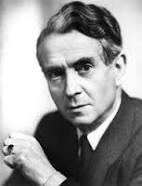
Herbert Howells

1892 - 1983 Topics: Trinity 5 Old Testament; Trinity 5 Old Testament; Trinity 9 Old Testament Composer of "MICHAEL" in Magnify the Lord UK

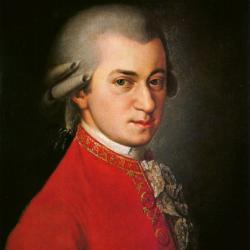
Wolfgang Amadeus Mozart

1756 - 1791 Person Name: Johann C. W. G. Mozart, (1756-1791) Topics: Trinity Composer of "[Glory to the Father give]" in The Sunday School Hymnal Wolfgang Amadeus Mozart Austria 1756-1791. Born at Salzburg, Austria, the son of Leopold Mozart, a minor composer and violinist, and youngest of seven children, he showed amazing ability on violin and keyboard from earliest childhood, even starting to compose music at age four when his father would play a piece and Mozart would play it exactly as did his father. At five, he composed some of his own music, which he played to his father, who wrote it down. When Mozart was eight, he wrote his first symphony, probably transcribed by his father. In his early years his father was his only teacher, teaching his children languages and academic subjects, as well as fundamentals of their strict Catholic faith. Some of his early compositions came as a surprise to his father, who eventually gave up composing himself when he realized how talented his son was. His family made several European journeys and he and his sister, Nanneri, performed as child prodigies, at the court of Prince-elector Maximillian II of Bavaria in Munich, and at the Imperial Courts in Vienna and Prague. A long concert tour followed, for 3.5 years, taking the family to courts in Munich, Mannheim, Paris, London, Dover, The Hague, Amsterdam, Utrecht, Mechelen, and again to Paris, and back home via Zurich, Donaueschingen, and Munich. During these trips Mozart met many musicians, acquainting himself with the works of other composers. He met Johann Christian Bach in London in 1764. Family trips were challenging, and travel conditions were primitive. They had to wait for invitations and reimbursements from nobility, and they endured long, near-fatal illnesses far from home. First Leopold (1764) got sick, then both children (1765). They traveled again to Vienna in 1767 and stayed there over a year. After a year back in Salzburg, Leopold and Wolfgang went to Italy (1769-1771), Leopold wished to display his son’s abilities as a performer and maturing composer. In Bologna, Italy, Wolfgang was accepted as a member of the famous Academia Filamonica. In Rome he heard Gregorio Allegri’s Miserere twice in performance. Back in the Sistine Chapel, Mozart wrote the whole performance out from memory, thus producing the first unauthorized copy of this closely guarded property of the Vatican. In the next few years Mozart wrote several operas performed with success in Italy, but his father’s hopes of securing a professional appointment for his son were not realized. At age 17 he was engaged as a musician at the Salzburg court, but grew restless and traveled in search of a better position. After returning to Salzburg, Mozart was employed as a court musician by the ruler of Salzburg, Prince Archbishop Hieronymus Colloredo. This gave Mozart ample opportunity to develop relationships with other musicians and his admirers, resulting in his development of new symphonies, sonatas, string quartets, masses, serenades, and some minor operas. In 1775 he wrote his only violin concertos, five in all. Again, he was discontent with work in Salzburg and traveled to find more opportunity to write operas. He and his father again visited Munich and Vienna, but neither visit was successful with the exception of his opera ‘La finta giardiniera’ in Munich. In 1777 he resigned his Salzburg position and went to Augsburg, Mannheim, Paris, and Munich again. In Mannheim he met and fell in love with Aloysia Weber, one of four daughters of a musical family. He could find no real employment there and left for Paris in 1778. He might have had a position as organist at Versailles, but he was not interested in that. He fell into debt and started pawning valuables. During these events his mother died. Meanwhile his father was still trying to find him a position in Salzburg. After checking out several other European cities and Munich, he again encountered Aloysia, but she was no longer interested in him, so he returned to Salzburg, having written another symphony, concerto, and piano sonata, and took the new appointment his father had found. However, he was still in discontent. Visiting Vienna in 1781, he was dismissed from his Salzburg position. He wrote another opera, ‘Idomeneo’, in 1781, that was successful in Munich. Two months later he was summoned to Vienna, where his employer, Archbishop Colloredo, wanted him around due to his notoriety. Mozart wished to meet the emperor and perform for him, and finally got that opportunity. It resulted in a part-time position and substantial commissions. Colloredo became a nemesis to Mozart’s career, finally releasing Mozart from his employ with a literal kick in the pants, much against his father’s wishes. However, he was now independent. Mozart then decided to settle in Vienna as a free lance performer and composer. He lived with the Fridolin Weber family, who had moved from Mannheim to Vienna. Fridolin, the father, had died, and they were taking in lodgers to make ends meet. His career there went well, and he performed as a pianist before the Emperor, establishing himself as the finest keyboard player in Vienna. He wrote another opera in 1782, again achieving success. Mozart had now become a prolific and influential composer of the Classical period and was known throughout Europe. Aloysia was now married to actor, Joseph Lange, and Mozart’s interest shifted to her sister, Constanze. In 1782 he married Constanze Weber Mozart Nissen. The marriage started out with a brief separation, and there was a problem getting Mozart’s father’s permission, which finally came. They had six children, but only two survived infancy: Carl and Franz. He lived in Vienna and achieved some notoriety, composing many of his best-known symphonies, concertos, and operas. In 1782-83 he became intimately acquainted with Johann Sebastian Bach and George Friederic Handel, as his friend, Gottfried van Swieten, owned many manuscripts of the Baroque masters, which Mozart studied intently. He altered his style of composition as a result. That year Mozart and his wife visited his father and sister, and he composed a liturgical piece, a Mass, with a singing part for his wife. He also met Joseph Hadyn in Vienna in 1784 and they became friends. They even played together in a string quartet from time to time. Mozart wrote six quartets dedicated to Hadyn. In 1785 Hadyn told Leopold Mozart, “Your son is the greatest composer known to me by person and repute, he has taste, and what is more, the greatest skill in composition”. Over the next several years Mozart booked several piano concertos in various places as a sole performer to delighted audiences, making substantial remuneration for his work. He and his wife then adopted a more luxurious lifestyle. They moved to an expensive apartment and he bought a fine fortepiano and billiard table. They sent their son, Karl, to an expensive boarding school and also kept servants. In 1784 Mozart became a Freemason and even composed Masonic music. Over the next several years he did little operatic writing and focused on his career as a piano soloist and writer of concertos. He again began operatic collaboration in 1785, creating ‘The marriage of Figaro’, then ‘Don Giovanni’ in 1787. That year his father died. Also that year he obtained a steady post under Emperor Joseph II as his chamber composer. This was part-time employment that was important when hard times arrived. However, Joseph aimed at keeping Mozart from leaving Vienna for better work. The Austrio-Turkish War made life difficult for musicians, and his aristocracy support had declined. He moved to save on expenses, but that did not help much, and he was reduced to borrowing funds from his friends, and pleading for loans. During this period he produced his last three symphonies. In 1789 he then set up on a journey to Leipzig, Dresden, and Berlin hoping to improve his fortunes. In 1790 he was highly productive, producing concertos, an opera, ‘The magic flute’, a series of string quintets, a motet, and an (unfinished) Requiem. Finances began to improve and he begin paying back his debts. Public reaction to his works also brought him great satisfaction. In 1791, while in Prague for the premiere of his opera, ‘La clemenza di Tito’, he fell ill. He continued professional functions for a short time, but had to go home and be nursed by his wife over the next couple of months. He died at Vienna, Austria, at the age of 35, a small thin man with undistinguishing characteristics. He was buried in a modest grave, having had a small funeral. Beethoven composed his early works in the shadow of Mozart, and Joseph Hadyn wrote “posterity will not see such a talent (as Mozart) again in 100 years”. 600+ works. Side note: Mozart enjoyed billiards, dancing, and had a pet canary, a starling, a dog, and a horse for recreational riding. He liked off-color humor. He wore elegant clothing when performing and had a modest tenor voice. John Perry

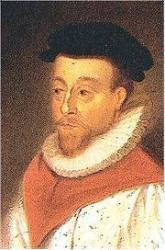
Orlando Gibbons

1583 - 1625 Topics: Sundays after Trinity; Sundays after Trinity Faith Composer of "GIBBONS" in The Hymnal Orlando Gibbons (baptised 25 December 1583 – 5 June 1625) was an English composer, virginalist and organist of the late Tudor and early Jacobean periods. He was a leading composer in the England of his day. Gibbons was born in Cambridge and christened at Oxford the same year – thus appearing in Oxford church records. Between 1596 and 1598 he sang in the Choir of King's College, Cambridge, where his brother Edward Gibbons (1568–1650), eldest of the four sons of William Gibbons, was master of the choristers. The second brother Ellis Gibbons (1573–1603) was also a promising composer, but died young. Orlando entered the university in 1598 and achieved the degree of Bachelor of Music in 1606. James I appointed him a Gentleman of the Chapel Royal, where he served as an organist from at least 1615 until his death. In 1623 he became senior organist at the Chapel Royal, with Thomas Tomkins as junior organist. He also held positions as keyboard player in the privy chamber of the court of Prince Charles (later King Charles I), and organist at Westminster Abbey. He died at age 41 in Canterbury of apoplexy, and a monument to him was built in Canterbury Cathedral. A suspicion immediately arose that Gibbons had died of the plague, which was rife in England that year. Two physicians who had been present at his death were ordered to make a report, and performed an autopsy, the account of which survives in The National Archives: We whose names are here underwritten: having been called to give our counsels to Mr. Orlando Gibbons; in the time of his late and sudden sickness, which we found in the beginning lethargical, or a profound sleep; out of which, we could never recover him, neither by inward nor outward medicines, & then instantly he fell in most strong, & sharp convulsions; which did wring his mouth up to his ears, & his eyes were distorted, as though they would have been thrust out of his head & then suddenly he lost both speech, sight and hearing, & so grew apoplectical & lost the whole motion of every part of his body, & so died. Then here upon (his death being so sudden) rumours were cast out that he did die of the plague, whereupon we . . . caused his body to be searched by certain women that were sworn to deliver the truth, who did affirm that they never saw a fairer corpse. Yet notwithstanding we to give full satisfaction to all did cause the skull to be opened in our presence & we carefully viewed the body, which we found also to be very clean without any show or spot of any contagious matter. In the brain we found the whole & sole cause of his sickness namely a great admirable blackness & syderation in the outside of the brain. Within the brain (being opened) there did issue out abundance of water intermixed with blood & this we affirm to be the only cause of his sudden death. His death was a shock to peers and the suddenness of his passing drew comment more for the haste of his burial – and of its location at Canterbury rather than the body being returned to London. His wife, Elizabeth, died a little over a year later, aged in her mid-30s, leaving Orlando's eldest brother, Edward, to care for the children left orphans by this event. Of these children only the eldest son, Christopher Gibbons, went on to become a musician. One of the most versatile English composers of his time, Gibbons wrote a quantity of keyboard works, around thirty fantasias for viols, a number of madrigals (the best-known being "The Silver Swan"), and many popular verse anthems. His choral music is distinguished by his complete mastery of counterpoint, combined with his wonderful gift for melody. Perhaps his most well known verse anthem is This is the record of John, which sets an Advent text for solo countertenor or tenor, alternating with full chorus. The soloist is required to demonstrate considerable technical facility at points, and the work at once expresses the rhetorical force of the text, whilst never being demonstrative or bombastic. He also produced two major settings of Evensong, the Short Service and the Second Service. The former includes a beautifully expressive Nunc dimittis, while the latter is an extended composition, combining verse and full sections. Gibbons's full anthems include the expressive O Lord, in thy wrath, and the Ascension Day anthem O clap your hands together for eight voices. He contributed six pieces to the first printed collection of keyboard music in England, Parthenia (to which he was by far the youngest of the three contributors), published in about 1611. Gibbons's surviving keyboard output comprises some 45 pieces. The polyphonic fantasia and dance forms are the best represented genres. Gibbons's writing exhibits full mastery of three- and four-part counterpoint. Most of the fantasias are complex, multisectional pieces, treating multiple subjects imitatively. Gibbons's approach to melody in both fantasias and dances features a capability for almost limitless development of simple musical ideas, on display in works such as Pavane in D minor and Lord Salisbury's Pavan and Galliard. In the 20th century, the Canadian pianist Glenn Gould championed Gibbons's music, and named him as his favorite composer. Gould wrote of Gibbons's hymns and anthems: "ever since my teen-age years this music ... has moved me more deeply than any other sound experience I can think of." In one interview, Gould compared Gibbons to Beethoven and Webern: ...despite the requisite quota of scales and shakes in such half-hearted virtuoso vehicles as the Salisbury Galliard, one is never quite able to counter the impression of music of supreme beauty that lacks its ideal means of reproduction. Like Beethoven in his last quartets, or Webern at almost any time, Gibbons is an artist of such intractable commitment that, in the keyboard field, at least, his works work better in one's memory, or on paper, than they ever can through the intercession of a sounding-board. To this day, Gibbons's obit service is commemorated every year in King's College Chapel, Cambridge. --wikipedia.org

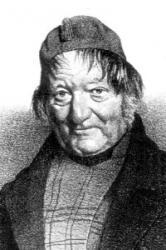
Conrad Kocher

1786 - 1872 Person Name: Konrad Kocher Topics: Third Sunday after Trinity; Thirteenth Sunday after Trinity Composer of "DIX (Treuer Heiland, wir sind hier)" in Evangelical Lutheran hymnal Trained as a teacher, Conrad Kocher (b. Ditzingen, Wurttemberg, Germany, 1786; d. Stuttgart, Germany, 1872) moved to St. Petersburg, Russia, to work as a tutor at the age of seventeen. But his love for the music of Haydn and Mozart impelled him to a career in music. He moved back to Germany in 1811, settled in Stuttgart, and remained there for most of his life. The prestigious Cotta music firm published some of his early compositions and sent him to study music in Italy, where he came under the influence of Palestrina's music. In 1821 Kocher founded the School for Sacred Song in Stuttgart, which popularized four-part singing in the churches of that region. He was organist and choir director at the Stiftskirche in Stuttgart from 1827 to 1865. Kocher wrote a treatise on church music, Die Tonkunst in der Kirche (1823), collected a large number of chorales in Zions Harfe (1855), and composed an oratorio, two operas, and some sonatas. William H. Monk created the current form of DIX by revising and shortening Conrad Kocher's chorale melody for “Treuer Heiland, wir sind hier,” found in Kocher's Stimmen aus dem Reiche Gottes (1838). Bert Polman

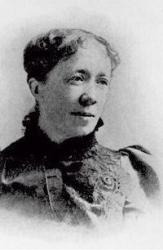
Mary A. Lathbury

1841 - 1913 Topics: God The Trinity Author of "Day Is Dying in the West" in The New Church Hymnal Lathbury, Mary Ann, was born in Manchester, Ontario County, New York, Aug. 10, 1841. Miss Lathbury writes somewhat extensively for the American religious periodical press, and is well and favourably known (see the Century Magazine, Jan., 1885, p. 342). Of her hymns which have come into common use we have:— 1. Break Thou the bread of life. Communion with God. A "Study Song" for the Chautauqua Literary and Scientific Circle, written in the summer of 1880. It is in Horder's (Eng.) Congregational Hymns, 1884. 2. Day is dying in the west. Evening. "Written at the request of the Rev. John H. Vincent, D.D., in the summer of 1880. It was a "Vesper Song," and has been frequently used in the responsive services of the Chautauqua Literary and Scientific Circle." It is in the Laudes Domini, N. Y., 1884. For these details we are indebted to S. W. Duffield's English Hymns, &c, N. Y., 1886. --John Julian, Dictionary of Hymnology (1907) ================== Lathbury, Mary A., p. 640, i. Another hymn by this writer is, "Lift up, lift up thy voice with singing." [Praise to Christ), in Sankey's Sacred Songs & Solos, 1878. --John Julian, Dictionary of Hymnology, Appendix, Part II (1907)

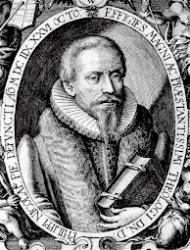
Philipp Nicolai

1556 - 1608 Person Name: Philip Nicolai Topics: Fourth Sunday after Trinity; Thirteenth Sunday after Trinity; Eighteenth Sunday after Trinity Author of "O Morning Star! how fair and bright" in Church Book Philipp Nicolai (b. Mengeringhausen, Waldeck, Germany, 1556; d. Hamburg, Germany, 1608) lived an eventful life–he fled from the Spanish army, sparred with Roman Catholic and Calvinist opponents, and ministered to plague-stricken congregations. Educated at Wittenberg University, he was ordained a Lutheran pastor in 1583 in the city of Herdecke. However, he was soon at odds with the Roman Catholic town council, and when Spanish troops arrived to reestablish Roman dominance, Nicolai fled. In 1588 he became chief pastor at Altwildungen and court preacher to Countess Argaretha of Waldeck. During that time Nicolai battled with Calvinists, who disagreed with him about the theology of the real presence of Christ in the Lord's Supper. These doctrinal controversies were renewed when he served the church in Unna, Westphalia. During his time as a pastor there, the plague struck twice, and Nicolai wrote both "How Bright Appears the Morning Star" and "Wake, Awake." Nicolai's last years were spent as Pastor of St. Katherine's Church in Hamburg. Bert Polman ===================== Nicolai, Philipp, D.D., son of Dieterich Nicolai, sometime Lutheran pastor at Herdecke, in Westphalia, and after 1552, at Mengeringhausen in Waldeck, was born at Mengeringhausen, August 10, 1556. (The father was son of Nicolaus Rafflenbol, of Rafflenbol, near Hagen, in Westphalia, and in later life had adopted the Latinised form Nicolai of his father's Christian name as his own surname.) In 1575 Nicolai entered the University of Erfurt, and in 1576 he went to Wittenberg. After completing his University course in 1579 (D.D. at Wittenberg July 4, 1594), he lived for some time at Volkliardinghausen, near Mengeringhausen, and frequently preached for his father. In August, 1583, he was appointed Lutheran preacher at Herdecke, but found many difficulties there, the members of the Town Council being Roman Catholics. After the invasion by the Spanish troops in April, 1586, his colleague re-introduced the Mass, and Nicolai resigned his post. In the end of 15S6 he was appointed diaconus at Niederwildungen, near Waldeck, and in 1587 he became pastor there. He then became, in Nov. 1588, chief pastor at Altwildungen, and also court preacher to the widowed Countess Margafetha of Waldeck, and tutor to her son, Count Wilhelm Ernst. Here he took an active part on the Lutheran side in the Sacramentarian controversy, and was, in Sept. 1592, inhibited from preaching by Count Franz of Waldeck, but the prohibition was soon removed, and in the Synod of 1593 held at Mengeringhausen, he found all the clergy of the principality of Waldeck willing to agree to the Formula of Concord. In October, 1596, he became pastor at Unna, in Westphalia, where he again became engaged in heated controversy with the Calvinists; passed through a frightful pestilence (see below); and then on Dec. 27, 1598, had to flee before the invasion of the Spaniards, and did not return till the end of April, 1599. Finally, in April 1601, he was elected chief pastor of St. Katherine's Church, at Hamburg, where he entered on his duties Aug. 6, 1601. On Oct. 22, 1608, he took part in the ordination of a colleague in the St. Katherine's Church, the diaconus Penshora, and returned home feeling unwell. A violent fever developed itself, under which he sank, and died Oct. 26, 1608 (D. Philipp Nicolai’s Leben und Lieder, by L. Curtze, 1859; Koch, ii. 324; Allgemeine Deutsche Biographie xxiii. 607, &c). In Hamburg Nicolai was universally esteemed, was a most popular and influential preacher, and was regarded as a "pillar" of the Lutheran church. In his private life he seems to have been most lovable and estimable. Besides his fame as a preacher, his reputation rests mainly on his hymns. His printed works are mostly polemical, often very violent and acrid in tone, and such as the undoubted sincerity of his zeal to preserve pure and unadulterated Lutheranism may explain, but cannot be said to justify. Of his hymns only four seem to have been printed. Three of Nicolai's hymns were first published in his devotional work entitled Frewden-Spiegel dess ewigen Lebens, published at Frankfurt-am-Main, 1599 (see further below). The two noted here ("Wachet auf” and “Wie schon") rank as classical and epoch-making. The former is the last of the long series of Watchmen's Songs. The latter marks the transition from the objective churchly period to the more subjective and experimental period of German hymn writing; and begins the long series of Hymns of Love to Christ as the Bridegroom of the Soul, to which Franck and Scheffler contributed such beautiful examples. Both are also worthy of note for their unusual and perfect rhythms, and for their splendid melodies. They are:— i. Wachet auf, ruft uns die Stimme. Eternal Life. This beautiful hymn, one of the first rank, is founded on St. Matt. xxv. 1-13; Rev. xix. 6-9, and xxi. 21; 1 Cor. ii. 9; Ezek. iii. 17; and Is. lii. 8. It first appeared in the Appendix to his Frewden-Spiegel, 1599, in 3 st. of 10 1., entitled "Of the Voice at Midnight, and the Wise Virgins who meet their Heavenly Bridegroom. Matt. 25." Thence in Wackernagel v. p. 259, the Unverfälschter Liedersegen, 1851, No. 690, and most German collections. It is a reversed acrostic, W. Z. G. for the Graf zu Waldeck, viz. his former pupil Count Wilhelm Ernst, who died at Tübingen Sept. 16, 1598, in his fifteenth year. It seems to have been written in 1597 at Unna, in Wesphalia, where Nicolai was then pastor; and during the terrible pestilence which raged there from July, 1597, to January, 1598, to which in July 300, in one week in August 170, and in all over 1300 fell victims. Nicolai's parsonage overlooked the churchyard, and there daily interments took place, often to the number of thirty. In these days of distress, when every household was in mourning, Nicolai's thoughts turned to Death, and thence to God in Heaven, and to the Eternal Fatherland. Jn the preface (dated Aug. 10, 1598) to his Frewden-Spiegel he says: "There seemed to me nothing more sweet, delightful and agreeable, than the contemplation of the noble, sublime doctrine of Eternal Life obtained through the Blood of Christ. This I allowed to dwell in my heart day and night, and searched the Scriptures as to what they revealed on this matter, read also the sweet treatise of the ancient doctor Saint Augustine [De Civitate Dei]. ..... Then day by day I wrote out my meditations, found myself, thank God! wonderfully well, comforted in heart, joyful in spirit, and truly content; gave to my manuscript the name and title of a Mirror of Joy, and took this so composed Frewden-Spiegel to leave behind me (if God should call me from this world) as the token of my peaceful, joyful, Christian departure, or (if God should spare me in health) to comfort other sufferers whom He should also visit with the pestilence .... Now has the gracious, holy God most mercifully preserved me amid the dying from the dreadful pestilence, and wonderfully spared me beyond all my thoughts and hopes, so that with the Prophet David I can say to Him "0 how great is Thy goodness, which Thou hast laid up for them that fear Thee," &c. The hymn composed under these circumstances (it may be stated that Curtze thinks both hymns were written in 1596, while Nicolai was still at Alt-Wildungen) soon became popular, and still retains its place, though often altered in the 3rd stanza. Probably the opening lines; "Wachet auf! ruft uns die Stimme Der Wachter sehr hoch auf der Zinne" are borrowed from one of the Wächter-Lieder, a form of lyric popular in the Middle Ages, introduced by Wolfram von Eschenbach. (See K. Goedeke's Deutsche Dichtung im Mittelalter, 1871, p. 918.) But while in the Songs the voice of the Watchman from his turret summons the workers of darkness to flee from discovery, with "Nicolai it is a summons to the children of light to awaken to their promised reward and full felicity. The melody appeared first along with the hymn, and is also apparently by Nicolai, though portions of it (e.g. 1. 1 by the Gregorian Fifth Tone) may have been suggested by earlier tunes. It has been called the King of Chorales, and by its majestic simplicity and dignity it well deserves the title. Since its use by Mendelssohn in his St. Paul it has become well known in England, and, in its original form, is given in Miss Winkworth's Chorale Book for England, 1863 (see below). Translations in common use:— 1. Sleepers wake, a voice is calling. This is an unrhymed translation of st. i. by W. Ball in his book of words to Mendelssohn's oratorio of St. Paul, 1836. This form is in Horder's Congregational Hymns, 1884, and others. In the South Place [London] Collection, 1873, it is a recast by A. J. Ellis, but opens with the same first line. In the Parish Hymn Book, 1875, a translation of st. ii., also unrhymed, is added. 2. "Wake ye holy maidens, wake ye. A good translation contributed by Philip Pusey to A. R. Reinagle's Collection of Psalm and Hymn Tunes, Oxford, 1840, p. 134. It was considerably altered, beginning "Wake, ye holy maidens, fearing" in the Salisbury Hymn Book, 1857, and this is repeated, with further alterations, in Kennedy, 1863, and the Sarum Hymnal, 1868. 3. Wake, arise! the call obeying. A good translation by A. T. Russell, as No. 110 in the Dalston Hospital Hymn Book 1848. 4. Wake, oh wake; around are flying. This is a recast, by A. T. Russell, not for the better, from his 1848 translation, as No. 268 in his Psalms & Hymns. 1851, st. iii. being omitted. Thence, unaltered, in the New Zealand Hymnal, 1872. 5. Wake, awake, for night is flying. A very good translation by Miss Winkworth, in her Lyra Germanica, 2nd Ser., 1858, p. 225, repeated in her Chorale Book for England, 1863, No. 200, with st. ii., 11. 7, 8, rewritten. Included in the English Presbyterian Psalms & Hymns, 1867; Scottish Presbyterian Hymnal, 1876, &c.; and in America, in Laudes Domini, 1884, and others. In the Cantate Domino, Boston, U. S., 1859, it begins "Awake, awake, for night is flying." 6. Wake! the startling watch-cry pealeth. By Miss Cox, in Lyra Messianica, 1864, p. 4, and her Hymns from the German, 1864, p. 27; repeated in W. F. Stevenson's Hymns for Church and Home, 1873. The version in J. L. Porter's Collection, 1876, takes st. i., 11. 1-4 from Miss Cox. The rest is mainly from R. C. Singleton's translation in the Anglican Hymn Book, but borrows lines also from Miss Winkworth, and from the Hymnary text. 7. Wake! the watchman's voice is sounding. By R. C.Singleton. This is No. 259 in the Anglican Hymn Book, 1868, where it is marked as a "versification by R. C. Singleton, 1867." 8. Wake, awake, for night is flying. This is by Canon W. Cooke, in the Hymnary, 1871, and signed A. C. C. In the edition of 1872, 11. 7, 8 of st. ii. are recast, and the whole is marked as " based on E. A. Dayman." It is really a cento, four lines of the 1872 text (i., 1. 5; ii., 11. 7, 8; iii., 1. 9) being by Canon Cooke; and the rest being adapted from the versions of P. Pusey as altered in the Sarum Hymnal, of Miss Winkworth, of Miss Cox, and of R. C. Singleton. It may be regarded as a success, and as passed into the Society for Promoting Christian Knowledge Church Hymns, 1871; the 1874 Appendix to the New Congregational Hymn Book; Horder's Congregational Hymns, 1884, and others. 9. Wake, arise! the voice is calling. This is an anonymous translation in the Ohio Lutheran Hymnal, 1880. 10. Slumberers, wake, the Bridegroom cometh. A spirited version, based on Miss Winkworth (and with an original st. as iv.), by J. H. Hopkins in his Carols, Hymns & Songs, 3rd ed., 1882. p. 88, and dated 1866. Repeated in the Hymnal Companion (Reformed Episcopal) Philadelphia, U.S., 1885. Other translations are:— (1) “Awake, the voice is crying." In Lyra Davidica, 1108, p. 73. (2) "Awake! awake! the watchman calls." By Miss Fry, 1845, p. 33. (3) "Hark! the trump of God is sounding." By Dr. H. Mills, 1845 (1856, p. 269. This is from the altered form by F. G. Klopstock, in his Geistliche Lieder, 1758, p. 246, as further altered in Zollikofer's Gesang-Buch, 1766, No. 303, where it begins "Wachet auf! so ruft." (4) "Awake, arise, the voice gives warning." In the United Presbyterian Juvenile Missionary Magazine, 1857, p. 193; repeated in 1859, p. 171, beginning, “Awake, arise, it is the warning." (5) “Waken! From the tower it soundeth." By Mrs. Bevan, 1858, p. 1. (6) Up! awake! his summons hurried." By J. D.Burns, in the Family Treasury, 1860, p. 84, and his Memoir & Remains, 1869, p. 234. 11. Wie schön leuchtet der Morgenstern, Voll Gnad und Wahrheit von dem Herrn. Love to Christ. First published in theAppendix to his Frewden-Spiegel, 1599, in 7 stanzas of 10 lines entitled "A spiritual bridal song of the believing soul concerning Jesus Christ, her heavenly Bridegroom, founded on the 45th Psalm of the prophet David." Lauxmann, in Koch, viii. 271, thus gives an account of it as written during the Pestilence of 1597. He says Nicola was "One morning in great distress and tribulation in his quiet study. He rose in spirit from the distress and death which surrounded him to his Redeemer and Saviour, and while he clasped Him in ardent love there welled forth from the inmost depths of his heart this precious hymn of the Saviour's love and of the joys of Heaven. He was so entirely absorbed in this holy exaltation that he forgot all around him, even his midday meal, and allowed nothing to disturb him in his poetical labours till the hymn was completed "—-three hours after midday. As Nicolai was closely connected with Waldeck he formed with the initial letters of his stanzas the acrostic W. E. G. U. H. Z. W., viz. Wilhelm Ernst Graf Und Herr Zn Waldeck— his former pupil. The hymn has reminiscences of Eph. v., of Canticles, and of the Mediaeval Hymns to the Blessed Virgin Mary. It became at once a favourite in Germany, was reckoned indispensable at weddings, was often sung around death beds, &c. The original form is in Wackernagel v. p. 258, and the Unverfälschter Liedersegen, 1851, No. 437; but this (as will be seen by comparing Miss Winkworth's version of 1869) is hardly suited for present day congregational use. In Bunsen's Versuch, 1833, No. 554, it is slightly altered. The form in Knapp's Evangelischer Lieder-Schatz, 1837, No. 2074 (1865, No. 1810) is a recast by Knapp made on Jan. 14, 1832, and published in his Christoterpe, 1833, p. 285, preceded by a recast of "Wachet auf!"; both being marked as “rewritten according to the requirements of our times." The popularity of the hymn was greatly aided by its beautiful chorale (named by Mr. Mercer, Frankfort), which has been called "The Queen of Chorales," and to which many city chimes in Germany were soon set. It was published with the hymn, and is probably an original tune by Nicolai, though portions may have been suggested by earlier melodies, especially by the "Resonet in laudibus," which is probably of the 14th cent. (Bäumker i., No. 48, cites it from the Obsequiale, Ingolstadt, 1570. In Alton's Congregational Psalmist named Arimathea). Translations in common use:— 1. How bright appears the Morning Star! This is a full and fairly close version by J. C. Jacobi, in his Psalter Germanica, 1722, p. 90 (1732, p. 162); repeated, with alterations, in the Moravian Hymn Book, 1754, pt. i., No. 317 (1886, No. 360). The versions of st. v., vii. beginning, "The Father from eternity," are included in Aids to the Service of Song, Edinburgh N.D., but since 1860. In 1855 Mercer gave in his The Church Psalter & Hymn Book., as No. 15, a hymn in 4 stanzas of 10 lines, of which five lines are exactly from Jacobi. St. i., l1. 1-3; ii., .11. 8, 9 ; iii., 11. 2, 3, 6 ; iv., 1. 10, are exactly; and i., 1. 9; ii., 11. 2, 3, 6, 10; iii., II. 1, 4, 5; iv., 11. 7, 9 are nearly from the Moravian Hymn Book, 1801. The interjected lines are by Mercer, but bear very slight resemblance either to Nicolai's original text, or to any version of the German that we have seen. In his 1859 edition he further recast it, leaving only the first line unaltered from Jacobi; and this form is in his Oxford edition, 1864, No. 121, in the Irish Church Hymnal, 1869 and 1873, and in the Hymnal Companion 1870 and 1876. In Kennedy, 1863, the text of 1859 is given with alterations, and begins "How brightly dawns the Morning Star;" and this form is in the People's Hymnal, 1867; Dale's English Hymn Book 1874, &c. 2. How graciously doth shine afar. By A. T. Russell, as No. 8 in the Dalston Hospital Hymn Book, 1848, and repeated in the Cheltenham College Hymn Book, No. 37. It is a free translation of st. i., vi., v. 3. How lovely shines the Morning Star! A good and full translation by Dr. H. Harbaugh (from the text in Dr. Schaff’s Deutsches Gesang-Buch, 1860), in the German Reformed Guardian, May, 1860, p. 157. Repeated in full in Schaff's Christ in Song, 1869, and abridged in Adams's Church Pastorals, Boston, U.S.A., 1864. 4. 0 Morning Star! how fair and bright. A somewhat free translation of st. i., iii., iv., vii., by Miss Winkworth, as No.149 in her Chorale Book for England, 1863. Repeated in the Pennsylvania Lutheran Church Book, 1868; Ohio Lutheran Hymnal,1880, &c. 5. How brightly shines the Morning Star, In truth and mercy from afar. A translation of st. i., iii., iv., vii., by Miss Borthwick, as No. 239 in Dr. Pagenstecher's Collection, 1864. 6. How brightly glows the Morning Star. In full, from Knapp's German recast, by M. W. Stryker, in his Hymns & Verses, 1883, p. 52; repeated, omitting st. ii., iv., in his Christian Chorals, 1885, No. 145. Other translations are:— (1) "How fairly shines the Morning Star." In Lyra Davidica, 1708, p. 40. (2) "As bright the star of morning gleams" (st. i.) By W. Bartholomew, in his book of words to Mendelssohn's oratorio of Christus, 1852, p. 11. (3) "How lovely now the Morning Star." By Miss Cox, 1864, p. 229. (4) "How beauteous shines the Morning Star." By Miss Burlingham, in the British Herald, Oct. 1865, p. 152, and Reid's Praise Book, 1872. (5) "0 Morning Star, how fair and bright." By MissWinkworth, 1869, p. 160. (6) "How bright appears our Morning Star." By J. H. Hopkins, in his Carols, Hymns and Songs, 3rd ed., 1882, p. 168, and dated 1866. There are also three hymns in common use, which have generally been regarded as translations from Nicolai. They are noted as follows:—i. "Behold how glorious is yon sky" (see p. 127, ii.). ii. "How beautiful the Morning Star". iii. "How brightly shines the Morning Star! What eye descries it from afar". [Rev. James Mearns, M.A.] --John Julian, Dictionary of Hymnology (1907)

Melchior Vulpius

1570 - 1615 Topics: Trinity Composer of "CHRISTUS, DER IST MEIN LEBEN" in Psalter Hymnal (Gray) Born into a poor family named Fuchs, Melchior Vulpius (b. Wasungen, Henneberg, Germany, c. 1570; d. Weimar, Germany, 1615) had only limited educational oppor­tunities and did not attend the university. He taught Latin in the school in Schleusingen, where he Latinized his surname, and from 1596 until his death served as a Lutheran cantor and teacher in Weimar. A distinguished composer, Vulpius wrote a St. Matthew Passion (1613), nearly two hundred motets in German and Latin, and over four hundred hymn tunes, many of which became popular in Lutheran churches, and some of which introduced the lively Italian balletto rhythms into the German hymn tunes. His music was published in Cantiones Sacrae (1602, 1604), Kirchengesangund Geistliche Lieder (1604, enlarged as Ein schon geistlich Gesanglmch, 1609), and posthumous­ly in Cantionale Sacrum (1646). Bert Polman

W. O. Cushing

1823 - 1902 Topics: The Holy Trinity Author of "Under his wings" in Alleluia Rv William Orcutt Cushing USA 1823-1902. Born at Hingham, MA, he read the Bible as a teenager and became a follower of the Orthodox Christian school of thought. At age 18 he decided to become a minister, following in his parents theology. His first pastorate was at the Christian Church, Searsburg, NY. He married Hena Proper in 1854. She was a great help to him throughout his ministry. He ministered at several NY locations over the years, including Searsburg, Auburn, Brookley, Buffalo, and Sparta. Hena died in 1870, and he returned to Searsburg, again serving as pastor there. Working diligently with the Sunday school, he was dearly beloved by young and old. Soon after, he developed a creeping paralysis that caused him to lose his voice. He retired from ministry after 27 years. He once gave all his savings ($1000) to help a blind girl receive an education. He was instrumental in the erection of the Seminary at Starkey, NY. He gave material aid to the school for the blind at Batavia. He was mindful of the suffering of others, but oblivious to his own. After retiring, he asked God to give him something to do. He discovered he had a talent for writing and kept busy doing that. He authored about 300 hymn lyrics. The last 13 years of his life he lived with Rev. and Mrs. E. E Curtis at Lisbon Center, NY, and joined with the Wesleyan Methodist Church there. He died at Searsburg, NY. John Perry ================== Cushing, William Orcutt , born at Hingham, Massachusetts, Dec. 31, 1823, is the author of the following hymns which appear in I. D. Sankey's Sacred Songs and Solos:— 1. Beautiful valley of Eden. Heaven. 2. Down in the valley with my Saviour I would go. Trusting to Jesus. 3. Fair is the morning land. Heaven. 4. I am resting so sweetly in Jesus now. Rest and Peace in Jesus. 5. I have heard of a land far away. Heaven. 6. O safe to the Rock that is higher than I. The Rock of Ages. 1. Ring the bells of heaven, there is joy today. Heavenly Joy over repenting Sinners. 8. We are watching, we are waiting. Second Advent anticipated. Mr. Cushing has also several additional hymns in some American Sunday School collections, and collections of Sacred Songs. -- John Julian, Dictionary of Hymnology ================= Cushing, W. 0., p. 274, i. Other hymns are:— 1. O I love to think of Jesus . Thinking of Jesus. 2. There is joy in heaven! there is joy to-day. Angels joy over returning Sinners. 3. When He cometh, when He cometh. Advent. --John Julian, Dictionary of Hymnology, Appendix, Part II (1907)

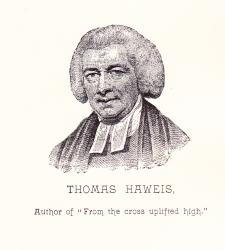
Thomas Haweis

1734 - 1820 Person Name: Rev. Thomas Haweis, 1734-1820 Topics: Trinity Composer of "CHESTERFIELD" in Hymnal and Order of Service Thomas Haweis (b. Redruth, Cornwall, England, 1734; d. Bath, England, 1820) Initially apprenticed to a surgeon and pharmacist, Haweis decided to study for the ministry at Oxford and was ordained in the Church of England in 1757. He served as curate of St. Mary Magdalen Church, Oxford, but was removed by the bishop from that position because of his Methodist leanings. He also was an assistant to Martin Madan at Locke Hospital, London. In 1764 he became rector of All Saints Church in Aldwinkle, Northamptonshire, and later served as administrator at Trevecca College, Wales, a school founded by the Countess of Huntingdon, whom Haweis served as chaplain. After completing advanced studies at Cambridge, he published a Bible commentary and a volume on church history. Haweis was strongly interested in missions and helped to found the London Mission Society. His hymn texts and tunes were published in Carmino Christo, or Hymns to the Savior (1792, expanded 1808). Bert Polman ============================ Haweis, Thomas, LL.B., M.D., born at Truro, Cornwall, 1732. After practising for a time as a Physician, he entered Christ's College, Cambridge, where he graduated. Taking Holy Orders, he became Assistant Preacher to M. Madan at the Lock Hospital, London, and subsequently Rector of All Saints, Aldwincle, Northamptonshire. He was also Chaplain to Lady Huntingdon, and for several years officiated at her Chapel in Bath. He died at Bath, Feb. 11, 1820. He published several prose works, including A History of the Church, A Translation of the New Testament, and A Commentary on the Holy Bible. His hymns, a few of which are of more than ordinary merit, were published in his Carmina Christo; or, Hymns to the Saviour. Designed for the Use and Comfort of Those who worship the Lamb that was slain. Bath, S. Hayward, 1792 (139 hymns), enlarged. London, 1808 (256 hymns). In 1794, or sometime after, but before the enlarged edition was published, two hymns "For the Fast-day, Feb. 28, 1794," were added to the first edition. These were, "Big with events, another year," and "Still o'er the deep the cannon's roar." The most popular and widely used of his hymns are, "Behold the Lamb of God, Who bore," &c.; "Enthroned on high, Almighty Lord"; and “O Thou from Whom all goodness flows." The rest, all being from Carmina Christo, first edition 1792, are:— 1. Dark was the night and cold the ground. Gethsemane. 2. From the cross uplifted high. Christ in Glory. 3. Great Spirit, by Whose mighty power. Whitsuntide. 4. Submissive to Thy will, my God. Resignation. 5. The happy morn is come. Easter. 6. Thou Lamb of God, that on the tree. Good Friday. The hymn, "Thy Head, the crown of thorns that wears," in Stryker & Main's Church Praise Book, N. Y., 1882, begins with st. ii. of this hymn. 7. To Thee, my God and Saviour, My heart, &c. Praise for Redemption. --John Julian, Dictionary of Hymnology (1907)

Michael Forster

b. 1946 Person Name: Michael Forster, b. 1946 Topics: The Holy Trinity Author (v. 4) of "Come, Holy Ghost, our souls inspire" in Complete Anglican Hymns Old and New

Pages


Export as CSV
It looks like you are using an ad-blocker. Ad revenue helps keep us running. Please consider white-listing Hymnary.org or getting Hymnary Pro to eliminate ads entirely and help support Hymnary.org.