

 My Starred Hymns
 My FlexScores
 My Hymnals
 My Purchased Files
Planning worship?
Check out our sister site, ZeteoSearch.org,
for 20+ additional resources related to your search.
- |
User Links
Person Results
Ralph Vaughan Williams
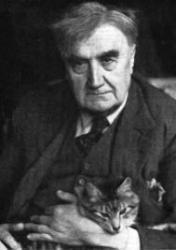
1872 - 1958 Person Name: Ralph Vaughan Williams, 1872-1958 Topics: Wisdom and Understanding Composer of "THE CALL" in Singing the Living Tradition Through his composing, conducting, collecting, editing, and teaching, Ralph Vaughan Williams (b. Down Ampney, Gloucestershire, England, October 12, 1872; d. Westminster, London, England, August 26, 1958) became the chief figure in the realm of English music and church music in the first half of the twentieth century. His education included instruction at the Royal College of Music in London and Trinity College, Cambridge, as well as additional studies in Berlin and Paris. During World War I he served in the army medical corps in France. Vaughan Williams taught music at the Royal College of Music (1920-1940), conducted the Bach Choir in London (1920-1927), and directed the Leith Hill Music Festival in Dorking (1905-1953). A major influence in his life was the English folk song. A knowledgeable collector of folk songs, he was also a member of the Folksong Society and a supporter of the English Folk Dance Society. Vaughan Williams wrote various articles and books, including National Music (1935), and composed numerous arrangements of folk songs; many of his compositions show the impact of folk rhythms and melodic modes. His original compositions cover nearly all musical genres, from orchestral symphonies and concertos to choral works, from songs to operas, and from chamber music to music for films. Vaughan Williams's church music includes anthems; choral-orchestral works, such as Magnificat (1932), Dona Nobis Pacem (1936), and Hodie (1953); and hymn tune settings for organ. But most important to the history of hymnody, he was music editor of the most influential British hymnal at the beginning of the twentieth century, The English Hymnal (1906), and coeditor (with Martin Shaw) of Songs of Praise (1925, 1931) and the Oxford Book of Carols (1928).
Bert Polman
Ralph Vaughan Williams
John L. Bell
b. 1949 Topics: Knowledge and Understanding; Knowledge and Understanding Author of "We Cannot Measure How You Heal" in Worship and Song John Bell (b. 1949) was born in the Scottish town of Kilmarnock in Ayrshire, intending to be a music teacher when he felt the call to the ministry. But in frustration with his classes, he did volunteer work in a deprived neighborhood in London for a time and also served for two years as an associate pastor at the English Reformed Church in Amsterdam. After graduating he worked for five years as a youth pastor for the Church of Scotland, serving a large region that included about 500 churches. He then took a similar position with the Iona Community, and with his colleague Graham Maule, began to broaden the youth ministry to focus on renewal of the church’s worship. His approach soon turned to composing songs within the identifiable traditions of hymnody that began to address concerns missing from the current Scottish hymnal:
"I discovered that seldom did our hymns represent the plight of poor people to God. There was nothing that dealt with unemployment, nothing that dealt with living in a multicultural society and feeling disenfranchised. There was nothing about child abuse…,that reflected concern for the developing world, nothing that helped see ourselves as brothers and sisters to those who are suffering from poverty or persecution." [from an interview in Reformed Worship (March 1993)]
That concern not only led to writing many songs, but increasingly to introducing them internationally in many conferences, while also gathering songs from around the world. He was convener for the fourth edition of the Church of Scotland’s Church Hymnary (2005), a very different collection from the previous 1973 edition. His books, The Singing Thing and The Singing Thing Too, as well as the many collections of songs and worship resources produced by John Bell—some together with other members of the Iona Community’s “Wild Goose Resource Group,” —are available in North America from GIA Publications.
Emily Brink
John L. Bell
David Haas
b. 1957 Person Name: David Haas, b. 1957 Topics: Understanding Author of "The Peace of God" in Gather (3rd ed.)
David Haas
James Merrick
1720 - 1769 Person Name: Merrick Topics: For the Understanding and Influence of God's Word Author of "While here as wandering sheep we stray" in Hymns for Christian Devotion Merrick, James , M.A., was born in 1720, and educated at Oxford, where he became a Fellow of Trinity College. He entered Holy Orders, but his health would not admit of parish work. He died at Reading, 1769. His publications include:—
(1) Messiah, a Divine Essay. Humbly dedicated to the Reverend the Vice-Chancellor of the University of Oxford and the Visitors of the Free School in Reading. By James Merrick, Ætat. 14, Senior Scholar of the School at their last Terminal Visitation, the 7th of October, 1734. Reading. (2) The Destruction of Troy. Translated from the Greek of Tryphiodorus into English Verse, with Notes, &c. 1742. (3) Poems on Sacred Subjects. Oxford . 1763. (4) The Psalms of David Translated or Paraphrased in English Verse. By James Merrick, M.A., late Fellow of Trinity College, Oxford. Reading. J. Carnan and Co. 1765. 2nd ed. 1766. A few only of these paraphrases were divided into stanzas. In 1797 the Rev. W. D. Tattersall pulished the work "Divided into stanzas for Parochial Use, and paraphrased in such language as will be intelligible to every capacity . . . with a suitable Collect to each Psalm from the Works of Archbishop Parker."
Merrick's paraphrases, although weak and verbose, were in extensive use in the early part of the present century, both in the Church of England and with Nonconformists. They have, however, fallen very much into disuse. Those in modern hymn-books, mainly in the form of centos, include:—
1. Blest Instructor, from Thy ways. Ps. xix.
2. Descend, O Lord! from heaven descend. Ps. cxliv. (In time of National Peril.)
3. Far as creation's bounds extend. Ps. cxlv.
4. God of my strength, the wise, the just. Ps. xxxi.
5. He who with generous pity glows. Ps. xli.
6. How pleasant, Lord.Thy dwellings are. Ps. lxxxiv.
7. Lift up your voice and thankful sing. Ps. cxxxvi.
8. Lo, my Shepherd's hand divine. Ps. xxiii.
9. Lord, my Strength, to Thee I pray. Ps. xxviii.
10. My heart its noblest theme has found. Ps.xlv.
11. O let me, [gracious] heavenly Lord extend. Ps. xxxix.
12. O turn, great Ruler of the skies. Ps. li.
13. Praise, O praise the Name divine. Ps. cl.
14. Sing, ye sons of [men] might, O sing. Ps. xxix.
15. Teach me, O teach me, Lord, Thy way. Ps. cxix.
16. The festal morn, my [O] God, is come. Ps. cxxii, (Sunday Morning.)
17. The morn and eve Thy praise resound. Ps. lxv. (Harvest.)
18. To Thy pastures, fair and large. Ps. xxiii.
From his Poems on Sacred Subjects, 1763, the following centos have also come into common use: --
19. Author of good, to Thee we turn. Resignation.
20. Eternal God, we look to Thee. Resignation.
21. 'Tis enough, the hour is come. Nunc Dimittis.
John Julian, Dictionary of Hymnology (1907)
James Merrick
Nolan Williams
Person Name: Nolan Williams, Jr., b.1969 Topics: Understanding Arranger of "BY AND BY" in Lead Me, Guide Me (2nd ed.)
Nolan Williams
Per Harling
b. 1948 Topics: Understanding Author of "Sing, Sing the Song of Life (When the Seed of Hope Is Growning)" in New Hymns of Hope
Per Harling
James E. Moore

b. 1951 Person Name: James E. Moore, Jr., b. 1951 Topics: Understanding Author of "Spirit of God" in Gather (3rd ed.)
James E. Moore
David Hurd
b. 1950 Person Name: David Hurd, b. 1950 Topics: Understanding Composer of "SPRAGUE" in Worship (3rd ed.) David Hurd (b. Brooklyn, New York, 1950) was a boy soprano at St. Gabriel's Church in Hollis, Long Island, New York. Educated at Oberlin College and the University of North Carolina, he has been professor of church music and organist at General Theological Seminary in New York since 1976. In 1985 he also became director of music for All Saints Episcopal Church, New York. Hurd is an outstanding recitalist and improvisor and a composer of organ, choral, and instrumental music. In 1987 David Hurd was awarded the degree of Doctor of Music, honoris causa, by the Berkeley Divinity School at Yale. The following year he received honorary doctorates from the Church Divinity School of the Pacific, Berkeley, California, and from Seabury-Western Theological Seminary, Evanston, Illinois. His I Sing As I Arise Today, the collected hymn tunes of David Hurd, was published in 2010.
Bert Polman and Emily Brink
David Hurd
George Willis Cooke
1848 - 1923 Person Name: George W. Cooke, 1848-1923 Topics: Understanding Author of "I've Got the Joy, Joy, Joy" in Lead Me, Guide Me (2nd ed.) George Willis Cooke was a writer of philosophical and literary works. He was a member the Unitarian church. He lived in Francestown, New Hampshire and he died in Revere, Massachusetts in 1923.
Dianne Shapiro from research done by Richard Green
George Willis Cooke
John Page Hopps
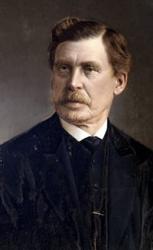
1834 - 1911 Person Name: John P. Hopps Topics: Prayer For Understanding Author of "Father, lead me day by day" in Elmhurst Hymnal Hopps, John Page, was born in London, Nov. 6, 1834, and educated at the G. Baptist College, Leicester. Commencing public work in 1856, after a brief ministry at Hugglescote and Ibstock, in Leicestershire, he became colleague with George Dawson at the Church of the Saviour, Birmingham. From 1860 to 1876 he ministered to Unitarian congregations at Sheffield, Dukinfield, and Glasgow. Since 1876 he has preached in Leicester. Mr. Hopps has published many books and pamphlets, chiefly volumes of Sermons and Lectures. Most of his smaller works are controversial. In 1863 he commenced a monthly periodical called The Truthseeker. He has compiled the following hymnbooks for Congregational, Mission, or School purposes:—
(1) Hymns for Public Worship and the Home, 1858; (2) Hymns of Faith and Progress, c. 1865; (3) Hymns for Public Worship, 1873; (4) One hundred Hymns for Sunday Schools, 1873; (5) Hymns, Chants and Anthems for Public Worship, 1877; (6) The Children's Hymn Book, 1879; (7) The Young People's Book of Hymns, 1881; (8) and six different editions of Hymns for Special Services (for Sunday afternoon and evening gatherings in the Temperance Hall and Floral Hall, Leicester).
Mr. Hopps has himself written various hymns, some of considerable merit. Several have appeared in Congregational, Baptist, Unitarian and other collections. Among the best known are the following:—
1. Cold and cheerless, dark and drear. Winter.
2. Father, lead me day by day. Child's Prayer for Divine Guidance.
3. Father, let Thy kingdom come. God's Kingdom desired.
4. God bless the little children. Prayer for Children.
5. We praise Thee oft for hours of bliss. The blessings of Sorrow.
These hymns are from his Hymns, Chants, and Anthems, &c. 1877, and the Hymns for Special Services. The most popular is No. 2.
[Rev. W. R .Stevenson, M.A.]
--John Julian, Dictionary of Hymnology (1907)
John Page Hopps
Pages




