You help make Hymnary.org possible. More than 10 million people from 200+ countries found hymns, liturgical resources and encouragement on Hymnary.org in 2025, including you. Every visit affirms the global impact of this ministry.

If Hymnary has been meaningful to you this year, would you take a moment today to help sustain it? A gift of any size—paired with a note of encouragement if you wish—directly supports the server costs, research work and curation that keep this resource freely available to the world.

Give securely online today, or mail a check to:
Hymnary.org
Calvin University
3201 Burton Street SE
Grand Rapids, MI 49546

Thank you for your partnership, and may the hope of Advent fill your heart.

Person Results

Topics:works+of+god+
In:people

Planning worship? Check out our sister site, ZeteoSearch.org, for 20+ additional resources related to your search.
Showing 31 - 40 of 692Results Per Page: 102050

Jeremiah Clarke

1669 - 1707 Topics: God's Work Providence; God Omnipotence of Attributed to of "ST. MAGNUS" in Trinity Hymnal (Rev. ed.)

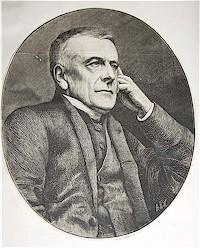
Frederick Oakeley

1802 - 1880 Person Name: F. Oakeley, 1802-1880 Topics: Christ, the Lord Jesus Divinity of; God: His Being, Word and Works God the Son: His Nativity: Christmas Translator of "O come, all ye faithful" in The Book of Praise Frederic Oakeley graduated M.A. at Oxford, and took Orders in the Church of England. He became Prebendary of Lichfield Cathedral, preacher at Whitehall, and incumbent of Margaret Chapel, London. He was active in the "Oxford Movement," and in 1845, called attention to his views for the purpose of seeing if he could continue to hold an Oxford degree, with so great a change in his opinions. The question was tried, and he was perpetually suspended unless he retracted. He then resigned his positions in the Church of England, and entered the Church of Rome, in which he became a Priest, and Canon of the diocese of Westminster. His publications are numerous, and some of them have considerable value. --Annotations of the Hymnal, Charles Hutchins, M.A., 1872 ================= Oakeley, Frederick, D.D., youngest son of Sir Charles Oakeley, Bart., sometime Governor of Madras, was born at Shrewsbury, Sept. 5, 1802, and educated at Christ Church, Oxford (B.A. 1824). In 1825 he gained a University prize for a Latin Essay; and in 1827 he was elected a Fellow of Balliol. Taking Holy Orders, he was a Prebendary of Lichfield Cathedral, 1832; Preacher at Whitehall, 1837; and Minister of Margaret Chapel, Margaret Street, London, 1839. In 1845 he resigned all his appointments in the Church of England, and was received into the Roman Communion. Subsequently he became a Canon of the Pro-Cathedral in the Roman Catholic ecclesiastical district of Westminster. He died January 29, 1880. Miller (Singers and Songs of the Church, 1869, p. 497), writing from information supplied to him by Canon Oakeley, says:— ”He traces the beginning of his change of view to the lectures of Dr. Charles Lloyd, Regius Professor, delivered at Oxford about the year 1827, on the 'History and Structure of the Anglican Prayer Book.' About that time a great demand arose at Oxford for Missals and Breviaries, and Canon Oakeley, sympathising with the movement, co-operated with the London booksellers in meeting that demand.....He promoted the [Oxford] movement, and continued to move with it till, in 1845, he thought it right to draw attention to his views, to gee if he could continue to hold an Oxford degree in conjunction with so great a change in opinion. The question having been raised, proceedings were taken against him in the Court of Arches, and a sentence given that he was perpetually suspended unless he retracted. He then resigned his Prebendal stall at Lichfield, and went over to the Church of Rome." Canon Oakeley's poetical works included:— (1) Devotions Commemorative of the Most Adorable Passion of Our Lord and Saviour Jesus Christ, 1842; (2) The Catholic Florist; (3) The Youthful Martyrs of Rome, a Christian Drama, 1856; (4) Lyra Liturgica; Reflections in Verse for Holy Days and Seasons, 1865. Canon Oakeley also published several prose works, including a translation of J. M. Horst's Paradise of the Christian Soul, London, Burns, 1850. He is widely known through his translation of the “Adeste fideles.” Several of his original hymns are also in Roman Catholic collections. --John Julian, Dictionary of Hymnology (1907)

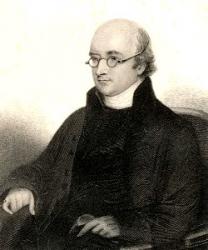
Richard Mant

1776 - 1848 Topics: God Works of Author of "God, My King, Thy Might Confessing" in Trinity Hymnal (Rev. ed.) Mant, Richard D.D., son of the Rev. Richard Mant, Master of the Grammar School, Southampton, was born at Southampton, Feb. 12, 1776. He was educated at Winchester and Trinity, Oxford (B.A. 1797, M.A., 1799). At Oxford he won the Chancellor's prize for an English essay: was a Fellow of Oriel, and for some time College Tutor. On taking Holy Orders he was successively curate to his father, then of one or two other places, Vicar of Coggeshall, Essex, 1810; Domestic Chaplain to the Archbishop of Canterbury, 1813, Rector of St. Botolph, Bishopsgate, London. 1816, and East Horsley, 1818, Bishop of Killaloe, 1820, of Down and Connor, 1823, and of Dromore, 1842. He was also Bampton Lecturer in 1811. He died Nov. 2, 1848. His prose works were numerous, and although now somewhat obsolete, they were useful and popular in their day. His poetical works, and other works which contain poetical pieces, are:— (1) The Country Curate, 1804; (2) Poems in three Parts, 1806; (3) The Slave, 1807; (4) The Book of Psalms in an English Metrical Version, &c, 1824; (5) The Holydays of the Church; or Scripture Narratives of Our Blessed Lord's Life and Ministry, and Biographical Notices of the Apostles, Evangelists, and Other Saints, with Reflections, Collects, and Metrical Sketches, vol. i., 1828; vol. ii., 1831; (6) The Gospel Miracles in a series of Poetical Sketches, &c., 1832; (7) The British Months, 2 vols., 1836; (8) Ancient Hymns from the Roman Breviary, for Domestick Use. . . .To which are added Original Hymns, principally of Commemoration and Thanksgiving for Christ's Holy Ordinances, 1837: new ed., 1871. (9) The Happiness of the Blessed Dead, 1847. Bishop Mant is known chiefly through his translations from the Latin. He was one of the earliest of the later translators, I. Williams and J. Chandler being his contemporaries. Concerning his translations, Mr. Ellerton, in his Notes on Church Hymns, 1881, p. xlviii. (folio ed.), says justly that:— "Mant had little knowledge of hymns, and merely took those of the existing Roman Breviary as he found them: consequently he had to omit many, and so to alter others that they have in fact become different hymns: nor was he always happy in his manipulation of them. But his book has much good taste and devout feeling, and has fallen into undeserved neglect." His metrical version of the Psalms has yielded very few pieces to the hymnals, the larger portion of his original compositions being from his work of 1837. The most popular of these is "Come Holy Ghost, my soul inspire, Spirit of," &c, and its altered forms; "Bright the vision that delighted," and its altered form of "Round the Lord in glory seated;" and "For all Thy saints, O Lord." His hymns in common use which are not annotated under their respective first lines are:— i. From his Metrical Version of the Psalms, 1824. 1. God, my King, Thy might confessing. Ps. cxlv. 2. Lord, to Thee I make my vows. Ps. xxvii. 3. Blessed be the Lord most High. Ps. xxviii. Pt. ii. 4. My trust is in the highest Name. Ps. xi. 5. Reign, Jehovah, King supreme. Ps. xcix. 6. Thy listening ear, O Lord, incline. Ps. Ixxxvi. 7. To God my earnest voice I raise. Ps. cxlii. 8. To Jehovah hymn the lay. Ps. cxviii. Two centos in Spurgeon's Our Own Hymn Book, 1866. (1) st. i., ii., v.; and (2) "Thee, Jehovah, will I bless" from st. vii.-x. ii. From his Holydays of the Church, &c, 1828-31. 9. Lo, the day the Lord hath made. Easter. 10. There is a dwelling place above. All Saints. iii. From his Ancient Hymns, &c, 1837. 11. Before Thy mercy's throne. Lent. 12. Father of all, from Whom we trace. Unity. 13. For these who first proclaimed Thy word. Apostles. 14. No! when He bids me seek His face. Holy Communion. 15. Oft as in God's own house we sit. Divine Worship. 16. Put off thy shoes, 'tis holy ground. The House of God . 17. Saviour of men, our Hope [Life] and Rest. The Greater Festivals. 18. Thy House each day of hallowed rest. Holy Communion. 19. We bless Thee for Thy Church, 0 Lord. Thanksgiving for the Church. 26. We deem and own it, Lord, a proof. Divine Grace. When all Bishop Mant's translations of original hymns, and versions of the Psalms in common use are taken into account, it is found that he is somewhat strongly represented in modern hymnody. -- John Julian, Dictionary of Hymnology (1907) ==================== http://en.wikipedia.org/wiki/Richard_Mant

Alexander Robert Reinagle

1799 - 1877 Person Name: Alexander R. Reinagle, 1799 - 1877 Topics: The Church Year Epiphany; The Church The People of God; Church Life and Work City, Nation, World Composer of "ST. PETER" in Service Book and Hymnal of the Lutheran Church in America Alexander Robert Reinagle United Kingdom 1799-1877. Born at Brighton, Sussex, England, gf Austrian descent, he came from a family of musicians, studying music with his father (a cellist), then with Raynor Taylor in Edinburgh, Scotland. Reinagle became a well-known organ teacher. He became organist at St Peter’s Church, Oxford (1823-1853). He was also a theatre musician. He wrote Teaching manuals for stringed instruments as well. He also compiled books of hymn tunes, one in 1830: “Psalm tunes for the voice and the pianoforte”, the other in 1840: “A collection of Psalm and hymn tunes”. He also composed waltzes. In 1846 he married Caroline Orger, a pianist, composer, and writer in her own right. No information found regarding children. In the 1860s he was active in Oxford music-making and worked with organist, John Stainer, then organist at Magdalen College. Reinagle also composed a piano sonata and some church music. At retirement he moved to Kidlington, Oxfordshire, England. He died at Kidlington. John Perry

Albert Midlane

1825 - 1909 Person Name: Albert Midlane, 1825-1909 Topics: Bread of Life; Calling; God Word of; God: His Being, Word and Works God the Holy Spirit: Pentecost; Holy Spirit Efficacious Grace of; Recessionals; Supplications for Revival Author of "Revive Thy work, O Lord" in The Book of Praise Midlane, Albert, was born at Newport, Isle of Wight, Jan. 23, 1825, and was engaged in business in that town for many years. To his Sunday school teacher he ascribes the honour of prompting him to poetic efforts: and the same teacher did much to shape his early life. His first printed hymn, "Hark! in the presence of our God," was written in September, 1842, at Carisbrooke Castle, and printed in the Youth’s Magazine in November of the same year. Since then he has written over 300, and of these a large proportion are in common use. They appeared in magazines and small mission hymn-books, including:— (1) The Youth's Magazine; (2) The British Messenger; (3) The London Messenger; (4) Trotter's Evangelical Hymn Book, 1860; (5) The Ambassador's Hymn Book, 1861; (6) Second edition of the same, 1868; (7)Hymn Book for Youth; (8) Good News for the Little Ones, 1860; (9) William Carter's Gospel Hymn Book, 1862; and several other works of a similar kind. In addition to several small works in prose, Mr. Midlane has gathered his verse together from time to time and published it as:— (1) Poetry addressed to Sabbath School Teachers, 1844; (2) Vecta Garland, 1850; (3) Leaves from Olivet, 1864; (4) Gospel Echoes, 1865; (5) Above the Bright Blue Sky, 1867; (6) Early Lispings, 1880. Of the hymns contained in these works nearly 200 have been in common use from 1861 to 1887, the most popular being "There's a Friend for little children." The hymn-books, however, in which many of them are found are usually very small, are used in what are commonly known as Gospel Missions, and have gradually given way to other and more important collections. We therefore append only those hymns which are at the present time in use in official or quasi-official hymn-books, or such collections as have a wide circulation. Those hymns which are omitted from the following list may be found in the works given above, and especially in the Gospel Echoes. The bracketed dates below are those of the composition of the hymns. i. Given in Trotter's Evangelical Hymn Book, 1860. 1. How sweet the cheering words. (Aug. 1860.) The Gospel. 2. Lord Jesus, save! (July 1860.) Lent. ii. Given in The Ambassador's Hymn Book, 1861. 3. Angels rejoice o'er sinners saved. (Aug. 1860.) Joy in Heaven over Repenting Sinners. 4. Come to the royal feast. (Aug. 1860.) The Gospel Feast. 5. Father, bless the heavenly message. (Aug. 1860.) Divine blessing implored. 6. How vast, how full, how free. (Aug. 1860.) Divine Mercy. 7. I am not told to labour. (June 25, 1860.) Salvation by Faith. 8. Jesus died upon the tree. (Aug. 13, 1860.) Good Friday. 9. Lord, prepare the hearts of sinners. (Aug. 28, 1861.) Preparation of the heart. 10. Not all the gold of all the world. Peace through Jesus. 11. Now we'll render to the Saviour. (Sept. 1, 1861.) Praise for Salvation. 12. O what a gift the Father gave. (Aug. 22, 1860.) The Gift of The Son. 13. O what a Saviour is Jesus the Lord. (Aug. 29, 1861.) Jesus the Saviour. 14. Passing onward, quickly passing. (Sept. 10, 1861.) Prepared? 15. Salvation, Lord, is Thine. (Aug., 1860.) Salvation through Jesus. 16. Sinner, where is room for doubting? (Sept., 1861.) Expostulation. 17. Soft the voice of mercy sounded. Grace. 18. The perfect righteousness of God. (Sept. 21, 1861.) God our Righteousness. 19. There is a throne of grace. (Sept. 14, 1860.) The Throne of Grace. 20. We speak of the mercy of God. (Sept. 19, 1861.) Divine Mercy. iii. Given in W. Carter's Gospel Hymn Book, 1863. 21. Can any say, I do believe ? (Aug., 1860.) Assurance in Christ. 22. If Jesus came to seek and save. (Oct., 1861.) Salvation in Jesus. iv. Given in Leaves from Olivet, 1864. 23. See the blessed Saviour dying. (Oct. 5, 1860.) Good Friday. 24. Sweet the theme of Jesus' love. (April 22, 1862.) The Love of Jesus. v. Given in Gospel Echoes, 1865. 25. Come and welcome to the Saviour. (June 8, 1862) Invitation. 26. God be gracious to a sinner. (May 21, 1861.) Lent. 27. God speaks from heaven; in love He speaks. (July, 1860.) Love and Mercy of God. 28. Hark! the cry, Behold He cometh. (June 8, 1862.) Advent. 29. He saves because He will. (April 20, 1862.) The "I Wills" of Jesus. 30. How solemn are the words. (Aug. 1, 1865.) The New Birth. 31. Himself He could not save. (Sept. 1861.) Good Friday. 32. I once was bound in Satan's chains. Pardon. 33. Jesus lived. He lived for sinners. (Jan. 4, 1862.) Easter. 34. Jesus never answered "Nay." (May 13, 1862.) Jesus always the same. 35. Jesus the blessed centre is. (June 8, 1862). Father glorified in the Son. 36. Jesus, the risen Saviour. (July 31, 1862.) Easter. 37. Jesus, the soul that trusts in Thee. (May 7, 1864.) Salvation through Jesus. 38. Look, poor sinner, look to Calvary. Good Friday. 39. Lord, when I think upon the love. (Oct. 1, 1860.) The Love of Jesus. 40. Peace with God ! How great a treasure (Oct. 18, 1861.) Peace. 41. Salvation! What a precious word. (Nov. 22, 1861.) Salvation. 42. Scripture says Where sin abounded. (March 3, 1862.) Abounding Grace. 43. Shall Jesus' love be spoken? (May 4, 1862.) Love of Jesus. 44. The Lamb was slain, the blood was brought. (Aug. 24,1862.) The Passover. 45. The silver trumpets sounding. (May 7, 1862.) The Year of Jubilee. 46. There is a rest for weary souls. (Dec. 4, 1863.) Rest. Peace in Jesus. 47. 'Tis the voice of mercy calls thee. (Nov. 5, 1861.) Mercy. 48. When the Saviour said "'Tis finished" (Oct. 1861.) Good Friday. 49. When God begins His gracious work. (Dec. 27, 1860.) God Unchangeable. 50. Who can praise the blessed God ? (Oct. 1861.) Praise for Salvation. 51. Why those fears, poor trembling sinner. Safety in Jesus. vi. Given in the Ambassador's Hymn Book, 2nd ed., 1868. 52. Life from the dead, eternal life. (Oct. 11, 1867.) Work of the Holy Spirit. 53. Stern justice cries for blood. (March 2, 1867.) The Atonement. vii. Various. 54. Apart from every worldly care. (June 1866.) Prayer Meetings. Written for Spurgeon's Our Own Hymn Book 1866. 55. Be not weary, toiling Christian. (Feb. 1857.) Encouragement. In the British Messenger, Sept. 1857. 56. Eighteen hundred years ago. (Aug. 1859.) Fulness of Time. In the London Messenger, April, 1861. 57. Father, for Thy promised blessing. (Feb. 20, 1860.) Outpouring of the Spirit desired. In The Revival, July, 1860. 58. God bless our Sunday School. Sunday School Anniversary. First printed in the Baptist Children's Magazine, July, 1844. It has passed into numerous collections for children, but usually st. ii. is omitted, thus reducing it to 3 st. 59. He comes! He comes! the Bridegroom comes. (Sept. 9, 1850.) Advent. In The Present Testimony, 1851. 60. Kept by the power of God. (May 6 ,1858.) Security in God. In the London Messenger, Sept., 1860. 61. Let the waves of blessing roll. (Jan. 6, 1868.) Missions. In the Enlarged London Hymn Book, 1873. 62. Lord, 'our waiting spirits bow. (June, 1866.) Prayer Meetings. Written for Spurgeon's Our Own Hymn Book 1866. 63. Love us freely, blessed Jesus. (July 2, 1858.) Lent. In the Churchman's Penny Magazine. Oct., 1858. 64. Never perish! words of mercy. Mercy in Christ. Printed in the monthly Girdle, June, 1857, and in the British Messenger, Aug. 1857, in 4 double st. In the collections it is reduced to the first two stanzas. 65. No separation, O my soul. (May 6, 1863.) Perseverance. In the British Herald, Aug., 1863. 66. Nought but the voice of God can speak. (Jan. 29, 1863.) All things are of God. In the 1873 Appendix to Snepp's Songs of Grace & Glory. 67. Now, O joy, my sins are pardoned. Pardon and Peace. (Nov. 9, 1860). Printed in the London Messenger, March, 1861, then in the Gospel Echoes, 1865; and then in several hymn-books. The original began, "Once I sang, but not in earnest." Usually st. ii., iii., of 8 l, are given as "Now, O joy, &c." 68. O art thou an heir of glory? (June 4, 1861.) Cautions. In Hymn Book for Youth, 1862. 69. O what a glorious truth is this. (Aug. 3, 1860.) Jesus Died. In the London Messenger, Sept., 1860. 70. Once it was mine, the cup of wrath. (Aug. 8, 1860.) Wrath and Pardon. In the London Messenger, Oct., 1861. 71. Onward, upward, heavenward. (Feb. 7, 1860.) Pressing Onward. In the London Messenger, March, 186l. 72. Perennial spring of pure delight. (March 17, 1864.) Jesus All in All. In the London Messenger, Jan., 1865. 73. Sheltered by the [Thy] sprinkled blood. (Sept. 23, 1863.) Safety in Jesus. In the London Messenger, Feb. 1864. 74. Showers of blessing, gracious promise. (April 19, 1862.) Missions. In the London Messenger, Aug., 1862, and Leaves from Olivet, 1864. 75. The Church of God, amazing, precious thought. (July 6, 1857.) The Church. In The Present Testimony, 1858, and Leaves from Olivet, 1864. 76. The whispers of Thy love divine. (May 3, 1868.) Love of God. In the Island Greeting, Oct., 1872. 77. Though billows round me roll. (April 2, 1853.) Trust. In Food for Christ's Flock, 1853. 78. 'Tis finished, cried the dying Lamb. (Feb. 21, 1850.) Good Friday. In the Baptist Children's Magazine, 1850). 79. Tis heaven where Jesus is. (Oct. 23, 1862.) Joy and Peace in Jesus. In the Enlarged London Hymn Book, 1873. 80. Together all things work for good. (Aug. 14, 1860.) All work for Good. In the Enlarged London Hymn Book, 1813. 81. Waiting for Jesus, and loving while waiting. (Jan. 9, 1872.) Second Advent desired. In the 1873 Appendix to Snepp's Songs of Grace & Glory. 82. Without a cloud between. (Mar. 18,1862.) Jesus, Face to Face. In the London Messenger, June, 1862. 83. Yet awhile; how sweet the thought. (Dec, 1864.) Second Advent desired. In theLondon Messenger, 1865. The collections in which these hymns are mainly found are Spurgeon's Our Own Hymn Book, 1866; Snepp's Songs of Grace & Glory, 1872-3; Hurditch's Enlarged London Hymn Book, 1873, and smaller books for Evangelical mission work. Of Mr. Midlane's hymns as a whole, Miher's estimate that "His hymns are full of spiritual thought, careful in their wording, and often very pleasing without reaching the highest form of poetical excellence " (Singers and Songs, p. 572), is just. A marked feature of these hymns is the constant and happy use of Scripture phraseology. --John Julian, Dictionary of Hymnology (1907) ======================== Midlane, A., p. 733, ii. Mr. Midlane published in 1901 The Bright Blue Sky Hymn Book, of 315 of his hymns, and the same year The Gospel Hall Hymn Book, for use in the Gospel Hall, Newport, I.W., with 218 additional, making 533 original compositions. A broad-sheet of seven special hymns for Jewish children, in connection with the Mildmay Mission to the Jews, was also issued in December, 1904. Other publications previously noticed give, with these, over 800 hymns to Mr. Midlane as his contribution to the hymnody of the Church. --John Julian, Dictionary of Hymnology, New Supplement (1907)

Melchior Teschner

1584 - 1635 Topics: Christ, the Lord Jesus Kingly Office of; Christ, the Lord Jesus Redeemer; Christ, the Lord Jesus Son of David; Christ, the Lord Jesus Triumphal Entry of; God: His Being, Word and Works God the Son: His Praise Composer of "ST. THEODULPH" in The Book of Praise Melchior Teschner (b. Fraustadt [now Wschowa, Poland], Silesia, 1584; d. Oberpritschen, near Fraustadt, 1635) studied philosophy, theology, and music at the University of Frankfurt an-der-Oder and later studied at the universities of Helmstedt and Wittenberg, Germany. From 1609 until 1614 he served as cantor in the Lutheran church in Fraustadt, and from 1614 until his death he was pastor of the church in Oberpritschen. Bert Polman

A. Williams

1731 - 1776 Person Name: Aaron Williams, 1731 - 76 Topics: The Church The People of God; The Church The House of God; Sacraments and Rites Ordination; Church Life and Work The Ministry Composer of "ST. THOMAS" in Service Book and Hymnal of the Lutheran Church in America Aaron Williams (b. London, England, 1731; d. London, 1776) was a singing teacher, music engraver, and clerk at the Scottish Church, London Wall. He published various church music collections, some intended for rural church choirs. Representative of his compilations are The Universal Psalmodist (1763)— published in the United States as The American Harmony (1769)—The Royal Harmony (1766), The New Universal Psalmodist (1770), and Psalmody in Miniature (1778). His Harmonia Coelestis (1775) included anthems by noted composers. Bert Polman

Angelus Silesius

1624 - 1677 Person Name: J. Scheffler, 1624-1677 Topics: God Works of; Works of God Author of "O God, of good the unfathomed Sea!" in Methodist Hymn and Tune Book Pen name of Johann Scheffler ======================================= Angelus Silesius, born in Selisia, in 1624, was the son of a Polish nobleman, and his true name was John Scheffler; but he adopted the name Angelus from a Spanish mystic of the 16th century--John ab Angelis--and added the name Silesius, because of his own country. He studied medicine, and obtained his degree of M.D. at Padua. While physician to the Duke Sylvius Nimrod--from 1649 to 1652--he had contention with the Lutheran clergy, and in 1653 entered the Romish Church. Subsequently he was physician to the Emperor Ferdinand III., but at length entered the priesthood and retired to the Jesuit monastery of S. Matthias, in Breslau, where he died in 1677. His hymns were mostly written before he joined the Romish Church, and were intended for private devotion; some, however, have been very acceptable for public use. "Several of them are among the deepest and most tender in the German language, and breathe a glowing love to the Saviour." --Annotations of the Hymnal, Charles Hutchins, M.A. 1872. ================================================= Scheffler, Johann (Angelus Silesius), was born in 1624 at Breslau in Silesia. His father, Stanislaus Scheffler, was a member of the Polish nobility, but had been forced to leave his fatherland on account of his adherence to Lutheranism, and had then settled in Breslau. The son was thus educated as a strict Lutheran. After passing through the St. Elisabeth's Gymnasium at Breslau, he matriculated at the University of Strassburg, on May 4, 1643, as a student of medicine. In the next year he went to Leyden, and in 1647 to Padua, where he graduated PH. D. and M.D. on July 9, 1648. Thereafter he returned to Silesia, and, on Nov. 3, 1649, was appointed private physician, at Oels, to Duke Sylvius Nimrod of Württemberg-Oels. The Duke was a staunch Lutheran, and his court preacher, Christoph Freitag, administered the ecclesiastical affairs of the district according to the strictest Lutheran churchly orthodoxy. Scheffler, who in Hollaud had become acquainted with the writings of Jakob Böhme, and had become a personal friend of Abraham von Frankenberg, the editor of Böhme's works, soon found that the spiritual atmosphere of Oels did not suit him. His own leanings at this time were distinctly to Mysticism and Separatism. He was at no pains to conceal his sentiments, and withdrew himself from public worship, from confession, and from the Holy Communion. When he wished to publish his poems, and submitted them for this purpose to Freitag, he was refused permission to print them on the ground of their mystical tendencies. He resigned his post in the end of 1652, and went to Breslau. Here he became acquainted with the Jesuits, who in that place were earnest students of the mystical works of Tauler (q.v.), and through them was introduced to the study of the mediaeval mystics of the Roman Catholic Church. On June 12, 1653, he was formally received into the Roman Catholic communion, and at his confirmation on that day at St. Matthias's Church in Breslau, he took the name of Angelus, probably after a Spanish mystic of the 16th cent, named John ab Angelis.* On March 24, 1654, the Emperor Ferdinand III. conferred on him the title of Imperial Court Physician, but this title was purely honorary, and Scheffler remained still at Breslau. On Feb. 27,1661, he entered the order of St. Francis; on May 21, 1661, was ordained priest at Neisse in Silesia, and in 1664 was appointed Rath and Hofmarschall to his friend Sebastian von Rostock, the newly created Prince Bishop of Breslau. After the Bishop's death in 1671 Scheffler retired to the monastery of St. Matthias in Breslau, where he died July 9, 1677, from a wasting sickness, during which he used this characteristic prayer, "Jesus and Christ, God and Man, Bridegroom and Brother, Peace and Joy, Sweetness and Pleasure, Refuge and Redemption, Heaven and Earth, Eternity and Time, Love and All, receive my soul." Of Scheffler, as a Convert and as a Controversialist, not much need be said. He certainly became more Roman than the Romans; and in his more than 50 controversial tractates, shows little of the sweetness and repose for which some have thought that he left the Lutheran church. In his Ecclesiologia, published at Glatz in 1677 [British Museum has the 2nd edition, published at Oberammergau and Kempten in 1735], he collected 39 of these treatises, of which e.g. No. 34 is entitled, "The Lutheran and Calvinistic Idol of the Understanding exhibited, laid bare, as well as the Likeness of the True God. In which also, at the same time, the attacks aud objections of adversaries are repelled. 1 Cor. viii. 4, Idolum nihil est, an idol is nothing." At an early age Scheffler had begun to write poems, and some of these occasional pieces were printed in 1641 and 1642. His most famous non-hymnological work is his Geistreiche Sinn- und Schlussreime, &c, published at Vienna in 1657, but better known by the title prefixed in the 2nd edition published at Glatz in 1675, viz. the Cherubinischer Wandersmann, [Both eds. in the British Museum]…. Scheffler's latest poetical work was the Sinnliche Beschreibung der vier letzten Dinge, zu heilsamen Schröken und Auffmunterung aller Menschen inn Druck gegeben. Mit der himmlischen Procession vermehrt, &c. Schweidnitz, 1675. [British Museum]… Scheffler's most important hymnological work is his Heilige Seelenlust, oder geistliche Hirten-Lieder, der in ihren Jesum verliebten Psyche, gesungen von Johann Angelo Silesio, und von Herrn Georgio Josepho mit aussbündig schönen Melodeyen geziert, &c. Of this the first edition appeared at Breslau, apparently in 1657, in three books, with Hymns 1-123, and a fourth—-separately paged—-book, with 32 hymns, apparently also at Breslau, 1657. In the 2nd ed., pub. at Breslau in 1668, the paging and numbering are consecutive; and a fifth book is added, with Hymns 166-205. [Both eds. in Royal Library, Breslau; 2nd ed. in British Museum] The first three books form a cycle of hymns, principally on the person and work of Our Lord, arranged according to the Christian Year, from Advent to Whitsuntide, and seem mostly to have been written before Scheffler left the Lutheran church. Those of the fourth book were probably written 1653 to 1656, and those of the fifth book between 1656 and 1668. In the first three books he is most clearly under the influence of his predecessors. That is, so far as the style and form are concerned, he was greatly influenced by the Pastorals of the Nürnberg Pegnitz Shepherds, and of Friedrich von Spee (q.v.) ; and in the substance of his poems—their longings for mystical union with Christ, and their clinging love to the Saviour—he was influenced on the one side by Böhme, and on the other by the earnest inner religious life which he had found in Holland. In his later hymns the tone is more manly, and the defects and excesses of his earlier style have, in great measure, disappeared. Scheffler's hymns were gladly received by the Lutheran Church as a welcome addition to the store of "Jesus Hymns," but many long passed current as anonymous; the I. A., for Johann Angelus, being often interpreted as Incerti Autoris, and vice versa. Through the Nürnberg Gesang-Buch, 1676; Freylinghausen's Gesang-Buch 1704 and 1714; Porst's Gesang-Buch, 1713; and Burg's Gesang-Buch, Breslau, 1746, a large number came into use among the Lutherans, more indeed than among the Roman Catholics. They were great favourites among the Moravians, after Zinzendorf had included 79 of them in his Christ-Catholisches Singe-und Bet-Büchlen, 1727 ; and, unfortunately, preciscly the worst were selected for imitation, so that Scheffler has the doubtful honour of being the model of tli8 spiritual-fleshly productions which disfigured the Moravian hymn-books between 1740 and 1755. Judging Scheffler's hymns as a whole one must give them a very high place in German hymnody. Only a small proportion of the hymns bear a distinctively Roman Catholic character. Of the rest, after setting on one side those in which Christ is set forth as the Bridegroom of the soul, with an excessive use of the imagery of Canticles; and those disfigured by the mannerisms of the Pastoral School, there remain a large number which are hymns of the first rank. These finer hymns are the work of a true poet, almost perfect in style and in beauty of rhythm, concise and profound; the fruits indeed it may be said of Mysticism, but of Mysticism chastened and kept in bounds by deep reverence and by a true and fervent love to the Saviour. Scheffler holds a high place in the first rank of German sacred poets, and is much the finest of the Post-Reformation Roman Catholic hymn-writers. A number of Scheffler's hymns are translations from the Latin…which have passed into English, are as follows. i. Ach Gott, was hat vor Herrlichkeit. God's Majesty. First published as No. 110 in Bk. iii., 1657, of his Heilige Seelenlust , in 6 st. of 8 1., entitled, "She [the soul] rejoices herself on the glory of Jesus." In the Herrnhut Gesang-Buch, 1735, No. 67. The translation in common use is:— Thy Majesty, how vast it is. This is a free translation of st. i.-iv. as part of No. 189 in the Moravian Hymn Book, 1789 (1886, No. 225). Another tr. is: "My God! how vast a Glory has," as No. 310 in the Moravian Hymn Book, pt. ii., 1743. ii. Der edle Schäfer, Gottes Sohn. The Good Shepherd . Translated as:— The true good Shepherd, God's own Son. This is a translation of st. i., v., by P. H. Molther, as No. 18 in the Moravian Hymn Book, 1789. In the 1826 and later eds. (1886, No. 22) it begins, "Christ the good Shepherd.” iii. Grosser König, dem ich diene. Love to God. First published as No. 161 in Bk. v., 1668, of his Heilige Seelenlust in 10 stanzas of 8 lines, entitled, "She presents to her Beloved her heart in diverse fashion as a morning gift." The translation in common use is:— Make my heart a garden fair. This is a tr. of st. viii., as st. ii. of No. 439 in the Moravian Hymn Book, 1789. Other trs. are: (1) "Lord, I come, Thy grace adoring," by J. D. Burns, 1869, p. 227. (2) "Almighty King, Eternal Sire," by G. Moultrie, in his Espousals of S. Dorothea, 1870, p. 69. iv. Jesus ist der schönste Nam'. Love to Christ. First published as No. 35 in Bk. i., 1657, of his Heilige Seelenlust in 9 stanzas of 6 lines, entitled, "She praises the excellency of the Name of Jesus." Tr. as:— Jesus is the highest name. This is a good tr. of st. i., ii., viii., ix., by A. T. Russell, as No. 69 in his Psalms & Hymns, 185. Another tr. is: "Jesus is the sweetest Name, Unto mortals," by J. C. Earle, in O. Shipley's Annus Sanctus, 1884, pt. ii. p. 43. v. Keine Schönheit hat die Welt. Love to Christ. A beautiful hymn on Christ in Nature. First published as No. 109 in Bk. iii., 1657, of his Heilige Seelenlust, in 16 stanzas of 4 lines, entitled, "She ponders His charmingness to the creatures." The trs. in common use are :— 1. Earth has nothing sweet or fair. This is a very good translation, omitting st. vi.—viii., x., xi., by Miss Cox in her Sacred Hymns from the German, 1841, p. 165 2. Nothing fair on earth I see. This is a somewhat free tr. of st. i.-v., ix., xii.-xiv., xvi., by Miss Winkworth in her Lyra Germanica, 1st Ser., 1855, p. 48; repeated, abridged and altered, in her Chorale Book for England, 1863, No. 158. Other translations are : (l) All the beauty we can find," as No. 457, in pt. i. of the Moravian Hymn Book 1754. (2) "Would you view the glorious face," in J. A. Latrobe's Psalms & Hymns ., 1841, No. 437. (3) "Whate'er of beauty I behold," by Lady E. Fortescue, 1843, p. 35. (4) " Earth has nothing bright for me," by Miss Manington, 1863, p. 168. (5) "The world with broadcast beauties sown," by E. Massie, 1867, p. 14. vi. Morgenstern der finstern Nacht. Love to Christ. First published as No. 26 in Bk. i., 1657, of his Heilige Seelenlust, in 6 st. of 5 1., entitled, "She wishes to have the little Jesus as the true Morning Star in the heaven of her heart." Another tr. is: "Morning Star in darksome night”, by Miss Winkworth, 1869, p. 250. vii. Nun nimm mein Herz, und alles was ich bin. Self-surrender to Christ. First published as No. 102 in Bk. iii., 1657, of his Heilige Seelenlust, in 4 stanzas of 6 lines, entitled, "She gives herself to her Bridegroom." The translation in common use is:— O take my heart, and whatsoe'er is mine. This is a tr. of st. i., iv., by F. W. Foster, as No. 267 in the Moravian Hymn Book, 1789. Another tr. is: "Now take my heart and all that is in me," by Miss Winkworth, 1858, p. 98. viii. Wollt ihr den Herren finden. Seeking of Christ. First published in Bk. iv., 1657, of his Heilige Seelenlust, entitled, "She gives notice where Jesus is to be found.” Translated as:— If you would find the Saviour. This is a free version, condensing st. iii., iv., as st. iii. in the Moravian Hymn Book, 1754, pt. i., No. 657. Included, greatly altered, and beginning, "Would you find the Saviour?" in J. A. Latrobe's Psalms & Hymns, 1841 and 1852. ix. Wo willt du hin, weils Abend ist. Evening. A beautiful hymn founded on the Narrative of Christ at Emmaus. The translation in common use is:— Where wilt Thou go! since night draws near. By A. Crull, in full, as No. 93 in the Ohio Lutheran Hymnal 1880. Another translation is: "Where wilt Thou go? the eve draws nigh," by Miss Manington; 1863, p. 154. Other hymns by Scheffler which have been rendered into English are:— x. Ach, sagt mir nicht von Gold und Schätzen. Love to Christ. The translations are (1) "Tell me no more of golden treasures," in the Supplement to German Psalmody, ed. 1765, p. 53; and Select Hymns from German Psalmody , Tranquebar, 1754, p. 84. (2) "0 tell me not of glitt'ring treasure," by Dr. H. Mills, 1845, p. 75. (3) "0 tell me not of gold and treasure," by Miss Burlingham, in the British Herald, August, 1865, p. 121, repeated as "Ah, tell me not," &c, in Reid's Praise Book, 1872. xi. Ach, was steh'st du auf der Au. Love to Christ. This form is tr. as "Jesus, end of my desires." xii. ‘Auf, auf, 0 Seel', auf, auf, zum Streit. Christian Warfare. The translations are (1) "Up! Christian man, and join the fight," by Miss Manington, 1863, p. 44. (2) "Up, Christian! gird thee to the strife," by Miss Burlingham, in the British Herald, July, 1865, p. 106. xiii, Dein' eigne Liebe zwinget mich. Love to Christ. Tr. as, "Thine own love doth me constrain," by J. Kelly, in the Family Treasury, 1878, p. 716. xiv. Die Sonne kommt heran. Morning. Translated as "The sun will soon appear," by J. Kelly, in the Family Trea¬sury, 1878, p. 716. xv. Ihr Engel, die das höchste Gut. Love to Christ. This form is tr. as, "Ye Seraphim, who prostrate fall," as No. 649 in pt. i. of the Moravian Hymn Book, 1754. xvi. Jesu, ew'ge Sonne. Love to Christ. Translated as "Christ the spring of endless joys," by J. Kelly, in the Family Treasury, 1878, p. 716. xvii. Kommt, meine Freund, und höret an. Eternal Life. Tr. as: "Come hither, friends, and hear me say," by J. Kelly, in the Family Treasury , 1879, p. 271. xviii. Meine Seele willt du ruh'n. Love to God. This form is tr. as "O my soul, desir'st thou rest." In the Supplement to German Psalmody, ed. 1765, p. 56. xix. Mein Lieb ist mir und ich bin ihm. Love to Christ. This is tr. as, "My Friend's to me, and I'm to Him," as No; 467 in pt. i. of the Moravian Hymn Book, 1754. xx. 0 du allerliebster Gott. Christ in Gethsemane. This form is tr. as "Jesus, O my Lord and God," by J. C. Earle, in O. Shipley's Annus Sanctus, 1884, p. 73. xxi. Schau', Braut, wie hängt dein Bräutigam. Passiontide. Tr. as, "O Bride! behold thy Bridegroom hangs," as No. 460 in pt. i. of the Moravian Hymn Book, 1754. xxii. Tritt hin, o Seel', und dank' dem Herrn. Thanksgiving. Tr. as "Come, O my soul, with thankful voice," by Dr. G. Walker, 1860, p. 70. xxiii. Weil ich schon seh' die gold'nen Wangen. Morning. The trs. are (1) "Because I see red tints adorning," by Miss Manington, 1863, p. 119. (2) "I see the golden light of morn," in the Family Treasury, 1877, p. 603. xxiv. Wie lieblich sind die Wohnungen. Eternal Life. Translated as "How lovely are the mansions fair," by J. Kelly, in the Family Treasury, 1879, p. 270. xxv. Zeuch mich nach dir, so laufen wir. Love to Christ. Translated as "Draw us to Thee, then will we flee," as No. 137 in pt. i. of the Moravian Hymn Book, 1754. It may be added that in some English books Scheffler appears as a composer of hymn-tunes. This is however a mistake, for the melodies in the Heilige Seelenlust are, as the title distinctly says, by Georg Joseph, a musician living at that time in Breslau. [Rev. James Mearns, M.A.] * In his later writings he styled himself Johann Angelus Silesius, adding this designation—the Silesian—in order to distinguish himself from the Lutheran theologian, Johann Angelus, of Darmstadt. --Excerpts from John Julian, Dictionary of Hymnology (1907)

John Needham

? - 1786 Person Name: Needham Topics: The Works of God Celebrated Author of "The rolling year almighty Lord" in A Selection of Sacred Poetry Needham, John, was the son of John Needham, Baptist Minister, of Hitchin, Herts, but the date of his birth is unknown. He would doubtless be educated by his father, who was a tutor and in repute as a learned man. In 1750 Needham became co-pastor with John Beddome at the Baptist meetinghouse in the Pithay, Bristol; but, two years later, Beddome having retired through age, a violent controversy arose in the Church with regard to a continuance of the plan of co-pastorship. As the result, Needham and a number of his friends removed to a Baptist meetinghouse in Callowhill Street, where a Mr. Foot was pastor. For a time the two societies used the same builing at different hours, but in 1755 they were united, with Mr. Needham and Mr. Foot as co-pastors. It is known that up to 1774 this arrangement continued, and it is also known that in 1787, both Mr. Needham and Mr. Foot having died, the Callowhill Street Church became extinct, but which of the two pastors was the survivor is not known. The date of Needham's death is unknown. It was probably circa 1786. In 1768 he published Hymns Devotional and Moral on various Subjects, collected chiefly from the Holy Scriptures, &c, Bristol, S. Farley, 1768. These hymns are 263 in all, and whilst none of them possess great excellence, yet several are of a pleasing and useful character. During the past 120 years several have appeared in Nonconformist hymnbooks, and specially in those of the Baptists. Of these the following are still in common use:— 1. Ashamed of Christ! my soul disdains. Not ashamed of Christ. 2. Awake, my tongue, thy tribute bring. The Divine Perfections. 3. Glory to God, Who reigns above. Jesus, the Messiah. 4. Great author of the immortal mind. Imitation of God's Moral Perfections. From "flow matchless, Lord, Thy glories are." 5. Happy the man whose cautious steps. Christian Moderation. 6. Holy and reverend is the Name. Reverence in Worship. 7. Kind are the words that Jesus speaks. Christ the Strengthener. 8. Lord,ere [Now Lord] the heavenly seed is sown. Parable of the Sower. 9. Methinks the last great day is come. The Judgment. 10. Rise, O my soul, pursue the path. The Example of the Saints. 11. See how the little toiling ant. Youth for Christ. 12. Thou art, O God, a Spirit pure. God a Spirit. 13. To praise the ever bounteous Lord. Harvest. 14. When some kind shepherd from his fold. The Lost Sheep. From this “O how divine, how sweet the joy," in Hatfield's Church Hymn Book, New York, 1872, is taken. [Rev. W. R. Stevenson, M.A.] --John Julian, Dictionary of Hymnology (1907)

James G. Walton

1821 - 1905 Person Name: J. G. Walton Topics: God, the Father The Works of God Composer of "ST. CATHERINE" in Hymns for the Living Age Born: Feb­ru­a­ry 19, 1821, Clith­er­oe, Lan­ca­shire, Eng­land. Died: Sep­tem­ber 1, 1905, Brad­ford, New York. Little is known of Wal­ton’s life. His works in­clude: Plain Song Mu­sic for the Ho­ly Com­mun­ion Of­fice, 1874 (ed­it­or) Music: ST. CATHERINE --www.hymntime.com/tch

Pages


Export as CSV
It looks like you are using an ad-blocker. Ad revenue helps keep us running. Please consider white-listing Hymnary.org or getting Hymnary Pro to eliminate ads entirely and help support Hymnary.org.