You help make Hymnary.org possible. More than 10 million people from 200+ countries found hymns, liturgical resources and encouragement on Hymnary.org in 2025, including you. Every visit affirms the global impact of this ministry.

If Hymnary has been meaningful to you this year, would you take a moment today to help sustain it? A gift of any size—paired with a note of encouragement if you wish—directly supports the server costs, research work and curation that keep this resource freely available to the world.

Give securely online today, or mail a check to:
Hymnary.org
Calvin University
3201 Burton Street SE
Grand Rapids, MI 49546

Thank you for your partnership, and may the hope of Advent fill your heart.

Person Results

Tune Identifier:"^bera_gould$"
In:person

Planning worship? Check out our sister site, ZeteoSearch.org, for 20+ additional resources related to your search.
Showing 31 - 40 of 45Results Per Page: 102050

W. Chatterton Dix

1837 - 1898 Person Name: William C. Dix Author of "The Way Of Sorrows" in The Cyber Hymnal Most British hymn writers in the nineteenth century were clergymen, but William C. Dix (b. Bristol, England, 1837; d. Cheddar, Somerset, England, 1898) was a notable exception. Trained in the business world, he became the manager of a marine insurance company in Glasgow, Scotland. Dix published various volumes of his hymns, such as Hymns of Love and Joy (1861) and Altar Songs: Verses on the Holy Eucharist (1867). A number of his texts were first published in Hymns Ancient and Modern (1861). Bert Polman ======================== Dix, William Chatterton, son of John Dix, surgeon, of Bristol, author of the Life of Chatterton; Local Legends, &c, born at Bristol, June 14, 1837, and educated at the Grammar School of that city. Mr. Chatterton Dix's contributions to modern hymnody are numerous and of value. His fine Epiphany hymn, "As with gladness men of old,” and his plaintive ”Come unto Me, ye weary," are examples of his compositions, many of which rank high amongst modern hymns. In his Hymns of Love and Joy, 1861, Altar Songs, Verses on the Holy Eucharist, 1867; Vision of All Saints, &c, 1871; and Seekers of a City, 1878, some of his compositions were first published. The greater part, however, were contributed to Hymns Ancient & Modern; St. Raphaels Hymnbook, 1861; Lyra Eucharidica, 1863; Lyra Messianica, 1864; Lyra Mystica, 1865; The People's Hymns, 1867; The Hymnary, 1872; Church Hymns, 1871, and others. Many of his contributions are renderings in metrical form of Dr. Littledale's translation from the Greek in his Offices . . . of the Holy Eastern Church, 1863; and of the Rev. J. M. Rodwell's translation of hymns of the Abyssinian Church. These renderings of the "songs of other Churches" have not received the attention they deserve, and the sources from whence they come are practically unknown to most hymnal compilers. Mr. Dix has also written many Christmas and Easter carols, the most widely known of which is "The Manger Throne."   In addition to detached pieces in prose and verse for various magazines, he has published two devotional works, Light; and The Risen Life, 1883; and a book of instructions for children entitled The Pattern Life, 1885. The last-named contains original hymns by Mr. Dix not given elsewhere. In addition to the more important of Mr. Dix's hymns which are annotated under their respective first lines, the following are also in common use:- 1. God cometh, let the heart prepare.  Advent. In his Vision of All Saints, &c, 1871.      2. Holy, holy, holy, to Thee our vows we pay.  Holy Communion.   Published in his Altar Songs, 1867, in 6 stanzas of 6 lines, and headed "Eucharistic Processional for Dedication Feast."    In the Society for Promoting Christian Knowledge Church Hymns, 1871, and others in an abridged form.      3. How long, O Lord, how long, we ask.   Second Advent.   Appeared in the Appendix to the Society for Promoting Christian Knowledge Psalms & Hymns, 1869, and repeated in several collections.        4. In our work and in our play.    Children's Hymn. Published in his Hymns and Carols for Children, 1869, and is largely adopted  in  children's  hymnbooks, as  Mrs. Brock's Children's Hymnbook, 1881, and others.   Also in the Society for Promoting Christian Knowledge Church Hymns, 1871.      5.  In the hollow of Thine hand.   For Fair Weather. Appeared in the People's Hymns, 1867, and repeated in several others.      6.  Joy fills our inmost heart today.    Christmas. Printed in the Church Times, and  then on a Flysheet by Gr. J. Palmer, as the third of Four Joyful Hymns for Christmas, circa 1865. It is in the Society for Promoting Christian Knowledge Church Hymns, 1871, and other hymnals. It is also one of Mr. Dix's Christmas Customs & Christmas Carols, not dated.      7. Lift up your songs, ye thankful.   St. Ambrose. Contributed to the People's Hymns, 1867.  8. Now in numbers softly flowing.    St. Cecilia. Contributed to the People's Hymns, 1867.    9.  Now, our Father, we adore Thee.   Praise to the Father.   Appeared in the Appendix to the S. P. C. K. Psalms & Hymns, 1869.   10.  O Christ, Thou Son of Mary.   St. Crispin.   First printed in the Union Review, Sept., 1866, and thence into the People's Hymns, 1887.   11. O Cross which only canst allay.   Glorying and Trusting in the Cross.   Published in the People's Hymns, 1867.   12. O Thou the Eternal Son of God.   Good Friday. Appeared in Lyra Messianica, 1864; the author's Hymns and Carols for Children, 1869; the S. P. C. K. Church Hymns, 1871, &c.   13. On the waters dark and drear.   For use at Sea. Published in Hymns for Public Worship, &c. (St. Raphael's, Bristol), 1861; the S. P. C. K. Church Hymns, 1871, &c.   14. Only one prayer to-day.   Ash Wednesday.   Contributed to the People's Hymns, 1867.   15. Sitting at receipt of custom.  St. Matthew.  Appeared in the People's Hymns, 1867.   16. The Cross is on thy brow.   Confirmation.   In the 1869 Appendix to the S. P. C. K. Psalms & Hymns.   17.  The stars above our head.   Work and Humility. In the 1869 Appendix to the S. P. C. K. Psalms & Hymns.  18. When the shades of night are falling.   Evening Hymn to the Good Shepherd.   In the author's Seekers of a City, &c. [1878]. Most of Mr. Dix's best-known hymns, and also some of those named above, are in common use in America and other English-speaking countries. In Great Britain and America from 30 to 40 are in common use.  He died Sept. 9, 1898. -- John Julian, Dictionary of Hymnology (1907) ====================== Dix, William Chatterton, p. 302, ii. Additional hymns by Mr. Dix now in common use are:— 1. Lift up your songs, ye angel choirs. Ascension. 2. Now, my soul rehearse the story. Christ Feeding the Multitude. 3. Within the temple's hallowed courts. Blessed Virgin Mary. These hymns are from his Altar Songs, 1867. --John Julian, Dictionary of Hymnology, Appendix, Part II (1907)

Abby Hyde

1799 - 1872 Person Name: Abigail B. Hyde Author of "Say, Sinner! Hath a Voice Within?" in The Cyber Hymnal Hyde, Abby Bradley, was born at Stockbridge, Massachusetts, Sept. 28, 1799, and married to the Rev. Lavius Hyde, of Salisbury, Mass., Sept. 28, 1818. She died at Andover, April 7, 1872. Her first poem, an Address to Mr. Wolfe, the Jewish missionary, appeared in a New Haven paper in 1822 or 1823, and from it Dr. L. Bacon (q.v.) took two hymns for his Hymns & Sacred Songs for the Monthly Concert, Andover, 1823. Those hymns have merit, but are not now in common use. Asahel Nettleton included 9 pieces by her in his Village Hymns, 1824, and 34 more were given in the revised and enlarged edition of the same, 1851. An additional hymn appeared in Nason's Congregational Hymn Book, 1857. Of those hymns the following are still in common use:— 1. Ah, what can I a sinner do! Lent. From Nettleton's Village Hymns, 1824, in 5 stanzas of 4 lines, into a few collections. 2. And canst thou, sinner, slight! Grieve not the Spirit. From Nettleton's Village Hymns, 1824, in 4 stanzas of 4 lines, into a great number of American collections, and a few in Great Britain. 3. Behold the glorious dawning bright. Second Advent. From Nettleton's Village Hymns, 1824, in 4 stanzas of 4 lines. Limited in use. 4. Dear Saviour, if these lambs should stray. Prayer on behalf of children. In Nettleton's Village Hymns, 1824, in 4 stanzas of 4 lines. A touching hymn, and widely used. 5. Say, sinner, hath a voice within! Exhortation to Repentance. In a letter to Mr. Nason, dated July 10, 1857, Mrs. Hyde says that this hymn "was written down from my lips by a young sister, when I was not able to hold up my head from the pillow." It appeared in Nettleton's Village Hymns, 1824, in 6 stanzas of 4 lines, and is in extensive use. All Mrs. Hyde's pieces in the Village Hymns are signed "Hyde." [Rev. F. M. Bird, M.A.] -- John Julian, Dictionary of Hymnology

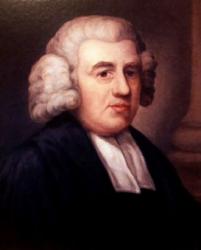
John Newton

1725 - 1807 Author of "How Kind The Good Samaritan" in The Cyber Hymnal John Newton (b. London, England, 1725; d. London, 1807) was born into a Christian home, but his godly mother died when he was seven, and he joined his father at sea when he was eleven. His licentious and tumul­tuous sailing life included a flogging for attempted desertion from the Royal Navy and captivity by a slave trader in West Africa. After his escape he himself became the captain of a slave ship. Several factors contributed to Newton's conversion: a near-drowning in 1748, the piety of his friend Mary Catlett, (whom he married in 1750), and his reading of Thomas à Kempis' Imitation of Christ. In 1754 he gave up the slave trade and, in association with William Wilberforce, eventually became an ardent abolitionist. After becoming a tide-surveyor in Liverpool, England, Newton came under the influence of George Whitefield and John and Charles Wesley and began to study for the ministry. He was ordained in the Church of England and served in Olney (1764-1780) and St. Mary Woolnoth, London (1780-1807). His legacy to the Christian church includes his hymns as well as his collaboration with William Cowper (PHH 434) in publishing Olney Hymns (1779), to which Newton contributed 280 hymns, including “Amazing Grace.” Bert Polman ================== Newton, John, who was born in London, July 24, 1725, and died there Dec. 21, 1807, occupied an unique position among the founders of the Evangelical School, due as much to the romance of his young life and the striking history of his conversion, as to his force of character. His mother, a pious Dissenter, stored his childish mind with Scripture, but died when he was seven years old. At the age of eleven, after two years' schooling, during which he learned the rudiments of Latin, he went to sea with his father. His life at sea teems with wonderful escapes, vivid dreams, and sailor recklessness. He grew into an abandoned and godless sailor. The religious fits of his boyhood changed into settled infidelity, through the study of Shaftesbury and the instruction of one of his comrades. Disappointing repeatedly the plans of his father, he was flogged as a deserter from the navy, and for fifteen months lived, half-starved and ill-treated, in abject degradation under a slave-dealer in Africa. The one restraining influence of his life was his faithful love for his future wife, Mary Catlett, formed when he was seventeen, and she only in her fourteenth year. A chance reading of Thomas à Kempis sowed the seed of his conversion; which quickened under the awful contemplations of a night spent in steering a water-logged vessel in the face of apparent death (1748). He was then twenty-three. The six following years, during which he commanded a slave ship, matured his Christian belief. Nine years more, spent chiefly at Liverpool, in intercourse with Whitefield, Wesley, and Nonconformists, in the study of Hebrew and Greek, in exercises of devotion and occasional preaching among the Dissenters, elapsed before his ordination to the curacy of Olney, Bucks (1764). The Olney period was the most fruitful of his life. His zeal in pastoral visiting, preaching and prayer-meetings was unwearied. He formed his lifelong friendship with Cowper, and became the spiritual father of Scott the commentator. At Olney his best works—-Omicron's Letters (1774); Olney Hymns (1779); Cardiphonia, written from Olney, though published 1781—were composed. As rector of St. Mary Woolnoth, London, in the centre of the Evangelical movement (1780-1807) his zeal was as ardent as before. In 1805, when no longer able to read his text, his reply when pressed to discontinue preaching, was, "What, shall the old African blasphemer stop while he can speak!" The story of his sins and his conversion, published by himself, and the subject of lifelong allusion, was the base of his influence; but it would have been little but for the vigour of his mind (shown even in Africa by his reading Euclid drawing its figures on the sand), his warm heart, candour, tolerance, and piety. These qualities gained him the friendship of Hannah More, Cecil, Wilberforce, and others; and his renown as a guide in experimental religion made him the centre of a host of inquirers, with whom he maintained patient, loving, and generally judicious correspondence, of which a monument remains in the often beautiful letters of Cardiphonia. As a hymnwriter, Montgomery says that he was distanced by Cowper. But Lord Selborne's contrast of the "manliness" of Newton and the "tenderness" of Cowper is far juster. A comparison of the hymns of both in The Book of Praise will show no great inequality between them. Amid much that is bald, tame, and matter-of-fact, his rich acquaintance with Scripture, knowledge of the heart, directness and force, and a certain sailor imagination, tell strongly. The one splendid hymn of praise, "Glorious things of thee are spoken," in the Olney collection, is his. "One there is above all others" has a depth of realizing love, sustained excellence of expression, and ease of development. "How sweet the name of Jesus sounds" is in Scriptural richness superior, and in structure, cadence, and almost tenderness, equal to Cowper's "Oh! for a closer walk with God." The most characteristic hymns are those which depict in the language of intense humiliation his mourning for the abiding sins of his regenerate life, and the sense of the withdrawal of God's face, coincident with the never-failing conviction of acceptance in The Beloved. The feeling may be seen in the speeches, writings, and diaries of his whole life. [Rev. H. Leigh Bennett, M.A.] A large number of Newton's hymns have some personal history connected with them, or were associated with circumstances of importance. These are annotated under their respective first lines. Of the rest, the known history of which is confined to the fact that they appeared in the Olney Hymns, 1779, the following are in common use:— 1. Be still, my heart, these anxious cares. Conflict. 2. Begone, unbelief, my Saviour is near. Trust. 3. By the poor widow's oil and meal. Providence. 4. Chief Shepherd of Thy chosen sheep. On behalf of Ministers. 5. Darkness overspreads us here. Hope. 6. Does the Gospel-word proclaim. Rest in Christ. 7. Fix my heart and eyes on Thine. True Happiness. 8. From Egypt lately freed. The Pilgrim's Song. 9. He Who on earth as man was Known. Christ the Rock. 10. How blest are they to whom the Lord. Gospel Privileges. 11. How blest the righteous are. Death of the Righteous. 12. How lost was my [our] condition. Christ the Physician. 13. How tedious and tasteless the hours. Fellowship with Christ. 14. How welcome to the saints [soul] when pressed. Sunday. 15. Hungry, and faint, and poor. Before Sermon. 16. In mercy, not in wrath, rebuke. Pleading for Mercy. 17. In themselves, as weak as worms. Power of Prayer. 18. Incarnate God, the soul that knows. The Believer's Safety. 19. Jesus, Who bought us with His blood. The God of Israel. "Teach us, 0 Lord, aright to plead," is from this hymn. 20. Joy is a [the] fruit that will not grow. Joy. 21. Let hearts and tongues unite. Close of the Year. From this "Now, through another year," is taken. 22. Let us adore the grace that seeks. New Year. 23. Mary to her [the] Saviour's tomb. Easter. 24. Mercy, 0 Thou Son of David. Blind Bartimeus. 25. My harp untun'd and laid aside. Hoping for a Revival. From this "While I to grief my soul gave way" is taken. 26. Nay, I cannot let thee go. Prayer. Sometimes, "Lord, I cannot let Thee go." 27. Now may He Who from the dead. After Sermon. 28. 0 happy they who know the Lord, With whom He deigns to dwell. Gospel Privilege. 29. O Lord, how vile am I. Lent. 30. On man in His own Image made. Adam. 31. 0 speak that gracious word again. Peace through Pardon. 32. Our Lord, Who knows full well. The Importunate Widow. Sometimes altered to "Jesus, Who knows full well," and again, "The Lord, Who truly knows." 33. Physician of my sin-sick soul. Lent. 34. Pleasing spring again is here. Spring. 35. Poor, weak, and worthless, though I am. Jesus the Friend. 36. Prepare a thankful song. Praise to Jesus. 37. Refreshed by the bread and wine. Holy Communion. Sometimes given as "Refreshed by sacred bread and wine." 38. Rejoice, believer, in the Lord. Sometimes “Let us rejoice in Christ the Lord." Perseverance. 39. Salvation, what a glorious plan. Salvation. 40. Saviour, shine and cheer my soul. Trust in Jesus. The cento "Once I thought my mountain strong," is from this hymn. 41. Saviour, visit Thy plantation. Prayer for the Church. 42. See another year [week] is gone. Uncertainty of Life. 43. See the corn again in ear. Harvest. 44. Sinner, art thou still secure? Preparation for the Future. 45. Sinners, hear the [thy] Saviour's call. Invitation. 46. Sovereign grace has power alone. The two Malefactors. 47. Stop, poor sinner, stop and think. Caution and Alarm. 48. Sweeter sounds than music knows. Christmas. 49. Sweet was the time when first I felt. Joy in Believing. 50. Ten thousand talents once I owed. Forgiveness and Peace. 51. The grass and flowers, which clothe the field. Hay-time. 52. The peace which God alone reveals. Close of Service. 53. Thy promise, Lord, and Thy command. Before Sermon. 54. Time, by moments, steals away. The New Year. 55. To Thee our wants are known. Close of Divine Service. 56. We seek a rest beyond the skies. Heaven anticipated. 57. When any turn from Zion's way. Jesus only. 58. When Israel, by divine command. God, the Guide and Sustainer of Life. 59. With Israel's God who can compare? After Sermon. 60. Yes, since God Himself has said it. Confidence. 61. Zion, the city of our God. Journeying Zionward. -- John Julian, Dictionary of Hymnology (1907) ================= Newton, J., p. 803, i. Another hymn in common use from the Olney Hymns, 1779, is "Let me dwell on Golgotha" (Holy Communion). --John Julian, Dictionary of Hymnology, Appendix, Part II (1907) ----- John Newton was born in London, July 24, 1725. His mother died when he was seven years old. In his eleventh year he accompanied his father, a sea captain, on a voyage. For several years his life was one of dissipation and crime. He was disgraced while in the navy. Afterwards he engaged in the slave trade. Returning to England in 1748, the vessel was nearly wrecked in a storm. This peril forced solemn reflection upon him, and from that time he was a changed man. It was six years, however, before he relinquished the slave trade, which was not then regarded as an unlawful occupation. But in 1754, he gave up sea-faring life, and holding some favourable civil position, began also religious work. In 1764, in his thirty-ninth year, he entered upon a regular ministry as the Curate of Olney. In this position he had intimate intercourse with Cowper, and with him produced the "Olney Hymns." In 1779, Newton became Rector of S. Mary Woolnoth, in London, in which position he became more widely known. It was here he died, Dec. 21, 1807, His published works are quite numerous, consisting of sermons, letters, devotional aids, and hymns. He calls his hymns "The fruit and expression of his own experience." --Annotations of the Hymnal, Charles Hutchins, M.A. 1872 See also in: Hymn Writers of the Church =======================

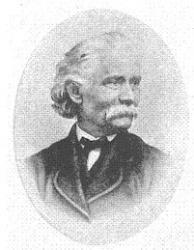
John Greenleaf Whittier

1807 - 1892 Person Name: J. G. Whittier Author of "Wherever through the ages rise" in Song-Hymnal of Praise and Joy Whittier, John Greenleaf, the American Quaker poet, was born at Haverhill, Massachusetts, Dec. 17, 1807. He began life as a farm-boy and shoemaker, and subsequently became a successful journalist, editor and poet. In 1828 he became editor of the American Manufacturer (Boston), in 1830 of the New England Review, and an 1836 (on becoming Secretary to the American Anti-Slavery Society) of the Pennsylvania Freeman. He was also for some time, beginning with 1847, the corresponding editor of the National Era. In 1840 he removed to Amesbury, Massachusetts, where most of his later works have been written. At the present time [1890] he lives alternately at Amesbury and Boston. His first poetical piece was printed in the Newburyport Free Press in 1824. Since then his publications have been numerous, including:— Voices of Freedom, 1833; Songs of Labour, and other Poems, 1850; Ballads and other Poems, London, 1844; The Panorama, and other Poems, 1856; In War Time, 1863; Occasional Poems, 1865; Poetical Works, 1869; Complete Poetical Works, 1876; The Bay of the Seven Islands, and other Poems, 1883, &c. From his numerous poems the following hymns have been compiled, and have come into common use, more especially amongst the American Unitarians:— 1. All as God wills, Who wisely heeds. Trust. This begins with stanza xi. of Whittier's poem, "My Psalm." in his workThe Panorama, and other Poems, 1856 (Complete Poetical Works, Boston, 1876, p. 179), and is given in Lyra Sacra Americana , 1868; Border's Congregational Hymns, 1884, &c. 2. All things are Thine: no gift have we. Opening of a Place of Worship. Written for the Opening of Plymouth Church, Minnesota, 1872 ( Complete Poetical Works , p. 281). In Horder's Congregational Hymns, 1884. 3. Another hand is beckoning us. Bereavement. From his poem " Gone," written in 1845 (Complete Poetical Works, p. 106). In Horder's Congregational Hymns, 1884. 4. Dear Lord and Father of mankind. Calmness in God desired. From his poem “The Brewing of Soma," beginning with stanza xii. (Complete Poetical Works p. 266). In Horder's Congregational Hymns, 1884. 5. God giveth quietness at last. Death and Burial. This begins with stanza xvii. of his poem, “The Singer," written in 1871 (Author's MS.), and included in the Complete Poetical Works, 1876, p. 265. In Martineau's Hymns, 1875. 6. Hast thou, 'midst life's empty noises. The Purpose of Life. Written in 1842. It is in Longfellow and Johnson's Unitarian Book of Hymns, Boston, 1846, and several other later American collections. Also in Lyra Sacra Americana, 1864. 7. I ask not now for gold to gild. Resignation. From his poem "The Wish of To-Day." Written in 1848 (Author's MS.). In Hedge and Huntingdon's Unitarian Hymns for the Church of Christ, Boston, 1853; the Laudes Domini, 1884, and other collections. 8. Immortal love, for ever full. The Love of Jesus. This poem, entitled “Our Master," appeared in Whittier's work, The Panorama, and other Poems, 1856, in 35 stanzas of 4 lines; in Schaff’s Christ in Song, 1869-70, p. 117; and in the Complete Poetical Works, 1876, p. 231, and others. From this poem the following centos have come into common use:— (1) Immortal love for ever full. In the 1890 edition of the Hymnal Companion and others. (2) 0 Lord and Master of us all. Begins with stanza xvi. (3) 0 Love! O Life! our faith and sight. Begins with stanza xxiv. In several American hymnals, including the Unitarian Hymn [and Tune Book ], Boston, 1868, and others. (4) Our Friend, our Brother, and our Lord. Begins with stanza xxxiv. In Horder's Congregational Hymns, 1884, &c. (5) We faintly hear, we dimly see. Begins with stanza xxvi. In Barrett's Congregational Church Hymnal, 1887. (6) We may not climb the heavenly steeps. Begins with stanza v. In Laudes Domini, 1884; the Primitive Methodist Hymnal, 1887, &c. The use of these centos shows that the hymnic element in the original poem is of a high and enduring order. 9. It may not be our lot to wield. Duty and its Reward. This begins with stanza iv. of his poem "Seedtime and Harvest." Written circa 1850 (Author's MS.). Given in his Complete Poetical Works, p. 114. The hymn is in Laudes Domini, 1884, and other American collections. 10. May freedom speed onward, wherever the blood. Freedom. In the 1848 Supplement to the Boston Book of Hymns, Boston, No. 582, Hymns of the Spirit, 1864, and other collections. In Whittier's Poetical Works, Boston, 1869, p. 68, it is given as, “Right onward, O speed it! Wherever the blood”. 11. Now is the seed-time; God alone. Self-Sacrifice. In the Boston Hymns of the Spirit, 1864, No. 683. 12. 0 backward-looking son of time. New and Old. This begins with stanza xix. of his poem "The Reformer," and is given in this form in the Boston Hymns for the Church of Christ, Boston, 1853, No. 835, and again in later collections. In full in the Complete Poetical Works, p. 78. 13. 0 beauty, old yet ever new. The Law of Love. This in the Boston Hymns of the Spirit, 1864, begins with stanza xxi. of his poem on “The Shadow and the Light,” given in full in the Complete Poetical Works , p. 173. 14. 0 fairest-born of love and light. American National Hymn. This is from his poem "Democracy," which is dated "Election Day, 1843," and is in his Ballads and other Poems, London, 1844, p. 214, and his Complete Poetical Works, p. 82. 15. 0, he whom Jesus loves has truly spoken. True Worship. This in the 1848 Supplement to the Boston Book of Hymns, 1848, No. 578, begins with stanza xi. of his poem on “Worship," given in full in his Complete Poetical Works, p. 96. The poem is dated by the Author, 1848 (Author's MS.). 16. 0 holy Father, just and true. Freedom. "Lines written for the Celebration of the third Anniversary of British Emancipation at the Broadway Tabernacle, N. Y., First of August, 1837." (Complete Poetical Works, p. 47.) It was included in the Unitarian Christian Hymns, Boston, 1844, and has been repeated in later collections. 17. 0 Maker of the Fruits and Flowers. Flower Services. This begins with stanza iv. of his "Lines for the Agricultural and Horticultural Exhibition at Amesbury and Salisbury, Sep. 28, 1858," as given in his Complete Poetical Works , p. 183. It is in the Boston Hymns of the Spirit, 1864, and as "O Painter of the fruits and flowers," in Horder's Congregational Hymns, 1884. 18. O not alone with outward sign. Divine Invitation. This begins with stanza ii. of his poem, "The Call of the Christian," given in his Ballads and other Poems, London, 1844, p. 185, and his Complete Poetical Works, p. 73. The hymn appeared in the Boston Book of Hymns, 1846, and again in later collections. 19. O pure Reformers, not in vain. Freedom. This begins with stanza xii. of his poem "To the Reformers of England," as given in his Complete Poetical Works, p. 77. The hymn was included in the Boston Book of Hymns, 1846, and has been repeated in later collections. 20. O sometimes gleams upon our sight. Old and New. This is taken from his poem "The Chapel of the Hermits," 1852 (in 94 stanzas of 4 lines), and begins with stanza xi. (Comp. Poetical Works, p. 115.) The cento was given in the Boston Hymns of the Spirit, 1864, and repeated in later collections. 21. O Thou, at Whose rebuke the grave. Mercy. This was given in the Boston Book of Hymns, 1848, No. 44l. 22. O [God] Thou, Whose presence went before. National Hymn. This hymn is dated by the author 1834 (Author's MS.), and was written for the Anti-slavery Meeting at Chatham Street Chapel, New York, "on the 4th of the 7th month, 1831." It is No. 750 in the Unitarian Christian Hymns, 1844. It is sometimes given as “0 God, whose presence went before." 23. 0, what though our feet may not tread where Christ trod. Presence of Christ's Spirit. The author dates this 1837 (Author's MS.). It is No. 150 in the Boston Book of Hymns, 1846. In their Hymns of the Spirit, 1864, No. 652, it begins: "0, wherefore the dream of the earthly abode." Both centos are from his poem “Poledom." 24. Shall we grow weary in our watch? Patience, or Resignation. This begins with stanza x. of his poem "The Cypress-Tree of Ceylon." (Complete Poetical Works, p. 84.) This form of the text was given in the Boston Book of Hymns, 1846, No. 278, in 7 stanzas of 4 lines, and again in Horder's Congregational Hymns, 1884, in 3 stanzas. 25. Sport of the changeful multitude. Persecution. This begins with line 6 of stanza x. of his poem "Ezekiel," and was given in the Boston Hymns of the Spirit, 1864, No. 65lines In full in Complete Poetical Works, p. 67. 26. The green earth sends its incense up. Worship of Nature. The author dates this 1845 (Author's MS.). It is from his poem “The Worship of Nature," and was given in this form in the Boston Hymns for the Church of Christ, 1853, No. 193. The cento "The harp at Nature's advent strung," in the Unitarian Hymn [and Tune] Book, Boston, 1868, No. 195, is from the same poem. The cento No. 321 in the Boston Hymns of the Spirit, 1864, is also (altered) from this poem. 27. The path of life we walk today. The Shadowing Rock. This in the Boston Hys. of the Spirit, 1864, begins with stanza i. of his poem on "The Rock in El Gh'or," which the author dates 1859 (Author's MS.). In full in Complete Poetical Works, p. 180. 28. Thine are all the gifts, 0 God. Children's Missions, or Ragged Schools. Written for the Anniversary of the Children's Mission, Boston, 1878. It is given in Horder's Congregational Hymns, 1884. 29. Thou hast fallen in thine armour. Death. From his poem "To the memory of Charles B. Storrs, late President of Western Reserve College," published in his Ballads and other Poems, London, 1844, p. 84. Dated by the author 1835 (Author's MS.). Abridged form in the Hymns of the Spirit, 1864. 30. To-day, beneath Thy chastening eye. Seeking Rest. This begins with stanza iv. of his poem, "The Wish of To-Day," dated by the author 1847 (Author's MS.), and given in full in his Complete Poetical Works, p. 114. The cento is in Martineau's Hymns, 1873, and others. 31. We see not, know not; all our way. Resignation. "Written at the opening of the Civil War, 1861" (Author's MS.), and included in his In War Time, 1863, and his Complete Poetical Works, p. 190. In full in the Prim. Methodist Hymnal, 1887. 32. When on my day of life the night is falling. Old Age. Written in 1882 (Author's MS.), and included in his work The Bay of the Seven Islands, and other Poems, 1883. In Horder's Congregational Hymns, 1884. 33. With silence only as their benediction. Death. 1845. "Written on the death of Sophia Sturge, sister of Joseph Sturge, of Birmingham, England" (Author's MS.). It is in several collections, including Martineau's Hymns, &c, 1873; Horder's Congregational Hymns, 1884, and others. Notwithstanding this extensive use of portions of Mr. Whittier's poems as hymns for congregational use, he modestly says concerning himself: "I am really not a hymn-writer, for the good reason that I know nothing of music. Only a very few of my pieces were written for singing. A good hymn is the best use to which poetry can be devoted, but I do not claim that I have succeeded in composing one." (Author's MS.) We must add, however, that these pieces are characterized by rich poetic beauty, sweet tenderness, and deep sympathy with human kind. -- John Julian, Dictionary of Hymnology (1907) ======================== Whittier, J. G, p. 1277, i. In addition to the large number of this author's hymns already annotated from his own manuscript, the following have also come into use, mainly in the form of centos from his poems, during the past ten years:— i. From Poems, 1850:— 1. O brother man! Fold to thy heart thy brother. [Brotherly Love.] From his poem, “Worship." Written in 1848, and published in Poems, 1850. ii. From Songs of Labour, and Other Poems, 1850;— 2. Bowed down in lowliness of min. [Resignation.] From the poem “The Wish of To-day." iii. From The Chapel of the Hermits, and Other Poems, 1853:— 3. O, sometimes glimpses on our sight. [Light in Darkness.] First published in The National Era, 1851, and again as above, 1853. In The Pilgrim Hymnal, N.Y. 1904, it begins " 0 sometimes gleams upon our sight," and in Hymns of the Ages, 1904, "Yet sometimes glimpses on my sight"; see p. 1277, ii. 20. iv. From The Panorama, and Other Poems, 1856:— 4. Thou, 0 most compassionate. [Divine Compassion.] This cento is from the poem "My Dream," and is dated 1855. v. From Home Ballads and Poems, 1860:— 5. I mourn no more my vanished years. [Life's Review.] A cento from "My Psalm," dated 1859, opening with st. i. 6. No longer forward nor behind. This begins with st. iii. of "My Psalm." 7. O hearts of love, O souls that turn. [Life from, Christ.] A cento from the poem, "The Overheart." 8. O Love Divine, Whose constant beam. [Divine Love Universal.] From the poem, "The Shadow and the Light." The form in which it is given in The Pilgrim Hymnal, 1904, first appeared in The Independent, Nov. 1860. 9. Once more the liberal year laughs out. [Autumn.] From his "For an Autumn Festival," 1859. vi. From In War Time, and Other Poems, 1864:— 10. I can only urge the plea. [Cry for Mercy.] A cento from “Andrew Rykman’s Prayer,” dated 1863. 11. What Thou wilt, O Father, give. Also from “Andrew Kykman's Prayer." vii. From The Tent on the Beach, and Other Poems, 1867:— 12. I bow my forehead to [in] the dust. St. ix., &c. 13. I know not what the future hath. St. xvi., &c. 14. I long for household voices gone. St. xv., &c. 15. I see the wrong that round me lies. St. x., &c. 16. Who fathoms the Eternal Thought. St. iv., &c. 17. Yet, in the maddening maze of things. St. xi., &c. These centos are taken from the poem, "The Eternal Goodness," which is dated 1865. viii. From Among the Hills, and Other Poems, 1869:— 18. For ever round the mercy-seat. [God's Love and Man's Unfaithfulness.] From the poem, “The Answer." ix. From The Pennsylvania Pilgrim, and Other Poems, 1873:— 19. Best for the weary hands is good. [Daily Renewal.] This is from "My Birthday," which appeared in the Atlantic Monthly, 1871, and again as above, 1873. x. From Hazel Blossoms, 1875:— 20. All things [gifts] are Thine, p. 1277, i. 2. The church for which this was written, in 1873, was Plymouth Church, St. Paul, Minn. The hymn was included in Hazel Blossoms, 1875. 21. We need love's tender lessons taught. [Love.] From Child-Songs," in Hazel Blossoms, opening with st. ix. xi. From The Bay of the Seven Islands, 1883:— 22. As from the lighted hearths behind me. [Anticipation of the Future.] This begins with st. iii. of the poem, "What the Traveller said at Sunset." xii. Additional Notes:— 23. Lord, for the things we see. [Public Gatherings.] This hymn is from "Poledom," 1837. 24. Not always as the whirlwind's rush. [Call to the Ministry.] Published in The Poetical Writings, 1857, Vol. i., p. 254, and again in the Oxford edition of his Poetical Works, 1904, p. 455. It is dated 1833. 25. Sound over all waters, [The Coming Kingdom.) This, in Horder's Worship Song, 1905, is from Whittier's Complete Poetical Works, Boston, 1876, p. 280, where it is dated 1873. 26. Take courage, Temperance workers. [Temperance.] Mr. Pickard, Whittier's literary executor, cannot trace this hymn in any of the author's writings, and we also are at fault. 27. The harp at Nature's advent strung. [Nature's acknowledgement of God.] Dr. Charles L. Noyes, one of the editors of The Pilgrim Hymnal, 1904, writes us concerning this hymn: "It was first published in its present form [as in the American hymn-books] in 1867 in The Tent on the Beach." But a hymn almost identical was written when Whittier was in his teens, and published in the Haverhill Gazette, October 5, 1827. The same poem appeared in The Palladium, 1829. It was revised for The Tent on the Beach, 1867 (p. 1278, i. 26). 28. We see not, know not; all our way, p. 1278, i. 31. This hymn, written in 1861, first appeared in the Atlantic Monthly, 1862, vol. 10, p. 235. 29. Wherever through the ages rise. [Love is universal.] Opens with line 1 of a section in the poem "Miriam," in Miriam, and Other Poems, 1871, p. 13. 30. Who calls Thy glorious service hard? [Duty.] This begins with st. iii. of his poem "Seedtime and Harvest," noted on p. 1277, ii. 9. 31. O Lord and Father of mankind. This is a slightly altered form of "Dear Lord and Father of mankind." p. 1277, i. 4. The poem, “Our Master," stated on p. 1277, i., No. 8, as having appeared in The Panorama, 1856, in error, was given in The Tent on the Beach, and Other Poems, Boston, 1867, pp. 143-152. In compiling the foregoing, we have been materially assisted by Mr. Pickard, the poet's literary executor, and the Rev. Dr. Charles L. Noyes, of Somerville, Mass. Whittier died at Hampton Falls, New Hampshire, Sep. 7, 1892. --John Julian, Dictionary of Hymnology, New Supplement (1907) ======================= See also in: Hymn Writers of the Church

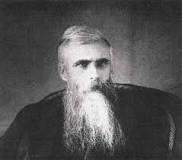
William H. Burleigh

1812 - 1871 Author of "O Holy Father, 'mid the calm" in Songs for the Lord's House Burleigh, William Henry, an active reformer and member of the Unitarian body, was born at Woodstock, Connecticut, Feb. 12, 1812, and brought up on a farm at Stainfield in the same state. In 1837 he went to Pittsburg, Pennsylvania, where, having been previously apprenticed to the printing trade, he published the Christian Witness and Temperance Banner. In 1843 he undertook the duties of editor of the Christian Freeman, at Hartford. From 1849 to 1855 he was agent of the New York State Temperance Society; and from 1855 to 1870 Harbour Master at New York. Died at Brooklyn, March 18, 1871. His poetical pieces and hymns were contributed to various periodicals and journals. Many of these were collected and published as Poems, Phila. in 1841. This volume was enlarged by additional pieces, and republished by his widow, in 1871. The dates of these hymns and poems are most difficult to determine. Where possible they are given in detail. It is somewhat curious that Burleigh's hymns are generally more extensively used in England than at home. The introduction of some of his best compositions into the English collections is due to the Lyra Sacra Americana, whence they were mostly taken by the compilers. Those in use in Great Britain and America are:— 1. Fades from the west the farewell nigh. Night . This poem, entitled “A Psalm of Night," is given in his Poems, N. Y., 1871, pp. 275-6. Although not in the 1st edition of his Poems, 1841, it was in common use as early as 1844. It is in 5 stanzas of 8 lines. From it the following centos have come into common use:— (1) “Day unto day uttereth speech." This is composed of stanzas iii.-v., and was given in the Christian Hymns of the Cheshire Pastoral Association (Amer. Unitarian), 1844, as an "Evening Hymn." (2) "O Holy Father, mid the calm." This cento In Longfellow and Johnson's Book of Hymns, 1846, and their Hymns of the Spirit, 1864, &c, is composed of stanzas iv.-v. (3) "Not only doth the voiceful day," No. 324 in Longfellow and Johnson's Hymns of the Spirit, 1864, is composed of st. ii.-iii. Another arrangement beginning with the same stanza is in the Lyra Sacra Americana, p. 41. (4) “The brightening dawn and voiceful day." In the Hymnary (Lond.), 1872, is, altered from the Lyra Sacra Americana as above, with the addition of a doxology. In and through these various forms, the use of this hymn is very extensive. 2. Father, beneath Thy sheltering wing. Trust and Peace. Appeared in Longfellow and Johnson's Hymns of the Spirit, 1864, No. 471, in 4 stanzas of 4 lines. It is given in many American collections, and in the Baptist Hymnal, 1879, Horder's Cong. Hymns , 1884, and others in Great Britain. Orig. text in Lyra Sacra Americana, p. 39, with "that" for "which” in st. ii. line 4. 3. For the dear love that kept us through the night. Morning. From Poems, 1871, into Horder's Congregational Hymns, 1884. 4. From profoundest depths of tribulation. Lent. This appeared in the Supplement to Hedge and Huntington's Hymns, &c. (Unitarian), 1853, No 843. 5. Lead us, 0 Father, in the paths of peace. Divine Guidance. No. 32 of the Lyra Sacra Americana, in 4 stanzas of 4 lines, being "A Prayer for Guidance." With English compilers this hymn ranks amongst Burleigh’s productions next in popularity to No. 8, and is found in most of the collections there named. 6. Not in vain I poured my supplication . Lent. This is a continuation of the same thought as No. 4 preceding, and follows it in the same Supplement. 7. O deem not that earth's crowning bliss. Mourning. This, passed from the Lyra Sacra Americana, 1868, into the Eng. Bap. Hymnal , 1879; Horder's Congregational Hymns, 1884, and others. It is in his Poems, 1i871, p. 258. The hymn, "From lips divine, like healing balm," in the Methodist Episcopal Hymnal, N. Y., 1878, is a cento from this hymn. 8. Still will we trust though earth seems dark and dreary. Faith. Appeared in the Lyra Sac. Amer., 1868, pp. 43-44, in 5 stanzas of 4 lines. This is the most widely adopted of this author's hymns by the English compilers. It is given in some of the best collections, as the New Congregational Hymn Book, Thring, Horder, the Baptist Hymnal, Allon, &c. 9. There is a beautiful land by the spoiler untrod. Heaven. Dr. Cleveland Lyra Sac. Americana, 1868, p. 298) says, "This piece was first published in the Independent, Jan. 18, 1866." 10. They who have kept their spirit's virgin whiteness. Purity. In Lyra Sacra Americana, 1868, p. 46. 11. Thou Who look'st with pitying eye. Lent. In Lyra Sacra Americana, 1868, p. 47. 12. Through the changes of the day. Evening. From his Poems, 1841. It is given in the Lyra Sac. Amer., p. 50, the Society for Promoting Christian Knowledge Psalms. and Hymns, 1852, Thring's Collection, and others. 13. We ask not that our path be always bright. Trust in God. From the Lyra Sac. Amer, 1868, into Horder's Congregational Hymns, 1884. 14. When gladness gilds our prosperous day. Good in all. Also from Lyra Sacra Americana into Horder's Cong. Hymns, 1884. It has been already noted that Burleigh's hymns have a more extended use in Great Britain, than in his own country. The foregoing notes will also show that his productions are more widely known and used outside of his own denomination than by his own people. Concerning the hymns included in the Lyra Sac. Amer., Dr. Cleveland, the editor, says, "Most of these beautiful hymns of Mr. Burleigh's were given to me in manuscript by the author," but he does not indicate what was new and what was old. -- John Julian, Dictionary of Hymnology (1907)

William B. Rands

1826 - 1882 Person Name: William Brighty Rands Author of "One Lord there is, all lords above" in The Students' Hymnal Rands, William Brighty, was born in Chelsea in 1826 and died at Dulwich on April 23rd, 1882. He was a considerable contributor to literature, but published his works under various names—-e.g. "Matthew Browne," "Henry Holbeach," "Lilliput Levee," &c. One hymn by him of great force and originality has found its way into recent hymnals, "One Lord there is all Lords above" (God a consuming fire to sin ). It appeared originally in his "Lilliput Lectures," 1872. It has been included in Horder's Congregational Hymns, 1884, and in the Congregational Church Hymnal, 1887. [Rev. W. Garrett Horder] --John Julian, Dictionary of Hymnology (1907)

Russell S. Cook

1811 - 1864 Person Name: R. S. Cook Author of "Burdened with guilt, wouldst thou be blest?" in The Standard Church Hymnal Cook, Russell Sturgis, born at New Marlborough, Mass., March 6, 1811, was educated for the Congregational Ministry, and married a daughter of Dr. Caesar Malan, of Geneva. From 1839 to 1856 he was one of the Secretaries of the American Tract Society. He was the originator of its system of colportage. Subsequently he became Secretary of the New York Sabbath Committee. He also edited the American Messenqer. He died at Pleasant Valley, New York, Sept. 4, 1864. His hymn:— Just as thou art, without one trace. Invitation, was published in the American Messenger, March, 1850, in. 6 stanzas of 4 lines. It was written as a companion hymn to Miss Elliott's "Just as I am, without one plea," and was sent by the author to her. It was soon adopted by editors of American hymn-books, sometimes in an abbreviated form, beginning with stanza iii. as, "Burdened with guilt, wouldst thou be blest?" as in the Sabbath Hymn Book, 1858. It became known in Great Britain through Lord Selborne's Book of Praise, 1862. In that collection it was reprinted from an anonymous tract, in which stanzas ii, and vi. are omitted. This form of the hymn is usually given in the English collections. Full original text in Schaff’s Christ in Song, 1869-70. [Rev. F. M. Bird, M.A.] --John Julian, Dictionary of Hymnology (1907)

Edward Arthur Dayman

1807 - 1890 Person Name: Rev. E. A. Dayman Author of "Almighty Father, Heaven and Earth" in The New Christian Hymnal Dayman, Edward Arthur, B.D., 3rd son of John Dayman, of Mambury, N. Devon, born at Padstow in Cornwall, 11th July, 1807, and educated at Blundell's School, Tiverton, Devon, and Exeter College Oxon. 1st Class in Lit. Hum. 1829, B.A. 1830, M.A. 1831, B.D. 1841. He was for some time Fellow and Tutor of his College, and Pro-Proctor, 1835. Taking Holy Orders in 1835, he became successively examiner for University Scholarship for Latin, 1838; in Lit. Hum., 1838-1839, and 1841-1842, Sen. Proctor of the University 1840, Rector of Shilling-Okeford or Shillingstone, Dorset, 1842; Rural Dean, 1849; Proctor in Convocation, 1852; and Hon. Canon of Bitton in Sarum Cathedral, 1862. His works include Modern Infidelity, 1861, and Essay on Inspiration, 1864. He was joint editor with Lord Nelson and Canon (afterwards Bishop) Woodford of the Sarum Hymnal, 1868; which contains translations from the Latin, and original hymns by him; and with Canon Rich-Jones, of Statula et Comuetudines Ecclesiae Cathedralis Sarisburiensis, 1883. He also contributed several translations from the Latin to The Hymnary, 1872. He has been for many years engaged in compiling an English Dictionary of Mediaeval Latin founded on Du Cange. The original hymns contributed by him to the Sarum Hymnal,1868, are, with the dates of their composition, as follows: 1.  Almighty Father, heaven and earth, q.v.  (1867) Offertory. 2.  O Lord, be with us when we sail.  (1865)  For use at Sea. 3.  O Man of Sorrows, Thy prophetic eye.   (1865) Tuesday before Easter. 4.  Sleep thy last sleep.  (1868)  Burial. 5.  Upon the solitary mountain's height.  (1866) Transfiguration. 6.  When the messengers of wrath. (1867)   During Pestilence and Famine. 7. Who is this with garments dyed? (1866) Monday before Easter.                                             -- John Julian, Dictionary of Hymnology (1907) =============== Dayman, E. A., p. 28S, ii. He died at Shillingstone, Oct. 30, 1890. --John Julian, Dictionary of Hymnology, Appendix, Part II (1907)

Thomas Lake Harris

1823 - 1906 Person Name: T. L. Harris Author of "The New Church" in Song-Hymnal of Praise and Joy Harris, Thomas Lake, born May 15, 1823. Under his name three hymns are given in the American Unitarian Hymns of the Spirit, 1864:—(1) "In every human mind we see" (The Soul God's Temple); (2) "Look up, O man, behold the same" (God All in All); (3) "O earth, thy past is crowned and consecrated" (Past, Present and Future). --John Julian, Dictionary of Hymnology, Appendix, Part II (1907) ===================== Harris, T. L., p. 1569, ii., was born at Stony Stratford, Bucks, and when three years of age went with his parents to America. He died at New York, March 23, 1006. His hymns were published as Hymns of Spiritual Devotion, N.Y., 1858. In his Preface, he says, "Many of the hymns were verbally communicated by individual spirits." [Rev. James Mearns, M.A.] --John Julian, Dictionary of Hymnology, New Supplement (1907)

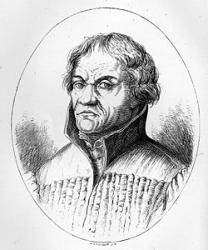
Paul Eber

1511 - 1569 Person Name: Paul Eber (1511-1569) Author of "When in Our Hour of Utmost Need" in The Christian Hymnary Eber, Paul, son of Johannes Eber, master tailor at Kitzingen, Bavaria, was born at Kitzingen, Nov. 8, 1511. He was sent in 1523 to the Gymnasium at Ansbach, but being forced by illness to return home, was on his way thrown from horseback and dragged more than a mile, remaining as a consequence deformed ever after. In 1525 he entered the St. Lorentz school at Nürnberg, under Joachim Camerarius, and in 1532 went to the University of Wittenberg, where he graduated 1536, and thereafter became tutor in the Philosophical Faculty. He was appointed Professor of Latin in 1544, then in 1557 Professor of Hebrew and Castle preacher, and in 1558 Town preacher and General Superintendent of the Electorate, receiving in 1559 the degree D.D. from the University. He died at Wittenberg, Dec. 10, 1569 (Koch, i. 271-278; Allgemeines Deutsche Biog., v. 529). At Wittenberg he was a close friend of Melanchthon, was privy to all his plans, and conducted the greater part of his correspondence. After Melanchthon's death in 1560, he became leader of his party, and had to engage in various controversies with the Crypto-Calvinists, &c.; the seeds of his fatal illness being sown on his return journey from the fruitless conference held at Altenburg with the theologians of Jena, which lasted from Oct. 20, 1568, to March 9, 1569. Eber was, next to Luther, the best poet of the Wittenberg school. His hymns, some of them written for his own children to sing to Luther's melodies, are distinguished for their child-like spirit and beautiful simplicity. Seventeen hymns have been attributed to him, four of which are certainly his, and probably two others. Of these six, five have been translated into English, one of which is noted under "Dicimus grates," and the others are:— i. Herr Jesu Christ, wahr Mensch und Gott. For the Dying. The first hymnbook in which this simple and beautiful hymn has been found is the Low German Enchiridion, published at Hamburg, 1565, where it is in 8 stanzas of 6 lines., entitled "A prayer to Christ for a happy departure from this troublous life," and marked as "D. Paulus Eberus Filiolis suis faciebat MDLVII. Wackernagel, iv. p. 4, gives this and a second form in High German from the Psalmen, Geystliche Lieder und Gesänge, Strassburg, 1569. In his Bibliographie, 1855, p. 233, Wackernagel describes an undated broadsheet, which he would date 1550, and at p. 279 says it forms the first of Neun Schöne Geistliche Lieder, Nürnberg N.D., c. 1556. G. Döring, in his Choralkunde, Danzig, 1865, p. 434, says it appeared as "Panie Jezu ty's czlowiek i Bog" in the Polish Cantional, edited by Pastor Seklucyan, and published at Königsberg, 1559. Lauxmann, in Koch, viii, 591-594, adds that it comforted Eber himself while he lay a-dying, Dec. 10, 1569; was repeated by Hugo Grotius a few minutes before his death, Aug. 28, 1645; and was a favourite hymn of Prince Wolfgang of Anhalt (d. 1566), Christian I., Elector of Saxony (d. 1591), of the Margrave Georg Friedrieh of Brandenburg-Kulmbach (d. 1603), &c. Included as No. 820 in the Unv. L. S., 1851. The translations in common use are:— 1. Lord Jesus Christ, true Man and God, Who borest. Good and full, by Miss Winkworth in the first Ser. of her Lyra Germanica, 1855, p. 239. Of this stanzas i.-iv. appear in the Psalms & Hymns., Bedford, 1859; i., ii., viii. in the Harrow School Hymn Book, 1866 ; and i.-iii., v., viii. in the Pennsylvania Lutheran Church Book,1868. A cento from stanza ii., line 3-6, iii., 11. 1-4, vii., 1line 3-6, beginning, "When from my sight all fades away," is No. 1181 in the American Sabbath Hymn Book, 1858. 2. Lord Jesus Christ, true Man and God, Thou Who. A translation by E. Cronenwett, in nine stanzas of L.M., based on stanzas i., ii., iv.-viii., as No. 434, in the Ohio Lutheran Hymnal 1880. Other translations are, (1) "0 God, support me, death is near," by Dr. G. Walker, 1860, p. 103. (2) "Lord Jesus Christ, true Man and God, who hast”, by E. Massie, 1867, p. 10. ii. Wenn wir in höchsten Nöthen sein. In Trouble. Founded on a hymn by Joachim Camerarius, his former master at Nürnberg [b. at Bamberg, April 12, 1500, d. as Professor of Greek and Latin at Leipzig, April 17, 1574], which in Wackernagel, i. p. 324, runs thus:— "In tenebris nostrae et densa caligine mentis, Cum nihil est toto pectore consilii, Turbati erigimus, Deus, ad Te lumina cordis Nostra, tuamque fides solius erat opem. Tu rege consiliis actus, Pater optime, nostros, Nostrum opus ut laudi serviat omne Tuae." These lines comforted Melanchthon in 1546; and Lauxmann, in Koch, viii. 161-165, thinks probably Eber also. He relates that on Ascension Day, 1547, after the battle of Mühlberg, the Wittenbergers having received a message from the captive Elector to deliver their city to the Emperor Charles V. assembled for prayer in church; and quotes a portion of the prayer by Bugenhagen which greatly resembles Eber's hymn. But that the hymn was written then we have no proof, and the earliest source quoted by Wackernagel, iv. p. 6, is the Naw Betbüchlein, Dresden 1566, in 7 stanza of 4 line., though in his Bibliographie, 1855, p. 312, he describes a broadsheet printed at Nürnberg, N.D., c. 1560. In M. Moller's Meditationes sanctorum Patrum, Görlitz, 1584, it is entitled "A beautiful prayer of the venerable Dr. Paul Eber, which he composed on the beautiful words of King Jehoshaphat, 2 Chron. xx. 12." Included as No. 583 in the Unv. L. S., 1851. A "Cry from the depths," though not in despair but in trustful confidence in God, it is one of the finest and most widely used hymns of the Reformation period. Lauxmann relates how the singing of this hymn and the prayers of Martin Rinkart (q.v.), Archidiaconus of Eulenburg near Leipzig, prevailed to move the heart of the Swedish Lieutenant-Colonel, who on Feb. 21, 1635, had demanded from the inhabitants a ransom of £4500, but eventually accepted 2000 florins; says that in commemoration of a similar deliverance from the Swedish army in 1642 the hymn was long sung at the end of the Sunday afternoon service at Pegau, near Leipzig, and adds other incidents regarding its use. The only translation in common use is :— When in the hour of utmost need. A full and very good translation by Miss Winkworth in the 2nd Ser. of her Lyra Germanica, 1858, p. 180, and thence as No. 141 in her Chorale Book for England, 1863. Included in full in the American Presbyterian Hymnal 1874, and the Ohio Lutheran Hymnal, 1880. In full, though slightly altered, as No. 233, in Hymns Ancient & Modern, 1861, but omitted in the revised edition, 1875. In the Hymnary, 1871, Psalmist, 1878, J. L. Porter's Collection, 1876, Thring's Collection, 1882, and the Evangelical Hymna, N. Y., 1880, st. v. is omitted. Other translations are, (1) "When we are under great distress," by J. C. Jacobi, 1720, p. 19 (1722, p. 119; 1732, p. 184, altered, and thence as No. 140 in p. i. of the Moravian Hymn Book, 1754). (2) "When neither help nor counsel's nigh," by Dr. G. Walker, 1860, p. 89. (3) "When all our way is hedged around," by N. L. Frothingham, 1870. His hymns not in English common use are:— iii. Helft mir Gottes Güte preisen. [New Year.] Written on the name Helena, borne both by his wife and his daughter, the initial letters of each stanza composing it. Wackernagel, iv. p. 6, quotes it from Eichorn's Geistliche Lieder, Frankfurt a. Oder, c. 1580, in 6 st. of 8 l., entitled, "A Thanksgiving and Prayer for the New Year, in remembrance of God's goodness, for the Children." Older but less correct forms are noted by Mützell, p. 486, as in the Copenhagen GesangBuch,1511, and the Stettin, 1576. Included as No. 68 in the Unv. L. S., 1851. It is translation as, "Ye Christians in this nation," by J. C. Jacobi, 1722, p. 11 (1732, p. 10, altered and beginning, "Come, let us all, with Fervour.") iv. In Christi Wunden schlaf ich ein. [For the Dying.] Appears in Jeremias Weber's Gesang-Buch, Leipzig, 1638, p. 797, marked as "Another" (the hymn immediately preceding is ascribed to Eber), in 3 st. of 4 1. In the Berlin Geistlicher Lieder Schatz, ed. 1863, No. 1468, the text is slightly varied, and arranged in 2 st. of 6 1. It was first ascribed to Eber in the Nürnberg Gesang-Buch, 1676. Lauxmann, in Koch, viii. 595-601, says of it, "That the hymn is much older than the date of its appearance [i.e. than 1638] seems obvious; that it breathes the childlike spirit of Eber is certain. More than this we cannot say." St. i., 11. 3-6, "Ja Christi Blut und Gerechtigkeit," has been adopted by many pious Germans, young and old, as a prayer in life and death, and Lauxmann relates many interesting incidents regarding its use by A. G. Spangenberg, by Wilhelm Hey, and others. These four lines were adopted by N. L. von Zinzendorf, as the first stanza of his well-known hymn, "Christi Blut und Gerechtigkeit" (q. v.). It is translation as, "I fall asleep in Jesus' arms," by Miss Winkworth, i860, p. 121. [Rev .James Mearns] -- John Julian, Dictionary of Hymnology (1907)

Pages


Export as CSV
It looks like you are using an ad-blocker. Ad revenue helps keep us running. Please consider white-listing Hymnary.org or getting Hymnary Pro to eliminate ads entirely and help support Hymnary.org.