You help make Hymnary.org possible. More than 10 million people from 200+ countries found hymns, liturgical resources and encouragement on Hymnary.org in 2025, including you. Every visit affirms the global impact of this ministry.

If Hymnary has been meaningful to you this year, would you take a moment today to help sustain it? A gift of any size—paired with a note of encouragement if you wish—directly supports the server costs, research work and curation that keep this resource freely available to the world.

Give securely online today, or mail a check to:
Hymnary.org
Calvin University
3201 Burton Street SE
Grand Rapids, MI 49546

Thank you for your partnership, and may the hope of Advent fill your heart.

Person Results

Tune Identifier:"^hendon_malan$"
In:people

Planning worship? Check out our sister site, ZeteoSearch.org, for 20+ additional resources related to your search.
Showing 31 - 40 of 88Results Per Page: 102050

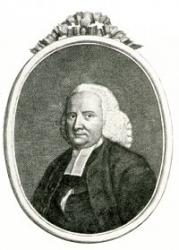
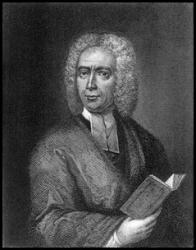
Isaac Watts

1674 - 1748 Author of "அருளின் வடிவாம் ஆண்டவா" in The Cyber Hymnal Isaac Watts was the son of a schoolmaster, and was born in Southampton, July 17, 1674. He is said to have shown remarkable precocity in childhood, beginning the study of Latin, in his fourth year, and writing respectable verses at the age of seven. At the age of sixteen, he went to London to study in the Academy of the Rev. Thomas Rowe, an Independent minister. In 1698, he became assistant minister of the Independent Church, Berry St., London. In 1702, he became pastor. In 1712, he accepted an invitation to visit Sir Thomas Abney, at his residence of Abney Park, and at Sir Thomas' pressing request, made it his home for the remainder of his life. It was a residence most favourable for his health, and for the prosecution of his literary labours. He did not retire from ministerial duties, but preached as often as his delicate health would permit. The number of Watts' publications is very large. His collected works, first published in 1720, embrace sermons, treatises, poems and hymns. His "Horae Lyricae" was published in December, 1705. His "Hymns" appeared in July, 1707. The first hymn he is said to have composed for religious worship, is "Behold the glories of the Lamb," written at the age of twenty. It is as a writer of psalms and hymns that he is everywhere known. Some of his hymns were written to be sung after his sermons, giving expression to the meaning of the text upon which he had preached. Montgomery calls Watts "the greatest name among hymn-writers," and the honour can hardly be disputed. His published hymns number more than eight hundred. Watts died November 25, 1748, and was buried at Bunhill Fields. A monumental statue was erected in Southampton, his native place, and there is also a monument to his memory in the South Choir of Westminster Abbey. "Happy," says the great contemporary champion of Anglican orthodoxy, "will be that reader whose mind is disposed, by his verses or his prose, to imitate him in all but his non-conformity, to copy his benevolence to men, and his reverence to God." ("Memorials of Westminster Abbey," p. 325.) --Annotations of the Hymnal, Charles Hutchins, M.A., 1872. ================================= Watts, Isaac, D.D. The father of Dr. Watts was a respected Nonconformist, and at the birth of the child, and during its infancy, twice suffered imprisonment for his religious convictions. In his later years he kept a flourishing boarding school at Southampton. Isaac, the eldest of his nine children, was born in that town July 17, 1674. His taste for verse showed itself in early childhood. He was taught Greek, Latin, and Hebrew by Mr. Pinhorn, rector of All Saints, and headmaster of the Grammar School, in Southampton. The splendid promise of the boy induced a physician of the town and other friends to offer him an education at one of the Universities for eventual ordination in the Church of England: but this he refused; and entered a Nonconformist Academy at Stoke Newington in 1690, under the care of Mr. Thomas Rowe, the pastor of the Independent congregation at Girdlers' Hall. Of this congregation he became a member in 1693. Leaving the Academy at the age of twenty, he spent two years at home; and it was then that the bulk of the Hymns and Spiritual Songs (published 1707-9) were written, and sung from manuscripts in the Southampton Chapel. The hymn "Behold the glories of the Lamb" is said to have been the first he composed, and written as an attempt to raise the standard of praise. In answer to requests, others succeeded. The hymn "There is a land of pure delight" is said to have been suggested by the view across Southampton Water. The next six years of Watts's life were again spent at Stoke Newington, in the post of tutor to the son of an eminent Puritan, Sir John Hartopp; and to the intense study of these years must be traced the accumulation of the theological and philosophical materials which he published subsequently, and also the life-long enfeeblement of his constitution. Watts preached his first sermon when he was twenty-four years old. In the next three years he preached frequently; and in 1702 was ordained pastor of the eminent Independent congregation in Mark Lane, over which Caryl and Dr. John Owen had presided, and which numbered Mrs. Bendish, Cromwell's granddaughter, Charles Fleetwood, Charles Desborough, Sir John Hartopp, Lady Haversham, and other distinguished Independents among its members. In this year he removed to the house of Mr. Hollis in the Minories. His health began to fail in the following year, and Mr. Samuel Price was appointed as his assistant in the ministry. In 1712 a fever shattered his constitution, and Mr. Price was then appointed co-pastor of the congregation which had in the meantime removed to a new chapel in Bury Street. It was at this period that he became the guest of Sir Thomas Abney, under whose roof, and after his death (1722) that of his widow, he remained for the rest of his suffering life; residing for the longer portion of these thirty-six years principally at the beautiful country seat of Theobalds in Herts, and for the last thirteen years at Stoke Newington. His degree of D.D. was bestowed on him in 1728, unsolicited, by the University of Edinburgh. His infirmities increased on him up to the peaceful close of his sufferings, Nov. 25, 1748. He was buried in the Puritan restingplace at Bunhill Fields, but a monument was erected to him in Westminster Abbey. His learning and piety, gentleness and largeness of heart have earned him the title of the Melanchthon of his day. Among his friends, churchmen like Bishop Gibson are ranked with Nonconformists such as Doddridge. His theological as well as philosophical fame was considerable. His Speculations on the Human Nature of the Logos, as a contribution to the great controversy on the Holy Trinity, brought on him a charge of Arian opinions. His work on The Improvement of the Mind, published in 1741, is eulogised by Johnson. His Logic was still a valued textbook at Oxford within living memory. The World to Come, published in 1745, was once a favourite devotional work, parts of it being translated into several languages. His Catechisms, Scripture History (1732), as well as The Divine and Moral Songs (1715), were the most popular text-books for religious education fifty years ago. The Hymns and Spiritual Songs were published in 1707-9, though written earlier. The Horae Lyricae, which contains hymns interspersed among the poems, appeared in 1706-9. Some hymns were also appended at the close of the several Sermons preached in London, published in 1721-24. The Psalms were published in 1719. The earliest life of Watts is that by his friend Dr. Gibbons. Johnson has included him in his Lives of the Poets; and Southey has echoed Johnson's warm eulogy. The most interesting modern life is Isaac Watts: his Life and Writings, by E. Paxton Hood. [Rev. H. Leigh Bennett, M.A.] A large mass of Dr. Watts's hymns and paraphrases of the Psalms have no personal history beyond the date of their publication. These we have grouped together here and shall preface the list with the books from which they are taken. (l) Horae Lyricae. Poems chiefly of the Lyric kind. In Three Books Sacred: i.To Devotion and Piety; ii. To Virtue, Honour, and Friendship; iii. To the Memory of the Dead. By I. Watts, 1706. Second edition, 1709. (2) Hymns and Spiritual Songs. In Three Books: i. Collected from the Scriptures; ii. Composed on Divine Subjects; iii. Prepared for the Lord's Supper. By I. Watts, 1707. This contained in Bk i. 78 hymns; Bk. ii. 110; Bk. iii. 22, and 12 doxologies. In the 2nd edition published in 1709, Bk. i. was increased to 150; Bk. ii. to 170; Bk. iii. to 25 and 15 doxologies. (3) Divine and Moral Songs for the Use of Children. By I. Watts, London, 1715. (4) The Psalms of David Imitated in the Language of the New Testament, And apply'd to the Christian State and Worship. By I. Watts. London: Printed by J. Clark, at the Bible and Crown in the Poultry, &c, 1719. (5) Sermons with hymns appended thereto, vol. i., 1721; ii., 1723; iii. 1727. In the 5th ed. of the Sermons the three volumes, in duodecimo, were reduced to two, in octavo. (6) Reliquiae Juveniles: Miscellaneous Thoughts in Prose and Verse, on Natural, Moral, and Divine Subjects; Written chiefly in Younger Years. By I. Watts, D.D., London, 1734. (7) Remnants of Time. London, 1736. 454 Hymns and Versions of the Psalms, in addition to the centos are all in common use at the present time. --Excerpts from John Julian, Dictionary of Hymnology (1907) ================================== Watts, I. , p. 1241, ii. Nearly 100 hymns, additional to those already annotated, are given in some minor hymn-books. --John Julian, Dictionary of Hymnology, Appendix, Part II (1907) ================= Watts, I. , p. 1236, i. At the time of the publication of this Dictionary in 1892, every copy of the 1707 edition of Watts's Hymns and Spiritual Songs was supposed to have perished, and all notes thereon were based upon references which were found in magazines and old collections of hymns and versions of the Psalms. Recently three copies have been recovered, and by a careful examination of one of these we have been able to give some of the results in the revision of pp. 1-1597, and the rest we now subjoin. i. Hymns in the 1709 ed. of Hymns and Spiritual Songs which previously appeared in the 1707 edition of the same book, but are not so noted in the 1st ed. of this Dictionary:— On pp. 1237, L-1239, ii., Nos. 18, 33, 42, 43, 47, 48, 60, 56, 58, 59, 63, 75, 82, 83, 84, 85, 93, 96, 99, 102, 104, 105, 113, 115, 116, 123, 124, 134, 137, 139, 146, 147, 148, 149, 162, 166, 174, 180, 181, 182, 188, 190, 192, 193, 194, 195, 197, 200, 202. ii. Versions of the Psalms in his Psalms of David, 1719, which previously appeared in his Hymns and Spiritual Songs, 1707:— On pp. 1239, U.-1241, i., Nos. 241, 288, 304, 313, 314, 317, 410, 441. iii. Additional not noted in the revision:— 1. My soul, how lovely is the place; p. 1240, ii. 332. This version of Ps. lxiv. first appeared in the 1707 edition of Hymns & Spiritual Songs, as "Ye saints, how lovely is the place." 2. Shine, mighty God, on Britain shine; p. 1055, ii. In the 1707 edition of Hymns & Spiritual Songs, Bk. i., No. 35, and again in his Psalms of David, 1719. 3. Sing to the Lord with [cheerful] joyful voice, p. 1059, ii. This version of Ps. c. is No. 43 in the Hymns & Spiritual Songs, 1707, Bk. i., from which it passed into the Ps. of David, 1719. A careful collation of the earliest editions of Watts's Horae Lyricae shows that Nos. 1, 7, 9, 10, 11, 12, 14, 16, p. 1237, i., are in the 1706 ed., and that the rest were added in 1709. Of the remaining hymns, Nos. 91 appeared in his Sermons, vol. ii., 1723, and No. 196 in Sermons, vol. i., 1721. No. 199 was added after Watts's death. It must be noted also that the original title of what is usually known as Divine and Moral Songs was Divine Songs only. --John Julian, Dictionary of Hymnology, New Supplement (1907) =========== See also in: Hymn Writers of the Church

Johann C. Schwedler

1672 - 1730 Author of "Ask Ye What Great Thing I Know" in The United Methodist Hymnal Schwedler, Johann Christoph, son of Anton Schwedler, farmer and rural magistrate at Krobsdorf, near Lowenberg, in Silesia, was born at Krobsdorf, Dec. 21, 1672, and matriculated at the University of Leipzig, in 1695 (M.A. 1697). In 1698 he was appointed assistant minister at Niederwiese, near Greiffenberg, and began his duties there on the 18th Sunday after Trinity. On the death of the diaconus, Christoph Adolph, he succeeded him as diaconus, in December, 1698; and, finally, in 1701, he became pastor there. He died at Niederwiese, suddenly, during the night of Jan. 12, 1730. Schwedler was a powerful and popular preacher, and peculiarly gifted in prayer. It is said that sometimes, beginning service at 5 or 6 a.m., he would continue the service to relays who in succession filled the church, till 2 or 3 p.m. He also founded an orphanage at Niederwiese. He was a near neighbour and great friend of Johann Mentzer and N. L. von Zinzendorf. As a hymnwriter he was useful and popular. The principal theme of his hymns was the Grace of God through Christ, and the joyful confidence imparted to the soul that experienced it. Of his hymns, 462 appeared in his Die Lieder Mose und des Lammes, oder neu eingerichtetes Gesang-Buch, Budissin, 1720, Nos. 345-806. Others are in his Wöchentliche Hauss-Andacht, 1112, in his various devotional works, and in the hymn-books of the period. The only hymn by Schwedler translated into English is:— Wollt ihr wissen was mein Preis? Jesus the Crucified, or Love to Christ. Founded on 1 Cor. ii. 2, and Gal. vi. 14. The trs. in common use are:— 1. Ask ye what great thing I know. By Dr. Kennedy, in his Hymnologia Christiana, 1863, No. 620, being a good tr. of st. i.-v., with a sixth stanza suggested by st. vi. of the German. 2. Do you ask what most I prize? This is a fairly close version, omitting st. vi., as No. 98, in the Moravian Hymn Book, 1886. [Rev. James Mearns, M.A.] --Excerpts from John Julian, Dictionary of Hymnology (1907)

Thomas Gibbons

1720 - 1785 Person Name: Thomas Gibbons (1720-1785) Author of "Angels, Roll the Rock Away" in The Cyber Hymnal Gibbons, Thomas, was born at Beak, near Newmarket, May 31, 1720; educated by Dr. Taylor, at Deptford; ordained in 1742, as assistant to the Rev. Mr. Bures, at Silver Street Chapel, London; and in 1743 became minister of the Independent Church, at Haberdashers' Hall, where he remained till his death, Feb. 22, 1785. In addition to his ministerial office he became, in 1754, tutor of the Dissenting Academy at Mile End, London; and, in 1759, Sunday evening lecturer at Monkwell Street. In 1760 the College at New Jersey, U.S., gave him the degree of M.A. and in 1764 that of Aberdeen the degree of D.D. His prose works were (1) Calvinism and Nonconformity defended, 1740; (2) Sermons on various subjects, 1762; (3) Rhetoric, 1767; (4) Female Worthies, 2 vols., 1777. Three volumes of sermons were published after his death. His poetical works were:— (1) Juvenilia; Poems on various subjects of Devotion and Virtue, 1750, was published by subscription. Among the subscribers is found the name of the Rev. Mr. George Whitefield, B.A. It was dedicated to the Countess of Huntingdon, and bears her coat of arms. In this volume are included versions of six of the Psalms, and a few hymns. (2) Hymns adapted to Divine wor¬ship in two books. Book I. Derived from select passages of Holy Scriptures. Book II., Written on sacred subjects and particular occasions, partly collected front various authors, but principally composed by Thomas Gibbons, D.D., 1769. (3) Hymns adapted to Divine worship in two books. Book I. Derived from select passages of the Holy Scriptures. Book II. Written on sacred subjects and particular occasions by Thomas Gibbons, D.D., 1784. (4) The Sermons, published in 1762, included fifteen hymns, one being appended to each sermon. (5) The Christian Minister in three poetical epistles to Philander, 1772. This volume included (i.) Poetical versions of several parts of Scripture, (ii.) Translations of poems from Greek and Latin writers, (iii.) Original pieces on various occasions. (6) An English version of the Latin Epitaphs on the Nonconformist's Memorial, with a poem to the memory of the 2000 ministers ejected in 1662, 1775. (7) Select Portions of Scripture, and Remarkable Occurrences, versified for the Instruction and entertainment of Youth of both Sexes, 1781. Reprinted in America, 1805. Dr. Gibbons may be called a disciple in hymnwriting of Dr. Watts, whose life he wrote. His hymns are not unlike those of the second rank of Watts. He lacked "the vision and faculty divine," which gives life to hymns and renders them of permanent value. Hence, although several are common use in America, they are dying out of use in Great Britain. The most popular are, "Now let our souls on wings sublime"; "Great God, the nations of the earth"; "Thy goodness, Lord, our souls confess"; "To Thee, my God, whose presence fills." [Rev. W. Garrett Horder] The less important of Dr. Gibbons's hymns, which are still in common use are:— 1. And be it so that till this hour. Hope. This is No. 50 in Book ii. of his Hymns adapted to Divine Worship, &c, 1769, in 5 stanzas of 4 lines, and headed, "Encouragement against Despair; or, Hope still set before us." Originally a Sacramental hymn in Rippon's Selections, 1787, No 230, it was altered to a general hymn, with special reference to "Hope." 2. Assist us, Lord, Thy Name to praise. Life, a race. In Rippon's Baptist Selections, 1787, No. 326, in 4 stanzas of 4 lines. 3. Eternal life, how sweet the sound. Eternal Life. This is one of three hymns on Titus iii. 7, in his Hymns adapted to Divine Worship, &c, 1784, Book i., No. 156, in 5 stanzas of 4 lines. In the American Dutch Reformed Hymns of the Church, 1869, No. 843 begins with st. ii., "Eternal life, how will it reign?" 4. Father, is not Thy promise pledged? Missions. This is Pt. iii.of his hymn, "Great God, the nations of the earth" (q. v.). 5. Forgiveness, 'tis a joyful sound. Pardon. From his Hymns adapted to Divine Worship, &c, 1769. Book i., No. 69, in 5 stanzas of 4 lines into several modern collections in Great Britain and America. It is based on St. Luke, vii. 47. 6. From winter's barren clods. [Spring.] Appeared in his Hymns, &c, 1784, Book ii., No. 27, in 5 stanzas of 4 lines, and headed, "The Return of the Spring celebrated in the Powerful and Gracious Work of God." In 1787 it was repeated anonymously in Rippon's Baptist Selections, No. 499. The hymn, "Great God, at Thy command, Seasons in order rise," begins with st. iii. of this hymn. 7. Happy the men in ancient days. Public Worship. In his Hymns adapted to Public Worship, &c, 1784. 8. On Zion, his most holy mount. Gospel Feast. From his Hymns adapted for Divine Worship, &c, 1769, Book i., No. 35, in 6 stanzas of 4 lines. It was originally a Sacramental hymn, but in its abbreviated form, as in use in America, that element is eliminated. 9. Our Father, high enthroned above. Lord's Prayer. Appeared in the Bristol Baptist Collection of Ash & Evans, 1769, No. 41, in 9 stanzas of 4 lines. In 1772 it was reprinted in a revised form, and with an additional stanza, in Gibbons's Christian Minister, p. 74. 10. Thy goodness, Lord, our souls confess. Providence and Grace. Appeared in the Gospel Magazine, 1775, and in his Hymns adapted to Divine Worship, &c, 1784, Bk. ii., No. 11, in 7 stanzas of 4 lines. In Dobell's Selections, 1806, st. i.-iv., and vi. were given with alterations, which were not improvements, as No. 9. This arrangement is repeated in modern hymnbooks, including the Baptist Hymnal, 1879, and others. 11. When Jesus dwelt in mortal clay. Jesus our Example. From his Hymns adapted to Divine Worship, &c, 1784, Book i., No. 128, in 9 stanzas of 4 lines into a few American collections, including the Baptist Praise Book, 1871. The more important of Dr. Gibbons's hymns are annotated under their respective first lines. [William T. Brooke] -- John Julian, Dictionary of Hymnology (1907) ====================== Gibbons, Thomas, p. 420, i. From his Hymns, &c, of 1784, are also in common use:— 1. Lord God, omnipotent to bless. Divine Help desired. 2. Now may the God of peace and love. Close of Service. (1769. Pt. i.) 3. O what stupendous mercy shines. Benevolence. --John Julian, Dictionary of Hymnology, Appendix, Part II (1907)

W. McComb

1793 - 1873 Person Name: William McComb Author of "Chief of Sinners Though I Be" in Lutherförbundets Sångbok McComb, William, author of "Chief of sinners though I be" (Christ All and All), was born in Coleraine, County Londonderry, Ireland, in 1793, and was for several years a bookseller in Belfast. He published The Dirge of O'Neill, 1816; The School of the Sabbath, 1822; and The Voice of a Year, 1848. These together with smaller pieces were collected and pub. as The Poetical Works of William M'Comb, 1864. --John Julian, Dictionary of Hymnology, Appendix, Part II (1907)

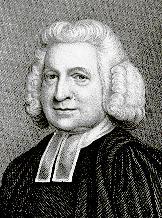
Charles Wesley

1707 - 1788 Author of "Depth of Mercy! Can There Be" in The New Christian Hymnal Charles Wesley, M.A. was the great hymn-writer of the Wesley family, perhaps, taking quantity and quality into consideration, the great hymn-writer of all ages. Charles Wesley was the youngest son and 18th child of Samuel and Susanna Wesley, and was born at Epworth Rectory, Dec. 18, 1707. In 1716 he went to Westminster School, being provided with a home and board by his elder brother Samuel, then usher at the school, until 1721, when he was elected King's Scholar, and as such received his board and education free. In 1726 Charles Wesley was elected to a Westminster studentship at Christ Church, Oxford, where he took his degree in 1729, and became a college tutor. In the early part of the same year his religious impressions were much deepened, and he became one of the first band of "Oxford Methodists." In 1735 he went with his brother John to Georgia, as secretary to General Oglethorpe, having before he set out received Deacon's and Priest's Orders on two successive Sundays. His stay in Georgia was very short; he returned to England in 1736, and in 1737 came under the influence of Count Zinzendorf and the Moravians, especially of that remarkable man who had so large a share in moulding John Wesley's career, Peter Bonier, and also of a Mr. Bray, a brazier in Little Britain. On Whitsunday, 1737, [sic. 1738] he "found rest to his soul," and in 1738 he became curate to his friend, Mr. Stonehouse, Vicar of Islington, but the opposition of the churchwardens was so great that the Vicar consented that he "should preach in his church no more." Henceforth his work was identified with that of his brother John, and he became an indefatigable itinerant and field preacher. On April 8, 1749, he married Miss Sarah Gwynne. His marriage, unlike that of his brother John, was a most happy one; his wife was accustomed to accompany him on his evangelistic journeys, which were as frequent as ever until the year 1756," when he ceased to itinerate, and mainly devoted himself to the care of the Societies in London and Bristol. Bristol was his headquarters until 1771, when he removed with his family to London, and, besides attending to the Societies, devoted himself much, as he had done in his youth, to the spiritual care of prisoners in Newgate. He had long been troubled about the relations of Methodism to the Church of England, and strongly disapproved of his brother John's "ordinations." Wesley-like, he expressed his disapproval in the most outspoken fashion, but, as in the case of Samuel at an earlier period, the differences between the brothers never led to a breach of friendship. He died in London, March 29, 1788, and was buried in Marylebone churchyard. His brother John was deeply grieved because he would not consent to be interred in the burial-ground of the City Road Chapel, where he had prepared a grave for himself, but Charles said, "I have lived, and I die, in the Communion of the Church of England, and I will be buried in the yard of my parish church." Eight clergymen of the Church of England bore his pall. He had a large family, four of whom survived him; three sons, who all became distinguished in the musical world, and one daughter, who inherited some of her father's poetical genius. The widow and orphans were treated with the greatest kindness and generosity by John Wesley. As a hymn-writer Charles Wesley was unique. He is said to have written no less than 6500 hymns, and though, of course, in so vast a number some are of unequal merit, it is perfectly marvellous how many there are which rise to the highest degree of excellence. His feelings on every occasion of importance, whether private or public, found their best expression in a hymn. His own conversion, his own marriage, the earthquake panic, the rumours of an invasion from France, the defeat of Prince Charles Edward at Culloden, the Gordon riots, every Festival of the Christian Church, every doctrine of the Christian Faith, striking scenes in Scripture history, striking scenes which came within his own view, the deaths of friends as they passed away, one by one, before him, all furnished occasions for the exercise of his divine gift. Nor must we forget his hymns for little children, a branch of sacred poetry in which the mantle of Dr. Watts seems to have fallen upon him. It would be simply impossible within our space to enumerate even those of the hymns which have become really classical. The saying that a really good hymn is as rare an appearance as that of a comet is falsified by the work of Charles Wesley; for hymns, which are really good in every respect, flowed from his pen in quick succession, and death alone stopped the course of the perennial stream. It has been the common practice, however for a hundred years or more to ascribe all translations from the German to John Wesley, as he only of the two brothers knew that language; and to assign to Charles Wesley all the original hymns except such as are traceable to John Wesley through his Journals and other works. The list of 482 original hymns by John and Charles Wesley listed in this Dictionary of Hymnology have formed an important part of Methodist hymnody and show the enormous influence of the Wesleys on the English hymnody of the nineteenth century. -- Excerpts from John Julian, Dictionary of Hymnology (1907) ================== Charles Wesley, the son of Samuel Wesley, was born at Epworth, Dec. 18, 1707. He was educated at Westminster School and afterwards at Christ Church, Oxford, where he graduated M.A. In 1735, he took Orders and immediately proceeded with his brother John to Georgia, both being employed as missionaries of the S.P.G. He returned to England in 1736. For many years he engaged with his brother in preaching the Gospel. He died March 29, 1788. To Charles Wesley has been justly assigned the appellation of the "Bard of Methodism." His prominence in hymn writing may be judged from the fact that in the "Wesleyan Hymn Book," 623 of the 770 hymns were written by him; and he published more than thirty poetical works, written either by himself alone, or in conjunction with his brother. The number of his separate hymns is at least five thousand. --Annotations of the Hymnal, Charles Hutchins, M.A., 1872.

Mary Fawler Maude

1819 - 1913 Person Name: Mary F. Maude Author of "Thine forever! God of love" in The Evangelical Hymnal Maude, Mary Fawler, née Hooper, daughter of George Henry Hooper, of Stanmore, Middlesex, was married in 1841 to the late Joseph Maude, some time Vicar of Chirk, near Ruabon, and Hon. Canon of St. Asaph, who died in Feb. 1887. Mrs. Maude's hymns were published in her Twelve Letters on Confirmation, 1848, and in Memorials of Past Years, 1852 (privately printed). Her best known hymn, is "Thine for ever, God of love" (Confirmation). Concerning it Mrs. Maude says: -- "It was written in 1847 for my class in the Girls' Sunday School of St. Thomas, Newport, Isle of Wight, and published in 1848 at the beginning of a little book called ‘Twelve Letters on Confirmation,' by a Sunday School Teacher, and reprinted in the Memorials, 1852." [S. MSS.] The original is in 7 stanzas of 4 lines. It is usually abbreviated, and stanzas ii., iii. transposed, as in the Society for Promoting Christian Knowledge Church Hymns, 1871; the Hymnal Companion; Hymns Ancient & Modern, 1875, Thring's Collection, 1882, and most other hymnbooks. As a hymn for Confirmation its use is extensive. The omitted stanzas are:— "Thine for ever in that day When the world shall pass away: When the trumpet note shall sound, And the nations underground "Shall the awful summons hear, Which proclaims the judgment near. Thine for ever. 'Neath Thy wings Hide and save us, King of Kings." -- John Julian, Dictionary of Hymnology (1907)

James C. Moore

1888 - 1962 Person Name: Rev. James Connor, 1824-1896 Author of "Do you ask what most I prize?" in Hymnal and Liturgies of the Moravian Church

Mary Dana Shindler

1810 - 1883 Person Name: Mary S. B. Shindler Author of "Prince of Peace, Control My Will" in Chautauqua Hymnal and Liturgy Shindler, Mary Stanley Bunce, née Palmer, better known as Mrs. Dana, was born in Beaufort, South Carolina, Feb. 15, 1810. In 1835 she was married to Charles E. Dana, of New York, and removed with him to Bloomington, now Muscatine, Iowa, in 1838. Mr. Dana died in 1839, and Mrs. Dana returned to South Carolina. Subsequently she was married to the Rev. Robert D. Shindler, who was Professor in Shelby College, Kentucky, in 1851, and afterwards in Texas. Mrs. Shindler, originally a Presbyterian, was for some time an Unitarian; but of late years she has been a member of the Protestant Episcopal Church. As Mary S. B. Dana she published the Southern Harp, 1840, and the Northern Harp, 1841. From these works her hymns have been taken, 8 of which are in T. O. Summers's Songs of Zion, 1851. The best known are:— 1. Fiercely came the tempest sweeping. Christ stilling the storm. (1841.) 2. I'm a pilgrim, and I'm a stranger. A Christian Pilgrim. (1841.) 3. O sing to me of heaven. Heaven contemplated. (1840.) Sometimes given as "Come, sing to me of heaven." [Rev. F. M. Bird, M.A.] -- John Julian, Dictionary of Hymnology (1907) =================== Shindler, Mary S. B., p. 1055, i. Other hymns usually attributed to this writer, are "Prince of Peace, control my will" (Perfect Peace), in the Church of England Magazine, March 3, 1858, in 32 lines; and " Once upon the heaving ocean" (Jesus calming the Sea). --John Julian, Dictionary of Hymnology, Appendix, Part II (1907)

James Merrick

1720 - 1769 Author of "To thy pastures fair and large" in Hymns and Tunes Merrick, James , M.A., was born in 1720, and educated at Oxford, where he became a Fellow of Trinity College. He entered Holy Orders, but his health would not admit of parish work. He died at Reading, 1769. His publications include:— (1) Messiah, a Divine Essay. Humbly dedicated to the Reverend the Vice-Chancellor of the University of Oxford and the Visitors of the Free School in Reading. By James Merrick, Ætat. 14, Senior Scholar of the School at their last Terminal Visitation, the 7th of October, 1734. Reading. (2) The Destruction of Troy. Translated from the Greek of Tryphiodorus into English Verse, with Notes, &c. 1742. (3) Poems on Sacred Subjects. Oxford . 1763. (4) The Psalms of David Translated or Paraphrased in English Verse. By James Merrick, M.A., late Fellow of Trinity College, Oxford. Reading. J. Carnan and Co. 1765. 2nd ed. 1766. A few only of these paraphrases were divided into stanzas. In 1797 the Rev. W. D. Tattersall pulished the work "Divided into stanzas for Parochial Use, and paraphrased in such language as will be intelligible to every capacity . . . with a suitable Collect to each Psalm from the Works of Archbishop Parker." Merrick's paraphrases, although weak and verbose, were in extensive use in the early part of the present century, both in the Church of England and with Nonconformists. They have, however, fallen very much into disuse. Those in modern hymn-books, mainly in the form of centos, include:— 1. Blest Instructor, from Thy ways. Ps. xix. 2. Descend, O Lord! from heaven descend. Ps. cxliv. (In time of National Peril.) 3. Far as creation's bounds extend. Ps. cxlv. 4. God of my strength, the wise, the just. Ps. xxxi. 5. He who with generous pity glows. Ps. xli. 6. How pleasant, Lord.Thy dwellings are. Ps. lxxxiv. 7. Lift up your voice and thankful sing. Ps. cxxxvi. 8. Lo, my Shepherd's hand divine. Ps. xxiii. 9. Lord, my Strength, to Thee I pray. Ps. xxviii. 10. My heart its noblest theme has found. Ps.xlv. 11. O let me, [gracious] heavenly Lord extend. Ps. xxxix. 12. O turn, great Ruler of the skies. Ps. li. 13. Praise, O praise the Name divine. Ps. cl. 14. Sing, ye sons of [men] might, O sing. Ps. xxix. 15. Teach me, O teach me, Lord, Thy way. Ps. cxix. 16. The festal morn, my [O] God, is come. Ps. cxxii, (Sunday Morning.) 17. The morn and eve Thy praise resound. Ps. lxv. (Harvest.) 18. To Thy pastures, fair and large. Ps. xxiii. From his Poems on Sacred Subjects, 1763, the following centos have also come into common use: -- 19. Author of good, to Thee we turn. Resignation. 20. Eternal God, we look to Thee. Resignation. 21. 'Tis enough, the hour is come. Nunc Dimittis. John Julian, Dictionary of Hymnology (1907)

John S. B. Monsell

1811 - 1875 Person Name: J. B. Monsell Author of "Jesus Christ, The Crucified" in Hymns of Grace John Samuel Bewley Monsell (b. St. Colomb's, Londonderry, Ireland, 1811; d. Guilford, Surrey, England, 1875) was educated at Trinity College in Dublin and served as a chaplain and rector of several churches in Ireland after his ordination in 1835. Transferred to England in 1853, he became rector of Egham in Surrey and was rector of St. Nicholas Church in Guilford from 1870 until his death (caused by a construction accident at his church). A prolific poet, Monsell published his verse in eleven volumes. His three hundred hymns, many celebrating the seasons of the church year, were issued in collections such as Hymns and Miscellaneous Poems (1837), Spiritual Songs (1857), Hymns of Love and Praise (1863), and The Parish Hymnal (1873). Bert Polman =============================== Monsell, John Samuel Bewley, L.L.D., son of Thomas Bewley Monsell, Archdeacon of Londonderry, was born at St. Columb's, Londonderry, March 2,1811, and educated at Trinity College, Dublin (B.A. 1832, LL.D. 1856). Taking Holy Orders in 1834, "he was successively Chaplain to Bishop Mant, Chancellor of the diocese of Connor, Rector of Ramoan, Vicar of Egham, diocese Worcester, and Rector of St. Nicholas's, Guildford. He died in consequence of a fall from the roof of his church, which was in the course of rebuilding, April 9, 1875. His prose works include Our New Vicar, 1867; The Winton Church Catechist, &c. His poetical works are:— (1) Hymns and Miscellaneous Poems, Dublin, W. Curry, Jun., & Co., 1837; (2) Parish Musings, or Devotional Poems, 1850; (3) Spiritual Songs for the Sundays and Holy Days throughout the Year. 1857 (People's Ed., 1875); (4) His Presence, not His Memory, 1855, 1858; (5) Hymns of Love and Praise for the Church's Year, 1863 (2nd ed. 1866); (6) The Passing Bell; Ode to The Nightingales, and Other Poems, 1867; (7) Litany Hymns, 1869; (8) The Parish Hymnal after the Order of The Book of Common Prayer, 1873; (9)Watches by the Cross, 1874; (10) Simon the Cyrenian; and Other Poems; (11) Nursery Carols. In these works several hymns which appeared in the earlier books are repeated in the later, and thus at first sight his compositions seem to be more in number than they really are. The total amounts to nearly 300, and of these about one-fourth are in common use. The most popular of these are, "God is love; that anthem olden"; "God of that glorious gift of grace"; "Holy offerings, rich and rare"; “Lord of the living harvest"; "Mighty Father, Blessed Son"; and "Sing to the Lord a joyful song." In addition to those which are annotated under their respective first lines, the following are in common use:— i. Appeared in his Hymns and Miscellaneous Poems, Dublin, 1837. 1. Birds have their quiet nests. Humility of Christ. 2. Dark and dim the day-light rose. Good Friday. 3. Friend of the friendless and the lone. Jesus, the Friend. 4. My God, what wondrous love was Thine. Whitsuntide. 5. O for a heart more fervent. Holiness desired. 6. O for the time when on the world. Missions. 7. The springtide hour brings leaf and flower. Spring. 8. This day the Lord is risen. Easter. 9. When cold our hearts and far from Thee. Teach us to Pray. 10. Why restless, why so weary? Providence. 11. Yes, I do feel, my God, that I am Thine. Assurance. ii. Appeared in his Parish Musings, 1850. 12. In Thee, my [O] God, will we rejoice. Trust in God. 13. Lord, dependent on Thy promise. Holy Baptism. 14. Members of Christ, Children of God. Confirmation. 15. So teach me, Lord, to number. The Old and New Year. 16. Soon [soon] and for ever. Death anticipated. 17. The broken, contrite heart oppress'd. Promises of God. 18. Thou art near, yes, Lord, I feel it. Divine Support. 19. Would'st thou learn the depths of sin? Passiontide. iii. Appeared in his Spiritual Songs, 1857. 20. A few bright leaders of her host. All Saints. 21. A happy, happy [merry, merry] Christmas. New Year's Day. 22. Blessed hope, that we the fallen [sinful]. Hope. 23. Heart in heart, and hand in hand. SS. Simon and Jude. 24. Jesus, my loving Lord! I know. Resignation. 25. Last Sunday of the work-day year. Sunday after Christmas Day. 26. Loved by God the Father. Holy Baptism. 27. Mercy, mercy, God the Father. Lent. 28. My head is low, my heart is sad. Confirmation. (Penitential.) 29. Oft doth the Christian's heart inquire. Christian Duty. 30. 0 God, most mighty, listen now. Charities. From "When languid frame or throbbing pulse." 31. 0 holy Sabbath day. Sunday. 32. 0 Lord, what records of Thy love. St. Barnabas. Sometimes, “Lord God, what records of Thy love." 33. 0 love, divine and golden. Holy Matrimony. From this, "Love divine and tender" is taken. 34. One lesson more the Church must learn. Waiting on God. From this, “One lesson Christ His own would teach" is taken. 35. Proudly in his [the] hall of judgment. Tuesday before Easter. 36. Sinful, sighing to be blest. Lent. 37. The Church of God, with equal care. St. James. 38. The journey done; The rest begun. Burial. 39. The simple trust that can confide. Trust. 40. Weary and sad, a wanderer from Thee. Lent. iv. Appeared, in his Hymns of Love and Praise, 1863, and 2nd ed., 1866. 41. Bounteous blesser of the seedtime. Sexagesima. Seed Time. 42. Brightly hopeful for the future. God's mercy through life. 43. Christ is risen! Alleluia! Easter. 44. Come and deck the grave with flowers. Easter Eve. 45. Fight the good fight with all thy might. Fight of Faith. 46. Holy Spirit, long expected. Whitsuntide. 47. Hours and days and months and years. The Circumcision. 48. I have no comfort but Thy love. The Comfort of Love. 49. I knew Thee in the land of drought. A Song of Love. 60. I think of Thee, my God by night. Evening. 61. Jesu, gentle Sufferer, say. Good Friday. 52. Labouring and heavy-laden. Lent. 53. Light of the world, we hail Thee. Missions. 54. Lord, to whom except to Thee? Holy Communion. 55. My sins, my sins, my Saviour. Ash Wednesday. 56. O'er the distant mountains breaking. Second Advent. 57. Other Name than our dear Lord's. Jesus All and in All. 58. Pity on us, heavenly Father. Litany Hymn for Lent. 59. Praise the Lord, rejoice, ye Gentiles. Advent, or Missions. 60. Rest of the weary, joy of the sad. Jesus, the Saviour and Friend. 61. Shadow of a mighty Rock. Jesus, the Rock of Ages. 62. Sing, 0 heaven; 0 earth rejoice. Ascension. 63. Sweet is the gentle voice of spring. Seed Time. 64. Sweet is Thy mercy, Lord. Divine Mercy. 65. Teach me to do the thing that pleaseth Thee. Divine Teaching. 66. The good old times, how glorious. Advent. 67. The world may in its wealth delight. Rejoicing in the Lord. An altered form of "Let others in their wealth delight." 68. Though Thou slay me, I will trust. Faith. 69. To Christ the Lord! The Incarnate Word. Christmas. 70. When I had wandered from His fold. The Love of God. v. Appeared in his Litany Hymns, 1869. 71. Lay the precious body, In the quiet grave. Burial. 72. My sins have taken such a hold on me. Litany of Repentance. vi. Appeared in his Parish Hymnal, 1873. 73. I hunger and I thirst. Septuagesima. Dr. Monsell’s hymns are as a whole bright, joyous, and musical; but they lack massiveness, concentration of thought, and strong emotion. A few only are of enduring excellence. --John Julian, Dictionary of Hymnology 1907 ===================== Monsell, J, S. B., p. 762, ii. Additional hymns in common use include:— 1. Blessed Lord, Who, till the morning. Holy Scriptures. From his Spiritual Songs, 1857. 2. Christ incarnate in His poor. Christ in His Poor. From his Hymns of Love and Praise, 1863. 3. We ask for life, and mean thereby. Life and Work. From his Hymns of Love and Praise, 1863. --John Julian, Dictionary of Hymnology, Appendix, Part II (1907) ==================== Monsell, J. S. B. Since the article on pp. 762-3 was written, copies of the original editions of Dr. Monsell's works have come into our hands, and from them we have to make the following corrections, the numbers following being those given to the first lines of the hymns on pp. 762-3:— 15. So teach me, &c. Hymns and Misc. Poems, 1837, p. 30. 17. The broken, &c. Hymns and Misc. Poems, 1837, p. 49. 18. Thou art near, &c. Hymns and Misc. Poems, 1837, p. 21. 19. Would'st thou, &c. Hymns and Misc. Poems, 1837, p. 14. 26. Loved by God, &c. Parish Hymnal, 1873, No. 181. 27. Mercy, mercy, &c. Prayers and Litanies, 1861, p. 119. 28. My head is low, &c. Hymns of Love and Praise, 1866, p. 125. 33. O Love divine, &c. Hymns of Love and Praise, p. 131. 38. The journey done, &c. Hymns of Love and Praise, p. 134. 40. Weary and sad, &c. Parish Hymnal, 1873, No. 209. 41-50. Hymns of Love and Praise, 1863. 51. See "Day of loss," &c, p. 282, i. 52. Labouring, &c. Prayers and Litanies, 1861, p. 116. 53-57. Hymns of Love and Praise, 1863. 58. Pity on us, &c. Prayers and Litanies, 1861, p. 125. 59. Praise the Lord, &c. Hymns of Love and Praise, 1863, p. 13. 60. 61, 62, 64, 65. Prayers and Litanies, 1861. 63, 66-70. Hymns of Love and Praise, 1863. 72. My sins, &c. Hymns of Love and Praise, 1866, p. 34. 73. I hunger, &c. Hymns of Love and Praise, 1866, p. 128. It will be seen from this list of additions and corrections that Dr. Monsell multiplied his works by giving much the same material under new titles, and that his Prayers and Litanies of 1861 were unknown to us when the original article was written. "We can sincerely add that few hymn writers are so perplexing to the annotator as Dr. Monsell. [Rev. James Mearns, M.A.] --John Julian, Dictionary of Hymnology, New Supplement (1907)

Pages


Export as CSV
It looks like you are using an ad-blocker. Ad revenue helps keep us running. Please consider white-listing Hymnary.org or getting Hymnary Pro to eliminate ads entirely and help support Hymnary.org.