You help make Hymnary.org possible. More than 10 million people from 200+ countries found hymns, liturgical resources and encouragement on Hymnary.org in 2025, including you. Every visit affirms the global impact of this ministry.

If Hymnary has been meaningful to you this year, would you take a moment today to help sustain it? A gift of any size—paired with a note of encouragement if you wish—directly supports the server costs, research work and curation that keep this resource freely available to the world.

Give securely online today, or mail a check to:
Hymnary.org
Calvin University
3201 Burton Street SE
Grand Rapids, MI 49546

Thank you for your partnership, and may the hope of Advent fill your heart.

Person Results

Tune Identifier:"^nottingham_mozart$"
In:people

Planning worship? Check out our sister site, ZeteoSearch.org, for 20+ additional resources related to your search.
Showing 31 - 40 of 55Results Per Page: 102050

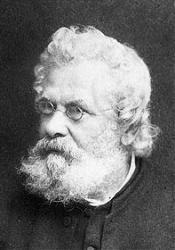
John H. Hopkins

1820 - 1891 Person Name: J. H. Hopkins Author of "When from the East the wise men came" in The Book of Praise for Sunday Schools John Henry Hopkins, Jr MA USA 1820-1891. Born in Pittsburgh, PA, having 12 siblings, the son of pioneer parents (his father from Dublin, his mother from Hamburg) he became an ecclesiologist. His father had been an ironmaster, school teacher, lawyer, priest and second Episcopal Bishop of Vermont, (becoming presiding bishop in 1865). When his father founded the Vermont Episcopal Institute, he needed an assistant to help run it, so he picked his son to become a tutor and disciplinarian. The younger Hopkins played the flute and bugle in the school orchestra and also taught Sunday school. John Henry reflected the artistic talents of both parents in music, poetry, and art. After graduating from the University of Vermont in 1839, he returned to help his father with the school, but a financial crisis hit that year and the school had to close. He worked as a reported in New York City while studying law. He developed a throat ailment and went south to be in a warmer climate. From 1842-1844 he tutored the children of Episcopal Bishop Elliott of Savannah, GA, returning to take his M.A. from Vermont in 1845. He graduated from General Theological Seminary in 1850 and was ordained a deacon, serving as first instructor in church music at the Seminary. He founded and edited the “Church Journal” from 1853 to 1868. Interested in New York’s Ecclesiological Society, his artistic talents were apparent in designing stained-glass windows, episcopal seals, and a variety of other church ornaments. At the same time, his musical talents led to the writing and composing of a number of fine hymns and tunes, as well as anthems and services. He was ordained a priest in 1872, and was Rector of Trinity Church, Plattsburg, NY, from 1872-1876, then of Christ Episcopal Church in Williamsport, PA, from 1876-1887. He helped get the building debt paid off by 1879 with(in 10 years of its construction). During his time there a Sunday school building was also erected, having steam heat and a tiled floor. He designed some of the church furniture and bishop periphernalia as well as wrought iron tombs in Wildwood Cemetery. He also helped design two other church buildings in the area. A man of many talents, he was much beloved as a scholar, writer, preacher, controvertialist, musician, poet, and artist, excelling in all that he did. Totally devoted to his parish people, he especially loved children and was kind to anyone in need. He was considered very down-to-earth. He delivered the eulogy at the funeral of President Usysses S Grant in 1885. He was considered a great developer of hymnody in the Episcopal Church in the mid-19th century. His “Carols, hymns, and songs,”, published in 1863, had a 4th edition in 1883. In 1887 he edited “Great hymns of the church”. He wrote a biography of his father (the life of John Henry Hopkins, S.T.D.) He never married. He died at Hudson, NY. John Perry ======================= Hopkins, John Henry, D.D., Jun., son of J. H. Hopkins, sometime Bishop of Vermont, was born at Pittsburg, Pa., Oct. 28, 1820, educated at the University of Vermont, ordained in 1850, Rector of Christ's Church, Williamsport, Pa., 1876, and died at Troy, New York, Aug. 13, 1891. He published Poems by the Wayside written during more than Forty Years, N.Y., James Pott, 1883; and Carols, Hymns, and Songs, 1862; 3rd ed. 1882. Of his hymns the following are in common use: 1. Blow on, thou [ye] mighty Wind. Missions. 2. Come with us, O blessed Jesus. Holy Communion. 3. Glory to God the Father be. (Dated 1867.) Holy Trinity. 4. God hath made the moon whose beam. (Dated 1840.) Duty. 5. Lord, now round Thy Church behold. (Dated 1867.) For the Reunion of Christendom. These hymns are in his Poems by the Wayside, 1883. In the same volume there are translations of the O Antiphons. --John Julian, Dictionary of Hymnology, Appendix, Part II (1907) ============== Hopkins, J. H., p. 1571, ii. The following additional hymns by him are in the American Hymnal, revised and enlarged .... Protestant Episcopal Church. . . U.S.A., 1892:— 1. God of our fathers, bless this our land. National Hymn. 2. When from the east the wise men came. Epiphany. --John Julian, Dictionary of Hymnology, New Supplement (1907)

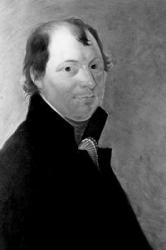
J. F. Bahnmaier

1774 - 1841 Person Name: Jonathan F. Bahnmaier, 1774-1841 Author of "Word of Life, Most Pure, Most Strong" in The Mennonite Hymnary, published by the Board of Publication of the General Conference of the Mennonite Church of North America Bahnmaier, Jonathan Friedrich, son of J. G. Bahnmaier, Town Preacher at Oberstenfeld, near Bottwar, Württemberg, was born at Oberstenfeld, July 12, 1774. After completing his studies at Tübingen, his first appointment was, in 1798, as assistant to his father. He became Diaconus at Marbach on the Neckar in 1806, and at Ludwigsburg in 1810, where he was for a time the head of a young ladies' school. In 1815 he was appointed Professor of Education and Homiletics at Tübingen, but in the troublous times that followed had to resign his post. He received in 1819 the appointment of Decan and Town Preacher at Kirchheim-unter-Teck, where he continued as a faithful, unwearied, and successful worker for 21 years. He was distinguished as a preacher, and greatly interested in the causes of education, of missions, and of Bible societies. He was also one of the principal members of the committee which compiled the Württemberg Gesang-Buch of 1842. He preached his last sermon at Kirchheim, on the 10th Sunday after Trinity, Aug. 15, 1841. Two days later he held a visitation at Owen. While inspecting the school at the adjacent village of Brucker, he was struck by paralysis, and being conveyed back to Owen, died there, Aug. 18, 1841 (Koch vii. 81-84; Allgemeine Deutsche Biographie, i. 766-767). Of his hymns two have been translated into English: i. Jesu als du wiederkehrtest. [Schools.] First published in his Christliche Blätter aus Tübingen, pts. 9-12 for 1819, p. 85, in 2 stanzas of 8 lines, entitled "Prayer after School"; as one of 7 metrical prayers for Children, and for the School and House. Included as No. 2947 in Knapp's Evanglischer Lieder-Schatz, 1837 (1865, No. 2614), and No. 513 in the Württemberg Gesang-Buch, 1842. The only translation in common use is: Jesu, when Thou once returnest. In full by Miss Winkworth in her Chorale Book for England, 1863, No. 178. ii. Walte, fürder, nah und fern. [Missions.] According to Koch, vii. 84, first printed separately 1827. Included as No. 97 in the Kern des deutschen Ziederschatzes, Nürnberg, 1828, and as No. 260, beginning,"Walte, walte, nah und fern" in Bunsen's Versuch, 1833, in 7 stanzas of 4 line, and since in the Württemberg Gesang-Buch, 1842, and other recent collections. One of the best and most useful of hymns for Foreign Missions. The translations in common use are: 1. Far and near, Almighty Word. A good and full translation by Miss Cox in her Sacred Hymns, Boston, U.S., 1853, and Dean Alford's Year of Praise, 1867, stanza i. was omitted and the hymn thus began, "Word by God the Father sent." 2. Spread thy triumph far and nigh, by H. J. Buckoll. By omitting stanzas ii., iv. as No. 65 in the Rugby School Hymn Book, 1850 (in the Rugby School Hymn Book, 1870, No. 175, the translation is complete). The translations of stanzas iii., v.-vii. altered and beginning "Word of Him whose sovereign will", were included in the Marylebone Collection, 1851, and Burgess and Money's Psalms and Hymns, 1857. The Wellington College Hymn Book, 1863, begins with the translations of stanza v., "Word of life, so pure and free." 3. Spread, oh spread, thou mighty Word. A full and very good translation by Miss Winkworth in her Lyra Germanica, 2nd Series, 1858, p. 60, repeated in her Chorale Book for England, 1863, No. 176. Since included in Kennedy, People's Hymnal, 1867, Horder's Congregational Hymns, 1884, and others; and in America in the Pennsylvania Lutheran Church Book, 1868, Hymns and Songs of Praise, N. Y., 1874, Evangelical Hymnal, and others. In Longfellow and Johnson's Hymns of the Spirit, Boston, 1864, it begins with st. v., "Word of life, most pure, most strong." Other translations are: (1) "Go forth, thou mighty word of grace", by Lady E, Fortescue, 1343 (ed. 1847, p. 31). (2) "0 Word of God, reign everywhere," by Dr. G. Walker, 1860, p. 85. (3) "Word of God! with glory crown'd", in L. Rehfuess's Ch. at Sea, 1868, p. 109. [Rev. James Mearns, M. A.] -- John Julian, Dictionary of Hymnology (1907)

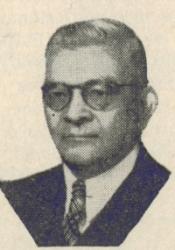
F. C. Jennings

1847 - 1948 Person Name: Frederick C. Jennings, 1847-1948 Author of "O My Savior, Glorified" in The Cyber Hymnal Born: December 3, 1847, Calcutta, India. Died: April 17, 1948, Plainfield, New Jersey. Buried: Hillside Cemetery, Plainfield, New Jersey. Jennings emigrated to America in 1871, and eventually established a tea business in New York City. He was associated with Britain’s Plymouth Brethren in the 1870’s, and, in 1881, moved to Plainfield, New Jersey. His works include: Old Groans and New Songs Judges and Ruth The End of the European War in the Light of Scripture, 1915 The World Conflict in Light of the Prophetic Word, 1917 Studies in Isaiah (Neptune, New Jersey: Loizeaux Brothers, 1935) --www.hymntime.com/tch

Vicente P. Mendoza

1875 - 1955 Person Name: Vicente Mendoza, 1975-1955 Translator of "Que Mi Vida Entera Esté Consagrada" in Cántico Nuevo Vicente Mendoza Born: De­cem­ber 24, 1875, Guad­a­la­ja­ra, Mex­i­co. Died: 1955, Mex­i­co Ci­ty, Mex­i­co. Mendoza stu­died in­i­tial­ly un­der Don Au­re­lio Or­te­ga. At age of 11 he went to work in a Pro­test­ant print shop in Mex­i­co Ci­ty and helped pro­duce El Evan­gel­is­ta Mex­i­ca­no (The Mex­i­can Evan­gel­ist) for the Meth­od­ist Church of the South; he rose to be­come its di­rect­or for 17 years. Look­ing to im­prove him­self, Men­do­za en­tered a night school for work­ers, but lat­er feel­ing the call to preach the Gos­pel, he en­tered the Pres­by­ter­i­an Sem­in­a­ry in Mex­i­co Ci­ty. When the sem­in­a­ry closed temp­o­rar­i­ly, Men­do­za en­tered the Meth­od­ist In­sti­tute of Pueb­la, where he fin­ished the course in the­ol­o­gy. In 1898 he be­came a mem­ber of the An­nu­al Con­fer­ence of the Mex­i­can Meth­od­ist Church. From 1915 to 1917, he be­longed to the South­ern Meth­od­ist Con­fer­ence of Cal­i­for­nia. Men­do­za worked on sev­er­al per­i­od­i­cals, in­clud­ing El Mun­do Crist­i­a­no (The Chris­tian World), El Abo­ga­do Crist­i­a­no (The Chris­tian Ad­vo­cate), and El Evan­gel­is­ta Crist­i­a­no (The Chris­tian Evan­gel­ist). © The Cyber Hymnal™ (hymntime.com/tch)

Daniel Hughes

Person Name: D. H. Translator of "Haleliwia! mawl i Dduw (Alleluia to our God)" in Mawl a chân = praise and song

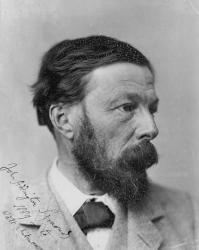
John Addington Symonds

1840 - 1893 Person Name: John A. Symonds Author of "These Things Shall Be,---A Loftier Place" in A. M. E. C. Hymnal Symonds, John Addington, M.A., s. of J. A. Symonds, b. at Bristol, Oct. 5, 1840; educated at Harrow, and Balliol College, Oxford, B.A. (double first) 1862, and Fellow of Magdalen 1862. Wrote extensively, especially on the History of the Italian Renaissance, and also published various volumes of verse. Died at home, April 19, 1893. His Life, by Horatio Brown, was published in 1895. His hymn: "These things shall be! a loftier race" (A Regenerated World), in The Methodist Hymn Book, 1901, is from his New and Old, a volume of verse by John Addington Symonds, 1880, p. 225. It begins with st. iv. of "Sad heart, what will the future bring?" a poem entitled "A Vista." [Rev. James Mearns, M.A.] --John Julian, Dictionary of Hymnology, New Supplement (1907)

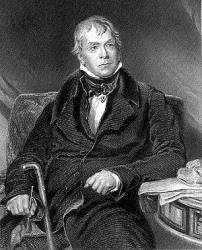
Sir Walter Scott

1771 - 1832 Person Name: Sir Walter Scott, Bart., 1771-1832 Author of "When Israel, of the Lord beloved" in Methodist Hymn and Tune Book Walter Scott was born in Edinburgh, August 15, 1771. In 1786, he commenced his apprenticeship as writer to the Signet. In 1796, he first appeared before the public in a translation of Burger's "William and Helen." Many poetical works followed, until in 1814, he began the series of "Waverly Novels." He died at Abbotsford, September 21, 1832. It is related that on his death-bed he distinctly repeated portions of the Latin original, upon which "That day of wrath, that dreadful day" is based. --Annotations of the Hymnal, Charles Hutchins, M.A., 1872 ====================== Scott, Sir Walter, Bart., was born in Edinburgh, Aug. 15, 1771, and died at Abbotsford, Sept. 21, 1832. Although so successful and widely known as a poet, he made no direct contributions to hymnody whatever. His condensed rendering of the “Dies Irae", and his hymn of Rebecca in Ivanhoe, "When Israel of the Lord beloved" (q.v.) were utilized as hymns for congregational use by others, but were never intended for such a purpose by himself. His work and rank as poet, novelist, and historian are fully set forth in his Life by J. G. Lockhart. --John Julian, Dictionary of Hymnology (1907)

John Pierpont

1785 - 1866 Author of "On this stone now laid with prayer" in The Evangelical Hymnal Pierpont, John, son of James Pierpont, of Litchfield, Connecticut, was born at Litchfield, April 6, 1785, and educated at Yale College, where he graduated in 1804. After fulfilling engagements as a Tutor in New Haven, and in Charlestown, South Carolina, he was admitted to the Bar in 1812. Shortly after he retired and went into business, only to leave it also, and to pass on to Harvard College as a student in theology. In 1819 he succeeded Dr. Holley as the pastor of the Unitarian congregation in Hollis Street, Boston. At length his zeal against intemperance and slavery caused him to resign his charge in 1840 [sic. 1845] (see Lothrop's Proceedings of an Eccl. Council in the case of the Hollis Street Meeting and the Rev. J. Pierpont). At this date he published his Poems & Hymns, including his anti-slavery and temperance poems and songs. In 1845 he became the pastor of an Unitarian congregation at Troy, New York. This he vacated for another at Medford, Massachusetts, in 1849. That he resigned in 1859. When over 70 years of age he became Chaplain in the United States Army (1862), and was finally a Government clerk in the Treasury Department at Washington. He died suddenly at Medford, Aug. 27, 1866. Pierpont's publications include Airs of Palestine, 1816, some school books, and his Poems & Hymns, 1840 and 1854. His hymns in common use include:— 1. Another day its course hath run. Evening. Appeared in Hymns for Children, Boston, 1825; in Greenwood's Chapel Liturgy, 1827; and in the author's Poems & Hymns, 1840. 2. Break forth in song, ye trees. Public Thanksgiving. Written for the Second Centennial Celebration of the Settlement of Boston, Sept. 17, 1830, and included in the Poems & Hymns, 1840. 3. Break the bread and pour the wine. Holy Communion. In Harris's Hymns for the Lord's Supper, 1820. 4. Father, while we break the bread. Holy Communion. 5. God Almighty and All-seeing. Greatness of the Father. Contributed to Elias Nason's Congregational Hymn Book, Boston, 1857. 6. God of mercy, do Thou never. Ordination. Written for the Ordination of John B. P. Storer at Walpole, Nov. 15, 1826; and published in the author's Poems, &c, 1840. 7. God of our fathers, in Whose sight. Love of Truth desired. This hymn is composed of st. ix., x. of a hymn written for the Charlestown Centennial, June 17, 1830. In this form it was given in the Boston Hymns of the Spirit, 1864, and others. 8. Gone are those great and good. Burial. Written in 1830. Part of No. 2 above. 9. I cannot make him dead. Gone Before. "A part of an exquisitely touching and beautiful poem of ten stanzas, originally printed in the Monthly Miscellany, Oct. 1840." 10. Let the still air rejoice. Praise. 11. Mighty One, Whose name is Holy. Charitable Institutions. Written for the anniversary of the Howard Benevolent Society, Dec. 1826, and included in the author's Poems, &c, 1840. 12. My [0] God, I thank Thee that the night. Morning. Appeared in his Poems, &c, 1840. In Martineau's Hymns, &c, 1873, it begins "O God, I thank Thee," &c. 13. 0 bow Thine ear, eternal One. Opening of Divine Service. This is dated 1823, but was not included in the author's Poems, &c, 1840, although one of his best productions. 14. 0 Thou to Whom in ancient time. Universal Worship. “Written for the opening of the Independent Congregational Church in Barton Square, Salem, Massachusetts, Dec. 7, 1824," and printed at the close of the sermon preached by Henry Colman on that day. It was given in Pierpont's Poems, &c, 1840, and is found in several collections in Great Britain and America. It is widely known. 15. 0 Thou Who art above all height. Ordination. “Written for the Ordination of Mr. William Ware, as Pastor of the First Congregational Church in New York, Dec. 18, 1821," and included in his Poems, &c, 1840. 16. 0 Thou Who on the whirlwind rides. Dedication of a Place of Worship. Written for the opening of the Seamen's Bethel in Boston, Sept. 11, 1833. Sometimes given as “Thou Who on the," &c. 17. O'er Kedron's stream, and Salem's height. Gethsemane. One of eight hymns contributed to Dr. T. M. Harris's Hymns for the Lord's Supper, 1820. It is in Martineau's Hymns, &c, London, 1873, and others. 18. On this stone, now laid with prayer. Foundation-stone Laying. Written for the laying of the cornerstone of Suffolk Street Chapel, Boston, for the Ministry of the Poor, May 23, 1839. 19. With Thy pure dews and rain. Against Slavery. Written for the African Colonization Society, and included in Cheever's American Common Place Book, 1831. Not in the author's Poems, &c, 1840. Pierpont's talents as a hymn-writer, as in other fields, were respectable rather than commanding, but so energetically employed as to make their mark. Thus, although he never wrote a single hymn that can be called a great lyric, yet he has attained to a prominent position in American hymnody. [Rev. F. M. Bird, M.A.] -- John Julian, Dictionary of Hymnology (1907)

John S. B. Monsell

1811 - 1875 Person Name: John Samuel Bewley Monsell Author of "Fight the Good Fight" in Trinity Hymnal (Rev. ed.) John Samuel Bewley Monsell (b. St. Colomb's, Londonderry, Ireland, 1811; d. Guilford, Surrey, England, 1875) was educated at Trinity College in Dublin and served as a chaplain and rector of several churches in Ireland after his ordination in 1835. Transferred to England in 1853, he became rector of Egham in Surrey and was rector of St. Nicholas Church in Guilford from 1870 until his death (caused by a construction accident at his church). A prolific poet, Monsell published his verse in eleven volumes. His three hundred hymns, many celebrating the seasons of the church year, were issued in collections such as Hymns and Miscellaneous Poems (1837), Spiritual Songs (1857), Hymns of Love and Praise (1863), and The Parish Hymnal (1873). Bert Polman =============================== Monsell, John Samuel Bewley, L.L.D., son of Thomas Bewley Monsell, Archdeacon of Londonderry, was born at St. Columb's, Londonderry, March 2,1811, and educated at Trinity College, Dublin (B.A. 1832, LL.D. 1856). Taking Holy Orders in 1834, "he was successively Chaplain to Bishop Mant, Chancellor of the diocese of Connor, Rector of Ramoan, Vicar of Egham, diocese Worcester, and Rector of St. Nicholas's, Guildford. He died in consequence of a fall from the roof of his church, which was in the course of rebuilding, April 9, 1875. His prose works include Our New Vicar, 1867; The Winton Church Catechist, &c. His poetical works are:— (1) Hymns and Miscellaneous Poems, Dublin, W. Curry, Jun., & Co., 1837; (2) Parish Musings, or Devotional Poems, 1850; (3) Spiritual Songs for the Sundays and Holy Days throughout the Year. 1857 (People's Ed., 1875); (4) His Presence, not His Memory, 1855, 1858; (5) Hymns of Love and Praise for the Church's Year, 1863 (2nd ed. 1866); (6) The Passing Bell; Ode to The Nightingales, and Other Poems, 1867; (7) Litany Hymns, 1869; (8) The Parish Hymnal after the Order of The Book of Common Prayer, 1873; (9)Watches by the Cross, 1874; (10) Simon the Cyrenian; and Other Poems; (11) Nursery Carols. In these works several hymns which appeared in the earlier books are repeated in the later, and thus at first sight his compositions seem to be more in number than they really are. The total amounts to nearly 300, and of these about one-fourth are in common use. The most popular of these are, "God is love; that anthem olden"; "God of that glorious gift of grace"; "Holy offerings, rich and rare"; “Lord of the living harvest"; "Mighty Father, Blessed Son"; and "Sing to the Lord a joyful song." In addition to those which are annotated under their respective first lines, the following are in common use:— i. Appeared in his Hymns and Miscellaneous Poems, Dublin, 1837. 1. Birds have their quiet nests. Humility of Christ. 2. Dark and dim the day-light rose. Good Friday. 3. Friend of the friendless and the lone. Jesus, the Friend. 4. My God, what wondrous love was Thine. Whitsuntide. 5. O for a heart more fervent. Holiness desired. 6. O for the time when on the world. Missions. 7. The springtide hour brings leaf and flower. Spring. 8. This day the Lord is risen. Easter. 9. When cold our hearts and far from Thee. Teach us to Pray. 10. Why restless, why so weary? Providence. 11. Yes, I do feel, my God, that I am Thine. Assurance. ii. Appeared in his Parish Musings, 1850. 12. In Thee, my [O] God, will we rejoice. Trust in God. 13. Lord, dependent on Thy promise. Holy Baptism. 14. Members of Christ, Children of God. Confirmation. 15. So teach me, Lord, to number. The Old and New Year. 16. Soon [soon] and for ever. Death anticipated. 17. The broken, contrite heart oppress'd. Promises of God. 18. Thou art near, yes, Lord, I feel it. Divine Support. 19. Would'st thou learn the depths of sin? Passiontide. iii. Appeared in his Spiritual Songs, 1857. 20. A few bright leaders of her host. All Saints. 21. A happy, happy [merry, merry] Christmas. New Year's Day. 22. Blessed hope, that we the fallen [sinful]. Hope. 23. Heart in heart, and hand in hand. SS. Simon and Jude. 24. Jesus, my loving Lord! I know. Resignation. 25. Last Sunday of the work-day year. Sunday after Christmas Day. 26. Loved by God the Father. Holy Baptism. 27. Mercy, mercy, God the Father. Lent. 28. My head is low, my heart is sad. Confirmation. (Penitential.) 29. Oft doth the Christian's heart inquire. Christian Duty. 30. 0 God, most mighty, listen now. Charities. From "When languid frame or throbbing pulse." 31. 0 holy Sabbath day. Sunday. 32. 0 Lord, what records of Thy love. St. Barnabas. Sometimes, “Lord God, what records of Thy love." 33. 0 love, divine and golden. Holy Matrimony. From this, "Love divine and tender" is taken. 34. One lesson more the Church must learn. Waiting on God. From this, “One lesson Christ His own would teach" is taken. 35. Proudly in his [the] hall of judgment. Tuesday before Easter. 36. Sinful, sighing to be blest. Lent. 37. The Church of God, with equal care. St. James. 38. The journey done; The rest begun. Burial. 39. The simple trust that can confide. Trust. 40. Weary and sad, a wanderer from Thee. Lent. iv. Appeared, in his Hymns of Love and Praise, 1863, and 2nd ed., 1866. 41. Bounteous blesser of the seedtime. Sexagesima. Seed Time. 42. Brightly hopeful for the future. God's mercy through life. 43. Christ is risen! Alleluia! Easter. 44. Come and deck the grave with flowers. Easter Eve. 45. Fight the good fight with all thy might. Fight of Faith. 46. Holy Spirit, long expected. Whitsuntide. 47. Hours and days and months and years. The Circumcision. 48. I have no comfort but Thy love. The Comfort of Love. 49. I knew Thee in the land of drought. A Song of Love. 60. I think of Thee, my God by night. Evening. 61. Jesu, gentle Sufferer, say. Good Friday. 52. Labouring and heavy-laden. Lent. 53. Light of the world, we hail Thee. Missions. 54. Lord, to whom except to Thee? Holy Communion. 55. My sins, my sins, my Saviour. Ash Wednesday. 56. O'er the distant mountains breaking. Second Advent. 57. Other Name than our dear Lord's. Jesus All and in All. 58. Pity on us, heavenly Father. Litany Hymn for Lent. 59. Praise the Lord, rejoice, ye Gentiles. Advent, or Missions. 60. Rest of the weary, joy of the sad. Jesus, the Saviour and Friend. 61. Shadow of a mighty Rock. Jesus, the Rock of Ages. 62. Sing, 0 heaven; 0 earth rejoice. Ascension. 63. Sweet is the gentle voice of spring. Seed Time. 64. Sweet is Thy mercy, Lord. Divine Mercy. 65. Teach me to do the thing that pleaseth Thee. Divine Teaching. 66. The good old times, how glorious. Advent. 67. The world may in its wealth delight. Rejoicing in the Lord. An altered form of "Let others in their wealth delight." 68. Though Thou slay me, I will trust. Faith. 69. To Christ the Lord! The Incarnate Word. Christmas. 70. When I had wandered from His fold. The Love of God. v. Appeared in his Litany Hymns, 1869. 71. Lay the precious body, In the quiet grave. Burial. 72. My sins have taken such a hold on me. Litany of Repentance. vi. Appeared in his Parish Hymnal, 1873. 73. I hunger and I thirst. Septuagesima. Dr. Monsell’s hymns are as a whole bright, joyous, and musical; but they lack massiveness, concentration of thought, and strong emotion. A few only are of enduring excellence. --John Julian, Dictionary of Hymnology 1907 ===================== Monsell, J, S. B., p. 762, ii. Additional hymns in common use include:— 1. Blessed Lord, Who, till the morning. Holy Scriptures. From his Spiritual Songs, 1857. 2. Christ incarnate in His poor. Christ in His Poor. From his Hymns of Love and Praise, 1863. 3. We ask for life, and mean thereby. Life and Work. From his Hymns of Love and Praise, 1863. --John Julian, Dictionary of Hymnology, Appendix, Part II (1907) ==================== Monsell, J. S. B. Since the article on pp. 762-3 was written, copies of the original editions of Dr. Monsell's works have come into our hands, and from them we have to make the following corrections, the numbers following being those given to the first lines of the hymns on pp. 762-3:— 15. So teach me, &c. Hymns and Misc. Poems, 1837, p. 30. 17. The broken, &c. Hymns and Misc. Poems, 1837, p. 49. 18. Thou art near, &c. Hymns and Misc. Poems, 1837, p. 21. 19. Would'st thou, &c. Hymns and Misc. Poems, 1837, p. 14. 26. Loved by God, &c. Parish Hymnal, 1873, No. 181. 27. Mercy, mercy, &c. Prayers and Litanies, 1861, p. 119. 28. My head is low, &c. Hymns of Love and Praise, 1866, p. 125. 33. O Love divine, &c. Hymns of Love and Praise, p. 131. 38. The journey done, &c. Hymns of Love and Praise, p. 134. 40. Weary and sad, &c. Parish Hymnal, 1873, No. 209. 41-50. Hymns of Love and Praise, 1863. 51. See "Day of loss," &c, p. 282, i. 52. Labouring, &c. Prayers and Litanies, 1861, p. 116. 53-57. Hymns of Love and Praise, 1863. 58. Pity on us, &c. Prayers and Litanies, 1861, p. 125. 59. Praise the Lord, &c. Hymns of Love and Praise, 1863, p. 13. 60. 61, 62, 64, 65. Prayers and Litanies, 1861. 63, 66-70. Hymns of Love and Praise, 1863. 72. My sins, &c. Hymns of Love and Praise, 1866, p. 34. 73. I hunger, &c. Hymns of Love and Praise, 1866, p. 128. It will be seen from this list of additions and corrections that Dr. Monsell multiplied his works by giving much the same material under new titles, and that his Prayers and Litanies of 1861 were unknown to us when the original article was written. "We can sincerely add that few hymn writers are so perplexing to the annotator as Dr. Monsell. [Rev. James Mearns, M.A.] --John Julian, Dictionary of Hymnology, New Supplement (1907)

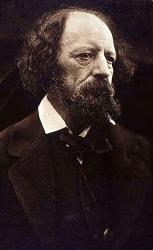
Alfred Tennyson, Baron Tennyson

1809 - 1892 Person Name: Alfred, Lord Tennyson Author of "Ring out, wild bells, to the wild sky" in The Hymnal Tennyson, Alfred, Lord, son of the Rev. G. C. Tennyson, Rector of Somersby, Lincolnshire, was born at Somersby, Aug. 6, 1809; educated at Trinity College, Cambridge; appointed Poet Laureate in 1850, and raised to the Peerage in 1884. Although Lord Tennyson has not written any hymns, extracts from his poems are sometimes used as such, as "Strong Son of God, immortal Love" (Faith in the Son of God), from the Introduction to his In Memoriam, 1850; the well-known "Too late, too late, ye cannot enter now," and others. The former is sometimes given as "Spirit of immortal Love," and again as "Eternal God, immortal Love." --John Julian, Dictionary of Hymnology, Appendix, Part II (1907)

Pages


Export as CSV
It looks like you are using an ad-blocker. Ad revenue helps keep us running. Please consider white-listing Hymnary.org or getting Hymnary Pro to eliminate ads entirely and help support Hymnary.org.